Advertisements for Common Sense Published May 3, 1776

Historians consider Thomas Paine’s Common Sense, published anonymously on January 9, 1776, the most influential political pamphlet that circulated in the colonies during the era of the American Revolution.  Written in plain language accessible to readers of all backgrounds, the pamphlet made a bold case for declaring independence at a time that many colonizers still sought a redress their grievances by George III and Parliament.  Paine’s pamphlet played a vital role in swaying public opinion in favor of declaring independence.

Common Sense was an eighteenth-century bestseller, though Paine wildly overestimated how many copies were published, claiming 150,000 circulated in 1776, and historians later made even more dubious claims that American printing presses produced as many as 500,000 copies.  Contrary to those exaggerations, American printers most likely published between 35,000 and 50,000 copies in 1776.  Scholars have identified twenty-five American editions, more than twice as many as any other American book or pamphlet published in the eighteenth century.

Colonizers certainly discussed Paine’s pamphlet … and printers, booksellers, and others advertised it widely.  As a special feature, the Adverts 250 Project chronicles those advertisements, starting with newspaper notices for Robert Bell’s first edition published in Philadelphia and then subsequent advertisements for that and other editions published and sold throughout the colonies.

These advertisements for Common Sense appeared in American newspapers 250 years ago today.
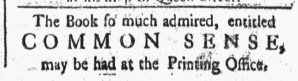
Connecticut Gazette (May 3, 1776).

Advertisements for Common Sense Published May 2, 1776

Historians consider Thomas Paine’s Common Sense, published anonymously on January 9, 1776, the most influential political pamphlet that circulated in the colonies during the era of the American Revolution.  Written in plain language accessible to readers of all backgrounds, the pamphlet made a bold case for declaring independence at a time that many colonizers still sought a redress their grievances by George III and Parliament.  Paine’s pamphlet played a vital role in swaying public opinion in favor of declaring independence.

Common Sense was an eighteenth-century bestseller, though Paine wildly overestimated how many copies were published, claiming 150,000 circulated in 1776, and historians later made even more dubious claims that American printing presses produced as many as 500,000 copies.  Contrary to those exaggerations, American printers most likely published between 35,000 and 50,000 copies in 1776.  Scholars have identified twenty-five American editions, more than twice as many as any other American book or pamphlet published in the eighteenth century.

Colonizers certainly discussed Paine’s pamphlet … and printers, booksellers, and others advertised it widely.  As a special feature, the Adverts 250 Project chronicles those advertisements, starting with newspaper notices for Robert Bell’s first edition published in Philadelphia and then subsequent advertisements for that and other editions published and sold throughout the colonies.

These advertisements for Common Sense appeared in American newspapers 250 years ago today.
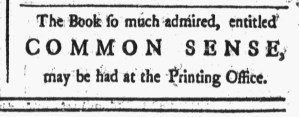
New York Packet (May 2, 1776).

Advertisements for Common Sense Published April 29, 1776

Historians consider Thomas Paine’s Common Sense, published anonymously on January 9, 1776, the most influential political pamphlet that circulated in the colonies during the era of the American Revolution.  Written in plain language accessible to readers of all backgrounds, the pamphlet made a bold case for declaring independence at a time that many colonizers still sought a redress their grievances by George III and Parliament.  Paine’s pamphlet played a vital role in swaying public opinion in favor of declaring independence.

Common Sense was an eighteenth-century bestseller, though Paine wildly overestimated how many copies were published, claiming 150,000 circulated in 1776, and historians later made even more dubious claims that American printing presses produced as many as 500,000 copies.  Contrary to those exaggerations, American printers most likely published between 35,000 and 50,000 copies in 1776.  Scholars have identified twenty-five American editions, more than twice as many as any other American book or pamphlet published in the eighteenth century.

Colonizers certainly discussed Paine’s pamphlet … and printers, booksellers, and others advertised it widely.  As a special feature, the Adverts 250 Project chronicles those advertisements, starting with newspaper notices for Robert Bell’s first edition published in Philadelphia and then subsequent advertisements for that and other editions published and sold throughout the colonies.

These advertisements for Common Sense appeared in American newspapers 250 years ago today.

Boston-Gazette (April 29, 1776).

**********

Connecticut Courant (April 29, 1776).

Advertisements for Common Sense Published April 27, 1776

Historians consider Thomas Paine’s Common Sense, published anonymously on January 9, 1776, the most influential political pamphlet that circulated in the colonies during the era of the American Revolution.  Written in plain language accessible to readers of all backgrounds, the pamphlet made a bold case for declaring independence at a time that many colonizers still sought a redress their grievances by George III and Parliament.  Paine’s pamphlet played a vital role in swaying public opinion in favor of declaring independence.

Common Sense was an eighteenth-century bestseller, though Paine wildly overestimated how many copies were published, claiming 150,000 circulated in 1776, and historians later made even more dubious claims that American printing presses produced as many as 500,000 copies.  Contrary to those exaggerations, American printers most likely published between 35,000 and 50,000 copies in 1776.  Scholars have identified twenty-five American editions, more than twice as many as any other American book or pamphlet published in the eighteenth century.

Colonizers certainly discussed Paine’s pamphlet … and printers, booksellers, and others advertised it widely.  As a special feature, the Adverts 250 Project chronicles those advertisements, starting with newspaper notices for Robert Bell’s first edition published in Philadelphia and then subsequent advertisements for that and other editions published and sold throughout the colonies.

These advertisements for Common Sense appeared in American newspapers 250 years ago today.
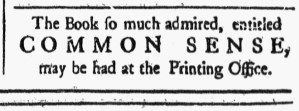
Providence Gazette (April 27, 1776).

Advertisements for Common Sense Published April 26, 1776

Historians consider Thomas Paine’s Common Sense, published anonymously on January 9, 1776, the most influential political pamphlet that circulated in the colonies during the era of the American Revolution.  Written in plain language accessible to readers of all backgrounds, the pamphlet made a bold case for declaring independence at a time that many colonizers still sought a redress their grievances by George III and Parliament.  Paine’s pamphlet played a vital role in swaying public opinion in favor of declaring independence.

Common Sense was an eighteenth-century bestseller, though Paine wildly overestimated how many copies were published, claiming 150,000 circulated in 1776, and historians later made even more dubious claims that American printing presses produced as many as 500,000 copies.  Contrary to those exaggerations, American printers most likely published between 35,000 and 50,000 copies in 1776.  Scholars have identified twenty-five American editions, more than twice as many as any other American book or pamphlet published in the eighteenth century.

Colonizers certainly discussed Paine’s pamphlet … and printers, booksellers, and others advertised it widely.  As a special feature, the Adverts 250 Project chronicles those advertisements, starting with newspaper notices for Robert Bell’s first edition published in Philadelphia and then subsequent advertisements for that and other editions published and sold throughout the colonies.

These advertisements for Common Sense appeared in American newspapers 250 years ago today.
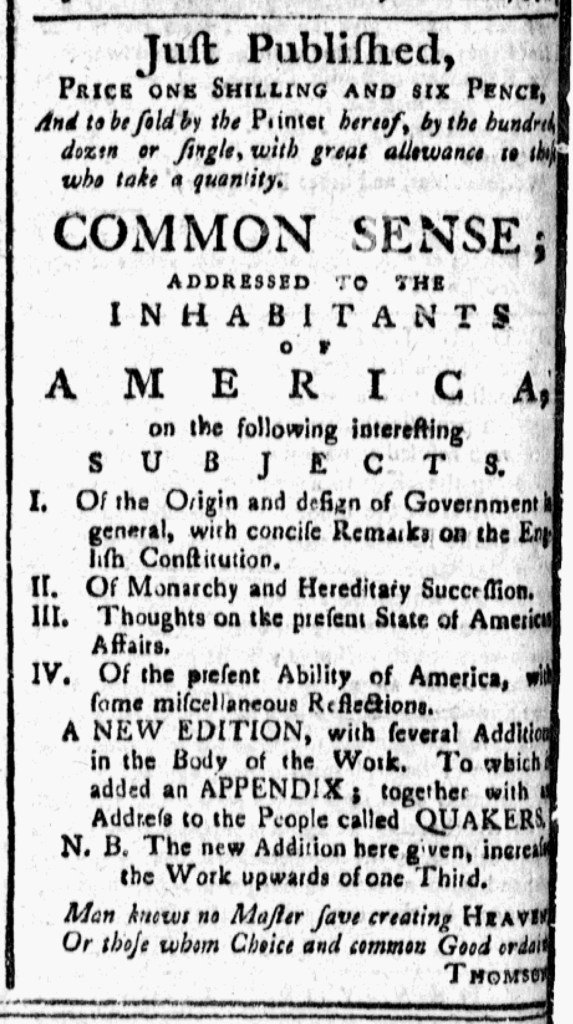
Connecticut Gazette (April 26, 1776).

**********

Essex Journal (April 26, 1776).

Advertisements for Common Sense Published April 25, 1776

Historians consider Thomas Paine’s Common Sense, published anonymously on January 9, 1776, the most influential political pamphlet that circulated in the colonies during the era of the American Revolution.  Written in plain language accessible to readers of all backgrounds, the pamphlet made a bold case for declaring independence at a time that many colonizers still sought a redress their grievances by George III and Parliament.  Paine’s pamphlet played a vital role in swaying public opinion in favor of declaring independence.

Common Sense was an eighteenth-century bestseller, though Paine wildly overestimated how many copies were published, claiming 150,000 circulated in 1776, and historians later made even more dubious claims that American printing presses produced as many as 500,000 copies.  Contrary to those exaggerations, American printers most likely published between 35,000 and 50,000 copies in 1776.  Scholars have identified twenty-five American editions, more than twice as many as any other American book or pamphlet published in the eighteenth century.

Colonizers certainly discussed Paine’s pamphlet … and printers, booksellers, and others advertised it widely.  As a special feature, the Adverts 250 Project chronicles those advertisements, starting with newspaper notices for Robert Bell’s first edition published in Philadelphia and then subsequent advertisements for that and other editions published and sold throughout the colonies.

These advertisements for Common Sense appeared in American newspapers 250 years ago today.
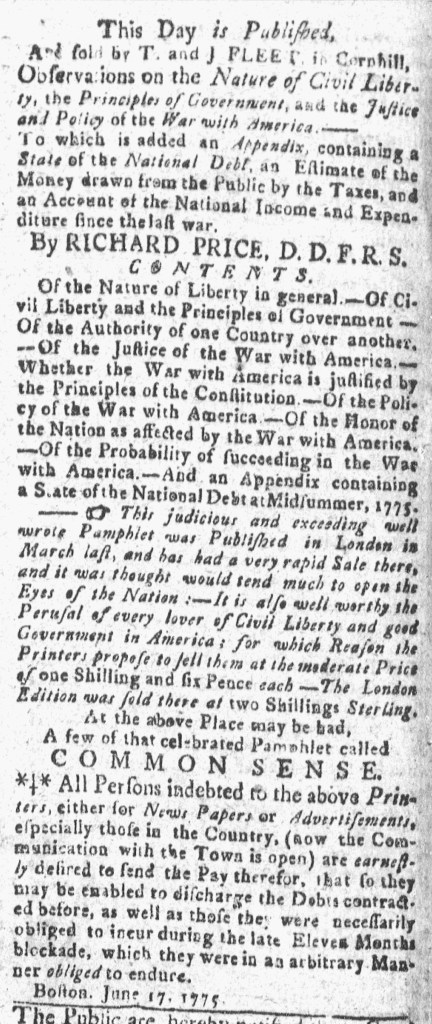
New York Packet (April 25, 1776).

**********

New York Packet (April 25, 1776).

Advertisements for Common Sense Published April 24, 1776

Historians consider Thomas Paine’s Common Sense, published anonymously on January 9, 1776, the most influential political pamphlet that circulated in the colonies during the era of the American Revolution.  Written in plain language accessible to readers of all backgrounds, the pamphlet made a bold case for declaring independence at a time that many colonizers still sought a redress their grievances by George III and Parliament.  Paine’s pamphlet played a vital role in swaying public opinion in favor of declaring independence.

Common Sense was an eighteenth-century bestseller, though Paine wildly overestimated how many copies were published, claiming 150,000 circulated in 1776, and historians later made even more dubious claims that American printing presses produced as many as 500,000 copies.  Contrary to those exaggerations, American printers most likely published between 35,000 and 50,000 copies in 1776.  Scholars have identified twenty-five American editions, more than twice as many as any other American book or pamphlet published in the eighteenth century.

Colonizers certainly discussed Paine’s pamphlet … and printers, booksellers, and others advertised it widely.  As a special feature, the Adverts 250 Project chronicles those advertisements, starting with newspaper notices for Robert Bell’s first edition published in Philadelphia and then subsequent advertisements for that and other editions published and sold throughout the colonies.

These advertisements for Common Sense appeared in American newspapers 250 years ago today.
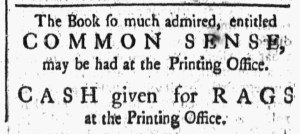
Constitutional Gazette (April 24, 1776).

Advertisements for Common Sense Published April 22, 1776

Historians consider Thomas Paine’s Common Sense, published anonymously on January 9, 1776, the most influential political pamphlet that circulated in the colonies during the era of the American Revolution.  Written in plain language accessible to readers of all backgrounds, the pamphlet made a bold case for declaring independence at a time that many colonizers still sought a redress their grievances by George III and Parliament.  Paine’s pamphlet played a vital role in swaying public opinion in favor of declaring independence.

Common Sense was an eighteenth-century bestseller, though Paine wildly overestimated how many copies were published, claiming 150,000 circulated in 1776, and historians later made even more dubious claims that American printing presses produced as many as 500,000 copies.  Contrary to those exaggerations, American printers most likely published between 35,000 and 50,000 copies in 1776.  Scholars have identified twenty-five American editions, more than twice as many as any other American book or pamphlet published in the eighteenth century.

Colonizers certainly discussed Paine’s pamphlet … and printers, booksellers, and others advertised it widely.  As a special feature, the Adverts 250 Project chronicles those advertisements, starting with newspaper notices for Robert Bell’s first edition published in Philadelphia and then subsequent advertisements for that and other editions published and sold throughout the colonies.

These advertisements for Common Sense appeared in American newspapers 250 years ago today.

Boston-Gazette (April 22, 1776).

**********

New-York Gazette and Weekly Mercury (April 22, 1776).

Advertisements for Common Sense Published April 20, 1776

Historians consider Thomas Paine’s Common Sense, published anonymously on January 9, 1776, the most influential political pamphlet that circulated in the colonies during the era of the American Revolution.  Written in plain language accessible to readers of all backgrounds, the pamphlet made a bold case for declaring independence at a time that many colonizers still sought a redress their grievances by George III and Parliament.  Paine’s pamphlet played a vital role in swaying public opinion in favor of declaring independence.

Common Sense was an eighteenth-century bestseller, though Paine wildly overestimated how many copies were published, claiming 150,000 circulated in 1776, and historians later made even more dubious claims that American printing presses produced as many as 500,000 copies.  Contrary to those exaggerations, American printers most likely published between 35,000 and 50,000 copies in 1776.  Scholars have identified twenty-five American editions, more than twice as many as any other American book or pamphlet published in the eighteenth century.

Colonizers certainly discussed Paine’s pamphlet … and printers, booksellers, and others advertised it widely.  As a special feature, the Adverts 250 Project chronicles those advertisements, starting with newspaper notices for Robert Bell’s first edition published in Philadelphia and then subsequent advertisements for that and other editions published and sold throughout the colonies.

These advertisements for Common Sense appeared in American newspapers 250 years ago today.
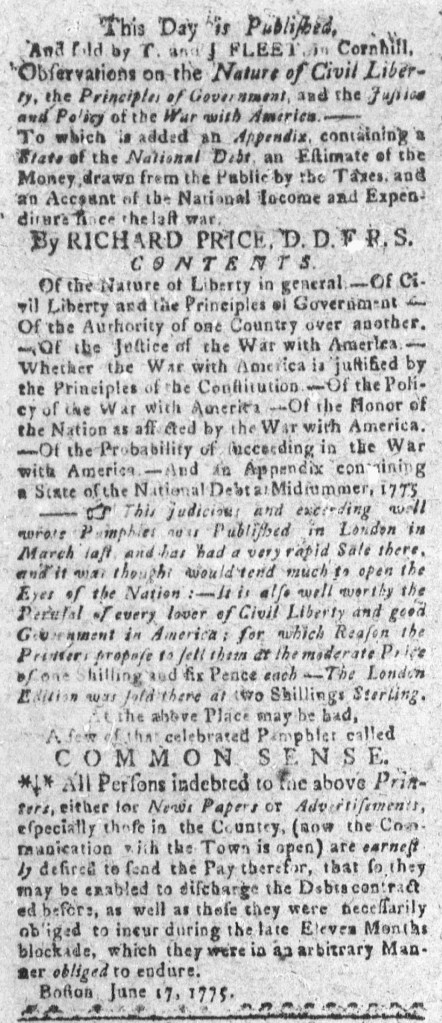
Providence Gazette (April 20, 1776).

Advertisements for Common Sense Published April 19, 1776

Historians consider Thomas Paine’s Common Sense, published anonymously on January 9, 1776, the most influential political pamphlet that circulated in the colonies during the era of the American Revolution.  Written in plain language accessible to readers of all backgrounds, the pamphlet made a bold case for declaring independence at a time that many colonizers still sought a redress their grievances by George III and Parliament.  Paine’s pamphlet played a vital role in swaying public opinion in favor of declaring independence.

Common Sense was an eighteenth-century bestseller, though Paine wildly overestimated how many copies were published, claiming 150,000 circulated in 1776, and historians later made even more dubious claims that American printing presses produced as many as 500,000 copies.  Contrary to those exaggerations, American printers most likely published between 35,000 and 50,000 copies in 1776.  Scholars have identified twenty-five American editions, more than twice as many as any other American book or pamphlet published in the eighteenth century.

Colonizers certainly discussed Paine’s pamphlet … and printers, booksellers, and others advertised it widely.  As a special feature, the Adverts 250 Project chronicles those advertisements, starting with newspaper notices for Robert Bell’s first edition published in Philadelphia and then subsequent advertisements for that and other editions published and sold throughout the colonies.

These advertisements for Common Sense appeared in American newspapers 250 years ago today.
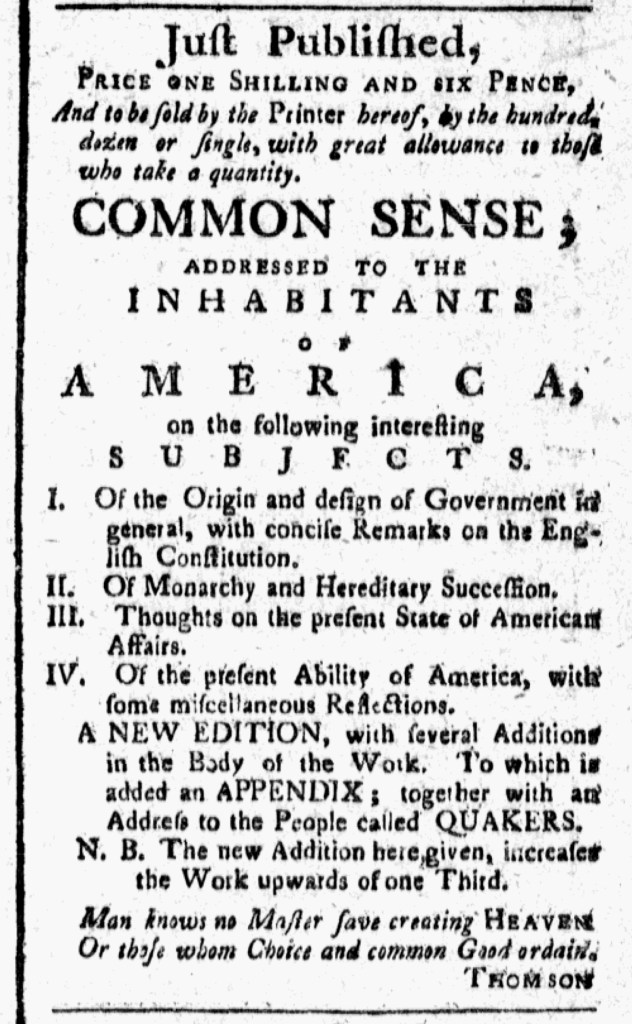
Connecticut Gazette (April 19, 1776).

**********

Essex Journal (April 19, 1776).