Happy Birthday, Isaiah Thomas!

Isaiah Thomas, patriot printer and founder of the American Antiquarian Society, was born on January 19 (New Style) in 1749 (or January 8, 1748/49, Old Style).  It’s quite an historical coincidence that the three most significant printers in eighteenth-century America — Benjamin Franklin, Isaiah Thomas, and Mathew Carey — were all born in January.

isaiah_thomas1818
Isaiah Thomas (January 30, 1739 – April 4, 1831). American Antiquarian Society.

The Adverts 250 Project is possible in large part due to Thomas’s efforts to collect as much early American printed material as he could, originally to write his monumental History of Printing in America.  The newspapers, broadsides, books, almanacs, pamphlets, and other items he gathered in the process eventually became the initial collections of the American Antiquarian Society.  That institution’s ongoing mission to acquire at least one copy of every American imprint through 1876 has yielded an impressive collection of eighteenth-century advertising materials, including newspapers, magazine wrappers, trade cards, billheads, watch papers, book catalogs, subscription notices, broadsides, and a variety of other items.  Exploring the history of advertising in early America — indeed, exploring any topic related to the history, culture, and literature of early America at all — has been facilitated for more than two centuries by the vision of Isaiah Thomas and the dedication of the curators and other specialists at the American Antiquarian Society over the years.

Thomas’s connections to early American advertising were not limited to collecting and preserving the items created on American presses during the colonial, Revolutionary, and early national periods.  Like Mathew Carey, he was at the hub of a network he cultivated for distributing newspapers, books, and other printed goods — including advertising to stimulate demand for those items.  Sometimes this advertising was intended for dissemination to the general public (such as book catalogs and subscription notices), but other times it amounted to trade advertising (such as circular letters and exchange catalogs intended only for fellow printers, publishers, and booksellers).

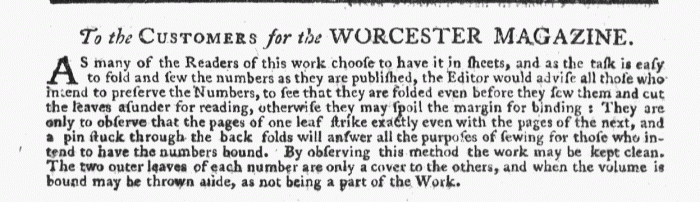
Thomas also experimented with advertising on wrappers that accompanied his Worcester Magazine, though he acknowledged to subscribers that these wrappers were ancillary to the publication:  “The two outer leaves of each number are only a cover to the others, and when the volume is bound may be thrown aside, as not being a part of the Work.”[1]
jan-30-worcerster-magazine-april-1786
Detail of Advertising Wrapper, Worcester Magazine (Second Week of April, 1786).

Thomas’s patriotic commitment to freedom of the press played a significant role in his decision to develop advertising wrappers.  As Thomas relays in his History of Printing in America, he discontinued printing his newspaper, the Massachusetts Spy, after the state legislature passed a law that “laid a duty of two-thirds of a penny on newspapers, and a penny on almanacs, which were to be stamped.”  Such a move met with strong protest since it was too reminiscent of the Stamp Act imposed by the British two decades earlier, prompting the legislature to repeal it before it went into effect.  On its heels, however, “another act was passed, which imposed a duty on all advertisements inserted in the newspapers” printed in Massachusetts.  Thomas vehemently rejected this law as “an improper restraint on the press. He, therefore, discontinued the Spy during the period that this act was in force, which was two years. But he published as a substitute a periodical work, entitled ‘The Worcester Weekly Magazine,’ in octavo.”[2] This weekly magazine lasted for two years; Thomas discontinued it and once again began printing the Spy after the legislature repealed the objectionable act.

jan-30-advertising-wrapper-worcester-magazine-4th-week-may-1786
Third Page of Advertising Wrapper, Worcester Magazine (Fourth Week of May, 1786).

Isaiah Thomas was not interested in advertising for its own sake to the same extent as Mathew Carey, but his political concerns did help to shape the landscape of early American advertising.  Furthermore, his vision for collecting American printed material preserved a variety of advertising media for later generations to admire, analyze, ponder, and enjoy.  Happy 276th birthday, Isaiah Thomas!

**********

[1] Isaiah Thomas, “To the CUSTOMERS for the WORCESTER MAGAZINE,” Worcester Magazine, wrapper, second week of April, 1786.

[2] Isaiah Thomas, The History of Printing in America: With a Biography of Printers, and an Account of Newspapers, vol. 2 (Worcester, MA: Isaac Sturtevant, 1810), 267-268.
October 16

What was advertised in a colonial American magazine 250 years ago this month?

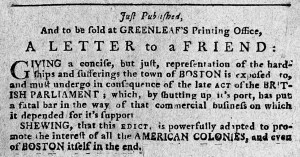
Detail from advertising wrapper: Royal American Magazine (August 1774).

“A concise, but just, representation of the hardships and sufferings of the town of BOSTON.”

For eighteen months, the Adverts 250 Project has been tracing the efforts of, first, Isaiah Thomas and, eventually, Joseph Greenleaf in advertising and publishing the Royal American Magazine.  Newspaper advertisements have definitively demonstrated that the dates associated with most issues did not match when they were published and distributed to subscribers and other readers.  On October 13, 1774, for instance Greenleaf placed advertisements in both the Massachusetts Gazette and Boston Weekly News-Letter and the Massachusetts Spy to announce “This day was published, THE Royal American Magazine, No. 8. For AUGUST, 1774.  In the eighteenth century, magazines usually came out at the end of the month, so readers would have expected to see the September issue advertised in October. Greenleaf continued to work on catching up on delinquent issues after acquiring the magazine from Thomas.

Greenleaf packaged the August issue in wrappers intended to be removed when the subscriber had the monthly issues bound into a single volume.  The pages numbers continued from one issue to the next.  The wrapper supplemented a title page that included a list of contents within the issue; printers intended for the title page to remain after discarding the wrapper.  Unlike modern magazines, advertisements did not appear within the issue.  Instead, they ran only on the wrappers.  The front of the wrapper for the August 1774 issue of the Royal American Magazine featured the same items as the one for July: the coat of arms of Great Britain above the title of the magazine (along with an updated date and issue number), an address to subscribers from Thomas, and an advertisement for “A LETTER to a FRIEND: GIVING a concise, but just, representation of the hardships and sufferings the town of BOSTON is exposed to” available at Greenleaf’s printing office.

What about the back of the wrapper?  That presented a bit of a mystery that cannot be solved solely by examining the digital surrogates.  A list of books and blanks that Greenleaf sold filled the back of the wrapper that accompanied the July issue.  That was also the case for the September issue.  The digitized version of the August issue, however, does not include any trace of the back of the wrapper, not even images of blank pages.  It does include an image of the blank page that was the interior of the front of the wrapper with the impression of the title and date from the other side clearly visible.  The same database includes images of blank pages for the interiors of front and back wrappers for the July and September issues, demonstrating that production of the digital surrogates incorporated careful attention to capturing more than just the contents printed on the numbered pages of those issues.  It stands to reason, then, that if the back of the wrapper had been present with the August issue that it would have been digitized.  Perhaps it had been damaged and removed at some point.  Yet sometimes mistakes happen.  The only way to know for certain is to examine the original document.

Unfortunately, my teaching schedule will not allow me to visit the reading room at the American Antiquarian Society before publishing this entry.  On the other hand, I am fortunate to live and work in the same city as the research library that houses the original magazine that was digitized to make the Royal American Magazine more widely accessible.  That means that I have more ready access to the original and tracking down answers to these sorts of questions than most others who consult the images in the database.  I will update this entry when time allow, but leave this discussion intact since it demonstrates that even though digital surrogates expand access, they cannot replace original sources.

September 18

What was advertised in a colonial American magazine 250 years ago this month?

Advertising wrapper enclosing Royal American Magazine, July 1774 (published September 15, 1774).

“A concise, but just, representation of the hardships and sufferings of the town of BOSTON.”

An advertisement in the September 15, 1774, edition of the Massachusetts Spy informed readers that “NUMBER VII of the ROYAL AMERICAN MAGAZINE” was “This day published” and “will be ready to be delivered, to-morrow, to the subscribers.”  The notice referred to the July edition.  Isaiah Thomas, the original publisher, had always been behind in circulating new issues of the magazine, putting Joseph Greenleaf, the new proprietor, in a position to catch up.  The July issue was his first, published just three weeks after the first announcement that he now oversaw the magazine.

Like other eighteenth-century magazines, the Royal American Magazine did not feature advertisements interspersed among its contents, yet that did not mean that it lacked advertising altogether.  First Thomas and then Greenleaf distributed each issue enclosed in blue paper wrappers that featured advertisements.  In the last quarter of the century, other magazine publishers did the same.  The wrappers protected each issue until subscribers had six of them bound into a volume, though bookbinders usually removed the wrappers and other advertising ephemera, such as trade cards, subscription proposals, and book catalogs, within them.  Bound volumes preserved in research libraries give the impression that advertising was not part of eighteenth-century magazines, yet intact individual issues demonstrate that was not the case at all.

Advertising wrapper enclosing Royal American Magazine, July 1774 (published September 15, 1774).

Over time, the kinds of advertisements on the wrappers evolved to include an array of goods and services, but in the 1770s they almost exclusively came from the book trades and, especially, the publisher of the magazine.  Such was the case with the Royal American Magazine.  The wrappers for the July 1774 issue had a message to the subscribers from Thomas, the same one that announced the change of publisher in the Massachusetts Spy, an advertisement for “A LETTER to a FRIEND: GIVING a concise, but just, representation of the hardships of the town of BOSTON” sold at Greenleaf’s printing office, and a list of books and printed blanks also available from the publisher of the magazine.  The wrappers for the June 1774 edition had included advertisers not affiliated with the magazine, yet still members of the book trades.  Benjamin Edes and John Gill, printers of the Boston-Gazette, advertised “OBSERVATIONS on the ACT of PARLIAMENT, commonly called the BOSTON PORT BILL,” the legislation that resulted in the “hardships of the town” outlined in the pamphlet Greenleaf promoted.  Nathaniel Mills and John Hicks, printers of the Massachusetts Gazette and Boston Post-Boy, advertised an array of books they stocked, while Bernard Romans outlined his “PROPOSALS For printing by Subscription, A CONCISE Natural HISTORY of EAST and WEST FLORIDA.”

The Adverts 250 Project has tracked newspaper advertisements concerning the Royal American Gazette from Thomas’s first mention of his intention to circulate subscription proposals through the publication of the first six issues and transferring the magazine to a new publisher.  That story, however, has not examined the Royal American Magazine as a delivery mechanism for advertising.  Subsequent entries will take a closer look at the advertisements that appeared on the magazine’s wrappers throughout its run.

Happy Birthday, Isaiah Thomas!

Isaiah Thomas, patriot printer and founder of the American Antiquarian Society, was born on January 19 (New Style) in 1749 (or January 8, 1748/49, Old Style).  It’s quite an historical coincidence that the three most significant printers in eighteenth-century America — Benjamin Franklin, Isaiah Thomas, and Mathew Carey — were all born in January.

isaiah_thomas1818
Isaiah Thomas (January 30, 1739 – April 4, 1831). American Antiquarian Society.

The Adverts 250 Project is possible in large part due to Thomas’s efforts to collect as much early American printed material as he could, originally to write his monumental History of Printing in America.  The newspapers, broadsides, books, almanacs, pamphlets, and other items he gathered in the process eventually became the initial collections of the American Antiquarian Society.  That institution’s ongoing mission to acquire at least one copy of every American imprint through 1876 has yielded an impressive collection of eighteenth-century advertising materials, including newspapers, magazine wrappers, trade cards, billheads, watch papers, book catalogs, subscription notices, broadsides, and a variety of other items.  Exploring the history of advertising in early America — indeed, exploring any topic related to the history, culture, and literature of early America at all — has been facilitated for more than two centuries by the vision of Isaiah Thomas and the dedication of the curators and other specialists at the American Antiquarian Society over the years.

Thomas’s connections to early American advertising were not limited to collecting and preserving the items created on American presses during the colonial, Revolutionary, and early national periods.  Like Mathew Carey, he was at the hub of a network he cultivated for distributing newspapers, books, and other printed goods — including advertising to stimulate demand for those items.  Sometimes this advertising was intended for dissemination to the general public (such as book catalogs and subscription notices), but other times it amounted to trade advertising (such as circular letters and exchange catalogs intended only for fellow printers, publishers, and booksellers).

Thomas also experimented with advertising on wrappers that accompanied his Worcester Magazine, though he acknowledged to subscribers that these wrappers were ancillary to the publication:  “The two outer leaves of each number are only a cover to the others, and when the volume is bound may be thrown aside, as not being a part of the Work.”[1]

jan-30-worcerster-magazine-april-1786
Detail of Advertising Wrapper, Worcester Magazine (Second Week of April, 1786).

Thomas’s patriotic commitment to freedom of the press played a significant role in his decision to develop advertising wrappers.  As Thomas relays in his History of Printing in America, he discontinued printing his newspaper, the Massachusetts Spy, after the state legislature passed a law that “laid a duty of two-thirds of a penny on newspapers, and a penny on almanacs, which were to be stamped.”  Such a move met with strong protest since it was too reminiscent of the Stamp Act imposed by the British two decades earlier, prompting the legislature to repeal it before it went into effect.  On its heels, however, “another act was passed, which imposed a duty on all advertisements inserted in the newspapers” printed in Massachusetts.  Thomas vehemently rejected this law as “an improper restraint on the press. He, therefore, discontinued the Spy during the period that this act was in force, which was two years. But he published as a substitute a periodical work, entitled ‘The Worcester Weekly Magazine,’ in octavo.”[2] This weekly magazine lasted for two years; Thomas discontinued it and once again began printing the Spy after the legislature repealed the objectionable act.

jan-30-advertising-wrapper-worcester-magazine-4th-week-may-1786
Third Page of Advertising Wrapper, Worcester Magazine (Fourth Week of May, 1786).

Isaiah Thomas was not interested in advertising for its own sake to the same extent as Mathew Carey, but his political concerns did help to shape the landscape of early American advertising.  Furthermore, his vision for collecting American printed material preserved a variety of advertising media for later generations to admire, analyze, ponder, and enjoy.  Happy 275th birthday, Isaiah Thomas!

**********

[1] Isaiah Thomas, “To the CUSTOMERS for the WORCESTER MAGAZINE,” Worcester Magazine, wrapper, second week of April, 1786.

[2] Isaiah Thomas, The History of Printing in America: With a Biography of Printers, and an Account of Newspapers, vol. 2 (Worcester, MA: Isaac Sturtevant, 1810), 267-268.

Happy Birthday, Isaiah Thomas!

Isaiah Thomas, patriot printer and founder of the American Antiquarian Society, was born on January 19 (New Style) in 1749 (or January 8, 1748/49, Old Style).  It’s quite an historical coincidence that the three most significant printers in eighteenth-century America — Benjamin Franklin, Isaiah Thomas, and Mathew Carey — were all born in January.

isaiah_thomas1818
Isaiah Thomas (January 30, 1739 – April 4, 1831). American Antiquarian Society.

The Adverts 250 Project is possible in large part due to Thomas’s efforts to collect as much early American printed material as he could, originally to write his monumental History of Printing in America.  The newspapers, broadsides, books, almanacs, pamphlets, and other items he gathered in the process eventually became the initial collections of the American Antiquarian Society.  That institution’s ongoing mission to acquire at least one copy of every American imprint through 1876 has yielded an impressive collection of eighteenth-century advertising materials, including newspapers, magazine wrappers, trade cards, billheads, watch papers, book catalogs, subscription notices, broadsides, and a variety of other items.  Exploring the history of advertising in early America — indeed, exploring any topic related to the history, culture, and literature of early America at all — has been facilitated for more than two centuries by the vision of Isaiah Thomas and the dedication of the curators and other specialists at the American Antiquarian Society over the years.

Thomas’s connections to early American advertising were not limited to collecting and preserving the items created on American presses during the colonial, Revolutionary, and early national periods.  Like Mathew Carey, he was at the hub of a network he cultivated for distributing newspapers, books, and other printed goods — including advertising to stimulate demand for those items.  Sometimes this advertising was intended for dissemination to the general public (such as book catalogs and subscription notices), but other times it amounted to trade advertising (such as circular letters and exchange catalogs intended only for fellow printers, publishers, and booksellers).

Thomas also experimented with advertising on wrappers that accompanied his Worcester Magazine, though he acknowledged to subscribers that these wrappers were ancillary to the publication:  “The two outer leaves of each number are only a cover to the others, and when the volume is bound may be thrown aside, as not being a part of the Work.”[1]

jan-30-worcerster-magazine-april-1786
Detail of Advertising Wrapper, Worcester Magazine (Second Week of April, 1786).

Thomas’s patriotic commitment to freedom of the press played a significant role in his decision to develop advertising wrappers.  As Thomas relays in his History of Printing in America, he discontinued printing his newspaper, the Massachusetts Spy, after the state legislature passed a law that “laid a duty of two-thirds of a penny on newspapers, and a penny on almanacs, which were to be stamped.”  Such a move met with strong protest since it was too reminiscent of the Stamp Act imposed by the British two decades earlier, prompting the legislature to repeal it before it went into effect.  On its heels, however, “another act was passed, which imposed a duty on all advertisements inserted in the newspapers” printed in Massachusetts.  Thomas vehemently rejected this law as “an improper restraint on the press. He, therefore, discontinued the Spy during the period that this act was in force, which was two years. But he published as a substitute a periodical work, entitled ‘The Worcester Weekly Magazine,’ in octavo.”[2] This weekly magazine lasted for two years; Thomas discontinued it and once again began printing the Spy after the legislature repealed the objectionable act.

jan-30-advertising-wrapper-worcester-magazine-4th-week-may-1786
Third Page of Advertising Wrapper, Worcester Magazine (Fourth Week of May, 1786).

Isaiah Thomas was not interested in advertising for its own sake to the same extent as Mathew Carey, but his political concerns did help to shape the landscape of early American advertising.  Furthermore, his vision for collecting American printed material preserved a variety of advertising media for later generations to admire, analyze, ponder, and enjoy.  Happy 274th birthday, Isaiah Thomas!

**********

[1] Isaiah Thomas, “To the CUSTOMERS for the WORCESTER MAGAZINE,” Worcester Magazine, wrapper, second week of April, 1786.

[2] Isaiah Thomas, The History of Printing in America: With a Biography of Printers, and an Account of Newspapers, vol. 2 (Worcester, MA: Isaac Sturtevant, 1810), 267-268.

Happy Birthday, Isaiah Thomas!

Isaiah Thomas, patriot printer and founder of the American Antiquarian Society, was born on January 19 (New Style) in 1749 (or January 8, 1748/49, Old Style).  It’s quite an historical coincidence that the three most significant printers in eighteenth-century America — Benjamin Franklin, Isaiah Thomas, and Mathew Carey — were all born in January.

isaiah_thomas1818
Isaiah Thomas (January 30, 1739 – April 4, 1831). American Antiquarian Society.

The Adverts 250 Project is possible in large part due to Thomas’s efforts to collect as much early American printed material as he could, originally to write his monumental History of Printing in America.  The newspapers, broadsides, books, almanacs, pamphlets, and other items he gathered in the process eventually became the initial collections of the American Antiquarian Society.  That institution’s ongoing mission to acquire at least one copy of every American imprint through 1876 has yielded an impressive collection of eighteenth-century advertising materials, including newspapers, magazine wrappers, trade cards, billheads, watch papers, book catalogs, subscription notices, broadsides, and a variety of other items.  Exploring the history of advertising in early America — indeed, exploring any topic related to the history, culture, and literature of early America at all — has been facilitated for more than two centuries by the vision of Isaiah Thomas and the dedication of the curators and other specialists at the American Antiquarian Society over the years.

Thomas’s connections to early American advertising were not limited to collecting and preserving the items created on American presses during the colonial, Revolutionary, and early national periods.  Like Mathew Carey, he was at the hub of a network he cultivated for distributing newspapers, books, and other printed goods — including advertising to stimulate demand for those items.  Sometimes this advertising was intended for dissemination to the general public (such as book catalogs and subscription notices), but other times it amounted to trade advertising (such as circular letters and exchange catalogs intended only for fellow printers, publishers, and booksellers).

Thomas also experimented with advertising on wrappers that accompanied his Worcester Magazine, though he acknowledged to subscribers that these wrappers were ancillary to the publication:  “The two outer leaves of each number are only a cover to the others, and when the volume is bound may be thrown aside, as not being a part of the Work.”[1]

jan-30-worcerster-magazine-april-1786
Detail of Advertising Wrapper, Worcester Magazine (Second Week of April, 1786).

Thomas’s patriotic commitment to freedom of the press played a significant role in his decision to develop advertising wrappers.  As Thomas relays in his History of Printing in America, he discontinued printing his newspaper, the Massachusetts Spy, after the state legislature passed a law that “laid a duty of two-thirds of a penny on newspapers, and a penny on almanacs, which were to be stamped.”  Such a move met with strong protest since it was too reminiscent of the Stamp Act imposed by the British two decades earlier, prompting the legislature to repeal it before it went into effect.  On its heels, however, “another act was passed, which imposed a duty on all advertisements inserted in the newspapers” printed in Massachusetts.  Thomas vehemently rejected this law as “an improper restraint on the press. He, therefore, discontinued the Spy during the period that this act was in force, which was two years. But he published as a substitute a periodical work, entitled ‘The Worcester Weekly Magazine,’ in octavo.”[2] This weekly magazine lasted for two years; Thomas discontinued it and once again began printing the Spy after the legislature repealed the objectionable act.

jan-30-advertising-wrapper-worcester-magazine-4th-week-may-1786
Third Page of Advertising Wrapper, Worcester Magazine (Fourth Week of May, 1786).

Isaiah Thomas was not interested in advertising for its own sake to the same extent as Mathew Carey, but his political concerns did help to shape the landscape of early American advertising.  Furthermore, his vision for collecting American printed material preserved a variety of advertising media for later generations to admire, analyze, ponder, and enjoy.  Happy 273rd birthday, Isaiah Thomas!

**********

[1] Isaiah Thomas, “To the CUSTOMERS for the WORCESTER MAGAZINE,” Worcester Magazine, wrapper, second week of April, 1786.

[2] Isaiah Thomas, The History of Printing in America: With a Biography of Printers, and an Account of Newspapers, vol. 2 (Worcester, MA: Isaac Sturtevant, 1810), 267-268.

Happy Birthday, Isaiah Thomas!

Isaiah Thomas, patriot printer and founder of the American Antiquarian Society, was born on January 19 (New Style) in 1749 (or January 8, 1748/49, Old Style).  It’s quite an historical coincidence that the three most significant printers in eighteenth-century America — Benjamin Franklin, Isaiah Thomas, and Mathew Carey — were all born in January.

isaiah_thomas1818
Isaiah Thomas (January 30, 1739 – April 4, 1831). American Antiquarian Society.

The Adverts 250 Project is possible in large part due to Thomas’s efforts to collect as much early American printed material as he could, originally to write his monumental History of Printing in America.  The newspapers, broadsides, books, almanacs, pamphlets, and other items he gathered in the process eventually became the initial collections of the American Antiquarian Society.  That institution’s ongoing mission to acquire at least one copy of every American imprint through 1876 has yielded an impressive collection of eighteenth-century advertising materials, including newspapers, magazine wrappers, trade cards, billheads, watch papers, book catalogs, subscription notices, broadsides, and a variety of other items.  Exploring the history of advertising in early America — indeed, exploring any topic related to the history, culture, and literature of early America at all — has been facilitated for more than two centuries by the vision of Isaiah Thomas and the dedication of the curators and other specialists at the American Antiquarian Society over the years.

Thomas’s connections to early American advertising were not limited to collecting and preserving the items created on American presses during the colonial, Revolutionary, and early national periods.  Like Mathew Carey, he was at the hub of a network he cultivated for distributing newspapers, books, and other printed goods — including advertising to stimulate demand for those items.  Sometimes this advertising was intended for dissemination to the general public (such as book catalogs and subscription notices), but other times it amounted to trade advertising (such as circular letters and exchange catalogs intended only for fellow printers, publishers, and booksellers).

Thomas also experimented with advertising on wrappers that accompanied his Worcester Magazine, though he acknowledged to subscribers that these wrappers were ancillary to the publication:  “The two outer leaves of each number are only a cover to the others, and when the volume is bound may be thrown aside, as not being a part of the Work.”[1]

jan-30-worcerster-magazine-april-1786
Detail of Advertising Wrapper, Worcester Magazine (Second Week of April, 1786).

Thomas’s patriotic commitment to freedom of the press played a significant role in his decision to develop advertising wrappers.  As Thomas relays in his History of Printing in America, he discontinued printing his newspaper, the Massachusetts Spy, after the state legislature passed a law that “laid a duty of two-thirds of a penny on newspapers, and a penny on almanacs, which were to be stamped.”  Such a move met with strong protest since it was too reminiscent of the Stamp Act imposed by the British two decades earlier, prompting the legislature to repeal it before it went into effect.  On its heels, however, “another act was passed, which imposed a duty on all advertisements inserted in the newspapers” printed in Massachusetts.  Thomas vehemently rejected this law as “an improper restraint on the press. He, therefore, discontinued the Spy during the period that this act was in force, which was two years. But he published as a substitute a periodical work, entitled ‘The Worcester Weekly Magazine,’ in octavo.”[2] This weekly magazine lasted for two years; Thomas discontinued it and once again began printing the Spy after the legislature repealed the objectionable act.

jan-30-advertising-wrapper-worcester-magazine-4th-week-may-1786
Third Page of Advertising Wrapper, Worcester Magazine (Fourth Week of May, 1786).

Isaiah Thomas was not interested in advertising for its own sake to the same extent as Mathew Carey, but his political concerns did help to shape the landscape of early American advertising.  Furthermore, his vision for collecting American printed material preserved a variety of advertising media for later generations to admire, analyze, ponder, and enjoy.  Happy 272nd birthday, Isaiah Thomas!

**********

[1] Isaiah Thomas, “To the CUSTOMERS for the WORCESTER MAGAZINE,” Worcester Magazine, wrapper, second week of April, 1786.

[2] Isaiah Thomas, The History of Printing in America: With a Biography of Printers, and an Account of Newspapers, vol. 2 (Worcester, MA: Isaac Sturtevant, 1810), 267-268.

Happy Birthday, Isaiah Thomas!

Isaiah Thomas, patriot printer and founder of the American Antiquarian Society, was born on January 19 (New Style) in 1749 (or January 8, 1748/49, Old Style). It’s quite an historical coincidence that the three most significant printers in eighteenth-century America — Benjamin Franklin, Isaiah Thomas, and Mathew Carey — were all born in January.

isaiah_thomas1818
Isaiah Thomas (January 30, 1739 – April 4, 1831). American Antiquarian Society.

The Adverts 250 Project is possible in large part due to Thomas’s efforts to collect as much early American printed material as he could, originally to write his monumental History of Printing in America.  The newspapers, broadsides, books, almanacs, pamphlets, and other items he gathered in the process eventually became the initial collections of the American Antiquarian Society.  That institution’s ongoing mission to acquire at least one copy of every American imprint through 1876 has yielded an impressive collection of eighteenth-century advertising materials, including newspapers, magazine wrappers, trade cards, billheads, watch papers, book catalogs, subscription notices, broadsides, and a variety of other items.  Exploring the history of advertising in early America — indeed, exploring any topic related to the history, culture, and literature of early America at all — has been facilitated for more than two centuries by the vision of Isaiah Thomas and the dedication of the curators and other specialists at the American Antiquarian Society over the years.

Thomas’s connections to early American advertising were not limited to collecting and preserving the items created on American presses during the colonial, Revolutionary, and early national periods.  Like Mathew Carey, he was at the hub of a network he cultivated for distributing newspapers, books, and other printed goods — including advertising to stimulate demand for those items.  Sometimes this advertising was intended for dissemination to the general public (such as book catalogs and subscription notices), but other times it amounted to trade advertising (such as circular letters and exchange catalogs intended only for fellow printers, publishers, and booksellers).

Thomas also experimented with advertising on wrappers that accompanied his Worcester Magazine, though he acknowledged to subscribers that these wrappers were ancillary to the publication:  “The two outer leaves of each number are only a cover to the others, and when the volume is bound may be thrown aside, as not being a part of the Work.”[1]

jan-30-worcerster-magazine-april-1786
Detail of Advertising Wrapper, Worcester Magazine (Second Week of April, 1786).

Thomas’s patriotic commitment to freedom of the press played a significant role in his decision to develop advertising wrappers.  As Thomas relays in his History of Printing in America, he discontinued printing his newspaper, the Massachusetts Spy, after the state legislature passed a law that “laid a duty of two-thirds of a penny on newspapers, and a penny on almanacs, which were to be stamped.”  Such a move met with strong protest since it was too reminiscent of the Stamp Act imposed by the British two decades earlier, prompting the legislature to repeal it before it went into effect.  On its heels, however, “another act was passed, which imposed a duty on all advertisements inserted in the newspapers” printed in Massachusetts.  Thomas vehemently rejected this law as “an improper restraint on the press. He, therefore, discontinued the Spy during the period that this act was in force, which was two years. But he published as a substitute a periodical work, entitled ‘The Worcester Weekly Magazine,’ in octavo.”[2] This weekly magazine lasted for two years; Thomas discontinued it and once again began printing the Spy after the legislature repealed the objectionable act.

jan-30-advertising-wrapper-worcester-magazine-4th-week-may-1786
Third Page of Advertising Wrapper, Worcester Magazine (Fourth Week of May, 1786).

Isaiah Thomas was not interested in advertising for its own sake to the same extent as Mathew Carey, but his political concerns did help to shape the landscape of early American advertising.  Furthermore, his vision for collecting American printed material preserved a variety of advertising media for later generations to admire, analyze, ponder, and enjoy.  Happy 271st birthday, Isaiah Thomas!

**********

[1] Isaiah Thomas, “To the CUSTOMERS for the WORCESTER MAGAZINE,” Worcester Magazine, wrapper, second week of April, 1786.

[2] Isaiah Thomas, The History of Printing in America: With a Biography of Printers, and an Account of Newspapers, vol. 2 (Worcester, MA: Isaac Sturtevant, 1810), 267-268.

Happy Birthday, Isaiah Thomas!

Isaiah Thomas, patriot printer and founder of the American Antiquarian Society, was born on January 19 (New Style) in 1749 (or January 8, 1748/49, Old Style). It’s quite an historical coincidence that the three most significant printers in eighteenth-century America — Benjamin Franklin, Isaiah Thomas, and Mathew Carey — were all born in January.

isaiah_thomas1818
Isaiah Thomas (January 30, 1739 – April 4, 1831). American Antiquarian Society.

The Adverts 250 Project is possible in large part due to Thomas’s efforts to collect as much early American printed material as he could, originally to write his monumental History of Printing in America.  The newspapers, broadsides, books, almanacs, pamphlets, and other items he gathered in the process eventually became the initial collections of the American Antiquarian Society.  That institution’s ongoing mission to acquire at least one copy of every American imprint through 1876 has yielded an impressive collection of eighteenth-century advertising materials, including newspapers, magazine wrappers, trade cards, billheads, watch papers, book catalogs, subscription notices, broadsides, and a variety of other items.  Exploring the history of advertising in early America — indeed, exploring any topic related to the history, culture, and literature of early America at all — has been facilitated for more than two centuries by the vision of Isaiah Thomas and the dedication of the curators and other specialists at the American Antiquarian Society over the years.

Thomas’s connections to early American advertising were not limited to collecting and preserving the items created on American presses during the colonial, Revolutionary, and early national periods.  Like Mathew Carey, he was at the hub of a network he cultivated for distributing newspapers, books, and other printed goods — including advertising to stimulate demand for those items.  Sometimes this advertising was intended for dissemination to the general public (such as book catalogs and subscription notices), but other times it amounted to trade advertising (such as circular letters and exchange catalogs intended only for fellow printers, publishers, and booksellers).

Thomas also experimented with advertising on wrappers that accompanied his Worcester Magazine, though he acknowledged to subscribers that these wrappers were ancillary to the publication:  “The two outer leaves of each number are only a cover to the others, and when the volume is bound may be thrown aside, as not being a part of the Work.”[1]

jan-30-worcerster-magazine-april-1786
Detail of Advertising Wrapper, Worcester Magazine (Second Week of April, 1786).

Thomas’s patriotic commitment to freedom of the press played a significant role in his decision to develop advertising wrappers.  As Thomas relays in his History of Printing in America, he discontinued printing his newspaper, the Massachusetts Spy, after the state legislature passed a law that “laid a duty of two-thirds of a penny on newspapers, and a penny on almanacs, which were to be stamped.”  Such a move met with strong protest since it was too reminiscent of the Stamp Act imposed by the British two decades earlier, prompting the legislature to repeal it before it went into effect.  On its heels, however, “another act was passed, which imposed a duty on all advertisements inserted in the newspapers” printed in Massachusetts.  Thomas vehemently rejected this law as “an improper restraint on the press. He, therefore, discontinued the Spy during the period that this act was in force, which was two years. But he published as a substitute a periodical work, entitled ‘The Worcester Weekly Magazine,’ in octavo.”[2] This weekly magazine lasted for two years; Thomas discontinued it and once again began printing the Spy after the legislature repealed the objectionable act.

jan-30-advertising-wrapper-worcester-magazine-4th-week-may-1786
Third Page of Advertising Wrapper, Worcester Magazine (Fourth Week of May, 1786).

Isaiah Thomas was not interested in advertising for its own sake to the same extent as Mathew Carey, but his political concerns did help to shape the landscape of early American advertising.  Furthermore, his vision for collecting American printed material preserved a variety of advertising media for later generations to admire, analyze, ponder, and enjoy.  Happy 270th birthday, Isaiah Thomas!

**********

[1] Isaiah Thomas, “To the CUSTOMERS for the WORCESTER MAGAZINE,” Worcester Magazine, wrapper, second week of April, 1786.

[2] Isaiah Thomas, The History of Printing in America: With a Biography of Printers, and an Account of Newspapers, vol. 2 (Worcester, MA: Isaac Sturtevant, 1810), 267-268.

Happy Birthday, Isaiah Thomas!

Isaiah Thomas, patriot printer and founder of the American Antiquarian Society, was born on January 19 (New Style) in 1749 (or January 8, 1748/49, Old Style). It’s quite an historical coincidence that the three most significant printers in eighteenth-century America — Benjamin Franklin, Isaiah Thomas, and Mathew Carey — were all born in January.

isaiah_thomas1818
Isaiah Thomas (January 30, 1739 – April 4, 1831). American Antiquarian Society.

The Adverts 250 Project is possible in large part due to Thomas’s efforts to collect as much early American printed material as he could, originally to write his monumental History of Printing in America.  The newspapers, broadsides, books, almanacs, pamphlets, and other items he gathered in the process eventually became the initial collections of the American Antiquarian Society.  That institution’s ongoing mission to acquire at least one copy of every American imprint through 1876 has yielded an impressive collection of eighteenth-century advertising materials, including newspapers, magazine wrappers, trade cards, billheads, watch papers, book catalogs, subscription notices, broadsides, and a variety of other items.  Exploring the history of advertising in early America — indeed, exploring any topic related to the history, culture, and literature of early America at all — has been facilitated for more than two centuries by the vision of Isaiah Thomas and the dedication of the curators and other specialists at the American Antiquarian Society over the years.

Thomas’s connections to early American advertising were not limited to collecting and preserving the items created on American presses during the colonial, Revolutionary, and early national periods.  Like Mathew Carey, he was at the hub of a network he cultivated for distributing newspapers, books, and other printed goods — including advertising to stimulate demand for those items.  Sometimes this advertising was intended for dissemination to the general public (such as book catalogs and subscription notices), but other times it amounted to trade advertising (such as circular letters and exchange catalogs intended only for fellow printers, publishers, and booksellers).

Thomas also experimented with advertising on wrappers that accompanied his Worcester Magazine, though he acknowledged to subscribers that these wrappers were ancillary to the publication:  “The two outer leaves of each number are only a cover to the others, and when the volume is bound may be thrown aside, as not being a part of the Work.”[1]

jan-30-worcerster-magazine-april-1786
Detail of Advertising Wrapper, Worcester Magazine (Second Week of April, 1786).

Thomas’s patriotic commitment to freedom of the press played a significant role in his decision to develop advertising wrappers.  As Thomas relays in his History of Printing in America, he discontinued printing his newspaper, the Massachusetts Spy, after the state legislature passed a law that “laid a duty of two-thirds of a penny on newspapers, and a penny on almanacs, which were to be stamped.”  Such a move met with strong protest since it was too reminiscent of the Stamp Act imposed by the British two decades earlier, prompting the legislature to repeal it before it went into effect.  On its heels, however, “another act was passed, which imposed a duty on all advertisements inserted in the newspapers” printed in Massachusetts.  Thomas vehemently rejected this law as “an improper restraint on the press. He, therefore, discontinued the Spy during the period that this act was in force, which was two years. But he published as a substitute a periodical work, entitled ‘The Worcester Weekly Magazine,’ in octavo.”[2] This weekly magazine lasted for two years; Thomas discontinued it and once again began printing the Spy after the legislature repealed the objectionable act.

jan-30-advertising-wrapper-worcester-magazine-4th-week-may-1786
Third Page of Advertising Wrapper, Worcester Magazine (Fourth Week of May, 1786).

Isaiah Thomas was not interested in advertising for its own sake to the same extent as Mathew Carey, but his political concerns did help to shape the landscape of early American advertising.  Furthermore, his vision for collecting American printed material preserved a variety of advertising media for later generations to admire, analyze, ponder, and enjoy.  Happy 269th birthday, Isaiah Thomas!

**********

[1] Isaiah Thomas, “To the CUSTOMERS for the WORCESTER MAGAZINE,” Worcester Magazine, wrapper, second week of April, 1786.

[2] Isaiah Thomas, The History of Printing in America: With a Biography of Printers, and an Account of Newspapers, vol. 2 (Worcester, MA: Isaac Sturtevant, 1810), 267-268.