May 31

What was advertised in a revolutionary American newspaper 250 years ago today?
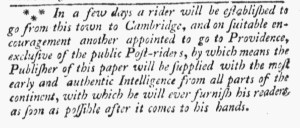
Massachusetts Spy (May 31, 1775).

The Publisher of this paper will be supplied with the most early and authentic Intelligence from all parts of the continent.”

Four weeks after commencing publication of the Massachusetts Spy in Worcester at the beginning of May 1775, Isaiah Thomas continued building the infrastructure necessary to operate a successful newspaper.  The Massachusetts Spy had been published in Boston since July 1770, but Thomas removed his press from the city and sent it to Worcester shortly before the battles at Lexington and Concord.  He had previously intended to install a junior partner in a printing office in Worcester and oversee publication of a new newspaper from afar, but he became increasingly nervous about remaining in Boston since his ardent advocacy for the patriot cause drew the attention of British officials and Loyalist colonizers. Fearing for his safety, he revised his plans, removing the Massachusetts Spy to Worcester and giving it a new secondary title, American Oracle of Liberty.

In the May 31 edition, Thomas continued to run subscription proposals that gave information about the newspaper, including its size (“large folio”), day of publication (“every WEDNESDAY Morning, as early as possible), and price (“Six Shillings and Eight Pence per annum”).  He also solicited advertisements and listed about two dozen local agents who accepted subscriptions in various towns in Worcester County.  In addition to the subscription proposals, Thomas inserted a new notice that announced, “In a few days a rider will be established to go from this town to Cambridge,” where the Massachusetts Provincial Congress met during the siege of Boston, “and on suitable encouragement another appointed to go to Providence, exclusive of the public Post-riders.”  Why did Thomas hire his own riders?  He explained that “the publisher of this paper will be supplied with the most early and authentic Intelligence from all parts of the continent,” the latest news “which he will ever furnish his readers, as soon as possible after it comes to his hands.”  Although Worcester is the second largest city in New England today, it was a small town in 1775.  It was not a hub for collecting information about current events, but Thomas aimed to change that.  He devised a plan for getting letters from Cambridge and newspaper from throughout the colonies via Providence.  Moving the Massachusetts Spy to Worcester meant establishing new means of gathering the news to collate into the newspaper to keep readers well informed.  Thomas was so committed to that endeavor that he employed his own riders rather than depending solely on those who already had routes that connected Worcester to Cambridge or Providence.

Slavery Advertisements Published May 31, 1775

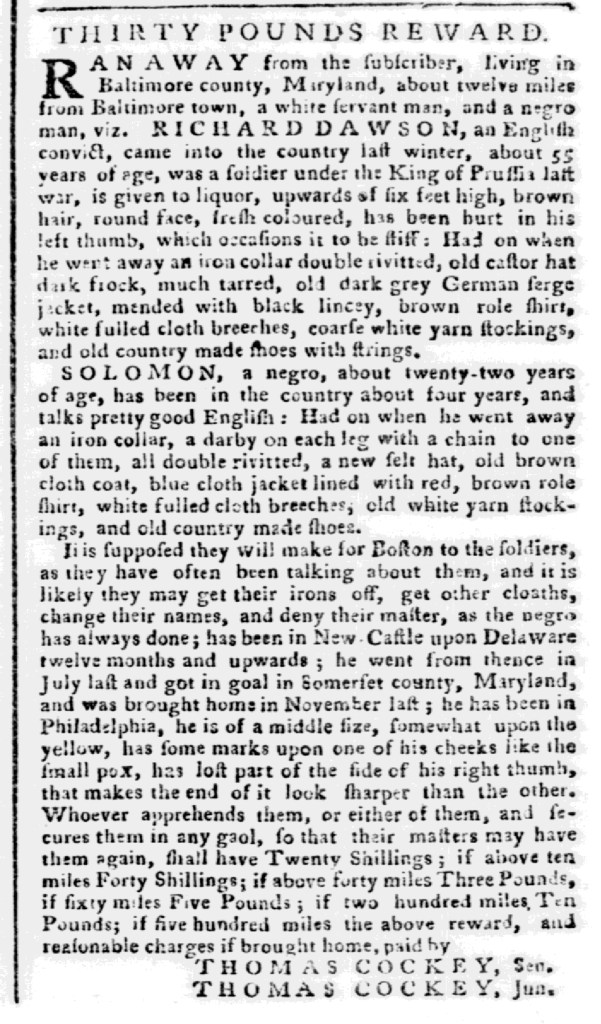
The Slavery Adverts 250 Project chronicles the role of newspaper advertising in perpetuating slavery in the era of the American Revolution. The project seeks to reveal the ubiquity of slavery in eighteenth-century life from New England to Georgia by republishing advertisements about enslaved people – for sale as individuals or in groups, wanted to purchase or for hire for short periods, runaways who liberated themselves, and those who were subsequently captured and confined in jails and workhouses – in daily digests on this site as well as in real time via the @SlaveAdverts250 Twitter feed, utilizing twenty-first-century media to stand in for the print media of the eighteenth century.

The project aims to provide modern audiences with a sense of just how often colonizers encountered these advertisements in their daily lives. Enslaved men, women, and children appeared in print somewhere in the colonies almost every single day. Those advertisements served as a constant backdrop for social, cultural, economic, and political life in colonial and revolutionary America. Colonizers who did not purport to own enslaved people were still confronted with slavery as well as invited to maintain the system by purchasing enslaved men, women, and children or assisting in the capture of so-called “runaways” who sought to free themselves from bondage. The frequency of these newspaper advertisements suggests just how embedded slavery was in colonial and revolutionary American culture in everyday interactions beyond the printed page.

These advertisements also testify to the experiences of enslaved men, women, and children, though readers must consider that those experiences have been remediated through descriptions offered by enslavers rather than enslaved people themselves. Often unnamed in the advertisements, enslaved men, women, and children were not invisible or unimportant in early America.

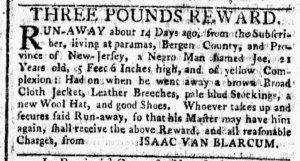
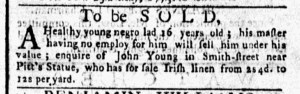
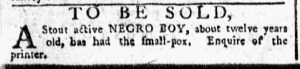
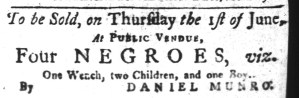
These advertisements appeared in colonial American newspapers 250 years ago today.

Maryland Journal (May 31, 1775).

**********

Pennsylvania Journal (May 31, 1775).

May 30

What was advertised in a revolutionary American newspaper 250 years ago today?

South-Carolina Gazette and Country Journal (May 30, 1775).

“Dr. KEYSER’s GENUINE PILLS, With FULL DIRECTIONS for their Use in all CASES.”

Like many eighteenth-century printers, Charles Crouch, the printer of the South-Carolina Gazette and Country Journal, sold patent medicines as a side hustle to supplement revenues from newspaper subscriptions, advertisements, job printing, and selling books and writing supplies.  In the May 30, 1775, edition of his newspaper, for instance, he ran an advertisement for a “FRESH PARCEL of Dr. KEYSER’s GENUINE PILLS.”  He did not need to explain that the pills treated venereal diseases because they were so familiar to consumers, but that did make it necessary to assure the public that he carried the “GENUINE” item rather than imitations or counterfeits.  Crouch also stocked “Dr. BOERHAAVE’s GRAND BALSAM of HEALTH.”  Realizing that many prospective customers would have been less familiar with this “admirable Remedy,” the printer explained that they could take it for “the dry Belly-Ach, Cholic, Griping in the Bowels, [and] Pain in the Stomach.”  In addition, the balsam “cleanses the Stomach.”  Today, many consumers have favorite over-the-counter medicines for similar symptoms.

Crouch realized that treating venereal disease was a sensitive subject and that customers purchasing Keyser’s Pills wanted to use them correctly and effectively.  He promised in his advertisement that he provided “FULL DIRECTIONS for their Use in all CASES.”  Doing so also minimized the amount of contact between the purchaser and the seller.  Customers did not need to visit an apothecary and go over how to use the medication.  Instead, they could visit the printer, ask for the pills and the directions, and avoid additional interaction.  Some may have even requested Keyser’s Pills along with other items, perhaps ink powder or a recent political pamphlet, to draw attention away from a purchase that caused embarrassment or discomfort.  Crouch also assured prospective customers that the pills were effective, inviting them to examine a “NARRATIVE of the Effects of Dr. KEYSER’s MEDICINE, with an Account of his ANALYSIS, by the Members of the Royal Academy of Sciences.”  Perusing those accounts did require more interaction between buyer and seller, but Crouch may have believed that some readers would have considered it sufficient to know that they were available.  That the printer could provide documentation upon request increased trust in the remedy.

The advertisement for Keyser’s Pills and Boerhaave’s Grand Balsam appeared immediately above a notice listing more than a dozen kinds of printed blanks commonly used for commercial and legal transactions.  Beyond publishing the South-Carolina and Country Journal, Crouch generated revenue through a variety of other means, some of them more closely related to printing than others.  He could earn money with both printed blanks and patent medicines, especially when he deployed savvy marketing.

Slavery Advertisements Published May 30, 1775

The Slavery Adverts 250 Project chronicles the role of newspaper advertising in perpetuating slavery in the era of the American Revolution. The project seeks to reveal the ubiquity of slavery in eighteenth-century life from New England to Georgia by republishing advertisements about enslaved people – for sale as individuals or in groups, wanted to purchase or for hire for short periods, runaways who liberated themselves, and those who were subsequently captured and confined in jails and workhouses – in daily digests on this site as well as in real time via the @SlaveAdverts250 Twitter feed, utilizing twenty-first-century media to stand in for the print media of the eighteenth century.

The project aims to provide modern audiences with a sense of just how often colonizers encountered these advertisements in their daily lives. Enslaved men, women, and children appeared in print somewhere in the colonies almost every single day. Those advertisements served as a constant backdrop for social, cultural, economic, and political life in colonial and revolutionary America. Colonizers who did not purport to own enslaved people were still confronted with slavery as well as invited to maintain the system by purchasing enslaved men, women, and children or assisting in the capture of so-called “runaways” who sought to free themselves from bondage. The frequency of these newspaper advertisements suggests just how embedded slavery was in colonial and revolutionary American culture in everyday interactions beyond the printed page.

These advertisements also testify to the experiences of enslaved men, women, and children, though readers must consider that those experiences have been remediated through descriptions offered by enslavers rather than enslaved people themselves. Often unnamed in the advertisements, enslaved men, women, and children were not invisible or unimportant in early America.

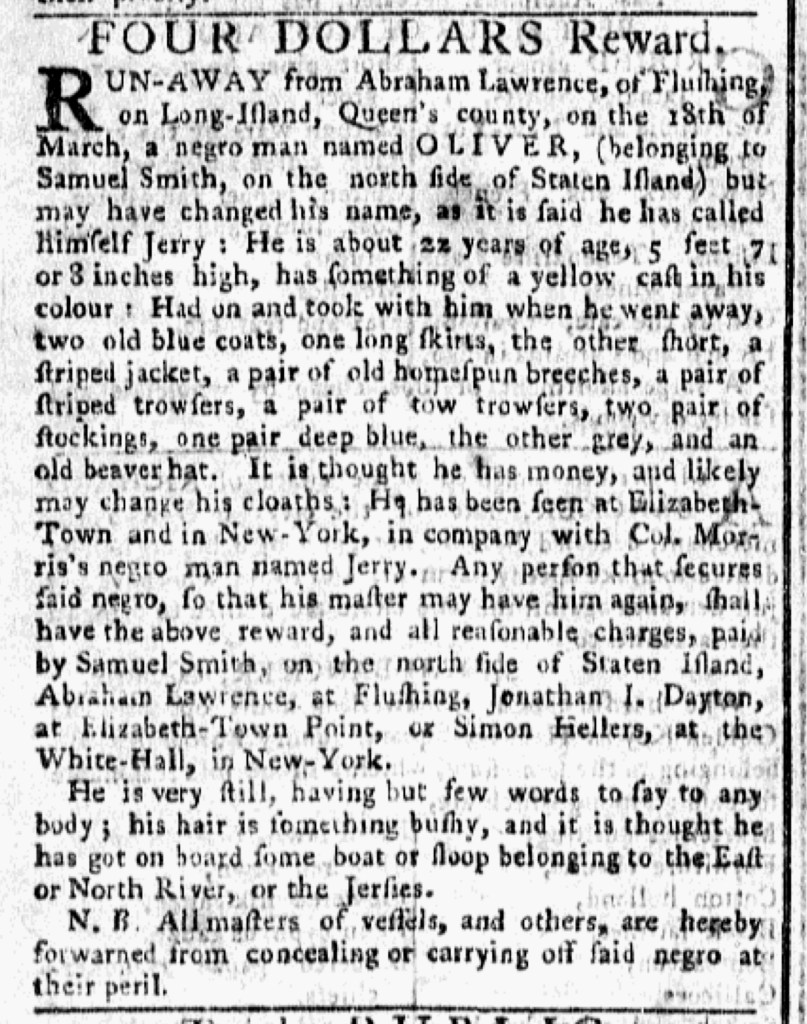
These advertisements appeared in colonial American newspapers 250 years ago today.

Dunlap’s Maryland Gazette (May 30, 1775).

**********

South-Carolina Gazette and Country Journal (May 30, 1775).

**********

South-Carolina Gazette and Country Journal (May 30, 1775).

**********

South-Carolina Gazette and Country Journal (May 30, 1775).

**********

South-Carolina Gazette and Country Journal (May 30, 1775).

**********

South-Carolina Gazette and Country Journal (May 30, 1775).

**********

South-Carolina Gazette and Country Journal (May 30, 1775).

**********

South-Carolina Gazette and Country Journal (May 30, 1775).

**********

South-Carolina Gazette and Country Journal (May 30, 1775).

**********

South-Carolina Gazette and Country Journal (May 30, 1775).

**********

South-Carolina Gazette and Country Journal (May 30, 1775).

**********

South-Carolina Gazette and Country Journal (May 30, 1775).

**********

South-Carolina Gazette and Country Journal (May 30, 1775).

**********

South-Carolina Gazette and Country Journal (May 30, 1775).

**********

South-Carolina Gazette and Country Journal (May 30, 1775).

**********

South-Carolina Gazette and Country Journal (May 30, 1775).

May 29

What was advertised in a revolutionary American newspaper 250 years ago today?

New-York Gazette and Weekly Mercury (May 29, 1775).

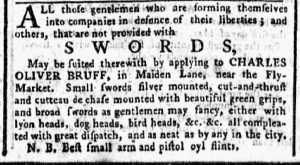
“Small swords silver mounted … and broad swords as gentlemen may fancy.”

Charles Oliver Bruff, a goldsmith and jeweler who kept a shop at the “sign of the tea-pot, tankard, and ear-ring,” placed a familiar advertisement in the May 29, 1775, edition of the New-York Gazette and Weekly Mercury.  By then it had appeared several times, likely drawing the attention of readers because a woodcut depicting several items made by Bruff adorned the advertisement.  It showed a looking class, a ring, a buckle, and an earning.  It also featured a coat of arms, a sample of the “arms, crests, cyphers, heads and fancies” that he engraved.  The goldsmith and jeweler also declared that he ornamented his wares with “emblems of liberty” for customers who wished to make political statements with their rings, brooches, and other accessories.

New-York Gazette and Weekly Mercury (May 29, 1775).

In the wake of current events, including the battles at Lexington and Concord and the ongoing siege of Boston, Bruff decided to insert a second advertisement in the New-York Gazette and Weekly Mercury.  He placed it for the purpose of promoting “SWORDS” to “ALL those gentlemen who are forming themselves into companies in defence of their liberties.”  He offered “[s]mall swords silver mounted, cut-and thrust and cutteau de chase mounted with beautiful green grips, and broad swords as gentlemen may fancy,” decorating them with “lyon heads, dogs heads, bird heads,” and other figures.  Bruff encouraged his genteel clients to contemplate how they could be fashionable as they mobilized in support of the American cause.  The latest news out of Massachusetts presented a marketing opportunity for the goldsmith and jeweler.  Kate Haulman has documented how military service during the Revolutionary War allowed men, especially officers, to embrace sartorial splendors.[1]  Yet those in uniform were not alone in embracing what Haulman terms “the military mode, where fashion and politics merged.”[2]  The purveyors of garments, textiles, and accoutrements, including tailors, shopkeepers, and jewelers, welcomed such business at a time that demonstrating patriotism otherwise called for abstaining from consumption so often considered luxurious and unnecessary.  Bruff saw a new avenue for attracting clients and adjusting his marketing efforts accordingly.

**********

[1] Kate Haulman, “Fashion and the Culture Wars of Revolutionary Philadelphia,” William and Mary Quarterly, 3rd ser., 62, no. 4 (October 2005), 644-49.

[2] Haulman, “Fashion and the Culture Wars,” 644.

Slavery Advertisements Published May 29, 1775

The Slavery Adverts 250 Project chronicles the role of newspaper advertising in perpetuating slavery in the era of the American Revolution. The project seeks to reveal the ubiquity of slavery in eighteenth-century life from New England to Georgia by republishing advertisements about enslaved people – for sale as individuals or in groups, wanted to purchase or for hire for short periods, runaways who liberated themselves, and those who were subsequently captured and confined in jails and workhouses – in daily digests on this site as well as in real time via the @SlaveAdverts250 Twitter feed, utilizing twenty-first-century media to stand in for the print media of the eighteenth century.

The project aims to provide modern audiences with a sense of just how often colonizers encountered these advertisements in their daily lives. Enslaved men, women, and children appeared in print somewhere in the colonies almost every single day. Those advertisements served as a constant backdrop for social, cultural, economic, and political life in colonial and revolutionary America. Colonizers who did not purport to own enslaved people were still confronted with slavery as well as invited to maintain the system by purchasing enslaved men, women, and children or assisting in the capture of so-called “runaways” who sought to free themselves from bondage. The frequency of these newspaper advertisements suggests just how embedded slavery was in colonial and revolutionary American culture in everyday interactions beyond the printed page.

These advertisements also testify to the experiences of enslaved men, women, and children, though readers must consider that those experiences have been remediated through descriptions offered by enslavers rather than enslaved people themselves. Often unnamed in the advertisements, enslaved men, women, and children were not invisible or unimportant in early America.

These advertisements appeared in colonial American newspapers 250 years ago today.

Newport Mercury (May 29, 1775).

**********

New-York Gazette and Weekly Mercury (May 29, 1775).

**********

New-York Gazette and Weekly Mercury (May 29, 1775).

**********

New-York Gazette and Weekly Mercury (May 29, 1775).

**********

New-York Gazette and Weekly Mercury (May 29, 1775).

**********

South-Carolina Gazette (May 29, 1775).

May 28

What was advertised in a revolutionary American newspaper 250 years ago this week?

New-York Journal (May 25, 1775).

He has settled a Correspondence in London, whereby he acquires the first fashions of the Court.”

Richard Norris, a “STAY MAKER, from LONDON,” regularly placed advertisements in New York’s newspapers during the era of the American Revolution.  Even as the imperial crisis heated up following the battles at Lexington and Concord in the spring of 1775, he emphasized his connections to London and knowledge of the current fashions there as he marketed the corsets he made.  After all, most colonizers still looked to the largest and most cosmopolitan city in the empire for the latest trends even if they happened to have concerns with how the Coercive Acts and other abuses perpetrated by Parliament.

In an advertisement in the May 25, 1775, edition of the New-York Journal, for instance, Norris declared that he fitted his clients “by methods approved by the Society of Stay Makers in London” and noted that he “has had the honour of working for several ladies of distinction, both in England and this City, with universal applause.”  By that time, he had been in New York for nearly a decade.  He placed an advertisement in the New-York Mercury on March 3, 1776.  The Adverts 250 Project first featured Norris with his advertisement that ran in the New-York Journal on June 23, 1768.  Even though he continued to describe himself as a “STAY MAKER, from LONDON” in 1775, it had been quite some time since he practiced his trade there.  Yet his clients did not need to worry about that because Norris “has settled a Correspondence in London, whereby he acquires the first fashions of the Court.”  That being the case, he proclaimed with confidence that he delivered the “newest fashions from London.”  In addition, he asserted “his work to be as good as any done in these parts, for neatness [and] true fitting.”

Norris also resorted to a familiar marketing strategy, encouraging women to feel anxious about their appearance, especially the shape of their bodies, to convince them to seek out his services.  He addressed “Ladies who are uneasy in their shapes” and emphasized that wearing his stays “prevents the casts and risings in the hips and shoulders of young Ladies and growing Misses, to which they are often subject.”  Norris considered this copy so effective that he recycled it several times over the years, honing a strategy that eventually became a staple of marketing in the modern beauty industry.

May 27

What was advertised in a revolutionary American newspaper 250 years ago today?

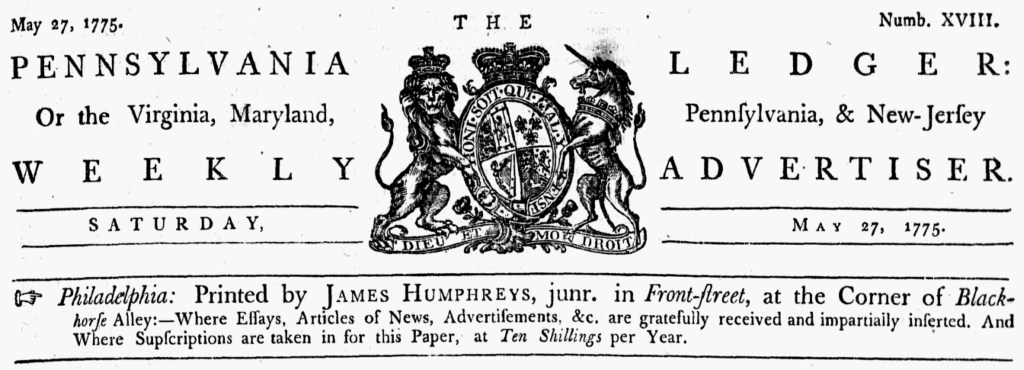
Pennsylvania Ledger (May 27, 1775).

“Essays, Articles of News, Advertisements, &c. are gratefully received and impartially inserted.”

Among newspapers published during the era of the American Revolution, those that included a colophon usually featured it at the bottom of the final page.  A few, including the Pennsylvania Ledger, incorporated the colophon into the masthead.  James Humphreys, Jr., the printer, also used the colophon as a perpetual advertisement for subscriptions and advertisements.  After all, the full title of the newspaper was the Pennsylvania Ledger: Or the Virginia, Maryland, Pennsylvania, & New Jersey Weekly Advertiser.  Accordingly, the colophon gave more than just place of publication and the name of the printer (“Philadelphia: Printed by JAMES HUMPHREYS, junr. in Front-street, at the Corner of Black-horse Alley”); it also informed readers that “Essays, Articles of News, Advertisements, &c. are gratefully received and impartially inserted” and “Subscriptions are taken in for this Paper, at Ten Shillings per Year.”  The enhanced colophon did not, however, give prices for advertising, though Humphreys stated that he set “the same terms as is usual with the other papers in the city” in the subscription proposals he distributed in January 1775.

What did Humphreys mean when he declared that he “impartially inserted” essays (or editorials), news, and advertisements?  In the proposals t, he asserted that “a number of worthy and reputable Gentlemen” in Philadelphia had encouraged him “to establish a Free and Impartial NEWS PAPER, open to All, and influenced by None.”  Furthermore, he proclaimed that he was “determined to act on the most impartial principles, and not render himself liable to be influenced by any party whatever.”  Such idealism stood in stark contrast to the partisanship of most newspapers as the imperial crisis intensified.  Humphreys’s determination to print essays and news from various perspectives amounted to sufficient proof for many Patriots that the printer was a Loyalist since he did not uniformly promote the American cause.  Decades later, Isaiah Thomas, the patriot printer who published the Massachusetts Spy at the same time Humphreys published the Pennsylvania Ledger, took a more evenhanded approach in his History of Printing of America: “The publisher announced his intention to conduct his paper with political impartiality; and perhaps, in times more tranquil than those in which it appeared, he might have succeeded in his plan.  …  The impartiality of the Ledger did not comport with the temper of the times.”[1]  Thomas seemed to consider Humphreys’s commitment to freedom of the press authentic rather than a rationalization for printing Loyalist views.  He was not so kind in his descriptions of other printers whose politics did not align with his own.

Still, the “temper of the times” likely prompted Humphreys to adjust his own advertising for political pamphlets available at his printing office.  When it came to “impartially insert[ing]” advertisements submitted by others, he gave assurances that he neither took an editorial stance when it came to the information they disseminated nor gave some more prominent placement on the page than others.  He did not rank newspapers notices but instead gave advertisers equal access to his press.

**********

[1] Isaiah Thomas, The History of Printing in America: With a Biography of Printers and an Account of Newspapers (1810; New York: Weathervane Books, 1970), 439-440.

Slavery Advertisements Published May 27, 1775

The Slavery Adverts 250 Project chronicles the role of newspaper advertising in perpetuating slavery in the era of the American Revolution. The project seeks to reveal the ubiquity of slavery in eighteenth-century life from New England to Georgia by republishing advertisements about enslaved people – for sale as individuals or in groups, wanted to purchase or for hire for short periods, runaways who liberated themselves, and those who were subsequently captured and confined in jails and workhouses – in daily digests on this site as well as in real time via the @SlaveAdverts250 Twitter feed, utilizing twenty-first-century media to stand in for the print media of the eighteenth century.

The project aims to provide modern audiences with a sense of just how often colonizers encountered these advertisements in their daily lives. Enslaved men, women, and children appeared in print somewhere in the colonies almost every single day. Those advertisements served as a constant backdrop for social, cultural, economic, and political life in colonial and revolutionary America. Colonizers who did not purport to own enslaved people were still confronted with slavery as well as invited to maintain the system by purchasing enslaved men, women, and children or assisting in the capture of so-called “runaways” who sought to free themselves from bondage. The frequency of these newspaper advertisements suggests just how embedded slavery was in colonial and revolutionary American culture in everyday interactions beyond the printed page.

These advertisements also testify to the experiences of enslaved men, women, and children, though readers must consider that those experiences have been remediated through descriptions offered by enslavers rather than enslaved people themselves. Often unnamed in the advertisements, enslaved men, women, and children were not invisible or unimportant in early America.

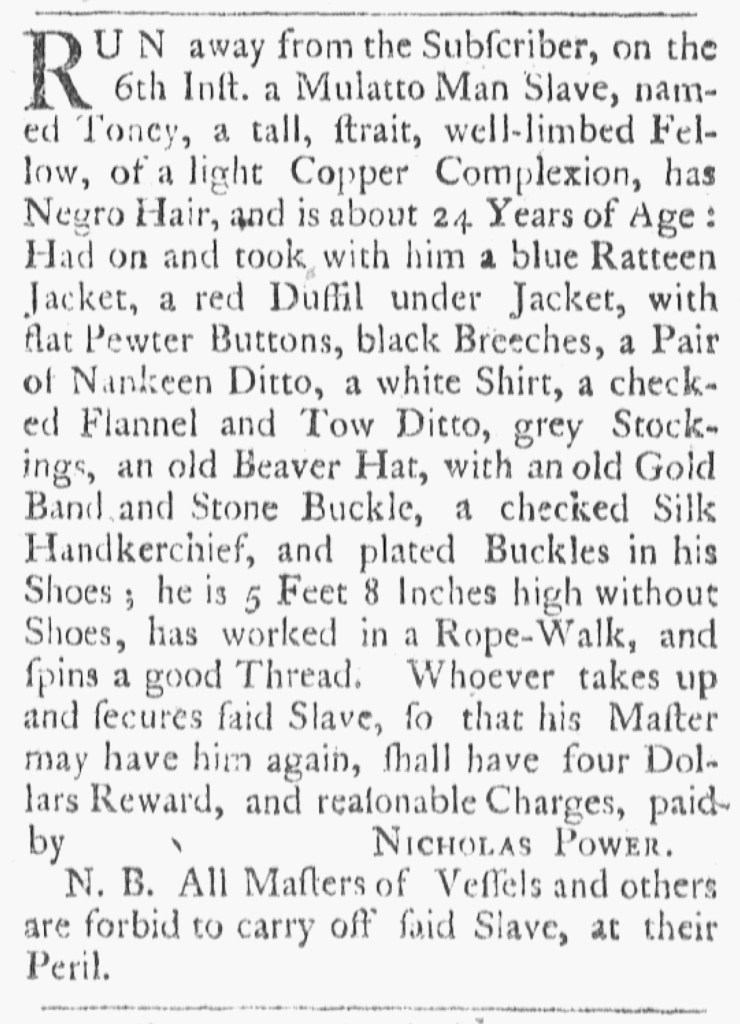
These advertisements appeared in colonial American newspapers 250 years ago today.

Providence Gazette (May 27, 1775).

**********

Virginia Gazette [Dixon and Hunter] (May 27, 1775).

**********

Virginia Gazette [Dixon and Hunter] (May 27, 1775).

**********

Virginia Gazette [Dixon and Hunter] (May 27, 1775).

**********

Virginia Gazette [Dixon and Hunter] (May 27, 1775).

**********

Virginia Gazette [Dixon and Hunter] (May 27, 1775).

**********

Virginia Gazette [Dixon and Hunter] (May 27, 1775).

May 26

What was advertised in a revolutionary American newspaper 250 years ago today?

New-Hampshire Gazette (May 26, 1775).

“HAIR-DRESSERS … The Business is still carried on in the same Shop.”

William Knight, a “PERUKE MAKER and HAIR DRESSER,” placed advertisements for the wigs he made and the services he provided on several occasions.  In the January 22, 1773, edition of the New-Hampshire Gazette, for instance, he announced that he “open’d SHOP near LIBERTY BRIDGE” in Portsmouth, where he will be ready to serve any Persons on reasonable Terms.”  Six months later, he established a partnership with Peter Man.  On July 30, they published an advertisement to advise prospective clients that they “carry on their Business in all its Branches, at their Shop on the Parade in Portsmouth.”  They continued together for nearly two years, but as the Revolutionary War began Man and Knight decided to part ways.

That prompted another newspaper advertisement, one that deployed standard language for such circumstances.  Upon “having agreed to dissolve the Partnership which was between them,” they called on “all Persons with whom they have Accounts open to close them as soon as possible.”  They did not indicate why they ended their partnership, though perhaps Knight retired or moved to another town.  He did not place any more advertisements in the New-Hampshire Gazette.  Man, on the other hand, used the notice about the partnership ending for a second purpose.  With a manicule to draw attention, he proclaimed, “The Business is still carried on in the same Shop, on the Parade and constant Attendance given.”  Even as one iteration of the business closed, Man hoped to maintain the clientele that he and Knight had established over the past two years as well as attract new customers for wigs and styling.

He was not the only one to advertise such services.  In an advertisement for the inn that he operated in nearby Greenland, John Williams added a nota bene to inform “Amy Gentlemen Travellers inclining to have their Hair or Wigs dressed before they go to Town, may have it done by said WILLIAMS in the genteelest and most fashionable Manner.”  Even as the New-Hampshire Gazette carried the “Freshest ADVICES FOREIGN AND DOMESTIC” about the imperial crisis, advertisers catered to ladies and gentlemen who wanted their hair or wigs presentable for appearing in public.