What was advertised in a revolutionary American newspaper 250 years ago today?
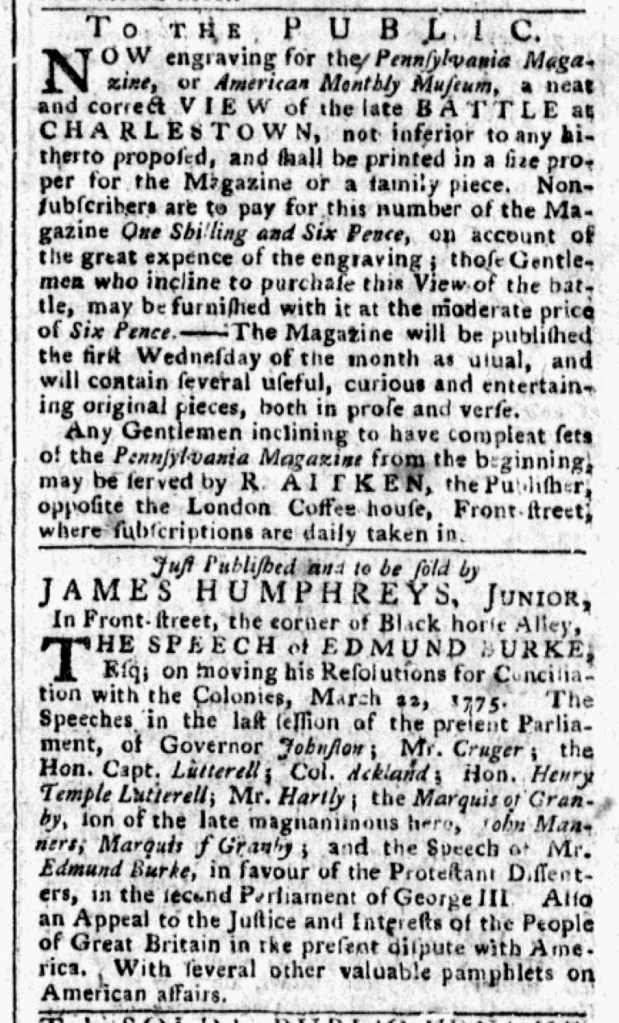
“THE SPEECH of EDMUND BURKE, Esq; on moving his Resolutions for Conciliation with the Colonies.”
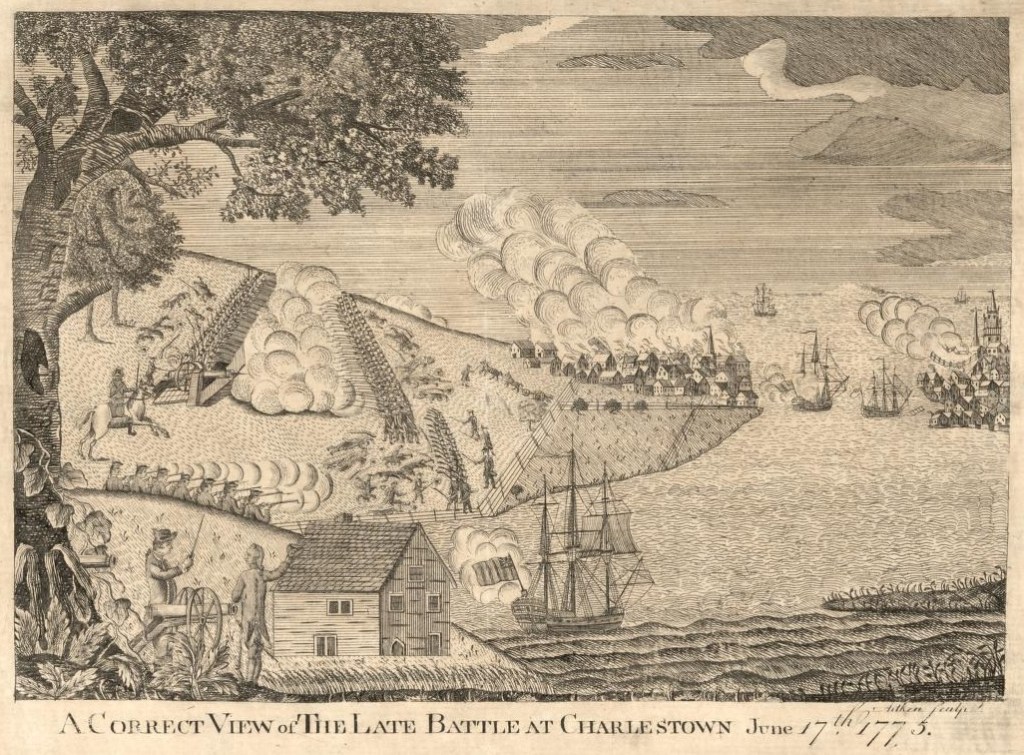
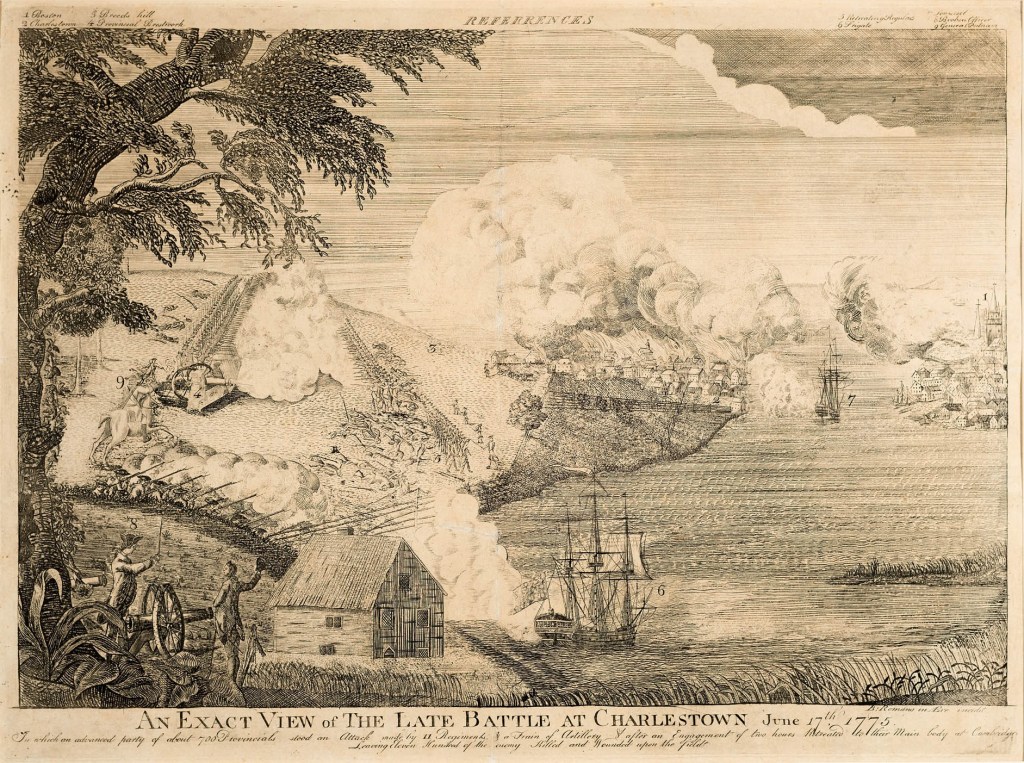
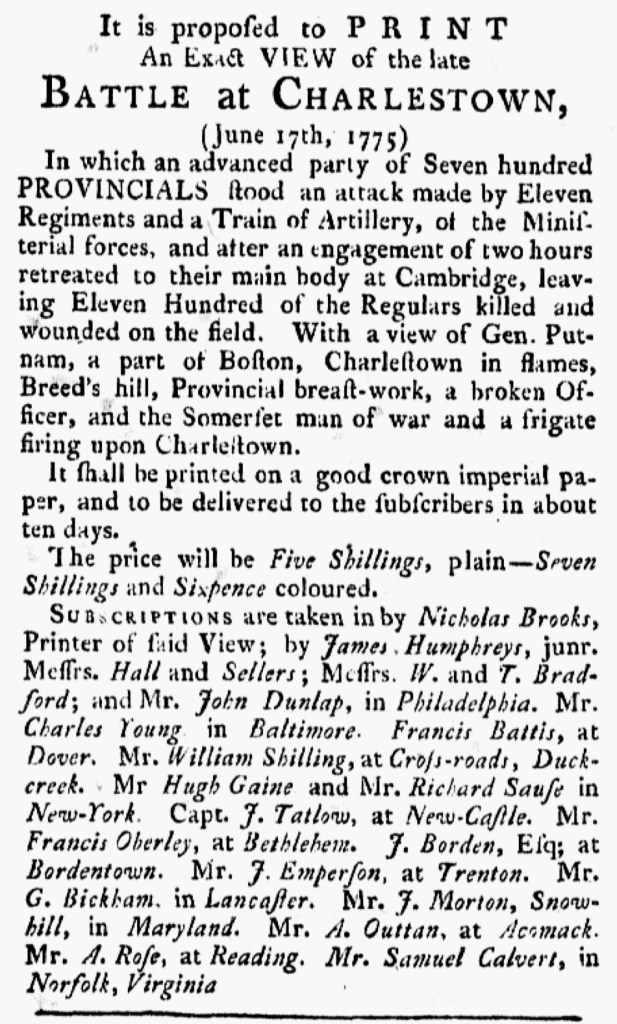
Interest in current events continued to influence some of the products advertised to colonial consumers in the October 2, 1775, edition of Dunlap’s Pennsylvania Packet. Robert Aitken once again ran his advertisement promoting a “neat and correct VIEW of the late BATTLE at CHARLESTOWN,” now known as the Battle of Bunker Hill. Subscribers to the Pennsylvania Magazine would receive the print as a premium, while others could purchase it separately.
Immediately below Aitken’s advertisement, James Humphreys, Jr., announced that he sold “THE SPEECH of EDMUND BURKE, Esq; on moving his Resolutions for Conciliation with the Colonies, March 22, 1775.” In that speech, delivered less than a month before the battles at Lexington and Concord, Burke presented peace and strengthening ties with the colonies as preferable to war. The colonies, after all, were an important market for British goods. Burke proposed allowing the colonies to elect their own representatives to send to Parliament as well as establishing a General Assembly with the authority to regulate taxes that would meet in the colonies. By that time, colonizers already recognized Burke as a friend and advocate for their cause. In April 1774, he had delivered a speech in favor of repealing duties on tea.
Humphreys also advertised a collection of speeches made “in the last session of the present Parliament” by “Governor Johnston; Mr. Cruger; the Hon. Capt. Lutterell; Col. Ackland,” and several others. That anthology included another speech by Burke, that one “in favour of the Protestant Dissenters” and religious liberty from 1773 during “the second Parliament of George III.” In addition, Humphreys stocked an “Appeal to the Justice and Interests of the People of Great Britain in the present dispute with America” by Arthur Lee, born in Virginia yet serving as an agent for Massachusetts in London in 1775. Humphreys concluded with a note that he also sold “several other valuable pamphlets on American affairs.” He most likely marketed American editions published by James Rivington, the printer of Rivington’s New-York Gazetteer often derided as a Tory who supported Parliament. Yet Rivington printed, advertised, and disseminated pamphlets representing a range of views, considering each of them opportunities to generate revenue. Among the “valuable pamphlets” that Humphreys named in his advertisement, he selected only those that supported the American cause, though he may have made a broader range of perspectives available without listing them in the public prints. Whatever the case, he anticipated that pamphlets about current events would attract customers.