
GUEST CURATOR: Mary Aldrich
What was advertised in a colonial newspaper 250 years ago this week?
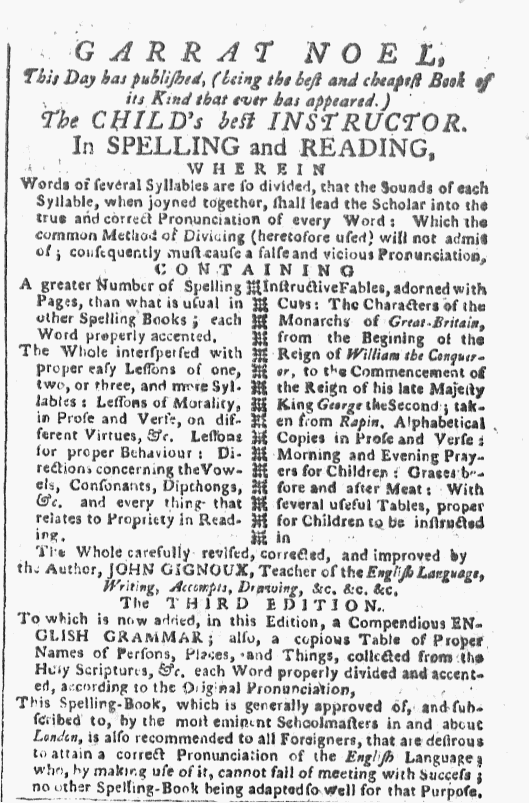
“This Day has published … The CHILD’s best INSTRUCTOR. In SPELLING and READING.”
This advertisement for a child’s spelling and reading book consists of instruction in the “true and correct pronunciation of every word.” According to E. Jennifer Monaghan and Arlene L. Berry, children were mainly taught to read before they could even write because the majority of reading was done orally. This particular book caters to that method of teaching by including words that are broken up into syllables so that the child will learn to pronounce words correctly.
Within the book, there are lessons on morality. In a time when faith was very much a part of people’s lives, whether they went to church or not, teaching one’s children to be virtuous was encouraged. They also mention the presence of historical events from England. It is interesting that the history of Britain is mentioned as a selling point because of the colonies eroding relationship with Britain.
This book was not just aimed at children. At the end of the advertisement, foreigners are invited to use it as well in order to learn the proper pronunciation of words.
**********
ADDITIONAL COMMENTARY: Carl Robert Keyes
Mary correctly notes that the relationship between Britain and the colonies was eroding in 1766. The Stamp Act was still in effect (and would not be repealed until March 20, 1766, almost simultaneously with passage of the Declaratory Act). I have previously featured several advertisements that reacted to the Stamp Act in one way or another, often encouraging consumers to purchase locally produced goods rather than imported wares.
In selecting this advertisement, Mary helps to provide balance in the narrative and interpretation. Colonists were engaged in resistance to what they considered abuses perpetrated by Parliament, but most were not yet prepared to advocate revolution and separation from Britain. Indeed, many objected to the Stamp Act and other measures because they believed they departed from traditional British liberties.
Even as political tensions rose, Americans continued to feel connected to Britain culturally. They believed that they shared a common past. As a result, it did not seem odd to colonists to oppose the Stamp Act imposed by Parliament while simultaneously celebrating the feats of William the Conqueror and other monarchs through seven centuries. Note that Noel also marketed this book by stating that it was used “by the most eminent Schoolmasters in and about London.” Noel likely believed that such connections to the metropolitan center of the empire imbued the book with greater cachet among potential readers.
(As an aside, Garrat Noel placed the first advertisement featured on the Adverts 250 Project when it started publication as a blog.)
