What was advertised in a colonial newspaper 250 years ago today?
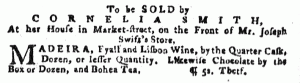
Pennsylvania Gazette (May 22, 1766).
“MADEIRA, Fyall and Lisbon Wine, by the Quarter Cask, Dozen, or lesser Quantity.”
In the 1760s many advertisements announced that merchants and shopkeepers sold an assortment of goods recently imported from London and other locations throughout England and the British Empire. Cornelia Smith’s advertisement, however, demonstrates that colonists participated in a transatlantic and increasingly global network of exchange that extended beyond the holdings of any single nation-state or empire. An array of foods, raw materials, and finished goods moved around and among extensive empires. Consumers regularly purchased merchandise from exotic and faraway places.
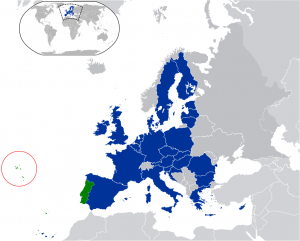
Smith sold wines from three different parts of Portugal’s maritime trading empire. The “Lisbon Wine” came from the capital city on the Iberian peninsula, but “MADEIRA” and “Fyall” wines came from two of the island chains in the eastern Atlantic that Europeans encountered in the fifteenth century as they searched for trade routes that would connect them to marketplaces in Asia.
Portuguese settlers arrived in Madeira in 1418 by accident when they were blown off course by a storm as they were attempting to navigate the western coast of Africa. A year later they returned to the archipelago to officially claim if for the Portuguese crown. Settlement began in the 1420s.
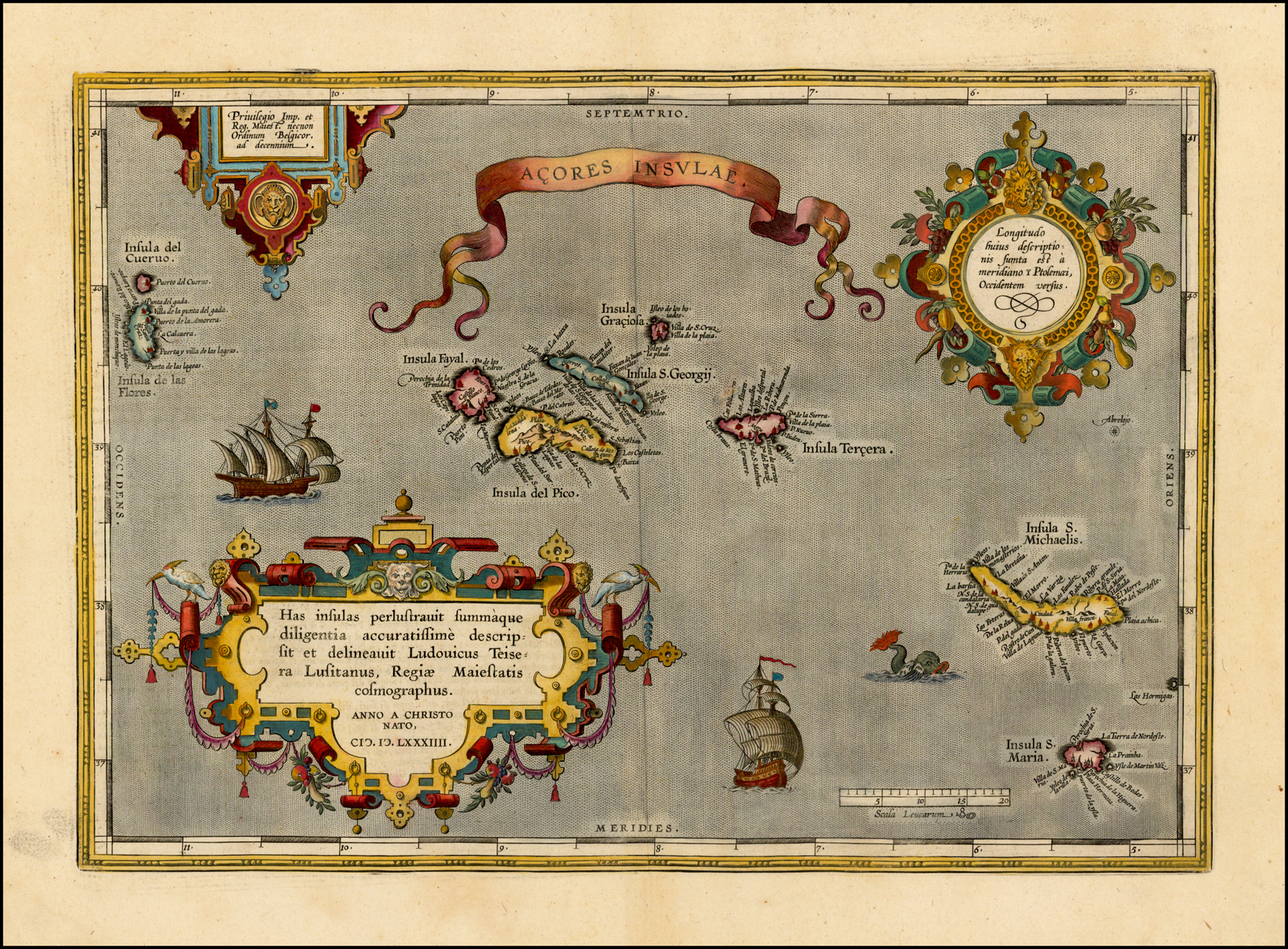
Faial (often spelled “Fyal” or “Fyall” in the eighteenth century) is one of the Azorean islands. Portuguese sailors first arrived in the Azores in 1427, exploring the easternmost islands (São Miguel, Santa Maria, and Terceira) first. They did not arrive in Faial, the westernmost of the central group of islands, until 1451.
Most residents in England’s North American colonies were unlikely to ever visit Lisbon, Madeira, or Faial, but they were familiar with the wines that came from those places. At a time that they were working out their relationship to England in the wake of the Stamp Act and frequently promoting the virtues of goods produced in America, they were also citizens of the world who participated in networks of exchange that crisscrossed the Atlantic and beyond.
What was advertised in a colonial newspaper 250 years ago this week?
New-Hampshire Gazette (April 18, 1766).
“Who has good white WINE by the Quarter Cask.”
The history of alcohol in colonial America is a long story of appreciation and sometimes conflict. Today I’m focusing on colonists’ appreciation of wine and other forms of alcohol.
According to Colonial Williamsburg, in 1770 “the colonies already had more than 140 rum distilleries, making about 4.8 million gallons annually.” Colonists’ dependence on alcohol was not necessarily due to alcoholism but due to poor water conditions. A dependence on beer and cider grew in Britain because crowded cities often did not have enough clean drinking water for all citizens, so they would resort to drinking beer and ciders. According to Melissa Swindell, “Alcohol-based drinks typically wouldn’t spread disease, and they had a much longer ‘shelf-life’ than non-alcoholic beverages.” This, combined with limited knowledge on the health effects of alcohol, made it the perfect hydration substitute to water.
The importance on alcohol consumption in colonial America also coincided with a lack of consistent clean drinking water. Colonial Williamsburg also reports that in 1768 “Virginians exported to Britain a little more than thirteen tons of wine while importing 396,580 gallons of rum from overseas, and another 78,264 from other North American colonies.” For every ton there are 264.48 gallons, so this means that while exporting thirteen tons (3,438.24 gallons) of wine the colonies were still importing far more rum than they were exporting wine.
Founders like John Adams and Thomas Jefferson were not shy to indulge in alcohol consumption. According to Colonial Williamsburg once again, John Adams started his day with a glass of hard cider and Thomas Jefferson “imported fine libations from France.”
All of this suggests there was not the current stigma that alcohol was sinful or a moral failing. Cutter’s advertisement was not out of place, nor taboo, because it referenced alcohol, but merely a normal part of daily life.
**********
ADDITIONAL COMMENTARY: Carl Robert Keyes
When Trevor “chose” this advertisement, I wasn’t certain what he might do with it, although I assumed he might choose one of the three commodities listed and offer a closer look at its role in colonial life and commerce. That was indeed the strategy he chose, demonstrating how a short reference to “good white WINE by the Quarter Cask” led him to learn about not only alcohol but also about public health conditions in Britain and America in the eighteenth century.
I say that Trevor “chose” (intentionally in quotation marks) this advertisement because he really had no choice at all. Regular visitors will remember that our methodology states that all featured advertisements must come from the most recently published newspaper exactly 250 years ago and advertisements cannot be featured more than once. Given those parameters, today’s advertisement had to come from the New-Hampshire Gazette. Compared to larger publications from Boston, New York, and Philadelphia, only a handful of advertisements appeared in the New-Hampshire Gazette. All of the other advertisements for consumer goods and services in this issue have already been featured previously, either by Trevor or, because advertisements often ran for several weeks, by previous guest curators. As a result, Trevor “chose” this advertisement. His work with it demonstrates that an advertisement need not be long or elaborate to help us learn about life in colonial America.
I appreciate that these circumstances presented another opportunity to reflect on the differences among colonial newspapers printed in the 1760s. To one extent or another, all of them included advertising (and even relied on advertising revenue to keep publishing), but the larger urban ports had newspapers overflowing with advertisements for consumer goods and services while such advertisements were not as prominent a feature in newspapers in smaller towns.
What was advertised in a colonial newspaper 250 years ago this week?
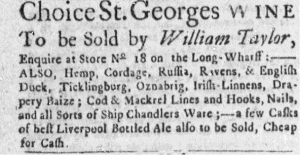
Massachusetts Gazette (March 20, 1766).
This found this advertisement on the second page. It intrigued me because of the goods described and the layout. From a marketing point of view, I wonder if William Taylor intentionally had the printer put the “Choice St. Georges WINE” at the top in the largest print because that was his best selling item. Wine was a very common drink for the every day as was the ale mention at the bottom of the advertisement. The ale came from Liverpool, England, as did many of the goods on the ships that supplied Taylor and other shopkeepers.
As I was scanning the advertisements the phrase “Ship Chandlers Ware” caught my attention and made me keep reading the other items Taylor sold. A ship chandler is “a person who deals in cordage, canvas, and other supplies for ships.” With Boston being a major seaport, much of the population relied on the shipping, importing, exporting, and shipbuilding industries. Other materials such as the nails, hooks, hemp, and cod and mackerel lines would also been in high demand for day-to-day usage in colonial America, but also in the fishing industry. It makes sense that William Taylor ran his shop on “the Long- Wharff,” where many similar businesses operated.
**********
ADDITIONAL COMMENTARY: Carl Robert Keyes
Elizabeth notes that today’s advertisement appeared on the second page of the Massachusetts Gazette. This detail gains in significance when examining the customary layout of this publication.
In the eighteenth century American printers tended to take different approaches when it came to the placement of advertisements within broadsheet newspapers folded in half to create four-page issues. Some printers tended to place advertisements on the first and final pages, which would have been printed with one impression (and, after the ink dried, flipped over to print the second and third pages in a single impression). In such instances, the first and last pages were printed earlier in the week; the “freshest advices foreign and domestick” were set in type and printed on the second and third pages later in the week. These seems counterintuitive to modern readers accustomed to headlines for major news stories appearing just below a newspaper’s masthead on the front page.
Other printers relegated advertisements to the final page. If their publication carried enough advertisements, they placed advertisements on the third and fourth pages, which, as explained above, would have been printed at different times during the week. Given that advertisements often repeated for multiple weeks, many would have been set in type already. Although the advertisements appeared together, they were not otherwise organized or “classified” by type. Printers who utilized this system sometimes placed short advertisements earlier in the newspaper as a means of filling space at the end of the final column on a page.
Whatever method they used, colonial printers tended to be fairly consistent from issue to issue. Richard Draper and Samuel Draper took a bit of a different approach. Like the latter method, the fourth page of the Massachusetts Gazette was often covered with advertisements exclusively, but the other three pages were peppered with advertisements. Those notices did not always appear in the final column of a page or at the bottom of a column. They sometimes appeared first or before news items or interspersed with news items. In that regard, the Drapers printed a newspaper that more closely resembled modern publications than many others: it featured both a separate section (page) for advertisements as well as additional advertisements alongside other content.
Such was the case for the Massachusetts Gazette on March 20, 176. The Drapers devoted the fourth page to advertising as usual, but a small number of short advertisements appeared at the end of the first and third columns on the first page. The second page featured news items, but only in the third column. The advertisement Elizabeth selected appeared in the first column of the second page. It would have been one of the first things a reader noticed when opening the newspaper to find more news.
What explains the Drapers’ decisions about layout? Was this mere expediency and efficiency? Or were they experimenting with different formats as a means of delivering advertisements to readers and potential consumers?