Slavery Advertisements Published June 21, 1770

Guest Curator: Jenna Smith

The Slavery Adverts 250 Project chronicles the role of newspaper advertising in perpetuating slavery in the era of the American Revolution. The project seeks to reveal the ubiquity of slavery in eighteenth-century life from New England to Georgia by republishing advertisements for slaves – for sale, wanted to purchase, runaways, captured fugitives – in daily digests on this site as well as in real time via the @SlaveAdverts250 Twitter feed, utilizing twenty-first-century media to stand in for the print media of the eighteenth century.

The project aims to provide modern audiences with a sense of just how often colonists encountered these advertisements in their daily lives. Enslaved men, women, and children appeared in print somewhere in the colonies almost every single day. Those advertisements served as a constant backdrop for social, cultural, economic, and political life in colonial and revolutionary America. Colonists who did not own slaves were still confronted with slavery as well as invited to maintain the system by purchasing slaves or assisting in the capture of runaways. The frequency of these newspaper advertisements suggests just how embedded slavery was in colonial and revolutionary American culture in everyday interactions beyond the printed page.

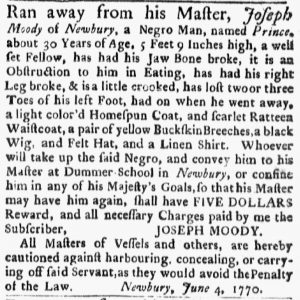
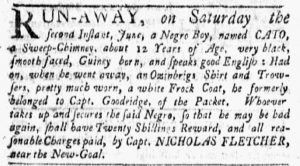
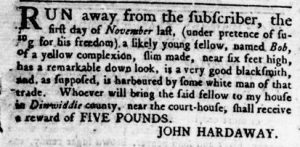
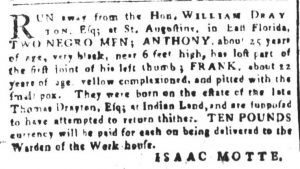
These advertisements also testify to the experiences of enslaved men, women, and children, though readers must consider that those experiences have been remediated through descriptions offered by slaveholders rather than the slaves themselves. Often unnamed in the advertisements, enslaved men, women, and children were not invisible or unimportant in early America.

From compiling an archive of digitized eighteenth-century newspapers to identifying advertisements about enslaved men, women, and children in those newspapers to preparing images of each advertisement to posting this daily digest, Jenna Smith served as guest curator for this entry. Working on this project fulfilled her senior capstone requirement for completing the major in History at Assumption College in Worcester, Massachusetts.

These advertisements appeared in colonial American newspapers 250 years ago.

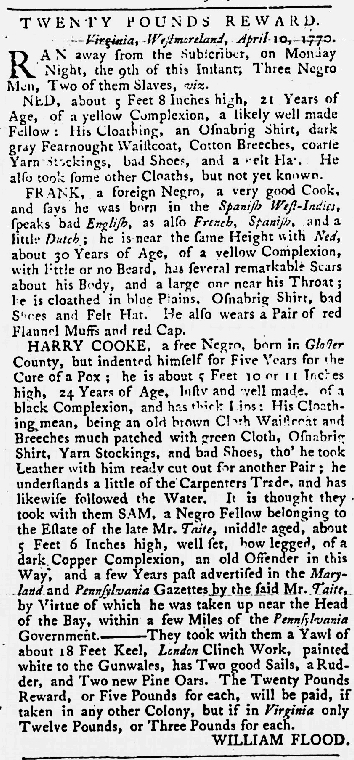
Jun 21 1770 - Maryland Gazette Slavery 1
Maryland Gazette (June 21, 1770).

**********

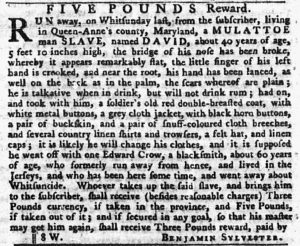
Jun 21 1770 - Maryland Gazette Slavery 2
Maryland Gazette (June 21, 1770).

**********

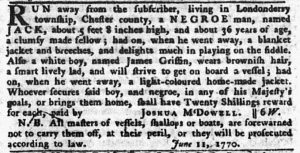
Jun 21 1770 - Maryland Gazette Slavery 3
Maryland Gazette (June 21, 1770).

**********

Jun 21 1770 - Maryland Gazette Slavery 4
Maryland Gazette (June 21, 1770).

**********

Jun 21 1770 - Maryland Gazette Slavery 5
Maryland Gazette (June 21, 1770).

**********

Jun 21 - New-York Journal Slavery 1
New-York Journal (June 21, 1770).

**********

Jun 21 - New-York Journal Slavery 2
New-York Journal (June 21, 1770).

**********

Jun 21 - Pennsylvania Gazette Slavery 1
Pennsylvania Gazette (June 21, 1770).

**********

Jun 21 - Pennsylvania Gazette Slavery 2
Pennsylvania Gazette (June 21, 1770).

**********

Jun 21 - Pennsylvania Gazette Slavery 3
Pennsylvania Gazette (June 21, 1770).

**********

Jun 21 - Pennsylvania Gazette Slavery 4
Pennsylvania Gazette (June 21, 1770).

**********

Jun 21 - Pennsylvania Gazette Slavery 5
Pennsylvania Gazette (June 21, 1770).

**********
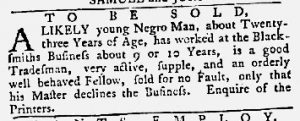
Jun 21 - Pennsylvania Journal Slavery 1
Pennsylvania Journal (June 21, 1770).

**********

Jun 21 - Pennsylvania Journal Slavery 2
Pennsylvania Journal (June 21, 1770).

**********

Jun 21 - Pennsylvania Journal Slavery 3
Pennsylvania Journal (June 21, 1770).

**********

Jun 21 - Pennsylvania Journal Slavery 4
Pennsylvania Journal (June 21, 1770).

**********

Jun 21 - Pennsylvania Journal Slavery 5
Pennsylvania Journal (June 21, 1770).

**********

Jun 21 - South-Carolina Gazette Slavery 1
South-Carolina Gazette (June 21, 1770).

**********

Jun 21 - South-Carolina Gazette Slavery 2
South-Carolina Gazette (June 21, 1770).

**********

Jun 21 - South-Carolina Gazette Slavery 3
South-Carolina Gazette (June 21, 1770).

**********

Jun 21 - South-Carolina Gazette Slavery 4
South-Carolina Gazette (June 21, 1770).

**********

Jun 21 - South-Carolina Gazette Slavery 5
South-Carolina Gazette (June 21, 1770).

**********

Jun 21 - South-Carolina Gazette Slavery 6
South-Carolina Gazette (June 21, 1770).

**********

Jun 21 - South-Carolina Gazette Slavery 7
South-Carolina Gazette (June 21, 1770).

**********

Jun 21 - South-Carolina Gazette Slavery 8
South-Carolina Gazette (June 21, 1770).

**********

Jun 21 - South-Carolina Gazette Slavery 9
South-Carolina Gazette (June 21, 1770).

**********

Jun 21 - South-Carolina Gazette Slavery 10
South-Carolina Gazette (June 21, 1770).

**********

Jun 21 - South-Carolina Gazette Slavery 11
South-Carolina Gazette (June 21, 1770).

**********

Jun 21 - Virginia Gazette Purdie and Dixon Slavery 1
Virginia Gazette [Purdie and Dixon] (June 21, 1770).

**********

Jun 21 - Virginia Gazette Purdie and Dixon Slavery 2
Virginia Gazette [Purdie and Dixon] (June 21, 1770).

**********

Jun 21 - Virginia Gazette Purdie and Dixon Slavery 3
Virginia Gazette [Purdie and Dixon] (June 21, 1770).

**********

Jun 21 - Virginia Gazette Purdie and Dixon Slavery 4
Virginia Gazette [Purdie and Dixon] (June 21, 1770).

**********

Jun 21 - Virginia Gazette Purdie and Dixon Slavery 5
Virginia Gazette [Purdie and Dixon] (June 21, 1770).

Slavery Advertisements Published June 19, 1770

Guest Curator: Jenna Smith

The Slavery Adverts 250 Project chronicles the role of newspaper advertising in perpetuating slavery in the era of the American Revolution. The project seeks to reveal the ubiquity of slavery in eighteenth-century life from New England to Georgia by republishing advertisements for slaves – for sale, wanted to purchase, runaways, captured fugitives – in daily digests on this site as well as in real time via the @SlaveAdverts250 Twitter feed, utilizing twenty-first-century media to stand in for the print media of the eighteenth century.

The project aims to provide modern audiences with a sense of just how often colonists encountered these advertisements in their daily lives. Enslaved men, women, and children appeared in print somewhere in the colonies almost every single day. Those advertisements served as a constant backdrop for social, cultural, economic, and political life in colonial and revolutionary America. Colonists who did not own slaves were still confronted with slavery as well as invited to maintain the system by purchasing slaves or assisting in the capture of runaways. The frequency of these newspaper advertisements suggests just how embedded slavery was in colonial and revolutionary American culture in everyday interactions beyond the printed page.

These advertisements also testify to the experiences of enslaved men, women, and children, though readers must consider that those experiences have been remediated through descriptions offered by slaveholders rather than the slaves themselves. Often unnamed in the advertisements, enslaved men, women, and children were not invisible or unimportant in early America.

From compiling an archive of digitized eighteenth-century newspapers to identifying advertisements about enslaved men, women, and children in those newspapers to preparing images of each advertisement to posting this daily digest, Jenna Smith served as guest curator for this entry. Working on this project fulfilled her senior capstone requirement for completing the major in History at Assumption College in Worcester, Massachusetts.

These advertisements appeared in colonial American newspapers 250 years ago today.

Jun 19 - South-Carolina Gazette and Country Journal Slavery 1
South-Carolina Gazette and Country Journal (June 19, 1770).

**********

Jun 19 - South-Carolina Gazette and Country Journal Slavery 2
South-Carolina Gazette and Country Journal (June 19, 1770).

**********

Jun 19 - South-Carolina Gazette and Country Journal Slavery 3
South-Carolina Gazette and Country Journal (June 19, 1770).

**********

Jun 19 - South-Carolina Gazette and Country Journal Slavery 4
South-Carolina Gazette and Country Journal (June 19, 1770).

**********

Jun 19 - South-Carolina Gazette and Country Journal Slavery 5
South-Carolina Gazette and Country Journal (June 19, 1770).

**********

Jun 19 - South-Carolina Gazette and Country Journal Slavery 6
South-Carolina Gazette and Country Journal (June 19, 1770).

**********

Jun 19 - South-Carolina Gazette and Country Journal Supplement Slavery 1
South-Carolina Gazette and Country Journal (June 19, 1770).

**********

Jun 19 - South-Carolina Gazette and Country Journal Supplement Slavery 2
South-Carolina Gazette and Country Journal (June 19, 1770).

**********

Jun 19 - South-Carolina Gazette and Country Journal Supplement Slavery 3
South-Carolina Gazette and Country Journal (June 19, 1770).

**********

Jun 19 - South-Carolina Gazette and Country Journal Supplement Slavery 4
South-Carolina Gazette and Country Journal (June 19, 1770).

**********

Jun 19 - South-Carolina Gazette and Country Journal Supplement Slavery 5
South-Carolina Gazette and Country Journal (June 19, 1770).

**********

Jun 19 - South-Carolina Gazette and Country Journal Supplement Slavery 6
South-Carolina Gazette and Country Journal (June 19, 1770).


Slavery Advertisements Published June 18, 1770

Guest Curator: Jenna Smith

The Slavery Adverts 250 Project chronicles the role of newspaper advertising in perpetuating slavery in the era of the American Revolution. The project seeks to reveal the ubiquity of slavery in eighteenth-century life from New England to Georgia by republishing advertisements for slaves – for sale, wanted to purchase, runaways, captured fugitives – in daily digests on this site as well as in real time via the @SlaveAdverts250 Twitter feed, utilizing twenty-first-century media to stand in for the print media of the eighteenth century.

The project aims to provide modern audiences with a sense of just how often colonists encountered these advertisements in their daily lives. Enslaved men, women, and children appeared in print somewhere in the colonies almost every single day. Those advertisements served as a constant backdrop for social, cultural, economic, and political life in colonial and revolutionary America. Colonists who did not own slaves were still confronted with slavery as well as invited to maintain the system by purchasing slaves or assisting in the capture of runaways. The frequency of these newspaper advertisements suggests just how embedded slavery was in colonial and revolutionary American culture in everyday interactions beyond the printed page.

These advertisements also testify to the experiences of enslaved men, women, and children, though readers must consider that those experiences have been remediated through descriptions offered by slaveholders rather than the slaves themselves. Often unnamed in the advertisements, enslaved men, women, and children were not invisible or unimportant in early America.

From compiling an archive of digitized eighteenth-century newspapers to identifying advertisements about enslaved men, women, and children in those newspapers to preparing images of each advertisement to posting this daily digest, Jenna Smith served as guest curator for this entry. Working on this project fulfilled her senior capstone requirement for completing the major in History at Assumption College in Worcester, Massachusetts.

These advertisements appeared in colonial American newspapers 250 years ago today.

Jun 18 - Boston Evening-Post Slavery 1
Boston Evening-Post (June 18, 1770).

**********

Jun 18 - Boston Evening-Post Slavery 2
Boston Evening-Post (June 18, 1770).

**********

Jun 18 - Boston Evening-Post Supplement Slavery 1
Boston Evening-Post (June 18, 1770).

**********

Jun 18 - Boston Gazette and Country Journal Supplement Slavery 1
Boston Gazette and Country Journal (June 18, 1770).

**********

Jun 18 - Boston Gazette and Country Journal Supplement Slavery 2
Boston Gazette and Country Journal (June 18, 1770).

**********

Jun 18 - Boston Gazette and Country Journal Supplement Slavery 3
Boston Gazette and Country Journal (June 18, 1770).

**********

Jun 18 - New-York Gazette and the Weekly Mercury Slavery 1
New-York Gazette and Weekly Mercury (June 18, 1770).

**********

Jun 18 - New-York Gazette and the Weekly Mercury Slavery 2
New-York Gazette and Weekly Mercury (June 18, 1770).

**********

Jun 18 - New-York Gazette or Weekly Post-Boy Slavery 1
New-York Gazette or Weekly Post-Boy (June 18, 1770).

**********

Jun 18 - Pennsylvania Chronicle and Universal Advertiser Slavery 1
Pennsylvania Chronicle and Universal Advertiser (June 18, 1770).

**********

Jun 18 - Pennsylvania Chronicle and Universal Advertiser Slavery 2
Pennsylvania Chronicle and Universal Advertiser (June 18, 1770).

Slavery Advertisements Published June 15, 1770

Guest Curator: Jenna Smith

The Slavery Adverts 250 Project chronicles the role of newspaper advertising in perpetuating slavery in the era of the American Revolution. The project seeks to reveal the ubiquity of slavery in eighteenth-century life from New England to Georgia by republishing advertisements for slaves – for sale, wanted to purchase, runaways, captured fugitives – in daily digests on this site as well as in real time via the @SlaveAdverts250 Twitter feed, utilizing twenty-first-century media to stand in for the print media of the eighteenth century.

The project aims to provide modern audiences with a sense of just how often colonists encountered these advertisements in their daily lives. Enslaved men, women, and children appeared in print somewhere in the colonies almost every single day. Those advertisements served as a constant backdrop for social, cultural, economic, and political life in colonial and revolutionary America. Colonists who did not own slaves were still confronted with slavery as well as invited to maintain the system by purchasing slaves or assisting in the capture of runaways. The frequency of these newspaper advertisements suggests just how embedded slavery was in colonial and revolutionary American culture in everyday interactions beyond the printed page.

These advertisements also testify to the experiences of enslaved men, women, and children, though readers must consider that those experiences have been remediated through descriptions offered by slaveholders rather than the slaves themselves. Often unnamed in the advertisements, enslaved men, women, and children were not invisible or unimportant in early America.

From compiling an archive of digitized eighteenth-century newspapers to identifying advertisements about enslaved men, women, and children in those newspapers to preparing images of each advertisement to posting this daily digest, Jenna Smith served as guest curator for this entry. Working on this project fulfilled her senior capstone requirement for completing the major in History at Assumption College in Worcester, Massachusetts.

These advertisements appeared in colonial American newspapers 250 years ago today.

Jun 15 - New Hampshire Gazette Slavery 1
New-Hampshire Gazette (June 15, 1770).

**********

Jun 15 - New-London Gazette Slavery 1
New-London Gazette (June 15, 1770).

**********

Jun 15 - South-Carolina and American General Gazette Slavery 1
South-Carolina and American General Gazette (June 15, 1770).

**********

Jun 15 - South-Carolina and American General Gazette Slavery 2
South-Carolina and American General Gazette (June 15, 1770).

**********

Jun 15 - South-Carolina and American General Gazette Slavery 3
South-Carolina and American General Gazette (June 15, 1770).

**********

Jun 15 - South-Carolina and American General Gazette Slavery 4
South-Carolina and American General Gazette (June 15, 1770).

**********

Jun 15 - South-Carolina and American General Gazette Slavery 5
South-Carolina and American General Gazette (June 15, 1770).

**********

Jun 15 - South-Carolina and American General Gazette Slavery 6
South-Carolina and American General Gazette (June 15, 1770).


Slavery Advertisements Published June 14, 1770

Guest Curator: Jenna Smith

The Slavery Adverts 250 Project chronicles the role of newspaper advertising in perpetuating slavery in the era of the American Revolution. The project seeks to reveal the ubiquity of slavery in eighteenth-century life from New England to Georgia by republishing advertisements for slaves – for sale, wanted to purchase, runaways, captured fugitives – in daily digests on this site as well as in real time via the @SlaveAdverts250 Twitter feed, utilizing twenty-first-century media to stand in for the print media of the eighteenth century.

The project aims to provide modern audiences with a sense of just how often colonists encountered these advertisements in their daily lives. Enslaved men, women, and children appeared in print somewhere in the colonies almost every single day. Those advertisements served as a constant backdrop for social, cultural, economic, and political life in colonial and revolutionary America. Colonists who did not own slaves were still confronted with slavery as well as invited to maintain the system by purchasing slaves or assisting in the capture of runaways. The frequency of these newspaper advertisements suggests just how embedded slavery was in colonial and revolutionary American culture in everyday interactions beyond the printed page.

These advertisements also testify to the experiences of enslaved men, women, and children, though readers must consider that those experiences have been remediated through descriptions offered by slaveholders rather than the slaves themselves. Often unnamed in the advertisements, enslaved men, women, and children were not invisible or unimportant in early America.

From compiling an archive of digitized eighteenth-century newspapers to identifying advertisements about enslaved men, women, and children in those newspapers to preparing images of each advertisement to posting this daily digest, Jenna Smith served as guest curator for this entry. Working on this project fulfilled her senior capstone requirement for completing the major in History at Assumption College in Worcester, Massachusetts.

These advertisements appeared in colonial American newspapers 250 years ago.

Jun 14 - Massachusetts Gazette and Boston News-Letter Supplement Slavery 1
Boston News-Letter (June 14, 1770).

**********

Jun 14 - Massachusetts Gazette and Boston News-Letter Supplement Slavery 2
Boston News-Letter (June 14, 1770).

**********

Jun 14 - Massachusetts Gazette and Boston News-Letter Supplement Slavery 3
Boston News-Letter (June 14, 1770).

**********

Jun 14 1770 - Maryland Gazette Slavery 1
Maryland Gazette (June 14, 1770).

**********

Jun 14 1770 - Maryland Gazette Slavery 2
Maryland Gazette (June 14, 1770).

**********

Jun 14 1770 - Maryland Gazette Slavery 3
Maryland Gazette (June 14, 1770).

**********

Jun 14 1770 - Maryland Gazette Slavery 4
Maryland Gazette (June 14, 1770).

**********

Jun 14 - New-York Journal Slavery 1
New-York Journal (June 14, 1770).

**********

Jun 14 - New-York Journal Slavery 2
New-York Journal (June 14, 1770).

**********

Jun 14 - New-York Journal Slavery 3
New-York Journal (June 14, 1770).

**********

Jun 14 - Pennsylvania Gazette Slavery 1
Pennsylvania Gazette (June 14, 1770).

**********

Jun 14 - Pennsylvania Gazette Slavery 2
Pennsylvania Gazette (June 14, 1770).

**********

Jun 14 - Pennsylvania Gazette Supplement Slavery 1
Pennsylvania Gazette (June 14, 1770).

**********

Jun 14 - Pennsylvania Gazette Supplement Slavery 2
Pennsylvania Gazette (June 14, 1770).

**********

Jun 14 - Pennsylvania Gazette Supplement Slavery 3
Pennsylvania Gazette (June 14, 1770).

**********

Jun 14 - Pennsylvania Gazette Supplement Slavery 4
Pennsylvania Gazette (June 14, 1770).

**********

Jun 14 - Virginia Gazette Purdie and Dixon Slavery 1
Virginia Gazette [Purdie and Dixon] (June 14, 1770).

**********

Jun 14 - Virginia Gazette Purdie and Dixon Slavery 2
Virginia Gazette [Purdie and Dixon] (June 14, 1770).

**********

Jun 14 - Virginia Gazette Purdie and Dixon Slavery 3
Virginia Gazette [Purdie and Dixon] (June 14, 1770).

**********

Jun 14 - Virginia Gazette Purdie and Dixon Slavery 4
Virginia Gazette [Purdie and Dixon] (June 14, 1770).

**********

Jun 14 - Virginia Gazette Purdie and Dixon Slavery 5
Virginia Gazette [Purdie and Dixon] (June 14, 1770).

**********

Jun 14 - Virginia Gazette Purdie and Dixon Slavery 6
Virginia Gazette [Purdie and Dixon] (June 14, 1770).

**********

Jun 14 - Virginia Gazette Purdie and Dixon Slavery 7
Virginia Gazette [Purdie and Dixon] (June 14, 1770).

**********

Jun 14 - Virginia Gazette Purdie and Dixon Slavery 8
Virginia Gazette [Purdie and Dixon] (June 14, 1770).

**********

Jun 14 - Virginia Gazette Rind Slavery 1
Virginia Gazette [Rind] (June 14, 1770).

**********

Jun 14 - Virginia Gazette Rind Slavery 2
Virginia Gazette [Rind] (June 14, 1770).

**********

Jun 14 - Virginia Gazette Rind Slavery 3
Virginia Gazette [Rind] (June 14, 1770).

**********

Jun 14 - Virginia Gazette Rind Slavery 4
Virginia Gazette [Rind] (June 14, 1770).

**********

Jun 14 - Virginia Gazette Rind Slavery 5
Virginia Gazette [Rind] (June 14, 1770).

**********

Jun 14 - Virginia Gazette Rind Slavery 6
Virginia Gazette [Rind] (June 14, 1770).

**********

Jun 14 - Virginia Gazette Rind Slavery 7
Virginia Gazette [Rind] (June 14, 1770).

**********

Jun 14 - Virginia Gazette Rind Slavery 8
Virginia Gazette [Rind] (June 14, 1770).

**********

Jun 14 - Virginia Gazette Rind Slavery 9
Virginia Gazette [Rind] (June 14, 1770).

Slavery Advertisements Published June 11, 1770

Guest Curator: Jenna Smith

The Slavery Adverts 250 Project chronicles the role of newspaper advertising in perpetuating slavery in the era of the American Revolution. The project seeks to reveal the ubiquity of slavery in eighteenth-century life from New England to Georgia by republishing advertisements for slaves – for sale, wanted to purchase, runaways, captured fugitives – in daily digests on this site as well as in real time via the @SlaveAdverts250 Twitter feed, utilizing twenty-first-century media to stand in for the print media of the eighteenth century.

The project aims to provide modern audiences with a sense of just how often colonists encountered these advertisements in their daily lives. Enslaved men, women, and children appeared in print somewhere in the colonies almost every single day. Those advertisements served as a constant backdrop for social, cultural, economic, and political life in colonial and revolutionary America. Colonists who did not own slaves were still confronted with slavery as well as invited to maintain the system by purchasing slaves or assisting in the capture of runaways. The frequency of these newspaper advertisements suggests just how embedded slavery was in colonial and revolutionary American culture in everyday interactions beyond the printed page.

These advertisements also testify to the experiences of enslaved men, women, and children, though readers must consider that those experiences have been remediated through descriptions offered by slaveholders rather than the slaves themselves. Often unnamed in the advertisements, enslaved men, women, and children were not invisible or unimportant in early America.

From compiling an archive of digitized eighteenth-century newspapers to identifying advertisements about enslaved men, women, and children in those newspapers to preparing images of each advertisement to posting this daily digest, Jenna Smith served as guest curator for this entry. Working on this project fulfilled her senior capstone requirement for completing the major in History at Assumption College in Worcester, Massachusetts.

These advertisements appeared in colonial American newspapers 250 years ago today.

Jun 11 - Massachusetts Gazette and Boston Post-Boy Slavery 1
Boston Post-Boy (June 11, 1770).

**********

Jun 11 - Boston Evening-Post Slavery 1
Boston Evening-Post (June 11, 1770).

**********

Jun 11 - Boston Evening-Post Slavery 2
Boston Evening-Post (June 11, 1770).

**********

Jun 11 - Boston Evening-Post Slavery 3
Boston Evening-Post (June 11, 1770).

**********

Jun 11 - Boston Evening-Post Slavery 4
Boston Evening-Post (June 11, 1770).

**********

Jun 11 - Boston Evening-Post Slavery 5
Boston Evening-Post (June 11, 1770).

**********

Jun 11 - Boston Evening-Post Slavery 6
Boston Evening-Post (June 11, 1770).

**********

Jun 11 - Boston Gazette and Country Journal Slavery 1
Boston Gazette and Country Journal (June 11, 1770).

**********

Jun 11 - Boston Gazette and Country Journal Slavery 2
Boston Gazette and Country Journal (June 11, 1770).

**********

Jun 11 - Boston Gazette and Country Journal Slavery 3
Boston Gazette and Country Journal (June 11, 1770).

**********

Jun 11 - Boston Gazette and Country Journal Slavery 4
Boston Gazette and Country Journal (June 11, 1770).

**********

Jun 11 - Boston Gazette and Country Journal Slavery 5
Boston Gazette and Country Journal (June 11, 1770).

**********

Jun 11 - Boston Gazette and Country Journal Slavery 6
Boston Gazette and Country Journal (June 11, 1770).

**********

Jun 11 - Boston Gazette and Country Journal Slavery 7
Boston Gazette and Country Journal (June 11, 1770).

**********

Jun 11 - Newport Mercury Slavery 1
Newport Mercury (June 11, 1770).

**********

Jun 11 - New-York Gazette and the Weekly Mercury Slavery 1
New-York Gazette and Weekly Mercury (June 11, 1770).

**********

Jun 11 - New-York Gazette and the Weekly Mercury Slavery 2
New-York Gazette and Weekly Mercury (June 11, 1770).

**********

Jun 11 - New-York Gazette and the Weekly Mercury Slavery 3
New-York Gazette and Weekly Mercury (June 11, 1770).

**********

Jun 11 - New-York Gazette and the Weekly Mercury Slavery 4
New-York Gazette and Weekly Mercury (June 11, 1770).

**********

Jun 11 - New-York Gazette and the Weekly Mercury Slavery 5
New-York Gazette and Weekly Mercury (June 11, 1770).

**********

Jun 11 - New-York Gazette and the Weekly Mercury Slavery 6
New-York Gazette and Weekly Mercury (June 11, 1770).

**********

Jun 11 - New-York Gazette and the Weekly Mercury Slavery 7
New-York Gazette and Weekly Mercury (June 11, 1770).

**********

Jun 11 - New-York Gazette and the Weekly Mercury Slavery 8
New-York Gazette and Weekly Mercury (June 11, 1770).

**********

Jun 11 - New-York Gazette and the Weekly Mercury Slavery 9
New-York Gazette and Weekly Mercury (June 11, 1770).

**********

Jun 11 - New-York Gazette and the Weekly Mercury Slavery 10
New-York Gazette and Weekly Mercury (June 11, 1770).

**********

Jun 11 - New-York Gazette and the Weekly Mercury Slavery 11
New-York Gazette and Weekly Mercury (June 11, 1770).

**********

Jun 11 - New-York Gazette or Weekly Post-Boy Slavery 1
New-York Gazette or Weekly Post-Boy (June 11, 1770).

**********

Jun 11 - Pennsylvania Chronicle and Universal Advertiser Slavery 1
Pennsylvania Chronicle and Universal Advertiser (June 11, 1770).

Slavery Advertisements Published June 8, 1770

Guest Curator: Jenna Smith

The Slavery Adverts 250 Project chronicles the role of newspaper advertising in perpetuating slavery in the era of the American Revolution. The project seeks to reveal the ubiquity of slavery in eighteenth-century life from New England to Georgia by republishing advertisements for slaves – for sale, wanted to purchase, runaways, captured fugitives – in daily digests on this site as well as in real time via the @SlaveAdverts250 Twitter feed, utilizing twenty-first-century media to stand in for the print media of the eighteenth century.

The project aims to provide modern audiences with a sense of just how often colonists encountered these advertisements in their daily lives. Enslaved men, women, and children appeared in print somewhere in the colonies almost every single day. Those advertisements served as a constant backdrop for social, cultural, economic, and political life in colonial and revolutionary America. Colonists who did not own slaves were still confronted with slavery as well as invited to maintain the system by purchasing slaves or assisting in the capture of runaways. The frequency of these newspaper advertisements suggests just how embedded slavery was in colonial and revolutionary American culture in everyday interactions beyond the printed page.

These advertisements also testify to the experiences of enslaved men, women, and children, though readers must consider that those experiences have been remediated through descriptions offered by slaveholders rather than the slaves themselves. Often unnamed in the advertisements, enslaved men, women, and children were not invisible or unimportant in early America.

From compiling an archive of digitized eighteenth-century newspapers to identifying advertisements about enslaved men, women, and children in those newspapers to preparing images of each advertisement to posting this daily digest, Jenna Smith served as guest curator for this entry. Working on this project fulfilled her senior capstone requirement for completing the major in History at Assumption College in Worcester, Massachusetts.

These advertisements appeared in colonial American newspapers 250 years ago today.

Jun 8 - New-Hampshire Gazette Slavery 1
New-Hampshire Gazette (June 8, 1770).

**********

Jun 8 - New-London Gazette Slavery 1
New-London Gazette (June 8, 1770).

**********

Jun 8 - South-Carolina and American General Gazette Slavery 1
South-Carolina and American General Gazette (June 8, 1770).

**********

Jun 8 - South-Carolina and American General Gazette Slavery 2
South-Carolina and American General Gazette (June 8, 1770).

**********

Jun 8 - South-Carolina and American General Gazette Slavery 3
South-Carolina and American General Gazette (June 8, 1770).

**********

Jun 8 - South-Carolina and American General Gazette Slavery 4
South-Carolina and American General Gazette (June 8, 1770).

**********

Jun 8 - South-Carolina and American General Gazette Slavery 5
South-Carolina and American General Gazette (June 8, 1770).

**********

Jun 8 - South-Carolina and American General Gazette Slavery 6
South-Carolina and American General Gazette (June 8, 1770). 

**********

Jun 8 - South-Carolina and American General Gazette Slavery 7
South-Carolina and American General Gazette (June 8, 1770).

**********

Jun 8 - South-Carolina and American General Gazette Slavery 8
South-Carolina and American General Gazette (June 8, 1770).

**********

Jun 8 - South-Carolina and American General Gazette Slavery 9
South-Carolina and American General Gazette (June 8, 1770).

**********

Jun 8 - South-Carolina and American General Gazette Slavery 10
South-Carolina and American General Gazette (June 8, 1770).

**********

Jun 8 - South-Carolina and American General Gazette Slavery 11
South-Carolina and American General Gazette (June 8, 1770).

Slavery Advertisements Published June 7, 1770

Guest Curator: Jenna Smith

The Slavery Adverts 250 Project chronicles the role of newspaper advertising in perpetuating slavery in the era of the American Revolution. The project seeks to reveal the ubiquity of slavery in eighteenth-century life from New England to Georgia by republishing advertisements for slaves – for sale, wanted to purchase, runaways, captured fugitives – in daily digests on this site as well as in real time via the @SlaveAdverts250 Twitter feed, utilizing twenty-first-century media to stand in for the print media of the eighteenth century.

The project aims to provide modern audiences with a sense of just how often colonists encountered these advertisements in their daily lives. Enslaved men, women, and children appeared in print somewhere in the colonies almost every single day. Those advertisements served as a constant backdrop for social, cultural, economic, and political life in colonial and revolutionary America. Colonists who did not own slaves were still confronted with slavery as well as invited to maintain the system by purchasing slaves or assisting in the capture of runaways. The frequency of these newspaper advertisements suggests just how embedded slavery was in colonial and revolutionary American culture in everyday interactions beyond the printed page.

These advertisements also testify to the experiences of enslaved men, women, and children, though readers must consider that those experiences have been remediated through descriptions offered by slaveholders rather than the slaves themselves. Often unnamed in the advertisements, enslaved men, women, and children were not invisible or unimportant in early America.

From compiling an archive of digitized eighteenth-century newspapers to identifying advertisements about enslaved men, women, and children in those newspapers to preparing images of each advertisement to posting this daily digest, Jenna Smith served as guest curator for this entry. Working on this project fulfilled her senior capstone requirement for completing the major in History at Assumption College in Worcester, Massachusetts.

These advertisements appeared in colonial American newspapers 250 years ago.

Jun 7 - Massachusetts Gazette and Boston Weekly News-Letter Slavery 1
Boston Weekly News-Letter (June 7, 1770).

**********

Jun 7 - Massachusetts Gazette and Boston Weekly News-Letter Slavery 2
Boston Weekly News-Letter (June 7, 1770).

**********

Jun 7 - Massachusetts Gazette and Boston Weekly News-Letter Slavery 3
Boston Weekly News-Letter (June 7, 1770).

**********

Jun 7 1770 - Maryland Gazette Slavery 1
Maryland Gazette (June 7, 1770).

**********

Jun 7 1770 - Maryland Gazette Slavery 2
Maryland Gazette (June 7, 1770).

**********

Jun 7 1770 - Maryland Gazette Slavery 3
Maryland Gazette (June 7, 1770).

**********

Jun 7 - New-York Journal Slavery 1
New-York Journal (June 7, 1770).

**********

Jun 7 - New-York Journal Slavery 2
New-York Journal (June 7, 1770).

**********

Jun 7 - Pennsylvania Gazette Slavery 1
Pennsylvania Gazette (June 7, 1770).

**********

Jun 7 - Pennsylvania Gazette Slavery 2
Pennsylvania Gazette (June 7, 1770).

**********

Jun 7 - Pennsylvania Gazette Supplement Slavery 1
Pennsylvania Gazette (June 7, 1770).

**********

Jun 7 - Pennsylvania Gazette Supplement Slavery 2
Pennsylvania Gazette (June 7, 1770).

**********

Jun 7 - Pennsylvania Gazette Supplement Slavery 3
Pennsylvania Gazette (June 7, 1770).

**********

Jun 7 - Pennsylvania Gazette Supplement Slavery 4
Pennsylvania Gazette (June 7, 1770).

**********

Jun 7 - Pennsylvania Journal Slavery 1
Pennsylvania Journal (June 7, 1770).

**********

Jun 7 - South Carolina Gazette Slavery 1
South-Carolina Gazette (June 7, 1770).

**********

Jun 7 - South Carolina Gazette Slavery 2
South-Carolina Gazette (June 7, 1770).

**********

Jun 7 - South Carolina Gazette Slavery 3
South-Carolina Gazette (June 7, 1770).

**********

Jun 7 - South Carolina Gazette Slavery 4
South-Carolina Gazette (June 7, 1770).

**********

Jun 7 - South Carolina Gazette Slavery 5
South-Carolina Gazette (June 7, 1770).

**********

Jun 7 - South Carolina Gazette Slavery 6
South-Carolina Gazette (June 7, 1770).

**********

Jun 7 - South Carolina Gazette Slavery 7
South-Carolina Gazette (June 7, 1770).

**********

Jun 7 - Virginia Gazette Purdie and Dixon Slavery 1
Virginia Gazette [Purdie and Dixon] (June 7, 1770).

**********

Jun 7 - Virginia Gazette Purdie and Dixon Slavery 2
Virginia Gazette [Purdie and Dixon] (June 7, 1770).

**********

Jun 7 - Virginia Gazette Purdie and Dixon Slavery 3
Virginia Gazette [Purdie and Dixon] (June 7, 1770).

**********

Jun 7 - Virginia Gazette Purdie and Dixon Slavery 4
Virginia Gazette [Purdie and Dixon] (June 7, 1770).

**********

Jun 7 - Virginia Gazette Purdie and Dixon Slavery 5
Virginia Gazette [Purdie and Dixon] (June 7, 1770).

**********

Jun 7 - Virginia Gazette Purdie and Dixon Slavery 6
Virginia Gazette [Purdie and Dixon] (June 7, 1770).

**********

Jun 7 - Virginia Gazette Purdie and Dixon Slavery 7
Virginia Gazette [Purdie and Dixon] (June 7, 1770).

**********

Jun 7 - Virginia Gazette Purdie and Dixon Slavery 8
Virginia Gazette [Purdie and Dixon] (June 7, 1770).

**********

Jun 7 - Virginia Gazette Rind Slavery 1
Virginia Gazette [Rind] (June 7, 1770).

**********

Jun 7 - Virginia Gazette Rind Slavery 2
Virginia Gazette [Rind] (June 7, 1770).

**********

Jun 7 - Virginia Gazette Rind Slavery 3
Virginia Gazette [Rind] (June 7, 1770).

**********

Jun 7 - Virginia Gazette Rind Slavery 4
Virginia Gazette [Rind] (June 7, 1770).

**********

Jun 7 - Virginia Gazette Rind Slavery 5
Virginia Gazette [Rind] (June 7, 1770).

**********

Jun 7 - Virginia Gazette Rind Slavery 6
Virginia Gazette [Rind] (June 7, 1770).

**********

Jun 7 - Virginia Gazette Rind Slavery 7
Virginia Gazette [Rind] (June 7, 1770).

**********

Jun 7 - Virginia Gazette Rind Slavery 8
Virginia Gazette [Rind] (June 7, 1770).

**********

Jun 7 - Virginia Gazette Rind Slavery 9
Virginia Gazette [Rind] (June 7, 1770).

Slavery Advertisements Published June 5, 1770

Guest Curator: Jenna Smith

The Slavery Adverts 250 Project chronicles the role of newspaper advertising in perpetuating slavery in the era of the American Revolution. The project seeks to reveal the ubiquity of slavery in eighteenth-century life from New England to Georgia by republishing advertisements for slaves – for sale, wanted to purchase, runaways, captured fugitives – in daily digests on this site as well as in real time via the @SlaveAdverts250 Twitter feed, utilizing twenty-first-century media to stand in for the print media of the eighteenth century.

The project aims to provide modern audiences with a sense of just how often colonists encountered these advertisements in their daily lives. Enslaved men, women, and children appeared in print somewhere in the colonies almost every single day. Those advertisements served as a constant backdrop for social, cultural, economic, and political life in colonial and revolutionary America. Colonists who did not own slaves were still confronted with slavery as well as invited to maintain the system by purchasing slaves or assisting in the capture of runaways. The frequency of these newspaper advertisements suggests just how embedded slavery was in colonial and revolutionary American culture in everyday interactions beyond the printed page.

These advertisements also testify to the experiences of enslaved men, women, and children, though readers must consider that those experiences have been remediated through descriptions offered by slaveholders rather than the slaves themselves. Often unnamed in the advertisements, enslaved men, women, and children were not invisible or unimportant in early America.

From compiling an archive of digitized eighteenth-century newspapers to identifying advertisements about enslaved men, women, and children in those newspapers to preparing images of each advertisement to posting this daily digest, Jenna Smith served as guest curator for this entry. Working on this project fulfilled her senior capstone requirement for completing the major in History at Assumption College in Worcester, Massachusetts.

These advertisements appeared in colonial American newspapers 250 years ago today.

Jun 5 - South Carolina Gazette and Country Journal Slavery 1
South-Carolina Gazette and Country Journal (June 5, 1770).

**********

Jun 5 - South Carolina Gazette and Country Journal Slavery 2
South-Carolina Gazette and Country Journal (June 5, 1770).

**********

Jun 5 - South Carolina Gazette and Country Journal Slavery 3
South-Carolina Gazette and Country Journal (June 5, 1770).

**********

Jun 5 - South Carolina Gazette and Country Journal Slavery 4
South-Carolina Gazette and Country Journal (June 5, 1770).

**********

Jun 5 - South Carolina Gazette and Country Journal Slavery 5
South-Carolina Gazette and Country Journal (June 5, 1770).

**********

Jun 5 - South Carolina Gazette and Country Journal Slavery 6
South-Carolina Gazette and Country Journal (June 5, 1770).

**********

Jun 5 - South Carolina Gazette and Country Journal Slavery 7
South-Carolina Gazette and Country Journal (June 5, 1770).

Slavery Advertisements Published June 4, 1770

Guest Curator: Jenna Smith

The Slavery Adverts 250 Project chronicles the role of newspaper advertising in perpetuating slavery in the era of the American Revolution. The project seeks to reveal the ubiquity of slavery in eighteenth-century life from New England to Georgia by republishing advertisements for slaves – for sale, wanted to purchase, runaways, captured fugitives – in daily digests on this site as well as in real time via the @SlaveAdverts250 Twitter feed, utilizing twenty-first-century media to stand in for the print media of the eighteenth century.

The project aims to provide modern audiences with a sense of just how often colonists encountered these advertisements in their daily lives. Enslaved men, women, and children appeared in print somewhere in the colonies almost every single day. Those advertisements served as a constant backdrop for social, cultural, economic, and political life in colonial and revolutionary America. Colonists who did not own slaves were still confronted with slavery as well as invited to maintain the system by purchasing slaves or assisting in the capture of runaways. The frequency of these newspaper advertisements suggests just how embedded slavery was in colonial and revolutionary American culture in everyday interactions beyond the printed page.

These advertisements also testify to the experiences of enslaved men, women, and children, though readers must consider that those experiences have been remediated through descriptions offered by slaveholders rather than the slaves themselves. Often unnamed in the advertisements, enslaved men, women, and children were not invisible or unimportant in early America.

From compiling an archive of digitized eighteenth-century newspapers to identifying advertisements about enslaved men, women, and children in those newspapers to preparing images of each advertisement to posting this daily digest, Jenna Smith served as guest curator for this entry. Working on this project fulfilled her senior capstone requirement for completing the major in History at Assumption College in Worcester, Massachusetts.

These advertisements appeared in colonial American newspapers 250 years ago today.

Jun 4 - Boston Evening-Post Slavery 1
Boston Evening-Post (June 4, 1770).

**********

Jun 4 - Boston Gazette and Country Journal Slavery 1
Boston Gazette and Country Journal (June 4, 1770).

**********

Jun 4 - Boston Gazette and Country Journal Slavery 2
Boston Gazette and Country Journal (June 4, 1770).

**********

Jun 4 - Boston Gazette and Country Journal Supplement Slavery 1
Boston Gazette and Country Journal (June 4, 1770).

**********

Jun 4 - Boston Gazette and Country Journal Supplement Slavery 2
Boston Gazette and Country Journal (June 4, 1770).

**********

Jun 4 - Boston Gazette and Country Journal Supplement Slavery 3
Boston Gazette and Country Journal (June 4, 1770).

**********

Jun 4 - Boston Gazette and Country Journal Supplement Slavery 4
Boston Gazette and Country Journal (June 4, 1770).

**********

Jun 4 - Boston Post-Boy Slavery 1
Boston Post-Boy (June 4, 1770).

**********

Jun 4 - New-York Gazette and the Weekly Mercury Slavery 1
New-York Gazette and Weekly Mercury (June 4, 1770).

**********

Jun 4 - New-York Gazette or Weekly Post-Boy Slavery 1
New-York Gazette or Weekly Post-Boy (June 4, 1770).

**********

Jun 4 - Pennsylvania Chronicle and Universal Advertiser Slavery 1
Pennsylvania Chronicle and Universal Advertiser (June 4, 1770).

**********

Jun 4 - Pennsylvania Chronicle and Universal Advertiser Slavery 2
Pennsylvania Chronicle and Universal Advertiser (June 4, 1770).