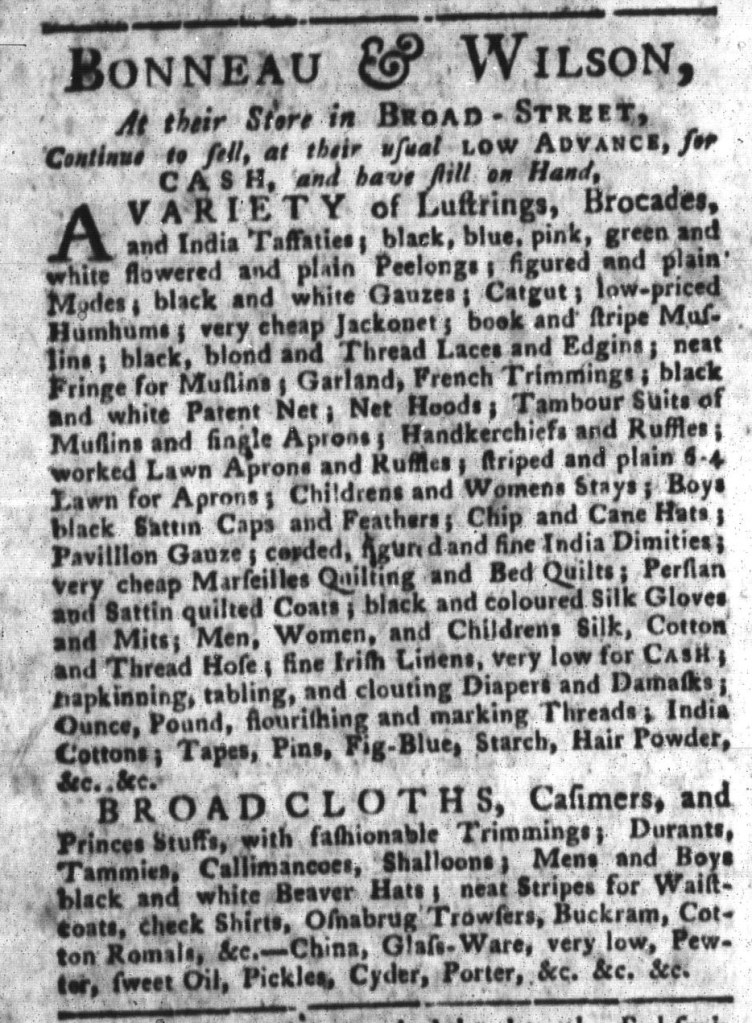
What was advertised in a revolutionary American newspaper 250 years ago today?
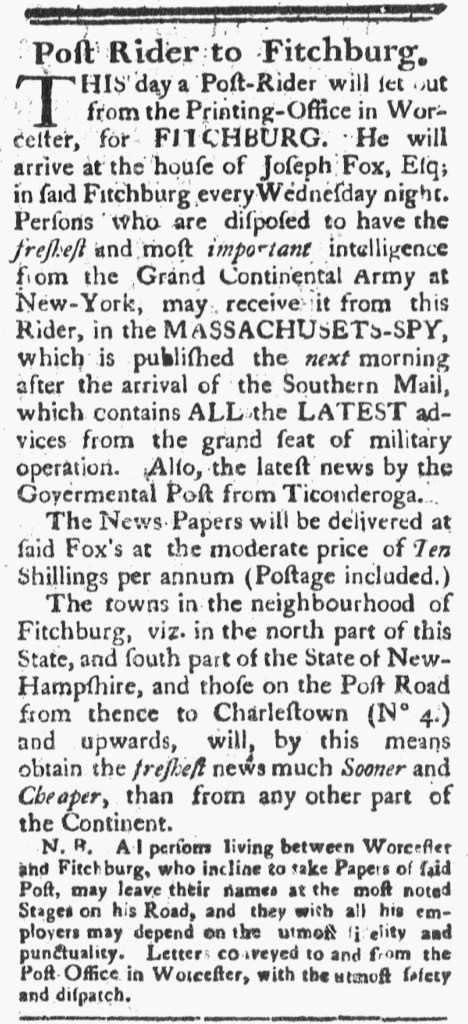
“The freshest and most important intelligence from the Grand Continental Army at New-York.”
An advertisement in the August 14, 1776, edition of the Massachusetts Spy promoted the services of a “Post Rider to Fitchburg,” a town twenty-five miles north of Worcester. The unnamed post rider stressed that there was no quicker way for residents of that town and others in the vicinity to receive the latest news, especially updates about the war being waged for independence.
The post rider explained that he set out from Worcester on Wednesdays, the same day that William Stearns and Daniel Bigelow published a new issue of the Massachusetts Spy, and “arrive[d] in … Fitchburg every Wednesday night,” supplying the “freshest and most important intelligence from the Grand Continental Army at New-York.” Readers could depend on it being the latest news because Stearns and Bigelow printed the Massachusetts Spy “the next morning after the arrival of the Southern Mail” on Tuesdays, giving them just enough time to glean the most significant news to include in new issues on Wednesdays. The letters and newspapers the printers received “contain[ed] ALL the LATEST advices from the grand seat of military operation” as well as “the latest news by the Government Post from Ticonderoga.” Stearns and Bigelow likely collaborated with the post rider in providing this service as well as in writing an advertisement that promoted the Massachusetts Spy to readers throughout central Massachusetts and southern New Hampshire. The Massachusetts Spy competed with newspapers published in Boston and Watertown in Massachusetts and Exeter and Portsmouth in New Hampshire, yet subscribers who received the Massachusetts Spy via the “Post Rider to Fitchburg” would “obtain the freshest news much Sooner and Cheaper, than from any other part of the Continent.” An annual subscription with delivery cost “Ten Shillings per annum (Postage included)” or two shillings more than the base price, “Eight Shillings, per Annum, exclusive of Postage,” listed in the newspaper’s colophon.
The Massachusetts Spy carried all sorts of news, including updates from the Continental Congress in Philadelphia, yet the printers and the post rider believed that readers were most interested in the latest news about the progress of the war. Better than any other newspaper printed in Massachusetts or New Hampshire, the Massachusetts Spy and the “Post Rider to Fitchburg” could deliver that news to subscribers and other readers.