Patrick Keane is a sophomore who transferred to Assumption College from Kennebec Valley Community College, where he was an honor student. He is majoring in History and minoring in Economics. He was on the varsity soccer and tennis teams at Waterville Senior High, in Waterville, Maine. He will be guest curator for the Adverts 250 Project during the week of November 20 to 26, 2016. He previously curated the Slavery Adverts 250 Project during the week of October 23 to 29, 2016.
The Slavery Adverts 250 Project chronicles the role of newspaper advertising in perpetuating slavery in the era of the American Revolution. The project seeks to reveal the ubiquity of slavery in eighteenth-century life from New England to Georgia by republishing advertisements about enslaved people – for sale as individuals or in groups, wanted to purchase or for hire for short periods, runaways who liberated themselves, and those who were subsequently captured and confined in jails and workhouses – in daily digests on this site as well as in real time via the @SlaveAdverts250 Twitter feed, utilizing twenty-first-century media to stand in for the print media of the eighteenth century.
The project aims to provide modern audiences with a sense of just how often colonizers encountered these advertisements in their daily lives. Enslaved men, women, and children appeared in print somewhere in the colonies almost every single day. Those advertisements served as a constant backdrop for social, cultural, economic, and political life in colonial and revolutionary America. Colonizers who did not purport to own enslaved people were still confronted with slavery as well as invited to maintain the system by purchasing enslaved men, women, and children or assisting in the capture of so-called “runaways” who sought to free themselves from bondage. The frequency of these newspaper advertisements suggests just how embedded slavery was in colonial and revolutionary American culture in everyday interactions beyond the printed page.
These advertisements also testify to the experiences of enslaved men, women, and children, though readers must consider that those experiences have been remediated through descriptions offered by enslavers rather than enslaved people themselves. Often unnamed in the advertisements, enslaved men, women, and children were not invisible or unimportant in early America.
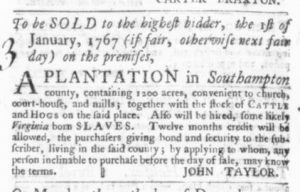
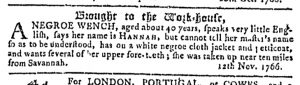
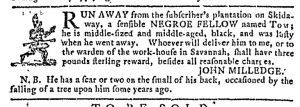
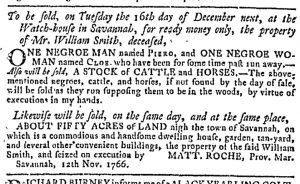
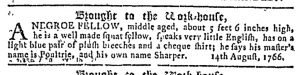
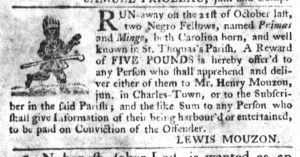
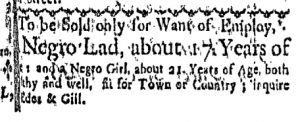
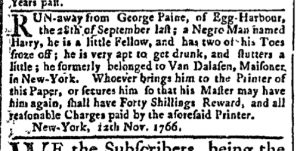
These advertisements appeared in colonial American newspapers 250 years ago today.
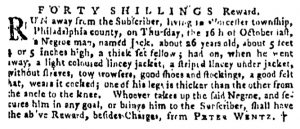
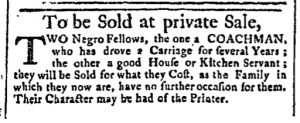
Pennsylvania Gazette (November 20, 1766).
**********
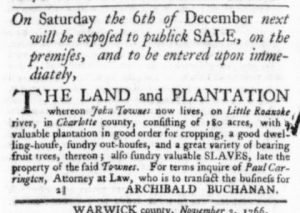
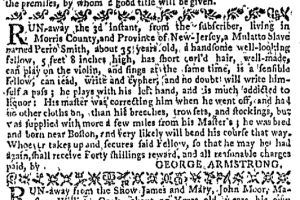
Supplement to the Pennsylvania Gazette (November 20, 1766).
**********
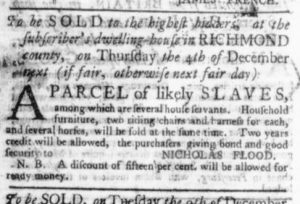
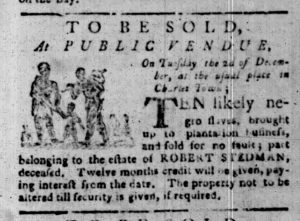
Supplement to the Pennsylvania Gazette (November 20, 1766).
**********
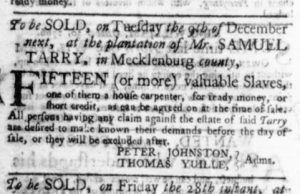
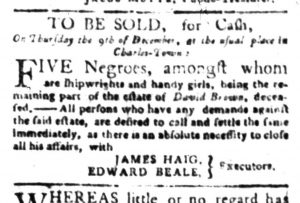
Supplement to the Pennsylvania Gazette (November 20, 1766).
As a senior History major, I’ve gotten to the point where I’ve solidified my routine of how I go about tackling historical essays and responses. Writing history papers has become a formula for me. It’s a calculated process with a set order to things. I am given a very specific topic, and I focus on defending a very specific answer.
When I sat down to write my first Adverts 250 response, I was overwhelmed with the freedom I was given. There was no prompt, and if there was a formula for success, I didn’t know it. At first, I figured the safest thing that I could do was to just pick an item from the advertisement that I was already familiar with. That way, I could provide an analysis that was similar to my usual history essays and responses. I could remain within my comfort zone. Thankfully, a few sentences in, I scratched that approach.
I began searching random phrases and words from the advertisements. I found numerous articles, books, blog posts, and pictures. One search would lead to another, and each valuable find would inspire me to ask new questions (which would then again result in more searches). I got into this cycle of digging through material, finding keywords, asking new questions, changing my original questions, and searching for more material all over again. It was such an unorganized process, unlike the history work that I am so used to.
Having the chance to “do history” through this project was both refreshing and exciting. I felt like I learned so much more from being able to engage in the research process myself. I really enjoyed being able to choose my own sources. I think the most difficult part about choosing my own sources proved to be finding dependable and recent sources. Sometimes I would find a relevant source, but it would be from so long ago that I would need to find another source that was published more recently to make sure I was getting updated information.
My favorite topic that I wrote about in this project was on my entry on November 14 from the New-Hampshire Gazette. I chose to research buckskin and sheepskin gloves that were advertised as the “neatest made Gloves for Funerals.” I knew absolutely nothing about funerals in colonial America, so I was extremely curious about how gloves related to colonial funerals. When I learned that families of the deceased distributed gloves to funeral attendees, I was shocked. Giving a parting gift, especially one that could be pricey, to funeral-goers was a practice that seemed so foreign to me. It’s so interesting to me that at one point in time, specifically 1766, this listing wouldn’t have been shocking to colonists in the slightest. The beauty of learning through analyzing advertisements is that it shows us the consumer culture at the time. Consumer culture gives us information about what sorts of things people wanted and needed, which tells us a lot about what kind of lives people from the past lived.
I can honestly say that I am disappointed that I didn’t have too many opportunities to do research like this in my previous history classes. I really enjoyed the independence that came with finding important information on my own. I am not only majoring in History, but also in Education. This project has given me a lot of inspiration about what kind of work I want my future students to engage in. I have retained so much more information from this project than my usual history work. I believe this is because I was not just skimming some assigned source and writing a response to it; instead, I was active in the process of finding information, which made it so much more valuable to me. I’m really thankful that I got a chance to guest curate the Adverts 250 Project, and I’m excited to read future entries posted by my classmates.
What was advertised in a colonial American newspaper 250 years ago today?
Georgia Gazette (November 19, 1766).
“TO BE SOLD, A SMALL ISLAND or NECK of LAND … belonging to the estate of Col. Kenneth Bailie, deceased.”
This advertisement published in the Georgia Gazette is a description of Colonel Kenneth Baillie’s home and lands. After the death of the colonel, three executors and one executrix published this advertisement for the sale of his estate.
I already knew that executor is the term for someone who carries out instructions for a will. What I didn’t know, however, was that in colonial times women executors had their own term, which was “executrixes.” The executrix named in this advertisement, according to genealogists, was the Colonel’s wife, Elizabeth Baillie. In general, executors and executrixes were named in the will of the deceased, and they were often given specific items or property in the will. We can assume that some or all of the executors received some part of the Colonel’s estate, and they decided to sell the estate rather than keeping it.
This advertisement reveals a lot about the Colonel Bailie. First of all, we know something about his status and military service because he was addressed as a colonel. We also know how many acres of land he owned, which tells us a bit more about his status in colonial Georgia. He owned many acres for cattle, hogs, and sheep, as well as lots of space for gardening.
**********
ADDITIONAL COMMENTARY: Carl Robert Keyes
On rare occasions I allow guest curators to depart from the established methodology for the Adverts 250 Project. In general, the project features an advertisement only once. Today’s advertisement, however, was featured relatively recently. Two advertisements for consumer goods and services that have not yet been included in the Adverts 250 Project were printed in the same issue of the Georgia Gazette. Why not instruct Mary to choose one of those instead?
I approved today’s advertisement for second appearance because I wanted an opportunity to explore some of the opportunities and constraints of the project. First, I’ll acknowledge two aspects of Mary’s analysis that I especially appreciated. Women placed disproportionately few advertisements as shopkeepers and other sorts of purveyors of goods and services during the eighteenth century. They appeared with a bit more regularity in various legal notices, such as this advertisement placed by Colonel Kenneth Baillie’s executrix and executors. Mary used this notice to demonstrate one of the roles that many women assumed at some point in their lives during the colonial era. In addition, Mary incorporated a type of source only infrequently consulted for entries on the Adverts 250 Project: genealogical records. Professional historians do not always adequately recognize the efforts of family historians and amateur genealogists in reconstructing relationships that help all of us to better understand the past.
In selecting this advertisement to make a second appearance, Mary has also recovered an element of eighteenth-century advertising that sometimes gets overlooked as a result of insisting that any particular advertisement may only be featured once. That obscures the fact that a great many advertisements ran for weeks or even months at a time, often with no updates or revisions. Today’s advertisement may look familiar to those who visit the Adverts 250 Project regularly; it would have certainly looked familiar to readers of the Georgia Gazette who saw only a limited number of advertisements in the once-weekly four-page issues of that newspaper. The Adverts 250 Project moves from newspaper to newspaper, city to city, every day. Colonists, however, would have had access to far fewer newspapers and far fewer advertisements. Those that lived in cities with multiple newspapers with robust advertising, such as Boston, New York, and Philadelphia, would have encountered a fairly broad array of advertisements, but readers in other places would not have seen the same range of advertisements that the Adverts 250 Project features.
Mary’s examination of this advertisement accomplished one other significant objective. She and former guest curator Ceara Morse demonstrated to their peers that there is no single “correct” interpretation or analysis of an advertisement. They each consulted different sources and learned different lessons about colonial America. At the same time, they both addressed common themes about property and status in eighteenth-century America.
These tables indicate how many advertisements for slaves appeared in colonial American newspapers during the week of November 13-19, 1766. Data for both tables was compiled by Jordan Russo.
Note: These tables are as comprehensive as currently digitized sources permit, but they may not be an exhaustive account. They includes all newspapers that have been digitized and made available via Accessible Archives, Colonial Williamsburg’s Digital Library, and Readex’s America’s Historical Newspapers. There are several reasons some newspapers may not have been consulted:
Issues that are no longer extant;
Issues that are extant but have not yet been digitized; and
Newspapers published in a language other than English (including the Wochentliche Philadelphische Staatsbote).
**********
Slavery Advertisements Published November 13-19, 1766: By Date
**********
Slavery Advertisements Published November 13-19, 1766: By Region
The Slavery Adverts 250 Project chronicles the role of newspaper advertising in perpetuating slavery in the era of the American Revolution. The project seeks to reveal the ubiquity of slavery in eighteenth-century life from New England to Georgia by republishing advertisements about enslaved people – for sale as individuals or in groups, wanted to purchase or for hire for short periods, runaways who liberated themselves, and those who were subsequently captured and confined in jails and workhouses – in daily digests on this site as well as in real time via the @SlaveAdverts250 Twitter feed, utilizing twenty-first-century media to stand in for the print media of the eighteenth century.
The project aims to provide modern audiences with a sense of just how often colonizers encountered these advertisements in their daily lives. Enslaved men, women, and children appeared in print somewhere in the colonies almost every single day. Those advertisements served as a constant backdrop for social, cultural, economic, and political life in colonial and revolutionary America. Colonizers who did not purport to own enslaved people were still confronted with slavery as well as invited to maintain the system by purchasing enslaved men, women, and children or assisting in the capture of so-called “runaways” who sought to free themselves from bondage. The frequency of these newspaper advertisements suggests just how embedded slavery was in colonial and revolutionary American culture in everyday interactions beyond the printed page.
These advertisements also testify to the experiences of enslaved men, women, and children, though readers must consider that those experiences have been remediated through descriptions offered by enslavers rather than enslaved people themselves. Often unnamed in the advertisements, enslaved men, women, and children were not invisible or unimportant in early America.
These advertisements appeared in colonial American newspapers 250 years ago today.
What was advertised in a colonial American newspaper 250 years ago today?
South-Carolina Gazette and Country Journal (November 18, 1766).
“Coarse Shoes for Negroes.”
In this advertisement published in the South-Carolina Gazette and Country Journal, Godfrey and Gadsden offered an assortment of goods from Bristol, England. For this entry, I decided to focus on the listing for “coarse Shoes for Negroes.”
My first question about this listing was why Godfrey & Gadsden chose the word “coarse” to describe shoes for slaves. I quickly discovered in my research that “coarse” was a very common description in advertisements for not only slave shoes, but for jackets, shirts, pants, and blankets, all created specifically for slaves. In Slavery in Alabama, James Benson Sellers writes, “The slave’s clothing was usually of a coarse quality, suitable for long, hard wear, as well as for protection against the weather.”[1] Slave shoes and clothes were created to stand the test of time, not for fashion or comfort. In “Fashion and Appearance: Men’s Clothing,” Travis Jacquess writes, “Slave shoes were notoriously uncomfortable and made of materials such as cardboard, thin leather, and wooden soles.”[2]
This listing also advertises “Men’s neat Shoes” for sale. Seeing the two items, “Men’s neat Shoes” and “coarse Shoes for Negroes” directly next to each other reminds us of how class distinctions could be presented through fashion in colonial America.
**********
ADDITIONAL COMMENTARY: Carl Robert Keyes
Mary and her peers began the semester by reading T.H. Breen’s groundbreaking article, “An Empire of Goods: The Anglicization of Colonial America, 1690-1776.”[3] In addition to providing an overview of early American economic history, Breen explains the importance of examining consumer culture in colonial America. In so doing, he provides a foundation on which to build for students preparing to contribute to the Adverts 250 Project.
In “Empire of Goods,” subsequent articles, and, eventually, a book (The Marketplace of Revolution: How Consumer Politics Shaped American Independence), Breen argues that colonists experienced a standardization of consumer culture throughout the eighteenth century. He claims that colonists from New England to Georgia had access to the same consumer goods imported from England and other faraway places. Even though colonists lived quite a distance from each other, they participated in the same marketplace because merchants and shopkeepers made available the same goods for them to purchase. As a result, consumers throughout the colonies had a common experience that united them culturally, thus facilitating subsequent political unity in the face of abuses by Parliament.
Breen relies on newspaper advertisements to make this argument. As my students and I have pursued the Adverts 250 Project over the past year we have seen for ourselves that, by and large, the same imported goods were indeed advertised in newspapers from throughout the colonies. However, there has been one notable exception: “coarse Shoes for Negroes” and similar descriptions of the same product. Especially as we have simultaneously constructed a parallel project, the Slavery Adverts 250 Project, that requires scanning all newspaper advertisements for words like “slave,” “negro,” and “mulatto,” we have noticed that advertisements for shoes for slaves appeared exclusively in newspapers published in the Chesapeake and Lower South, regions that by the 1760s were slave societies rather than societies with slaves. In the absence of large populations of enslaved men, women, and children, merchants and shopkeepers in New England and the Middle Atlantic did not tend to advertise “coarse Shoes for Negroes,” even if they may have stocked and sold them.
As a result, we have concluded that Breen offers a convincing argument about the standardization of consumer culture in eighteenth-century America, but with at least one important caveat. Whether they owned slaves or not, colonists in the Chesapeake and Lower South were exposed regularly to advertisements for shoes and clothing explicitly associated with slaves in stark contrast to the apparel marketed for white consumers. Slavery caused some regional differences in consumer culture to creep into newspaper advertising.
**********
[1] James Sellers, Slavery in Alabama (Tuscaloosa: University of Alabama Press, 1950), 99.
[2] Travis Jacquess, “Fashion and Appearance: Men’s Clothing” in The World of the American Revolution: A Daily Life Encyclopedia, ed, Merril D. Smith (Santa Barbara, CA: Greenwood Publishing Group, 2015), 284.
[3] T.H. Breen, “An Empire of Goods: The Anglicization of Colonial America, 1690-1776,” Journal of British Studies 25, no. 4 (October 1986): 467-499.
The Slavery Adverts 250 Project chronicles the role of newspaper advertising in perpetuating slavery in the era of the American Revolution. The project seeks to reveal the ubiquity of slavery in eighteenth-century life from New England to Georgia by republishing advertisements about enslaved people – for sale as individuals or in groups, wanted to purchase or for hire for short periods, runaways who liberated themselves, and those who were subsequently captured and confined in jails and workhouses – in daily digests on this site as well as in real time via the @SlaveAdverts250 Twitter feed, utilizing twenty-first-century media to stand in for the print media of the eighteenth century.
The project aims to provide modern audiences with a sense of just how often colonizers encountered these advertisements in their daily lives. Enslaved men, women, and children appeared in print somewhere in the colonies almost every single day. Those advertisements served as a constant backdrop for social, cultural, economic, and political life in colonial and revolutionary America. Colonizers who did not purport to own enslaved people were still confronted with slavery as well as invited to maintain the system by purchasing enslaved men, women, and children or assisting in the capture of so-called “runaways” who sought to free themselves from bondage. The frequency of these newspaper advertisements suggests just how embedded slavery was in colonial and revolutionary American culture in everyday interactions beyond the printed page.
These advertisements also testify to the experiences of enslaved men, women, and children, though readers must consider that those experiences have been remediated through descriptions offered by enslavers rather than enslaved people themselves. Often unnamed in the advertisements, enslaved men, women, and children were not invisible or unimportant in early America.
These advertisements appeared in colonial American newspapers 250 years ago today.
South-Carolina Gazette and Country Journal (November 18, 1766).
**********
South-Carolina Gazette and Country Journal (November 18, 1766).
**********
South-Carolina Gazette and Country Journal (November 18, 1766).
**********
South-Carolina Gazette and Country Journal (November 18, 1766).
**********
South-Carolina Gazette and Country Journal (November 18, 1766).
**********
South-Carolina Gazette and Country Journal (November 18, 1766).
**********
South-Carolina Gazette and Country Journal (November 18, 1766).
**********
South-Carolina Gazette and Country Journal (November 18, 1766).
**********
South-Carolina Gazette and Country Journal (November 18, 1766).
**********
South-Carolina Gazette and Country Journal (November 18, 1766).
**********
South-Carolina Gazette and Country Journal (November 18, 1766).
**********
South-Carolina Gazette and Country Journal (November 18, 1766).
What was advertised in a colonial American newspaper 250 years ago today?
New-York Mercury (November 17, 1766).
“To be sold cheap by John Keteltas … pewter tea-pots.”
In this advertisement from the New-York Mercury, John Keteltas announced that he had an assortment of goods imported from London and Bristol to be sold “cheap” at his store located “in Queen-street.” I decided to focus on his listing for “pewter tea-pots.”
I first decided to do some research on pewter as a material. Pewter is an alloy metal that is made up of mostly tin. Pewter was often used for domestic items such as dishes and cups and even teapots. Pewterers often marked their pewter creations with a signature “touchmark” so people could identify who created the item. Consumers who purchased pewter items would also on some occasions put their own touchmark, often their initials, on their items. Some wealthy families would have their family crest stamped onto their pewter item as their touchmark.
In A History of Boston in 50 Artifacts, Joseph Bagley writes that pewter as a material flourished during the eighteenth century in Boston, but by the late 1700s, shortly after this advertisement was published, pewter saw a decline in popularity. “The eventual decline in the use of pewter happened in the late 1700s, when cheaply made English ceramics flooded the market, replacing the equally inexpensive pewter goods with whiter-colored wares and their sometimes colorful decorations.”[1] Pewter domestic wares were common, but other options became increasingly available and more popular.
Tea played an important role in the daily lives of colonial families. In Defiance of the Patriots: The Boston Tea Party and the Making of America, Benjamin Carp notes that in the eighteenth century drinking tea was a regular event for families of all classes. He writes, “During the eighteenth century, tea became the drink of respectable British and colonial households everywhere.”[2]
John Keteltas advertised an essential item made of a common material. Considering he also promised his items to be sold at a cheap price, we can assume that a wide variety of people might respond to his advertisement in their search for a “pewter tea-pot.”
**********
ADDITIONAL COMMENTARY: Carl Robert Keyes
It is impossible to know from John Keteltas’ advertisement if the “pewter tea-pots” he sold had the sort of touchmarks that Mary described. Artisans of all sorts frequently marked their work in one way or another in the eighteenth century. While they did so out of pride in the items they had created, this practice served other purposes as well. Pewterers and others marked their wares as a means of permanently associating their skill and expertise with the goods they produced. In this manner, they branded the items that came out of their workshops. They transformed their creations, the goods that consumers would display and use in their households, into advertisements through the act of marking them. In one sense, such items never fully left the possession of artisans to become the property of their customers. Even when customers used a family crest or other means of personalizing their possessions, such marks competed with any touchmark that belonged to the creator. No matter how often they were used to serve the needs of consumers, marked items also continued to promote the work of the artisans who produced them. Every time a colonist used an item with a touchmark or other device he or she was exposed to a form of perpetual marketing.
The Adverts 250 Project focuses primarily on newspaper advertisements, though other forms of printed marketing materials (such as trade cards, broadsides, catalogs, and billheads) are sometimes featured. Yet not all advertising in colonial America was printed. Some of it was verbal, delivered by word of mouth, town criers, auctioneers, or street hawkers. Or, in the case of the “pewter tea-pots” sold by John Keteltas and other items made by artisans, material goods themselves could serve as advertisements. Furniture with paper labels affixed combined printed advertising and material goods, as did books with labels of various sorts. In such cases, commodities became advertisements for more commodities.
**********
[1] Joseph M. Bagley, A History of Boston in 50 Artifacts (Hanover: University Press of New England, 2016), 95.
[2] Benjamin L. Carp, Defiance of the Patriots: The Boston Tea Party and the Making of America (New Haven: Yale University Press, 2010), 55.
The Slavery Adverts 250 Project chronicles the role of newspaper advertising in perpetuating slavery in the era of the American Revolution. The project seeks to reveal the ubiquity of slavery in eighteenth-century life from New England to Georgia by republishing advertisements about enslaved people – for sale as individuals or in groups, wanted to purchase or for hire for short periods, runaways who liberated themselves, and those who were subsequently captured and confined in jails and workhouses – in daily digests on this site as well as in real time via the @SlaveAdverts250 Twitter feed, utilizing twenty-first-century media to stand in for the print media of the eighteenth century.
The project aims to provide modern audiences with a sense of just how often colonizers encountered these advertisements in their daily lives. Enslaved men, women, and children appeared in print somewhere in the colonies almost every single day. Those advertisements served as a constant backdrop for social, cultural, economic, and political life in colonial and revolutionary America. Colonizers who did not purport to own enslaved people were still confronted with slavery as well as invited to maintain the system by purchasing enslaved men, women, and children or assisting in the capture of so-called “runaways” who sought to free themselves from bondage. The frequency of these newspaper advertisements suggests just how embedded slavery was in colonial and revolutionary American culture in everyday interactions beyond the printed page.
These advertisements also testify to the experiences of enslaved men, women, and children, though readers must consider that those experiences have been remediated through descriptions offered by enslavers rather than enslaved people themselves. Often unnamed in the advertisements, enslaved men, women, and children were not invisible or unimportant in early America.
These advertisements appeared in colonial American newspapers 250 years ago today.
Boston Evening-Post (November 17, 1766).
**********
Supplement to the Boston-Gazette (November 17, 1766).