February 4

Who was the subject of an advertisement in a colonial American newspaper 250 years ago today?
feb-4-241767-georgia-gazette
Georgia Gazette (February 4, 1767).

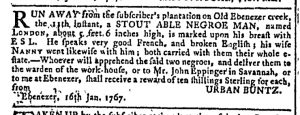
“RUN AWAY … two negroes.”

The Slavery Adverts 250 Project, a companion to the Adverts 250 Project, began last fall as an experimental class project for my Colonial America course. Along with the undergraduate guest curators, I hoped to explore the frequency that advertisements concerning slaves appeared in colonial newspapers and, when appropriate, draw distinctions between the presence of such advertisements among various cities and towns, colonies, or regions. In general, I hoped to use the Slavery Adverts 250 Project to demonstrate to students that slavery was present throughout colonial America, in the northern colonies where they did not expect to encounter it as well as in southern colonies where they already knew slavery was practiced extensively.

Identifying and republishing all of the advertisements for slaves that appeared in colonial newspapers 250 years ago certainly gives a sense of the frequency that such advertisements appeared in colonial newspapers. Slavery was such a part of everyday life and culture, as well as an integral component of colonial economies, that advertisements seeking to buy or sell slaves and notices about runaways and captured fugitive slaves became a mundane part of the advertising pages in newspapers throughout the colonies.
feb-4-georgia-gazette
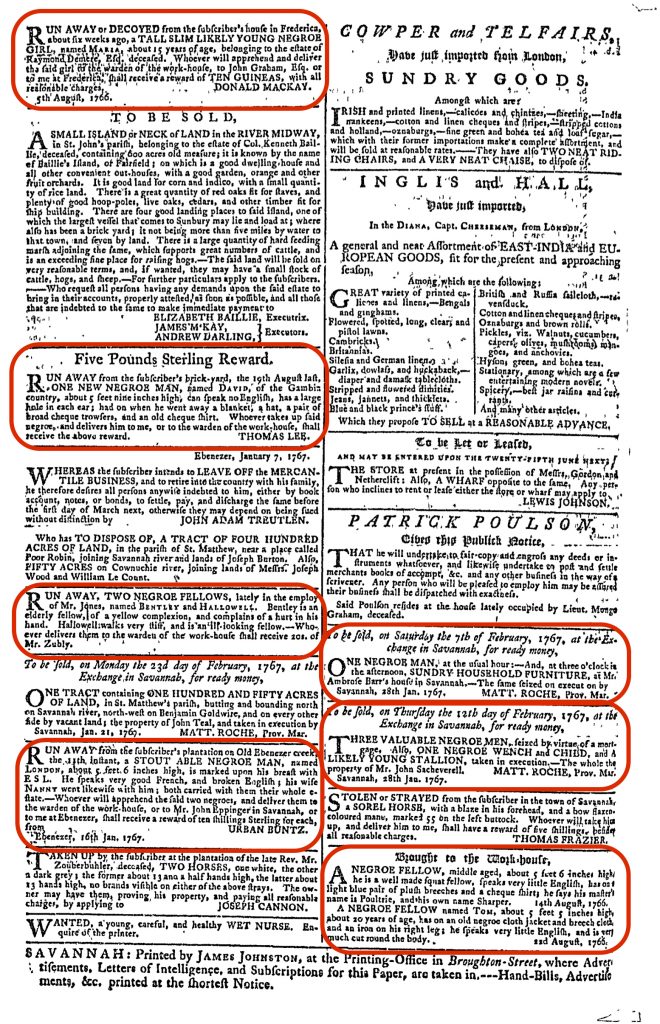
Advertisements concerning slavery on the final page of the Georgia Gazette (February 4, 1767).

That being said, collecting and republishing such advertisements tells an incomplete story. It reveals which newspapers tended to include more advertisements for slaves than others, but removing those advertisements from their original context disguises their ubiquity, especially in newspapers published in the Lower South.

Consider today’s advertisement for runaways London (who “speaks very good French, and broken English”) and his wife, Nanny. In and of itself, this advertisement tells a fascinating story of enslavement and agency in the eighteenth-century Atlantic world. On its own, however, it does not reveal the amount of space given over to advertisements for slaves in the Georgia Gazette. Nine such advertisements appeared in the February 4, 1767, issue, spread over three of its four pages. They accounted for one-third of the twenty-nine advertisements. Seven were printed on the final page, distributed such that readers could not escape noticing them.

A few days ago I noted that advertisements placed by the printer filled a disproportionate amount of space on the final page of the Providence Gazette, perhaps because the publication had difficulty attracting other advertisers. James Johnston did not have that difficulty when he took the Georgia Gazette to press every week. Enslavement was a significant aspect of daily life in Georgia in 1767. If it had not been, the colony’s only newspaper would not have been overflowing with advertisements announcing “ONE NEGROE WENCH and CHILD” for sale or “A NEGROE FELLOW named TOM” committed to the workhouse or “a reward of ten shillings” for anyone who captured London and Nanny.
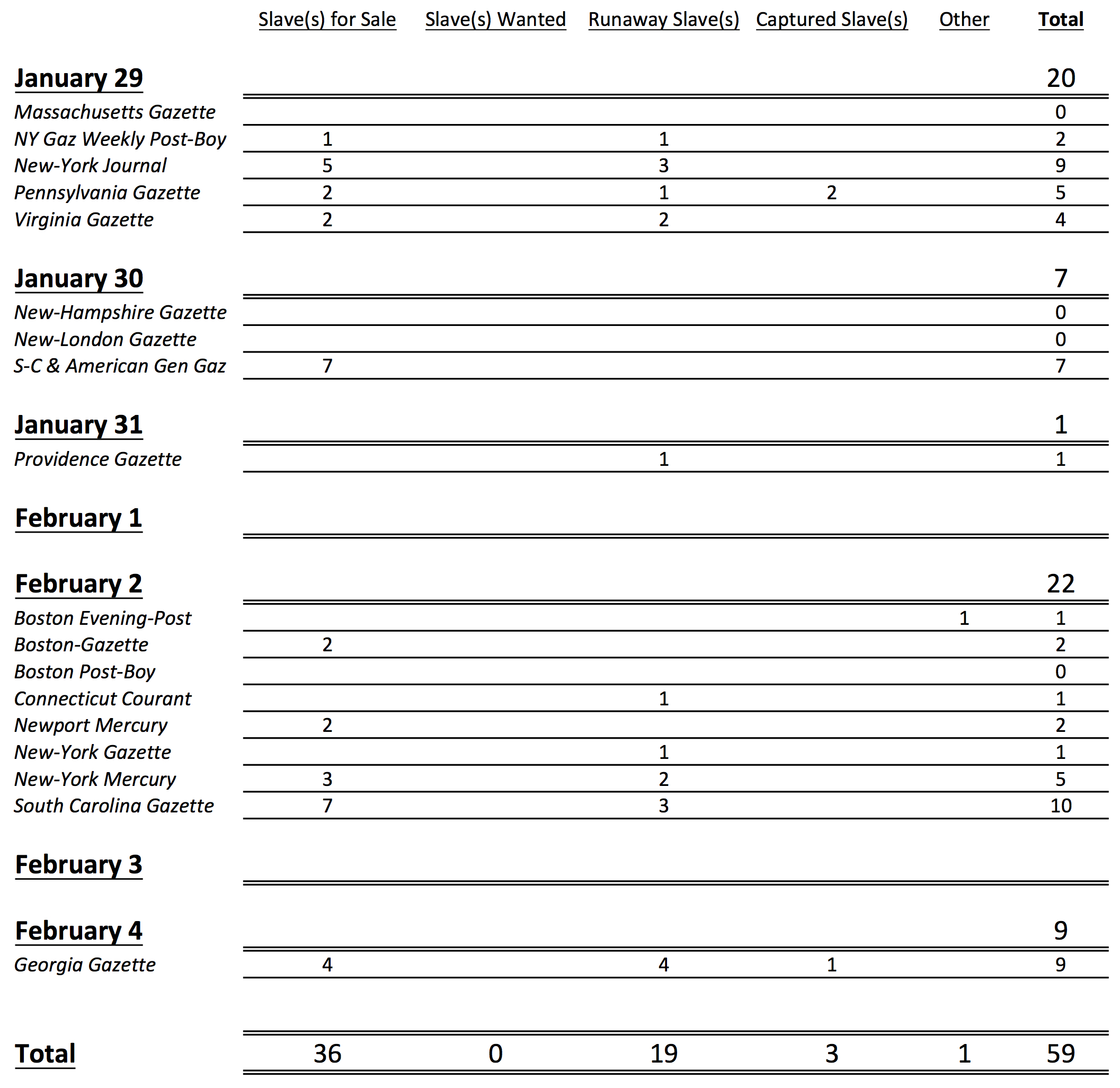
Summary of Slavery Advertisements Published January 29 – February 4, 1767

These tables indicate how many advertisements for slaves appeared in colonial American newspapers during the week of January 29 – February 4, 1767.

Note:  These tables are as comprehensive as currently digitized sources permit, but they may not be an exhaustive account.  They includes all newspapers that have been digitized and made available via Accessible Archives, Colonial Williamsburg’s Digital Library, and Readex’s America’s Historical Newspapers.  There are several reasons some newspapers may not have been consulted:

  • Issues that are no longer extant;
  • Issues that are extant but have not yet been digitized (including the Pennsylvania Journal); and
  • Newspapers published in a language other than English (including the Wochentliche Philadelphische Staatsbote).

**********

Slavery Advertisements Published January 29 – February 4, 1767:  By Date

slavery-adverts-tables-1767-by-date-jan-29

**********

Slavery Advertisements Published January 29 – February 4:  By Region

slavery-adverts-tables-1767-by-region-jan-29

Slavery Advertisements Published February 4, 1767

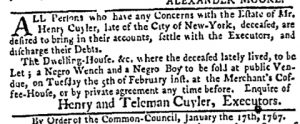
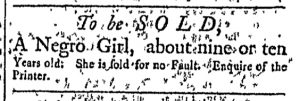
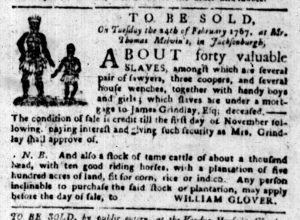
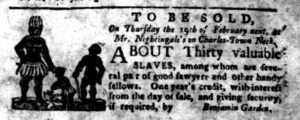
The Slavery Adverts 250 Project chronicles the role of newspaper advertising in perpetuating slavery in the era of the American Revolution. The project seeks to reveal the ubiquity of slavery in eighteenth-century life from New England to Georgia by republishing advertisements about enslaved people – for sale as individuals or in groups, wanted to purchase or for hire for short periods, runaways who liberated themselves, and those who were subsequently captured and confined in jails and workhouses – in daily digests on this site as well as in real time via the @SlaveAdverts250 Twitter feed, utilizing twenty-first-century media to stand in for the print media of the eighteenth century.

The project aims to provide modern audiences with a sense of just how often colonizers encountered these advertisements in their daily lives. Enslaved men, women, and children appeared in print somewhere in the colonies almost every single day. Those advertisements served as a constant backdrop for social, cultural, economic, and political life in colonial and revolutionary America. Colonizers who did not purport to own enslaved people were still confronted with slavery as well as invited to maintain the system by purchasing enslaved men, women, and children or assisting in the capture of so-called “runaways” who sought to free themselves from bondage. The frequency of these newspaper advertisements suggests just how embedded slavery was in colonial and revolutionary American culture in everyday interactions beyond the printed page.

These advertisements also testify to the experiences of enslaved men, women, and children, though readers must consider that those experiences have been remediated through descriptions offered by enslavers rather than enslaved people themselves. Often unnamed in the advertisements, enslaved men, women, and children were not invisible or unimportant in early America.

These advertisements appeared in colonial American newspapers 250 years ago today.

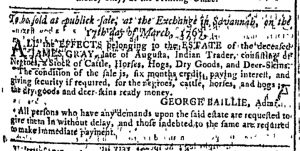
feb-4-georgia-gazette-slavery-1
Georgia Gazette (February 4, 1767).

**********

feb-4-georgia-gazette-slavery-2
Georgia Gazette (February 4, 1767).

**********

feb-4-georgia-gazette-slavery-3
Georgia Gazette (February 4, 1767).

**********

feb-4-georgia-gazette-slavery-4
Georgia Gazette (February 4, 1767).

**********

feb-4-georgia-gazette-slavery-5
Georgia Gazette (February 4, 1767).

**********

feb-4-georgia-gazette-slavery-6
Georgia Gazette (February 4, 1767).

**********

feb-4-georgia-gazette-slavery-7
Georgia Gazette (February 4, 1767).

**********

feb-4-georgia-gazette-slavery-8
Georgia Gazette (February 4, 1767).

**********

feb-4-georgia-gazette
Georgia Gazette (February 4, 1767).

February 3

What was advertised in a colonial American newspaper 250 years ago this week?

feb-3-221767-boston-gazette
Boston-Gazette (February 2, 1767).

“David Conkie Begs Leave to acquaint the Public that he is just arrived.”

Shopkeeper David Conkie placed an advertisement in the Boston-Gazette “to acquaint the Public that he is just arrived” and that he sold “a large Assortment of Winter and Spring Goods” at a store he opened near Faneuil Hall. A newcomer to the city, advertising in one of the local newspapers served a different function for Conkie than for many of his competitors who relied on inserting notices in the public prints. Conkie needed to make potential customers aware that his shop was now an alternative to others in the city, one where they could depend on the same courteous and conscientious service and low prices that other shopkeepers promised.

In contrast, many of Conkie’s competitors were well established in Boston. They operated shops already familiar to residents of the city. Even if readers of the local newspapers had not patronized Frederick William Geyer’s shop or Jolley Allen’s shop, they had certainly encountered advertisements placed by these industrious entrepreneurs. Geyer and Allen both used advertising to gain maximum market exposure.

Geyer’s advertisement appeared immediately to the left of Conkie’s advertisement in the Boston-Gazette, but on the same day it also ran in the Boston Evening-Post and the Boston Post-Boy. Four days earlier it appeared in the Massachusetts Gazette. Geyer regularly advertised in all four of Boston’s newspapers, often choosing to run shorter advertisements (as opposed to lengthy list advertisements) in order to moderate the costs of his marketing campaign. All the same, he kept his name and his goods in the minds of local consumers.

Similarly, Allen regularly advertised in multiple newspapers. His distinctive advertisement appeared two columns to the left of Conkie’s advertisement in the Boston-Gazette, as well as in the Boston Evening-Post and the Boston Post-Boy on the same day. Allen devised a brand, of sorts, for his advertising. Each notice featured a border composed of printing ornaments, making his advertisements immediately recognizable, especially for regular readers of Boston’s newspapers. Like Geyer, he established a prominent presence through continuous and widespread advertising in the local media.

David Conkie did not publish his advertisement in multiple newspapers. He may not have had the resources to do so, yet he recognized the importance of advertising in at least one if he wished to gain a foothold in the local marketplace. He deployed the same appeals concerning price, choice, and service as his competitors as he attempted to overcome the familiarity enjoyed by established shopkeepers and draw customers to his own shop.

February 2

What was advertised in a colonial American newspaper 250 years ago today?

feb-2-221767-new-york-gazette
New-York Gazette (February 2, 1767).

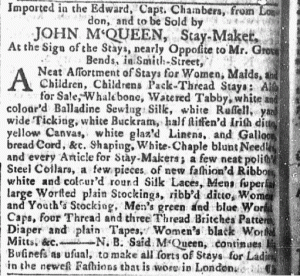
“Said M‘Queen, continues his Business as usual, to make all sorts of Stays for Ladies.”

John McQueen pursued multiple branches of the staymaking business at his shop “At the Sign of the Stays … in Smith-Street” in New York. He sold stays (or corsets) recently imported from London, but stated that he made “all sorts of Stays” as well. McQueen described himself as a “Stay-Maker” rather than a shopkeeper, although he also engaged in retailing “every Article for Stay-Makers” to others who practiced the trade. He sold textiles and accessories, like many shopkeepers, but the landmark that identified his shop, “the Sign of the Stays,” testified to his primary occupation and merchandise.

Even though he possessed the skills “to make all sorts of Stays,” McQueen may have considered it necessary to stock and advertise inventory imported from London. In addition to keeping up with demand that might have exceeded the number of garments he could produce in his shop, this also allowed him to assert that customers who purchased his stays could be certain that they made stylish choices that kept with those made by genteel women who resided across the Atlantic in the metropolitan capital of the British empire. McQueen had a habit of concluding his advertisements with declarations that he made stays “in the newest Fashions that is wore in London,” as he did in a nota bene that accompanied today’s advertisement. In an advertisement published nearly a year earlier, he resorted to even more grandiose language, proclaiming that he made stays “in the newest Fashion that is wore by the Ladies of Great-Britain or France, &c. &c.” In that case, he also reported that he imported stays “directly from London.”

Which merchandise comprised the bulk of McQueen’s business? Imported Stays or those he made in his own shop? Either way, he needed to establish some sort of connection – some sort of awareness of – current fashions in London and other cosmopolitan cities in Europe to help move any of his inventory made in his own shop. In the coming years many colonists would increasingly turn to homespun and look askance at goods and styles transported across the Atlantic for England, but for the moment most were still invested in expressing British identity through the Anglicization of the goods they purchased and clothing they wore.

Slavery Advertisements Published February 2, 1767

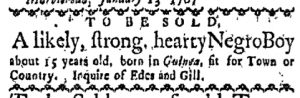
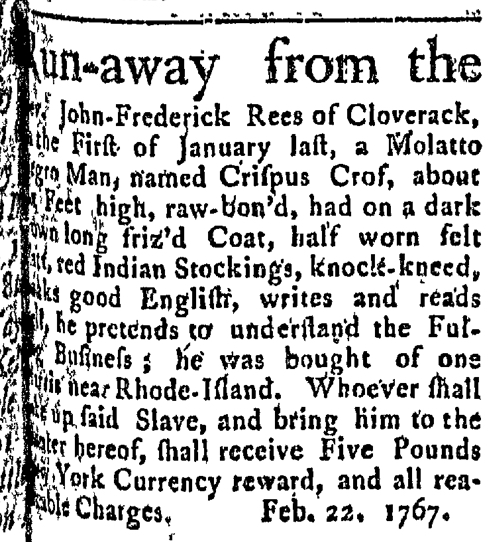
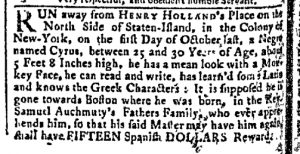
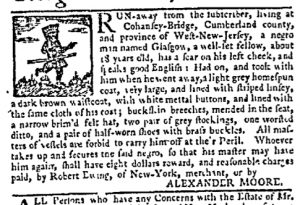
The Slavery Adverts 250 Project chronicles the role of newspaper advertising in perpetuating slavery in the era of the American Revolution. The project seeks to reveal the ubiquity of slavery in eighteenth-century life from New England to Georgia by republishing advertisements about enslaved people – for sale as individuals or in groups, wanted to purchase or for hire for short periods, runaways who liberated themselves, and those who were subsequently captured and confined in jails and workhouses – in daily digests on this site as well as in real time via the @SlaveAdverts250 Twitter feed, utilizing twenty-first-century media to stand in for the print media of the eighteenth century.

The project aims to provide modern audiences with a sense of just how often colonizers encountered these advertisements in their daily lives. Enslaved men, women, and children appeared in print somewhere in the colonies almost every single day. Those advertisements served as a constant backdrop for social, cultural, economic, and political life in colonial and revolutionary America. Colonizers who did not purport to own enslaved people were still confronted with slavery as well as invited to maintain the system by purchasing enslaved men, women, and children or assisting in the capture of so-called “runaways” who sought to free themselves from bondage. The frequency of these newspaper advertisements suggests just how embedded slavery was in colonial and revolutionary American culture in everyday interactions beyond the printed page.

These advertisements also testify to the experiences of enslaved men, women, and children, though readers must consider that those experiences have been remediated through descriptions offered by enslavers rather than enslaved people themselves. Often unnamed in the advertisements, enslaved men, women, and children were not invisible or unimportant in early America.

These advertisements appeared in colonial American newspapers 250 years ago today.

feb-2-boston-evening-post-slavery-1
Boston Evening-Post (February 2, 1767).

**********

feb-2-boston-gazette-slavery-1
Boston-Gazette (February 2, 1767).

**********

feb-2-boston-gazette-slavery-2
Boston-Gazette (February 2, 1767).

**********

feb-2-connecticut-courant-slavery-1
Connecticut Courant (February 2, 1767).

**********

feb-2-new-york-gazette-slavery-1
New-York Gazette (February 2, 1767).

**********

feb-2-new-york-mercury-slavery-1
New-York Mercury (February 2, 1767).

**********

feb-2-new-york-mercury-slavery-2
New-York Mercury (February 2, 1767).

**********

feb-2-new-york-mercury-slavery-3
New-York Mercury (February 2, 1767).

**********

feb-2-new-york-mercury-slavery-4
New-York Mercury (February 2, 1767).

**********

feb-2-new-york-mercury-slavery-5
New-York Mercury (February 2, 1767).

**********

feb-2-newport-mercury-slavery-1
Newport Mercury (February 2, 1767).

**********

feb-2-south-carolina-gazette-slavery-1
South Carolina Gazette (February 2, 1767).

**********

feb-2-south-carolina-gazette-slavery-2
South Carolina Gazette (February 2, 1767).

**********

feb-2-south-carolina-gazette-slavery-3
South Carolina Gazette (February 2, 1767).

**********

feb-2-south-carolina-gazette-slavery-4
South Carolina Gazette (February 2, 1767).

**********

feb-2-south-carolina-gazette-slavery-5
South Carolina Gazette (February 2, 1767).

**********

feb-2-south-carolina-gazette-slavery-6
South Carolina Gazette (February 2, 1767).

**********

feb-2-south-carolina-gazette-supplement-slavery-1
Supplement to the South Carolina Gazette (February 2, 1767).

**********

feb-2-south-carolina-gazette-supplement-slavery-2
Supplement to the South Carolina Gazette (February 2, 1767).

**********

feb-2-south-carolina-gazette-supplement-slavery-3
Supplement to the South Carolina Gazette (February 2, 1767).

**********

feb-2-south-carolina-gazette-supplement-slavery-4
Supplement to the South Carolina Gazette (February 2, 1767).

February 1

What was advertised in a colonial American newspaper 250 years ago this week?

“TO BE SOLD, at the POST-OFFICE … A Collection of valuable and useful BOOKS.”

feb-1-1311767-providence-gazette
Providence Gazette (January 31, 1767).

The methodology that guides the Adverts 250 Project sometimes makes it difficult to choose which advertisement to feature on certain days. Each advertisement must have been published 250 years ago that day. If no newspapers were printed in colonial America on any particular date, then the advertisement should come from the most recently published newspaper available anywhere in the colonies. This means that there are days – Thursdays in 2017 (Mondays in 1767) and Sundays in 2017 (Thursdays in 1767) – for choosing among multiple newspapers from colonial America’s largest urban ports, many overflowing with advertisements to the point that they sometimes issued supplements to contain then all.

On other days, however, only one newspaper was published anywhere in the colonies. For Fridays (Mondays in 1767) the project draws from South-Carolina and American General Gazette, on Saturdays (Tuesdays in 1767) from the Georgia Gazette, and on Tuesdays (Saturdays in 1767) from the Providence Gazette.

Note that the Providence Gazette was the only colonial American newspaper published on Saturdays in 1767. Recall that no newspapers were printed on Sundays. That means that on Wednesdays in 2017 (Sundays in 1767), featured advertisements must come from the Providence Gazette. As a result, this methodology privileges the Providence Gazette, a newspaper from a smaller port, over its counterparts in larger and busier cities. The Providence Gazette did not include nearly as many advertisements as the four newspapers printed in Boston, four others in New York, three in Philadelphia, and three in Charleston. This greatly constrains the choices when selecting which advertisements to feature on the Adverts 250 Project.

It does not help that the methodology also asserts that advertisements should not be featured twice, though exceptions can be made to demonstrate significant aspects of marketing practices in eighteenth-century America. Such is the case today. The featured advertisement previously appeared in the Providence Gazette on multiple occasions, sometimes as a single advertisement and other times divided into two parts. The few advertisements in the January 31 issue all appeared in earlier editions.

jan-31-providence-gazette
Advertisements inserted by the printers on the final page of the Providence Gazette (January 31, 1767).

Examining those advertisements to make that determination yields an interesting revelation: the printers of the Providence Gazette occupied most of the advertising space on the final page. This includes William Goddard. After all, the colophon indicates that the newspaper was “Printed (in the Absence of WILLIAM GODDARD) by SARAH GODDARD, and COMPANY.”

This gives that impression that the Providence Gazette may have been struggling to attract advertisers in 1767, unlike its counterparts in other larger port cities. Even the new Pennsylvania Chronicle, promoted in one of the advertisements inserted by the printers of the Providence Gazette in their own publication, ran copious advertisements within its first month. Sarah Goddard and Company made an editorial decision to fill the final page of their newspaper with advertisements, even if they were their own notices. In comparison, other printers in smaller towns opted to print news items almost exclusively and forego similar amounts of advertising. Such decisions merit additional investigation as the Adverts 250 Project continues.