September 1

What was advertised in a colonial America newspaper 250 years ago today?
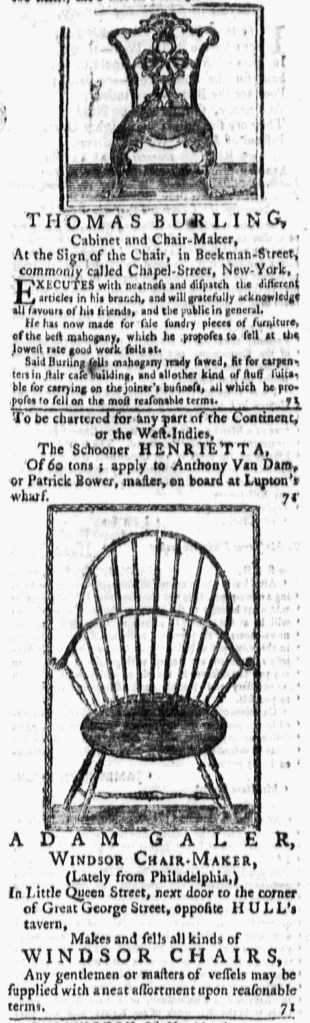
Rivington’s New-York Gazetteer (September 1, 1774).

“Cabinet and Chair-Maker, At the Sign of the Chair.”

A week ago, the Adverts 250 Project examined advertisements placed by Adam Galer, “WINDSOR CHAIR-MAKER,” and Thomas Burling, “Cabinet and Chair-Maker,” that happened to appear one after the other in the August 25, 1774, edition of Rivington’s New-York Gazetteer.  Galer adorned his advertisement with an image of a Windsor chair within a decorative border, the focal point of his notice, while Burling relied exclusively on copy in making his pitch to prospective customers.

Burling apparently did not like being outdone by Galer.  In the next issue of Rivington’s New-York Gazetteer his advertisement also featured a woodcut of a chair within a border.  Though the image was not as large as Galer’s image, the chair depicted in it was much more elaborate.  That represented the sorts of furniture, the “different articles in his branch,” that Burling produced in his shop, compared to Galer specializing in Windsor chairs.  The woodcut may have also replicated the “Sign of the Chair” that marked Burling’s location “in Beekman-Street, commonly called Chapel-Street.”  Once again, the two advertisements appeared in proximity to each other, though this time Burling’s came first and a short advertisement for chartering the schooner Henrietta separated them since colonial printers did not classify or organize advertisements by purpose or genre.

That Burling first published his advertisement without an image and then so quickly added one suggests that he consulted the newspaper to see his advertisement in print, perhaps to confirm its conclusion or perhaps out of pride to see his name and a description of his “neatness and dispatch” and “good work” in print.  He might have been quite surprised to discover that Galer upstaged him with an image and, adding to his frustration, that the two advertisements appeared together.  While the image drew attention to that portion of the page, increasing the chances that readers noticed Burling’s advertisement immediately below Galer’s, Burling might have felt that it reflected poorly on him that a chairmaker who made only Windsor chairs circulated the more striking notice.  To make his advertisement just as memorable, he added an image of a much more ornate chair at the first opportunity.
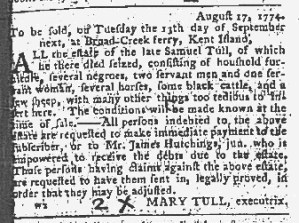
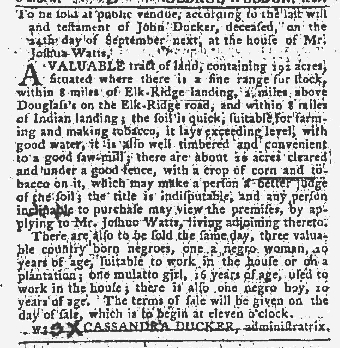
Slavery Advertisements Published September 1, 1774

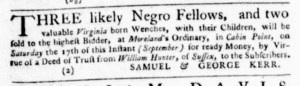
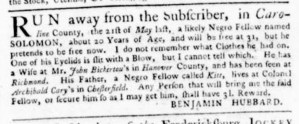
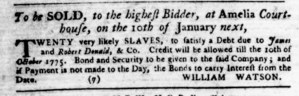
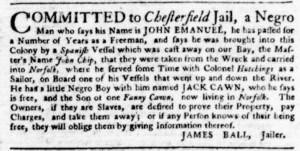
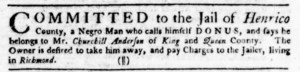
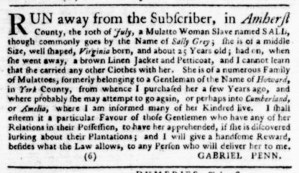
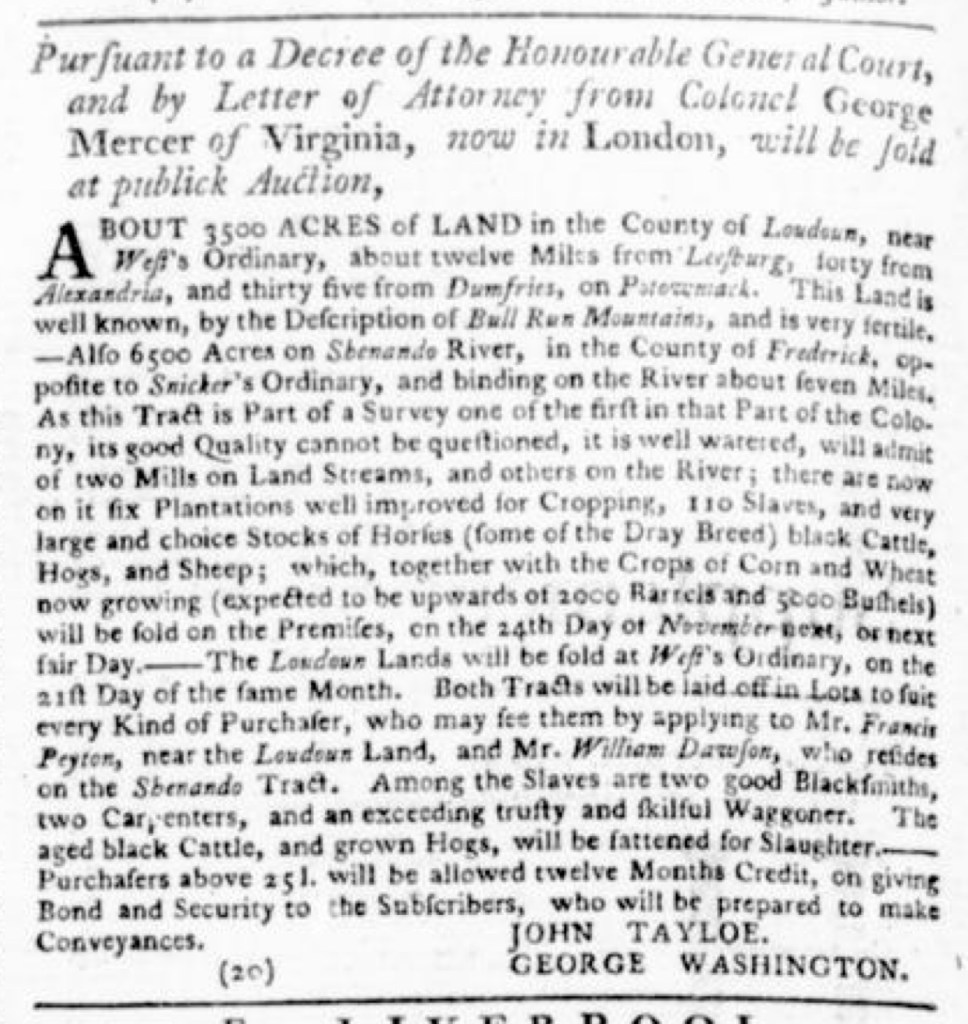
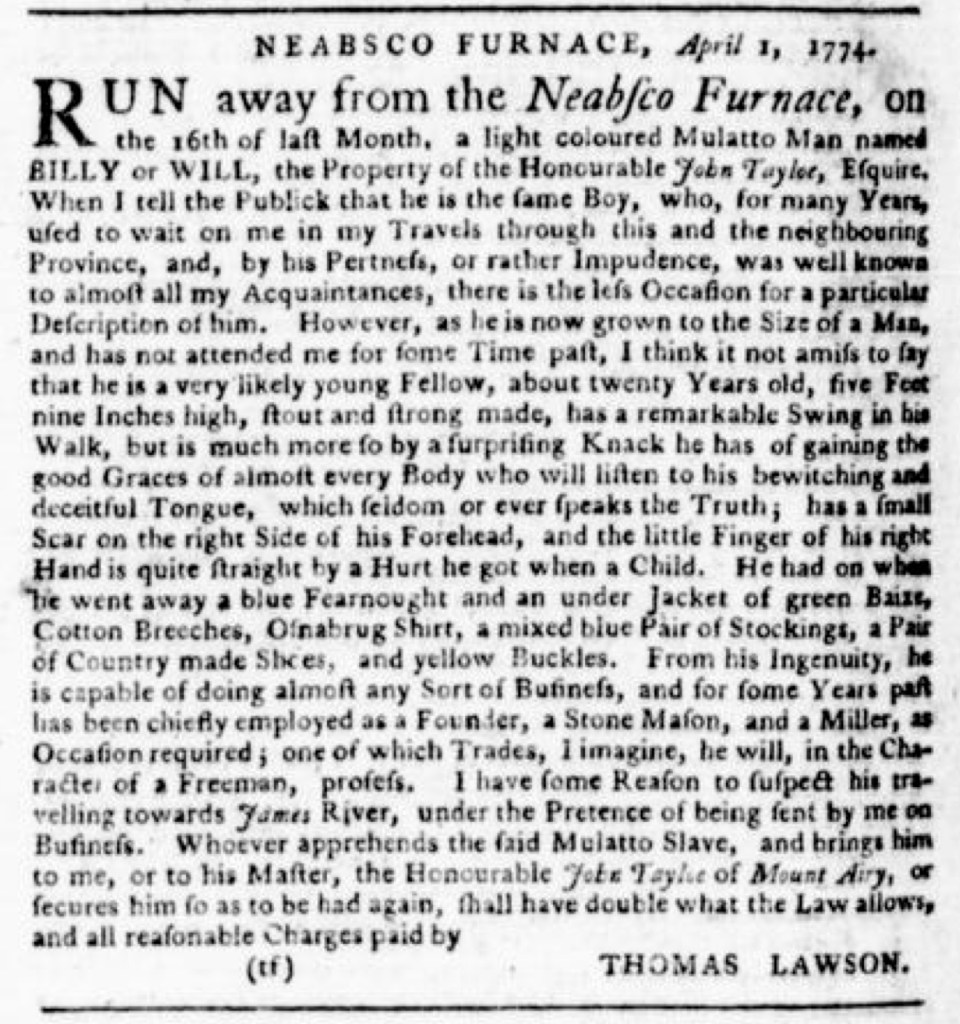
The Slavery Adverts 250 Project chronicles the role of newspaper advertising in perpetuating slavery in the era of the American Revolution. The project seeks to reveal the ubiquity of slavery in eighteenth-century life from New England to Georgia by republishing advertisements about enslaved people – for sale as individuals or in groups, wanted to purchase or for hire for short periods, runaways who liberated themselves, and those who were subsequently captured and confined in jails and workhouses – in daily digests on this site as well as in real time via the @SlaveAdverts250 Twitter feed, utilizing twenty-first-century media to stand in for the print media of the eighteenth century.

The project aims to provide modern audiences with a sense of just how often colonizers encountered these advertisements in their daily lives. Enslaved men, women, and children appeared in print somewhere in the colonies almost every single day. Those advertisements served as a constant backdrop for social, cultural, economic, and political life in colonial and revolutionary America. Colonizers who did not purport to own enslaved people were still confronted with slavery as well as invited to maintain the system by purchasing enslaved men, women, and children or assisting in the capture of so-called “runaways” who sought to free themselves from bondage. The frequency of these newspaper advertisements suggests just how embedded slavery was in colonial and revolutionary American culture in everyday interactions beyond the printed page.

These advertisements also testify to the experiences of enslaved men, women, and children, though readers must consider that those experiences have been remediated through descriptions offered by enslavers rather than enslaved people themselves. Often unnamed in the advertisements, enslaved men, women, and children were not invisible or unimportant in early America.

These advertisements appeared in colonial American newspapers 250 years ago today.

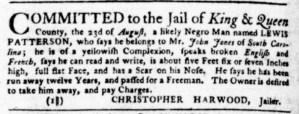
Maryland Gazette (September 1, 1774).

**********

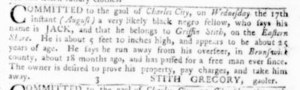
Maryland Gazette (September 1, 1774).

**********

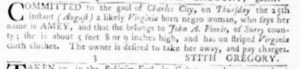
Maryland Gazette (September 1, 1774).

**********

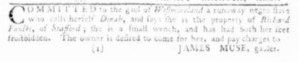
New-York Journal (September 1, 1774).

**********

Norwich Packet (September 1, 1774).

**********

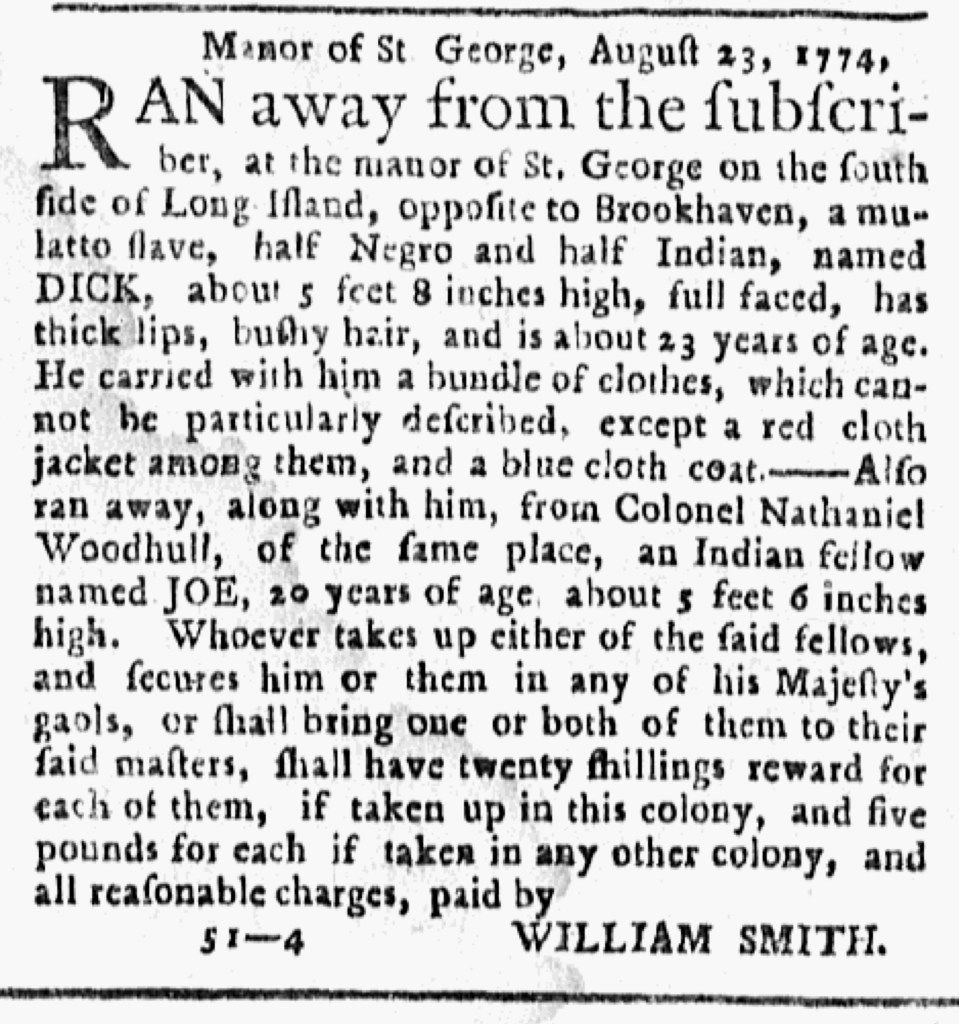
Rivington’s New-York Gazetteer (September 1, 1774).

**********

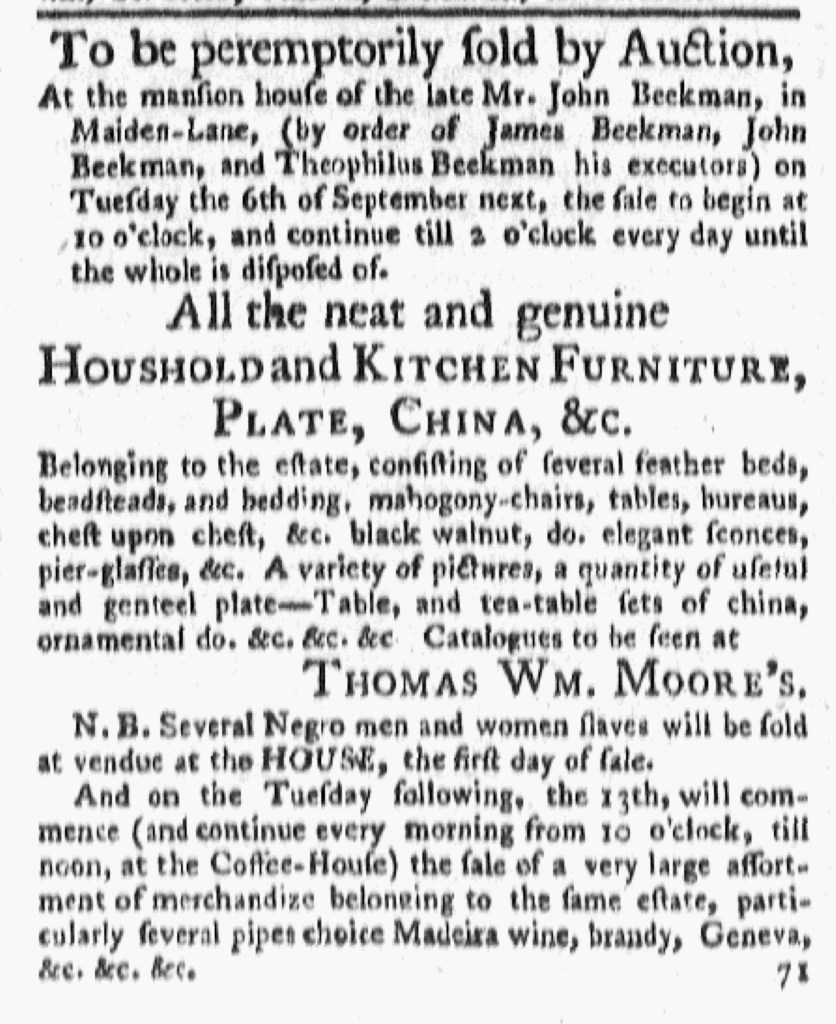
Rivington’s New-York Gazetteer (September 1, 1774).

**********

Rivington’s New-York Gazetteer (September 1, 1774).

**********

Rivington’s New-York Gazetteer (September 1, 1774).

**********

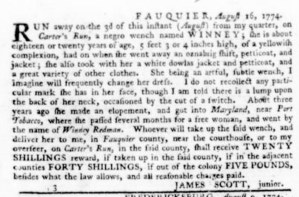
Virginia Gazette [Purdie and Dixon] (September 1, 1774).

**********

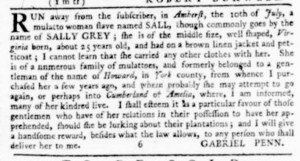
Virginia Gazette [Purdie and Dixon] (September 1, 1774).

**********

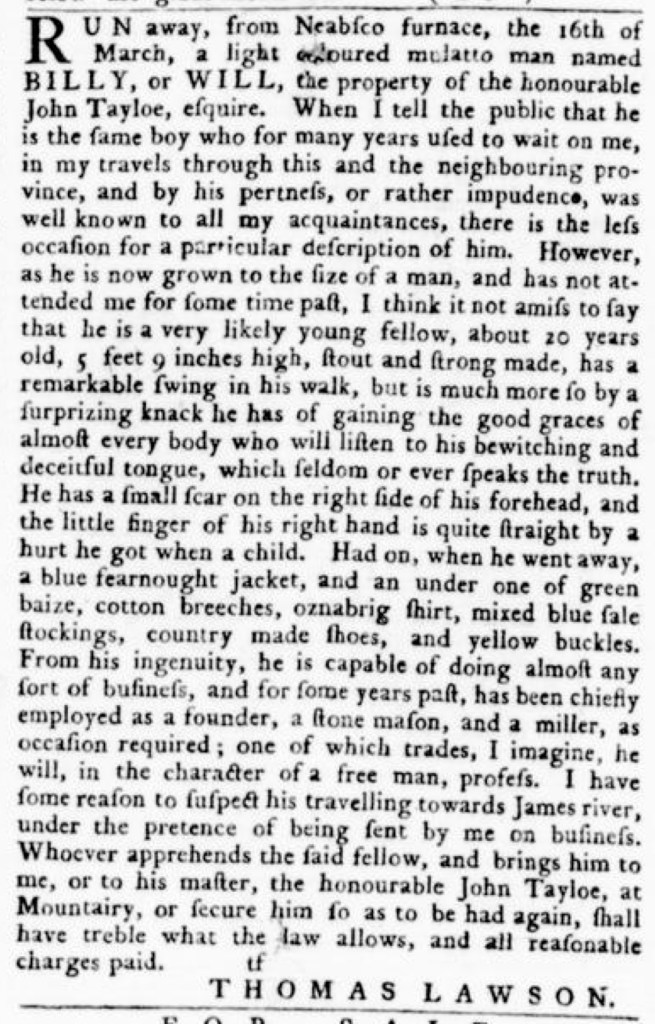
Virginia Gazette [Purdie and Dixon] (September 1, 1774).

**********

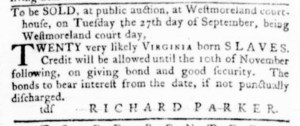
Virginia Gazette [Purdie and Dixon] (September 1, 1774).

**********

Virginia Gazette [Purdie and Dixon] (September 1, 1774).

**********

Virginia Gazette [Purdie and Dixon] (September 1, 1774).

**********

Virginia Gazette [Purdie and Dixon] (September 1, 1774).

**********

Virginia Gazette [Purdie and Dixon] (September 1, 1774).

**********

Supplement to the Virginia Gazette [Purdie and Dixon] (September 1, 1774).

**********

Virginia Gazette [Rind] (September 1, 1774).

**********

Virginia Gazette [Rind] (September 1, 1774).

**********

Virginia Gazette [Rind] (September 1, 1774).

**********

Virginia Gazette [Rind] (September 1, 1774).

**********

Virginia Gazette [Rind] (September 1, 1774).

**********

Virginia Gazette [Rind] (September 1, 1774).

**********

Virginia Gazette [Rind] (September 1, 1774).