September 5

What was advertised in a colonial American newspaper 250 years ago today?

Sep 5 - 9:5:1767 Providence Gazette
Providence Gazette (September 5, 1767).

“JUST PUBLISHED, And to be Sold by the Printers hereof …”

When Sarah Goddard and Company placed an advertisement for a recently published book, Letters of the Right Honorable Lady M–y W—–y M——e, in the Providence Gazette, they followed a course common among printers in early America. From New Hampshire to Georgia, printers who published both newspapers and books reserved space in the former for advertising the latter, one of the advantages of running the press. In some newspapers, notices placed by the printer disproportionately filled the advertising pages.

In such cases, the question of who wrote the copy – the printer or the advertiser – often becomes much more certain since they were often one and the same. There were some exceptions. Sometimes printers produced books on behalf of local authors, as was the situation with Lambertus de Ronde’s True Spiritual Religion printed by John Holt and advertised in his New-York Journal. The author, rather than the printer, generated the copy for the advertisement. In instances that printers also served as publishers, however, they assumed the responsibility for crafting the contents of the advertisements.

Lady Mary Wortley Montagu, an English aristocrat who gained special prominence after the publication of letters she wrote while traveling to the Ottoman Empire with her husband, an ambassador, certainly was not a local author. Goddard and Company published their edition of the Letters of their own accord. This suggests that the partnership should have been responsible for composing the advertisement, yet the author (or perhaps the publisher of the first edition in England) exercised great influence. The second half of Goddard and Company’s advertisement repeats the book’s extended title nearly verbatim: “written, during her travels in Europe, Asia and Africa to persons of distinction, men of letters. &c. in different parts of Europe. Which contain, among other curious relations, accounts of the policy and manners of the Turks; drawn from sources that have been inaccessible to other travellers.”

Goddard and Company made their own contributions to promoting the book, asserting that Montagu’s Letters “will shew … the sprightliness of her WIT, the solidity of her JUDGMENT, the extent of her KNOWLEDGE, the elegance of her TASTE, and the excellence of her real CHARACTER.” Yet the firm did not find it necessary to generate additional copy when the title of the book itself provided a synopsis already designed to entice readers.

Slavery Advertisements Published September 5, 1767

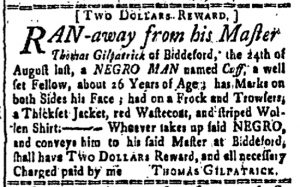
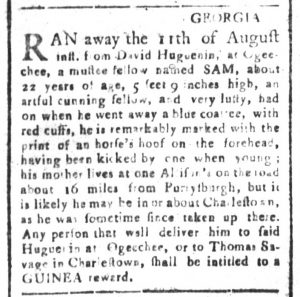
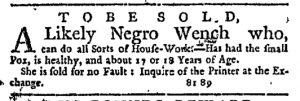
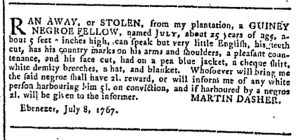
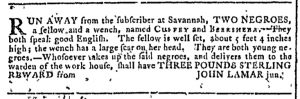
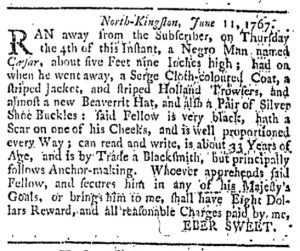
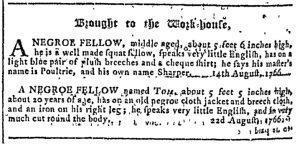
The Slavery Adverts 250 Project chronicles the role of newspaper advertising in perpetuating slavery in the era of the American Revolution. The project seeks to reveal the ubiquity of slavery in eighteenth-century life from New England to Georgia by republishing advertisements about enslaved people – for sale as individuals or in groups, wanted to purchase or for hire for short periods, runaways who liberated themselves, and those who were subsequently captured and confined in jails and workhouses – in daily digests on this site as well as in real time via the @SlaveAdverts250 Twitter feed, utilizing twenty-first-century media to stand in for the print media of the eighteenth century.

The project aims to provide modern audiences with a sense of just how often colonizers encountered these advertisements in their daily lives. Enslaved men, women, and children appeared in print somewhere in the colonies almost every single day. Those advertisements served as a constant backdrop for social, cultural, economic, and political life in colonial and revolutionary America. Colonizers who did not purport to own enslaved people were still confronted with slavery as well as invited to maintain the system by purchasing enslaved men, women, and children or assisting in the capture of so-called “runaways” who sought to free themselves from bondage. The frequency of these newspaper advertisements suggests just how embedded slavery was in colonial and revolutionary American culture in everyday interactions beyond the printed page.

These advertisements also testify to the experiences of enslaved men, women, and children, though readers must consider that those experiences have been remediated through descriptions offered by enslavers rather than enslaved people themselves. Often unnamed in the advertisements, enslaved men, women, and children were not invisible or unimportant in early America.

These advertisements appeared in colonial American newspapers 250 years ago today.

Sep 5 - Providence Gazette Slavery 1
Providence Gazette (September 5, 1767).

**********

Sep 5 - Providence Gazette Slavery 2
Providence Gazette (September 5, 1767).

September 4

What was advertised in a colonial American newspaper 250 years ago today?

Sep 4 - 9:4:1767 South-Carolina and American General Gazette
South-Carolina and American General Gazette (September 4, 1767).

“PIKE’s DANCING SCHOOL.”

Mr. Pike, a dancing and fencing instructor, was well known to the residents of Charleston, especially readers of the South-Carolina and American Gazette and other local newspapers who regularly encountered advertisements for his “DANCING SCHOOL.” The dancing master cultivated an aura of mystery by never using his first name in his newspaper notices, neither in Charleston in the 1760s nor in Philadelphia in the 1770s. Pike considered himself enough of a celebrity that he did not find it necessary to offer much information about the lessons he taught during daytime hours except to note that he did so “upon the same terms as usual.” He expected that the public, at least those most likely to partake of his services, was already familiar with the “terms” for youth who wished to attend his dancing school.

Many dancing masters targeted young people in their advertisements, but colonists of any age benefited from lessons. Adults could further refine their skills or learn new and unfamiliar steps as they became popular. To that end, Pike offered lessons for “GROWN GENTLEMEN … every evening from six to nine.” He realized that most men had other responsibilities during the day so scheduled his lessons for when they were more likely available to visit his school. Similarly, he offered instruction in the “use of the SMALL-SWORD” in the early morning.

For genteel colonists – and those who aspired to gentility – Pike’s lessons supplemented the education they received from schoolmasters and tutors that placed their own advertisements that described other sorts of lessons and curricula. The better sort believed that true gentility manifested itself not only in intellectual pursuits, such as reading and discussing classical texts, speaking French, and participating in conversations with others who appreciated belles lettres, but also in physical activities that demanded physical discipline and proper comportment of the body, especially dancing and, for men, fencing.

Slavery Advertisements Published September 4, 1767

The Slavery Adverts 250 Project chronicles the role of newspaper advertising in perpetuating slavery in the era of the American Revolution. The project seeks to reveal the ubiquity of slavery in eighteenth-century life from New England to Georgia by republishing advertisements about enslaved people – for sale as individuals or in groups, wanted to purchase or for hire for short periods, runaways who liberated themselves, and those who were subsequently captured and confined in jails and workhouses – in daily digests on this site as well as in real time via the @SlaveAdverts250 Twitter feed, utilizing twenty-first-century media to stand in for the print media of the eighteenth century.

The project aims to provide modern audiences with a sense of just how often colonizers encountered these advertisements in their daily lives. Enslaved men, women, and children appeared in print somewhere in the colonies almost every single day. Those advertisements served as a constant backdrop for social, cultural, economic, and political life in colonial and revolutionary America. Colonizers who did not purport to own enslaved people were still confronted with slavery as well as invited to maintain the system by purchasing enslaved men, women, and children or assisting in the capture of so-called “runaways” who sought to free themselves from bondage. The frequency of these newspaper advertisements suggests just how embedded slavery was in colonial and revolutionary American culture in everyday interactions beyond the printed page.

These advertisements also testify to the experiences of enslaved men, women, and children, though readers must consider that those experiences have been remediated through descriptions offered by enslavers rather than enslaved people themselves. Often unnamed in the advertisements, enslaved men, women, and children were not invisible or unimportant in early America.

These advertisements appeared in colonial American newspapers 250 years ago today.

Sep 4 - New-Hamspshire Gazette Slavery 1
New-Hampshire Gazette (September 4, 1767).

**********

Sep 4 - South-Carolina and American General Gazette Slavery 1
South-Carolina and American General Gazette (September 4, 1767).

**********

Sep 4 - South-Carolina and American General Gazette Slavery 2
South-Carolina and American General Gazette (September 4, 1767).

**********

Sep 4 - South-Carolina and American General Gazette Slavery 3
South-Carolina and American General Gazette (September 4, 1767).

**********

Sep 4 - South-Carolina and American General Gazette Slavery 4
South-Carolina and American General Gazette (September 4, 1767).

September 3

What was advertised in a colonial American newspaper 250 years ago today?

Sep 3 - 9:3:1767 Pennsylvania Gazette
Pennsylvania Gazette (September 3, 1767).

“Wire work of all sorts, particularly for flaxseed and wheat.”

In the September 3, 1767, edition of the Pennsylvania Gazette, John Sellers updated an advertisement that he had previously inserted in other issues. The copy remained the same (and does not appear to have been reset), but he added an image of a rolling wire screen for separating flaxseed and “cleansing wheat.” In and of itself, the woodcut enhanced the advertisement and likely caught the attention of more readers, especially since images were a relatively rare component of eighteenth-century advertisements. When they did appear, they tended to fall into four main categories – ships, houses, slaves, and horses – that could be used interchangeably in any advertisements related to the corresponding image. Those woodcuts belonged to printers.

On the other hand, advertisers had to commission more specialized images, which then belonged to them and were not associated with other advertisements. This made Sellers’ woodcut of a rolling wire screen all the more extraordinary in the pages of the Pennsylvania Gazette. The advertisements in the September 3 issue and its supplement featured only six images. Three depicted ships, including one announcing that the Phoenix would soon depart for Cork and encouraging readers to make arrangements for “Freight or Passage.” Another depicted Benjamin Jackson and John Gibbons’ seal flanked by a bottle of mustard and a block of chocolate, the two specialty items at the center of their grocery business. The remaining two both had images of wire screens “for cleaning all sorts of Grain.”

Sep 3 - 9:3:1767 Truman Advert Pennsylvania Gazette
Pennsylvania Gazette (September 3, 1767).

That may help to explain why Sellers chose to spruce up his advertisement with an image of the rolling screens he produced. Even though the copy in his advertisement made stronger appeals concerning his skill and the quality of his screens, it may have been overshadowed by Richard Truman’s advertisement that simply presented the image of one of his screens and let it do most of the work in the absence appeals made over the course of many lines of dense text. Sellers may have decided that he needed to increase his investment in his marketing efforts in order to make his advertisements competitive. After all, if the competition’s advertisements got all the attention, it was not worth the expense to advertise at all. Sellers increased the likelihood that potential customers would consider the appeals made in the copy by providing some art as a hook to interest them.

Slavery Advertisements Published September 3, 1767

The Slavery Adverts 250 Project chronicles the role of newspaper advertising in perpetuating slavery in the era of the American Revolution. The project seeks to reveal the ubiquity of slavery in eighteenth-century life from New England to Georgia by republishing advertisements about enslaved people – for sale as individuals or in groups, wanted to purchase or for hire for short periods, runaways who liberated themselves, and those who were subsequently captured and confined in jails and workhouses – in daily digests on this site as well as in real time via the @SlaveAdverts250 Twitter feed, utilizing twenty-first-century media to stand in for the print media of the eighteenth century.

The project aims to provide modern audiences with a sense of just how often colonizers encountered these advertisements in their daily lives. Enslaved men, women, and children appeared in print somewhere in the colonies almost every single day. Those advertisements served as a constant backdrop for social, cultural, economic, and political life in colonial and revolutionary America. Colonizers who did not purport to own enslaved people were still confronted with slavery as well as invited to maintain the system by purchasing enslaved men, women, and children or assisting in the capture of so-called “runaways” who sought to free themselves from bondage. The frequency of these newspaper advertisements suggests just how embedded slavery was in colonial and revolutionary American culture in everyday interactions beyond the printed page.

These advertisements also testify to the experiences of enslaved men, women, and children, though readers must consider that those experiences have been remediated through descriptions offered by enslavers rather than enslaved people themselves. Often unnamed in the advertisements, enslaved men, women, and children were not invisible or unimportant in early America.

These advertisements appeared in colonial American newspapers 250 years ago today.

Sep 3 - Massachusetts Gazette Slavery 1
Massachusetts Gazette (September 3, 1767).

**********

Sep 3 - New-York Journal Slavery 1
New-York Journal (September 3, 1767).

**********

Sep 3 - New-York Journal Slavery 2
New-York Journal (September 3, 1767).

**********

Sep 3 - New-York Journal Slavery 3
New-York Journal (September 3, 1767).

**********

Sep 3 - New-York Journal Slavery 4
New-York Journal (September 3, 1767).

**********

Sep 3 - New-York Journal Slavery 5
New-York Journal (September 3, 1767).

**********

Sep 3 - New-York Journal Slavery 6
New-York Journal (September 3, 1767).

**********

Sep 3 - Pennsylvania Gazette Supplement Slavery 1
Supplement to the Pennsylvania Gazette (September 3, 1767).

**********

Sep 3 - Pennsylvania Gazette Supplement Slavery 2
Supplement to the Pennsylvania Gazette (September 3, 1767).

**********

Sep 3 - Pennsylvania Gazette Supplement Slavery 3
Supplement to the Pennsylvania Gazette (September 3, 1767).

**********

Sep 3 - Pennsylvania Gazette Supplement Slavery 4
Supplement to the Pennsylvania Gazette (September 3, 1767).

**********

Sep 3 - Pennsylvania Gazette Supplement Slavery 5
Supplement to the Pennsylvania Gazette (September 3, 1767).

**********

Sep 3 - Virginia Gazette Slavery 1
Virginia Gazette (September 3, 1767).

**********

Sep 3 - Virginia Gazette Slavery 2
Virginia Gazette (September 3, 1767).

**********

Sep 3 - Virginia Gazette Slavery 3
Virginia Gazette (September 3, 1767).

**********

Sep 3 - Virginia Gazette Slavery 4
Virginia Gazette (September 3, 1767).

**********

Sep 3 - Virginia Gazette Slavery 5
Virginia Gazette (September 3, 1767).

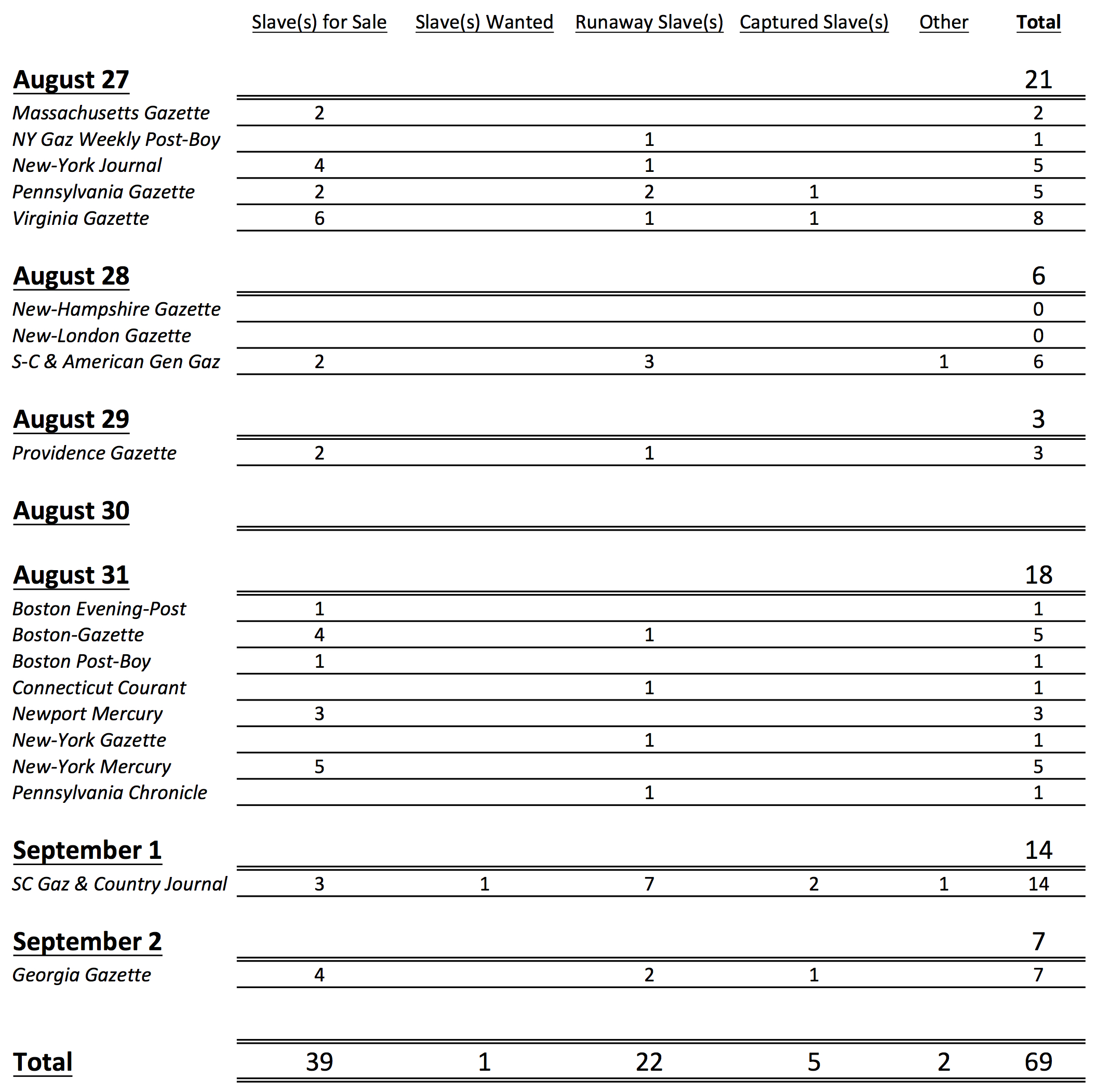
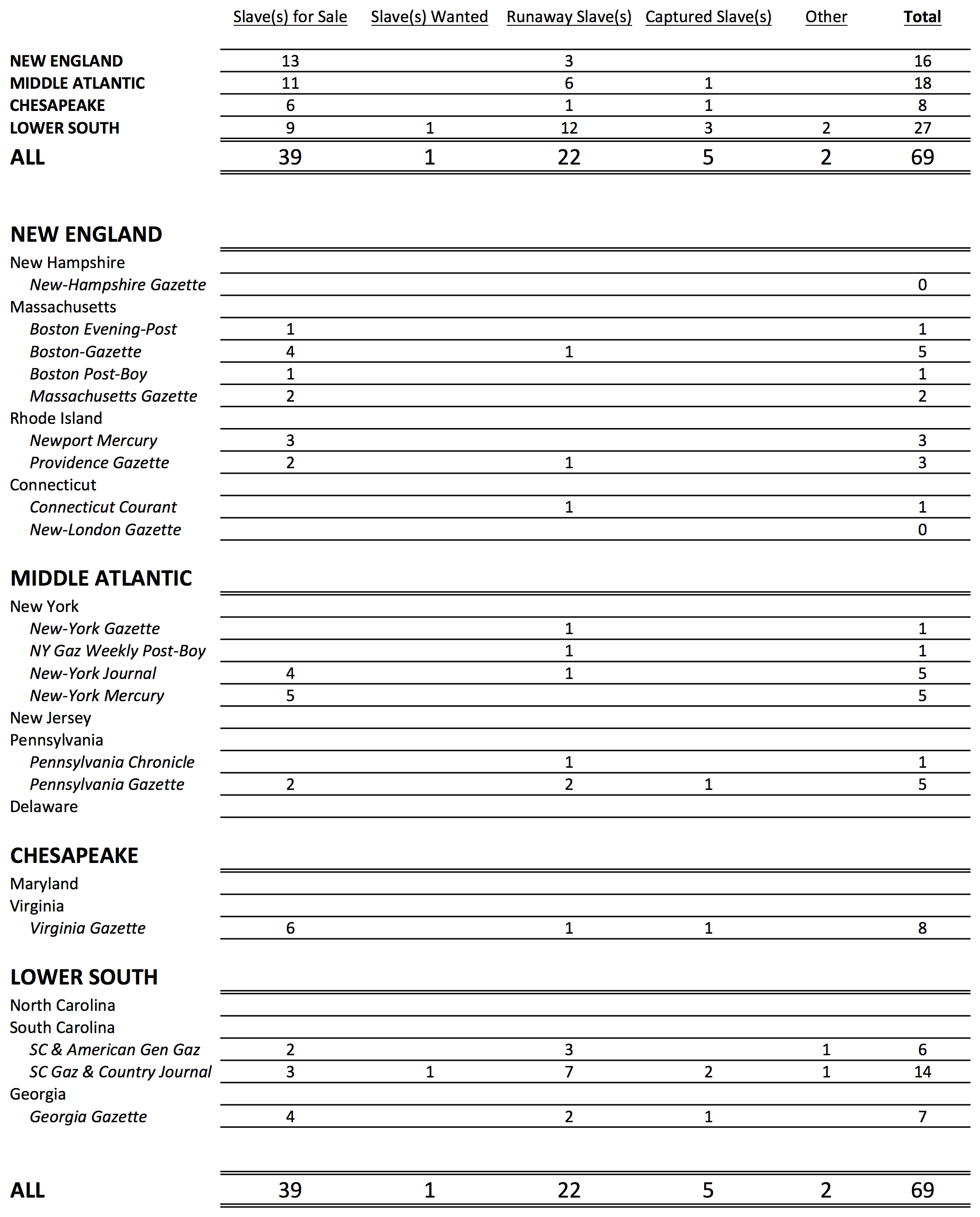
Summary of Slavery Advertisements Published August 27 – September 2, 1767

These tables indicate how many advertisements for slaves appeared in colonial American newspapers during the week of August 27 – September 2, 1767.

Note:  These tables are as comprehensive as currently digitized sources permit, but they may not be an exhaustive account.  They includes all newspapers that have been digitized and made available via Accessible Archives, Colonial Williamsburg’s Digital Library, and Readex’s America’s Historical Newspapers.  There are several reasons some newspapers may not have been consulted:
  • Issues that are no longer extant;
  • Issues that are extant but have not yet been digitized (including the Pennsylvania Journal); and
  • Newspapers published in a language other than English (including the Wochentliche Philadelphische Staatsbote).

**********

Slavery Advertisements Published August 27 – September 2, 1767:  By Date

Slavery Adverts Tables 1767 By Date Aug 27

**********

Slavery Advertisements Published August 27 – September 2, 1767:  By Region

Slavery Adverts Tables 1767 By Region Aug 27

September 2

What was advertised in a colonial American newspaper 250 years ago today?

Sep 2 - 9:2:1767 Georgia Gazette
Georgia Gazette (September 2, 1767).

“EXCEEDING GOOD OLD BARBADOS RUM, by the hogshead, quarter-cask, or small quantity.”

Horton and Moore placed a fairly simple advertisement in the September 2, 1767, issue of the Georgia Gazette. In it, they announced that they sold a small number of items: rum, sugar, vinegar, and Delftware (a popular blue and white pottery made in the Netherlands and exported to locales throughout the Atlantic world). Compared to the list-style advertisements that crowded the pages of many eighteenth-century newspapers, their notice was relatively short. Yet the simplicity and the length did not mean that Horton and Moore neglected to advance marketing messages in their advertisement. For each item, they offered some sort of commentary intended to entice potential customers to visit Horton and Moore’s wharf to make their purchases.

The partners resorted to some of the most common appeals made to consumers throughout the eighteenth century. They emphasized quality, explicitly and implicitly, to promote both rum and sugar. They described the former as “EXCEEDING GOOD” and the latter as “of an extraordinary good quality.” In noting the places of origin – “BARBADOS RUM” and “JAMAICA SUGAR” – they further testified to quality since those locations were widely recognized for producing the finest examples of their respective commodities.

When it mattered, Horton and Moore made an appeal to consumer choice: they carried a ‘COMPLETE ASSORTMENT” of Delftware. This implied a variety of (fashionable) patterns as well as an array of items, from plates and bowls to canisters and sugar dishes to tiles and tureens for household use and decoration. Horton and Moore invited customers to examine all the possibilities, promising that they would not be forced to choose from a tiny selection. A “COMPLETE ASSORTMENT” meant the freedom to express themselves by identifying their favorites and choosing items that distinguished them from their friends and relations.

Horton and Moore also marketed convenience when they offered to sell their commodities in various quantities. Customers could purchase rum “by the hogshead, quarter-cask, or small quantity,” sugar “by the hogshead, barrel, or small quantity,” and vinegar “in any quantity.” Presumably shoppers were also welcome to select as many or as few pieces of Delftware as they desired.

Finally, the partners made an appeal to price, stating they sold all of their merchandise “on the most reasonable terms.” Combined with the other appeals, this made their wares even more attractive to prospective customers.

Horton and Moore’s advertisement demonstrates that commercial notices aimed at consumers did not need to be elaborate or lengthy to incorporate marketing appeals. In the space of half a dozen lines, the merchants deployed messages about quality, choice, convenience, and price as they attempted to incite demand among customers in Savannah and its hinterland.

Slavery Advertisements Published September 2, 1767

The Slavery Adverts 250 Project chronicles the role of newspaper advertising in perpetuating slavery in the era of the American Revolution. The project seeks to reveal the ubiquity of slavery in eighteenth-century life from New England to Georgia by republishing advertisements about enslaved people – for sale as individuals or in groups, wanted to purchase or for hire for short periods, runaways who liberated themselves, and those who were subsequently captured and confined in jails and workhouses – in daily digests on this site as well as in real time via the @SlaveAdverts250 Twitter feed, utilizing twenty-first-century media to stand in for the print media of the eighteenth century.

The project aims to provide modern audiences with a sense of just how often colonizers encountered these advertisements in their daily lives. Enslaved men, women, and children appeared in print somewhere in the colonies almost every single day. Those advertisements served as a constant backdrop for social, cultural, economic, and political life in colonial and revolutionary America. Colonizers who did not purport to own enslaved people were still confronted with slavery as well as invited to maintain the system by purchasing enslaved men, women, and children or assisting in the capture of so-called “runaways” who sought to free themselves from bondage. The frequency of these newspaper advertisements suggests just how embedded slavery was in colonial and revolutionary American culture in everyday interactions beyond the printed page.

These advertisements also testify to the experiences of enslaved men, women, and children, though readers must consider that those experiences have been remediated through descriptions offered by enslavers rather than enslaved people themselves. Often unnamed in the advertisements, enslaved men, women, and children were not invisible or unimportant in early America.

These advertisements appeared in colonial American newspapers 250 years ago today.

Sep 2 - Georgia Gazette Slavery 1
Georgia Gazette (September 2, 1767).

**********

Sep 2 - Georgia Gazette Slavery 2
Georgia Gazette (September 2, 1767).

**********

Sep 2 - Georgia Gazette Slavery 3
Georgia Gazette (September 2, 1767).

**********

Sep 2 - Georgia Gazette Slavery 4
Georgia Gazette (September 2, 1767).

**********

Sep 2 - Georgia Gazette Slavery 5
Georgia Gazette (September 2, 1767).

**********

Sep 2 - Georgia Gazette Slavery 6
Georgia Gazette (September 2, 1767).

**********

Sep 2 - Georgia Gazette Slavery 7
Georgia Gazette (September 2, 1767).

September 1

What was advertised in a colonial American newspaper 250 years ago today?

Sep 1 - 9:1:1767 South-Carolina Gazette and Country Journal
South-Carolina Gazette and Country Journal (September 1, 1767).

“GODREY & GADSDEN, Will exchange the following GOODS.”

Godfrey and Gadsden’s dense list-style advertisement resembled many other inserted in the South-Carolina Gazette and Country Journal and newspapers throughout the colonies in the second half of the eighteenth century. The partners enumerated dozens of imported items, everything from textiles to housewares to hardware, and concluded with “&c.” (etc.) to suggest an even greater array of merchandise than what could be squeezed into their advertisement.

Their advertisement differed from most others, however, in one significant aspect. Godfrey and Gadsden were not seeking customers. They did not offer their assortment of goods directly to colonial consumers. Instead, they stated that they “Will exchange the following GOODS … for such others as they have occasion for.” The partners intended this notice for fellow merchants who imported a similar, yet slightly different, variety of goods and now wished to further diversify their wares. Perhaps they also sought shopkeepers who had obtained surpluses of certain items and looked for opportunities to reduce their inventory through such exchanges. They may have also had their eye on the export market, trading imported goods for local commodities that they could then transport to other ports around the Atlantic. Whatever the possibilities, Godfrey and Gadsden did not address end-sue consumers in their advertisement.

This illustrates that even though the format looked quite similar to other commercial notices advertisers sometimes envisioned very different purposes for their advertisements. They turned to the advertising pages of weekly newspapers to conduct business along multiple trajectories, rather than exclusively pursuing potential customers engulfed in the consumer revolution. The “black silk and cotton gauze” and “large bell lamps for halls and stair-cases” and “parrot cages” and “gilt Morocco leather prayer books” eventually found their way into the homes of consumers, but Godfrey and Gadsden’s advertisement helps to demonstrate the circuitous route. Rather than a direct transatlantic supply chain from English producer to English merchant to American shopkeeper to American consumer, imported goods often passed through many other hands and were part of numerous additional commercial exchanges before consumers purchased them.