Slavery Advertisements Published January 2, 1768

The Slavery Adverts 250 Project chronicles the role of newspaper advertising in perpetuating slavery in the era of the American Revolution. The project seeks to reveal the ubiquity of slavery in eighteenth-century life from New England to Georgia by republishing advertisements about enslaved people – for sale as individuals or in groups, wanted to purchase or for hire for short periods, runaways who liberated themselves, and those who were subsequently captured and confined in jails and workhouses – in daily digests on this site as well as in real time via the @SlaveAdverts250 Twitter feed, utilizing twenty-first-century media to stand in for the print media of the eighteenth century.

The project aims to provide modern audiences with a sense of just how often colonizers encountered these advertisements in their daily lives. Enslaved men, women, and children appeared in print somewhere in the colonies almost every single day. Those advertisements served as a constant backdrop for social, cultural, economic, and political life in colonial and revolutionary America. Colonizers who did not purport to own enslaved people were still confronted with slavery as well as invited to maintain the system by purchasing enslaved men, women, and children or assisting in the capture of so-called “runaways” who sought to free themselves from bondage. The frequency of these newspaper advertisements suggests just how embedded slavery was in colonial and revolutionary American culture in everyday interactions beyond the printed page.

These advertisements also testify to the experiences of enslaved men, women, and children, though readers must consider that those experiences have been remediated through descriptions offered by enslavers rather than enslaved people themselves. Often unnamed in the advertisements, enslaved men, women, and children were not invisible or unimportant in early America.

These advertisements appeared in colonial American newspapers 250 years ago today.

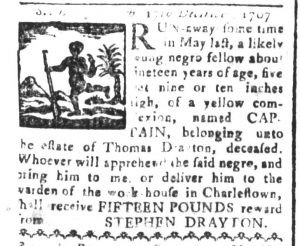
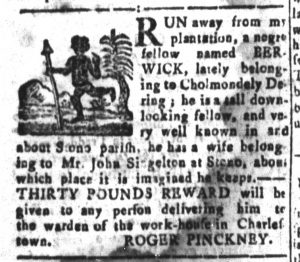
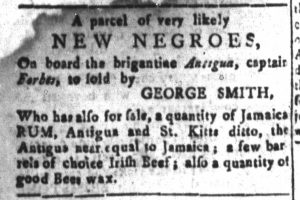
Jan 2 - Providence Gazette Slavery 1
Providence Gazette (January 2, 1768).

January 1

What was advertised in a colonial American newspaper 250 years ago today?

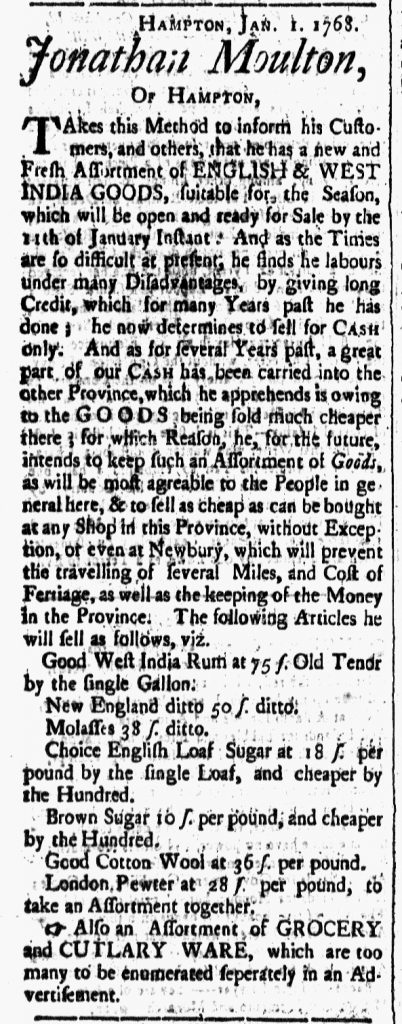
Jan 1 - 1:1:1768 New-Hampshire Gazette
New-Hampshire Gazette (January 1, 1768).

“Such as an Assortment of Goods, as will be most agreable to the People in general here.”

In 1768 Jonathan Moulton began the new year by announcing that he would soon make available “a new and Fresh Assortment of ENGLISH & WEST INDIA GOODS” for customers who visited his shop in Hampton, New Hampshire. Most eighteenth-century merchants and shopkeepers placed advertisements to promote merchandise they had commenced selling, but Moulton did not wait. Instead, he previewed his new inventory, pledging that consumers would be able to make purchases within ten days time. He incited anticipation as a means of cultivating demand in advance.

To whet consumers’ appetites, he also underscored his low prices. Moulton proclaimed that he would “sell as cheap as can be bought at any Shop in this Province, without Exception” or even in nearby Newbury, Massachusetts. To demonstrate the veracity of that claim, Moulton published prices for several popular items, including rum, molasses, sugar, and wool.

As a further means of convincing potential customers to purchase his wares, he cleverly introduced a resolution for them to achieve in the new year: supporting the local economy rather than doing business with merchants and shopkeepers in other colonies. He lamented that “for several Years past, a great part of our CASH has been carried into the other Province.” He attributed this to lower prices available at shops in Massachusetts, but Moulton’s low prices made it attractive for local customers to resolve to keep “the Money in the Province.” Furthermore, that achieved other practical advantages for his customers: purchasing from a local supplier “prevent[ed] the travelling of several Miles, and Cost of Ferriage” in addition to benefiting the local economy.

As colonists in New Hampshire acknowledged the passing of one year and the commencement of another, Moulton challenged them to think about the opportunities they would encounter as consumers in 1768 and how to respond responsibly. He previewed “such an Assortment of Goods, as will be most agreable to the People in general here.” Rather than focus solely on price and selection, he explained why purchasing from him benefited both customers and the general welfare of their local community and colony.

Slavery Advertisements Published January 1, 1768

The Slavery Adverts 250 Project chronicles the role of newspaper advertising in perpetuating slavery in the era of the American Revolution. The project seeks to reveal the ubiquity of slavery in eighteenth-century life from New England to Georgia by republishing advertisements about enslaved people – for sale as individuals or in groups, wanted to purchase or for hire for short periods, runaways who liberated themselves, and those who were subsequently captured and confined in jails and workhouses – in daily digests on this site as well as in real time via the @SlaveAdverts250 Twitter feed, utilizing twenty-first-century media to stand in for the print media of the eighteenth century.

The project aims to provide modern audiences with a sense of just how often colonizers encountered these advertisements in their daily lives. Enslaved men, women, and children appeared in print somewhere in the colonies almost every single day. Those advertisements served as a constant backdrop for social, cultural, economic, and political life in colonial and revolutionary America. Colonizers who did not purport to own enslaved people were still confronted with slavery as well as invited to maintain the system by purchasing enslaved men, women, and children or assisting in the capture of so-called “runaways” who sought to free themselves from bondage. The frequency of these newspaper advertisements suggests just how embedded slavery was in colonial and revolutionary American culture in everyday interactions beyond the printed page.

These advertisements also testify to the experiences of enslaved men, women, and children, though readers must consider that those experiences have been remediated through descriptions offered by enslavers rather than enslaved people themselves. Often unnamed in the advertisements, enslaved men, women, and children were not invisible or unimportant in early America.

These advertisements appeared in colonial American newspapers 250 years ago today.
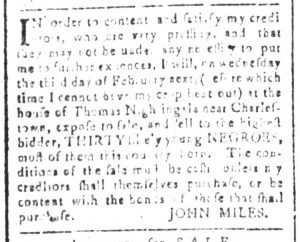
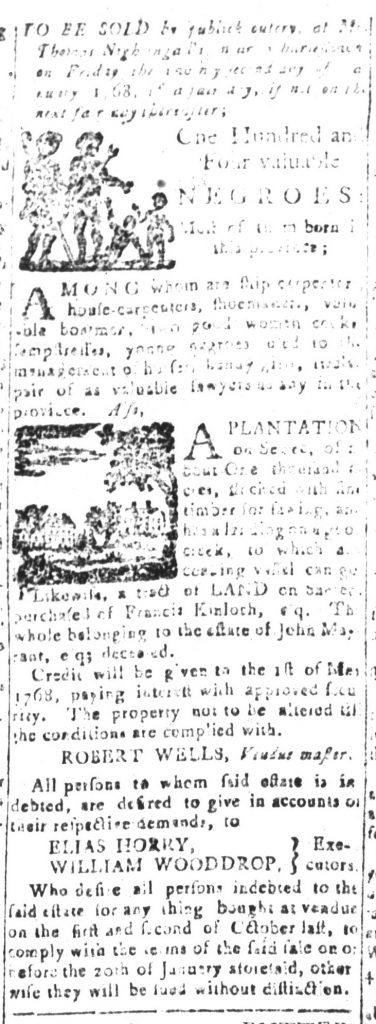
Jan 1 - South-Carolina and American General Gazette Slavery 1
South-Carolina and American General Gazette (January 1, 1768).

**********

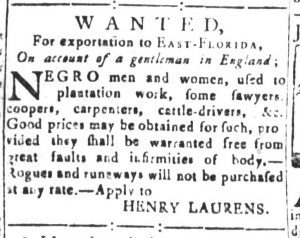
Jan 1 - South-Carolina and American General Gazette Slavery 2
South-Carolina and American General Gazette (January 1, 1768).

**********

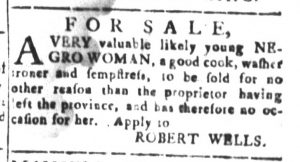
Jan 1 - South-Carolina and American General Gazette Slavery 3
South-Carolina and American General Gazette (January 1, 1768).

**********

Jan 1 - South-Carolina and American General Gazette Slavery 4
South-Carolina and American General Gazette (January 1, 1768).

**********

Jan 1 - South-Carolina and American General Gazette Slavery 5
South-Carolina and American General Gazette (January 1, 1768).

**********

Jan 1 - South-Carolina and American General Gazette Slavery 6
South-Carolina and American General Gazette (January 1, 1768).

**********

Jan 1 - South-Carolina and American General Gazette Slavery 7
South-Carolina and American General Gazette (January 1, 1768).

**********

Jan 1 - South-Carolina and American General Gazette Slavery 8
South-Carolina and American General Gazette (January 1, 1768).

**********

Jan 1 - South-Carolina and American General Gazette Slavery 9
South-Carolina and American General Gazette (January 1, 1768).

**********

Jan 1 - South-Carolina and American General Gazette Slavery 10
South-Carolina and American General Gazette (January 1, 1768).

**********

Jan 1 - South-Carolina and American General Gazette Slavery 11
South-Carolina and American General Gazette (January 1, 1768).