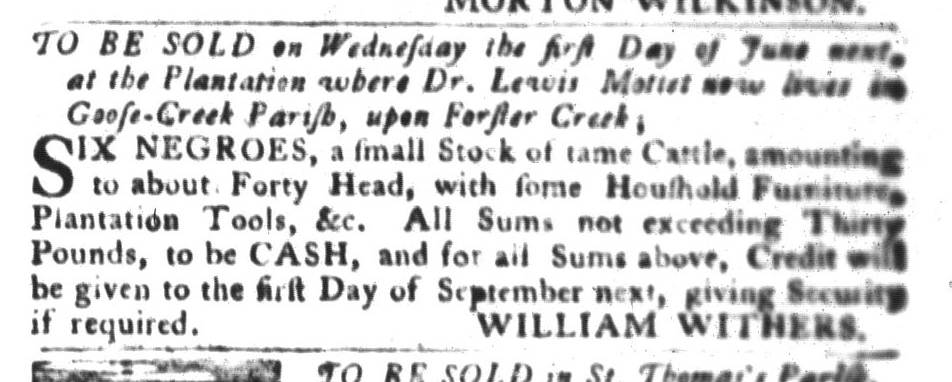
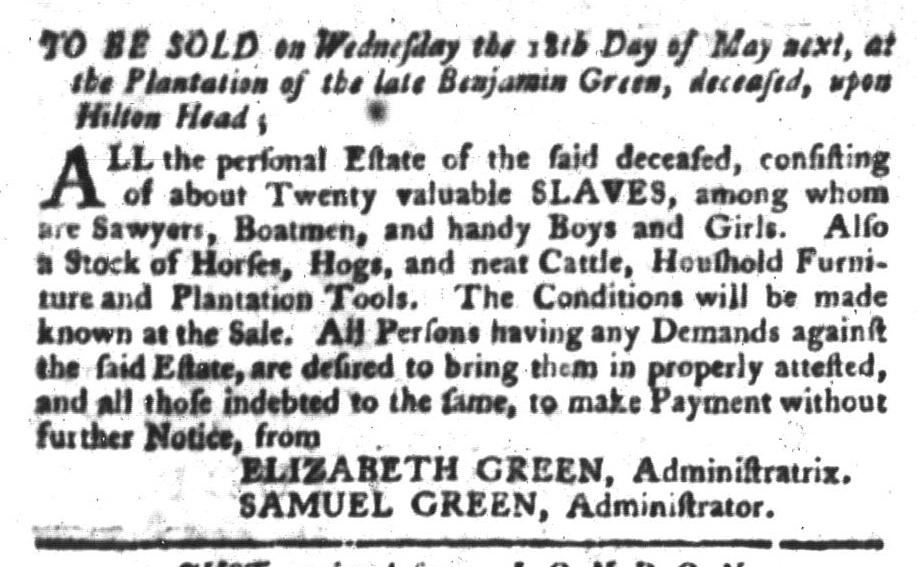
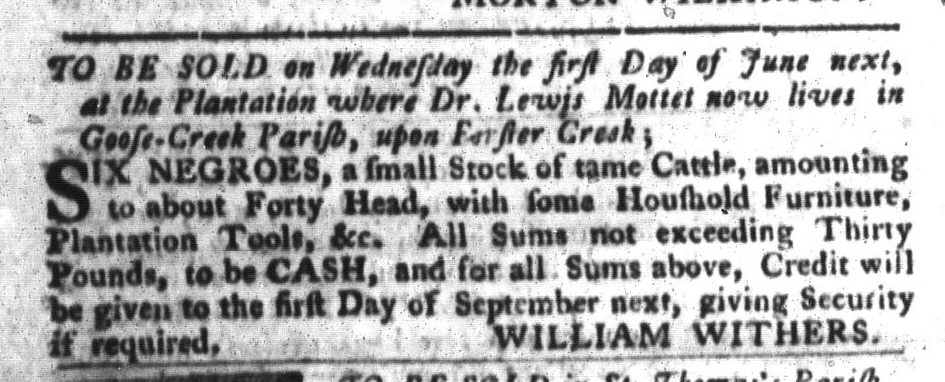
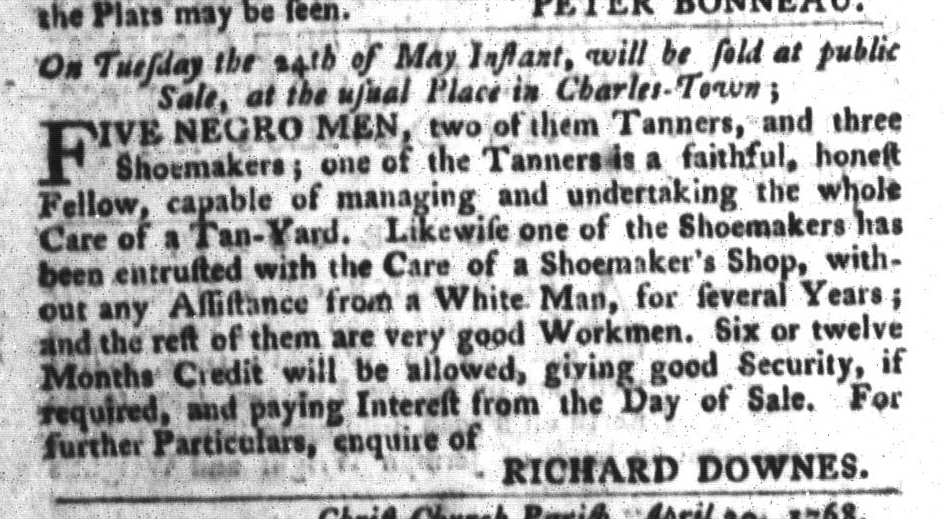
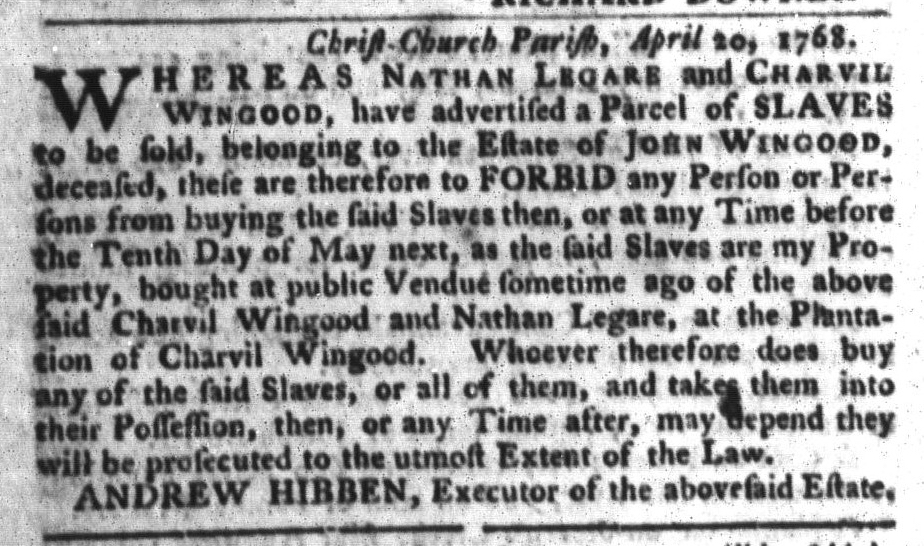
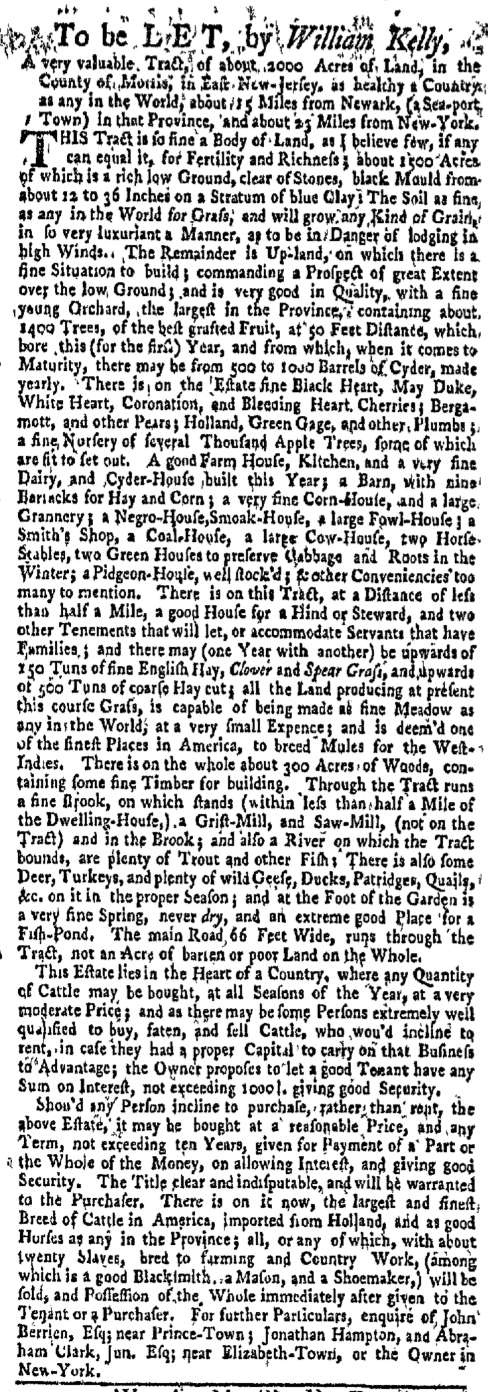
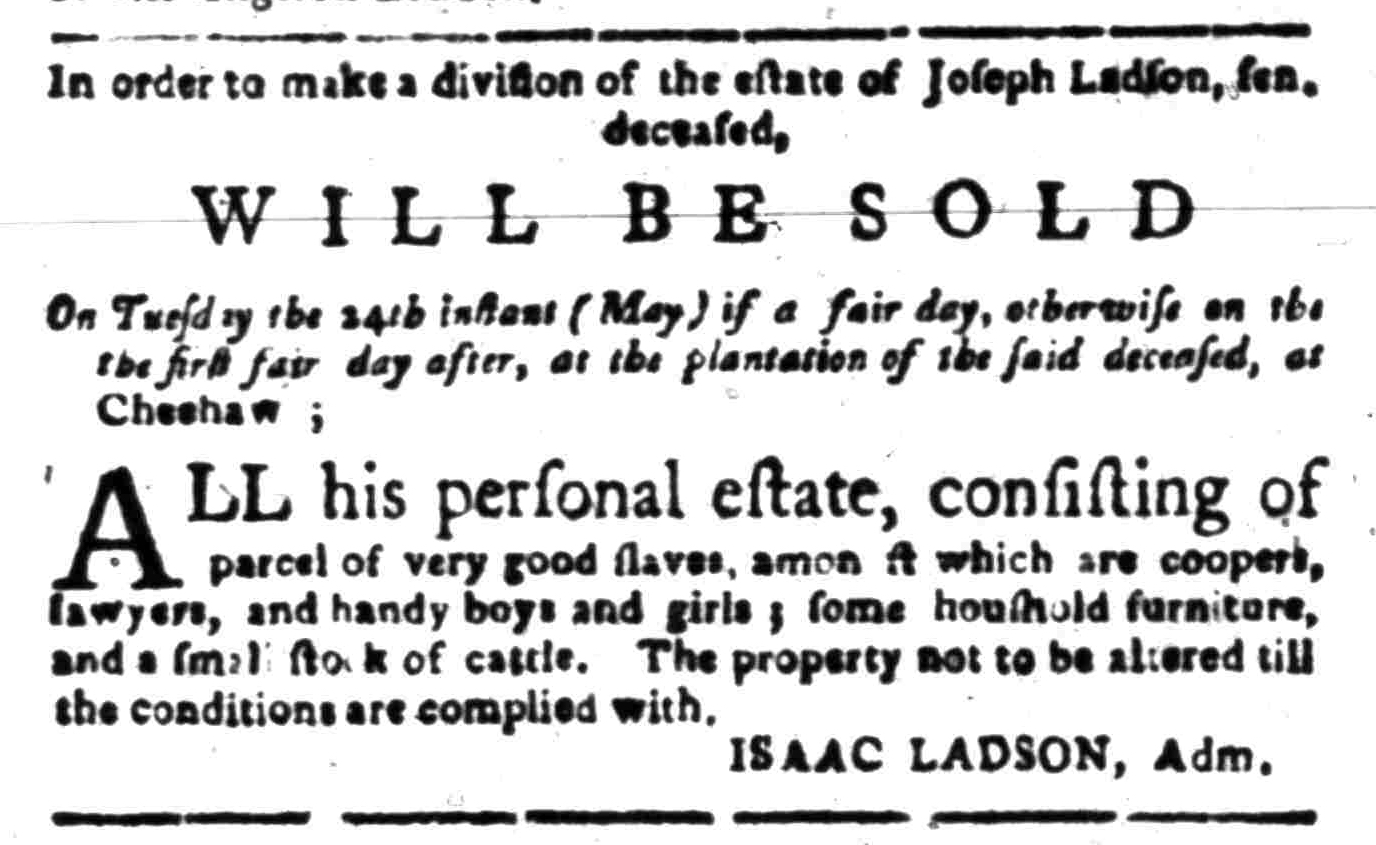
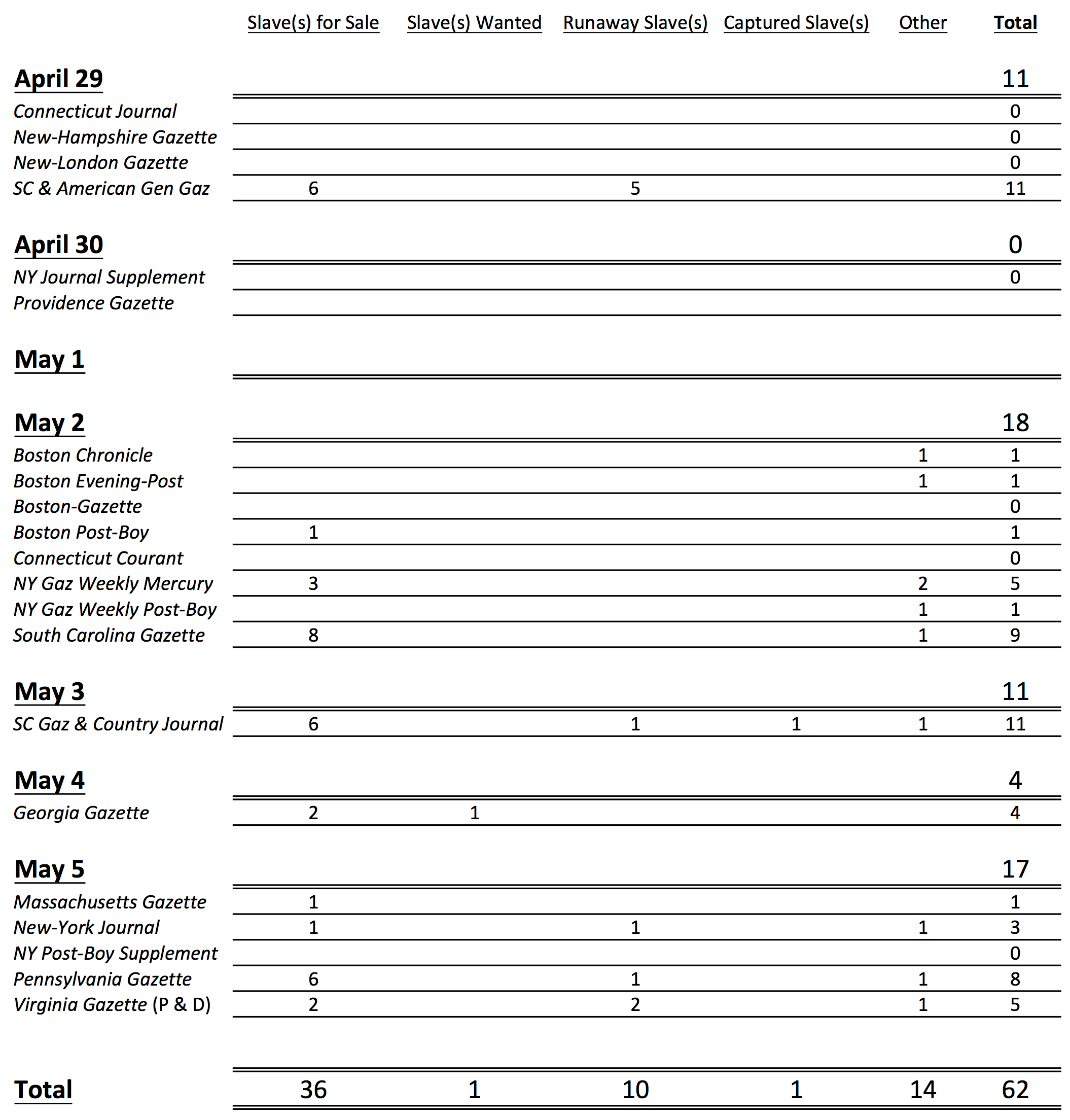
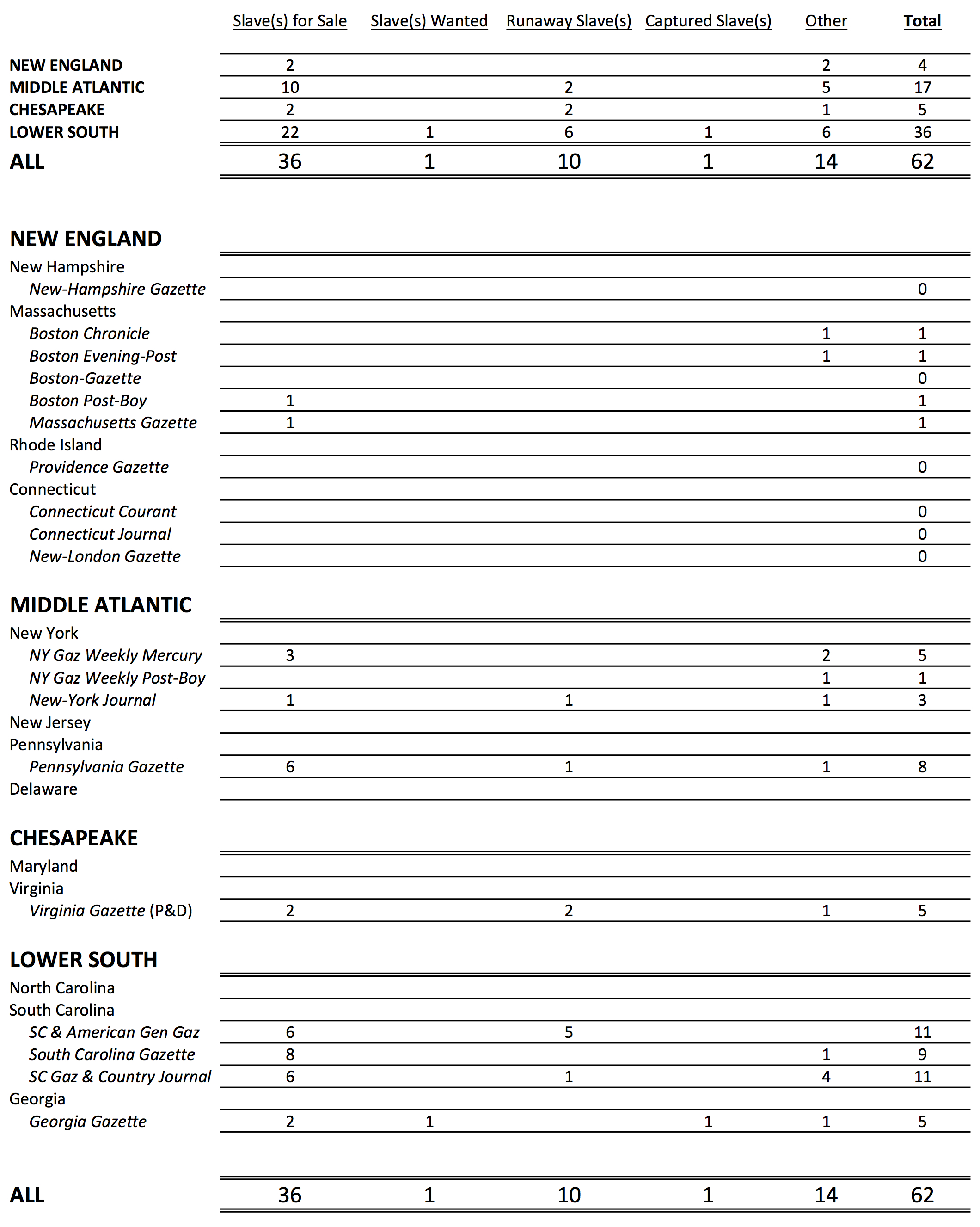
These tables indicate how many advertisements for slaves appeared in colonial American newspapers during the week of April 29 – May 5, 1768.
Note: These tables are as comprehensive as currently digitized sources permit, but they may not be an exhaustive account. They includes all newspapers that have been digitized and made available via Accessible Archives, Colonial Williamsburg’s Digital Library, and Readex’s America’s Historical Newspapers. There are several reasons some newspapers may not have been consulted:
Issues that are no longer extant;
Issues that are extant but have not yet been digitized (including the Pennsylvania Journal); and
Newspapers published in a language other than English (including the Wochentliche Philadelphische Staatsbote).
**********
Slavery Advertisements Published April 29 – May 5, 1768: By Date
**********
Slavery Advertisements Published April 29 – May 5, 1768: By Region
The Slavery Adverts 250 Project chronicles the role of newspaper advertising in perpetuating slavery in the era of the American Revolution. The project seeks to reveal the ubiquity of slavery in eighteenth-century life from New England to Georgia by republishing advertisements for slaves – for sale, wanted to purchase, runaways, captured fugitives – in daily digests on this site as well as in real time via the @SlaveAdverts250 Twitter feed, utilizing twenty-first-century media to stand in for the print media of the eighteenth century.
The project aims to provide modern audiences with a sense of just how often colonists encountered these advertisements in their daily lives. Enslaved men, women, and children appeared in print somewhere in the colonies almost every single day. Those advertisements served as a constant backdrop for social, cultural, economic, and political life in colonial and revolutionary America. Colonists who did not own slaves were still confronted with slavery as well as invited to maintain the system by purchasing slaves or assisting in the capture of runaways. The frequency of these newspaper advertisements suggests just how embedded slavery was in colonial and revolutionary American culture in everyday interactions beyond the printed page.
These advertisements also testify to the experiences of enslaved men, women, and children, though readers must consider that those experiences have been remediated through descriptions offered by slaveholders rather than the slaves themselves. Often unnamed in the advertisements, enslaved men, women, and children were not invisible or unimportant in early America.
These advertisements appeared in colonial American newspapers 250 years ago today.
Supplement to the Massachusetts Gazette (May 5, 1768).
**********
New-York Journal (May 5, 1768).
**********
New-York Journal (May 5, 1768).
**********
Supplement to the New-York Journal (May 5, 1768).
**********
Supplement to the Pennsylvania Gazette (May 5, 1768).
**********
Supplement to the Pennsylvania Gazette (May 5, 1768).
**********
Supplement to the Pennsylvania Gazette (May 5, 1768).
**********
Supplement to the Pennsylvania Gazette (May 5, 1768).
**********
Supplement to the Pennsylvania Gazette (May 5, 1768).
**********
Supplement to the Pennsylvania Gazette (May 5, 1768).
**********
Supplement to the Pennsylvania Gazette (May 5, 1768).
**********
Supplement to the Pennsylvania Gazette (May 5, 1768).
What was advertised in a colonial American newspaper 250 years ago today?
Georgia Gazette (May 4, 1768).
“They intend carrying on their business in all its branches, as they have brought proper tools for that purpose.”
According to an advertisement they placed in the May 4, 1768, edition of the Georgia Gazette, William Sime and Jacob Moses had recently arrived in Savannah and planned to open their own shop in the small port city. They described themselves as “Goldsmith and Jewelers, from LONDON,” but did not indicate if they had migrated directly from the largest city in the empire or if they had practiced their trades in other cities before arriving in Georgia. For the purposes of marketing their services, establishing a connection to the cosmopolitan center of the British Atlantic world mattered most. It implied skill that arose from training and experience as well as familiarity with the most popular fashions.
Sime and Moses informed prospective customers that they were prepared for “carrying on their business in all its branches.” They had “brought proper tools for that purpose” when they moved to Savannah. That they considered it necessary to make this point in their brief advertisement suggests that they anticipated potential clients might be concerned not only about their skill but also whether they possessed the necessary implements to follow through on their pledge of “having their work executed in the neatest manner,” a standard appeal made by artisans of all sorts throughout the eighteenth century.
Many advertisements for consumer goods and services from the period appear indistinguishable at first glance, in part because many incorporated formulaic language to make many of the most common appeals to price, quality, fashion, or skill. Sime and Moses merely reiterated some phrases used in countless other advertisements: “in the neatest manner” and “at the shortest notice.” Yet their notice was not completely unoriginal. Although artisans frequently trumpeted their skill and the quality of their work, very few made reference to the set of specific tools they needed to pursue their craft “in all its branches.” Sime and Moses adapted other advertisements to suit their purposes by adding unique content specific to their trade and their personal circumstances.
The Slavery Adverts 250 Project chronicles the role of newspaper advertising in perpetuating slavery in the era of the American Revolution. The project seeks to reveal the ubiquity of slavery in eighteenth-century life from New England to Georgia by republishing advertisements for slaves – for sale, wanted to purchase, runaways, captured fugitives – in daily digests on this site as well as in real time via the @SlaveAdverts250 Twitter feed, utilizing twenty-first-century media to stand in for the print media of the eighteenth century.
The project aims to provide modern audiences with a sense of just how often colonists encountered these advertisements in their daily lives. Enslaved men, women, and children appeared in print somewhere in the colonies almost every single day. Those advertisements served as a constant backdrop for social, cultural, economic, and political life in colonial and revolutionary America. Colonists who did not own slaves were still confronted with slavery as well as invited to maintain the system by purchasing slaves or assisting in the capture of runaways. The frequency of these newspaper advertisements suggests just how embedded slavery was in colonial and revolutionary American culture in everyday interactions beyond the printed page.
These advertisements also testify to the experiences of enslaved men, women, and children, though readers must consider that those experiences have been remediated through descriptions offered by slaveholders rather than the slaves themselves. Often unnamed in the advertisements, enslaved men, women, and children were not invisible or unimportant in early America.
These advertisements appeared in colonial American newspapers 250 years ago today.
What was advertised in a colonial American newspaper 250 years ago today?
Supplement to the South-Carolina Gazette and Country Journal (May 3, 1768).
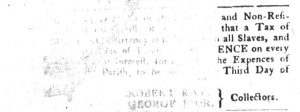
“… that a Tax of … all Slaves, and … ENCE on every … he Expences of … Third Day of …”
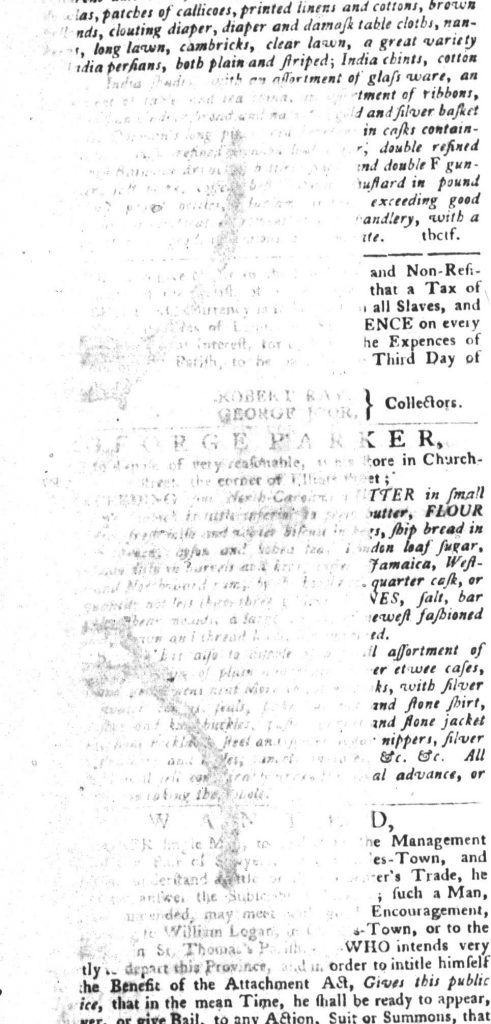
This advertisement presented a conundrum when I set about compiling the advertisements from the May 3, 1768, edition of the South-Carolina Gazette and Country Journal for inclusion in the Slavery Adverts 250 Project. It includes a reference to slaves, seemingly in connection to taxes to be collected, but the majority of the advertisement has been obscured. Working with a digital surrogate available in Accessible Archives‘s database of newspapers published in South Carolina rather than an original copy, it is difficult to determine exactly why a large portion of the advertisement is not visible. It does not seem to be the result of poor photography or digitization but rather a faithful rendition of the state of the original issue as the result of the treatment it received in the quarter millennium since it was published.
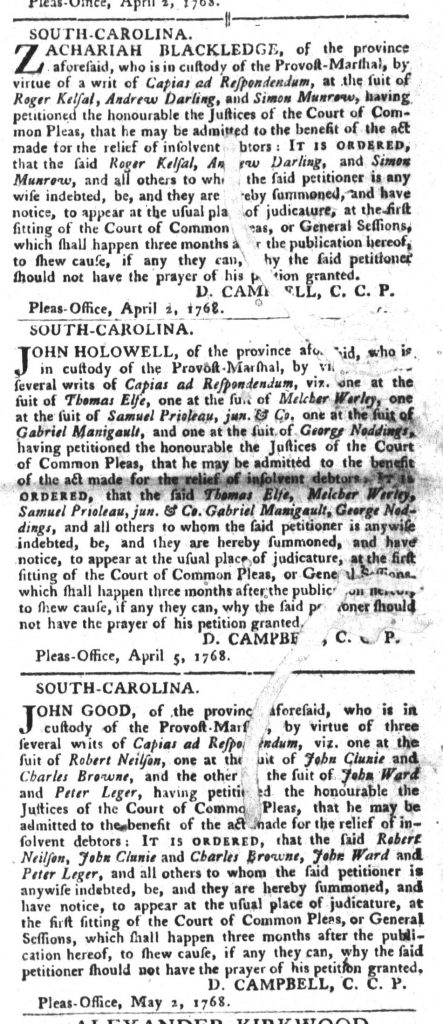
As I have worked my way through the digitized copies of the South-Carolina Gazette and Country Journal from 1768 I have discovered that many issues include portions that are similarly illegible. It appears that at some point someone attempted to repair rips and tears in those issues with tape. (See the image of today’s advertisement and others to the left.) Most often the concealed portion appears at the edge of the page, the place most easily ripped. In the case of this advertisement, the items printed on the opposite side of the page do indeed display evidence of two tears. (See the image below. Note the mirrored tears that appear to have happened when the page was folded in half.) Taping one side preserved the contents on the other. Whether the tape remains on the page is not clear. It appears that it may have been removed, damaging the newspaper in the process. If this is indeed the case, examining the original may not reveal anything that cannot be viewed in the digital surrogate. If the tape remains on the page, however, it may be possible to examine the original from other angles that reveal more than the single image of the page yields.
Historical documents are fragile things that sometimes present a variety of problems when working with them. Digital surrogates sometimes compound those problems. Although photography and digitization have been performed to aid in the preservation of eighteenth-century newspapers and other sources, to prevent them from sustaining further damage as a result of continued use, sometimes the surrogates do not sufficiently replicate the originals. Digital surrogates are not replacements for original documents. Instead, they are complements that allow greater numbers of people to gain access to historical sources. In this case, unfortunately, the complement does not tell the complete story … and it is difficult to tell from the surrogate if examining the original would reveal more. As much as we celebrate the advantages of digitization in this technological age, we must also acknowledge the various shortcomings and challenges of working with digitized sources.
The Slavery Adverts 250 Project chronicles the role of newspaper advertising in perpetuating slavery in the era of the American Revolution. The project seeks to reveal the ubiquity of slavery in eighteenth-century life from New England to Georgia by republishing advertisements for slaves – for sale, wanted to purchase, runaways, captured fugitives – in daily digests on this site as well as in real time via the @SlaveAdverts250 Twitter feed, utilizing twenty-first-century media to stand in for the print media of the eighteenth century.
The project aims to provide modern audiences with a sense of just how often colonists encountered these advertisements in their daily lives. Enslaved men, women, and children appeared in print somewhere in the colonies almost every single day. Those advertisements served as a constant backdrop for social, cultural, economic, and political life in colonial and revolutionary America. Colonists who did not own slaves were still confronted with slavery as well as invited to maintain the system by purchasing slaves or assisting in the capture of runaways. The frequency of these newspaper advertisements suggests just how embedded slavery was in colonial and revolutionary American culture in everyday interactions beyond the printed page.
These advertisements also testify to the experiences of enslaved men, women, and children, though readers must consider that those experiences have been remediated through descriptions offered by slaveholders rather than the slaves themselves. Often unnamed in the advertisements, enslaved men, women, and children were not invisible or unimportant in early America.
These advertisements appeared in colonial American newspapers 250 years ago today.
South-Carolina Gazette and Country Journal (May 3, 1768).
**********
South-Carolina Gazette and Country Journal (May 3, 1768).
**********
South-Carolina Gazette and Country Journal (May 3, 1768).
**********
South-Carolina Gazette and Country Journal (May 3, 1768).
**********
South-Carolina Gazette and Country Journal (May 3, 1768).
**********
Supplement to the South-Carolina Gazette and Country Journal (May 3, 1768).
**********
Supplement to the South-Carolina Gazette and Country Journal (May 3, 1768).
**********
Supplement to the South-Carolina Gazette and Country Journal (May 3, 1768).
**********
Supplement to the South-Carolina Gazette and Country Journal (May 3, 1768).
**********
Supplement to the South-Carolina Gazette and Country Journal (May 3, 1768).
**********
Supplement to the South-Carolina Gazette and Country Journal (May 3, 1768).
What was advertised in a colonial American newspaper 250 years ago today?
Supplement to the Boston Chronicle (May 2, 1768).
“LONDON BOOK-STORE, North-side of KING-STREET, Boston.”
Like many other printers in eighteenth-century America, John Mein and John Fleeming took advantage of publishing a newspaper to insert advertisements for their own goods and services. In addition to a note in the colophon advising prospective clients that “All Manner of Printing-work performed at the most reasonable Rates” at their printing office in Newbury Street, the partners included two advertisements for books they sold in the May 2, 1768, edition of the Boston Chronicle. One appeared in the standard issue and the other in the supplement that accompanied it.
The first did not deviate significantly from the length of most other advertisements in their newspaper. It promoted their pamphlet that collected together John Dickinson’s “Letters from a Farmer in Pennsylvania,” proclaiming that each was “Printed exactly from the Philadelphia papers, in which these Letters were first published.”
The second occupied significantly more space. In it, Mein published a book catalog that listed many of the titles from the “very GRAND ASSORTMENT of the BEST BOOKS in every branch of POLITE LITERATURE, ARTS, and SCIENCES” in stock at the London Book-Store on King Street. This advertisement filled an entire page as well as the first column of the next page, four of the twelve columns in the supplement.
Full-page advertisements were rare but not unknown in the 1760s. Still, scholars of advertising and printing history must be careful when distinguishing among such advertisements, especially when working primarily with digitized sources. No matter the actual size of an original, databases of digitized newspapers standardize it to the size of the screen. When scholars print those sources they are once again standardized when remediated, this time to an 8.5×11 sheet of office paper. Thus a page from the May 2, 1768, edition of the Boston Chronicle appears to be the same size as a page from the May 2, 1768, edition of the Boston Evening-Post.
Supplement to the Boston Chronicle (May 2, 1768).
Yet that was not the case. The production process created material texts of two different sizes. The Boston Evening-Post, like most other newspapers printed in the colonies at the time, was a folio newspaper. In other words, each issue consisted of four pages created by printing two per side and folding a broadsheet in half. The Boston Chronicle, on the other hand, was a quarto newspaper. It had been folded once again, yielding eight pages from a single broadsheet rather than just four. The pages were smaller, changing the experience of carrying and reading the newspaper.
This also changed the proportion of space constituted by a single page in quarto-sized newspapers. In standard issues, each page accounted for one-eighth rather than one-quarter of the content. In supplements, each page accounted for one-quarter rather than one-half. This does not diminish the significance of Mein and Fleeming devoting so much space in the May 2, 1768, edition of the Boston Chronicle to their own advertisements, especially since the full-page advertisement in the supplement flowed through an entire column on a subsequent page. At the same time, however, the magnitude of this innovation must be measured against the size of the actual page rather than the deceptive size of the remediated image. The publishers created a spectacle, but since a full-page advertisement required less space in their newspaper than in most others they also left room for news items and paid notices.
The Slavery Adverts 250 Project chronicles the role of newspaper advertising in perpetuating slavery in the era of the American Revolution. The project seeks to reveal the ubiquity of slavery in eighteenth-century life from New England to Georgia by republishing advertisements for slaves – for sale, wanted to purchase, runaways, captured fugitives – in daily digests on this site as well as in real time via the @SlaveAdverts250 Twitter feed, utilizing twenty-first-century media to stand in for the print media of the eighteenth century.
The project aims to provide modern audiences with a sense of just how often colonists encountered these advertisements in their daily lives. Enslaved men, women, and children appeared in print somewhere in the colonies almost every single day. Those advertisements served as a constant backdrop for social, cultural, economic, and political life in colonial and revolutionary America. Colonists who did not own slaves were still confronted with slavery as well as invited to maintain the system by purchasing slaves or assisting in the capture of runaways. The frequency of these newspaper advertisements suggests just how embedded slavery was in colonial and revolutionary American culture in everyday interactions beyond the printed page.
These advertisements also testify to the experiences of enslaved men, women, and children, though readers must consider that those experiences have been remediated through descriptions offered by slaveholders rather than the slaves themselves. Often unnamed in the advertisements, enslaved men, women, and children were not invisible or unimportant in early America.
These advertisements appeared in colonial American newspapers 250 years ago today.
Supplement to the Boston Chronicle (May 2, 1768).
**********
Supplement to the Boston Evening-Post (May 2, 1768).
**********
Boston Post-Boy (May 2, 1768).
**********
New-York Gazette and Weekly Mercury (May 2, 1768).
**********
Supplement to the New-York Gazette and Weekly Mercury (May 2, 1768).
**********
Supplement to the New-York Gazette and Weekly Mercury (May 2, 1768).
**********
Supplement to the New-York Gazette and Weekly Mercury (May 2, 1768).
**********
Supplement to the New-York Gazette and Weekly Mercury (May 2, 1768).
**********
New-York Gazette: Or, the Weekly Post-Boy (May 2, 1768).
**********
South-Carolina Gazette (May 2, 1768).
**********
South-Carolina Gazette (May 2, 1768).
**********
South-Carolina Gazette (May 2, 1768).
**********
South-Carolina Gazette (May 2, 1768).
**********
South-Carolina Gazette (May 2, 1768).
**********
South-Carolina Gazette (May 2, 1768).
**********
South-Carolina Gazette (May 2, 1768).
**********
South-Carolina Gazette (May 2, 1768).
**********
Supplement to the South-Carolina Gazette (May 2, 1768).
What was advertised in a colonial American newspaper 250 years ago this week?
Massachusetts Gazette (April 28, 1768).
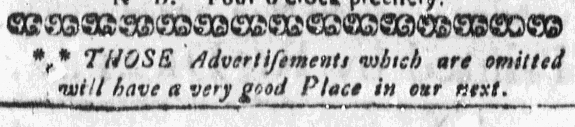
“THOSE Advertisements which are omitted will have a very good Place in our next.”
Richard Draper inserted a short notice at the bottom of the middle column on the third page of the April 28, 1768, edition of the Massachusetts Gazette. In it, the printer informed the public that “THOSE Advertisements which are omitted will have a very good Place in our next.” Like the abbreviated colophon (“Printed by R. DRAPER”) that appeared at the same place on the final page, it looked like the printer barely had enough space to squeeze this announcement into an issue that quite literally overflowed with news, editorials, and, especially, advertising. Unlike other printers in Boston and elsewhere in the colonies, Draper did not issue a supplement. Perhaps he did not have sufficient time or resources to do so. Perhaps he did not have sufficient content to fill an additional two pages, even though he had not been able to run all of the advertisements he had received.
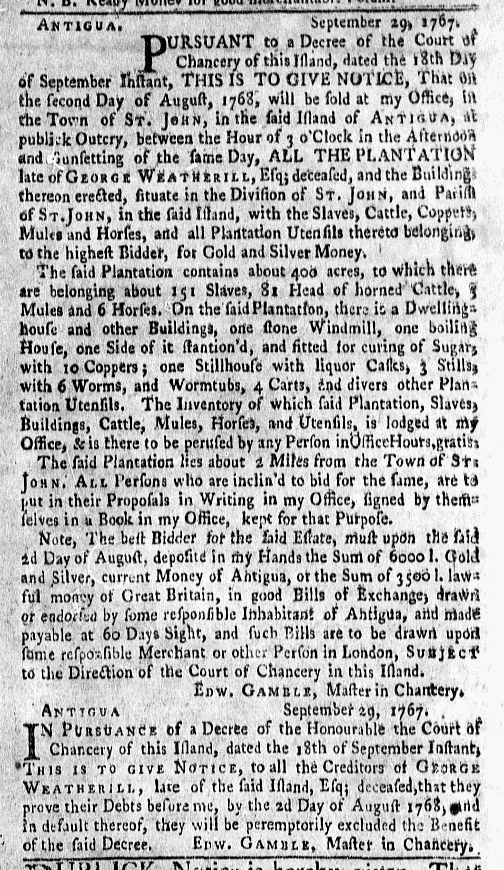
Proportionally, Draper did publish a significant quantity of advertisements compared to other content in the April 28 edition. More than thirty advertisements of various lengths accounted for nearly two-thirds of the space, filling seven of the twelve columns and extending well into an eighth. Although the Massachusetts Gazette was alternately known as the Boston News-Letter, it also functioned as a delivery mechanism for advertising of all sorts in addition to news. In this particular issue, for instance, merchants and shopkeepers promoted vast assortments of consumer goods and services. Vendue masters highlighted which goods would be presented for bids at upcoming auctions. Local officials inserted legal notices. Executors called on debtors and creditors to settle accounts. Two schoolmistresses declared their intentions to open a boarding school for young ladies. Timothy Force warned others not to allow his wife to contract any debts in his name because she “has eloped and keeps away, and refuses to live with me.” All the way from Antigua, Edward Gamble announced an estate sale that included a plantation and 151 enslaved men, women, and children.
Although more than half of the paid notices in that issue featured consumer goods and services, “subscribers” placed advertisements with various purposes and goals in mind. Each expected some sort of results or return on their investment. In his own notice concerning “Advertisements which are omitted,” Draper primarily addressed advertisers rather than readers, though his announcement may have also incited anticipation about what else might appear in the pages of the next issue among some readers. The printer offered a consolation to advertisers, promising “a very good Place in our next.” That promise suggested that the printer put more consideration into the order of advertisements than their haphazard arrangement on the page otherwise indicated. That he could not include all of them in the issue also testified to the popularity of his publication, implying that prospective advertisers should follow the lead established by their peers and place their notices in the Massachusetts Gazette. After all, demand for space in that newspaper was so high, presumably because advertisers believed the publication placed their advertisements before as many eyes as possible, that Draper could not include all of them. Though he did not state it so bluntly, the printer transformed his inability to disseminate all the advertisements submitted for the April 28 edition into a rationale for others to advertise in his newspaper when choosing among the several published in Boston at the time.







 As I have worked my way through the digitized copies of the South-Carolina Gazette and Country Journal from 1768 I have discovered that many issues include portions that are similarly illegible. It appears that at some point someone attempted to repair rips and tears in those issues with tape. (See the image of today’s advertisement and others to the left.) Most often the concealed portion appears at the edge of the page, the place most easily ripped. In the case of this advertisement, the items printed on the opposite side of the page do indeed display evidence of two tears. (See the image below. Note the mirrored tears that appear to have happened when the page was folded in half.) Taping one side preserved the contents on the other. Whether the tape remains on the page is not clear. It appears that it may have been removed, damaging the newspaper in the process. If this is indeed the case, examining the original may not reveal anything that cannot be viewed in the digital surrogate. If the tape remains on the page, however, it may be possible to examine the original from other angles that reveal more than the single image of the page yields.
 Historical documents are fragile things that sometimes present a variety of problems when working with them. Digital surrogates sometimes compound those problems. Although photography and digitization have been performed to aid in the preservation of eighteenth-century newspapers and other sources, to prevent them from sustaining further damage as a result of continued use, sometimes the surrogates do not sufficiently replicate the originals. Digital surrogates are not replacements for original documents. Instead, they are complements that allow greater numbers of people to gain access to historical sources. In this case, unfortunately, the complement does not tell the complete story … and it is difficult to tell from the surrogate if examining the original would reveal more. As much as we celebrate the advantages of digitization in this technological age, we must also acknowledge the various shortcomings and challenges of working with digitized sources.