August 19

What was advertised in a colonial American newspaper 250 years ago today?
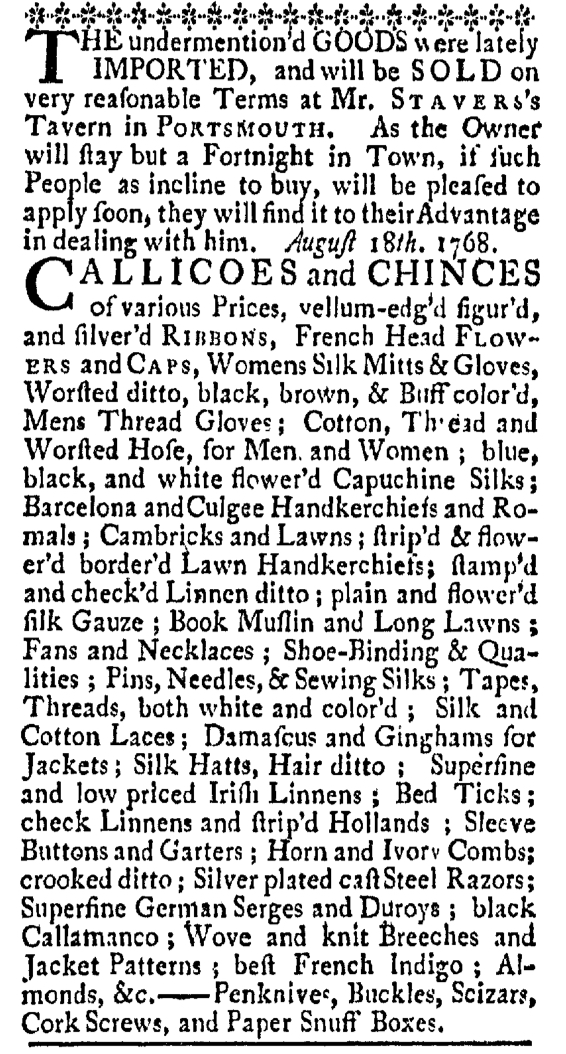
Aug 19 - 8:19:1768 New-Hampshire Gazette
New-Hampshire Gazette (August 19, 1768).

“The Owner will stay but a Fortnight in Town.”

Henry Appleton and Richard Champney placed advertisements in the New-Hampshire Gazette frequently. Members of their community likely knew where to find Appleton “At his shop in Portsmouth” and Champney “At his shop near Mr. John Beck’s, Hatter.” In the small port, both their faces and their shops would have been familiar. One of their competitors, however, was not nearly as familiar to the residents of Portsmouth and the surrounding area. An advertisement that appeared in the August 19, 17678, edition of the New-Hampshire Gazette listed many wares quite similar to those stocked by Appleton and Champney, but it did not specify the name of the seller.

Instead, it announced that “THE undermention’d GOODS were lately IMPORTED, and will be SOLD on very reasonable terms at Mr. STAVERS’s Tavern in PORTSMOUTH.” The unnamed advertiser stated that he “will stay but a Fortnight in Town.” From all appearances, Appleton and Champney found themselves in competition with a peddler. They likely did not appreciate his brief interlude in the local marketplace. Peddlers were disruptive. They diverted business away from the shops where customers usually acquired goods. In this case, the advertisement encouraged potential customers to head to a tavern to examine ribbons, gloves, fans, necklaces, and a variety of other “Baubles of Britain” (to borrow the evocative phrase from T.H. Breen’s examination of the consumer revolution in America in the eighteenth century). Those “incline[d] to buy … will find it to their Advantage in dealing with” the unnamed itinerant. Local shopkeepers like Appleton and Champney were probably none too pleased about this alternative means for their prospective customers to obtain many of the same trinkets they sold, especially not when the peddler implied that he offered lower prices than residents would otherwise encounter in Portsmouth.

Itinerant hawkers who traversed the roads from town to town in the late colonial period provided an alternate means of distributing many of the goods that were at the center of the consumer revolution. They complemented the shops and auctions that otherwise placed an array of merchandise in the hands and households of customers, usually to the chagrin of local entrepreneurs who did not appreciate the intrusion.
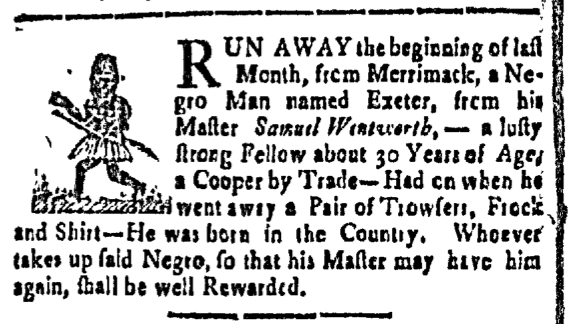
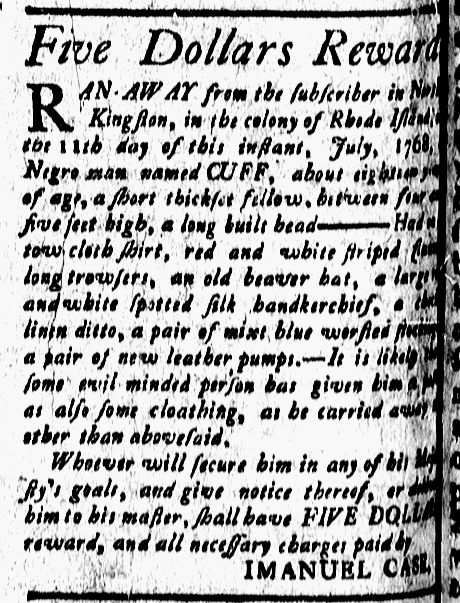
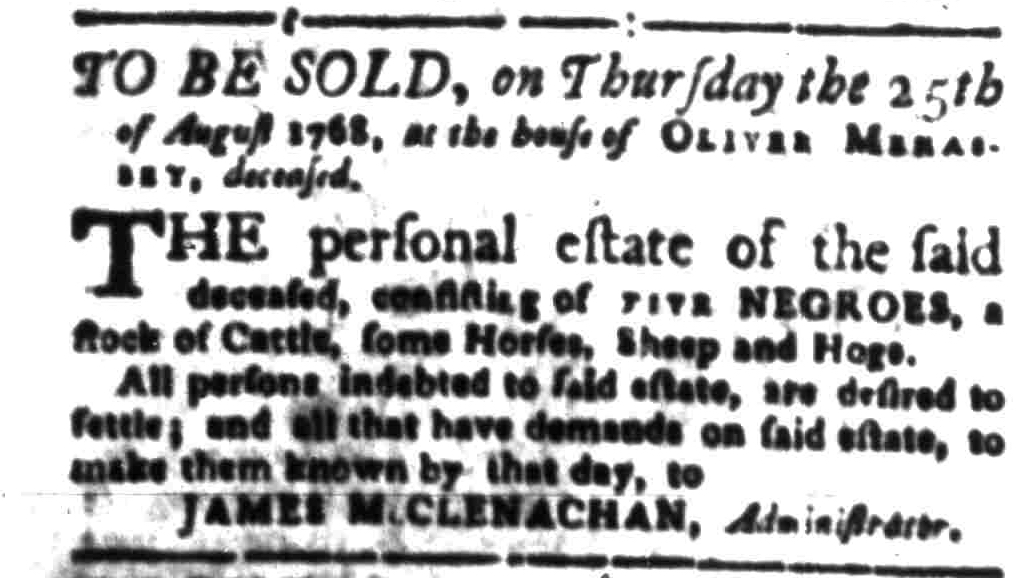
Slavery Advertisements Published August 19, 1768

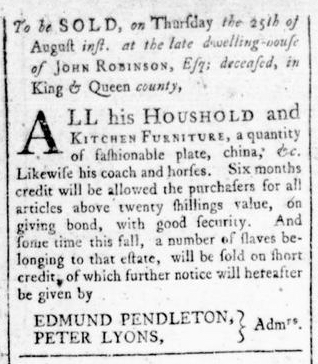
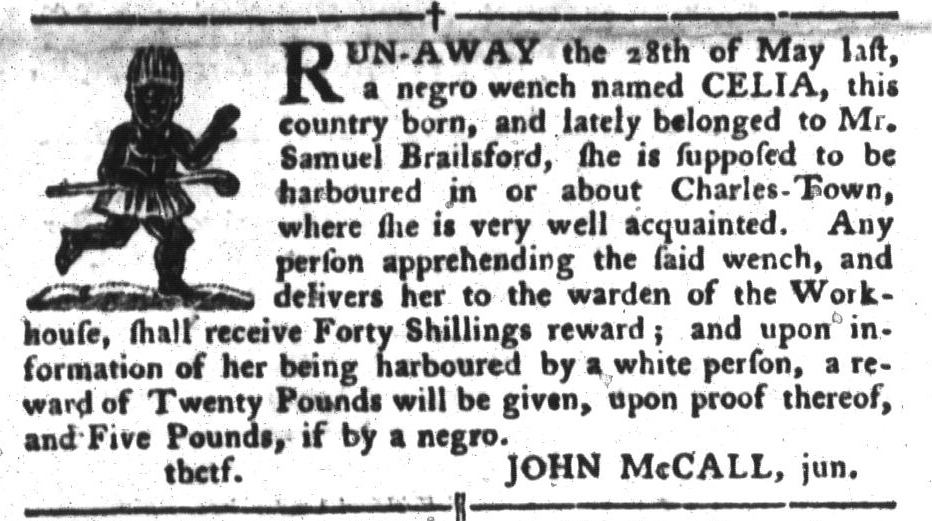
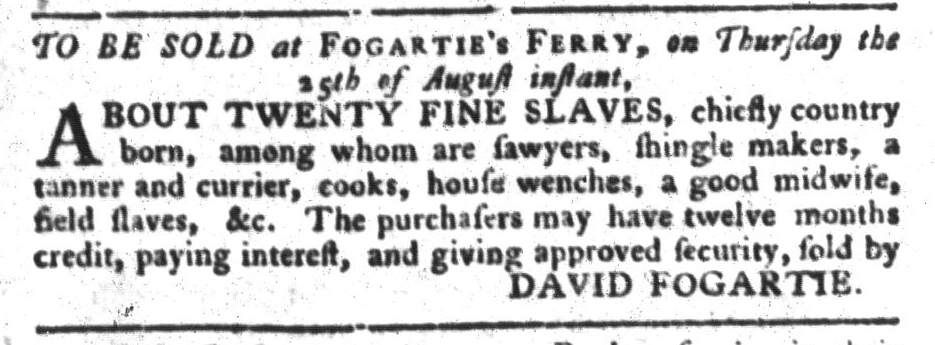
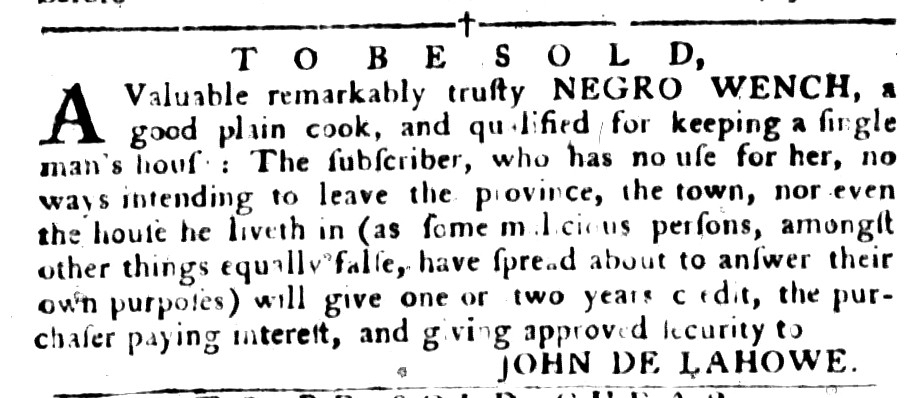
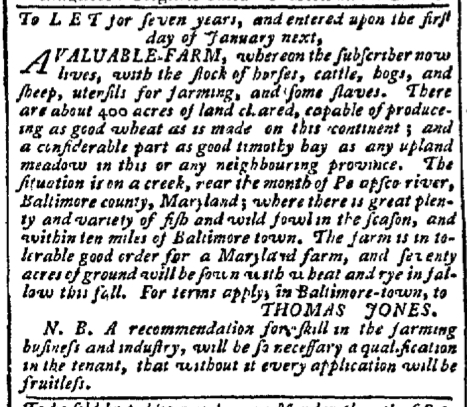
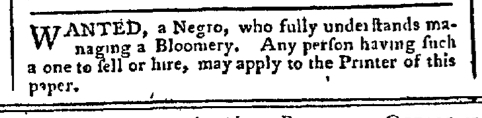
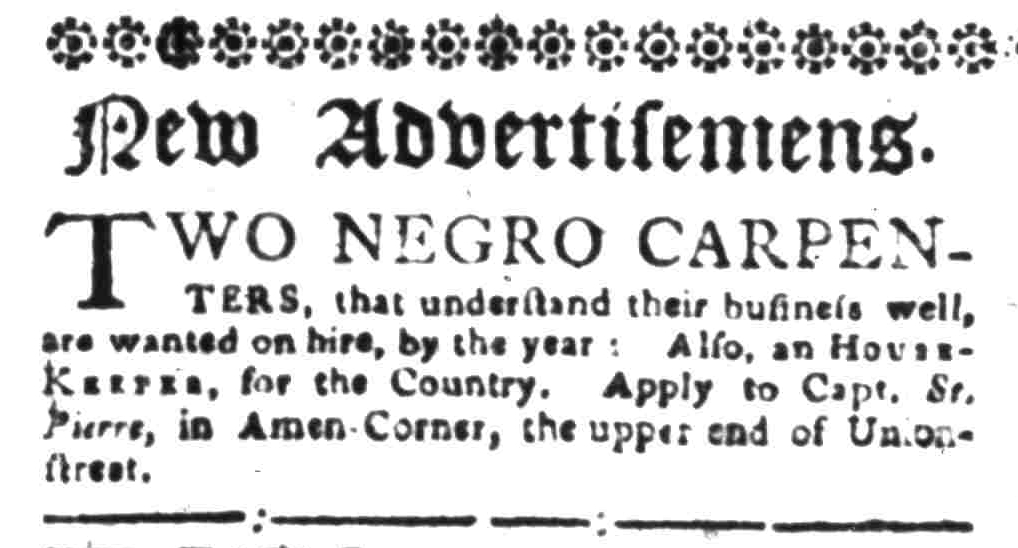
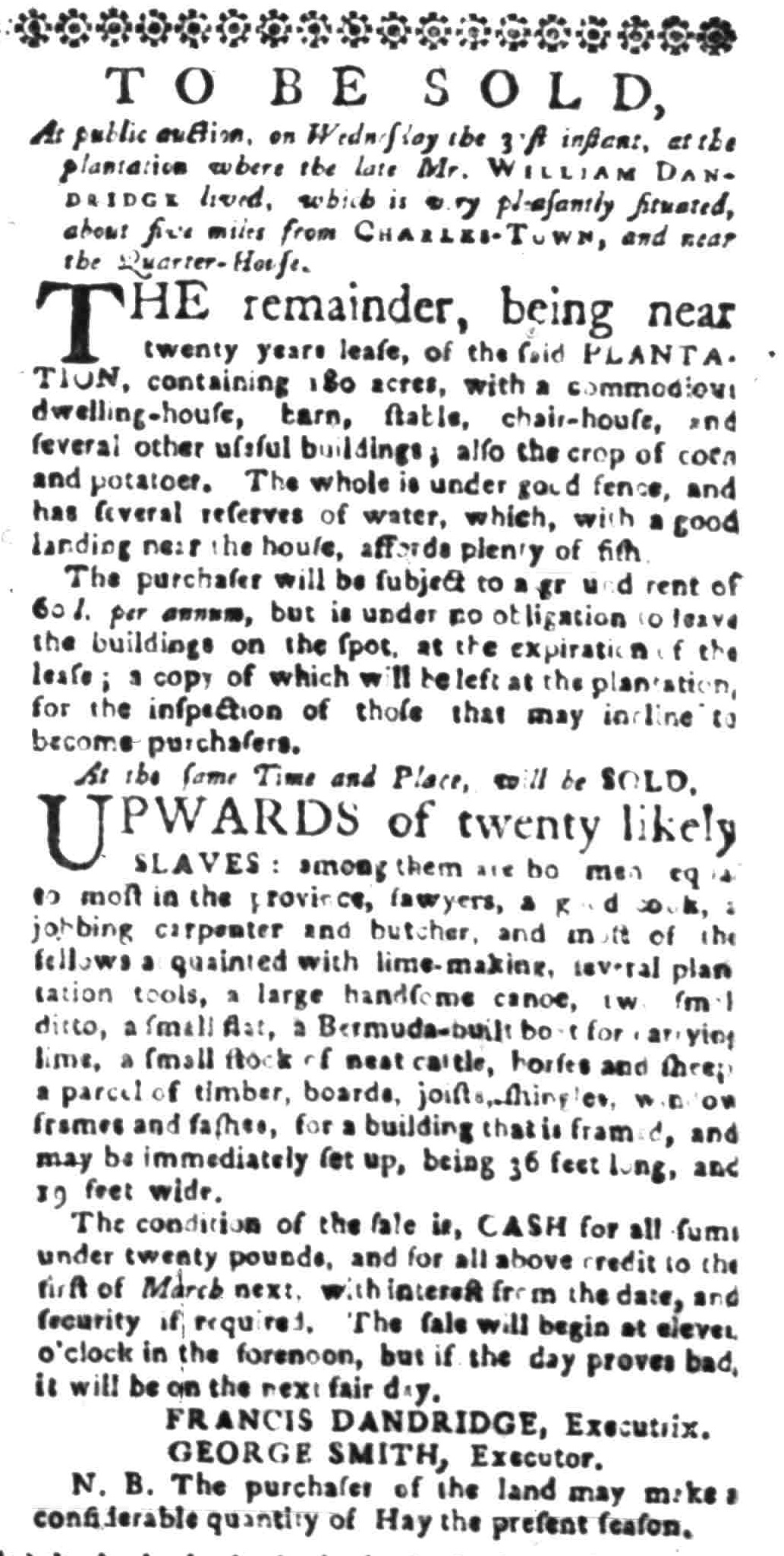
The Slavery Adverts 250 Project chronicles the role of newspaper advertising in perpetuating slavery in the era of the American Revolution. The project seeks to reveal the ubiquity of slavery in eighteenth-century life from New England to Georgia by republishing advertisements for slaves – for sale, wanted to purchase, runaways, captured fugitives – in daily digests on this site as well as in real time via the @SlaveAdverts250 Twitter feed, utilizing twenty-first-century media to stand in for the print media of the eighteenth century.

The project aims to provide modern audiences with a sense of just how often colonists encountered these advertisements in their daily lives. Enslaved men, women, and children appeared in print somewhere in the colonies almost every single day. Those advertisements served as a constant backdrop for social, cultural, economic, and political life in colonial and revolutionary America. Colonists who did not own slaves were still confronted with slavery as well as invited to maintain the system by purchasing slaves or assisting in the capture of runaways. The frequency of these newspaper advertisements suggests just how embedded slavery was in colonial and revolutionary American culture in everyday interactions beyond the printed page.

These advertisements also testify to the experiences of enslaved men, women, and children, though readers must consider that those experiences have been remediated through descriptions offered by slaveholders rather than the slaves themselves. Often unnamed in the advertisements, enslaved men, women, and children were not invisible or unimportant in early America.

These advertisements appeared in colonial American newspapers 250 years ago today.

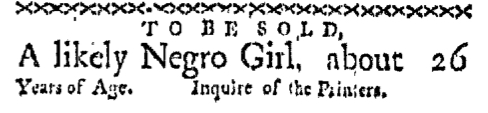
Aug 19 - New-Hampshire Gazette Slavery 1
New-Hampshire Gazette (August 19, 1768).

**********

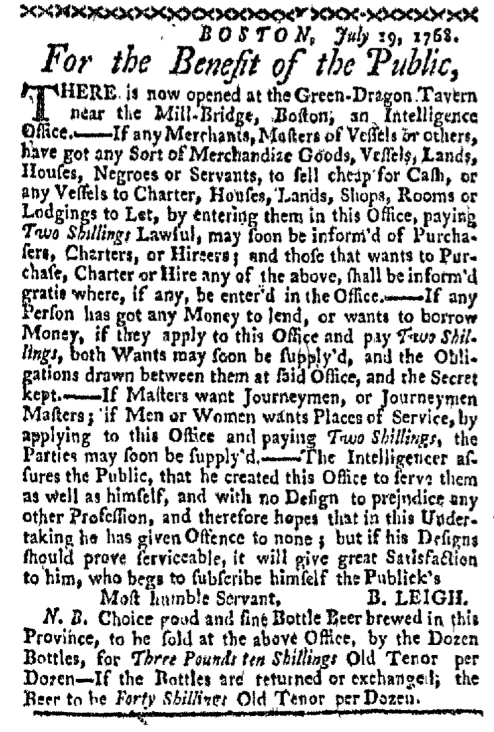
Aug 19 - New-London Gazette Slavery 1
New-London Gazette (August 19, 1768).

**********

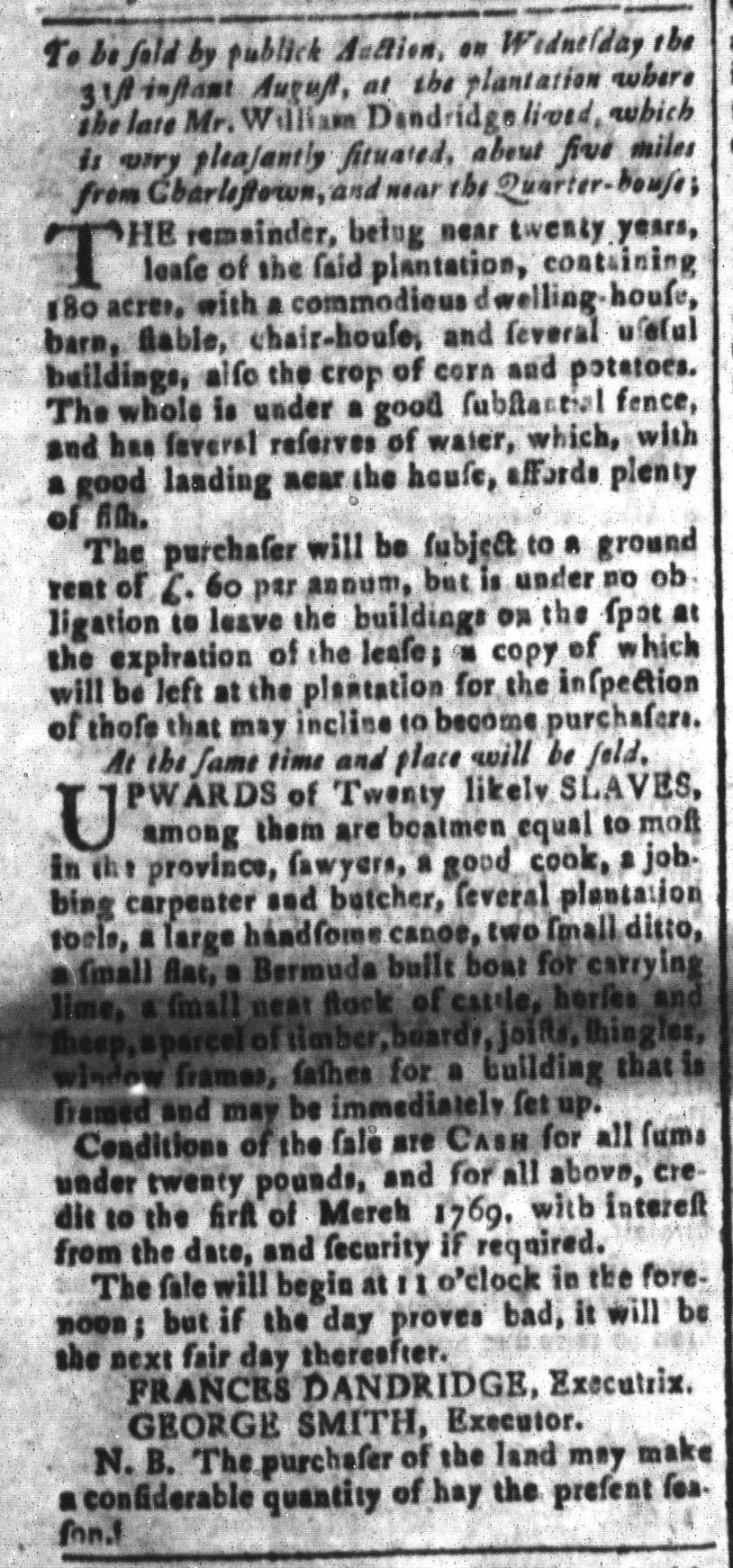
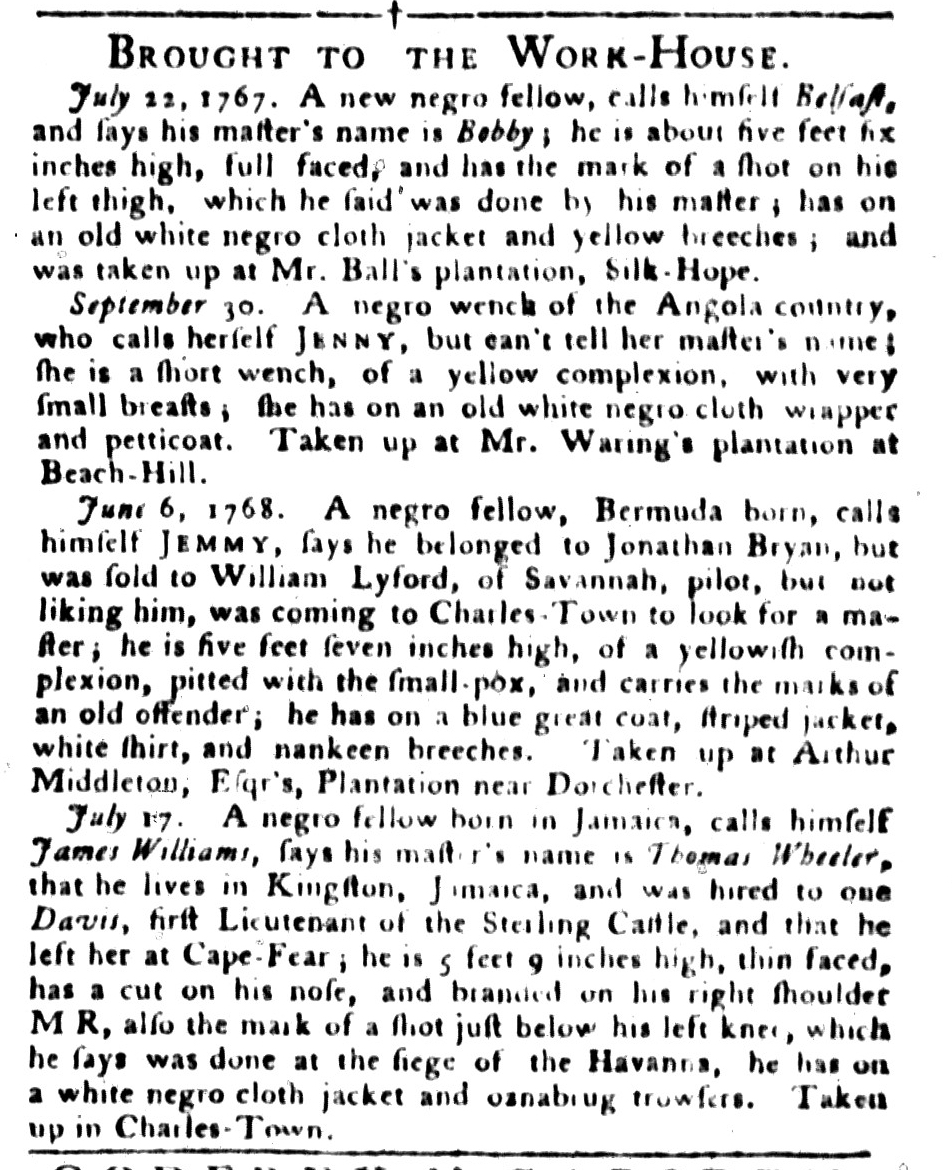
Aug 19 - South-Carolina and American General Gazette Slavery 1
South-Carolina and American General Gazette (August 19, 1768).

**********

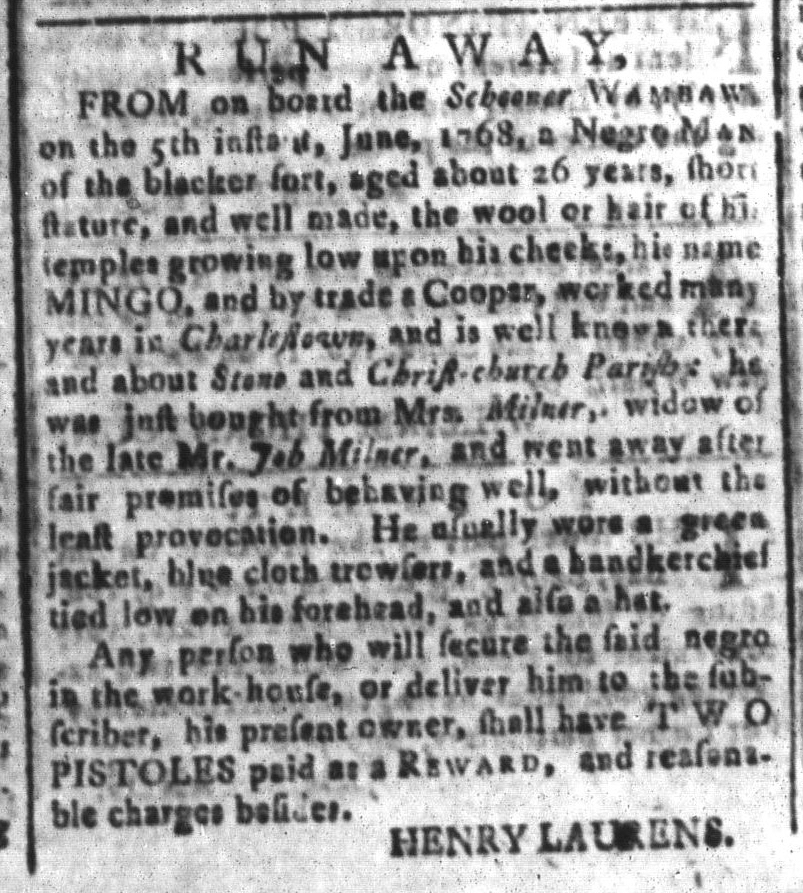
Aug 19 - South-Carolina and American General Gazette Slavery 2
South-Carolina and American General Gazette (August 19, 1768).

**********

Aug 19 - South-Carolina and American General Gazette Slavery 3
South-Carolina and American General Gazette (August 19, 1768).

**********

Aug 19 - South-Carolina and American General Gazette Slavery 4
South-Carolina and American General Gazette (August 19, 1768).

**********

Aug 19 - South-Carolina and American General Gazette Slavery 5
South-Carolina and American General Gazette (August 19, 1768).

**********

Aug 19 - South-Carolina and American General Gazette Slavery 6
South-Carolina and American General Gazette (August 19, 1768).

**********

Aug 19 - South-Carolina and American General Gazette Slavery 7
South-Carolina and American General Gazette (August 19, 1768).

**********

Aug 19 - South-Carolina and American General Gazette Slavery 8
South-Carolina and American General Gazette (August 19, 1768).

August 18

What was advertised in a colonial American newspaper 250 years ago today?

Aug 18 - 8:18:1768 Pennsylvania Gazette
Pennsylvania Gazette (August 18, 1768).

“Carpenters, joiners, sadlers and others, may expect they will be sold on the lowest terms.”

In the late 1760s James Eddy operated a hardware store on Second Street in Philadelphia. His lengthy advertisements in the Pennsylvania Gazette promised a “large and neat assortment of IRONMONGERY.” To demonstrate that was the case, he listed dozens of items available at his shop, everything from nails to “dovetail and key-hole saws” to “files of various sorts and sizes” to “brass H hinges for book cases” to “sundry kinds of brass and iron wire.”

Although everyday consumers would have purchased many of his wares, Eddy understood that artisans comprised a customer base particularly important to his business. As a result, he catered to them by drawing attention to specific tools, including “taylors and womens shears,” “A large assortment of chapes for silver smiths,” “carpenters hammers,” “A large and very neat assortment of clock and watchmakers tools,” and “sundry other tools, suitable for carpenters, ship carpenters, joiners, &c.” Eddy supplied artisans with the tools they needed to practice their trades. That endeavor likely accounted for a substantial portion of his business.

Even if it did not, Eddy’s advertisement suggests that he envisioned a special relationship with artisans as a means of generating revenues. He appended a nota bene that made general appeals about price and quality for all potential customers but then targeted artisans for their prospective patronage. “Carpenters, joiners, sadlers and others,” Eddy proclaimed, “may expect they will be sold on the lowest terms.”

In the eighteenth century advertisers only occasionally addressed their notices to members of particular occupations. Eddy apparently sensed an opportunity to establish a sense of community with artisans who did not merely desire his wares but actually needed them to pursue their own livelihoods. He cultivated that relationship by stocking a wide assortment of tools and underscoring that those who used them could depend on outfitting their own workshops with quality tools sold at low prices. His particular concern for the artisans of Philadelphia may have won him some customers who appreciated that he was sensitive to the costs of the tools they needed to operate their own businesses, a part of his business model that distinguished him from many other shopkeepers in the city.

Slavery Advertisements Published August 18, 1768

The Slavery Adverts 250 Project chronicles the role of newspaper advertising in perpetuating slavery in the era of the American Revolution. The project seeks to reveal the ubiquity of slavery in eighteenth-century life from New England to Georgia by republishing advertisements for slaves – for sale, wanted to purchase, runaways, captured fugitives – in daily digests on this site as well as in real time via the @SlaveAdverts250 Twitter feed, utilizing twenty-first-century media to stand in for the print media of the eighteenth century.

The project aims to provide modern audiences with a sense of just how often colonists encountered these advertisements in their daily lives. Enslaved men, women, and children appeared in print somewhere in the colonies almost every single day. Those advertisements served as a constant backdrop for social, cultural, economic, and political life in colonial and revolutionary America. Colonists who did not own slaves were still confronted with slavery as well as invited to maintain the system by purchasing slaves or assisting in the capture of runaways. The frequency of these newspaper advertisements suggests just how embedded slavery was in colonial and revolutionary American culture in everyday interactions beyond the printed page.

These advertisements also testify to the experiences of enslaved men, women, and children, though readers must consider that those experiences have been remediated through descriptions offered by slaveholders rather than the slaves themselves. Often unnamed in the advertisements, enslaved men, women, and children were not invisible or unimportant in early America.

These advertisements appeared in colonial American newspapers 250 years ago today.

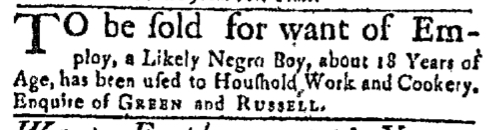
Aug 18 - Boston Weekly News-Letter Slavery 1
Boston Weekly News-Letter (August 18, 1768).

**********

Aug 18 - Boston Weekly News-Letter Slavery 2
Boston Weekly News-Letter (August 18, 1768).

**********

Aug 18 - Massachusetts Gazette Draper Slavery 1
Massachusetts Gazette [Draper] (August 18, 1768).

**********

Aug 18 - New-York Journal Slavery 1
New-York Journal (August 18, 1768).

**********

Aug 18 - Pennsylvania Gazette Slavery 1
Supplement to the Pennsylvania Gazette (August 18, 1768).

**********

Aug 18 - Virginia Gazette Purdie and Dixon Slavery 1
Virginia Gazette [Purdie & Dixon] (August 18, 1768).

**********

Aug 18 - Virginia Gazette Purdie and Dixon Slavery 2
Virginia Gazette [Purdie & Dixon] (August 18, 1768).

**********

Aug 18 - Virginia Gazette Purdie and Dixon Slavery 3
Virginia Gazette [Purdie & Dixon] (August 18, 1768).

**********

Aug 18 - Virginia Gazette Purdie and Dixon Slavery 4
Virginia Gazette [Purdie & Dixon] (August 18, 1768).

**********

Aug 18 - Virginia Gazette Purdie and Dixon Slavery 5
Virginia Gazette [Purdie & Dixon] (August 18, 1768).

**********

Aug 18 - Virginia Gazette Purdie and Dixon Slavery 6
Virginia Gazette [Purdie & Dixon] (August 18, 1768).

**********

Aug 18 - Virginia Gazette Purdie and Dixon Slavery 7
Virginia Gazette [Purdie & Dixon] (August 18, 1768).

**********

Aug 18 - Virginia Gazette Purdie and Dixon Slavery 8
Virginia Gazette [Purdie & Dixon] (August 18, 1768).

**********

Aug 18 - Virginia Gazette Purdie and Dixon Slavery 9
Virginia Gazette [Purdie & Dixon] (August 18, 1768).

**********

Aug 18 - Virginia Gazette Purdie and Dixon Slavery 10
Virginia Gazette [Purdie & Dixon] (August 18, 1768).

**********

Aug 18 - Virginia Gazette Rind Slavery 1
Virginia Gazette [Rind] (August 18, 1768).

**********

Aug 18 - Virginia Gazette Rind Slavery 2
Virginia Gazette [Rind] (August 18, 1768).

**********

Aug 18 - Virginia Gazette Rind Slavery 3
Virginia Gazette [Rind] (August 18, 1768).

**********

Aug 18 - Virginia Gazette Rind Slavery 4
Virginia Gazette [Rind] (August 18, 1768).

**********

Aug 18 - Virginia Gazette Rind Slavery 5
Virginia Gazette [Rind] (August 18, 1768).

**********

Aug 18 - Virginia Gazette Rind Slavery 6
Virginia Gazette [Rind] (August 18, 1768).

**********

Aug 18 - Virginia Gazette Rind Slavery 7
Virginia Gazette [Rind] (August 18, 1768).

**********

Aug 18 - Virginia Gazette Rind Slavery 8
Virginia Gazette [Rind] (August 18, 1768).

**********

Aug 18 - Virginia Gazette Rind Slavery 9
Virginia Gazette [Rind] (August 18, 1768).

**********

Aug 18 - Virginia Gazette Rind Slavery 10
Virginia Gazette [Rind] (August 18, 1768).

August 17

What was advertised in a colonial American newspaper 250 years ago today?

Aug 17 - 8:17:1768 Georgia Gazette
Georgia Gazette (August 17, 1768).

“LEWIS JOHNSON Has just imported … AN ASSORTMENT of MEDICINES.”

When readers of the Georgia Gazette perused the August 17, 1768, edition they encountered an advertisement for “AN ASSORTMENT of MEDICINES, and sundry other Articles” that may have looked familiar. Lewis Johnson had placed his notice listing an extensive array of goods as soon as they arrived in his shop. The shipping news in the June 29 issue indicated that the “Ship Charming Sally, Peter Rainier” from London had “ENTERED INWARDS at the CUSTOM-HOUSE” on June 28. Johnson’s advertisement listing merchandise “just imported for Sale from LONDON, By the CHARMING SALLY, Capt. RAINIER” appeared in the Georgia Gazette the following day. It ran for three consecutive weeks, a standard length of time according to the fee structure for advertising in many colonial newspapers.

Johnson’s advertisement then disappeared from the next four issues before returning in the August 17 issue. Why did Johnson suddenly decide to insert his advertisement again? Just as its initial run coincided with the shipping news that confirmed the Charming Sally had just arrived with a cargo of goods imported from London, its return to the pages of the Georgia Gazette occurred when the shipping news reported the vessel’s departure. Among the other entries from the Customs House, the “Ship Charming Sally, Peter Rainier” had “CLEARED” and sailed for Martinique. For the past three weeks, the Charming Sally had been listed with those that had “ENTERED OUTWARDS” in preparation of leaving Savannah. Either from the shipping news or his interactions with the captain, Johnson would have known when the ship that transported his goods was leaving. The August 17 issue would be the last issue that carried information about the Charming Nancy provided by the Customs House. It was also Johnson’s last chance to underscore that he had indeed “just imported” his wares on a ship that had recently arrived in port.

His advertisement did not appear the following week, nor did the shipping news mention the Charming Nancy. Johnson had seized the opportunity when it presented itself, but withdrawn his advertisement when the news items printed elsewhere in newspaper made one of the appeals in his advertisement look outdated.

Slavery Advertisements Published August 17, 1768

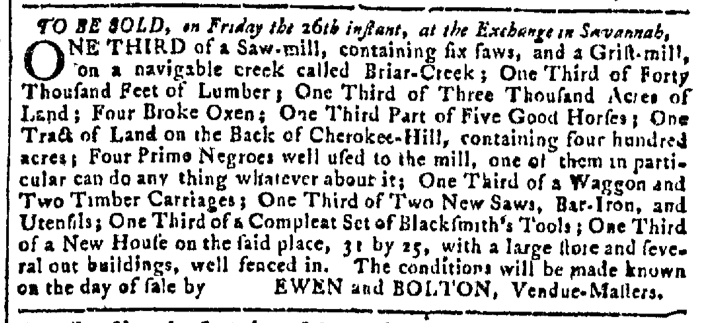
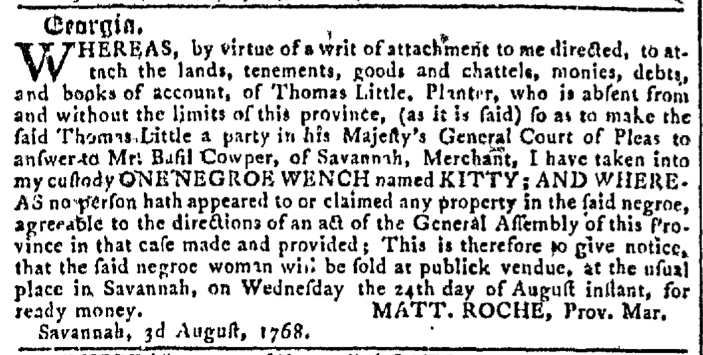
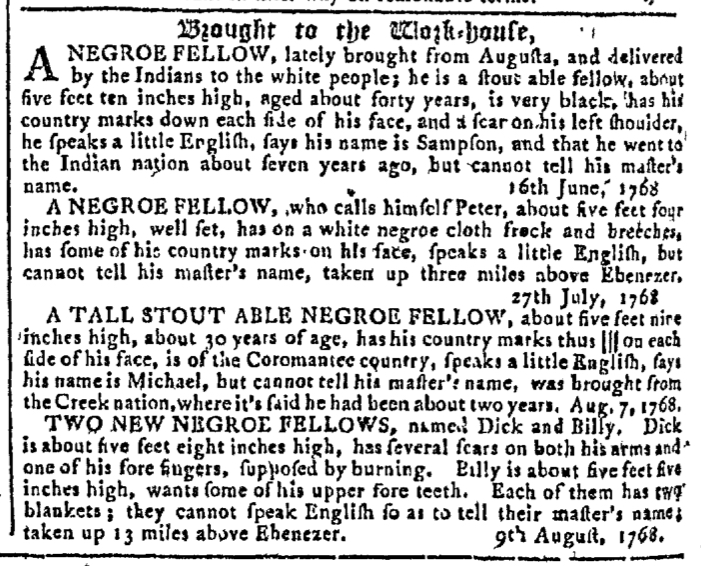
The Slavery Adverts 250 Project chronicles the role of newspaper advertising in perpetuating slavery in the era of the American Revolution. The project seeks to reveal the ubiquity of slavery in eighteenth-century life from New England to Georgia by republishing advertisements for slaves – for sale, wanted to purchase, runaways, captured fugitives – in daily digests on this site as well as in real time via the @SlaveAdverts250 Twitter feed, utilizing twenty-first-century media to stand in for the print media of the eighteenth century.

The project aims to provide modern audiences with a sense of just how often colonists encountered these advertisements in their daily lives. Enslaved men, women, and children appeared in print somewhere in the colonies almost every single day. Those advertisements served as a constant backdrop for social, cultural, economic, and political life in colonial and revolutionary America. Colonists who did not own slaves were still confronted with slavery as well as invited to maintain the system by purchasing slaves or assisting in the capture of runaways. The frequency of these newspaper advertisements suggests just how embedded slavery was in colonial and revolutionary American culture in everyday interactions beyond the printed page.

These advertisements also testify to the experiences of enslaved men, women, and children, though readers must consider that those experiences have been remediated through descriptions offered by slaveholders rather than the slaves themselves. Often unnamed in the advertisements, enslaved men, women, and children were not invisible or unimportant in early America.

These advertisements appeared in colonial American newspapers 250 years ago today.

Aug 17 - Georgia Gazette Slavery 1
Georgia Gazette (August 17, 1768).

**********

Aug 17 - Georgia Gazette Slavery 2
Georgia Gazette (August 17, 1768).

**********

Aug 17 - Georgia Gazette Slavery 3
Georgia Gazette (August 17, 1768).

**********

Aug 17 - Georgia Gazette Slavery 4
Georgia Gazette (August 17, 1768).

**********

Aug 17 - Georgia Gazette Slavery 5
Georgia Gazette (August 17, 1768).

**********

Aug 17 - Georgia Gazette Slavery 6
Georgia Gazette (August 17, 1768).

**********

Aug 17 - Georgia Gazette Slavery 7
Georgia Gazette (August 17, 1768).

**********

Aug 17 - Georgia Gazette Slavery 8
Georgia Gazette (August 17, 1768).

**********

Aug 17 - Georgia Gazette Slavery 9
Georgia Gazette (August 17, 1768).

**********

Aug 17 - Georgia Gazette Slavery 10
Georgia Gazette (August 17, 1768).

**********

Aug 17 - Georgia Gazette Slavery 13
Georgia Gazette (August 17, 1768).

**********

Aug 17 - Georgia Gazette Slavery 11
Georgia Gazette (August 17, 1768).

**********

Aug 17 - Georgia Gazette Slavery 12
Georgia Gazette (August 17, 1768).

August 16

What was advertised in a colonial American newspaper 250 years ago today?

Aug 16 - 8:16:1768 South-Carolina Gazette and Country Journal
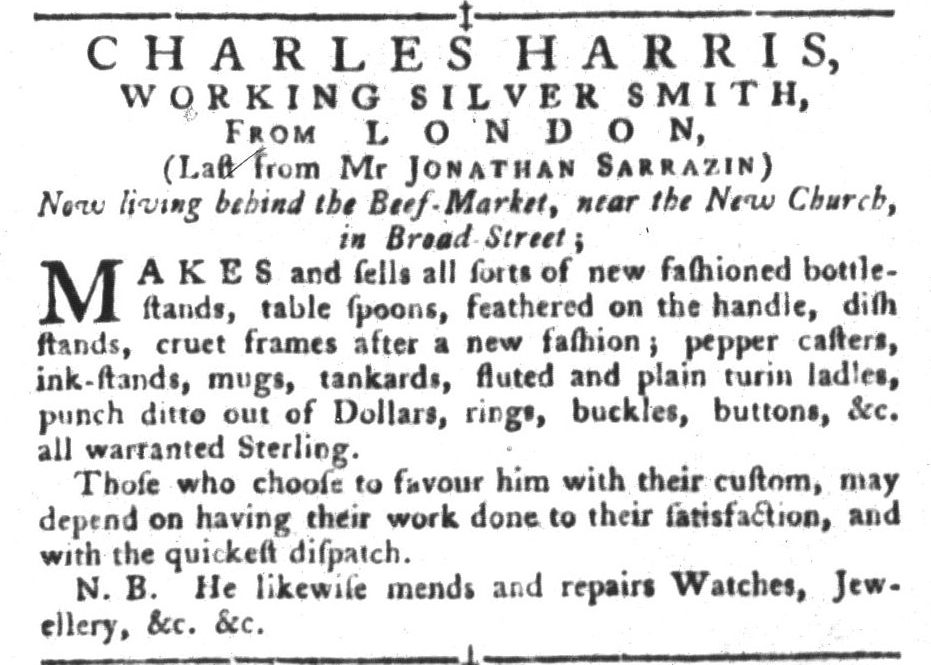
South-Carolina Gazette and Country Journal (August 16, 1768).

“CHARLES HARRIS, WORKING SILVERSMITH, FROM LONDON, (Last from Mr. JONATHAN SARRAZIN.”

Like many other artisans who advertised in colonial newspapers, Charles Harris, a silversmith, provided his some of his credentials in the notice he inserted in the August 16, 1768, edition of the South-Carolina Gazette and Country Journal. He first asserted his connections to London, the cosmopolitan center of the empire, as a means of assuring prospective customers that he was indeed aware of the current tastes and styles. Invoking his London origins gave the silversmith cachet while simultaneously suggesting his familiarity with “all sorts of new fashioned bottle-stands” and “cruet frames after a new fashion.” He paid attention to the smallest details, even when making “table spoons, feathered on the handle.”

Yet Harris had not just arrived in Charleston directly from London. His advertisement indicated that he had already spent some time in the colony, employed in another workshop before establishing his own. Even though he had migrated “FROM LONDON,” Harris informed readers that he was also “(Last from Mr JONATHAN SARRAZIN),” a jeweler who ran a shop at the corner of Broad Street and Church Street. Harris’s former employer, who had recently published a series of advertisements in all three newspapers published in Charleston, was now one of his competitors. Harris took advantage of their former affiliation to market his own wares. Prospective customers who had previously secured Sarrazin’s services had likely acquired items that Harris took a hand in producing. Rather than his work being completely unknown in the local marketplace, as was the case for artisans newly arrived from London, some of his wares had already found their way into the hands of local consumers. This allowed Harris to piggyback on the reputation that Sarrazin had cultivated among residents of Charleston.

Harris deployed his advertisement as his résumé. He included vital work history that allowed prospective customers to determine if they wished to consider availing themselves of his services. Establishing that he had already made contributions to his trade in the local marketplace gave Harris additional credibility in his pledge to potential clients that they “may depend on having their work done to their satisfaction, and with the quickest dispatch.”

Slavery Advertisements Published August 16, 1768

The Slavery Adverts 250 Project chronicles the role of newspaper advertising in perpetuating slavery in the era of the American Revolution. The project seeks to reveal the ubiquity of slavery in eighteenth-century life from New England to Georgia by republishing advertisements for slaves – for sale, wanted to purchase, runaways, captured fugitives – in daily digests on this site as well as in real time via the @SlaveAdverts250 Twitter feed, utilizing twenty-first-century media to stand in for the print media of the eighteenth century.

The project aims to provide modern audiences with a sense of just how often colonists encountered these advertisements in their daily lives. Enslaved men, women, and children appeared in print somewhere in the colonies almost every single day. Those advertisements served as a constant backdrop for social, cultural, economic, and political life in colonial and revolutionary America. Colonists who did not own slaves were still confronted with slavery as well as invited to maintain the system by purchasing slaves or assisting in the capture of runaways. The frequency of these newspaper advertisements suggests just how embedded slavery was in colonial and revolutionary American culture in everyday interactions beyond the printed page.

These advertisements also testify to the experiences of enslaved men, women, and children, though readers must consider that those experiences have been remediated through descriptions offered by slaveholders rather than the slaves themselves. Often unnamed in the advertisements, enslaved men, women, and children were not invisible or unimportant in early America.

These advertisements appeared in colonial American newspapers 250 years ago today.

Aug 16 - South-Carolina Gazette and Country Journal Slavery 1
South-Carolina Gazette and Country Journal (August 16, 1768).

**********

Aug 16 - South-Carolina Gazette and Country Journal Slavery 2
South-Carolina Gazette and Country Journal (August 16, 1768).

**********

Aug 16 - South-Carolina Gazette and Country Journal Slavery 3
South-Carolina Gazette and Country Journal (August 16, 1768).

**********

Aug 16 - South-Carolina Gazette and Country Journal Slavery 4
South-Carolina Gazette and Country Journal (August 16, 1768).

**********

Aug 16 - South-Carolina Gazette and Country Journal Slavery 5
South-Carolina Gazette and Country Journal (August 16, 1768).

**********

Aug 16 - South-Carolina Gazette and Country Journal Supplement Slavery 1
Supplement to the South-Carolina Gazette and Country Journal (August 16, 1768).

**********

Aug 16 - South-Carolina Gazette and Country Journal Supplement Slavery 2
Supplement to the South-Carolina Gazette and Country Journal (August 16, 1768).

**********

Aug 16 - South-Carolina Gazette and Country Journal Supplement Slavery 3
Supplement to the South-Carolina Gazette and Country Journal (August 16, 1768).

**********

Aug 16 - South-Carolina Gazette and Country Journal Supplement Slavery 4
Supplement to the South-Carolina Gazette and Country Journal (August 16, 1768).

**********

Aug 16 - South-Carolina Gazette and Country Journal Supplement Slavery 5
Supplement to the South-Carolina Gazette and Country Journal (August 16, 1768).

**********

Aug 16 - South-Carolina Gazette and Country Journal Supplement Slavery 6
Supplement to the South-Carolina Gazette and Country Journal (August 16, 1768).

**********

Aug 16 - South-Carolina Gazette and Country Journal Supplement Slavery 7
Supplement to the South-Carolina Gazette and Country Journal (August 16, 1768).

August 15

What was advertised in a colonial American newspaper 250 years ago today?

Aug 15 - 8:15:1768 New-York Gazette Weekly Mercury
New-York Gazette and Weekly Mercury (August 15, 1768).

“I am Master of the new Mode, lately invented in London, of making Wigs.”

In the advertisements they placed in American newspapers in late colonial period, entrepreneurs in occupations tied to fashion often underscored their connections to London, the cosmopolitan center of the Britain’s empire. Tailors, milliners, and others who made apparel often proclaimed that they were “from London.” Hairdressers and wigmakers advanced similar appeals. Even shopkeepers did so when they thought that it might help them to sell imported garments, textiles, and assorted adornments.

John Lewis, a native of New York, could not claim to be “from London,” but his origins mattered less than the time he had spent in that city. The “HAIR-DRESSER, and PERUKE-MAKER” opened his advertisement in the New-York Gazette and Weekly Mercury by informing prospective clients that “after considerable Residence in London” he had returned to New York and set up shop. During the time that he had resided in London Lewis had worked with “the most eminent Masters in the above mentioned Branches of Business” and, as a result, had “acquired Abilities equal to any of my Brethren, in the Professions of Hair-Dressing and Wig-Making.” This made him particularly qualified to serve customers in New York and its environs.

Lewis highlighted his familiarity with current fashions and the most advanced methods of his trade, both acquired during his time in London. To that end, his advertisement served as a primer to newspaper readers about some of styles currently popular on the other side of the Atlantic. “I am Master of the new Mode, lately invented in London,” he proclaimed, “of making Wigs that shall not need dressing for six Months, preserving their Shape and first Appearance during that Time.” For those who were unaware, he firther explained that “This fashion is much esteem’d at present in England [for] its Usefulness and Convenience.” Since such wigs were new to the American marketplace, Lewis proposed another means of helping prospective clients become more familiar with them. In addition to describing the wigs in advertisements, he made several “Specimens” or samples that “Gentlemen” could examine before engaging his services.
Lewis leveraged his connections to London in his advertisement. He not only claimed familiarity with the current styles but also asserted that he was in a position to educate potential customers about new tastes and methods that they had not yet encountered in the colonies. He provided extensive detail in hopes that these factors would distinguish him from local competitors who either had never traveled to London or had not done so recently.

Slavery Advertisements Published August 15, 1768

The Slavery Adverts 250 Project chronicles the role of newspaper advertising in perpetuating slavery in the era of the American Revolution. The project seeks to reveal the ubiquity of slavery in eighteenth-century life from New England to Georgia by republishing advertisements for slaves – for sale, wanted to purchase, runaways, captured fugitives – in daily digests on this site as well as in real time via the @SlaveAdverts250 Twitter feed, utilizing twenty-first-century media to stand in for the print media of the eighteenth century.

The project aims to provide modern audiences with a sense of just how often colonists encountered these advertisements in their daily lives. Enslaved men, women, and children appeared in print somewhere in the colonies almost every single day. Those advertisements served as a constant backdrop for social, cultural, economic, and political life in colonial and revolutionary America. Colonists who did not own slaves were still confronted with slavery as well as invited to maintain the system by purchasing slaves or assisting in the capture of runaways. The frequency of these newspaper advertisements suggests just how embedded slavery was in colonial and revolutionary American culture in everyday interactions beyond the printed page.

These advertisements also testify to the experiences of enslaved men, women, and children, though readers must consider that those experiences have been remediated through descriptions offered by slaveholders rather than the slaves themselves. Often unnamed in the advertisements, enslaved men, women, and children were not invisible or unimportant in early America.

These advertisements appeared in colonial American newspapers 250 years ago today.

Aug 15 - Boston Evening-Post Slavery 1
Boston Evening-Post (August 15, 1768).

**********

Aug 15 - Boston-Gazette Slavery 1
Boston-Gazette (August 15, 1768).

**********

Aug 15 - Boston-Gazette Slavery 2
Boston-Gazette (August 15, 1768).

**********

Aug 15 - Boston-Gazette Slavery 3
Boston-Gazette (August 15, 1768).

**********

Aug 15 - Boston-Gazette Supplement Slavery 1
Supplement to the Boston-Gazette (August 15, 1768).

**********

Aug 15 - Massachusetts Gazette Green and Russell Slavery 1
Massachusetts Gazette [Green & Russell] (August 15, 1768).

**********

Aug 15 - Massachusetts Gazette Green and Russell Slavery 2
Massachusetts Gazette [Green & Russell] (August 15, 1768).

**********

Aug 15 - Massachusetts Gazette Green and Russell Slavery 3
Massachusetts Gazette [Green & Russell] (August 15, 1768).

**********

Aug 15 - New-York Gazette Weekly Mercury Slavery 1
New-York Gazette and Weekly Mercury (August 15, 1768).

**********

Aug 15 - New-York Gazette Weekly Mercury Slavery 2
New-York Gazette and Weekly Mercury (August 15, 1768).

**********

Aug 15 - New-York Gazette Weekly Post-Boy Slavery 1
New-York Gazette: Or, the Weekly Post-Boy (August 15, 1768).

**********

Aug 15 - Newport Mercury Slavery 1
Newport Mercury (August 15, 1768).

**********

Aug 15 - Newport Mercury Slavery 2
Newport Mercury (August 15, 1768).

**********

Aug 15 - Newport Mercury Slavery 3
Newport Mercury (August 15, 1768).

**********

Aug 15 - Newport Mercury Slavery 4
Newport Mercury (August 15, 1768).

**********

Aug 15 - Newport Mercury Slavery 5
Newport Mercury (August 15, 1768).

**********

Aug 15 - Newport Mercury Slavery 6
Newport Mercury (August 15, 1768).

**********

Aug 15 - Pennsylvania Chronicle Slavery 1
Pennsylvania Chronicle (August 15, 1768).

**********

Aug 15 - Pennsylvania Chronicle Slavery 2
Pennsylvania Chronicle (August 15, 1768).

**********

Aug 15 - Pennsylvania Chronicle Slavery 3
Pennsylvania Chronicle (August 15, 1768).

**********

Aug 15 - Pennsylvania Chronicle Slavery 4
Pennsylvania Chronicle (August 15, 1768).

**********

Aug 15 - Pennsylvania Chronicle Slavery 5
Pennsylvania Chronicle (August 15, 1768).

**********

Aug 15 - South-Carolina Gazette Slavery 1
South-Carolina Gazette (August 15, 1768).

**********

Aug 15 - South-Carolina Gazette Slavery 2
South-Carolina Gazette (August 15, 1768).

**********

Aug 15 - South-Carolina Gazette Slavery 3
South-Carolina Gazette (August 15, 1768).

**********

Aug 15 - South-Carolina Gazette Slavery 4
South-Carolina Gazette (August 15, 1768).

**********

Aug 15 - South-Carolina Gazette Slavery 5
South-Carolina Gazette (August 15, 1768).

**********

Aug 15 - South-Carolina Gazette Slavery 6
South-Carolina Gazette (August 15, 1768).

**********

Aug 15 - South-Carolina Gazette Slavery 7
South-Carolina Gazette (August 15, 1768).

**********

Aug 15 - South-Carolina Gazette Slavery 8
South-Carolina Gazette (August 15, 1768).

**********

Aug 15 - South-Carolina Gazette Slavery 9
South-Carolina Gazette (August 15, 1768).

**********

Aug 15 - South-Carolina Gazette Slavery 10
South-Carolina Gazette (August 15, 1768).

**********

Aug 15 - South-Carolina Gazette Slavery 11
South-Carolina Gazette (August 15, 1768).

**********

Aug 15 - South-Carolina Gazette Slavery 12
South-Carolina Gazette (August 15, 1768).