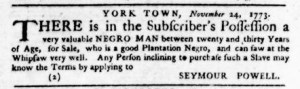
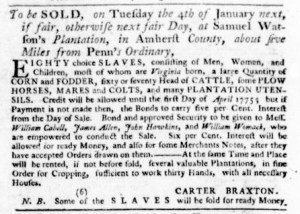
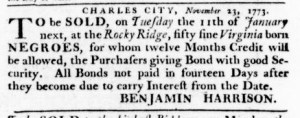
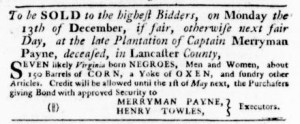
Slavery Advertisements Published November 25, 1773

The Slavery Adverts 250 Project chronicles the role of newspaper advertising in perpetuating slavery in the era of the American Revolution. The project seeks to reveal the ubiquity of slavery in eighteenth-century life from New England to Georgia by republishing advertisements about enslaved people – for sale as individuals or in groups, wanted to purchase or for hire for short periods, runaways who liberated themselves, and those who were subsequently captured and confined in jails and workhouses – in daily digests on this site as well as in real time via the @SlaveAdverts250 Twitter feed, utilizing twenty-first-century media to stand in for the print media of the eighteenth century.

The project aims to provide modern audiences with a sense of just how often colonizers encountered these advertisements in their daily lives. Enslaved men, women, and children appeared in print somewhere in the colonies almost every single day. Those advertisements served as a constant backdrop for social, cultural, economic, and political life in colonial and revolutionary America. Colonizers who did not purport to own enslaved people were still confronted with slavery as well as invited to maintain the system by purchasing enslaved men, women, and children or assisting in the capture of so-called “runaways” who sought to free themselves from bondage. The frequency of these newspaper advertisements suggests just how embedded slavery was in colonial and revolutionary American culture in everyday interactions beyond the printed page.

These advertisements also testify to the experiences of enslaved men, women, and children, though readers must consider that those experiences have been remediated through descriptions offered by enslavers rather than enslaved people themselves. Often unnamed in the advertisements, enslaved men, women, and children were not invisible or unimportant in early America.

These advertisements appeared in colonial American newspapers 250 years ago today.
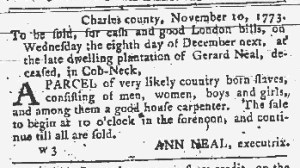
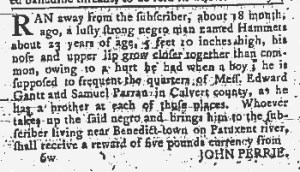
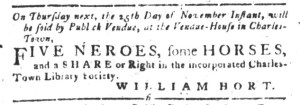
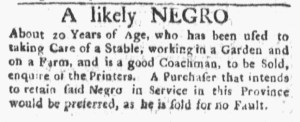
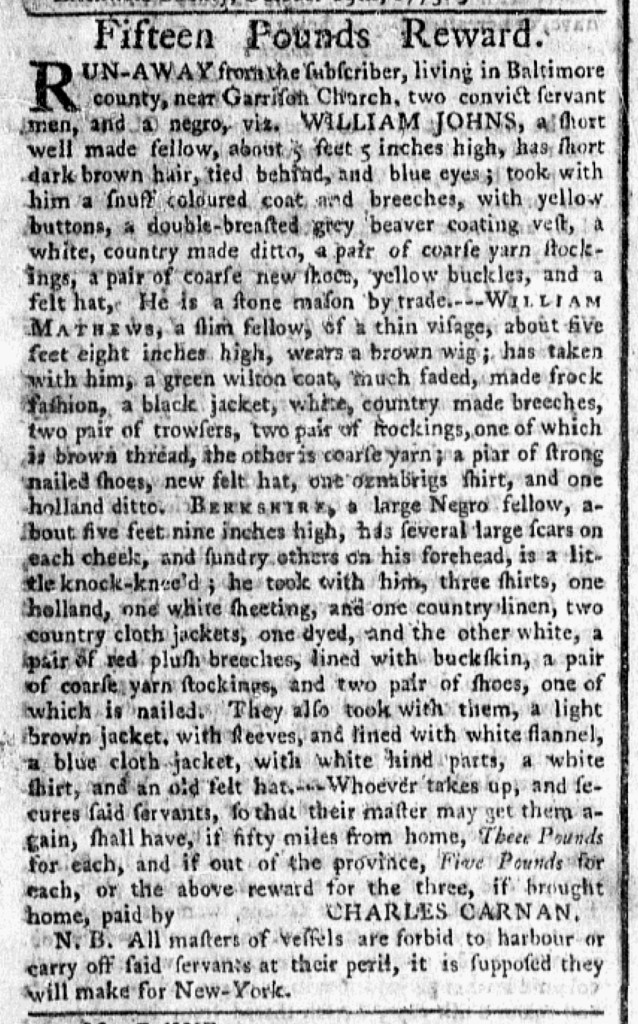
Maryland Gazette (November 25, 1773).

**********
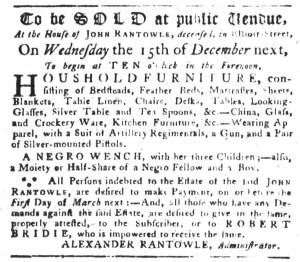
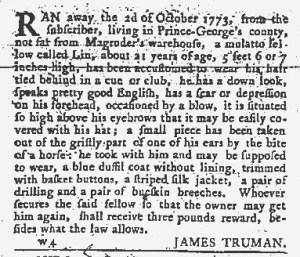
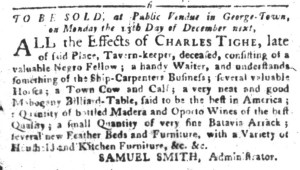
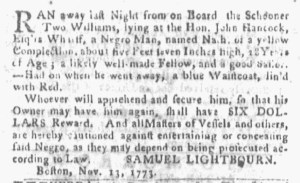
Maryland Gazette (November 25, 1773).

**********

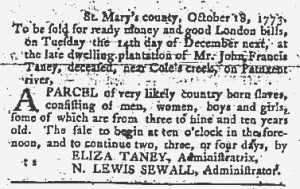
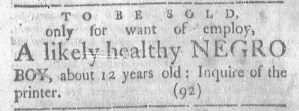
Maryland Gazette (November 25, 1773).

**********
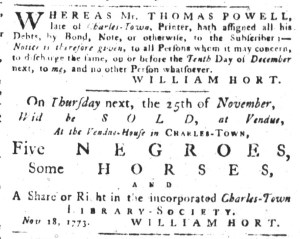
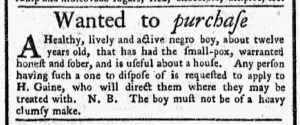
Maryland Gazette (November 25, 1773).

**********
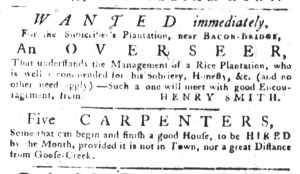
Maryland Gazette (November 25, 1773).

**********
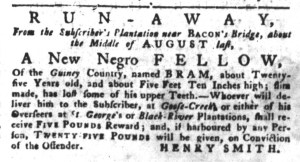
Rivington’s New-York Gazetteer (November 25, 1773).

**********
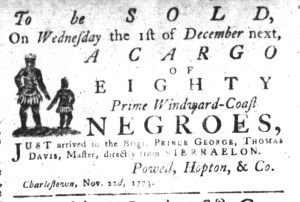
Rivington’s New-York Gazetteer (November 25, 1773).

**********

Virginia Gazette [Purdie and Dixon] (November 25, 1773).

**********
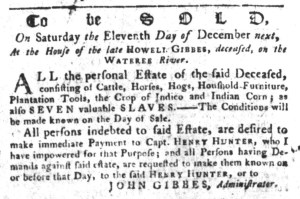
Virginia Gazette [Purdie and Dixon] (November 25, 1773).

**********
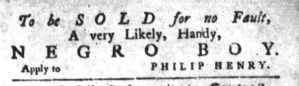
Virginia Gazette [Purdie and Dixon] (November 25, 1773).

**********
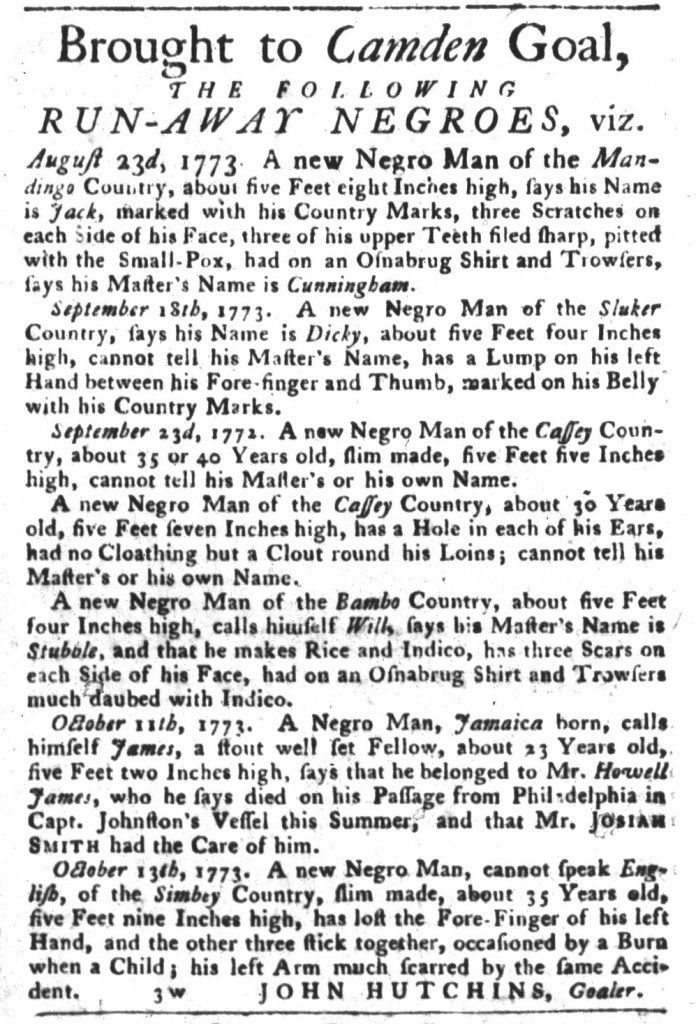
Virginia Gazette [Purdie and Dixon] (November 25, 1773).

**********
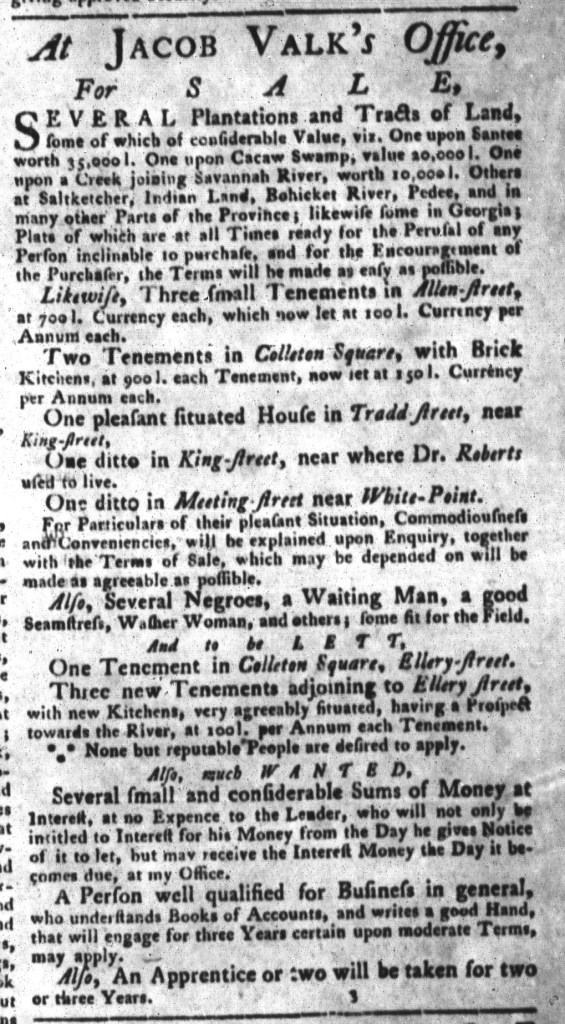
Virginia Gazette [Purdie and Dixon] (November 25, 1773).

**********
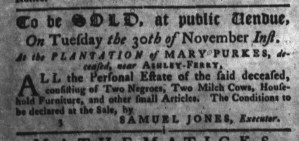
Virginia Gazette [Purdie and Dixon] (November 25, 1773).

**********

Virginia Gazette [Purdie and Dixon] (November 25, 1773).

**********

Virginia Gazette [Purdie and Dixon] (November 25, 1773).

**********

Virginia Gazette [Purdie and Dixon] (November 25, 1773).

**********

Virginia Gazette [Purdie and Dixon] (November 25, 1773).

**********

Virginia Gazette [Purdie and Dixon] (November 25, 1773).

**********

Virginia Gazette [Purdie and Dixon] (November 25, 1773).

**********

Virginia Gazette [Rind] (November 25, 1773).

November 24

What was advertised in a colonial American newspaper 250 years ago today?

Pennsylvania Journal (November 24, 1773).

“THE extraordinary quality of this Oil will (he presumes) recommend it to all, who please to make trial of it.”

As November came to an end and the days continued getting shorter, Richard Wells took to the pages of the Pennsylvania Gazette and the Pennsylvania Journal to advertise the “Fine Spermaceti LAMP OIL” that he “MANUFACTURED and SOLD … At his SPERMACETI WORKS” on Arch Street in Philadelphia.  His short advertisement gave his location and declared that the “extraordinary quality of this Oil will (he presumes) recommend it to all, who please to make trial of it.”  Customers who purchased a small quantity, Wells suggested, would be so satisfied that they would buy more.

Pennsylvania Gazette (November 24, 1773).

Wells did not go into great detail about the “extraordinary quality” of his lamp oil, nor did he arrange for any sort of distinctive typography to call attention to his advertisement.  In both newspapers, the format for the copy Wells submitted to the printing office followed the choices often made by the compositors when they set the type for advertisements.  As a result, the version in the Pennsylvania Journal featured more variation in capitalization, font sizes, and white space, but nothing that suggested Wells made any special requests or gave specific instructions.  His advertisement in the Pennsylvania Journal also benefited from appearing at the bottom of the first column on the first page, giving it greater visibility than notices that ran on the third and fourth pages, but most likely that resulted from a choice made by a compositor who needed to complete a column rather than from any arrangements made by Wells.

For the most part, Wells took a conservative approach to advertising.  He did realize that placing notices in two newspapers rather than just one would place his product before the eyes of a greater number of prospective customers.  He did not, however, opt to run his advertisement in every newspaper in other local newspapers, such as the Pennsylvania Chronicle and the Pennsylvania Packet.  Perhaps he found the cost of doing so prohibitive.  Perhaps he wished to see what kind of response these advertisements received before making final determinations about inserting them in other publications.  His advertisements in the Pennsylvania Gazette and Pennsylvania Journal included notations (intended for the compositors) that they should remain until Wells discontinued them rather than for a set period (like “6W” for six weeks).  It could have been Wells’s intention to assess their effectiveness, determining the value his business derived from those notices in order to make further decisions about his marketing efforts.

November 23

What was advertised in a colonial American newspaper 250 years ago today?

South-Carolina Gazette and Country Journal (November 23, 1773).

“Wedding-Cakes.”

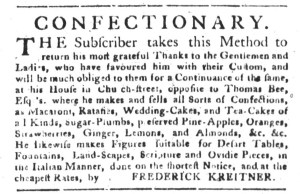
Frederick Kreitner made and sold sweet treats at his “CONFECTIONARY” in Charleston in the early 1770s.  In an advertisement in the November 23, 1773, edition of the South-Carolina Gazette and Country Journal, he expressed “his most grateful Thanks to the Gentlemen and Ladies, who have favoured him with their Custom” and solicited the patronage of new and returning customers.  The confectioner listed several of the items he made and sold, including macaroons, “Tea-Cakes of all Kinds, Sugar-Plumbs, [and] preserved Pine-Apples, Oranges, Strawberries, Ginger, Lemons, and Almonds.”  Kreitner also advertised that he sold “Wedding-Cakes.”

What distinguished a wedding cake from other cakes in colonial Charleston?  In “Wedding Cake: A Slice of History,” Carol Wilson examines a variety of traditions, including English traditions that colonizers brought with them to North America.  According to Wilson, “bride cake, the predecessor of the modern wedding cake,” replaced bride pie in the seventeenth century.  “Fruited cakes, as symbols of fertility and prosperity, gradually became the centerpieces for weddings.”  However, a “much less costly bride cake took the simpler form of two large rounds of shortcrust pastry sandwiched together with currants and sprinkled with sugar on the top.”  This simple type of cake “could easily be cooked on a bakestone on the hearth.”  Wilson also reports, “Bride cake covered with white icing first appeared sometime in the seventeenth century.”  In 1769, Elizabeth Raffald, known for the recipes and other household hints she published in England, “was the first to offer the combination of bride cake, almond cake, and royal icing.”  In 1773, Raffald published the third edition of The Experienced English Housekeeper, for the Use and Ease of Ladies, Housekeepers, Cooks.  It contained nearly nine-hundred recipes, including instructions “To make a BRIDE CAKE,” “To make ALMOND-ICEING for the BRIDE CAKE,” and “To make SUGAR ICEING for the BRIDE CAKE.”  Raffald considered these recipes so important that she placed them first in chapter 11, following and introduction that offered “Observations upon CAKES.”

Prospective customers in Charleston had expectations about what distinguished wedding cakes from “Tea-Cakes” and other cakes that Kreitner made and sold.  By including wedding cakes among the confections in his advertisement, Kreitner aided in further diffusing traditions associated with new marriages and presented himself as an authority who could assist customers who wished to adhere to contemporary fashions and rituals.

Slavery Advertisements Published November 23, 1773

The Slavery Adverts 250 Project chronicles the role of newspaper advertising in perpetuating slavery in the era of the American Revolution. The project seeks to reveal the ubiquity of slavery in eighteenth-century life from New England to Georgia by republishing advertisements about enslaved people – for sale as individuals or in groups, wanted to purchase or for hire for short periods, runaways who liberated themselves, and those who were subsequently captured and confined in jails and workhouses – in daily digests on this site as well as in real time via the @SlaveAdverts250 Twitter feed, utilizing twenty-first-century media to stand in for the print media of the eighteenth century.

The project aims to provide modern audiences with a sense of just how often colonizers encountered these advertisements in their daily lives. Enslaved men, women, and children appeared in print somewhere in the colonies almost every single day. Those advertisements served as a constant backdrop for social, cultural, economic, and political life in colonial and revolutionary America. Colonizers who did not purport to own enslaved people were still confronted with slavery as well as invited to maintain the system by purchasing enslaved men, women, and children or assisting in the capture of so-called “runaways” who sought to free themselves from bondage. The frequency of these newspaper advertisements suggests just how embedded slavery was in colonial and revolutionary American culture in everyday interactions beyond the printed page.

These advertisements also testify to the experiences of enslaved men, women, and children, though readers must consider that those experiences have been remediated through descriptions offered by enslavers rather than enslaved people themselves. Often unnamed in the advertisements, enslaved men, women, and children were not invisible or unimportant in early America.

These advertisements appeared in colonial American newspapers 250 years ago today.

Essex Gazette (November 23, 1773).

**********

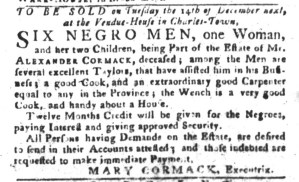
South-Carolina Gazette and Country Journal (November 23, 1773).

**********

South-Carolina Gazette and Country Journal (November 23, 1773).

**********

South-Carolina Gazette and Country Journal (November 23, 1773).

**********

South-Carolina Gazette and Country Journal (November 23, 1773).

**********

South-Carolina Gazette and Country Journal (November 23, 1773).

**********

South-Carolina Gazette and Country Journal (November 23, 1773).

**********

South-Carolina Gazette and Country Journal (November 23, 1773).

**********

South-Carolina Gazette and Country Journal (November 23, 1773).

**********

November 22

What was advertised in a colonial American newspaper 250 years ago today?

New-York Gazette and Weekly Mercury (November 22, 1773).

“A Certificate from under her own Hand of the Genuineness of the above Pills.”

Hugh Gaine, the printer of the New-York Gazette and Weekly Mercury, and James Rivington, the printer of Rivington’s New-York Gazetteer, competed to sell subscriptions, to sell advertising, to sell books, to sell stationery, to sell printed blanks, to do job printing orders, … and to sell patent medicines.  In particular, they marketed and sold “KEYSER’s FAMOUS PILLS” for “perfectly eradicating every Degree of a certain Disease.”  Eighteenth-century readers understood that those code words referred to syphilis.

In November 1773, Gaine published a new salvo in the ongoing advertising war over Keyser’s Pills.  He expanded on his earlier advertisements, noting that he now “has in his Hands a Letter from the Widow Keyser, and a Certificate under her own Hand of the Genuineness of the above Pills.”  Furthermore, he declared that “any Person may have the Perusal of [those documents] by applying to him at his Book Store and Printing Office.”  That portion of the advertisement appeared within a decorative border.  Gaine also called attention to his notice with six manicules, one pointing to each letter of “KEYSER.”

Yet he still did not consider that sufficient to attract the attention of prospective customers and convince them to purchase the remedy from him rather than from Rivington or other purveyors.  Gaine’s primary competitor had been publishing advertisements that included descriptions of patients successfully treating that “DISEASE, not to be mentioned in a News-Paper” as well as rheumatism, apoplexies, asthma, and a “WHITE SWELLING.”  Rivington has also supplied William Bradford and Thomas Bradford, printers of the Pennsylvania Journal in Philadelphia, with a letter attesting that he supplied them with Keyser’s Pills imported “immediately from Mr. Keyser himself,” the son of the late doctor, “at Paris.”  That answered claims by Speakman and Carter, “Chemists and Druggists,” that they acquired their supply of Keyser’s Pills from James Cowper, “the only importer in London.”  In his most recent advertisement, Rivington proclaimed that he had “Certificates and Letters of the old Doctor, and Madame W. KEYSER, his Widow, and likewise of their Son, the present Monsieur Keyser, who has many Years prepared all the Pills sold by his Father.”  Like Gaine, Rivington invited the public to examine those documents at his printing office.

That apparently prompted Gaine to expand his advertisement once again.  Instead of merely presenting the option of seeing the letter and certificate he received from Keyser’s widow at his shop, he published transcriptions of both documents in his newspaper notice.  In the letter, Madame Keyser acknowledged her correspondence with Gaine and explained that the certificate “proves that the Polls I now send are of my Composition.”  The certificate was “Sealed with the Seal of my Arms, at Paris.”  Gaine included a representation of the seal to underscore the authenticity of the medicines he peddled.

When it came to advertising the goods and services available at their printing offices, Gaine and Rivington invested a significant amount of time and energy in promoting a particular patent medicine.  Their efforts suggest that Keyser’s Pills accounted for an important revenue stream to supplement their earnings from selling newspapers, advertising, books, stationery, blanks, and job printing.  They also seemed to follow and respond to advertisements placed by each other as well as others who sold the famous patent medicine.

Slavery Advertisements Published November 22, 1773

The Slavery Adverts 250 Project chronicles the role of newspaper advertising in perpetuating slavery in the era of the American Revolution. The project seeks to reveal the ubiquity of slavery in eighteenth-century life from New England to Georgia by republishing advertisements about enslaved people – for sale as individuals or in groups, wanted to purchase or for hire for short periods, runaways who liberated themselves, and those who were subsequently captured and confined in jails and workhouses – in daily digests on this site as well as in real time via the @SlaveAdverts250 Twitter feed, utilizing twenty-first-century media to stand in for the print media of the eighteenth century.

The project aims to provide modern audiences with a sense of just how often colonizers encountered these advertisements in their daily lives. Enslaved men, women, and children appeared in print somewhere in the colonies almost every single day. Those advertisements served as a constant backdrop for social, cultural, economic, and political life in colonial and revolutionary America. Colonizers who did not purport to own enslaved people were still confronted with slavery as well as invited to maintain the system by purchasing enslaved men, women, and children or assisting in the capture of so-called “runaways” who sought to free themselves from bondage. The frequency of these newspaper advertisements suggests just how embedded slavery was in colonial and revolutionary American culture in everyday interactions beyond the printed page.

These advertisements also testify to the experiences of enslaved men, women, and children, though readers must consider that those experiences have been remediated through descriptions offered by enslavers rather than enslaved people themselves. Often unnamed in the advertisements, enslaved men, women, and children were not invisible or unimportant in early America.

These advertisements appeared in colonial American newspapers 250 years ago today.

Boston Evening-Post (November 22, 1773).

**********

Boston Evening-Post (November 22, 1773).

**********

Boston-Gazette (November 22, 1773).

**********

Newport Mercury (November 22, 1773).

**********

New-York Gazette and Weekly Mercury (November 22, 1773).

**********

New-York Gazette and Weekly Mercury (November 22, 1773).

**********

New-York Gazette and Weekly Mercury (November 22, 1773).

**********

Supplement to the New-York Gazette and Weekly Mercury (November 22, 1773).

**********

Supplement to the New-York Gazette and Weekly Mercury (November 22, 1773).

**********

Supplement to the New-York Gazette and Weekly Mercury (November 22, 1773).

**********

Pennsylvania Packet (November 22, 1773).

**********

South-Carolina Gazette (November 22, 1773).

**********

South-Carolina Gazette (November 22, 1773).

**********

South-Carolina Gazette (November 22, 1773).

**********

South-Carolina Gazette (November 22, 1773).

**********

South-Carolina Gazette (November 22, 1773).

**********

South-Carolina Gazette (November 22, 1773).

**********

South-Carolina Gazette (November 22, 1773).

**********

South-Carolina Gazette (November 22, 1773).

**********

South-Carolina Gazette (November 22, 1773).

**********

South-Carolina Gazette (November 22, 1773).

**********

South-Carolina Gazette (November 22, 1773).

**********

Supplement to the South-Carolina Gazette (November 22, 1773).

**********

Supplement to the South-Carolina Gazette (November 22, 1773).

**********

Supplement to the South-Carolina Gazette (November 22, 1773).

**********

Supplement to the South-Carolina Gazette (November 22, 1773).

**********

Supplement to the South-Carolina Gazette (November 22, 1773).

November 21

What was advertised in a colonial American newspaper 250 years ago this week?

Massachusetts Spy (November 18, 1773).

“Humbly requesting the Favour of their LUCUBRATIONS, which he promises to convey to the World with the greatest Care and Attention.”

Isaiah Thomas, printer of the Massachusetts Spy, advertised widely in his efforts to launch the Royal American Magazine.  On November 18, 1773, he once again published a notice calling on “gentlemen, in this and the other provinces, who have subscription papers in their hands … to return them as soon as possible.”  As readers very well knew, taking the magazine to press depended on generating a sufficient number of subscribers in advance to make it a viable endeavor.  Fortunately for both the printer and the “generous Patrons and Promoters of useful KNOWLEDGE, throughout AMERICA” who supported the project, that critical number of subscribers did present themselves by the middle of November.

Thomas inserted an update to inform subscribers and the public “that the first Number will undoubtedly appear on the first of January next.”  Now he needed another sort of assistance, “the Favour of their LUCUBRATIONS” or essays to publish in the magazine.  An American magazine needed content contributed by Americans.  In the proposals, Thomas acknowledged that he would select some pieces “from the labours of our European brethren,” but “shall not fail of making the strictest searches after curious anecdotes, and interesting events in British America.”  He requested “the assistance of the learned, the witty, the curious, and the candid, of both sexes, throughout this extensive continent” in sending their correspondence “for the public benefit.”  In his latest update, Thomas solicited those “LUCUBRATIONS” and “promises to convey [them] to the World with the greatest Care and Attention” after submitting them to a “Society of Gentlemen, for their Inspection and Approbation.”  In other words, Thomas would not publish every essay he received, but did intend to print those that earned the approval of an informal editorial board.

The printer also took the opportunity to make another appeal to “Gentlemen and Ladies who incline to encourage theRoyal American Magazine” who had not yet subscribed to submit their names as soon as possible.  If they did not do so, they ran the risk of “be[ing] disappointed of the first Number” when Thomas distributed the inaugural issue to subscribers.  He also inserted a note to “PRINTERS of all the Public Papers in America,” knowing that they perused newspapers for material to reprint and that many already served as local agents for the magazine so updates that appeared in the Massachusetts Spy would catch their attention.  Thomas requested that printers of other newspapers “insert this Advertisement as soon as may be, for which they shall be fully satisfied by their humble servant.”  Rather than expecting fellow printers to run his advertisement as an in-kind favor, Thomas indicated that he would send payment.  From recruiting subscribers to soliciting essays to publish to coordinating a marketing campaign, Thomas’s advertisements revealed several aspects of establishing the Royal American Magazine.

November 20

What was advertised in a colonial American newspaper 250 years ago today?

Maryland Journal (November 20, 1773).

“Such unworthy motives as these are far from Dr. Gilbert’s intention.”

When Dr. H. Gilbert relocated from Philadelphia to Baltimore, he inserted an advertisement in the Maryland Journal to introduce himself to the community and solicit patients who wished to consult him about “all the disorders to which the human body is incident.”  His lively notice included commentary about the kinds of advertisements that others who provided medical services often placed. “It is now become almost customary,” the doctor observed, “at least many have of late thought proper to begin their address to the public with liberal encomiums on their own knowledge, practice, and abilities.”  When they arrived in new places, doctors could not rely on their reputations to encourage patients to see them; in the absence of such familiarity, many emphasized their training and experience to assure prospective patients that they would be in good hands.

Gilbert found a certain aspect of such introductions particularly unsavory and disingenuous.  Some doctors, he charged, “at once declare there is no disorder, however accute or malignant in its nature, that they cannot immediately not only give relief in, but effectually eradicate, without the least inconvenience or danger to the patient.”  Those claims appeared in too many newspaper advertisements and handbills, leading “persons who are unacquainted with the human frame” to believe that “many disorders exist altogether in the imagination, by the easy manner in which they are said to be expelled.”  Such marketing had two outcomes: “imposing on the ignorant” and “the emolument of the authors of such preposterous assertions.”  Unfortunately, patients often had a “fatal experience” under those circumstances.  Gilbert suggested that grandiose promises from doctors “must … appear in a very ridiculous light to every person of the smallest degree of penetration.”  In a backhanded fashion, he discouraged readers from seeking treatment from quacks and charlatans who seemed to promise too much.

Gilbert pledged that he would give patients false hopes by telling them merely what they wanted to hear and taking their money for cures that did not work.  He would not make “preposterous assertions” and swindle them: “such unworthy motives as these are far from Dr. Gilbert’s intention.”  He did relay his own credentials, “being regularly bred to his profession, as well as his having had several years experience and practice by land and sea, and in Germany, Holland, and America,” but did not make the kinds of unfounded assertions that he critiqued.  Instead, he stated that he would “exert his utmost abilities to serve” patients and “by good attendance and a particular attention to their respective cases, endeavour to merit the patronage of the public.”  In other words, Gilbert stressed the individualized care that he bestowed on each patient.  He assessed their particular symptoms and recommended care specific to their needs.  Rather than making self-promotion and dubious promises the centerpieces of his marketing efforts, he emphasized honesty and respect in his interactions with the public and his patients.

Slavery Advertisements Published November 20, 1773

The Slavery Adverts 250 Project chronicles the role of newspaper advertising in perpetuating slavery in the era of the American Revolution. The project seeks to reveal the ubiquity of slavery in eighteenth-century life from New England to Georgia by republishing advertisements about enslaved people – for sale as individuals or in groups, wanted to purchase or for hire for short periods, runaways who liberated themselves, and those who were subsequently captured and confined in jails and workhouses – in daily digests on this site as well as in real time via the @SlaveAdverts250 Twitter feed, utilizing twenty-first-century media to stand in for the print media of the eighteenth century.

The project aims to provide modern audiences with a sense of just how often colonizers encountered these advertisements in their daily lives. Enslaved men, women, and children appeared in print somewhere in the colonies almost every single day. Those advertisements served as a constant backdrop for social, cultural, economic, and political life in colonial and revolutionary America. Colonizers who did not purport to own enslaved people were still confronted with slavery as well as invited to maintain the system by purchasing enslaved men, women, and children or assisting in the capture of so-called “runaways” who sought to free themselves from bondage. The frequency of these newspaper advertisements suggests just how embedded slavery was in colonial and revolutionary American culture in everyday interactions beyond the printed page.

These advertisements also testify to the experiences of enslaved men, women, and children, though readers must consider that those experiences have been remediated through descriptions offered by enslavers rather than enslaved people themselves. Often unnamed in the advertisements, enslaved men, women, and children were not invisible or unimportant in early America.

These advertisements appeared in colonial American newspapers 250 years ago today.

Maryland Journal (November 20, 1773).

**********

Maryland Journal (November 20, 1773).

**********

Maryland Journal (November 20, 1773).

November 19

What was advertised in a colonial American newspaper 250 years ago today?

New-Hampshire Gazette (November 19, 1773).

Printer, Bookseller, Provedore to the SENTIMENTALISTS, and Hand Servant to the FRIENDS of LITERATURE.”

Robert Bell became one of the most influential American booksellers and publishers during the second half of the eighteenth century in part due to his lively marketing efforts.  He developed a flamboyant personality that made him memorable and, simultaneously, made the books he advertised memorable.  Based in Philadelphia in 1773, he placed notices in newspapers from New England to South Carolina.  Two advertisements in the November 19 edition of the New-Hampshire Gazette demonstrate his unique style.

Both featured headlines that addressed prospective customers in a manner meant to flatter them and encourage them to identify with a peer group that they imagined buying the books that Bell presented to them.  For instance, one alerted the “SAGES, and STUDENTS of the LAW, in AMERICA” that they could find subscription proposals for several different law books, including “BACON’s new abridgment of the law” and a “second American edition of Judge BLACKSTONE’s Commentaries on the laws of England,” at their local “booksellers shops.”  The other advertisement promoted Bell’s first American edition of Blackstone’s Commentaries to the “Sons of Science in America.”  In it, Bell described himself as “Printer, Bookseller, Provedore to the SENTIMENTALISTS, and Hand Servant to the FRIENDS of LITERATURE.”  When he named those fanciful occupations, he also depicted his ideal customers.

Bell also insisted that readers envision a community that extended throughout the colonies.  His advertisements ran in newspapers published in many cities and towns, but they did not address the “SAGES, and STUDENTS of the LAW, in PORTSMOUTH” or the “Sons of Science in New Hampshire.”  Instead, Bell treated readers near and far as an integrated market.  In his “SAGES, and STUDENTS of the LAW” advertisement, he advised that prospective subscribers “now have an opportunity of seeing at most of the booksellers shops in the capital towns and cities on the Continent, printed proposals with conditions and specimens” for publishing several books.  In his “Sons of Science” advertisement, Bell credited the “auspicious influence” of those subscribers for making the first edition of Blackstone’s Commentariespossible.  In the other advertisement, he portrayed subscribers as “Encouragers” who “greatly contribute towards the elevation, and enlivening of Literary Manufactures in America.”

Printers, booksellers, and publishers often placed subscription proposals in newspapers in multiple colonies in their efforts to generate sufficient demand to make their projects viable.  Bell was especially proficient at disseminating advertisements and subscription papers throughout the colonies.  When he did so, he devised advertising copy that emphasized that customers were members of communities not bounded by geography.  Their interests rather than their location defined them as they joined other “Sons of Science,” “SAGES, and STUDENTS of the LAW,” and “FRIENDS of LITERATURE” in creating a common American experience.