August 2

What was advertised in a colonial American newspaper 250 years ago today?
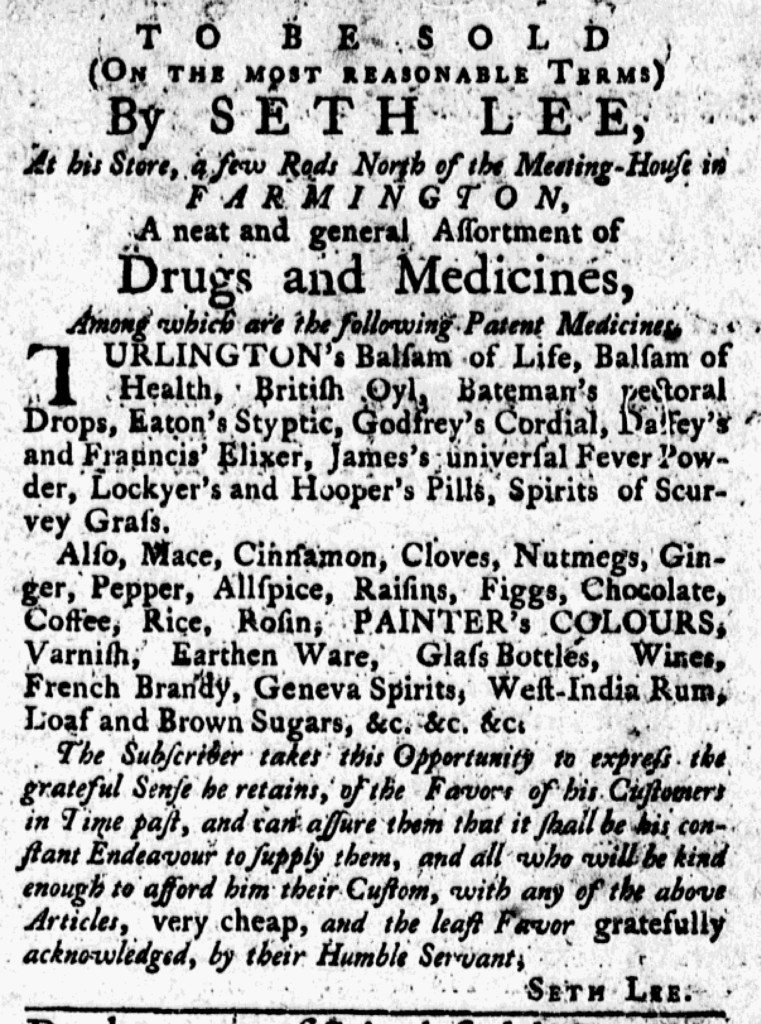
Connecticut Courant (August 2, 1774).

“Opportunity to express the grateful Sense he retains, of the Favors of his Customers in Time past.”

In the summer of 1774, Seth Lee of Farmington ran an advertisement for a “neat and general Assortment of Drugs and Medicines” in the Connecticut Courant.  He advised prospective customers that he sold his wares “ON THE MOST REASONABLE TERMS,” hoping that the promise of bargains would entice them to shop at his store.  His merchandise included a variety of patent medicines, each of them so familiar that Lee merely listed a dozen of them without indicating which symptoms they alleviated or maladies they supposedly cured.  He also called attention to alcohol, groceries, paint, and other items that supplemented his inventory.  Lee peddled two popular beverages, coffee and chocolate, but did not mention tea, an increasingly problematic commodity following the Boston Tea Party the previous December and the Coercive Acts passed by Parliament in response.  Elsewhere in the August 2 edition, Amos Wadsworth and Fenn Wadsworth continued hawking “BOHEA TEA, (not infected with a duty),” while Samuel Wescote advertised “good TEA” without further explanation.

Rather than wade into consumer politics, Lee appended a note to his former customers and prospective new customers.  He declared that he wished “to express the grateful Sense he retains, of the Favors of his Customers in Time past.”  In addition to demonstrating his appreciation for their business, such sentiments also testified to his experience providing satisfactory service, an implicit appeal to new customers as Lee attempted to buttress his reputation.  As he continued, Lee included prospective customers in the invitation he extended to readers to shop at his store.  He addressed “all who will be kind enough to afford him their Custom,” pledging that “it shall be his constant Endeavour to supply them … with any of the above Articles, very cheap.”  Furthermore, they would receive exemplary customer service, with “the least Favorgratefully acknowledged.”  Lee highlighted prices at the beginning and end of his advertisement, but he did not make those “REASONABLE TERMS” the focus of his notice.  Instead, he emphasized the relationships he cultivated with customers in the past and would endeavor to continue providing as “their Humble Servant.”  Lee listed goods to attract attention, then sought to hold it by wooing readers with his devotion to customer service.
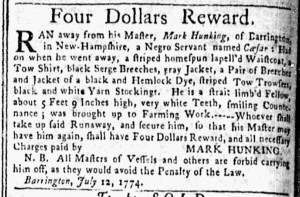
Slavery Advertisements Published August 2, 1774

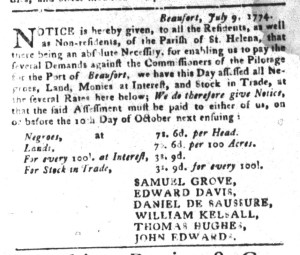
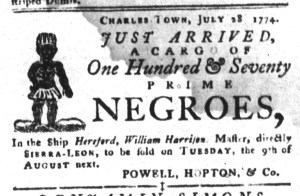
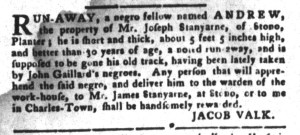
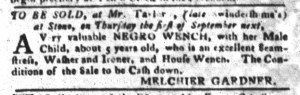
The Slavery Adverts 250 Project chronicles the role of newspaper advertising in perpetuating slavery in the era of the American Revolution. The project seeks to reveal the ubiquity of slavery in eighteenth-century life from New England to Georgia by republishing advertisements about enslaved people – for sale as individuals or in groups, wanted to purchase or for hire for short periods, runaways who liberated themselves, and those who were subsequently captured and confined in jails and workhouses – in daily digests on this site as well as in real time via the @SlaveAdverts250 Twitter feed, utilizing twenty-first-century media to stand in for the print media of the eighteenth century.

The project aims to provide modern audiences with a sense of just how often colonizers encountered these advertisements in their daily lives. Enslaved men, women, and children appeared in print somewhere in the colonies almost every single day. Those advertisements served as a constant backdrop for social, cultural, economic, and political life in colonial and revolutionary America. Colonizers who did not purport to own enslaved people were still confronted with slavery as well as invited to maintain the system by purchasing enslaved men, women, and children or assisting in the capture of so-called “runaways” who sought to free themselves from bondage. The frequency of these newspaper advertisements suggests just how embedded slavery was in colonial and revolutionary American culture in everyday interactions beyond the printed page.

These advertisements also testify to the experiences of enslaved men, women, and children, though readers must consider that those experiences have been remediated through descriptions offered by enslavers rather than enslaved people themselves. Often unnamed in the advertisements, enslaved men, women, and children were not invisible or unimportant in early America.

These advertisements appeared in colonial American newspapers 250 years ago today.

Essex Gazette (August 2, 1774).

**********

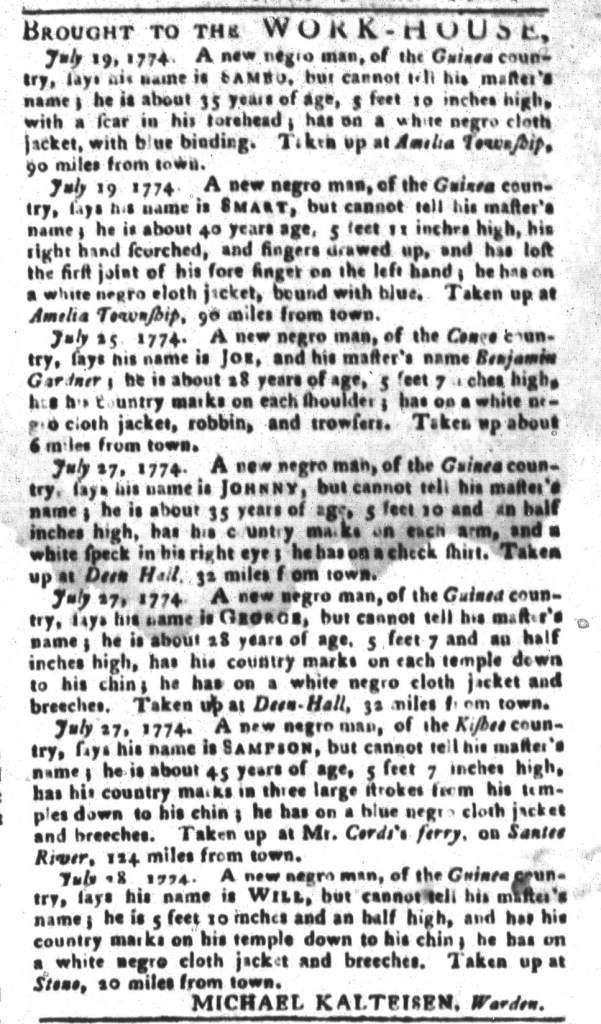
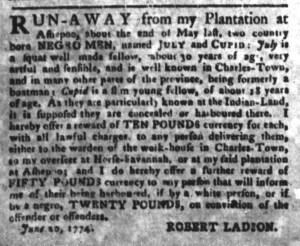
South-Carolina Gazette and Country Journal (August 2, 1774).

**********

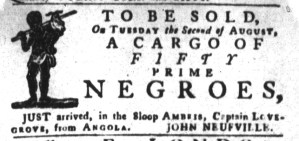
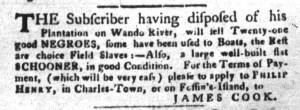
South-Carolina Gazette and Country Journal (August 2, 1774).

**********

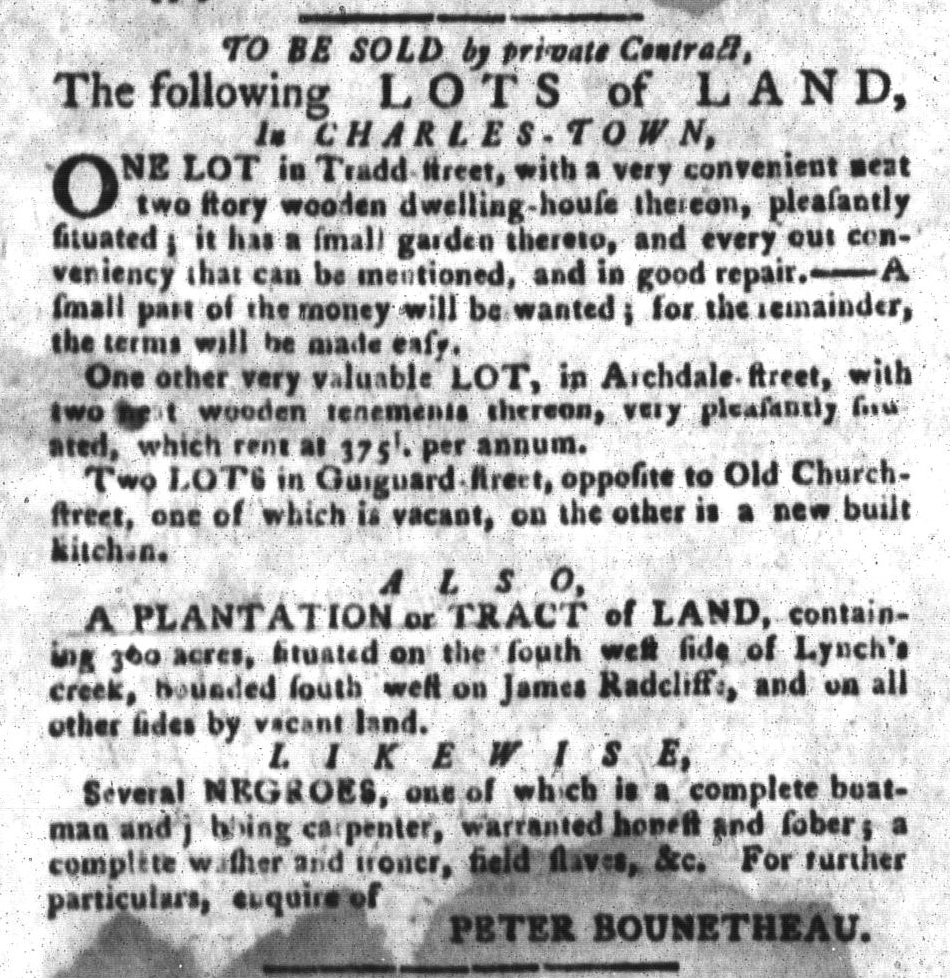
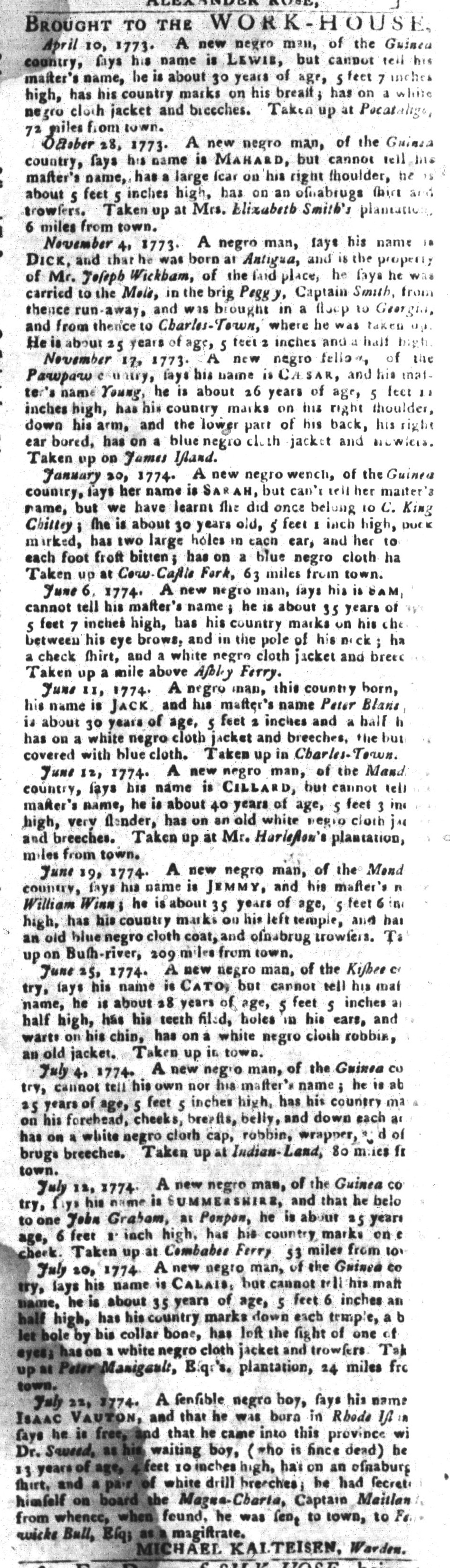
South-Carolina Gazette and Country Journal (August 2, 1774).

**********

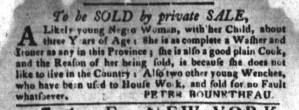
South-Carolina Gazette and Country Journal (August 2, 1774).

**********

South-Carolina Gazette and Country Journal (August 2, 1774).

**********

South-Carolina Gazette and Country Journal (August 2, 1774).

**********

South-Carolina Gazette and Country Journal (August 2, 1774).

**********

South-Carolina Gazette and Country Journal (August 2, 1774).

**********

South-Carolina Gazette and Country Journal (August 2, 1774).

**********

South-Carolina Gazette and Country Journal (August 2, 1774).

**********

South-Carolina Gazette and Country Journal (August 2, 1774).

**********

South-Carolina Gazette and Country Journal (August 2, 1774).

**********

South-Carolina Gazette and Country Journal (August 2, 1774).

**********

South-Carolina Gazette and Country Journal (August 2, 1774).

August 1

What was advertised in a colonial American newspaper 250 years ago today?

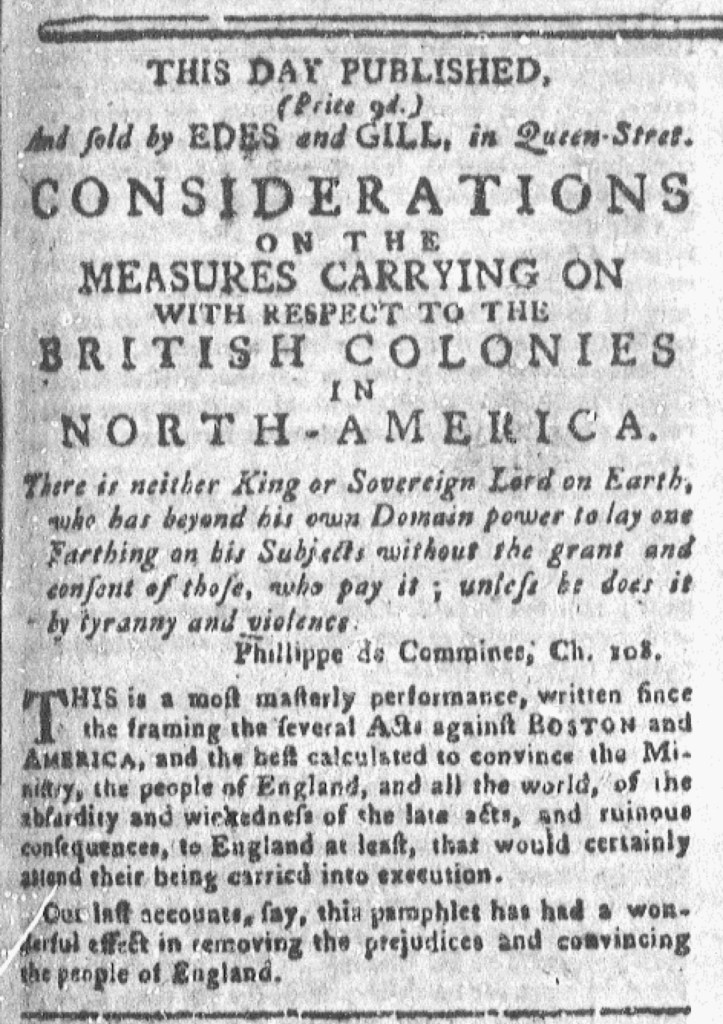
Boston-Gazette (August 1, 1774).

“This pamphlet has had a wonderful effect in removing the prejudices and convincing the people of England.”

Benjamin Edes and John Gill, the printers of the Boston-Gazette, gave an advertisement for their American edition of Considerations on the Measures Carrying On with Respect to the British Colonies in North-America a prominent place in the August 1, 1774, edition of their newspaper.  It appeared as the first item in the first column on the first page, making it difficult for readers to miss.  The printers wished to call attention to the book, originally published in London, not only because they hoped to generate revenue from its sales but also as a means for colonizers to become even better informed about current events and the political challenges they faced as Parliament passed a series of laws, the Coercive Acts, following the Boston Tea Party.  As the imperial crisis intensified, patriot printers like Edes and Gill published newspapers, broadsides, pamphlets, books, and other items that documented the ongoing contest with Parliament, the king, and royal officials in the colonies.

To convince prospective customers of the necessity of purchasing and perusing this pamphlet, Edes and Gill explained that it was the “most masterly performance, written since the framing of the several Acts against BOSTON and AMERICA,” including the Boston Port Act and the Massachusetts Government Act, and “the best calculated to convince the Ministry, the people of England, and all the world, of the absurdity and wickedness of the late acts.”  Colonizers used newspapers and other publications in their efforts to shape opinion in the colonies, yet they were just as concerned with the information environment on the other side of the Atlantic.  In their publications and letters, they hoped to sway both officials and the general public in London and throughout Great Britain.  They also took note of the support they received for their plight.  In their advertisement for Considerations, Edes and Gill reported that their “last accounts” indicated “this pamphlet had had a wonderful effect in removing the prejudices and convincing the people of England” that Parliament had not been just in its treatment of the colonies.  Whether that was accurate or wishful thinking likely varied from person to person, but the printers wanted to believe that it was true.

Edes and Gill applauded how the pamphlet made a case about the “ruinous consequences, to England at least,” not just the colonies, “that would certainly attend” from the Coercive Acts “being carried into execution.”  Printers in Hartford, New York, and Philadelphia shared those sentiments, producing other American editions in each of those towns.  They hoped that the dissemination of the ideas expressed in Considerations would buttress the resolve of colonizers distressed by Parliament’s most recent legislation, especially upon learning how their allies in England made a case on their behalf.

Slavery Advertisements Published August 1, 1774

The Slavery Adverts 250 Project chronicles the role of newspaper advertising in perpetuating slavery in the era of the American Revolution. The project seeks to reveal the ubiquity of slavery in eighteenth-century life from New England to Georgia by republishing advertisements about enslaved people – for sale as individuals or in groups, wanted to purchase or for hire for short periods, runaways who liberated themselves, and those who were subsequently captured and confined in jails and workhouses – in daily digests on this site as well as in real time via the @SlaveAdverts250 Twitter feed, utilizing twenty-first-century media to stand in for the print media of the eighteenth century.

The project aims to provide modern audiences with a sense of just how often colonizers encountered these advertisements in their daily lives. Enslaved men, women, and children appeared in print somewhere in the colonies almost every single day. Those advertisements served as a constant backdrop for social, cultural, economic, and political life in colonial and revolutionary America. Colonizers who did not purport to own enslaved people were still confronted with slavery as well as invited to maintain the system by purchasing enslaved men, women, and children or assisting in the capture of so-called “runaways” who sought to free themselves from bondage. The frequency of these newspaper advertisements suggests just how embedded slavery was in colonial and revolutionary American culture in everyday interactions beyond the printed page.

These advertisements also testify to the experiences of enslaved men, women, and children, though readers must consider that those experiences have been remediated through descriptions offered by enslavers rather than enslaved people themselves. Often unnamed in the advertisements, enslaved men, women, and children were not invisible or unimportant in early America.

These advertisements appeared in colonial American newspapers 250 years ago today.

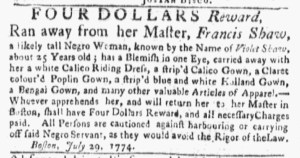
Boston Evening-Post (August 1, 1774).

**********

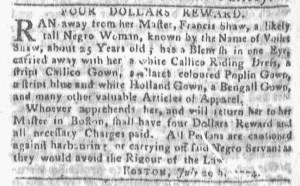
Boston-Gazette (August 1, 1774).

**********

Boston-Gazette (August 1, 1774).

**********

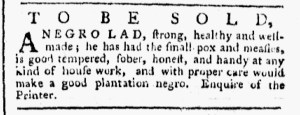
Dunlap’s Pennsylvania Packet (August 1, 1774).

**********

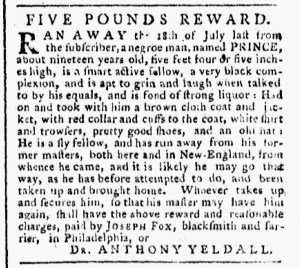
Dunlap’s Pennsylvania Packet (August 1, 1774).

**********

Dunlap’s Pennsylvania Packet (August 1, 1774).

**********

Dunlap’s Pennsylvania Packet (August 1, 1774).

**********

New-York Gazette and Weekly Mercury (August 1, 1774).

**********

New-York Gazette and Weekly Mercury (August 1, 1774).

**********

New-York Gazette and Weekly Mercury (August 1, 1774).

**********

New-York Gazette and Weekly Mercury (August 1, 1774).

**********

New-York Gazette and Weekly Mercury (August 1, 1774).