Slavery Advertisements Published September 21, 1767

The Slavery Adverts 250 Project chronicles the role of newspaper advertising in perpetuating slavery in the era of the American Revolution. The project seeks to reveal the ubiquity of slavery in eighteenth-century life from New England to Georgia by republishing advertisements about enslaved people – for sale as individuals or in groups, wanted to purchase or for hire for short periods, runaways who liberated themselves, and those who were subsequently captured and confined in jails and workhouses – in daily digests on this site as well as in real time via the @SlaveAdverts250 Twitter feed, utilizing twenty-first-century media to stand in for the print media of the eighteenth century.

The project aims to provide modern audiences with a sense of just how often colonizers encountered these advertisements in their daily lives. Enslaved men, women, and children appeared in print somewhere in the colonies almost every single day. Those advertisements served as a constant backdrop for social, cultural, economic, and political life in colonial and revolutionary America. Colonizers who did not purport to own enslaved people were still confronted with slavery as well as invited to maintain the system by purchasing enslaved men, women, and children or assisting in the capture of so-called “runaways” who sought to free themselves from bondage. The frequency of these newspaper advertisements suggests just how embedded slavery was in colonial and revolutionary American culture in everyday interactions beyond the printed page.

These advertisements also testify to the experiences of enslaved men, women, and children, though readers must consider that those experiences have been remediated through descriptions offered by enslavers rather than enslaved people themselves. Often unnamed in the advertisements, enslaved men, women, and children were not invisible or unimportant in early America.

These advertisements appeared in colonial American newspapers 250 years ago today.

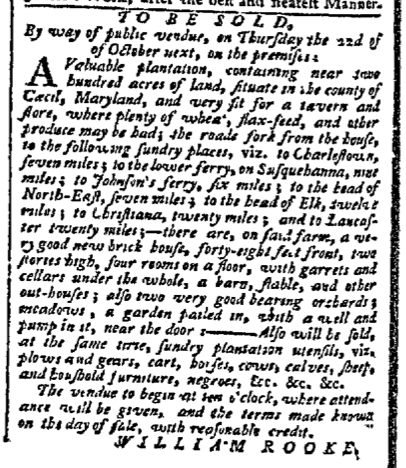
Sep 21 - Boston Post-Boy Slavery 1
Boston Post-Boy (September 21, 1767).

**********

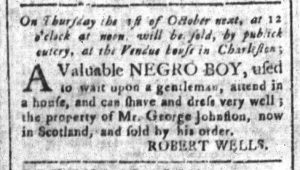
Sep 21 - Boston-Gazette Slavery 1
Boston-Gazette (September 21, 1767).

**********

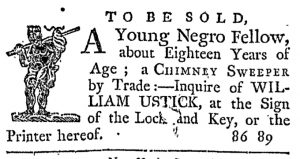
Sep 21 - Boston-Gazette Slavery 2
Boston-Gazette (September 21, 1767).

**********
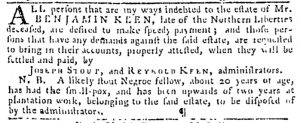
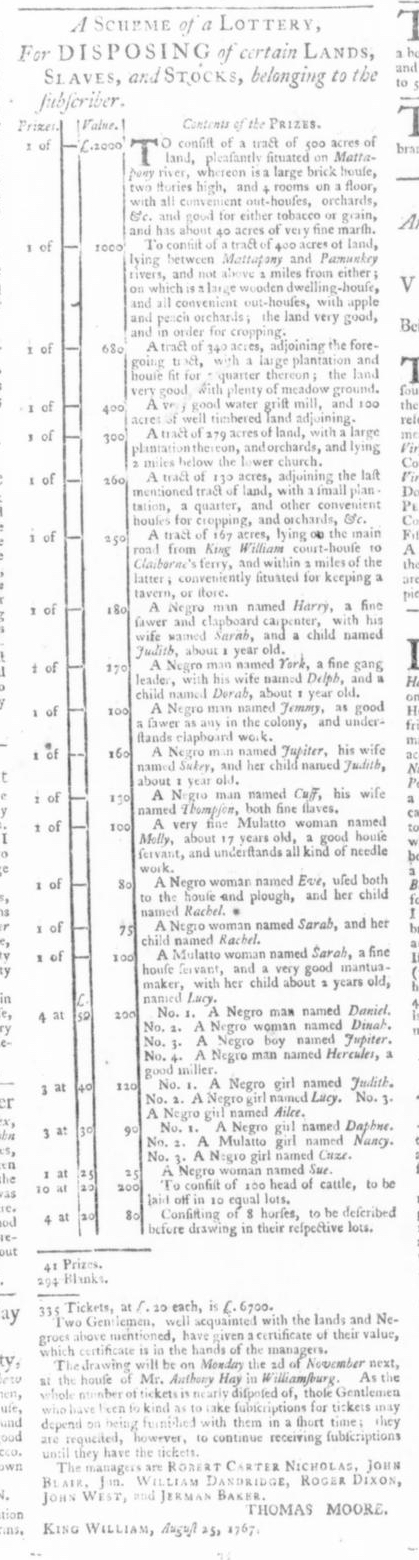
Sep 21 - Boston-Gazette Slavery 3
Boston-Gazette (September 21, 1767).

**********
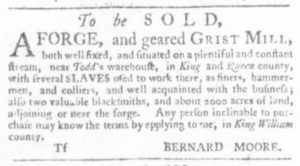
Sep 21 - Connecticut Courant Slavery 1
Connecticut Courant (September 21, 1767).

**********

Sep 21 - New-York Gazette Slavery 1
New-York Gazette (September 21, 1767).

**********

Sep 21 - New-York Gazette Slavery 2
New-York Gazette (September 21, 1767).

**********

Sep 21 - New-York Mercury Slavery 1
New-York Mercury (September 21, 1767).

**********

Sep 21 - New-York Mercury Slavery 2
New-York Mercury (September 21, 1767).

**********

Sep 21 - New-York Mercury Slavery 3
New-York Mercury (September 21, 1767).

**********

Sep 21 - Newport Mercury Slavery 1
Newport Mercury (September 21, 1767).

**********

Sep 21 - Newport Mercury Slavery 2
Newport Mercury (September 21, 1767).

**********

Sep 21 - Newport Mercury Slavery 3
Newport Mercury (September 21, 1767).

**********

Sep 21 - Pennsylvania Chronicle Slavery 1
Pennsylvania Chronicle (September 21, 1767).

**********

Sep 21 - Pennsylvania Chronicle Slavery 2
Pennsylvania Chronicle (September 21, 1767).

September 20

What was advertised in a colonial American newspaper 250 years ago this week?

Sep 20 - 9:17:1767 Pennsylvania Gazette
Pennsylvania Gazette (September 17, 1767).

“Many other Medicines.”

In addition to working as a steward and apothecary at the Pennsylvania Hospital, George Weed sold a variety of medicines from his home “at the Corner of Arch and Front-streets” in Philadelphia. Regardless of the malady, Weed seemed to have some sort of remedy for every patient: “an excellent Syrup to cure the Bloody Flux,” “a Balsamick Syrup, which cures Colds, Coughs, Shortness of Breath, Spitting of Blood,” and other symptoms of consumption, and “a Sudorifick Elixir, which cures the Gout and Rheumatism … by a gentle Sweat.” He also peddled “Fine Cordials for Infants,” but was also prepared “to cure the Venereal Disease in all its Stages” for adult patients

In the 1770s, the apothecary assumed the title of “Dr. George Weed” in various advertisements, though this may have been a courtesy initially bestowed by patients and associates who benefited from consuming or selling his medicines. In 1767, he proclaimed that he had been “bred to the Practice of PHYSICK and SURGERY,” deploying a phrase that often denoted some sort of formal education or apprenticeship. Whatever impression such wording suggested to readers, Weed may have been referring to his “more than 30 Years Experience” during which time he “had the greatest Opportunity to gain Skill, from his own immediate Observations, and the Advice of the ablest Physicians of this Province.” If potential customers misunderstood the nature of his training, that hardly mattered compared to the “greatest Attention and Integrity” he devoted to “the Relief of the Sick, the Wounded, Infirm and Distressed.”

Weed’s employment at the Pennsylvania Hospital came to an end in 1767. Once he found himself in the position of earning a living “in a more private Station,” he may have considered his previous affiliation with the hospital sufficient for taking the title of doctor if it meant convincing more prospective customers to purchase his nostrums and tinctures. Calling himself “Dr. George Weed” bestowed additional authority as he marketed the medicines he mixed to customers in Philadelphia and exported them to other colonies. Weed did not consistently use this title in advertisements he placed during the final year of his life, but the Pennsylvania Evening Post referred to him as “Dr. GEORGE WEED” when announcing his death on February 1, 1777. For nearly a year, his widow, Elizabeth, subsequently sought to mobilize the clout associated with “Doctor George Weed” as she advertised that she continued to sell medicines he prepared before his death.

Although the apothecary did not tout himself as “Dr. George Weed” in his advertisements immediately after leaving the Pennsylvania Hospital, as more time elapsed he may have realized the benefits of shading his qualifications just slightly in order to sell his drugs. Patients who published testimonials, shopkeepers who sold his elixirs, and newspaper editors who reported his death all eventually granted him the title of doctor, perhaps out of respect for his skill and experience if not in recognition of any particular formal training.

September 19

What was advertised in a colonial American newspaper 250 years ago today?

Sep 19 - 9:19:1767 Providence Gazette
Providence Gazette (September 19, 1767).

“Every proper Measure has been concerted to render the PROVIDENCE GAZETTE as useful and entertaining as possible.”

In September 1767, Sarah Goddard and Company inserted an impassioned notice in the newspaper they published. They thanked subscribers of the Providence Gazette for their patronage, especially those who had already paid their bills, while also calling on others to settle accounts. They politely requested that “those who have not yet settled for the last Year’s Papers, will be so considerate as to follow the Example of those who have already paid.” Settling the “Company Accounts” would allow Goddard and Company to “carry on the useful and necessary Business of Printing in this Town.” They concluded their advertisement with an elaborate argument about the value derived from a local newspaper, portraying their work not only as a means of earning a living but, more importantly, as a service to the entire community.

The timing and urgency of that advertisement became even more apparent in a notice that appeared at the top of the first column on the first page of the September 19, 1767, issue of the Providence Gazette. In an address “To the PUBLIC,” they reported the dissolution of the “Partnership between SARAH GODDARD and COMPANY.” In his monumental History and Bibliography of American Newspapers, 1690-1820, Clarence Brigham states that a history of the newspaper appeared in the March 6, 1779, edition.[1] This history identified Samuel Inslee as Goddard’s partner. The advertisements calling on subscribers to pay their bills had not merely been part of the regular business of operating a printing office. The publishers knew that one partnership was coming to an end and another on the verge of commencing. They wanted subscriber to settle accounts in order to facilitate the transition.

The advertisement in the September 19, 1767, issue indicated that Sarah Goddard and John Carter now operated the printing office and published the newspaper. The colophon also shifted to read: “Printed by SARAH GODDARD and JOHN CARTER.” This partnership lasted until Goddard’s retirement in November of the following year. In the meantime, Goddard and Carter assured readers that publication of the Providence Gazette would continue without disruption to the quality they had come to expect: “every proper Measure has been concerted to render the PROVIDENCE GAZETTE as useful and entertaining as possible.” Goddard and Carter promised that “Care and Diligence shall not be wanting” in the production of the newspaper as they invited the public to “continue to favour this Paper with their Subscriptions.”

**********

[1] Clarence S. Brigham, History and Bibliography of American Newspapers, 1690-1820 (Worcester, Massachusetts: American Antiquarian Society, 1947), 2: 1008.

Slavery Advertisements Published September 19, 1767

The Slavery Adverts 250 Project chronicles the role of newspaper advertising in perpetuating slavery in the era of the American Revolution. The project seeks to reveal the ubiquity of slavery in eighteenth-century life from New England to Georgia by republishing advertisements about enslaved people – for sale as individuals or in groups, wanted to purchase or for hire for short periods, runaways who liberated themselves, and those who were subsequently captured and confined in jails and workhouses – in daily digests on this site as well as in real time via the @SlaveAdverts250 Twitter feed, utilizing twenty-first-century media to stand in for the print media of the eighteenth century.

The project aims to provide modern audiences with a sense of just how often colonizers encountered these advertisements in their daily lives. Enslaved men, women, and children appeared in print somewhere in the colonies almost every single day. Those advertisements served as a constant backdrop for social, cultural, economic, and political life in colonial and revolutionary America. Colonizers who did not purport to own enslaved people were still confronted with slavery as well as invited to maintain the system by purchasing enslaved men, women, and children or assisting in the capture of so-called “runaways” who sought to free themselves from bondage. The frequency of these newspaper advertisements suggests just how embedded slavery was in colonial and revolutionary American culture in everyday interactions beyond the printed page.

These advertisements also testify to the experiences of enslaved men, women, and children, though readers must consider that those experiences have been remediated through descriptions offered by enslavers rather than enslaved people themselves. Often unnamed in the advertisements, enslaved men, women, and children were not invisible or unimportant in early America.

These advertisements appeared in colonial American newspapers 250 years ago today.

Sep 19 - Providence Gazette Slavery 1
Providence Gazette (September 19, 1767).

**********

Sep 19 - Providence Gazette Slavery 2
Providence Gazette (September 19, 1767).

September 18

What was advertised in a colonial American newspaper 250 years ago today?

Sep 18 - 9:18:1767 New-London Gazette
New-London Gazette (September 18, 1767).

“Stolen from the subscriber … a plaid jacket.”

Peter Bulkley was the victim of a theft! In an advertisement in the New-London Gazette, he listed several items (mostly clothing, but also some cash) stolen on the night of September 13, 1767. He accused John Nicholas, “a Frenchman,” of stealing a hat, a coat, a jacket, a shirt, a pair of breeches, a pair of trousers, a pair of stockings, a pair of shoe buckles, and a pair of knee buckles. Nicholas made off with an entire outfit!

What did the thief intend to do with these items? He may have been on the move to another town or another colony, somewhere that he could wear the clothes himself without attracting notice (provided others did not see Bulkley’s advertisement). Alternately, he might have planned to sell the clothes, either one piece at a time or as a package. If the latter, he may have known someone who received secondhand (sometimes stolen) goods with the intention of reselling them. In Dangerous Economies, Serena Zabin describes an informal economy in eighteenth-century America, an extralegal marketplace that included fences who worked with thieves in the redistribution of consumer goods.[1]

Bulkley was not alone in advertising that someone stole an assortment of goods from him. Throughout the colonies, victims of theft placed advertisements describing the stolen items and offering rewards for the return of their goods and the capture of the thief. Whether Nicholas planned to keep or sell the stolen clothing, Bulkley’s advertisement and the many others like it provide evidence that some colonists devised alternate methods for participating in the consumer revolution. Rather than read the lengthy advertisements listing all sorts of imported goods and then purchasing them from merchants and shopkeepers, some colonists – especially those without the means to purchase new items – instead resorted to theft or buying secondhand goods of uncertain origins.

**********

[1] Serena R. Zabin, Dangerous Economies: Status and Commerce in Imperial New York (Philadelphia: University of Pennsylvania Press, 2009). See especially chapter 3, “The Informal Economy.”

Slavery Advertisements Published September 18, 1767

The Slavery Adverts 250 Project chronicles the role of newspaper advertising in perpetuating slavery in the era of the American Revolution. The project seeks to reveal the ubiquity of slavery in eighteenth-century life from New England to Georgia by republishing advertisements about enslaved people – for sale as individuals or in groups, wanted to purchase or for hire for short periods, runaways who liberated themselves, and those who were subsequently captured and confined in jails and workhouses – in daily digests on this site as well as in real time via the @SlaveAdverts250 Twitter feed, utilizing twenty-first-century media to stand in for the print media of the eighteenth century.

The project aims to provide modern audiences with a sense of just how often colonizers encountered these advertisements in their daily lives. Enslaved men, women, and children appeared in print somewhere in the colonies almost every single day. Those advertisements served as a constant backdrop for social, cultural, economic, and political life in colonial and revolutionary America. Colonizers who did not purport to own enslaved people were still confronted with slavery as well as invited to maintain the system by purchasing enslaved men, women, and children or assisting in the capture of so-called “runaways” who sought to free themselves from bondage. The frequency of these newspaper advertisements suggests just how embedded slavery was in colonial and revolutionary American culture in everyday interactions beyond the printed page.

These advertisements also testify to the experiences of enslaved men, women, and children, though readers must consider that those experiences have been remediated through descriptions offered by enslavers rather than enslaved people themselves. Often unnamed in the advertisements, enslaved men, women, and children were not invisible or unimportant in early America.

These advertisements appeared in colonial American newspapers 250 years ago today.

Sep 18 - New-Hampshire Gazette Slavery 1
New-Hampshire Gazette (September 18, 1767).

**********

Sep 18 - New-London Gazette Slavery 1
New-London Gazette (September 18, 1767).

**********

Sep 18 - New-London Gazette Slavery 2
New-London Gazette (September 18, 1767).

**********

Sep 18 - South-Carolina and American General Gazette Slavery 1
South-Carolina and American General Gazette (September 18, 1767).

**********

Sep 18 - South-Carolina and American General Gazette Slavery 2
South-Carolina and American General Gazette (September 18, 1767).

September 17

What was advertised in a colonial American newspaper 250 years ago today?

Sep 17 - 9:17:1767 New-York Journal
New-York Journal (September 17, 1767).

“The Coach-making Trade is carried on in all its different Branches.”

Elkanah and William Deane incorporated multiple marketing appeals into their advertisement for carriages slated for sale at auction the following week. Just as modern car dealerships do today, the coachmakers stocked several models so potential customers could choose the one that best fit their needs, tastes, and budgets. They may have also offered choices between new and used carriages. Other coachmakers, including Adino Paddock in Boston, advertised used carriages in the 1760s. The Deanes explicitly described both their “Post-Chariot, and Harness” and “one Horse-Chaise, with Steel-Springs and Iron Axeltree neatly finished with Harness complete” as “new,” but not their “Curricle and Harness.” That they instead described as “good.” If the curricle did indeed have a previous owner, it made sense to focus on its condition to reassure skeptical customers.

The Deanes also proclaimed that they pursued their trade “in all its different Branches” to the same standards as in London and Dublin. They had previously advertised that they “made and finished” coaches, harnesses, saddles and accessories “in the genteelest taste” and that employees in their workshop had been “regularly brought up to the different Branches of Trade.” Establishing connections to London and Dublin elaborated on that appeal. Consumers did not need to import carriages from workshops across the Atlantic. Instead, local artisans possessed the same skills and expertise and followed the same styles as in the most cosmopolitan cities in Britain and Ireland. Their coaches rivaled any built elsewhere in the empire.

Finally, the Deanes inserted a nota bene that informed prospective customers that they “warrant their Work for Twelve Months.” The coachmakers regularly included this guarantee in their advertisements, having previously stated in an earlier notice that the items they sold were “warranted for Twelve Months. They did not offer false promises about the craftsmanship of their carriages; instead, they were so confident that they backed up their appeals to quality with guarantees valid for an entire year after purchase.

Buying a carriage was a major purchase for any customer, even the most affluent. Some colonists spared no expense when they imported carriages from workshops in London, yet local coachmakers sought their own place in the market. Elkanah and William Deane underscored the virtues associated with the carriages they made and sold, promising customers the same cachet as well as services, including repair work during the first year, that faraway competitors could not provide.

Slavery Advertisements Published September 17, 1767

The Slavery Adverts 250 Project chronicles the role of newspaper advertising in perpetuating slavery in the era of the American Revolution. The project seeks to reveal the ubiquity of slavery in eighteenth-century life from New England to Georgia by republishing advertisements about enslaved people – for sale as individuals or in groups, wanted to purchase or for hire for short periods, runaways who liberated themselves, and those who were subsequently captured and confined in jails and workhouses – in daily digests on this site as well as in real time via the @SlaveAdverts250 Twitter feed, utilizing twenty-first-century media to stand in for the print media of the eighteenth century.

The project aims to provide modern audiences with a sense of just how often colonizers encountered these advertisements in their daily lives. Enslaved men, women, and children appeared in print somewhere in the colonies almost every single day. Those advertisements served as a constant backdrop for social, cultural, economic, and political life in colonial and revolutionary America. Colonizers who did not purport to own enslaved people were still confronted with slavery as well as invited to maintain the system by purchasing enslaved men, women, and children or assisting in the capture of so-called “runaways” who sought to free themselves from bondage. The frequency of these newspaper advertisements suggests just how embedded slavery was in colonial and revolutionary American culture in everyday interactions beyond the printed page.

These advertisements also testify to the experiences of enslaved men, women, and children, though readers must consider that those experiences have been remediated through descriptions offered by enslavers rather than enslaved people themselves. Often unnamed in the advertisements, enslaved men, women, and children were not invisible or unimportant in early America.

These advertisements appeared in colonial American newspapers 250 years ago today.

Sep 17 - Massachusetts Gazette Slavery 1
Massachusetts Gazette (September 17, 1767).

**********

Sep 17 - New-York Journal Slavery 1
New-York Journal (September 17, 1767).

**********

Sep 17 - Pennsylvania Gazette Slavery 1
Pennsylvania Gazette (September 17, 1767).

**********

Sep 17 - Pennsylvania Gazette Slavery 2
Pennsylvania Gazette (September 17, 1767).

**********

Sep 17 - Pennsylvania Gazette Slavery 3
Pennsylvania Gazette (September 17, 1767).

**********

Sep 17 - Pennsylvania Gazette Supplement Slavery 1
Supplement to the Pennsylvania Gazette (September 17, 1767).

**********

Sep 17 - Pennsylvania Gazette Supplement Slavery 2
Supplement to the Pennsylvania Gazette (September 17, 1767).

**********

Sep 17 - Pennsylvania Gazette Supplement Slavery 4
Supplement to the Pennsylvania Gazette (September 17, 1767).

**********

Sep 17 - Pennsylvania Gazette Supplement Slavery 3
Supplement to the Pennsylvania Gazette (September 17, 1767).

**********

Sep 17 - Virginia Gazette Slavery 1
Virginia Gazette (September 17, 1767).

**********

Sep 17 - Virginia Gazette Slavery 2
Virginia Gazette (September 17, 1767).

**********

Sep 17 - Virginia Gazette Slavery 3
Virginia Gazette (September 17, 1767).

**********

Sep 17 - Virginia Gazette Slavery 4
Virginia Gazette (September 17, 1767).

**********

Sep 17 - Virginia Gazette Slavery 7
Virginia Gazette (September 17, 1767).

**********

Sep 17 - Virginia Gazette Slavery 5
Virginia Gazette (September 17, 1767).

**********

Sep 17 - Virginia Gazette Slavery 6
Virginia Gazette (September 17, 1767).

September 16

What was advertised in a colonial American newspaper 250 years ago today?

Sep 16 - 9:16:1767 Georgia Gazette
Georgia Gazette (September 16, 1767).

“TWO POOR BOYS … will be taught to read, write, and cast accounts … by the bounty of Gentleman.”

As fall arrived in 1767, schoolmaster John Francklin incorporated philanthropy into his advertising campaign in the Georgia Gazette. Thanks in part to his previous newspaper notices, residents of Savannah and its hinterland may have already been aware that he taught reading, writing, and arithmetic, though in the newest iteration of his advertisement he further elaborated on his methods. That he utilized “a new and most concise method,” however, was not the most significant new information he provided for prospective pupils and their parents.

Francklin offered a scholarship, funded “by the bounty of a Gentleman,” to “TWO POOR BOYS … within the Town of Savannah.” Over the course of a year, these two students would learn “to read, write, and cast accounts.” In addition to tuition, the anonymous benefactor also provided “books, &c.” Presumably “&c.” (the eighteenth-century version of “etc.”) included other school supplies purchased from local booksellers or other shopkeepers, but not room or board. Francklin’s advertisements all suggested that he ran a day school, which may help explain why the recipients of this beneficence had to reside “within the Town of Savannah.”

Although Francklin may not have induced the anonymous gentleman to make this donation, he certainly attempted to extract as much benefit from it as possible. His association with this philanthropic effort would have made his services look even more attractive to the parents of prospective students. In evaluating the schoolmaster, parents would have been as interested in Francklin’s character and the morals imparted in the classroom as in the quality of his instruction. Lest anyone express concern about the influence “POOR BOYS” might have on other students at the school, Francklin specified that they would come from “industrious honest parents,” minimizing the possibility of introducing corrupting factors into interactions among students. The schoolmaster walked a fine line, welcoming recognition of his public spiritedness while simultaneously reassuring current and prospective students and their families that the scholarship students would not cause disruptions. Philanthropy made for a powerful marketing appeal, but Francklin also had to manage it carefully.

Summary of Slavery Advertisements Published September 10-16, 1767

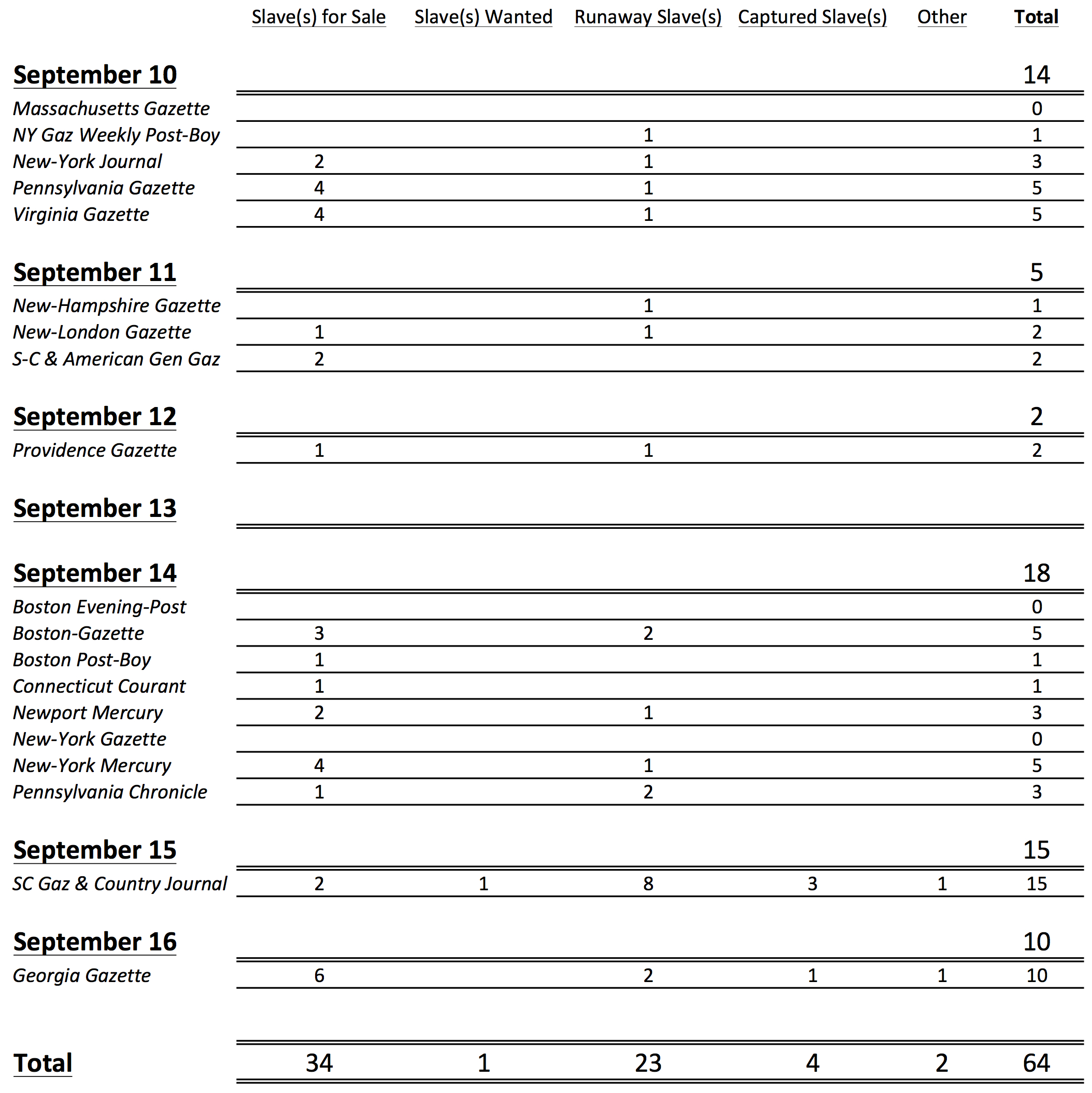
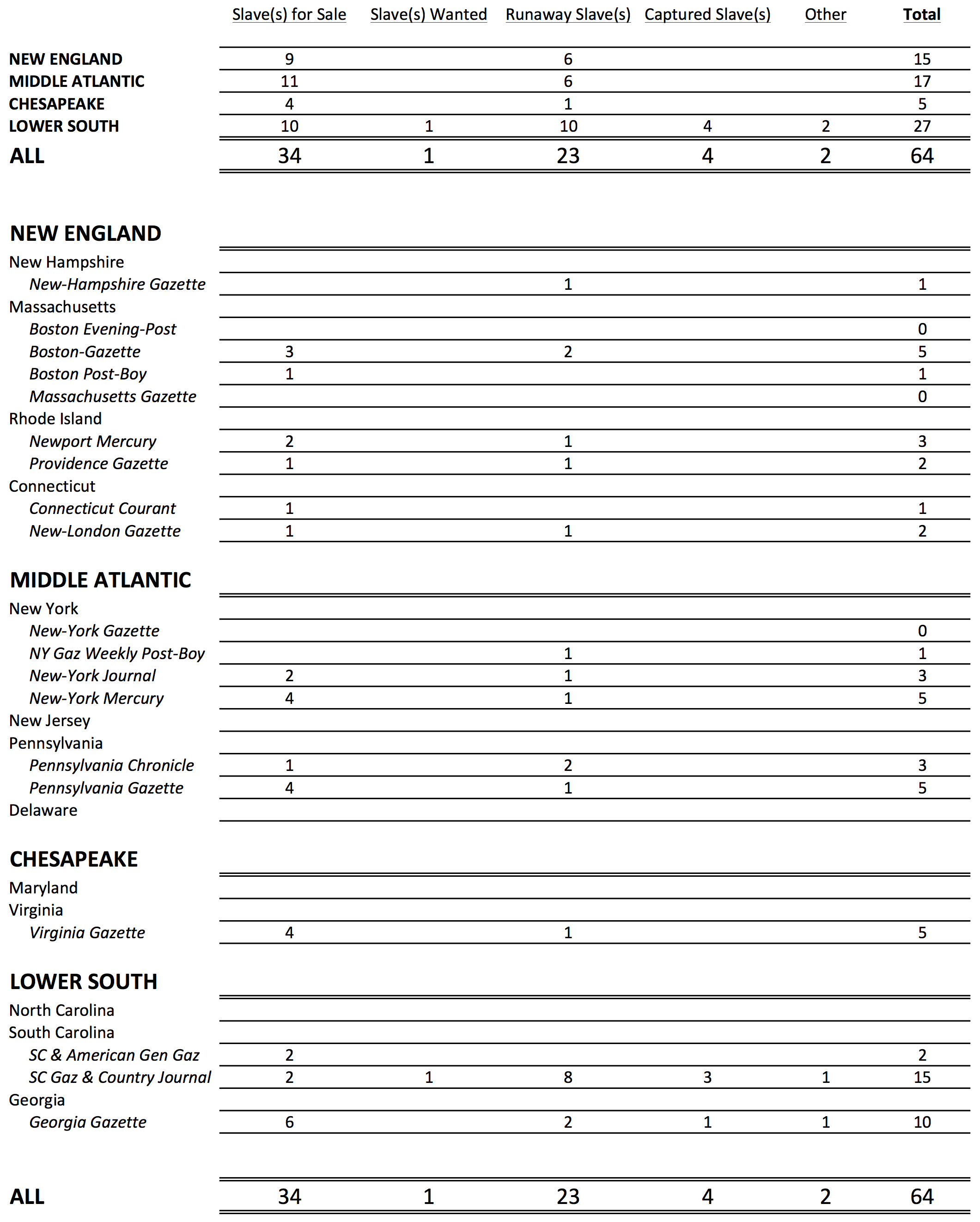
These tables indicate how many advertisements for slaves appeared in colonial American newspapers during the week of September 10-16, 1767.

Note:  These tables are as comprehensive as currently digitized sources permit, but they may not be an exhaustive account.  They includes all newspapers that have been digitized and made available via Accessible Archives, Colonial Williamsburg’s Digital Library, and Readex’s America’s Historical Newspapers.  There are several reasons some newspapers may not have been consulted:

  • Issues that are no longer extant;
  • Issues that are extant but have not yet been digitized (including the Pennsylvania Journal); and
  • Newspapers published in a language other than English (including the Wochentliche Philadelphische Staatsbote).

**********

Slavery Advertisements Published September 10-16, 1767:  By Date

Slavery Adverts Tables 1767 By Date Sep 10

**********

Slavery Advertisements Published September 10-16, 1767:  By Region

Slavery Adverts Tables 1767 By Region Sep 10