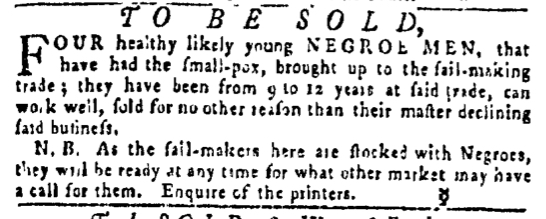
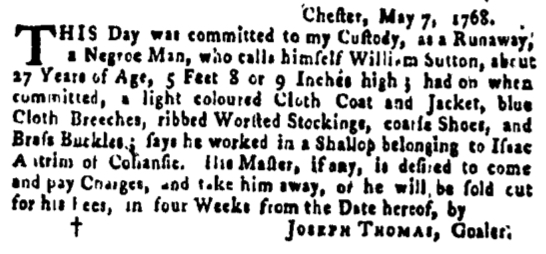
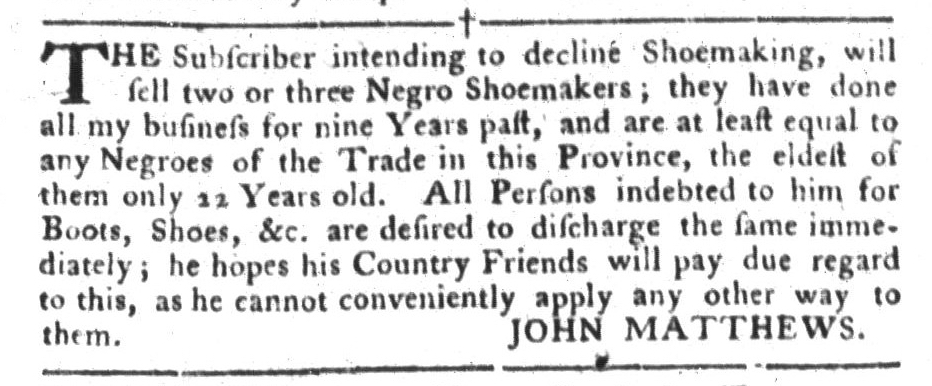
Slavery Advertisements Published May 21, 1768

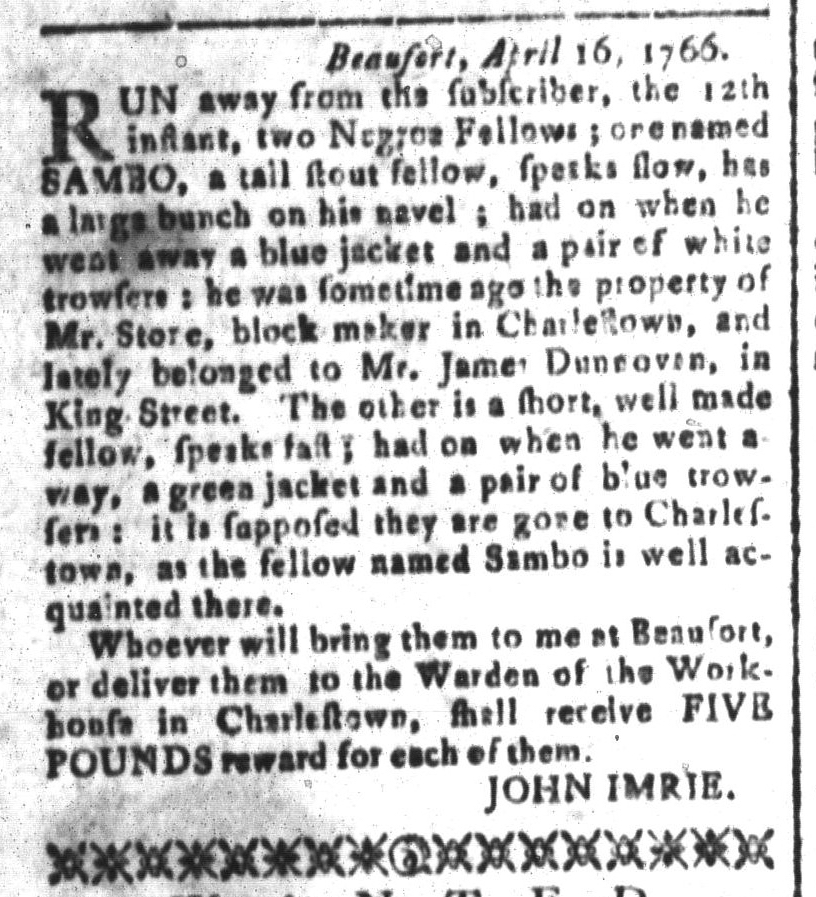
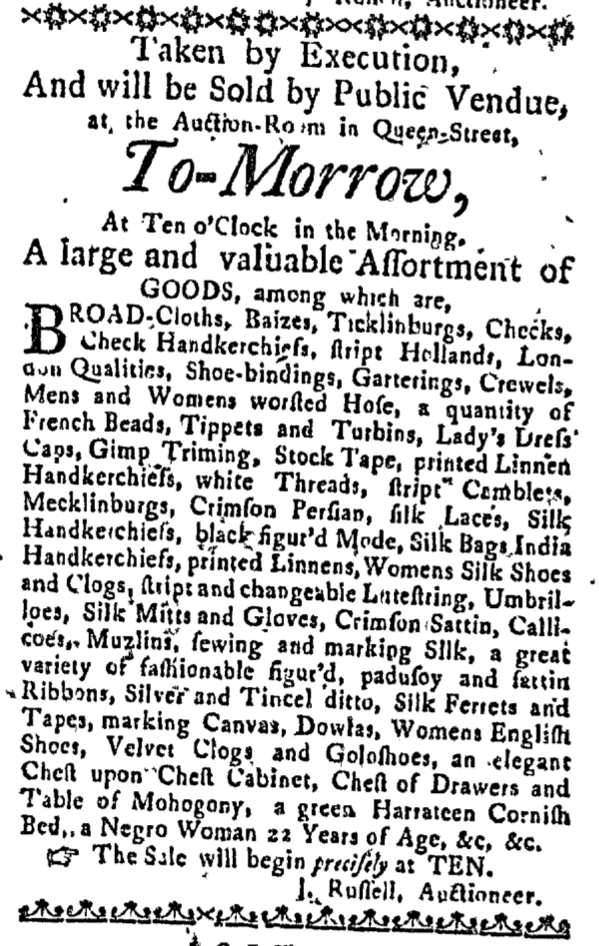
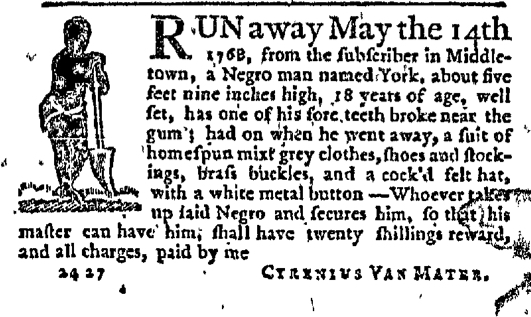
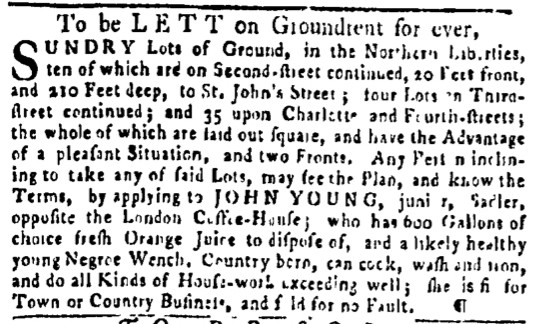
The Slavery Adverts 250 Project chronicles the role of newspaper advertising in perpetuating slavery in the era of the American Revolution. The project seeks to reveal the ubiquity of slavery in eighteenth-century life from New England to Georgia by republishing advertisements for slaves – for sale, wanted to purchase, runaways, captured fugitives – in daily digests on this site as well as in real time via the @SlaveAdverts250 Twitter feed, utilizing twenty-first-century media to stand in for the print media of the eighteenth century.

The project aims to provide modern audiences with a sense of just how often colonists encountered these advertisements in their daily lives. Enslaved men, women, and children appeared in print somewhere in the colonies almost every single day. Those advertisements served as a constant backdrop for social, cultural, economic, and political life in colonial and revolutionary America. Colonists who did not own slaves were still confronted with slavery as well as invited to maintain the system by purchasing slaves or assisting in the capture of runaways. The frequency of these newspaper advertisements suggests just how embedded slavery was in colonial and revolutionary American culture in everyday interactions beyond the printed page.

These advertisements also testify to the experiences of enslaved men, women, and children, though readers must consider that those experiences have been remediated through descriptions offered by slaveholders rather than the slaves themselves. Often unnamed in the advertisements, enslaved men, women, and children were not invisible or unimportant in early America.

These advertisements appeared in colonial American newspapers 250 years ago today.

May 21 - Providence Gazette Slavery 1
Providence Gazette (May 21, 1768).

**********
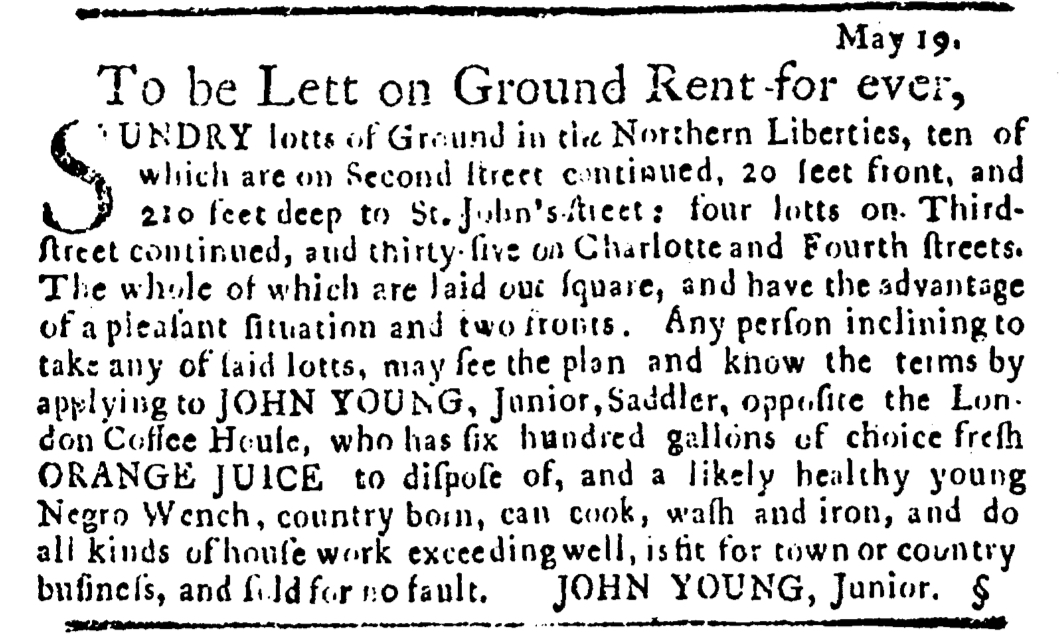
May 21 - Providence Gazette Slavery 2
Providence Gazette (May 21, 1768).

May 20

What was advertised in a colonial American newspaper 250 years ago today?

May 20 - 5:20:1768 Connecticut Journal
Connecticut Journal (May 20, 1768).

“JOHN DURAND, Portrait Painter, INTENDS to Stay in this Town part of the warm Season.”

Advertising in local newspapers was imperative for John Durand, an itinerant portrait painter. Since he regularly moved from town to town he did not build up a clientele in a community that considered him one of its own.  Instead, Durand earned his living by traveling from place to place, setting up temporary studios where he served “any Gentlemen or Ladies” who “choose to have their Pictures Drawn.”  When he arrived in New Haven late in the spring of 1768, he placed an advertisement in the Connecticut Journal to inform the community that he “INTENDS to Stay in this Town part of the warm Season.”  He would engage as many clients as possible but then move along to another town once he determined that the local market had been satisfied.

To convince potential clients to commission his services, Durand invited them to visit “Captain Camp’s House, where several of his Performances may be seen.”  Before sitting for their own portrait or drawing, “any Gentlemen or Ladies” could examine Durand’s portfolio and determine for themselves whether they appreciated his style or considered his abilities sufficient to merit the time and expense of sitting for a portrait. In addition, the artist made an appeal to price, noting that he would create their likenesses “a good deal cheaper than has yet been seen.”  As he moved from town to town, he may have inquired about prices charged by his rivals. Even if he did not offer the best bargain possible, he likely did not set rates so high that prospective clients would choose to wait for the next itinerant portrait painter to pass through town.  He also invited clients to dictate some of the terms of service.  They could visit his temporary studio in his lodgings “at Captain Camp’s House” or summon him to their own residences, asserting their own social standing in the process.

Unlike artisans who worked in one location for years or decades, this artist could not rely on the familiarity of friends and associates for word-of-mouth recommendations that enhanced his reputation over time and, as a result, attracted new customers to an established studio.  As much as he may have wished to stay in one place and accrue such advantages, the market for portraits and drawings in colonial America did not afford him that opportunity.

Slavery Advertisements Published May 20, 1768

The Slavery Adverts 250 Project chronicles the role of newspaper advertising in perpetuating slavery in the era of the American Revolution. The project seeks to reveal the ubiquity of slavery in eighteenth-century life from New England to Georgia by republishing advertisements for slaves – for sale, wanted to purchase, runaways, captured fugitives – in daily digests on this site as well as in real time via the @SlaveAdverts250 Twitter feed, utilizing twenty-first-century media to stand in for the print media of the eighteenth century.

The project aims to provide modern audiences with a sense of just how often colonists encountered these advertisements in their daily lives. Enslaved men, women, and children appeared in print somewhere in the colonies almost every single day. Those advertisements served as a constant backdrop for social, cultural, economic, and political life in colonial and revolutionary America. Colonists who did not own slaves were still confronted with slavery as well as invited to maintain the system by purchasing slaves or assisting in the capture of runaways. The frequency of these newspaper advertisements suggests just how embedded slavery was in colonial and revolutionary American culture in everyday interactions beyond the printed page.

These advertisements also testify to the experiences of enslaved men, women, and children, though readers must consider that those experiences have been remediated through descriptions offered by slaveholders rather than the slaves themselves. Often unnamed in the advertisements, enslaved men, women, and children were not invisible or unimportant in early America.

These advertisements appeared in colonial American newspapers 250 years ago today.

May 20 - Connecticut Journal Slavery 1
Connecticut Journal (May 20, 1768).

**********
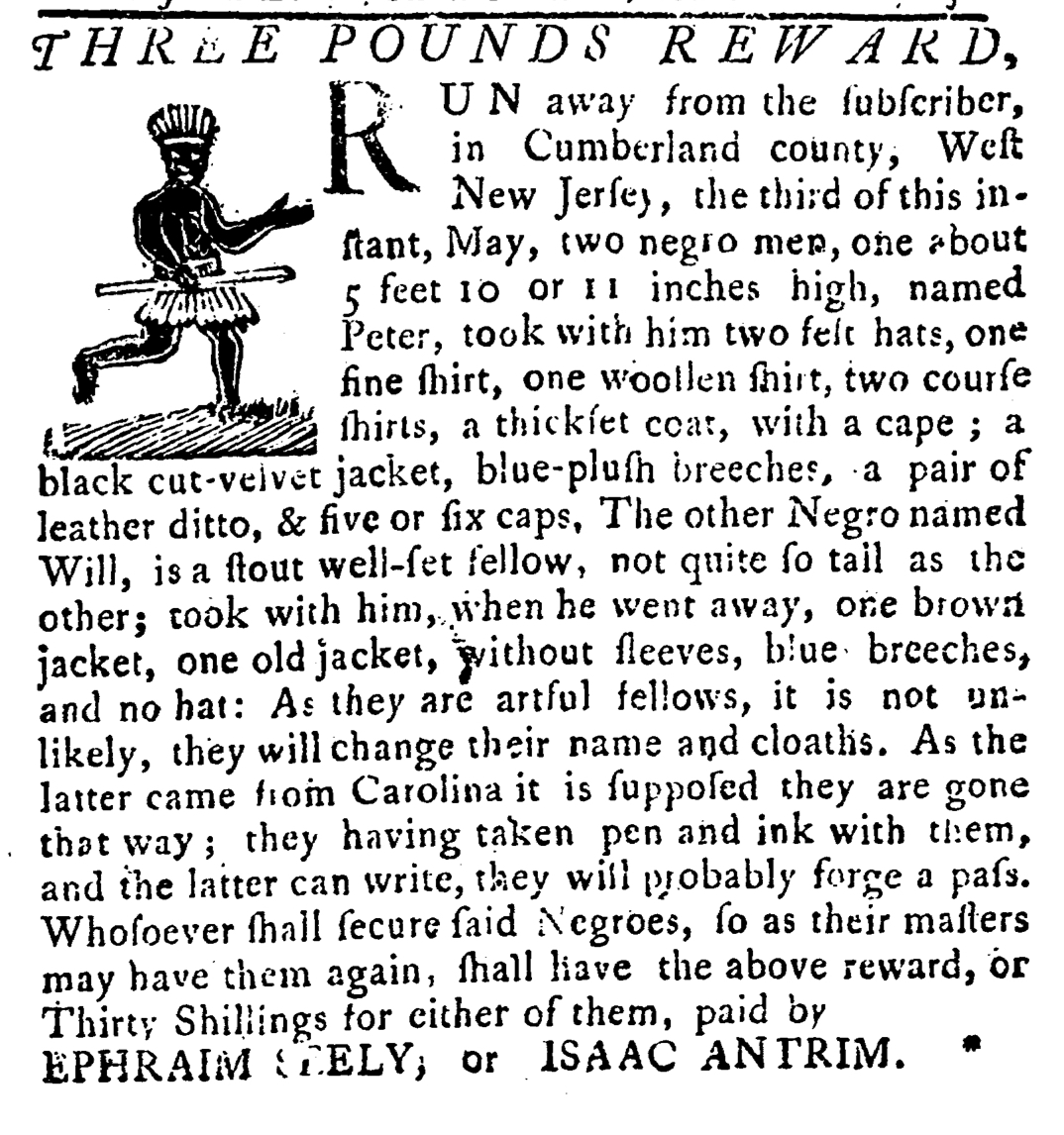
May 20 - New-London Gazette Slavery 1
New-London Gazette (May 20, 1768).

**********
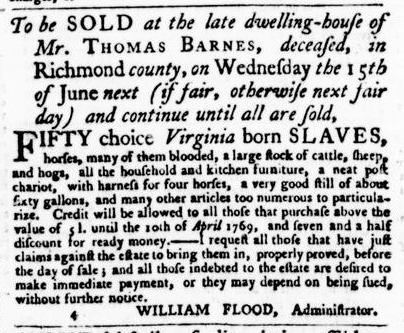
May 20 - New-London Gazette Slavery 2
New-London Gazette (May 20, 1768).

**********
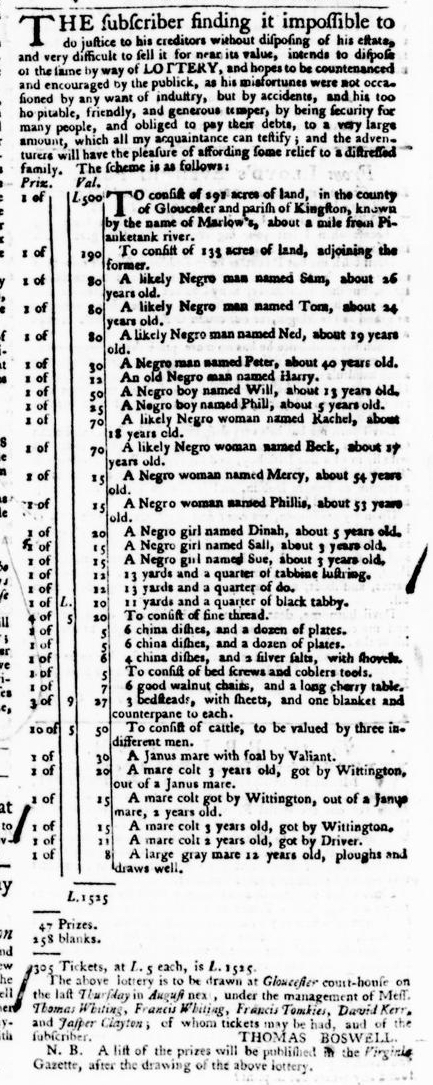
May 20 - South-Carolina and American General Gazette Slavery 1
South-Carolina and American General Gazette (May 20, 1768).

**********

May 20 - South-Carolina and American General Gazette Slavery 2
South-Carolina and American General Gazette (May 20, 1768).

**********
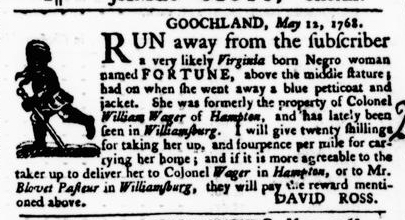
May 20 - South-Carolina and American General Gazette Slavery 3
South-Carolina and American General Gazette (May 20, 1768).

**********

May 20 - South-Carolina and American General Gazette Slavery 4
South-Carolina and American General Gazette (May 20, 1768).

**********

May 20 - South-Carolina and American General Gazette Slavery 5
South-Carolina and American General Gazette (May 20, 1768).

**********
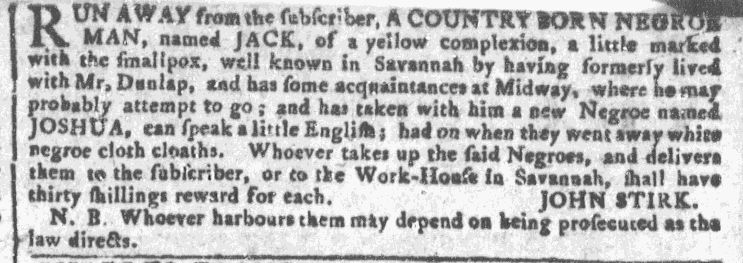
May 20 - South-Carolina and American General Gazette Slavery 6
South-Carolina and American General Gazette (May 20, 1768).

**********

May 20 - South-Carolina and American General Gazette Slavery 7
South-Carolina and American General Gazette (May 20, 1768).

**********

May 20 - South-Carolina and American General Gazette Slavery 8
South-Carolina and American General Gazette (May 20, 1768).

**********

May 20 - South-Carolina and American General Gazette Slavery 9
South-Carolina and American General Gazette (May 20, 1768).

**********
May 20 - South-Carolina and American General Gazette Slavery 10
South-Carolina and American General Gazette (May 20, 1768).

**********

May 20 - South-Carolina and American General Gazette Slavery 11
South-Carolina and American General Gazette (May 20, 1768).

May 19

What was advertised in a colonial American newspaper 250 years ago today?

May 19 - 5:19:1768 Pennsylvania Gazette
Pennsylvania Gazette (May 19, 1768).

“The Cork of each Bottle will be stamped.”

Timothy Matlack promoted his “Philadelphia brewed BOTTLED BEER” in an advertisement in the May 19, 1768, edition of the Pennsylvania Gazette. The brewer encouraged “Masters of Vessels, and others” to purchase his beer, describing it as “remarkably pale, and very good.” His advertisement also revealed that he engaged in a practice that amounted to branding his beer, marking his product in such a way that made it easy for consumers to recognize and associate it with a particular brewer. He informed prospective customers that “[t]he Cork of each Bottle will be stamped” with his name and an abbreviation for Philadelphia.

Matlack had been marking the corks that stoppered bottles containing his beer for quite some time. Two years earlier, in an advertisement in the Pennsylvania Journal, he reported that his beer “will be stamped on the cork with black letters.” (For more biographical information about Matlack, including his famous connection to the Declaration of Independence, see the entry that examined that previous advertisement.) His advertisement in the Pennsylvania Gazette, however, featured an innovation. With increased attention to typography, this advertisement more accurately depicted the likely appearance of the stamp. It arranged the three words that identified the beer on three lines, centering them just as they would appear on the cork:

TIM

MATLACK

PHILAD.

No matter where throughout the Atlantic world “Masters of Vessels” happened to transport Matlack’s beer, those who consumed it would always be able to identify its origins and its brewer. Matack planned ahead in anticipation that those who drank his beer would appreciate its taste or quality, especially after being stored and shipped long distances. He made sure they encountered tangible reminders of where to obtain more the next time they needed to provision their ships or make purchases for other sorts of consumption. While he certainly did not achieve the name recognition associated with modern breweries, Matlack made efforts – in print and on the packaging of his product – to induce customers to associate his name with a beverage that might otherwise have seemed generic.

Summary of Slavery Advertisements Published May 13-19, 1768

These tables indicate how many advertisements for slaves appeared in colonial American newspapers during the week of May 13-19, 1768.

Note:  These tables are as comprehensive as currently digitized sources permit, but they may not be an exhaustive account.  They includes all newspapers that have been digitized and made available via Accessible Archives, Colonial Williamsburg’s Digital Library, and Readex’s America’s Historical Newspapers.  There are several reasons some newspapers may not have been consulted:

  • Issues that are no longer extant;
  • Issues that are extant but have not yet been digitized (including the Pennsylvania Journal); and
  • Newspapers published in a language other than English (including the Wochentliche Philadelphische Staatsbote).

**********

Slavery Advertisements Published May 13-19, 1768:  By Date

Slavery Adverts Tables 1768 By Date May 13

**********

Slavery Advertisements Published May 13-19, 1768:  By Region

Slavery Adverts Tables 1768 By Region May 13

Slavery Advertisements Published May 19, 1768

The Slavery Adverts 250 Project chronicles the role of newspaper advertising in perpetuating slavery in the era of the American Revolution. The project seeks to reveal the ubiquity of slavery in eighteenth-century life from New England to Georgia by republishing advertisements for slaves – for sale, wanted to purchase, runaways, captured fugitives – in daily digests on this site as well as in real time via the @SlaveAdverts250 Twitter feed, utilizing twenty-first-century media to stand in for the print media of the eighteenth century.

The project aims to provide modern audiences with a sense of just how often colonists encountered these advertisements in their daily lives. Enslaved men, women, and children appeared in print somewhere in the colonies almost every single day. Those advertisements served as a constant backdrop for social, cultural, economic, and political life in colonial and revolutionary America. Colonists who did not own slaves were still confronted with slavery as well as invited to maintain the system by purchasing slaves or assisting in the capture of runaways. The frequency of these newspaper advertisements suggests just how embedded slavery was in colonial and revolutionary American culture in everyday interactions beyond the printed page.

These advertisements also testify to the experiences of enslaved men, women, and children, though readers must consider that those experiences have been remediated through descriptions offered by slaveholders rather than the slaves themselves. Often unnamed in the advertisements, enslaved men, women, and children were not invisible or unimportant in early America.

These advertisements appeared in colonial American newspapers 250 years ago today.

May 19 - Massachusetts Gazette Slavery 1
Massachusetts Gazette (May 19, 1768).

**********

May 19 - New-York Journal Slavery 1
New-York Journal (May 19, 1768).

**********

May 19 - New-York Journal Slavery 2
New-York Journal (May 19, 1768).

**********

May 19 - Pennsylvania Gazette Slavery 1
Pennsylvania Gazette (May 19, 1768).

**********

May 19 - Pennsylvania Gazette Slavery 2
Pennsylvania Gazette (May 19, 1768).

**********

May 19 - Pennsylvania Gazette Slavery 3
Pennsylvania Gazette (May 19, 1768).

**********

May 19 - Pennsylvania Gazette Supplement Slavery 1
Supplement to the Pennsylvania Gazette (May 19, 1768).

**********

May 19 - Pennsylvania Journal Slavery 1
Pennsylvania Journal (May 19, 1768).

**********

May 19 - Pennsylvania Journal Slavery 2
Pennsylvania Journal (May 19, 1768).

**********

May 19 - Virginia Gazette Purdie and Dixon Slavery 1
Virginia Gazette [Purdie & Dixon] (May 19, 1768).

**********

May 19 - Virginia Gazette Purdie and Dixon Slavery 2
Virginia Gazette [Purdie & Dixon] (May 19, 1768).

**********

May 19 - Virginia Gazette Purdie and Dixon Slavery 3
Virginia Gazette [Purdie & Dixon] (May 19, 1768).

**********

May 19 - Virginia Gazette Purdie and Dixon Slavery 4
Virginia Gazette [Purdie & Dixon] (May 19, 1768).

May 18

What was advertised in a colonial American newspaper 250 years ago today?

May 18 - 5:18:1768 Response Georgia Gazette
Georgia Gazette (May 18, 1768).

“If propagating injurious reports be at all commendable …”

Whether or not advertisements achieved the intended purposes of those who placed them in colonial newspapers, they did generate revenue for the printers who published them. At least that was the case once advertisers paid for their advertisements; colonial printers frequently inserted their own notices calling on subscribers and advertisers alike to settle accounts long overdue.

If his clients did indeed pay, James Johnston, the printer of the Georgia Gazette, generated significant revenue by publishing two series of advertisements between feuding colonists in the spring of 1768. It began with the dispute between Lachlan McGillivray and John Joachim Zubly. Over the course of several lengthy advertisements, the two men published point and counterpoint among the advertisements in the Georgia Gazette. They spilled so much ink making accusations and defending their reputations that Johnston even published a two-page supplement devoted entirely to their quarrel because including their notices in the regular issue would have crowded out both news and other advertisements. That they thrust and parried in the pages of the Georgia Gazette week after week over the course of a month likely provided entertainment for some readers not involved in their disagreement.

May 18 - 5:11:1768 Georgia Gazette
Georgia Gazette (May 11, 1768).

That exchange had barely died down before another found its way into the Georgia colony’s only newspaper. Upon receiving a letter from John Mullryne informing her of his intention to publish “a short dissertation upon Slanders” and “the danger of envenomed tongues,” Heriot Crooke opted to promptly place her own advertisement in the Georgia Gazette for public view rather than respond privately to her correspondent. In so doing, she preempted Mullryne and shaped the narrative by suggesting that she had had nothing to hide when it came to his accusations about how she had comported herself when discussing the candidates standing for election to become “Member of Assembly for Vernonburgh.” Crooke’s advertisement ran in the May 11 edition of the Georgia Gazette. It appeared again the following week, but by then Mullryne had composed a lengthy response. In it, he accused Crooke of being a pawn who acted “under the influence of a prompter or prompters.” He then defended himself against accusations leveled in an affidavit that had been included in Crooke’s original advertisement.

Together, the two advertisements filled approximately two-thirds of a column, a significant amount of space in a newspaper comprised of only eight columns. Assuming that Johnston, like many other printers, charged by the length of the advertisement, he stood to profit from the feud that unfolded among the advertisements in his newspaper. This also benefited the advertisers who wished to draw attention to the legal issues they litigated in their notices. By paying to have their advertisements inserted, Crooke and Mullryne (as well as McGillivray and Zubly) sidestepped the editorial process involved in selecting which news items to publish. In publishing advertisements, they made sure the content they wanted to see in the Georgia Gazette was indeed available for consideration by the public.

Slavery Advertisements Published May 18, 1768

The Slavery Adverts 250 Project chronicles the role of newspaper advertising in perpetuating slavery in the era of the American Revolution. The project seeks to reveal the ubiquity of slavery in eighteenth-century life from New England to Georgia by republishing advertisements for slaves – for sale, wanted to purchase, runaways, captured fugitives – in daily digests on this site as well as in real time via the @SlaveAdverts250 Twitter feed, utilizing twenty-first-century media to stand in for the print media of the eighteenth century.

The project aims to provide modern audiences with a sense of just how often colonists encountered these advertisements in their daily lives. Enslaved men, women, and children appeared in print somewhere in the colonies almost every single day. Those advertisements served as a constant backdrop for social, cultural, economic, and political life in colonial and revolutionary America. Colonists who did not own slaves were still confronted with slavery as well as invited to maintain the system by purchasing slaves or assisting in the capture of runaways. The frequency of these newspaper advertisements suggests just how embedded slavery was in colonial and revolutionary American culture in everyday interactions beyond the printed page.

These advertisements also testify to the experiences of enslaved men, women, and children, though readers must consider that those experiences have been remediated through descriptions offered by slaveholders rather than the slaves themselves. Often unnamed in the advertisements, enslaved men, women, and children were not invisible or unimportant in early America.

These advertisements appeared in colonial American newspapers 250 years ago today.

May 18 - Georgia Gazette Slavery 1
Georgia Gazette (May 18, 1768).

**********

May 18 - Georgia Gazette Slavery 2
Georgia Gazette (May 18, 1768).

**********

May 18 - Georgia Gazette Slavery 3
Georgia Gazette (May 18, 1768).

**********

May 18 - Georgia Gazette Slavery 4
Georgia Gazette (May 18, 1768).

May 17

What was advertised in a colonial American newspaper 250 years ago today?

May 3 - 5:3:1768 South-Carolina Gazette and Country Journal
Supplement to the South-Carolina Gazette and Country Journal (May 17, 1768).

“He has removed from Dorchester to Charles-Town.”

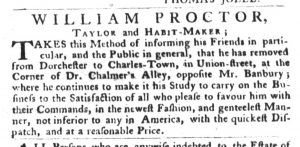
William Proctor, a tailor, placed an advertisement in the South-Carolina Gazette and Country Journal when he relocated from the small town of Dorchester on the Ashley River to the bustling urban port of Charleston. He addressed his notice to both “his Friends in particular, and the Public in general,” a strategy intended to maintain any clients who wished to patronize him at his new location as well as introduce him to the residents of Charleston.

Given that Dorchester, a town already in decline and abandoned after the American Revolution, was eighteen miles from Charleston, Proctor probably had few existing customers in his new city. After all, residents could choose from among many tailors and others who worked in the garments trades in one of the largest ports in the American colonies. Still, acknowledging “his Friends in particular” in his advertisement served an important purpose. It signaled to prospective clients that he had experience pursuing his trade, that he had previously cultivated a clientele in Dorchester and thus deserved their consideration now that he set up shop in Charleston.

He enhanced that appeal by underscoring that “he continues to make it his Study to carry on the Business to the Satisfaction of all who please to favour him with their Commands.” Proctor provided his own testimonial about the quality of the garments he made and the level of customer satisfaction he previously achieved, promising that new clients would not be disappointed if they engaged his services. In case some prospective customers remained skeptical about the clothing he produced, the tailor proclaimed that he constructed garments “in the newest Fashion, and genteelest Manner, not inferior to any in America.” In so doing, he cautioned readers not to dismiss him as a backwoods amateur merely because he had lived and worked outside the colony’s largest city. Instead, he pledged that he was as familiar with current trends – and capable of replicating them – as tailors from Charleston as well as Philadelphia and New York. That he made such a claim at all suggested that he was prepared for prospective clients to assess his efforts and reach their own conclusions, realizing that word of his ineptitude would spread if he did not manage to achieve “the Satisfaction of all who please to favour him with their Commands.” Proctor’s advertisement established a narrative about his skills and the types of garments he created, but consumers possessed the power to verify or discredit the reputation he attempted to construct.

Slavery Advertisements Published May 17, 1768

The Slavery Adverts 250 Project chronicles the role of newspaper advertising in perpetuating slavery in the era of the American Revolution. The project seeks to reveal the ubiquity of slavery in eighteenth-century life from New England to Georgia by republishing advertisements for slaves – for sale, wanted to purchase, runaways, captured fugitives – in daily digests on this site as well as in real time via the @SlaveAdverts250 Twitter feed, utilizing twenty-first-century media to stand in for the print media of the eighteenth century.

The project aims to provide modern audiences with a sense of just how often colonists encountered these advertisements in their daily lives. Enslaved men, women, and children appeared in print somewhere in the colonies almost every single day. Those advertisements served as a constant backdrop for social, cultural, economic, and political life in colonial and revolutionary America. Colonists who did not own slaves were still confronted with slavery as well as invited to maintain the system by purchasing slaves or assisting in the capture of runaways. The frequency of these newspaper advertisements suggests just how embedded slavery was in colonial and revolutionary American culture in everyday interactions beyond the printed page.

These advertisements also testify to the experiences of enslaved men, women, and children, though readers must consider that those experiences have been remediated through descriptions offered by slaveholders rather than the slaves themselves. Often unnamed in the advertisements, enslaved men, women, and children were not invisible or unimportant in early America.

These advertisements appeared in colonial American newspapers 250 years ago today.

May 17 - South-Carolina Gazette and Country Journal Slavery 1
South-Carolina Gazette and Country Journal (May 17, 1768).

**********

May 17 - South-Carolina Gazette and Country Journal Slavery 2
South-Carolina Gazette and Country Journal (May 17, 1768).

**********

May 17 - South-Carolina Gazette and Country Journal Slavery 3
South-Carolina Gazette and Country Journal (May 17, 1768).

**********

May 17 - South-Carolina Gazette and Country Journal Slavery 4
South-Carolina Gazette and Country Journal (May 17, 1768).

**********

May 17 - South-Carolina Gazette and Country Journal Supplement Slavery 1
Supplement to the South-Carolina Gazette and Country Journal (May 17, 1768).

**********

May 17 - South-Carolina Gazette and Country Journal Supplement Slavery 2
Supplement to the South-Carolina Gazette and Country Journal (May 17, 1768).

**********

May 17 - South-Carolina Gazette and Country Journal Supplement Slavery 3
Supplement to the South-Carolina Gazette and Country Journal (May 17, 1768).

**********

May 17 - South-Carolina Gazette and Country Journal Supplement Slavery 4
Supplement to the South-Carolina Gazette and Country Journal (May 17, 1768).