Slavery Advertisements Published August 3, 1768

The Slavery Adverts 250 Project chronicles the role of newspaper advertising in perpetuating slavery in the era of the American Revolution. The project seeks to reveal the ubiquity of slavery in eighteenth-century life from New England to Georgia by republishing advertisements for slaves – for sale, wanted to purchase, runaways, captured fugitives – in daily digests on this site as well as in real time via the @SlaveAdverts250 Twitter feed, utilizing twenty-first-century media to stand in for the print media of the eighteenth century.

The project aims to provide modern audiences with a sense of just how often colonists encountered these advertisements in their daily lives. Enslaved men, women, and children appeared in print somewhere in the colonies almost every single day. Those advertisements served as a constant backdrop for social, cultural, economic, and political life in colonial and revolutionary America. Colonists who did not own slaves were still confronted with slavery as well as invited to maintain the system by purchasing slaves or assisting in the capture of runaways. The frequency of these newspaper advertisements suggests just how embedded slavery was in colonial and revolutionary American culture in everyday interactions beyond the printed page.

These advertisements also testify to the experiences of enslaved men, women, and children, though readers must consider that those experiences have been remediated through descriptions offered by slaveholders rather than the slaves themselves. Often unnamed in the advertisements, enslaved men, women, and children were not invisible or unimportant in early America.

These advertisements appeared in colonial American newspapers 250 years ago today.

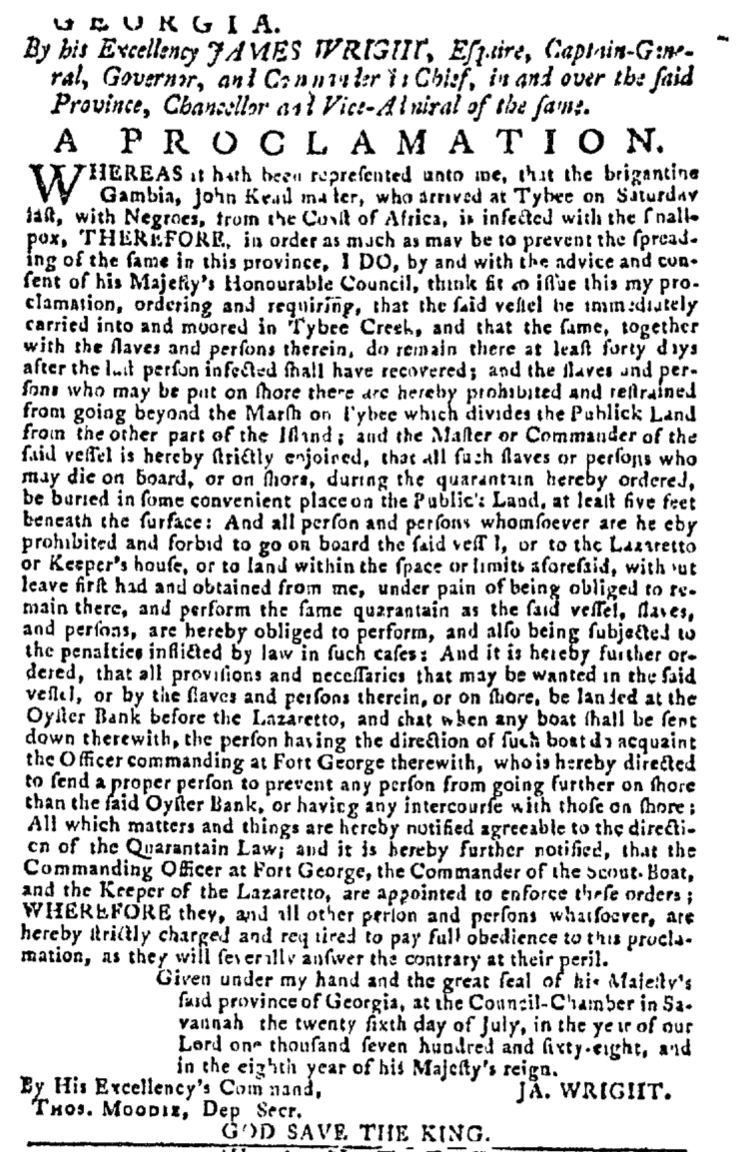
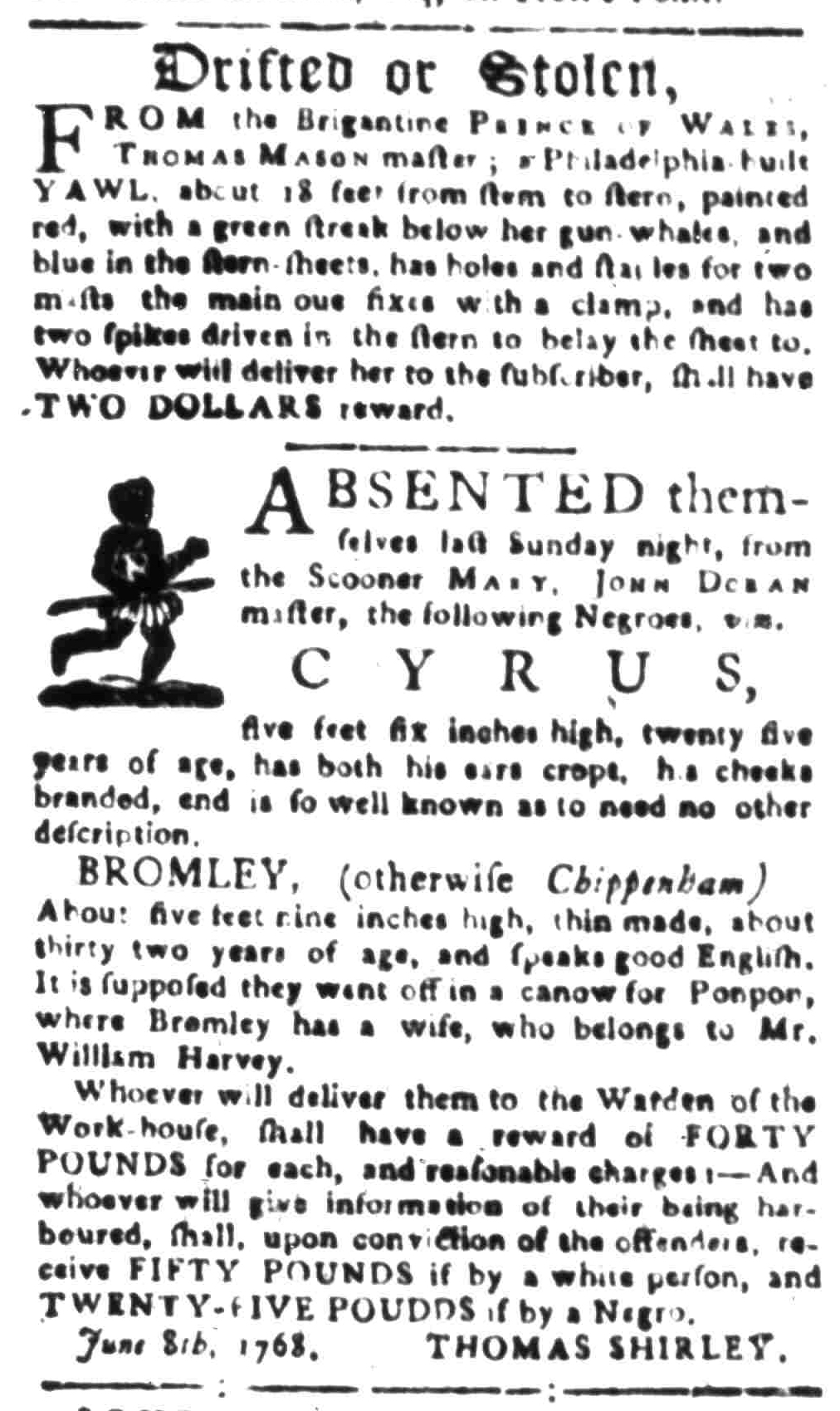
Aug 3 - Georgia Gazette Slavery 1
Georgia Gazette (August 3, 1768).

**********

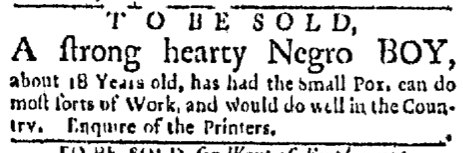
Aug 3 - Georgia Gazette Slavery 2
Georgia Gazette (August 3, 1768).

**********
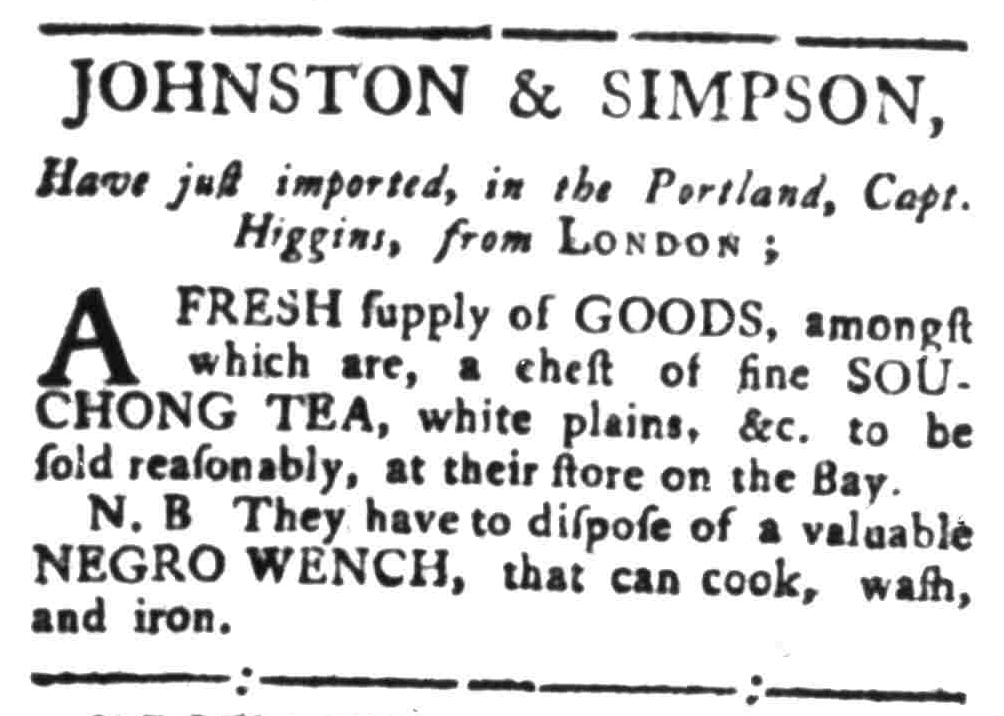
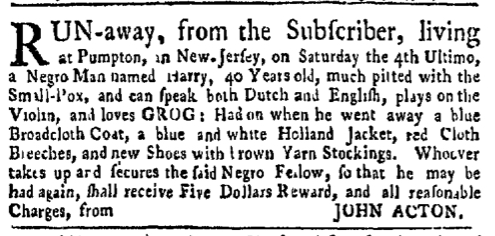
Aug 3 - Georgia Gazette Slavery 3
Georgia Gazette (August 3, 1768).

**********

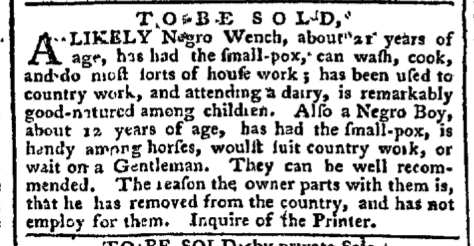
Aug 3 - Georgia Gazette Slavery 4
Georgia Gazette (August 3, 1768).

**********
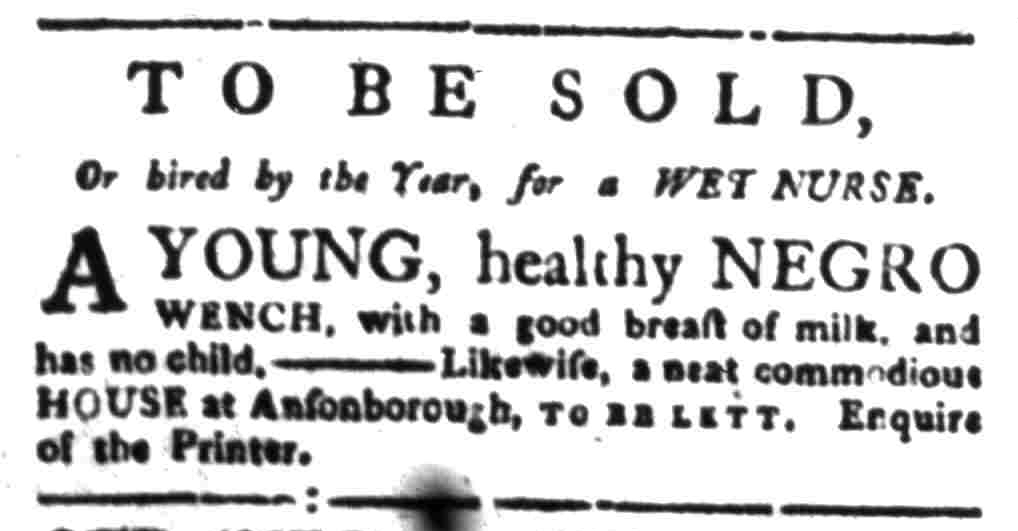
Aug 3 - Georgia Gazette Slavery 5
Georgia Gazette (August 3, 1768).

**********

Aug 3 - Georgia Gazette Slavery 6
Georgia Gazette (August 3, 1768).

**********

Aug 3 - Georgia Gazette Slavery 8
Georgia Gazette (August 3, 1768).

**********

Aug 3 - Georgia Gazette Slavery 9
Georgia Gazette (August 3, 1768).

**********

Aug 3 - Georgia Gazette Slavery 10
Georgia Gazette (August 3, 1768).

**********

Aug 3 - Georgia Gazette Slavery 11
Georgia Gazette (August 3, 1768).

**********

Aug 3 - Georgia Gazette Slavery 12
Georgia Gazette (August 3, 1768).

**********

Aug 3 - Georgia Gazette Slavery 13
Georgia Gazette (August 3, 1768).

**********

Aug 3 - Georhia Gazette Slavery 7
Georgia Gazette (August 3, 1768).

August 2

What was advertised in a colonial American newspaper 250 years ago today?

Aug 2 - 8:2:1768 Essex Gazette
Essex Gazette (August 2, 1768).

Marblehead, July 25, 1768. Edward Griffiths, Taylor and Habit-maker from LONDON.”

Today the Adverts 250 Project features an advertisement from the Essex Gazette for the first time, an advertisement from the first issue of that newspaper. Samuel Hall commenced publication of the Essex Gazette in Salem, Massachusetts, on August 2, 1768. Hall offered an address “To the PUBLICK” on the first page, explaining the purpose of establishing a printing office and, especially, publishing a newspaper to the residents of Salem and other readers: “there can be no doubt that every Inhabitant is sufficiently sensible that the Exercise of this Art is of the utmost Importance to every Community, and that News-Papers, in particular, are of great publick Utility.” That was because newspapers collected together “miscellaneous Productions, and the Advices from different Parts of the World” in order that “the most useful Knowledge to Mankind, tending to preserve and promote the Liberty, Happiness and Welfare of Civil Society, is, at a trifling Expence, imperceptibly diffused among the Inhabitants of an extensive Country.”

Although Hall assumed primary responsibly for compiling those “miscellaneous Productions” and “Advices from different Parts of the World,” other colonists did play a part in shaping the contents of the Essex Gazette, just as they did newspapers published throughout the colonies, through the advertisements they paid to have inserted alongside news, editorials, prices current, poetry, and other items. Hall did not solicit advertising in his address “To the PUBLICK,” but the colophon at the bottom of the final page did states that “SUBSCRIPTIONS, (at Six Shillings and Eight Pence per Annum) ADVERTISEMENTS, &c. are received for this Paper” at the printing office “a few Doors above the Town-House.” Hall reported that he had issued proposals for publishing the Essex Gazette a month earlier. Those proposals likely included a call for colonists to submit advertisements in advance of the first issue going to press.

Five advertisements, filling, one and a half of the twelve columns, did appear in the inaugural issue. Andrew Oliver,a prominent colonial official, requested that “WHOEVER has borrowed” two books from his library either return them or contact him. The other four advertisements all promoted consumer goods and services. William Vans peddled a “Great Variety of English Goods” at his shop on the “Corner leading from the main Street to the North-River Bridge.” Edward Griffiths, a “Taylor and Habit-maker from LONDON” used a list of prices for suits, jackets, and breeches to attract prospective clients to his shop in Marblehead. William Jones invited travelers and others to the “King’s-Head Tavern, in Danvers, on the Road from Boston to Salem.” In an advertisement that filled an entire column, Philip Godfrid Kast listed and described various patent medicines available at his apothecary shop “at the Sign on the Lyon and Mortar” in Salem. Kast regularly advertised in newspapers published in Boston, but the new Essex Gazette provided an opportunity for him and the other entrepreneurs who inserted notices in the first issue to more directly target local readers who could become customers. That certainly enhanced the “publick Utility” of the newspaper for advertisers.

August 1

What was advertised in a colonial American newspaper 250 years ago today?

Aug 1 - 8:1:1768 New-York Gazette Weekly Mercury
New-York Gazette and Weekly Mercury (August 1, 1768).

“One of the most beautiful Animals, call’d, The LEOPARD.”

In addition to an array of consumer goods and services, newspaper advertisements also promoted a variety of entertainments and leisure activities, from concerts and plays to fireworks and exotic animals. Readers of the August 1, 1768, edition of the New-York Gazette and Weekly Mercury could not have missed Abraham Van Dyck’s advertisement that invited them to view a leopard that had just arrived in the city. The relatively large woodcut that accompanied the advertisement crudely depicted the large cat, inciting even greater interest than Van Dyck’s description of the animal.

Van Dyck introduced New Yorkers to a spectacle previously unknown to them, “one of the most beautiful Animals.” He could not assume that prospective viewers were already familiar with leopards, prompting him to publish a short description to supplement the woodcut. Van Dyck explained that the leopard was “adorned all over with very neat and different spots, black and white.” It had “large sparkling Eyes, and long Whiskers on both Sides of his Jaws.” In comparison to an animal that may have been more familiar to many colonists, “This Leopard is much in Shape, Nature, and Colour, like unto a Panther.” To augment the excitement of viewing this exotic beast, Van Dyck noted that the leopard was “greedy in catching his Prey by leaping at it,” but those tantalized by this description did not need to worry about their safety when they went to see this exotic creature. “Gentlemen and Ladies may have a full View of the Leopard,” Van Dyck promised, as he is well secured with a Chain.”

The leopard was not Van Dyck’s only attraction. He informed readers that he had “several other Animals, which will be seen at the same Time,” though he did not indicate which other animals comprised the rest of the show. The leopard was the star, the exotic beast that Van Dyck expected would draw viewers willing to pay a shilling to glimpse a creature so out of the ordinary compared to the sights they encountered on most days. The woodcut underscored that the leopard was a true curiosity that readers did not want to miss.

Slavery Advertisements Published August 1, 1768

The Slavery Adverts 250 Project chronicles the role of newspaper advertising in perpetuating slavery in the era of the American Revolution. The project seeks to reveal the ubiquity of slavery in eighteenth-century life from New England to Georgia by republishing advertisements for slaves – for sale, wanted to purchase, runaways, captured fugitives – in daily digests on this site as well as in real time via the @SlaveAdverts250 Twitter feed, utilizing twenty-first-century media to stand in for the print media of the eighteenth century.

The project aims to provide modern audiences with a sense of just how often colonists encountered these advertisements in their daily lives. Enslaved men, women, and children appeared in print somewhere in the colonies almost every single day. Those advertisements served as a constant backdrop for social, cultural, economic, and political life in colonial and revolutionary America. Colonists who did not own slaves were still confronted with slavery as well as invited to maintain the system by purchasing slaves or assisting in the capture of runaways. The frequency of these newspaper advertisements suggests just how embedded slavery was in colonial and revolutionary American culture in everyday interactions beyond the printed page.

These advertisements also testify to the experiences of enslaved men, women, and children, though readers must consider that those experiences have been remediated through descriptions offered by slaveholders rather than the slaves themselves. Often unnamed in the advertisements, enslaved men, women, and children were not invisible or unimportant in early America.

These advertisements appeared in colonial American newspapers 250 years ago today.

Aug 1 - Boston Evening-Post Slavery 1
Boston Evening-Post (August 1, 1768).

**********

Aug 1 - Boston Evening-Post Slavery 2
Boston Evening-Post (August 1, 1768).

**********

Aug 1 - Boston Evening-Post Slavery 3
Boston Evening-Post (August 1, 1768).

**********

Aug 1 - Boston-Gazette Slavery 1
Boston-Gazette (August 1, 1768).

**********

Aug 1 - Boston-Gazette Slavery 2
Boston-Gazette (August 1, 1768).

**********

Aug 1 - Boston-Gazette Slavery 3
Boston-Gazette (August 1, 1768).

**********

Aug 1 - New-York Gazette Weekly Mercury Slavery 1
New-York Gazette and Weekly Mercury (August 1, 1768).

**********

Aug 1 - New-York Gazette Weekly Mercury Slavery 2
New-York Gazette and Weekly Mercury (August 1, 1768).

**********

Aug 1 - New-York Gazette Weekly Mercury Slavery 3
New-York Gazette and Weekly Mercury (August 1, 1768).

**********

Aug 1 - New-York Gazette Weekly Mercury Supplement Slavery 1
New-York Gazette and Weekly Mercury (August 1, 1768).

**********

Aug 1 - New-York Gazette Weekly Post-Boy Slavery 1
New-York Gazette: Or, the Weekly Post-Boy (August 1, 1768).

**********

Aug 1 - Newport Mercury Slavery 1
Newport Mercury (August 1, 1768).

**********

Aug 1 - Newport Mercury Slavery 2
Newport Mercury (August 1, 1768).

**********

Aug 1 - Newport Mercury Slavery 3
Newport Mercury (August 1, 1768).

**********

Aug 1 - Newport Mercury Slavery 4
Newport Mercury (August 1, 1768).

**********

Aug 1 - Pennsylvania Chronicle Slavery 1
Pennsylvania Chronicle (August 1, 1768).

**********

Aug 1 - Pennsylvania Chronicle Slavery 2
Pennsylvania Chronicle (August 1, 1768).

**********

Aug 1 - Pennsylvania Chronicle Slavery 3
Pennsylvania Chronicle (August 1, 1768).

**********

Aug 1 - Pennsylvania Chronicle Slavery 4
Pennsylvania Chronicle (August 1, 1768).

**********

Aug 1 - South-Carolina Gazette Slavery 1
South-Carolina Gazette (August 1, 1768).

**********

Aug 1 - South-Carolina Gazette Slavery 2
South-Carolina Gazette (August 1, 1768).

**********

Aug 1 - South-Carolina Gazette Slavery 3
South-Carolina Gazette (August 1, 1768).

**********

Aug 1 - South-Carolina Gazette Slavery 4
South-Carolina Gazette (August 1, 1768).

**********

Aug 1 - South-Carolina Gazette Slavery 5
South-Carolina Gazette (August 1, 1768).

**********

Aug 1 - South-Carolina Gazette Slavery 6
South-Carolina Gazette (August 1, 1768).

**********

Aug 1 - South-Carolina Gazette Slavery 7
South-Carolina Gazette (August 1, 1768).

**********

Aug 1 - South-Carolina Gazette Slavery 8
South-Carolina Gazette (August 1, 1768).

**********

Aug 1 - South-Carolina Gazette Slavery 9
South-Carolina Gazette (August 1, 1768).