What was advertised in a colonial American newspaper 250 years ago today?
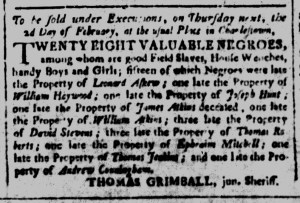
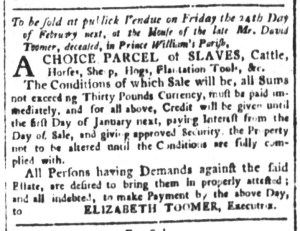
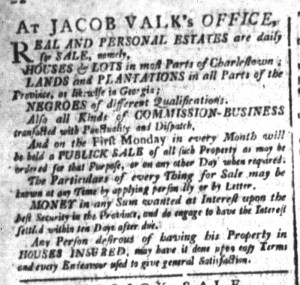
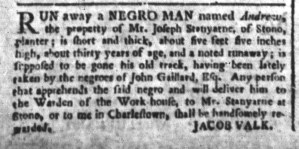
South-Carolina Gazette and Country Journal (January 31, 1775).
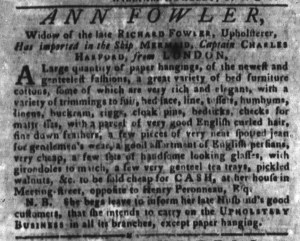
“She intends to carry on the UPHOLSTERY BUSINESS in all its branches, except paper hanging.”
Ann Fowler, “Widow of the late RICHARD FOWLER, Upholsterer,” took to the pages of the South-Carolina Gazette and Country Journal to advertise a variety of merchandise that she sold out of her house on Meeting Street in Charleston. She indicated that she imported her wares “in the Ship MERMAID, Captain CHARLES HARFORD, from LONDON,” a vessel that arrived in port on December 29, 1774, according to the list of “ENTRIES INWARDS” at the custom house published in the January 3, 1775, edition of the South-Carolina Gazette and Country Journal. Those goods should have fallen under the jurisdiction of the Continental Association. Nevertheless, Fowler hawked a “Large quantity of paper hangings, of the newest and genteelest fashions, a great variety of bed furniture cottons, some of which are very rich and elegant, with a variety of trimmings to suit, [and] a few sets of handsome looking glasses, with girandoles to match.” The widow was not the only advertiser who placed notices about imported goods that looked the same as those published before the Continental Association went into effect.
Fowler appended a nota bene to “inform her late Husband’s good customers, that she intends to carry on the UPHOLSTERY BUSINESS in all its branches, except paper hanging.” Widows often took over the family business in colonial America, sometimes doing the same tasks their husbands had done and sometimes supervising employees. Even though Ann had not been the public face of the enterprise while Richard still lived, she likely had experience assisting him in his shop and interacting with any assistants that he hired. She hoped that she and her husband had cultivated relationships that would allow her to maintain their clientele, though they would have to look elsewhere when it came to “paper hanging” or installing wallpaper. Fowler sold papers hangings “of the newest and genteelest fashions,” but her customers needed to contract with someone else to paste them up. That may have been because she lacked experience with that aspect of the family business, her role having been primarily in the shop. On the other hand, perhaps she felt comfortable doing all sorts of upholstery work in the shop, a semi-public space that now belonged to her, but she did not consider it appropriate to enter the private spaces of her customers, especially male clients who lived alone. As a female entrepreneur, Fowler may have attempted to observe a sense of propriety that the public would find acceptable. Whether or not Fowler had prior experience installing paper hangings, she constrained herself in discontinuing that service following the death of her husband.
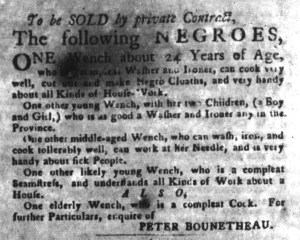
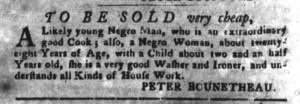
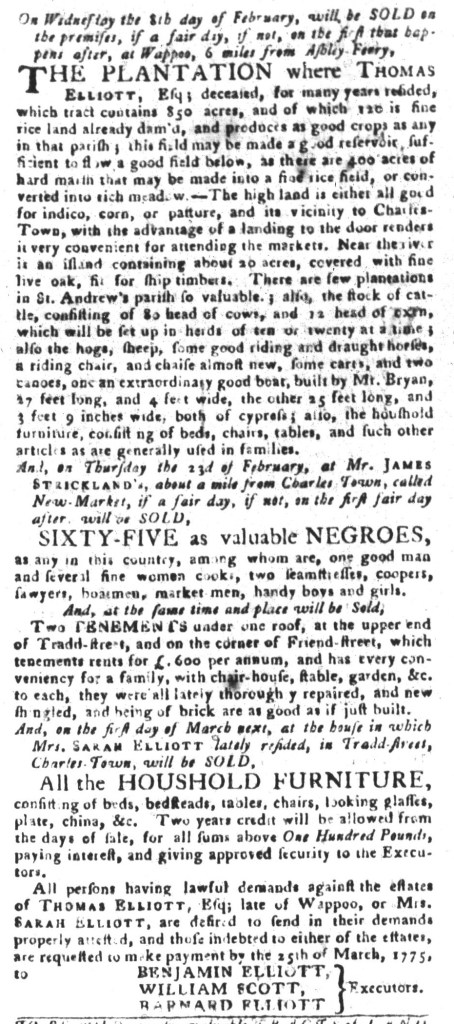
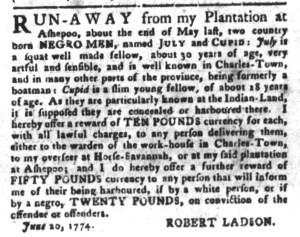
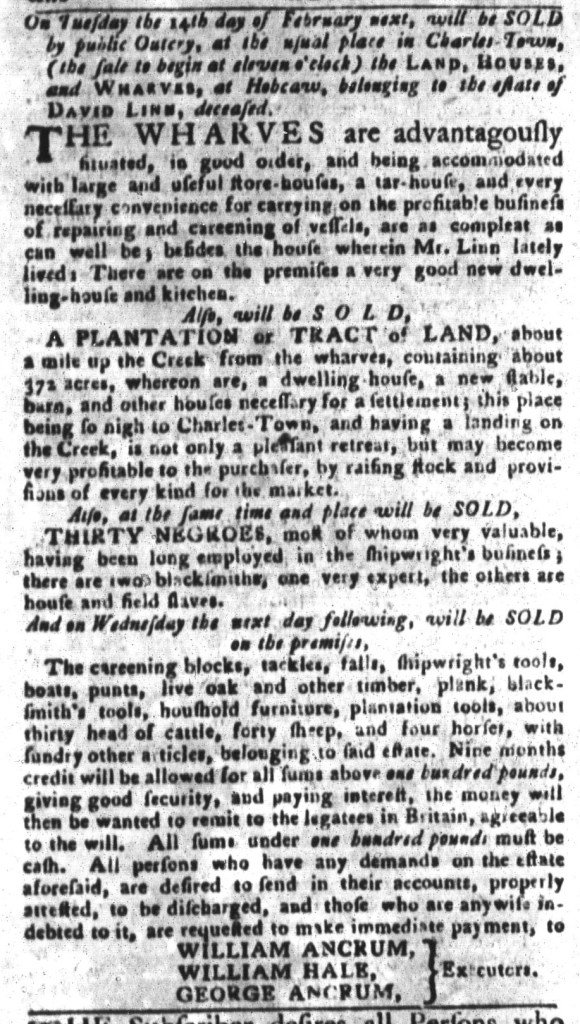
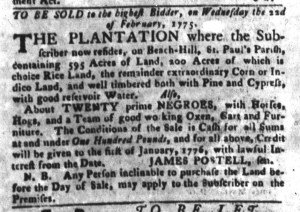
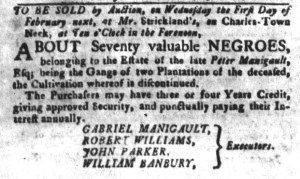
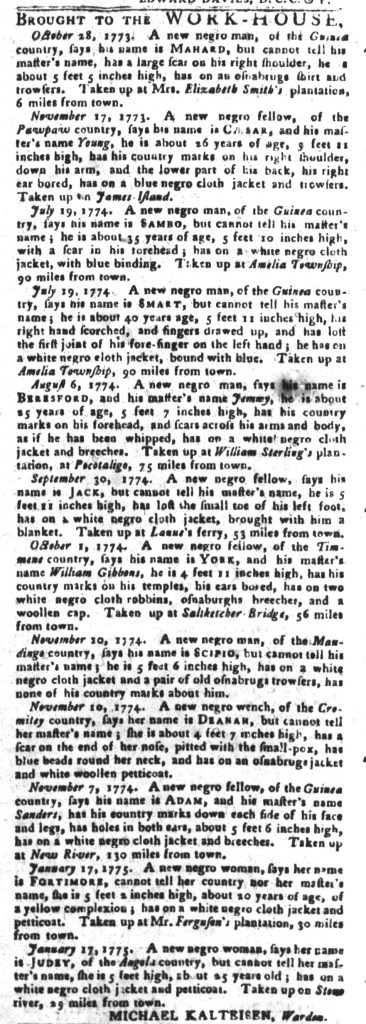
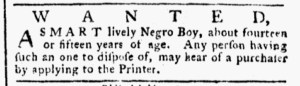
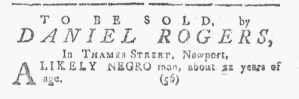
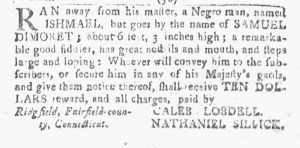
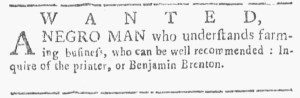
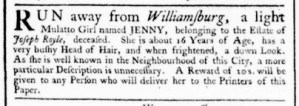
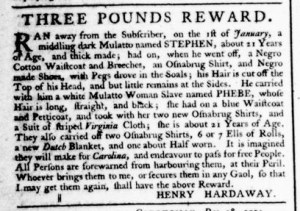
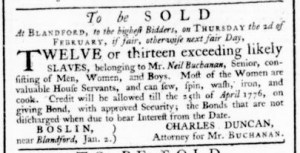
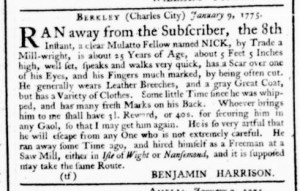
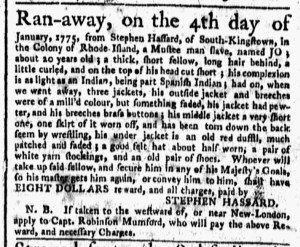
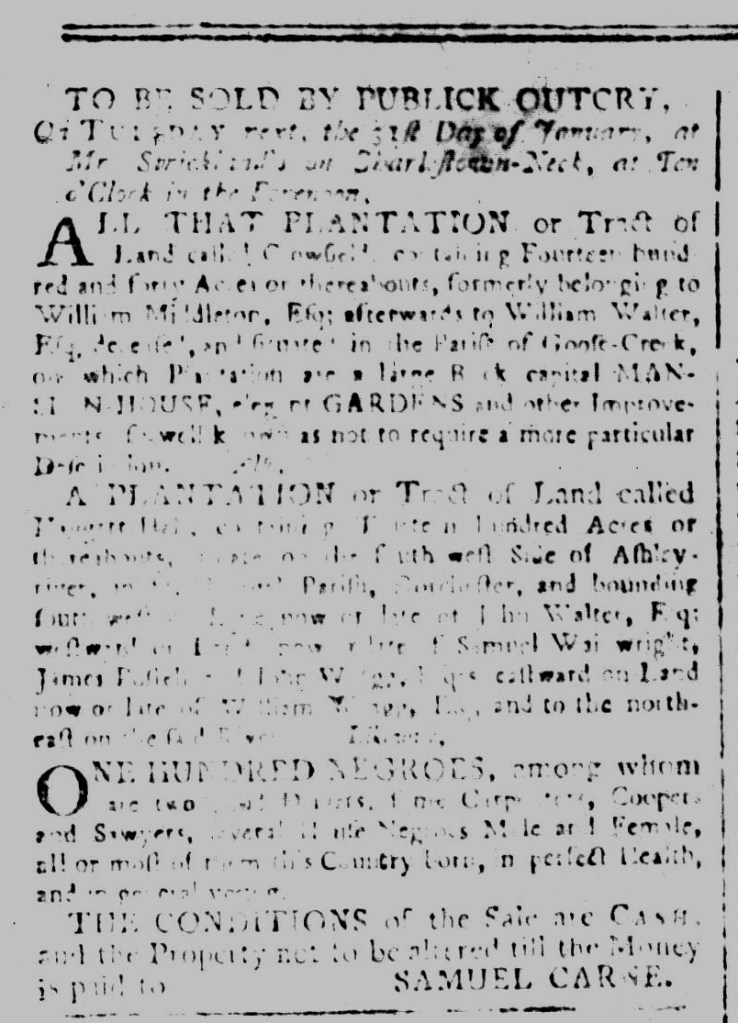
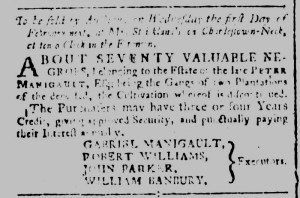
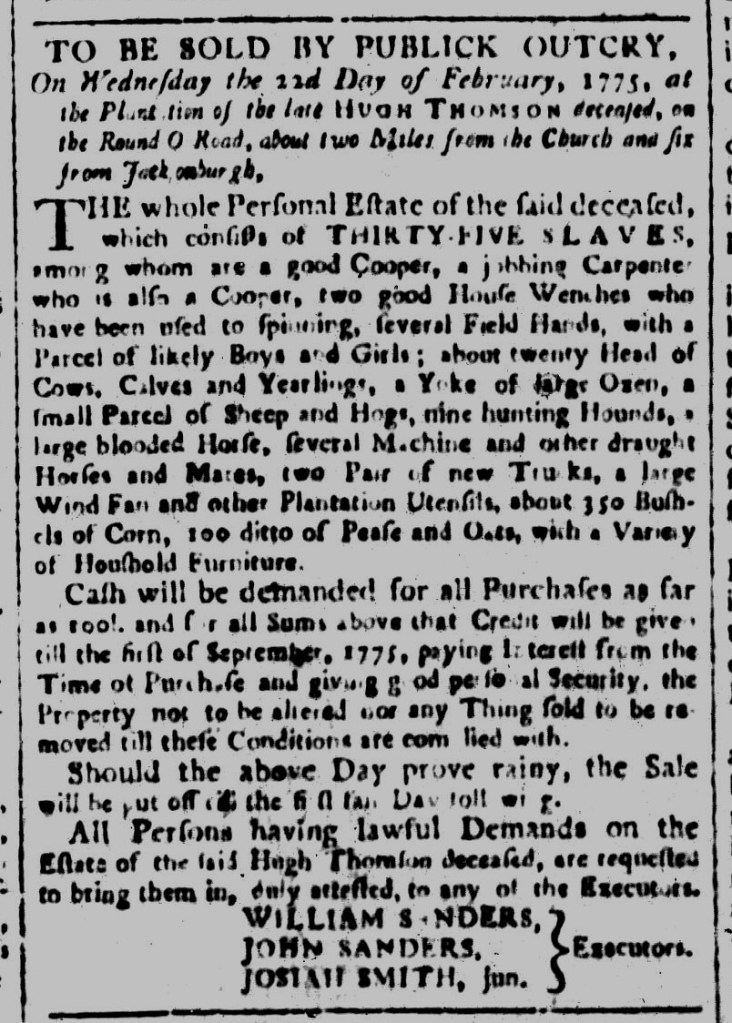
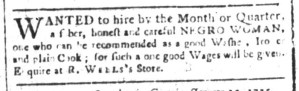
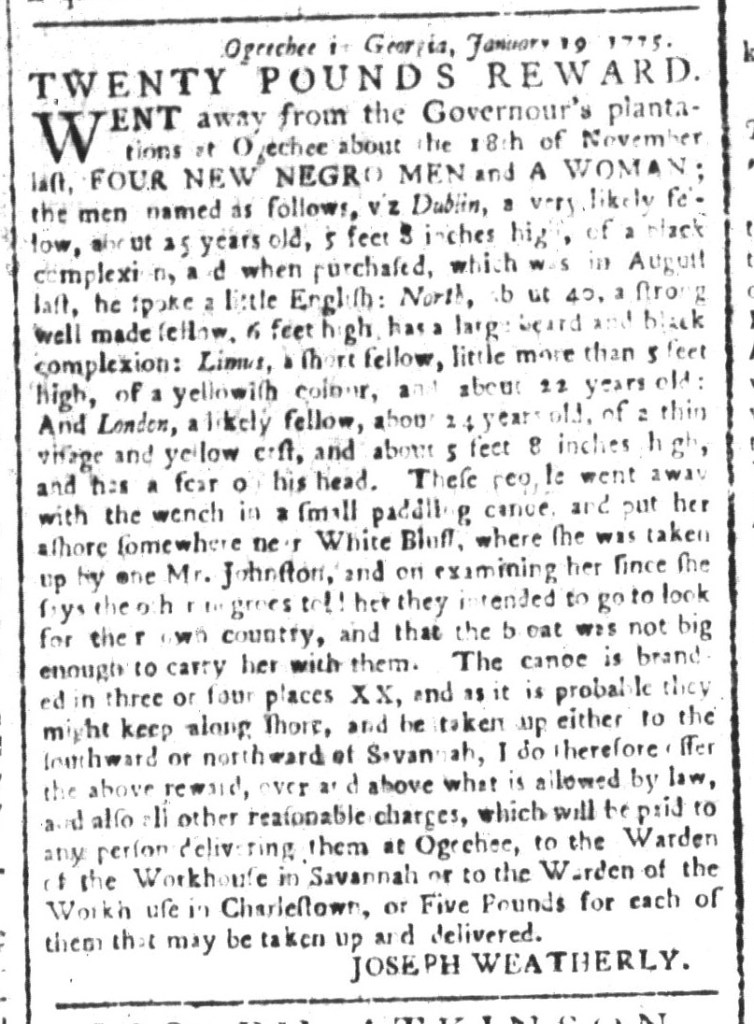
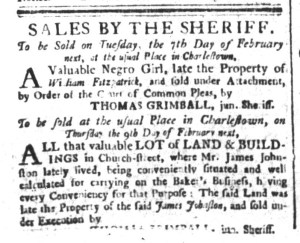
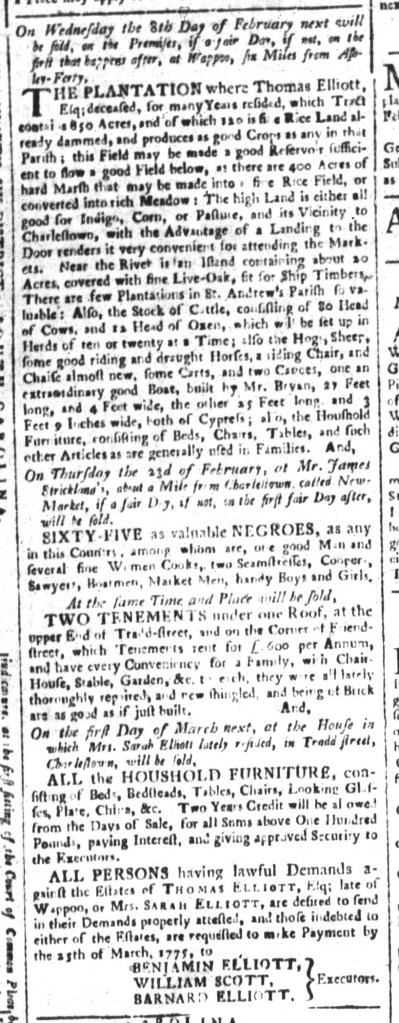
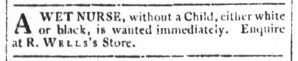
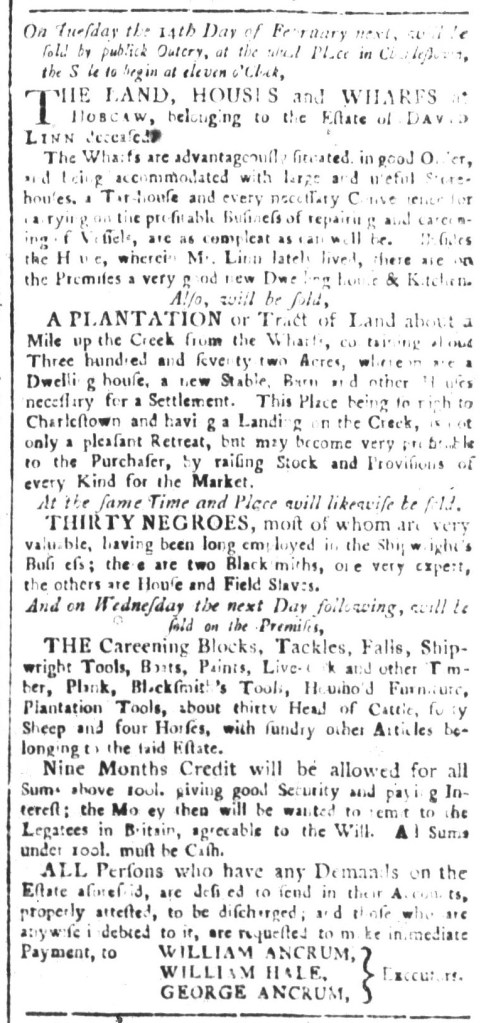
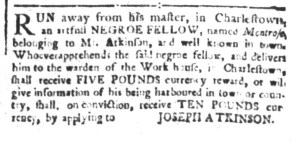
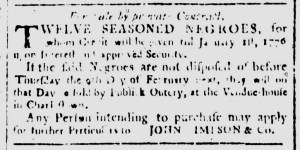
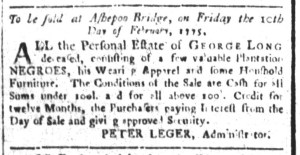
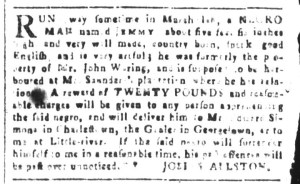
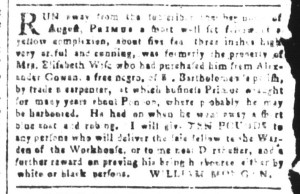
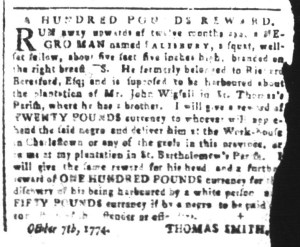
The Slavery Adverts 250 Project chronicles the role of newspaper advertising in perpetuating slavery in the era of the American Revolution. The project seeks to reveal the ubiquity of slavery in eighteenth-century life from New England to Georgia by republishing advertisements about enslaved people – for sale as individuals or in groups, wanted to purchase or for hire for short periods, runaways who liberated themselves, and those who were subsequently captured and confined in jails and workhouses – in daily digests on this site as well as in real time via the @SlaveAdverts250 Twitter feed, utilizing twenty-first-century media to stand in for the print media of the eighteenth century.
The project aims to provide modern audiences with a sense of just how often colonizers encountered these advertisements in their daily lives. Enslaved men, women, and children appeared in print somewhere in the colonies almost every single day. Those advertisements served as a constant backdrop for social, cultural, economic, and political life in colonial and revolutionary America. Colonizers who did not purport to own enslaved people were still confronted with slavery as well as invited to maintain the system by purchasing enslaved men, women, and children or assisting in the capture of so-called “runaways” who sought to free themselves from bondage. The frequency of these newspaper advertisements suggests just how embedded slavery was in colonial and revolutionary American culture in everyday interactions beyond the printed page.
These advertisements also testify to the experiences of enslaved men, women, and children, though readers must consider that those experiences have been remediated through descriptions offered by enslavers rather than enslaved people themselves. Often unnamed in the advertisements, enslaved men, women, and children were not invisible or unimportant in early America.
These advertisements appeared in colonial American newspapers 250 years ago today.
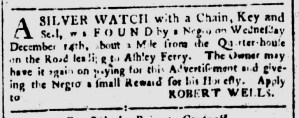
South-Carolina Gazette and Country Journal (January 31, 1775).
**********
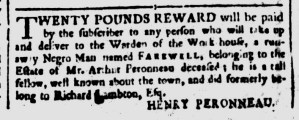
South-Carolina Gazette and Country Journal (January 31, 1775).
**********
South-Carolina Gazette and Country Journal (January 31, 1775).
**********
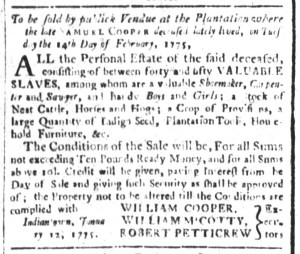
South-Carolina Gazette and Country Journal (January 31, 1775).
**********
South-Carolina Gazette and Country Journal (January 31, 1775).
**********
South-Carolina Gazette and Country Journal (January 31, 1775).
**********
South-Carolina Gazette and Country Journal (January 31, 1775).
**********
South-Carolina Gazette and Country Journal (January 31, 1775).
**********
South-Carolina Gazette and Country Journal (January 31, 1775).
**********
South-Carolina Gazette and Country Journal (January 31, 1775).
**********
South-Carolina Gazette and Country Journal (January 31, 1775).
**********
South-Carolina Gazette and Country Journal (January 31, 1775).
**********
South-Carolina Gazette and Country Journal (January 31, 1775).
**********
South-Carolina Gazette and Country Journal (January 31, 1775).
**********
South-Carolina Gazette and Country Journal (January 31, 1775).
**********
South-Carolina Gazette and Country Journal (January 31, 1775).
**********
Supplement to the South-Carolina Gazette and Country Journal (January 31, 1775).
**********
Supplement to the South-Carolina Gazette and Country Journal (January 31, 1775).
**********
Supplement to the South-Carolina Gazette and Country Journal (January 31, 1775).
**********
Supplement to the South-Carolina Gazette and Country Journal (January 31, 1775).
**********
Supplement to the South-Carolina Gazette and Country Journal (January 31, 1775).
**********
Supplement to the South-Carolina Gazette and Country Journal (January 31, 1775).
What was advertised in a colonial American newspaper 250 years ago today?
Massachusetts Gazette and Boston Post-Boy (January 30, 1775).
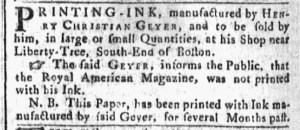
“The Royal American Magazine, was not printed with his Ink.”
The final mention of the Royal American Magazine in newspaper advertisements published in January 1775 may not have been the kind of coverage that Joseph Greenleaf, the printer, desired. Henry Christian Geyer once again inserted his notice for printing ink that he made and sold “at his Shop near Liberty-Tree” in Boston in the January 30 edition of the Massachusetts Gazette and Boston Post-Boy. In it, he noted to the public that “the Royal American Magazine, was not printed with his Ink.”
Beyond that squabble, Greenleaf did advertise the Royal American Magazine on eight occasions in three of the five newspapers printed in Boston that January. On January 5, he ran notices in both the Massachusetts Gazette and Boston Weekly News-Letter and the Massachusetts Spy. In the former, he announced that he “JUST PUBLISHED … NUMBER XII. of The Royal American Magazine … For DECEMBER, 1774.” To entice curiosity, he noted that issue was “Embellished with elegant Engravings.” He also stated that he continued to accept subscriptions at his printing office. That advertisement ran in three consecutive issues. As was his custom, he ran a shorter advertisement in the Massachusetts Spy. Extending only three lines, it advised, “This day was published, by J. GREENLEAF, THE Royal American Magazine, or Universal Repository, No. XII. for DECEMBER, 1774.” That advertisement in the Massachusetts Spy ran only twice. Another version appeared in the January 16 edition of the Boston Evening-Post, much closer in format to the one in the Massachusetts Gazette and Boston Weekly News-Letter except but without the call for new subscriptions.
That Greenleaf disseminated the December edition of the magazine in early January was a feat. In the eighteenth century, monthly magazines came out at the end of the month that bore their date or early in the next month, unlike modern magazines released in advance of the dates on their covers. When Greenleaf acquired the Royal American Magazine from Isaiah Thomas in August 1774, publication had fallen behind by two months because of the “Distresses of the Town of Boston, by the shutting up of our Port.” Over the next several months, Greenleaf steadily caught up on the overdue issues, delivering the December issue to subscribers right on time at the beginning of January.
On January 23, Greenleaf inserted a new advertisement in the Boston Evening-Post, this time alerting readers that he published “A SUPPLEMENT to The Royal American Magazine … With the Title-Page and Index to Vol. I. for 1774.” That supplement consisted of a two-page address to the subscribers, a seven-page index, and the next twenty-four pages of Thomas Hutchinson’s History of the Province of Massachusetts-Bay, a monthly feature and premium for subscribers. In the address, Greenleaf explained that since the magazine had been “suspended near two months by the original undertaker, I have been obliged to publish one oftner than once in three weeks.” Furthermore, he considered it “necessary to apologize for the poor appearance of the work the last six months.” He did not have type “so good as I could wish” and could not acquire more because of the “non-importation agreement, which it was MY DUTY to comply with.” Fortunately, a friend assisted him in obtaining “almost new” type for continuing to publish the magazine. He also acknowledged that the ink “has been poor, but as it was of AMERICAN MANUFACTURE my customers were not only willing but desirous I should use it.” When Geyer published advertisements that mentioned Greenleaf did not use his ink in printing the Royal American Magazine, it may have been just as much an attempt to distance his product from the “poor” appearance of the magazine as it was an effort to shame Greenleaf into purchasing from him in the future. The index concluded with “DIRECTIONS to the BOOK-BINDER for placing the PLATES, &c. in the ROYAL AMERICAN MAGAZINE, for 1774.” Bookbinders usually incorporated the copperplate engravings that accompanied eighteenth-century magazines yet removed the advertising wrappers that enclosed them.
Curiously, when an advertisement about the supplement ran in the January 26 edition of the Massachusetts Gazette and Boston Weekly News-Letter, it looked identical to the one in the Boston Evening-Post. If that was indeed the case, it was not the first time that those printing offices seemed to share type that had already been set, a matter for further investigation.
The Slavery Adverts 250 Project chronicles the role of newspaper advertising in perpetuating slavery in the era of the American Revolution. The project seeks to reveal the ubiquity of slavery in eighteenth-century life from New England to Georgia by republishing advertisements about enslaved people – for sale as individuals or in groups, wanted to purchase or for hire for short periods, runaways who liberated themselves, and those who were subsequently captured and confined in jails and workhouses – in daily digests on this site as well as in real time via the @SlaveAdverts250 Twitter feed, utilizing twenty-first-century media to stand in for the print media of the eighteenth century.
The project aims to provide modern audiences with a sense of just how often colonizers encountered these advertisements in their daily lives. Enslaved men, women, and children appeared in print somewhere in the colonies almost every single day. Those advertisements served as a constant backdrop for social, cultural, economic, and political life in colonial and revolutionary America. Colonizers who did not purport to own enslaved people were still confronted with slavery as well as invited to maintain the system by purchasing enslaved men, women, and children or assisting in the capture of so-called “runaways” who sought to free themselves from bondage. The frequency of these newspaper advertisements suggests just how embedded slavery was in colonial and revolutionary American culture in everyday interactions beyond the printed page.
These advertisements also testify to the experiences of enslaved men, women, and children, though readers must consider that those experiences have been remediated through descriptions offered by enslavers rather than enslaved people themselves. Often unnamed in the advertisements, enslaved men, women, and children were not invisible or unimportant in early America.
These advertisements appeared in colonial American newspapers 250 years ago today.
Connecticut Courant (January 30, 1775).
**********
Dunlap’s Pennsylvania Packet (January 30, 1775).
**********
Dunlap’s Pennsylvania Packet (January 30, 1775).
**********
Dunlap’s Pennsylvania Packet (January 30, 1775).
**********
Dunlap’s Pennsylvania Packet (January 30, 1775).
**********
Dunlap’s Pennsylvania Packet (January 30, 1775).
**********
Newport Mercury (January 30, 1775).
**********
Newport Mercury (January 30, 1775).
**********
Newport Mercury (January 30, 1775).
**********
Newport Mercury (January 30, 1775).
**********
New-York Gazette and Weekly Mercury (January 30, 1775).
**********
New-York Gazette and Weekly Mercury (January 30, 1775).
**********
South-Carolina Gazette (January 30, 1775).
**********
South-Carolina Gazette (January 30, 1775).
**********
South-Carolina Gazette (January 30, 1775).
**********
South-Carolina Gazette (January 30, 1775).
**********
South-Carolina Gazette (January 30, 1775).
**********
South-Carolina Gazette (January 30, 1775).
**********
South-Carolina Gazette (January 30, 1775).
**********
South-Carolina Gazette (January 30, 1775).
**********
South-Carolina Gazette (January 30, 1775).
**********
South-Carolina Gazette (January 30, 1775).
**********
Supplement to the South-Carolina Gazette (January 30, 1775).
**********
Supplement to the South-Carolina Gazette (January 30, 1775).
**********
Supplement to the South-Carolina Gazette (January 30, 1775).
**********
Supplement to the South-Carolina Gazette (January 30, 1775).
**********
Supplement to the South-Carolina Gazette (January 30, 1775).
**********
Supplement to the South-Carolina Gazette (January 30, 1775).
**********
Supplement to the South-Carolina Gazette (January 30, 1775).
**********
Supplement to the South-Carolina Gazette (January 30, 1775).
**********
Supplement to the South-Carolina Gazette (January 30, 1775).
What was advertised in a colonial American newspaper 250 years ago this week?
Massachusetts Spy (January 26, 1775).
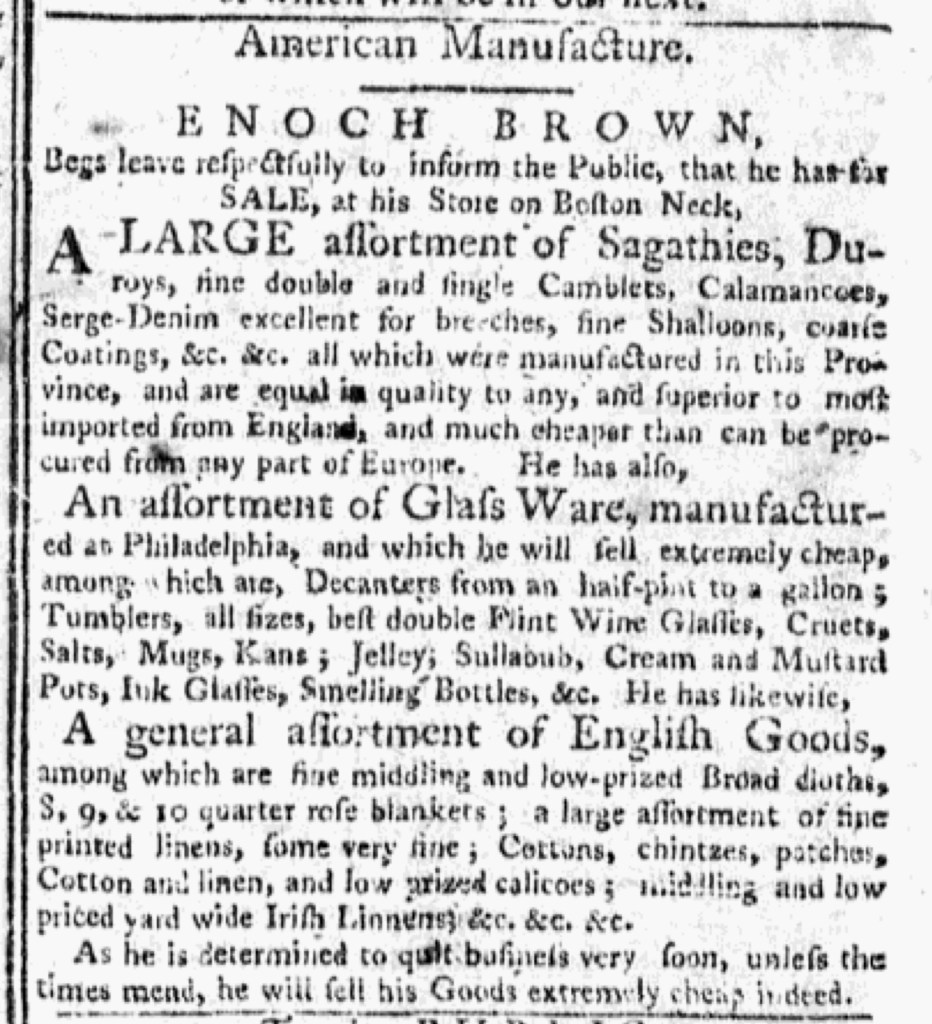
“American Manufacture.”
An advertisement in the January 26, 1775, edition of the Massachusetts Spy informed readers of “SUNDRY Goods, Wares and Merchandize Imported in the Brigantine Venus … from London” that would be “SOLD agreeable to The American Congress Association.” That nonimportation agreement included provisions for selling goods imported between December 1, 1774, and February 1, 1775, yet it also called for encouraging “domestic manufactures” as alternatives to items acquired from Britain.
Enoch Brown emphasized such wares in his own advertisement in that same issue of the Massachusetts Spy. The headline proclaimed, “American Manufacture.” Brown reported that he stocked several kinds of textiles, a “LARGE assortment of Sagathies, Duroys, … Camblets, Calamancoes, Serge-Denim, [and] Shalloons … all which were manufactured in this Province.” Like many other retailers who encouraged consumers to “Buy American” during the imperial crisis, Brown emphasized that his customers would not have to make sacrifices when it came to price or quality for the sake of abiding by their political principles. These textiles, he insisted, “are equal in quality to any, and superior to most imported from England.” In addition, customers could purchase them “much cheaper than can be procured from any part of Europe.”
Yet that was not the extent of Brown’s wares produced in the colonies. He also stocked an “assortment of Glass Ware, manufactured at Philadelphia.” Perhaps he stocked some of the “AMERICAN GLASS” advertised by John Elliott and Company in the Pennsylvania Journal just as the Continental Association went into effect at the beginning of December 1774. Brown listed a variety of items, including decanters, wine glasses, and mustard pots, underscoring that “he will sell extremely cheap.”
Only after detailing products made in the colonies did Brown also mention a “general assortment of English Goods,” naming several textiles, such as “fine printed linens,” not included among those “manufactured in this Province.” He likely attempted to liquidate inventory that had been on his shelves before the nonimportation agreement commenced, intending to “quite business very soon, unless the times mend.” To that end, he vowed to “sell his Goods extremely cheap indeed.” In the process, he gave priority to “American Manufacture” in his advertisement, directing readers to options that would allow them to be responsible consumers who did their part in support of the Continental Association and the American cause.
Though Benjamin Franklin is often considered the patron saint of American advertising in the popular press, I believe that his efforts pale in comparison to the contributions made by Mathew Carey (1760-1839) in the final decades of the eighteenth century. Franklin is rightly credited with experimenting with the appearance of newspaper advertising, mixing font styles and sizes in the advertisements that helped to make him a prosperous printer, but Mathew Carey introduced and popularized an even broader assortment of advertising innovations, ranging from inventive appeals that targeted potential consumers to a variety of new media to networks for effectively distributing advertising materials. In the process, his efforts played an important role in the development of American capitalism by enlarging markets for the materials sold by printers, booksellers, and publishers as well as a host of other goods marketed by merchants, shopkeepers, and artisans who eventually adopted many of Carey’s innovative advertising methods. Mathew Carey will probably never displace Benjamin Franklin as the founder of American advertising in the popular imagination, but scholars of early American history and culture should recognize his role as the most important leader in eighteenth-century advertising among the many other activities and accomplishments of his long career in business and public life.
Mathew Carey (January 28, 1760 – September 16, 1839). Portrait by John Neagle, 1825. Library Company of Philadelphia.
Carey’s efforts as an advertiser were enmeshed within transatlantic networks of print and commerce. Though he did not invent the advertising wrapper printed on blue paper that accompanied magazines in the eighteenth century, he effectively utilized this medium to an extent not previously seen in America, Ireland, or the English provinces outside of London. The wrappers distributed with his American Museum (1787-1792) comprised the most extensive collection of advertising associated with any magazine published in North America in the eighteenth century, both in terms of the numbers of advertisements and the diversity of occupations represented in those advertisements. In Carey’s hands, the American Museum became a vehicle for distributing advertising media: inserts that included trade cards, subscription notices, testimonials, and book catalogues in addition to the wrappers themselves.
Located at the hub of a network of printers and booksellers, Carey advocated the use of a variety of advertising materials, some for consumption by the general public and others for use exclusively within the book trade. Subscription notices and book catalogues, for instance, could stimulate demand among potential customers, but exchange catalogues were intended for printers and booksellers to manage their inventory and enlarge their markets by trading surplus copies of books, pamphlets, and other printed goods. Working with members of this network also facilitated placing advertisements for new publications in the most popular newspapers published in distant towns and cities.
Carey also participated in the development of advertising appeals designed to stimulate demand among consumers in eighteenth-century America. He targeted specific readers by stressing the refinement associated with some of his publications, while simultaneously speaking to general audiences by emphasizing the patriotism and virtue associated with purchasing either books about American history, especially the events of the Revolution and the ratification of the Constitution, or books published in America. In his advertising, Carey invoked a patriotic politics of consumption that suggested that the success of the republican experiment depended not only on virtuous activity in the realm of politics but also on the decisions consumers made in the marketplace.
For my money, Carey is indeed the father of American advertising. Happy 265th birthday, Mathew Carey!
What was advertised in a colonial American newspaper 250 years ago today?
Pennsylvania Ledger (January 28, 1775).
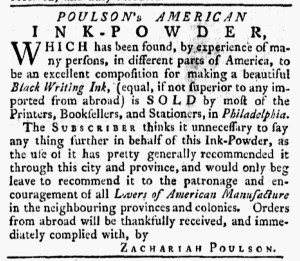
“POULSON’s AMERICAN INK-POWDER.”
Just four days after Benjamin Towne launched the Pennsylvania Evening Post, James Humphreys, Jr., commenced publication of the Pennsylvania Ledger on January 28, 1775. In less than a week, the number of English-language newspapers printed in Philadelphia increased from three to five, rivaling the number that came off the presses in Boston. No other city in the colonies had as many newspapers. Humphreys incorporated the colophon into the masthead, advising that he ran his printing office “in Front-street, at the Corner of Black-horse Alley:– Where Essays, Articles of News, Advertisements, &c. are gratefully received and impartially inserted.”
Unlike the first issue of the Pennsylvania Evening Post, the inaugural edition of the Pennsylvania Ledger carried advertisements. Humphreys placed some of them, one hawking “POLITICAL PAMPHLETS … on Both Sides of the Question,” another promoting an assortment of books he sold, and a final one seeking “an APPRENTICE to the Printing Business.” Nine other advertisers placed notices, all of them for consumer goods and services. They took a chance that the new newspaper had sufficient circulation to merit their investment in advertising in its pages.
Among those advertisers, Zachariah Poulson marketed “POULSON’s AMERICAN INK-POWDER.” He asserted that “most of the Printers, Bookseller, and Stationers, in Philadelphia” stocked that product. Customers just needed to request it. With the deteriorating political situation in mind, especially the boycott of imported goods outlined in the Continental Association, Poulson called on “all Lovers of American Manufacture” in Pennsylvania and “in the neighbouring provinces and colonies” to choose his ink powder over any other.
Detail from Edward Pole’s Advertisement in the Pennsylvania Ledger (January 28, 1775).
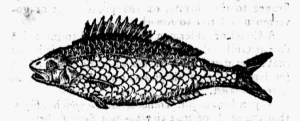
Edward Pole inserted the lengthiest advertisement (except for Humphreys’s notice cataloging the books he sold). It filled half a column, the first portion devoted to the merchandise available “at his GROCERY STORE, in Market-street” and the rest to “FISHING TACKLE of all sorts,” “FISHING RODS of various sorts and sizes,” and other fishing equipment. In advertisements in several newspapers published in Philadelphia (and, later, with ornate trade cards that he distributed), Pole regularly marketed himself as a sporting goods retailer. For the first issue of the Pennsylvania Ledger, he adorned his advertisement with a woodcut depicting a fish that previously appeared in his notices in Dunlap’s Pennsylvania Packetin May and June 1774.
Humphreys provided residents of Philadelphia and other towns greater access to news and editorials with the Pennsylvania Ledger, but that was not all. The publication of yet another newspaper in Philadelphia increased the circulation of advertising in the city and region, disseminating messages to consumers far and wide. Not long after Humphreys published that first issue, advertisers took to the pages of the Pennsylvania Ledger to publish notices for a variety of purposes, supplementing the information the editor selected for inclusion.
The Slavery Adverts 250 Project chronicles the role of newspaper advertising in perpetuating slavery in the era of the American Revolution. The project seeks to reveal the ubiquity of slavery in eighteenth-century life from New England to Georgia by republishing advertisements about enslaved people – for sale as individuals or in groups, wanted to purchase or for hire for short periods, runaways who liberated themselves, and those who were subsequently captured and confined in jails and workhouses – in daily digests on this site as well as in real time via the @SlaveAdverts250 Twitter feed, utilizing twenty-first-century media to stand in for the print media of the eighteenth century.
The project aims to provide modern audiences with a sense of just how often colonizers encountered these advertisements in their daily lives. Enslaved men, women, and children appeared in print somewhere in the colonies almost every single day. Those advertisements served as a constant backdrop for social, cultural, economic, and political life in colonial and revolutionary America. Colonizers who did not purport to own enslaved people were still confronted with slavery as well as invited to maintain the system by purchasing enslaved men, women, and children or assisting in the capture of so-called “runaways” who sought to free themselves from bondage. The frequency of these newspaper advertisements suggests just how embedded slavery was in colonial and revolutionary American culture in everyday interactions beyond the printed page.
These advertisements also testify to the experiences of enslaved men, women, and children, though readers must consider that those experiences have been remediated through descriptions offered by enslavers rather than enslaved people themselves. Often unnamed in the advertisements, enslaved men, women, and children were not invisible or unimportant in early America.
These advertisements appeared in colonial American newspapers 250 years ago today.
What was advertised in a colonial American newspaper 250 years ago today?
South-Carolina and American General Gazette (January 27, 1775).
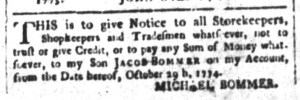
“Not to trust or give Credit … to my Son JACOB BOMMER on my Account.”
As the imperial crisis intensified and the colonies and Parliament were increasingly at odds in 1774, a rupture occurred in the relationship that Michael Bommer had with his son, Jacob. It may or may not have been the result of politics and disagreements over the Coercive Acts and how the colonies should respond. Just as likely, it had nothing to with politics. After all, colonizers continued to lead their daily lives even as momentous events unfolded around them. Fathers and sons quarreled about a variety of personal and financial issues that had little or nothing to do with politics.
Whatever the cause of their discord, it was significant enough to cause the father to take to the pages of the South-Carolina and American General Gazette with a notice “to all Storekeepers, Shopkeepers, and Tradesmen whatsoever, not to trust or give Credit, or to pay any Sum of Money whatsoever, to my Son JACOB BOMMER, on my Account, from the Date hereof, October 29th, 1774.” Three months later, the Bommers had not reconciled. Instead, the elder Bommer felt compelled to insert his advertisement in the January 27, 1775, edition of the South-Carolina and American General Gazette.
When he did so, he followed a format familiar to readers because it was so very regularly deployed by husbands against their wives in newspapers throughout the colonies. On the same day that Bommer’s notice appeared, for instance, Richard Mills informed readers of the New-Hampshire Gazette that he “hereby forbids any person crediting his Wife ANNA, on his Account, as he will not pay any Debts by her contracted.” Such notices offered a means for husbands to attempt to assert their authority in public after their wives had disdained that authority in private. On rare occasions, men adapted those sorts of newspaper notices when their relationships with other family members deteriorated. When Bommer did so, he protected his credit and finances, but at the expense of hinting at private affairs in the public prints. Such a spectacle had the potential to fuel gossip and draw more attention to the strife he and his son experienced.
The Slavery Adverts 250 Project chronicles the role of newspaper advertising in perpetuating slavery in the era of the American Revolution. The project seeks to reveal the ubiquity of slavery in eighteenth-century life from New England to Georgia by republishing advertisements about enslaved people – for sale as individuals or in groups, wanted to purchase or for hire for short periods, runaways who liberated themselves, and those who were subsequently captured and confined in jails and workhouses – in daily digests on this site as well as in real time via the @SlaveAdverts250 Twitter feed, utilizing twenty-first-century media to stand in for the print media of the eighteenth century.
The project aims to provide modern audiences with a sense of just how often colonizers encountered these advertisements in their daily lives. Enslaved men, women, and children appeared in print somewhere in the colonies almost every single day. Those advertisements served as a constant backdrop for social, cultural, economic, and political life in colonial and revolutionary America. Colonizers who did not purport to own enslaved people were still confronted with slavery as well as invited to maintain the system by purchasing enslaved men, women, and children or assisting in the capture of so-called “runaways” who sought to free themselves from bondage. The frequency of these newspaper advertisements suggests just how embedded slavery was in colonial and revolutionary American culture in everyday interactions beyond the printed page.
These advertisements also testify to the experiences of enslaved men, women, and children, though readers must consider that those experiences have been remediated through descriptions offered by enslavers rather than enslaved people themselves. Often unnamed in the advertisements, enslaved men, women, and children were not invisible or unimportant in early America.
These advertisements appeared in colonial American newspapers 250 years ago today.
Connecticut Gazette (January 27, 1775).
**********
South-Carolina and American General Gazette (January 27, 1775).
**********
South-Carolina and American General Gazette (January 27, 1775).
**********
South-Carolina and American General Gazette (January 27, 1775).
**********
South-Carolina and American General Gazette (January 27, 1775).
**********
South-Carolina and American General Gazette (January 27, 1775).
**********
South-Carolina and American General Gazette (January 27, 1775).
**********
South-Carolina and American General Gazette (January 27, 1775).
**********
South-Carolina and American General Gazette (January 27, 1775).
**********
South-Carolina and American General Gazette (January 27, 1775).
**********
South-Carolina and American General Gazette (January 27, 1775).
**********
South-Carolina and American General Gazette (January 27, 1775).
**********
South-Carolina and American General Gazette (January 27, 1775).
**********
South-Carolina and American General Gazette (January 27, 1775).
**********
South-Carolina and American General Gazette (January 27, 1775).
**********
South-Carolina and American General Gazette (January 27, 1775).
**********
South-Carolina and American General Gazette (January 27, 1775).
**********
South-Carolina and American General Gazette (January 27, 1775).
**********
South-Carolina and American General Gazette (January 27, 1775).
**********
South-Carolina and American General Gazette (January 27, 1775).
**********
South-Carolina and American General Gazette (January 27, 1775).
**********
South-Carolina and American General Gazette (January 27, 1775).
**********
South-Carolina and American General Gazette (January 27, 1775).
**********
South-Carolina and American General Gazette (January 27, 1775).
**********
South-Carolina and American General Gazette (January 27, 1775).
**********
South-Carolina and American General Gazette (January 27, 1775).
**********
South-Carolina and American General Gazette (January 27, 1775).
**********
South-Carolina and American General Gazette (January 27, 1775).
**********
South-Carolina and American General Gazette (January 27, 1775).
**********
South-Carolina and American General Gazette (January 27, 1775).
**********
South-Carolina and American General Gazette (January 27, 1775).
**********
South-Carolina and American General Gazette (January 27, 1775).
**********
South-Carolina and American General Gazette (January 27, 1775).
**********
South-Carolina and American General Gazette (January 27, 1775).
**********
South-Carolina and American General Gazette (January 27, 1775).
**********
South-Carolina and American General Gazette (January 27, 1775).