June 25

What was advertised in a revolutionary American newspaper 250 years ago this week?
Rivington’s New-York Gazetteer (June 22, 1775).

“The doctors family medicines, which are well known in most parts of the continent.”

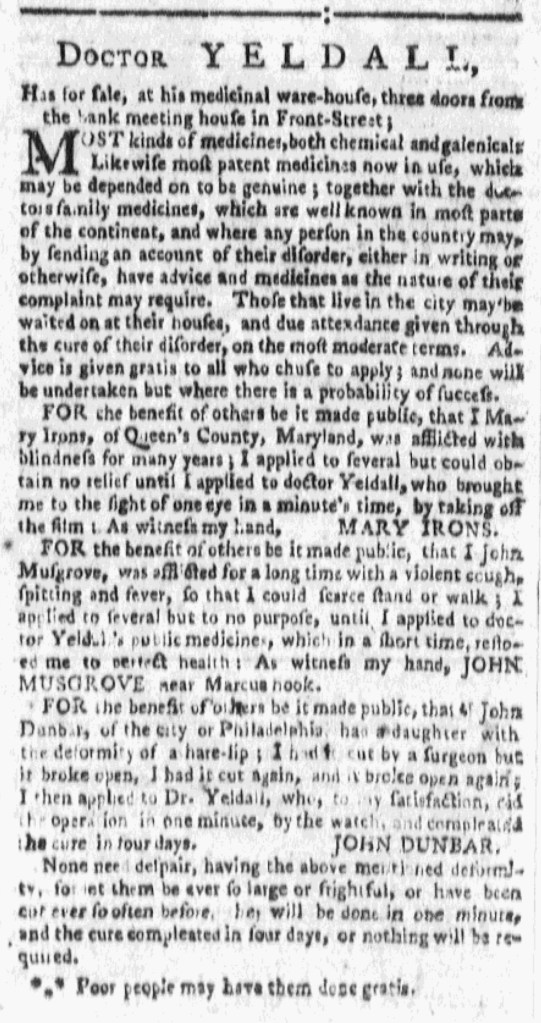
Doctor Yeldall ran his advertisement for remedies available “at his medicinal ware-house” on Front Street in Philadelphia in Rivington’s New-York Gazetteer at the same time that it appeared in the Pennsylvania Ledger.  He did, after all, claim that the “doctors family medicines” that he produced as an alternative to other patent medicines were “well known in most parts of the continent” and advised that “any person in the country may, be sending an account of their disorder … have advice and medicines as the nature of their complaint may require.”  Yeldall operated the eighteenth-century version of a mail order pharmacy.  Advertising in Rivington’s New-York Gazetteer: Or, the Connecticut, Hudson’s River, New-Jersey, and Quebec Weekly Advertiser placed his notice before the eyes of many more prospective patients.  In addition to selling medicines, Yeldall also performed medical procedures.  Two of the four testimonials in the original advertisement described restoring sight “by taking off the film” from a patient’s eye and repairing “the deformity of a Hare-Lip.”  New York was close enough to Philadelphia that Yeldall may have expected that some prospective patients who exhausted their options in one place would travel to Philadelphia in hopes that he would successfully treat them.

The advertisements in the two newspapers were nearly identical.  The use of capital letters and italics varied, likely the result the decisions made by compositors in the two printing offices.  That was usually the case when advertisers submitted the same copy to multiple newspapers.  The version in Rivington’s New-York Gazetteer lacked the longest of the four testimonials that ran in the Pennsylvania Ledger.  The compositor might have removed Alexander Martin’s description of how Yeldall “recovered me to my perfect health” after being “afflicted with a consumptive disorder for upwards of three years” in the interest of space.  Yeldall’s advertisement ran at the bottom of the final column on the third page of the June 22, 1775, edition of Rivington’s New-York Gazetteer, making it one of the last items inserted during the production of that issue.  The compositor, lacking space for the entire advertisement, may have simply removed one of the testimonials.  The notice still made the point that Yeldall supposedly cured several patients who “could obtain no relief” until they sought medical care from him.
June 24

What was advertised in a revolutionary American newspaper 250 years ago today?

Pennsylvania Ledger (June 24, 1775).
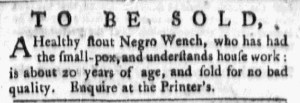
“MILITARY INSTRUCTIONS FOR OFFICERS DETACHED IN THE FIELD.”

It was a timely volume for the summer of 1775.  The June 24 edition of the Pennsylvania Ledger carried an advertisement for Military Instructions for Officers Detached in the Field: With Plans of the Manoeuvres Necessary in Carrying on the Petite Guerre.  Robert Aitken, a printer and bookseller in Philadelphia, published and sold an American edition of a book that had been successful enough in England to go to a second edition the previous year.

Aitken marketed it at a time that readers of the Pennsylvania Ledger already knew about the battles at Concord and Lexington and the siege of Boston.  They were just learning about the Battle of Bunker Hill a week earlier.  In the column to the left of the advertisement for Military Instructions, the Pennsylvania Ledger reprinted a portion of a letter that reported “our people attempting to take possession of Bunker’s Hill and Dorchester Point … were attacked by the regulars.”  The correspondent did not have all the details, but did know that “three Colonels in our service were wounded, Col. Gardner, mortally; how many are slain on either side, is uncertain.”  The letter did not mention the death of Joseph Warren, a noted Patriot and the president of the Massachusetts Provincial Congress, nor did it reveal the outcome of the battle.  “When the post came away,” the letter stated, “our people kept their ground and made a stand; how they have fared at Dorchester, we do not hear.”  Incomplete, it was the most recent update available in Philadelphia at the time the June 24 edition of the Pennsylvania Ledger went to press.

Still, it likely primed some readers to take greater interest in Military Instructions written “BY AN OFFICER.”  To help in stimulating demand, Aitken inserted an excerpt of a review that appeared in the Monthly Review, a magazine published in London.  “OF the instructions which this useful treatise contains,” the reviewer asserted, “it may, with great truth and propriety, be declared, that they are the dictates of military genius, and the evident result of extensive experience.”  That made the book required reading for colonizers serving as officers.  “Those gentlemen, for whose service they are intended,” the reviewer pronounced, “will peruse them with pleasure and advantage.”  Yet that was not the only prospective audience for Military Instructions.  The reviewer insisted that “they are illustrated by observations and facts which must interest the attention and gratify the taste of the most indifferent reader.”  With battles being fought in New England and George Washington “appointed commander in chief of all the North-American forces by the Honourable Continental CONGRESS” (according to an update that appeared just below the initial report from Bunker Hill), could any prospective reader have been “indifferent” when they saw Aitken’s advertisement?

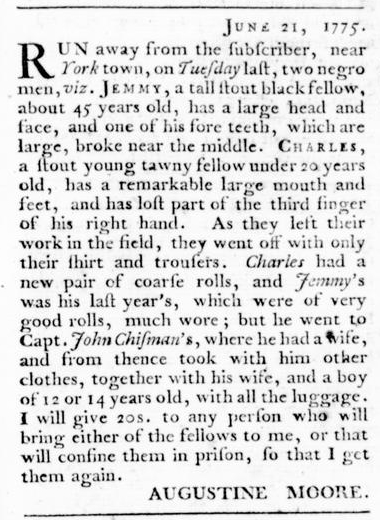
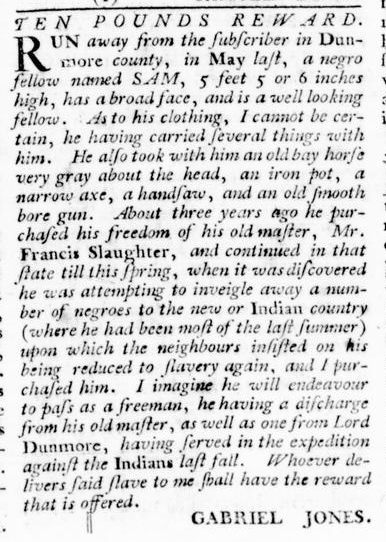
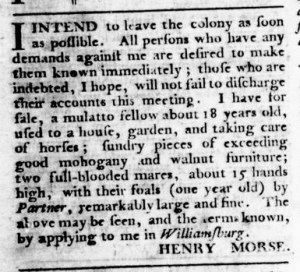
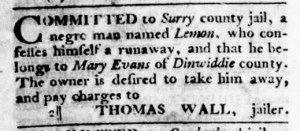
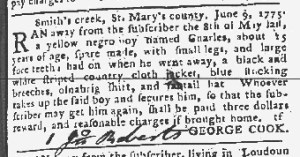
Slavery Advertisements Published June 24, 1775

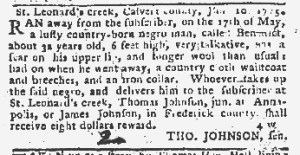
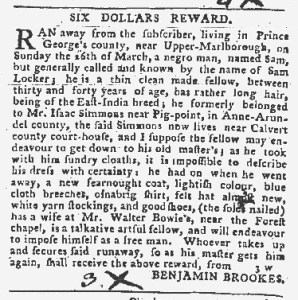
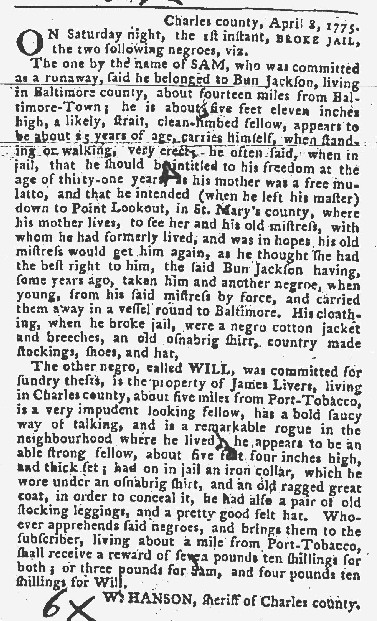
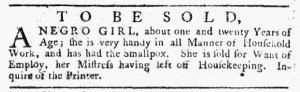
The Slavery Adverts 250 Project chronicles the role of newspaper advertising in perpetuating slavery in the era of the American Revolution. The project seeks to reveal the ubiquity of slavery in eighteenth-century life from New England to Georgia by republishing advertisements about enslaved people – for sale as individuals or in groups, wanted to purchase or for hire for short periods, runaways who liberated themselves, and those who were subsequently captured and confined in jails and workhouses – in daily digests on this site as well as in real time via the @SlaveAdverts250 Twitter feed, utilizing twenty-first-century media to stand in for the print media of the eighteenth century.

The project aims to provide modern audiences with a sense of just how often colonizers encountered these advertisements in their daily lives. Enslaved men, women, and children appeared in print somewhere in the colonies almost every single day. Those advertisements served as a constant backdrop for social, cultural, economic, and political life in colonial and revolutionary America. Colonizers who did not purport to own enslaved people were still confronted with slavery as well as invited to maintain the system by purchasing enslaved men, women, and children or assisting in the capture of so-called “runaways” who sought to free themselves from bondage. The frequency of these newspaper advertisements suggests just how embedded slavery was in colonial and revolutionary American culture in everyday interactions beyond the printed page.

These advertisements also testify to the experiences of enslaved men, women, and children, though readers must consider that those experiences have been remediated through descriptions offered by enslavers rather than enslaved people themselves. Often unnamed in the advertisements, enslaved men, women, and children were not invisible or unimportant in early America.

These advertisements appeared in colonial American newspapers 250 years ago today.

Pennsylvania Ledger (June 24, 1775).

**********

Providence Gazette (June 24, 1775).

**********

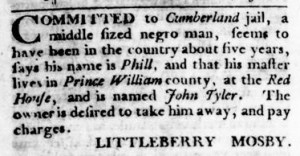
Virginia Gazette [Dixon and Hunter] (June 24, 1775).

**********

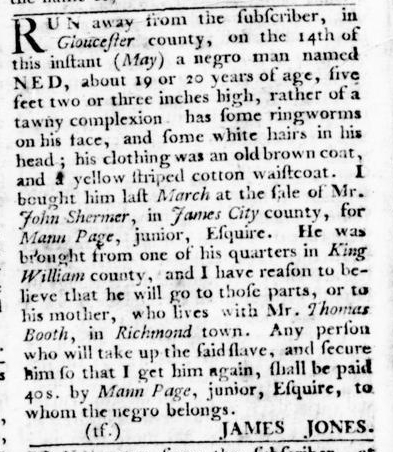
Virginia Gazette [Dixon and Hunter] (June 24, 1775).

**********

Virginia Gazette [Dixon and Hunter] (June 24, 1775).

**********

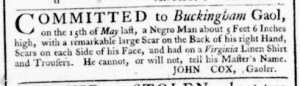
Virginia Gazette [Dixon and Hunter] (June 24, 1775).

**********

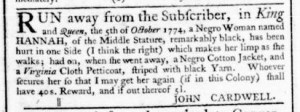
Virginia Gazette [Dixon and Hunter] (June 24, 1775).

**********

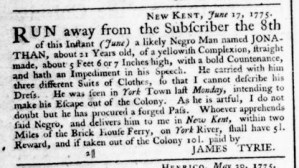
Virginia Gazette [Dixon and Hunter] (June 24, 1775).

**********

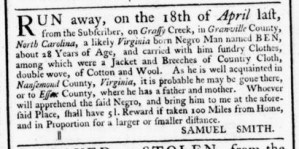
Virginia Gazette [Dixon and Hunter] (June 24, 1775).

June 23

What was advertised in a revolutionary American newspapers 250 years ago today?

Story and Humphreys’s Pennsylvania Mercury (June 23, 1775).

“Just PUBLISHED … THE IMPENETRABLE SECRET … to be SOLD by STORY and HUMPHREYS.”

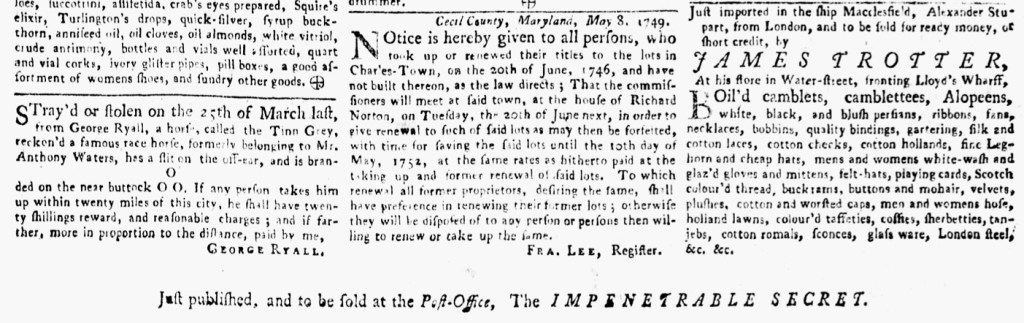
The June 23, 1775, edition of Story and Humphreys’s Pennsylvania Mercury included the first advertisement for a new edition of The Impenetrable Secret, a book or pamphlet “Just PUBLISHED and PRINTED with TYPES, PAPER, and INK, MANUFACTURED in this PROVINCE.”  The advertisement suggested that Enoch Story and Daniel Humphreys, the printers of the newspaper, also published The Impenetrable Secret, though that may not have been the case.  Printers often included the phrase “just published and sold by” in advertisements, but they expected readers to separate “just published” from “sold by.”  In other words, printers sometimes acted as booksellers who sold books and pamphlets “just published” by other printers.  Story and Humphreys could have printed The Impenetrable Secret, though Isaiah Thomas declared in his History of Printing in America (1810) that “[t]heir chief employment was a newspaper, which they published but a few months when their printing house and materials were burnt, and their partnership was in consequence dissolved.”[1]

Still, no other newspaper carried advertisements for The Impenetrable Secret, suggesting that Story and Humphreys were indeed the publishers and advertised a product from their own press in their newspaper.  They also advertised “Blank Bonds” and “Bills of Exchange” that they presumably printed.  Whether a book or pamphlet, The Impenetrable Secret may have been one of the few projects that they pursued beyond their newspaper during their brief partnership.  No copy of the work survives, making it impossible to examine the imprint.  In American Bibliography, Charles Evans lists The Impenetrable Secret and assigns it an imprint that resembles the advertisement: “Philadelphia: Printed and sold by Story and Humphreys, 1775.”  He indicates that the entry in American Bibliography originated with the advertisement.  He also notes that The Impenetrable Secret was “First printed by B. Franklin and D. Hall, in 1749.”[2]  Unfortunately, there are no extant copies of that edition either.  The entry in American Bibliography merely states, “Philadelphia: Printed by B. Franklin, and D. Hall. 1749.”[3]  That entry likely came from an advertisement that first appeared in the margin at the bottom of the third page of the May 18, 1749, edition of the Pennsylvania Gazette: “Just published, and to be sold at the Post-Office, The IMPENETRABLE SECRET.”  That advertisement ran many times over the next several months before The Impenetrable Secret eventually appeared in the January 16, 1750, issue at the end of a lengthy advertisement that described the contents of several books for sale at the printing office.  Each of those items was numbered, with the list followed by a note that “likewise may be had, The Impenetrable Secret, with the Key.”  Was it some sort of puzzle or riddle?  Franklin and Hall and, later, Story and Humphreys expected that prospective customers already knew the answer and did not give an explanation.  For now, the contents of The Impenetrable Secret remain an impenetrable secret, but perhaps a lost and forgotten copy of either Franklin and Hall’s edition or Story and Humphrey’s edition might someday be found.

Pennsylvania Gazette (May 18, 1749).

**********

[1] Isaiah Thomas, The History of Printing in America: With a Biography of Printers and an Account of Newspapers (1810; New York: Weathervane Books, 1970), 402.

[2] See entry 14126 in Charles Evans, American Bibliography: A Chronological Dictionary of All, Books, Pamphlets, and Periodical Publications Printed in the United States of America From the Genesis of Printing in 1639 Down to and Including the Year 1820 with Bibliographical and Biographical Notes.

[3] See entry 6334 in Evans, American Bibliography.

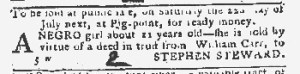
Slavery Advertisements Published June 23, 1775

The Slavery Adverts 250 Project chronicles the role of newspaper advertising in perpetuating slavery in the era of the American Revolution. The project seeks to reveal the ubiquity of slavery in eighteenth-century life from New England to Georgia by republishing advertisements about enslaved people – for sale as individuals or in groups, wanted to purchase or for hire for short periods, runaways who liberated themselves, and those who were subsequently captured and confined in jails and workhouses – in daily digests on this site as well as in real time via the @SlaveAdverts250 Twitter feed, utilizing twenty-first-century media to stand in for the print media of the eighteenth century.

The project aims to provide modern audiences with a sense of just how often colonizers encountered these advertisements in their daily lives. Enslaved men, women, and children appeared in print somewhere in the colonies almost every single day. Those advertisements served as a constant backdrop for social, cultural, economic, and political life in colonial and revolutionary America. Colonizers who did not purport to own enslaved people were still confronted with slavery as well as invited to maintain the system by purchasing enslaved men, women, and children or assisting in the capture of so-called “runaways” who sought to free themselves from bondage. The frequency of these newspaper advertisements suggests just how embedded slavery was in colonial and revolutionary American culture in everyday interactions beyond the printed page.

These advertisements also testify to the experiences of enslaved men, women, and children, though readers must consider that those experiences have been remediated through descriptions offered by enslavers rather than enslaved people themselves. Often unnamed in the advertisements, enslaved men, women, and children were not invisible or unimportant in early America.

These advertisements appeared in colonial American newspapers 250 years ago today.

South-Carolina Gazette and Country Journal Extraordinary (June 23, 1775).

**********

South-Carolina Gazette and Country Journal Extraordinary (June 23, 1775).

**********

South-Carolina Gazette and Country Journal Extraordinary (June 23, 1775).

**********

South-Carolina Gazette and Country Journal Extraordinary (June 23, 1775).

**********

Story and Humphreys’s Pennsylvania Mercury (June 23, 1775).

**********

Virginia Gazette [Purdie] (June 23, 1775).

**********

Virginia Gazette [Purdie] (June 23, 1775).

**********

Virginia Gazette [Purdie] (June 23, 1775).

**********

Virginia Gazette [Purdie] (June 23, 1775).

**********

Virginia Gazette [Purdie] (June 23, 1775).

**********

Virginia Gazette [Purdie] (June 23, 1775).

**********

Virginia Gazette [Purdie] (June 23, 1775).

**********

Virginia Gazette [Purdie] (June 23, 1775).

**********

Virginia Gazette [Purdie] (June 23, 1775).

**********

Virginia Gazette [Purdie] (June 23, 1775).

June 22

What was advertised in a revolutionary American newspaper 250 years ago today?

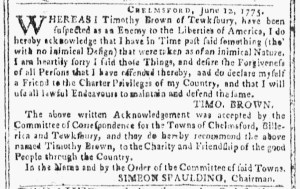
New-England Chronicle (June 22, 1775).

“I … declare myself a Friend to the Charter Privileges of my Country.”

Timothy Brown of Tewksbury, Massachusetts, wanted to return to the good graces of his community in the summer of 1775.  He had fallen out of favor because he had not always supported the American cause with as much fervor as his neighbors wished, so he realized that he needed to apologize and pledge to do better.  To that end, he not only submitted a “written Acknowledgment” to the Committee of Correspondence for the towns of Chelmsford, Billerica, and Tewksbury but also benefitted from the publication of their response in the New-England Chronicle for readers far and wide to see.

“WHEREAS I … have been suspected as an Enemy to the Liberties of America,” Brown confessed, “I do hereby acknowledge that I have in Time past said something (tho’ with no inimical Design) that were taken as of an inimical Nature.”  Like others who had signed an address to Governor Thomas Hutchinson when he departed for England, Brown simultaneously admitted what he had done and attempted to distance himself from it.  He had not intended his words, he claimed, in the way that they had been interpreted, though he understood how whatever he had said had been received.  “I am heartily sorry I said those Things,” Brown lamented, “and desire the Forgiveness of all Persons that I have offended thereby.”  Furthermore, he declared himself “a Friend to the Charter Privileges of my Country” and pledged that he would “use all lawful Endeavours to maintain and defend the same.”

Brown presented that statement in writing to the Committee of Correspondence for Chelmsford, Billerica, and Tewksbury.  In turn, the committee recommended him “to the Charity and Friendship of the good People through the Country.”  Simeon Spaulding, the chairman, published Brown’s acknowledgment of his error and the committee’s response in the New-England Chronicle “In the Name and by the Order of the Committee of said Towns.”  It appeared next to the second insertion of the advertisement that cleared Ebenezer Bradish of attempting “to do any Injury to his Country,” part of a trend of using newspaper advertisements to designate which colonizers once suspected of sympathizing with Tories now expressed support for the Patriot cause.  That the advertisement concerning Brown was inserted in the New-England Chronicle “by the Order of the Committee” suggests that Brown was not the only one to benefit from its publication.  The committee paid for an advertisement to make a public display of Brown falling in line, an example for others who had not yet done so and a testament to the unity they hoped to achieve among colonizers as the imperial crisis became a war of resistance in the spring and summer of 1775.

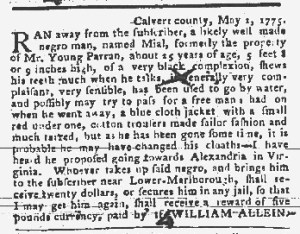
Slavery Advertisements Published June 22, 1775

The Slavery Adverts 250 Project chronicles the role of newspaper advertising in perpetuating slavery in the era of the American Revolution. The project seeks to reveal the ubiquity of slavery in eighteenth-century life from New England to Georgia by republishing advertisements about enslaved people – for sale as individuals or in groups, wanted to purchase or for hire for short periods, runaways who liberated themselves, and those who were subsequently captured and confined in jails and workhouses – in daily digests on this site as well as in real time via the @SlaveAdverts250 Twitter feed, utilizing twenty-first-century media to stand in for the print media of the eighteenth century.

The project aims to provide modern audiences with a sense of just how often colonizers encountered these advertisements in their daily lives. Enslaved men, women, and children appeared in print somewhere in the colonies almost every single day. Those advertisements served as a constant backdrop for social, cultural, economic, and political life in colonial and revolutionary America. Colonizers who did not purport to own enslaved people were still confronted with slavery as well as invited to maintain the system by purchasing enslaved men, women, and children or assisting in the capture of so-called “runaways” who sought to free themselves from bondage. The frequency of these newspaper advertisements suggests just how embedded slavery was in colonial and revolutionary American culture in everyday interactions beyond the printed page.

These advertisements also testify to the experiences of enslaved men, women, and children, though readers must consider that those experiences have been remediated through descriptions offered by enslavers rather than enslaved people themselves. Often unnamed in the advertisements, enslaved men, women, and children were not invisible or unimportant in early America.

These advertisements appeared in colonial American newspapers 250 years ago today.

Maryland Gazette (June 22, 1775).

**********

Maryland Gazette (June 22, 1775).

**********

Maryland Gazette (June 22, 1775).

**********

Maryland Gazette (June 22, 1775).

**********

Maryland Gazette (June 22, 1775).

**********

Maryland Gazette (June 22, 1775).

**********

Pennsylvania Evening Post (June 22, 1775).

**********

Rivington’s New-York Gazetteer (June 22, 1775).

**********

Rivington’s New-York Gazetteer (June 22, 1775).

**********

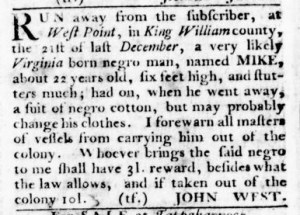
Rivington’s New-York Gazetteer (June 22, 1775).

**********

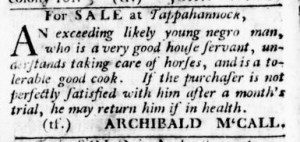
Rivington’s New-York Gazetteer (June 22, 1775).

**********

Virginia Gazette [Pinkney] (June 22, 1775).

**********

Virginia Gazette [Pinkney] (June 22, 1775).

June 21

What was advertised in a revolutionary American newspaper 250 years ago today?

Massachusetts Spy (June 21, 1775).

“RESOLVED, That we abhor the enslaving of any of the human race, and particularly of the NEGROES in this county.”

Nathaniel Read’s advertisement describing Tower, an enslaved man who liberated himself by running away, and offering a reward for his capture and return ran in the Massachusetts Spy a second time on June 21, 1775.  It was the last time that advertisement appeared.  Perhaps the notice achieved its intended purpose when someone recognized the Black man with “a little scar on one side [of] his cheek” or perhaps Read discontinued it for other reasons.

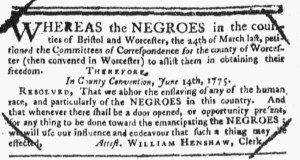
Whatever the explanation, Read’s advertisement starkly contrasted with a new notice that relayed a resolution passed “In County Convention” on June 14.[1]  “[T]he NEGROES in the counties of Bristol and Worcester, the 24th of March last, petitioned the Committees of Correspondence for the county of Worcester (then convened in Worcester) to assist them in obtaining their freedom.”  As the imperial crisis intensified and colonizers invoked the language of liberty and freedom from (figurative) enslavement, Black people who were (literally) enslaved in Massachusetts applied that rhetoric to themselves and initiated a process that challenged white colonizers to recognize their rights.  They did so before the Revolutionary War began with the battles at Lexington and Concord in April 1775, though it took a few months for the County Convention to pass a resolution.  That resolution supported the petition: “we abhor the enslaving of any of the human race, and particularly of the NEGROES in this county.”  Furthermore, “whenever there shall be a door opened, or opportunity present, for any thing to be done toward the emancipating the NEGROES; we will use our influence and endeavour that such a thing may be effected.”

During the era of the American Revolution, the press often advanced purposes that seem contradictory to modern readers.  Newspapers undoubtedly served as engines of liberty that promoted the American cause and shaped public opinion in favor of declaring independence, yet they also played a significant role in perpetuating the enslavement of Africans, African Americans, and Indigenous Americans.  News articles reported on the dangers posed by enslaved people, especially when they engaged in resistance or rebellion, and advertisements facilitated the slave trade and encouraged the surveillance of Black men and women to determine whether they matched the descriptions of enslaved people who liberated themselves.  Revenue from those advertisements underwrote publishing news and editorials that supported the patriot cause.  Yet the early American press occasionally published items that supported the emancipation of enslaved people and abolishing the transatlantic slave trade as some colonizers applied the rhetoric of the American Revolution more evenly to all people.

**********

[1] Although it resembles a news article, this item appeared among the advertisements.  In addition, it ran more than once, typical of paid notices rather than news printed just once.  Newspaper advertisements often delivered news, especially local news, during the era of the American Revolution.

Slavery Advertisements Published June 21, 1775

The Slavery Adverts 250 Project chronicles the role of newspaper advertising in perpetuating slavery in the era of the American Revolution. The project seeks to reveal the ubiquity of slavery in eighteenth-century life from New England to Georgia by republishing advertisements about enslaved people – for sale as individuals or in groups, wanted to purchase or for hire for short periods, runaways who liberated themselves, and those who were subsequently captured and confined in jails and workhouses – in daily digests on this site as well as in real time via the @SlaveAdverts250 Twitter feed, utilizing twenty-first-century media to stand in for the print media of the eighteenth century.

The project aims to provide modern audiences with a sense of just how often colonizers encountered these advertisements in their daily lives. Enslaved men, women, and children appeared in print somewhere in the colonies almost every single day. Those advertisements served as a constant backdrop for social, cultural, economic, and political life in colonial and revolutionary America. Colonizers who did not purport to own enslaved people were still confronted with slavery as well as invited to maintain the system by purchasing enslaved men, women, and children or assisting in the capture of so-called “runaways” who sought to free themselves from bondage. The frequency of these newspaper advertisements suggests just how embedded slavery was in colonial and revolutionary American culture in everyday interactions beyond the printed page.

These advertisements also testify to the experiences of enslaved men, women, and children, though readers must consider that those experiences have been remediated through descriptions offered by enslavers rather than enslaved people themselves. Often unnamed in the advertisements, enslaved men, women, and children were not invisible or unimportant in early America.

These advertisements appeared in colonial American newspapers 250 years ago today.

Connecticut Journal (June 21, 1775).

**********

Pennsylvania Journal (June 21, 1775).

June 20

What was advertised via subscription proposals in revolutionary American 250 years ago today?

Subscription proposals bound in Abraham Swan, The British Architect: Or, the Builders Treasury of Stair-Cases (Philadelphia: Robert Bell, Bookseller, for John Norman, Architect Engraver, 1775). Courtesy Library of Congress.

“THE GENTLEMAN AND CABINET-MAKER’s ASSISTANT.”

As the summer of 1775 approached, Robert Bell, the prominent bookseller and auctioneer, partnered with John Norman, an architect engraver, in publishing an American edition of Abraham Swan’s British Architect: Or, the Builders Treasury of Stair-Cases.  Norman, who had arrived in Philadelphia just a year earlier, advertised the forthcoming volume in the Pennsylvania Journal in March and advised that prospective subscribers who considered supporting the project could examine printed proposals “with a specimen of the plates and letter press” at his house on Second Street.  He also pledged that the “names of the subscribers to this useful and ornamental work will be published.”  The book eventually included, according to its title page, “upwards of One Hundred DESIGNS and EXAMPLES, curiously engraved on Sixty FolioCopper-Plates,” some of them previously on view.  The “NAMES OF THE ENCOURAGERS,” as promised, appeared on four pages, clustered together by the first letter of their last names.  In the copy in the collections of the American Antiquarian Society, the list of nearly two hundred subscribers had a prominent place immediately after the title page and before the introduction, though binders may have placed the list at the end in other copies.

The copies at the American Antiquarian Society, the Getty Research Institute, and the Library of Congress also include subscription proposals for The Gentleman and Cabinet-Maker’s Assistant with the “DRAWINGS by the ingenious JOHN FOLWELL, Cabinet-Maker; and the ENGRAVINGS by JOHN NORMAN,” bound to face the title page.  While the proposals may have also circulated separately as a broadside, it seems that Bell and Norman seized an opportunity to market a similar book to subscribers and other readers of their edition of British Architecture, an audience that already demonstrated interest in the subject matter.  The proposals carried a date – June 20, 1775 – but could have been paired with British Architecture any time after that.  The proposed volume would feature even more illustrations, “Two Hundred Designs and Examples … with proper Explanations in Letter Press,” at a cost of fifty shillings.  Subscribers were expected to pay fifteen shillings in advance and the remainder “on the Delivery of the Book.”  Folwell and Norman intended to take it to press as soon as subscribers ordered three hundred copies.  As with the British Architect, “The Names of the SUBSCRIBERS to this useful WORK will be printed” as an acknowledgment of their support.  Folwell and Norman accepted subscriptions in Philadelphia, as did Bell and Thomas Nevell “at the Sign of the CARPENTERS-HALL,” but so did local agents in Annapolis, Baltimore, Charleston, and New York.  The list of associates in other towns further suggests that the subscription proposals did indeed circulate separately in an effort to enhance demand.