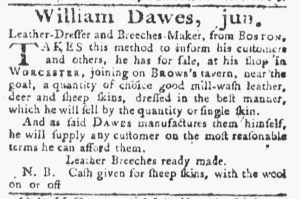
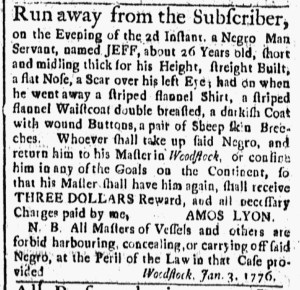
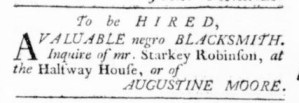
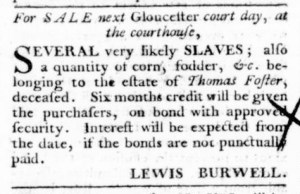
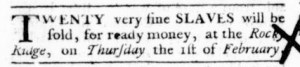
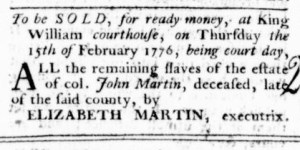
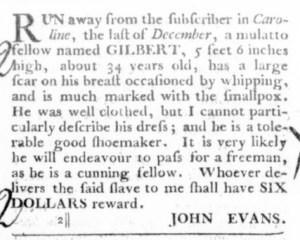
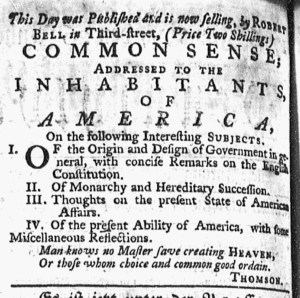
What was advertised in a revolutionary American newspaper 250 years ago this week?

“I cannot publish such Advertisements as ought to have appeared this Week.”
John Pinkney should have printed and distributed an edition of his weekly newspaper, the Virginia Gazette, on January 27, 1776, but he did not. Instead, he placed a notice in the newspaper printed by John Dixon and William Hunter, also named the Virginia Gazette. “AFTER having received so many Instances of public Favour,” he explained, “I should think myself inexcusable did I not make known the Reason why I do not this Week publish a Gazette.” It turned out that he experienced the same disruption in his supply of paper that many other printers faced during the first year of the Revolutionary War. He did not publish a new issue “owing to a Disappointment in receiving Paper from the Northward.” In their own notice on the next page, Dixon and Hunter confirmed that “a stock of printing-paper … at this time is very scarce” and acquiring it involved “an infinite deal of trouble and expence in transporting it from Pennsylvania.” Pinkney claimed that “no human Prudence could have prevented” the situation.
He also informed readers that “Next Week … or in a short Time, I expect a very considerable Quantity” and when it arrived he would “endeavour to make up for all Deficiencies.” Through “unwearied Diligence,” he would continue to collate and disseminate items of “instructive Amusement” and “every Piece of authentic Intelligence.” He concluded with an acknowledgement for advertisers: “It gives me the greatest Uneasiness that I cannot publish such Advertisements as ought to have appeared this Week, but as far as a Restitution of Money can atone for the Disappointment, it shall be made.” Advertising was an important revenue stream for most printers who published newspapers. This “Restitution of Money” put Pinkney in an even more precarious position, especially since Dixon and Hunter indicated that paper “cannot be had without cash.” Pinkney could not purchase paper on credit. He managed to get his hands on enough paper to print a new issue on February 3, as promised in his notice, but most likely did not continue printing for long after that. The February 3 edition is the last known. Disruptions in Pinkney’s supply of paper likely played a significant role in his Virginia Gazette folding.