January 10

What was advertised in a revolutionary American newspaper 250 years ago today?
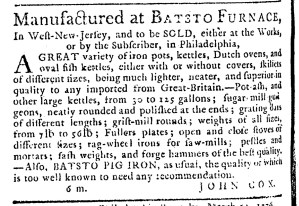
Pennsylvania Gazette (January 10, 1776).

“Disabled further to prosecute the publishing that News-paper by an unfortunate accident of FIRE.”

As the imperial crisis intensified, Enoch Story and Daniel Humphreys launched the Pennsylvania Mercury (quickly renamed Story and Humphreys’s Pennsylvania Mercury) on April 7, 1775.  That newspaper joined two others founded earlier in the year, the Pennsylvania Evening Post on January 24 and the Pennsylvania Ledger on January 28, as well as Dunlap’s Pennsylvania Packet, the Pennsylvania Gazette, the Pennsylvania Journal, and the Wochentliche Pennsylvanische Staatsbote.  During the first four months of 1775, Philadelphia surpassed Boston in terms of the number of newspapers printed there.  With the outbreak of hostilities at Lexington and Concord on April 19 and the ensuing siege of Boston, several of Boston’s newspapers ceased publication or relocated to other towns.

Yet Boston was not the only major port city that saw one of its newspapers cease publication during the first year of the Revolutionary War.  Story and Humphreys’s Pennsylvania Mercury lasted less than a year, though disruptions caused by the war did not lead to its demise.  Unfortunately, “an unfortunate accident of FIRE … consumed the Printing-office, together with their whole Stock of Paper, Types, Press,” and other equipment on December 31.  The situation did not leave any possibility for the partners to recover and eventually resume publication.  “[B]eing disabled further to prosecute the publishing [of] that News-paper,” they announced in an advertisement in the Pennsylvania Gazette, they instead expressed “their unfeigned thanks” to the subscribers who had supported the venture and requested that they “will be so kind as to pay up their subscriptions (in proportion to the time of subscribing) for the nine months the publication continued.”  In other words, they expected customers to make prorated payments based on the number of issues they received.  Humphreys eventually tried again, but not until after the Revolutionary War.  On August 20, 1784, he commenced publishing a new Pennsylvania Mercury.

Even with the loss of Story and Humphreys’s Pennsylvania Mercury, Philadelphia still had more newspapers than any other city or town in the colonies.  As the war continued, not all of them survived.  Some closed permanently while others moved to other towns or suspended publication during the British occupation of Philadelphia.  Yet, as the “unfortunate accident of FIRE” at Story and Humphreys’s printing office demonstrated, disruptions caused by the war were not the only dangers that forced newspapers to fold.

Slavery Advertisements Published January 10, 1776

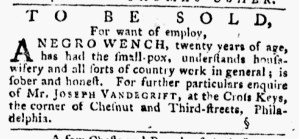
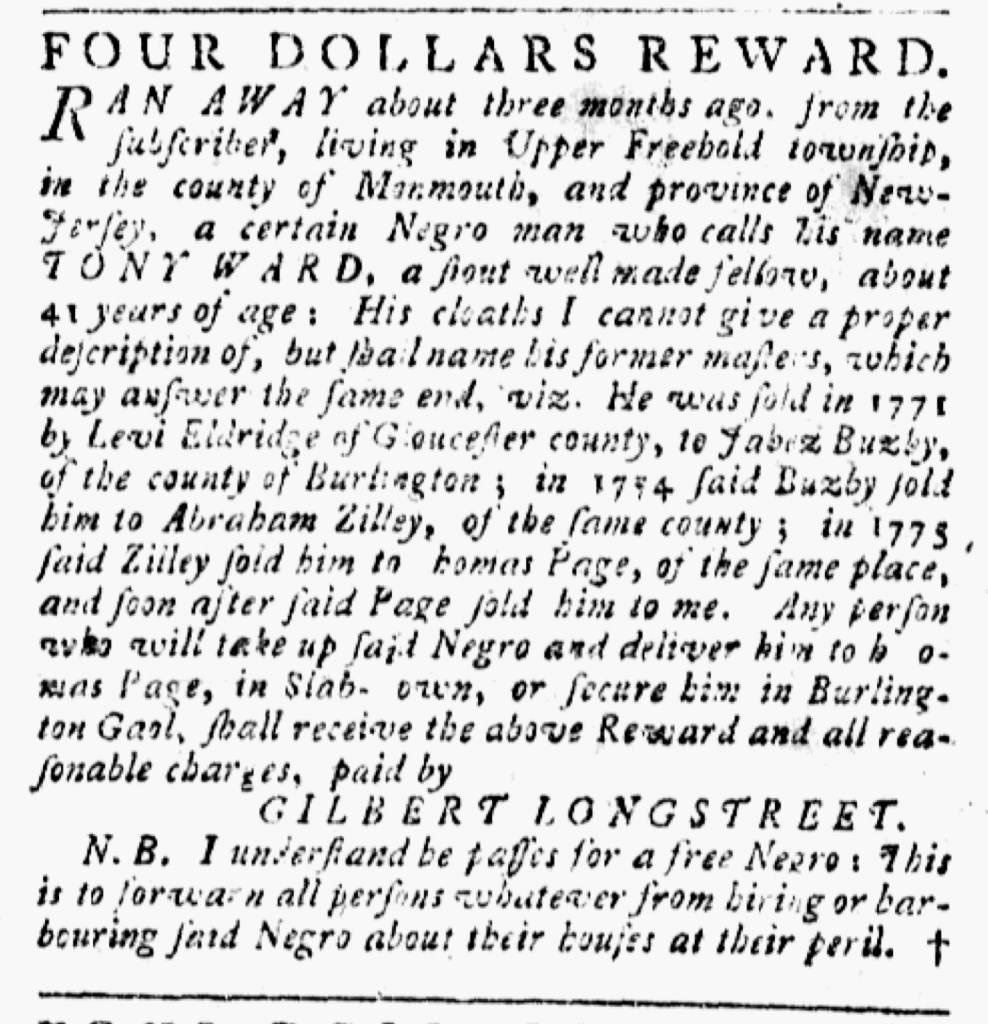
The Slavery Adverts 250 Project chronicles the role of newspaper advertising in perpetuating slavery in the era of the American Revolution. The project seeks to reveal the ubiquity of slavery in eighteenth-century life from New England to Georgia by republishing advertisements about enslaved people – for sale as individuals or in groups, wanted to purchase or for hire for short periods, runaways who liberated themselves, and those who were subsequently captured and confined in jails and workhouses – in daily digests on this site as well as in real time via the @SlaveAdverts250 Twitter feed, utilizing twenty-first-century media to stand in for the print media of the eighteenth century.

The project aims to provide modern audiences with a sense of just how often colonizers encountered these advertisements in their daily lives. Enslaved men, women, and children appeared in print somewhere in the colonies almost every single day. Those advertisements served as a constant backdrop for social, cultural, economic, and political life in colonial and revolutionary America. Colonizers who did not purport to own enslaved people were still confronted with slavery as well as invited to maintain the system by purchasing enslaved men, women, and children or assisting in the capture of so-called “runaways” who sought to free themselves from bondage. The frequency of these newspaper advertisements suggests just how embedded slavery was in colonial and revolutionary American culture in everyday interactions beyond the printed page.

These advertisements also testify to the experiences of enslaved men, women, and children, though readers must consider that those experiences have been remediated through descriptions offered by enslavers rather than enslaved people themselves. Often unnamed in the advertisements, enslaved men, women, and children were not invisible or unimportant in early America.

Massimo Sgambati made significant contributions to this entry as part of the Summer Scholars Program, funded by a fellowship from the D’Amour College of Liberal Arts and Sciences at Assumption University in Worcester, Massachusetts, in Summer 2025.

These advertisements appeared in revolutionary American newspapers 250 years ago today.

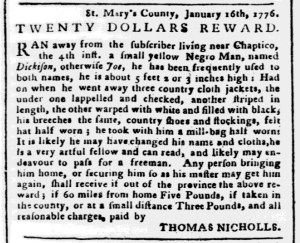
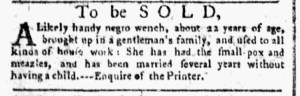
Connecticut Journal (January 10, 1776).

**********

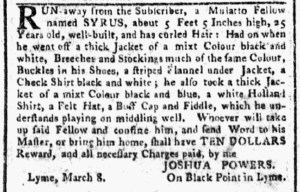
Constitutional Gazette (January 10, 1776).

**********

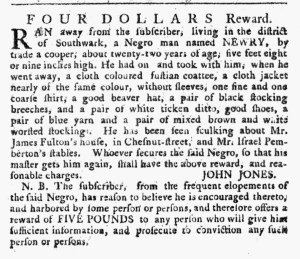
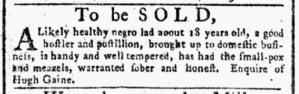
Pennsylvania Gazette (January 10, 1776).

**********

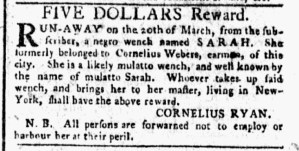
Virginia Gazette [Pinkney] (January 10, 1776).

**********

Virginia Gazette [Pinkney] (January 10, 1776).

**********

Virginia Gazette [Pinkney] (January 10, 1776).

**********

Virginia Gazette [Pinkney] (January 10, 1776).

**********

Virginia Gazette [Pinkney] (January 10, 1776).

**********

Virginia Gazette [Pinkney] (January 10, 1776).

January 9

What was advertised in a revolutionary American newspaper 250 years ago today?

Pennsylvania Evening Post (January 9, 1776).

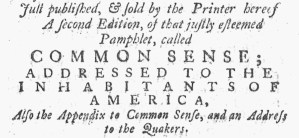
“THIS day was published … COMMON SENSE addressed to the INHABITANTS of AMERICA.”

On January 9, 1776, the first advertisement for Thomas Paine’s Common Sense appeared in an American newspaper.  The notice did not include Paine’s name.  Instead, it stated that Robert Bell, the prominent printer and bookseller, “published, and is now selling … COMMON SENSE addressed to the INHABITANTS of AMERICA, on the following subjects.”  The advertisement then listed the headings for the several sections in the first edition: “I. Of the origin and design of government in general, with concise Remarks on the English constitution.  II. Of Monarchy and Hereditary Succession.  III. Thoughts on the present state of American affairs.  IV. Of the present ability of America, with some miscellaneous reflections.”

Over the next several months, printers in many towns would publish and advertise local editions of Common Sense, making it the most widely disseminated political pamphlet during the era of the American Revolution (though, as Trish Loughran convincingly demonstrates, the number of copies has been wildly exaggerated).[1]  Historians also consider Common Sense the most persuasive pamphlet that advocated for the American cause.  Even though hostilities commenced at Lexington and Concord in April 1775, many Americans still hoped that the king would intervene to address their grievances.  The plain language of Common Sense (along with unflattering depictions of monarchy) played a significant role in convincing many colonizers to support independence over a redress of grievances.  Paine made a strong case for “the present ability of America” to establish a new government and trading relationships beyond the British Empire.

There seems to be some confusion about the publication date for Common Sense.  Some sources claim that it was published on January 10, 1776.  I suspect that is because advertisements for the pamphlet first appeared in the January 10 editions of the Pennsylvania Gazette, the newspaper Benjamin Franklin formerly operated, and the Pennsylvania Journal, published by Patriot printers William Bradford and Thomas Bradford.  Those advertisements featured almost identical copy (but different choices for the format made by the compositors), including the phrase “THIS DAY IS PUBLISHED” in the Pennsylvania Gazette and “This Day was Published” in the Pennsylvania Journal.  I have previously examined other instances of similar phrases, demonstrating that they did not literally refer to the publication date but instead meant that a book or pamphlet was now available for purchase.  When the advertisement ran in the Pennsylvania Ledger on January 13 and in the Wochentliche Pennsylvanische Staatsbote on January 16, both versions stated, “This Day was Published.”  Eighteenth-century readers knew how to interpret the phrase.  I wonder if some scholars consulted the more famous and the more venerable Pennsylvania Gazette (founded 1728) and Pennsylvania Journal (founded 1742), saw a phrase that suggested the date of the newspaper was indeed the publication date for Common Sense, and overlooked a newspaper that had been in production for a little less than a year when it carried its first advertisement for Common Sense.  (Benjamin Towne distributed the first issue of the Pennsylvania Evening Post on January 24, 1775.)  Bell may have been selling copies of Common Sense before January 9.  The advertisement in the Pennsylvania Evening Post does not definitively demonstrate that the pamphlet was published on January 9, but it does show when marketing for the pamphlet began and that Bell published it no later than January 9, 1776.

**********

[1] Trish Loughran, “Disseminating Common Sense: Thomas Paine and the Problem of the Early National Bestseller,” American Literature 78., no. 1 (March 2006), 1-28.

Slavery Advertisements Published January 9, 1776

The Slavery Adverts 250 Project chronicles the role of newspaper advertising in perpetuating slavery in the era of the American Revolution. The project seeks to reveal the ubiquity of slavery in eighteenth-century life from New England to Georgia by republishing advertisements about enslaved people – for sale as individuals or in groups, wanted to purchase or for hire for short periods, runaways who liberated themselves, and those who were subsequently captured and confined in jails and workhouses – in daily digests on this site as well as in real time via the @SlaveAdverts250 Twitter feed, utilizing twenty-first-century media to stand in for the print media of the eighteenth century.

The project aims to provide modern audiences with a sense of just how often colonizers encountered these advertisements in their daily lives. Enslaved men, women, and children appeared in print somewhere in the colonies almost every single day. Those advertisements served as a constant backdrop for social, cultural, economic, and political life in colonial and revolutionary America. Colonizers who did not purport to own enslaved people were still confronted with slavery as well as invited to maintain the system by purchasing enslaved men, women, and children or assisting in the capture of so-called “runaways” who sought to free themselves from bondage. The frequency of these newspaper advertisements suggests just how embedded slavery was in colonial and revolutionary American culture in everyday interactions beyond the printed page.

These advertisements also testify to the experiences of enslaved men, women, and children, though readers must consider that those experiences have been remediated through descriptions offered by enslavers rather than enslaved people themselves. Often unnamed in the advertisements, enslaved men, women, and children were not invisible or unimportant in early America.

Massimo Sgambati made significant contributions to this entry as part of the Summer Scholars Program, funded by a fellowship from the D’Amour College of Liberal Arts and Sciences at Assumption University in Worcester, Massachusetts, in Summer 2025.

These advertisements appeared in revolutionary American newspapers 250 years ago today.

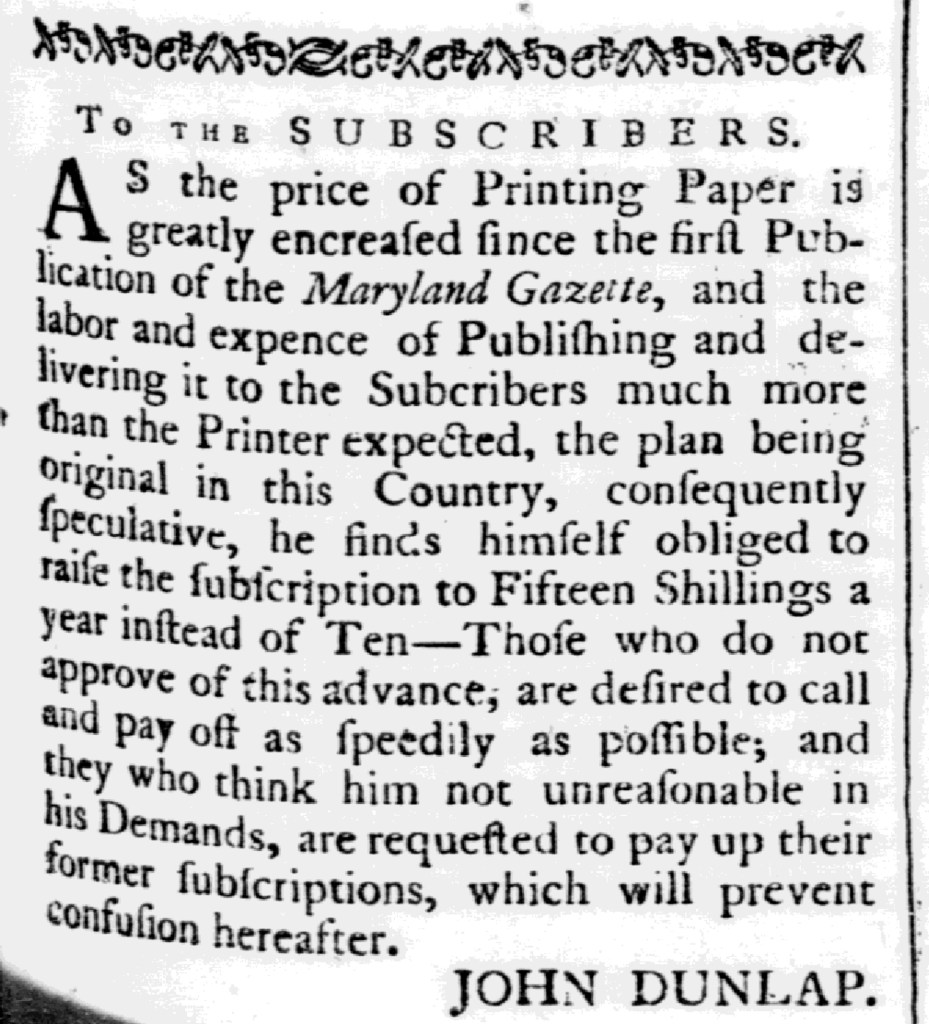
Dunlap’s Maryland Gazette (January 9, 1776).

January 8

What was advertised in a revolutionary American newspaper 250 years ago today?

New-York Gazette and Weekly Mercury (January 8, 1776).

“WRITING TAUGHT in six Weeks … Specimens of Improvement may be seen.”

Among the various advertisements that appeared in the January 8, 1776, edition of the New-York Gazette and Weekly Mercury, W. Elphinston offered his services as a writing tutor.  Although writing and reading are skills often taught simultaneously today, that was not always the case in eighteenth-century America.  For instance, at “Mrs. TAYLOR’s BOARDING SCHOOL” for “young LADIES” in Philadelphia, all students learned “Reading and the Grammar” along with sewing and embroidery, but they had to pay extra for instruction from a “Writing Master,” a “Drawing Master,” a “Dancing Master,” a “Musick Master,” and other tutors.  Some colonizers learned to read without simultaneously learning writing (or arithmetic).  Those who made their mark on documents rather than signing their names did not necessarily lack the skill to read those documents, but they did not benefit from instruction in forming the letters that they knew how to read.

Elphinston offered his assistance.  He did not teach reading; he assumed that his prospective students already possessed that skill at some level.  He expected them to apply what they already knew about reading to learning to write.  Elphinston claimed that his pupils would learn to write in just six weeks, provided that they devoted an hour per day to their lessons.  In addition to novices, he also helped those with rudimentary ability to improve their writing, yet he did not merely ask prospective students to take his word for it.  Instead, he made “Specimens of Improvement” available at the house where he gave lessons.  Anyone who considered engaging his services could examine those specimens themselves to see what kind of progress Elphinston’s former students made because of their lessons with the writing tutor.  He was not the only writing master to make specimens available to the public.  When a “Person from Boston” relocated to Connecticut and advertised that he “will teach in the most elegant and easy Manner, the several Hands now in Practice, both Useful and Ornamental,” he noted that a “Specimen of [his] Performance, in the several hands abovementioned, is left with the Printer … for the Inspection of any Person” who might hire him.  Newspaper advertisements attracted attention, but writing tutors believed that samples could seal the deal.

January 7

What was advertised in a revolutionary American newspaper 250 years ago this week?

Pennsylvania Evening Post (January 6, 1776).

“He has opened an AMERICAN PORTER HOUSE.”

During the first week of 1776, Lewis Nicola took to the pages of the Pennsylvania Evening Post “to inform his friends, and the public in general, that he has opened an AMERICAN PORTER HOUSE at his dwelling in Water-street” in Philadelphia.  He promised that “those who favor him with their custom may depend upon his best endeavors to please.

Nicola assumed that readers knew who brewed the porter that he served at his establishment.  After all, “Mr. HARE’s best AMERICAN DRAUGHT PORTER” had been the subject of several advertisements that recently ran in the Pennsylvania Evening Post.  William Dibley served “this new and glorious manufacture” at the Fountain and White Horse Inn on Chestnut Street.  Joseph Price encouraged “all the SONS of AMERICAN LIBERTY” to drink “Messrs. HARE’s and Co. best DRAUGHT and BOTTLED AMERICAN PORTER” at his tavern “at the sign of the Bull and Dog” on Market Street.  Similarly, Patrick Meade offered “Messrs. HARE and Co. AMERICAN PORTER” to “the TRUE FRIENDS to LIBERTY” at the Harp and Crown in nearby Southwark.

Robert Hare, the son of an English brewer who specialized in porter, arrived in Philadelphia in 1773.  He established his own brewery where he brewed porter, “the first person to brew the drink in America.”  The timing worked well for Hare; he commenced brewing American porter as the imperial crisis intensified and the Revolutionary War began.  Colonizers looked to support local enterprises by purchasing “domestic manufactures” while they boycotted goods imported from England.  That positioned Hare’s brewery for success.

Just as significantly, consumers liked his porter (unlike some of the substitutes for imported tea that some colonizers concocted).  When John Adams attended the First Continental Congress in the fall of 1774, he lauded Hare’s porter in a letter to Abigail: “I drink no Cyder, but feast upon Phyladelphia Beer, and Porter.  A Gentleman, one Mr. Hare, has lately set up in this City a Manufactory of Porter, as good as any that comes from London.  I pray We may introduce it into the Massachusetts.  It agrees with me, infinitely better than Punch, Wine, or Cyder, or any other Spirituous Liquor.”  With Hare’s porter having such a reputation, Nicola did not need to mention the brewer when he opened his “AMERICAN PORTER HOUSE.”  The public knew the porter came from Hare’s brewery.

January 6

What was advertised in a revolutionary American newspaper 250 years ago today?

Virginia Gazette [Dixon and Hunter] (January 6, 1776).

Monsieur LAFONG, HAIR-DRESSER, &c. AND BARBER GENERAL!”

George Lafong, a “French HAIR-DRESSER” in Williamsburg, occasionally placed newspaper advertisements in the early 1770s.  When he took to the pages of the first issue of John Dixon and William Hunter’s Virginia Gazette for 1776, he presented himself as “Monsieur LAFONG, HAIR-DRESSER, &c. AND BARBER GENERAL!”  That elaborate and spectacular title served as the headline for his advertisement.  He had not previously dropped his first name in favor of referring to himself as “Monsieur LAFONG,” but apparently decided that circumstances merited this affectation.

That may have been because he jointly placed the advertisement with his new partner, Alexander Wiley, explaining that they went into business together “IN Order to carry on the business more extensively.”  Wiley possessed “great Abilities in Hair-Dressing,” according to the advertisement, yet neither his name nor reputation seemed to suggest any connection to French styles.  Hairdressers frequently benefited from the cachet that their clientele associated with French fashion, something that Lafong understood when he introduced himself as a “French HAIR-DRESSER” and there in a French phrase, “TOUT A LA MODE,” in 1770.  He doubled down on that in his new advertisement, naming himself “Monsieur Lafong” in the body as well as “Monsieur LAFONG” in the headline.

The new partners hoped that the combination of Wiley’s “great Abilities in Hair-Dressing, and the general Satisfaction which Monsieur Lafong flatters himself to have hitherto given” would yield “Encouragement” (or appointments) “from the Ladies and Gentlemen of this City.”  Lafong deserved to lean on his reputation.  According to the entry on wigmakers from the Williamsburg Craft Series, Lafong operated one of the premiere wig shops in the town in the early 1770s.[1]  In his own marketing, he declared that he “makes Head Dresses for Ladies, so natural as not to be distinguished by the most curious Eye.”  If former clients (or their acquaintances who knew who dressed their hair) agreed with that assessment, it did indeed suggest a “general Satisfaction” with Lafong’s work.  Furthermore, Lafong and Wiley promised that “the greatest Pains will be taken” to earn the approval of their clients.

**********

[1] Thomas K. Bullock and Maurice B. Tinkin, Jr., The Wigmaker in Eighteenth-Century Williamsburg: An Account of his Barbering, Hair-Dressing, and Peruke-Making Services, and Some Remarks on Wigs of Various Styles (Colonial Williamsburg: 1959, 1987).

Slavery Advertisements Published January 6, 1776

The Slavery Adverts 250 Project chronicles the role of newspaper advertising in perpetuating slavery in the era of the American Revolution. The project seeks to reveal the ubiquity of slavery in eighteenth-century life from New England to Georgia by republishing advertisements about enslaved people – for sale as individuals or in groups, wanted to purchase or for hire for short periods, runaways who liberated themselves, and those who were subsequently captured and confined in jails and workhouses – in daily digests on this site as well as in real time via the @SlaveAdverts250 Twitter feed, utilizing twenty-first-century media to stand in for the print media of the eighteenth century.

The project aims to provide modern audiences with a sense of just how often colonizers encountered these advertisements in their daily lives. Enslaved men, women, and children appeared in print somewhere in the colonies almost every single day. Those advertisements served as a constant backdrop for social, cultural, economic, and political life in colonial and revolutionary America. Colonizers who did not purport to own enslaved people were still confronted with slavery as well as invited to maintain the system by purchasing enslaved men, women, and children or assisting in the capture of so-called “runaways” who sought to free themselves from bondage. The frequency of these newspaper advertisements suggests just how embedded slavery was in colonial and revolutionary American culture in everyday interactions beyond the printed page.

These advertisements also testify to the experiences of enslaved men, women, and children, though readers must consider that those experiences have been remediated through descriptions offered by enslavers rather than enslaved people themselves. Often unnamed in the advertisements, enslaved men, women, and children were not invisible or unimportant in early America.

Massimo Sgambati made significant contributions to this entry as part of the Summer Scholars Program, funded by a fellowship from the D’Amour College of Liberal Arts and Sciences at Assumption University in Worcester, Massachusetts, in Summer 2025.

These advertisements appeared in revolutionary American newspapers 250 years ago today.

Pennsylvania Ledger (January 6, 1776).

**********

Providence Gazette (January 6, 1776).

**********

Virginia Gazette [Dixon and Hunter] (January 6, 1776).

**********

Virginia Gazette [Dixon and Hunter] (January 6, 1776).

**********

Virginia Gazette [Dixon and Hunter] (January 6, 1776).

**********

Virginia Gazette [Pinkney] (January 6, 1776).

**********

Virginia Gazette [Pinkney] (January 6, 1776).

**********

Virginia Gazette [Pinkney] (January 6, 1776).

**********

Virginia Gazette [Pinkney] (January 6, 1776).

**********

Virginia Gazette [Pinkney] (January 6, 1776).

**********

Virginia Gazette [Pinkney] (January 6, 1776).

January 5

What was advertised in a revolutionary American newspaper 250 years ago today?

Virginia Gazette [Purdie] (January 5, 1776).

“The PRINTER is reduced to the necessity of demanding half the year’s subscription money.”

In the final issue of his Virginia Gazette for 1775, Alexander Purdie called on subscribers “to pay in their subscriptions, to enable me to lay in a stock of paper for the winter,” and “all persons indebted to me for BOOKS, STATIONARY, [and] ADVERTISEMENTS” to settle their accounts.  He asserted that it was “impossible to carry on such an expensive business, to the publick’s or his own satisfaction, without punctual payment.”

A week later, Purdie expressed even more alarm in a notice in the first edition of his Virginia Gazette for 1776.  “CONSIDERING the great rise in the price of PAPER, the high expense attending the transportation of it to this place from Philadelphia, and the difficulty there is to procure it almost on any terms,” he explained, “the PRINTER is reduced to the necessity of demanding half the year’s subscription money from every new subscriber to his GAZETTE.”  Newspaper subscribers often enjoyed generous credit, but Purdie made clear that was not a viable option.  He simultaneously renewed his call “that those who owe him for the last 11 months” since he commenced publication of hisVirginia Gazette “send in their subscriptions” and “those that subscribed later … pay in to Dec. 31st … that he may begin a new account, this NEW YEAR, with all his customers.”  Like many other printers, Purdie believed that he performed a valuable service for the public, “hop[ing] to be able to furnish them always with pleasing intelligence, even in these boisterous times.”  Many readers may have considered “boisterous” an understatement as they read news and editorials about the war that commenced at Lexington and Concord the previous April.

Where Purdie placed his advertisement within the issue testifies to its urgency.  Like other newspapers of the era, his Virginia Gazette consisted of four pages printed on a broadsheet and folded in half.  Printers usually printed the first and fourth pages on one side, let it dry, and then printed the second and third pages on the other side.  That meant that the news and advertisements that arrived in the printing office most recently appeared on the second and third pages, inside the folded newspaper.  Purdie’s Virginia Gazette had a heading for “ADVERTISEMENTS” in the final column of the third page.  He could have followed the example of other printers and given his notice a privileged place as the first item under that heading.  Instead, he made it the first item in the first column on the fourth page.  He placed his notice in the upper left corner of the final page, making it the first advertisement readers encountered then they turned to that page.  That also guaranteed a spot for the printer’s notice.  Purdie made it a priority rather than risking that news he had not yet received would be of such significance to justify crowding out his notice.  Purdie made a savvy decision in choosing where to place his notice calling on subscribers and other customers to settle accounts.

Slavery Advertisements Published January 5, 1776

The Slavery Adverts 250 Project chronicles the role of newspaper advertising in perpetuating slavery in the era of the American Revolution. The project seeks to reveal the ubiquity of slavery in eighteenth-century life from New England to Georgia by republishing advertisements about enslaved people – for sale as individuals or in groups, wanted to purchase or for hire for short periods, runaways who liberated themselves, and those who were subsequently captured and confined in jails and workhouses – in daily digests on this site as well as in real time via the @SlaveAdverts250 Twitter feed, utilizing twenty-first-century media to stand in for the print media of the eighteenth century.

The project aims to provide modern audiences with a sense of just how often colonizers encountered these advertisements in their daily lives. Enslaved men, women, and children appeared in print somewhere in the colonies almost every single day. Those advertisements served as a constant backdrop for social, cultural, economic, and political life in colonial and revolutionary America. Colonizers who did not purport to own enslaved people were still confronted with slavery as well as invited to maintain the system by purchasing enslaved men, women, and children or assisting in the capture of so-called “runaways” who sought to free themselves from bondage. The frequency of these newspaper advertisements suggests just how embedded slavery was in colonial and revolutionary American culture in everyday interactions beyond the printed page.

These advertisements also testify to the experiences of enslaved men, women, and children, though readers must consider that those experiences have been remediated through descriptions offered by enslavers rather than enslaved people themselves. Often unnamed in the advertisements, enslaved men, women, and children were not invisible or unimportant in early America.

Massimo Sgambati made significant contributions to this entry as part of the Summer Scholars Program, funded by a fellowship from the D’Amour College of Liberal Arts and Sciences at Assumption University in Worcester, Massachusetts, in Summer 2025.

These advertisements appeared in revolutionary American newspapers 250 years ago today.

Thomas’s Massachusetts Spy (January 5, 1776).

**********

Virginia Gazette [Purdie] (January 5, 1776).

**********

Virginia Gazette [Purdie] (January 5, 1776).

**********

Supplement to the Virginia Gazette [Purdie] (January 5, 1776).