Slavery Advertisements Published December 16, 1766

The Slavery Adverts 250 Project chronicles the role of newspaper advertising in perpetuating slavery in the era of the American Revolution. The project seeks to reveal the ubiquity of slavery in eighteenth-century life from New England to Georgia by republishing advertisements about enslaved people – for sale as individuals or in groups, wanted to purchase or for hire for short periods, runaways who liberated themselves, and those who were subsequently captured and confined in jails and workhouses – in daily digests on this site as well as in real time via the @SlaveAdverts250 Twitter feed, utilizing twenty-first-century media to stand in for the print media of the eighteenth century.

The project aims to provide modern audiences with a sense of just how often colonizers encountered these advertisements in their daily lives. Enslaved men, women, and children appeared in print somewhere in the colonies almost every single day. Those advertisements served as a constant backdrop for social, cultural, economic, and political life in colonial and revolutionary America. Colonizers who did not purport to own enslaved people were still confronted with slavery as well as invited to maintain the system by purchasing enslaved men, women, and children or assisting in the capture of so-called “runaways” who sought to free themselves from bondage. The frequency of these newspaper advertisements suggests just how embedded slavery was in colonial and revolutionary American culture in everyday interactions beyond the printed page.

These advertisements also testify to the experiences of enslaved men, women, and children, though readers must consider that those experiences have been remediated through descriptions offered by enslavers rather than enslaved people themselves. Often unnamed in the advertisements, enslaved men, women, and children were not invisible or unimportant in early America.

These advertisements appeared in colonial American newspapers 250 years ago today.
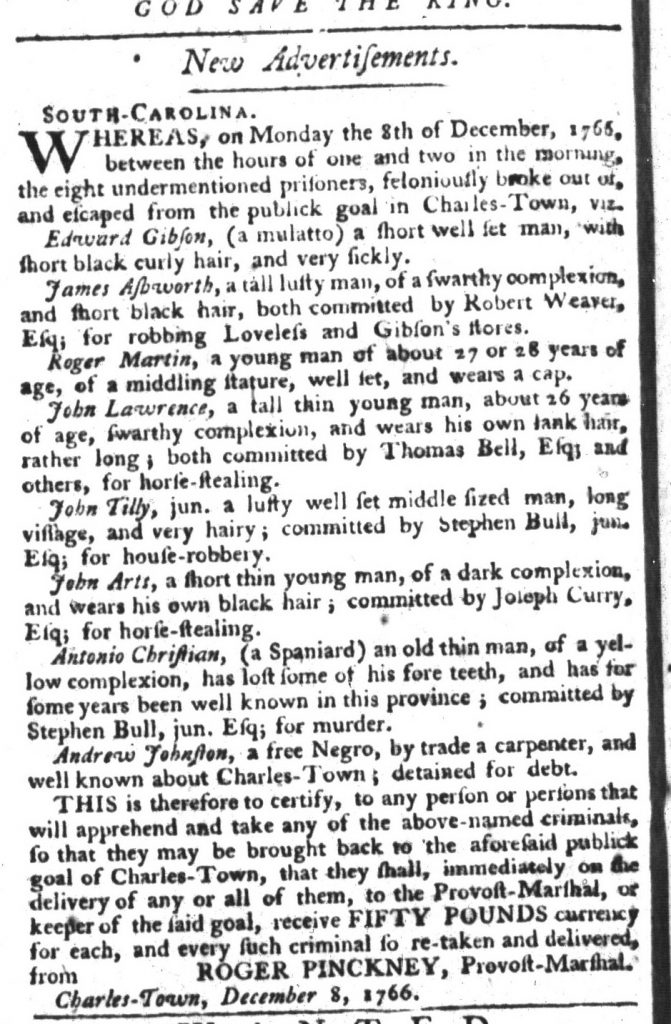
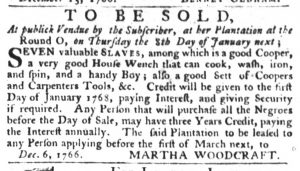
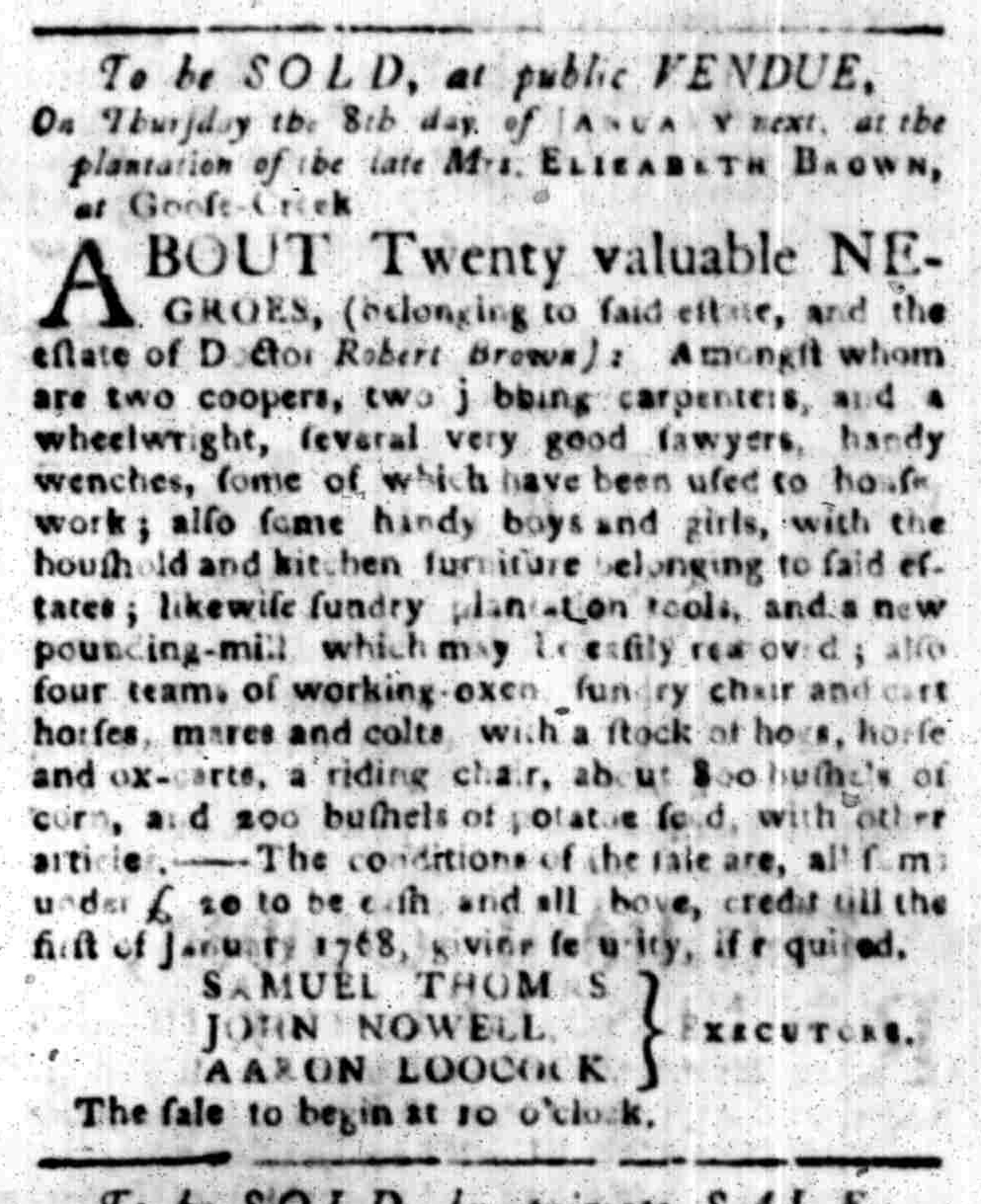
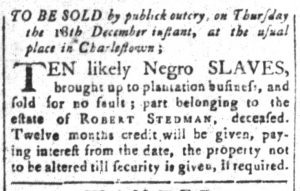
dec-16-south-carolina-gazette-and-country-journal-slavery-1
South-Carolina Gazette and Country Journal (December 16, 1766).

**********
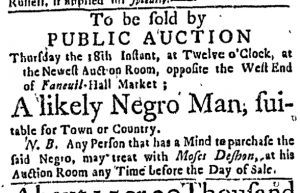
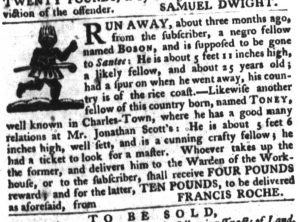
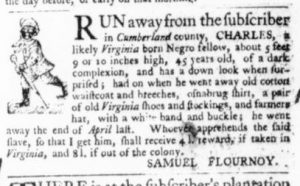
dec-16-south-carolina-gazette-and-country-journal-slavery-2
South-Carolina Gazette and Country Journal (December 16, 1766).

**********
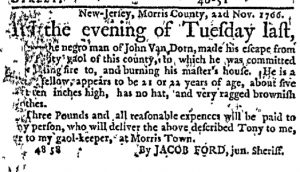
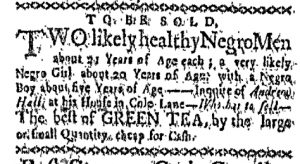
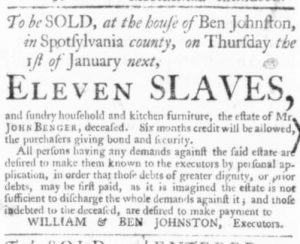
dec-16-south-carolina-gazette-and-country-journal-slavery-3
South-Carolina Gazette and Country Journal (December 16, 1766).

**********

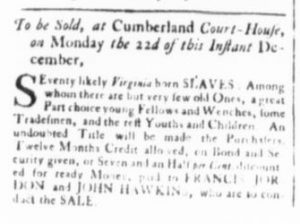
dec-16-south-carolina-gazette-and-country-journal-slavery-4
South-Carolina Gazette and Country Journal (December 16, 1766).

**********

dec-16-south-carolina-gazette-and-country-journal-slavery-5
South-Carolina Gazette and Country Journal (December 16, 1766).

**********

dec-16-south-carolina-gazette-and-country-journal-slavery-6
South-Carolina Gazette and Country Journal (December 16, 1766).

**********

dec-16-south-carolina-gazette-and-country-journal-slavery-7
South-Carolina Gazette and Country Journal (December 16, 1766).

**********
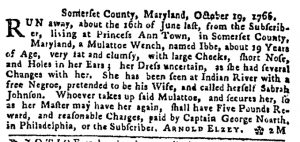
dec-16-south-carolina-gazette-and-country-journal-slavery-8
South-Carolina Gazette and Country Journal (December 16, 1766).

**********

dec-16-south-carolina-gazette-and-country-journal-slavery-9
South-Carolina Gazette and Country Journal (December 16, 1766).

**********

dec-16-south-carolina-gazette-and-country-journal-slavery-10
South-Carolina Gazette and Country Journal (December 16, 1766).

December 15

What was advertised in a colonial American newspaper 250 years ago today?

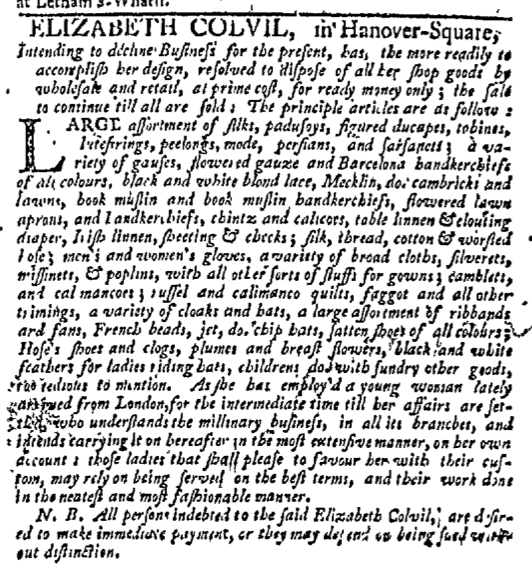
dec-15-12151766-new-york-mercury
New-York Mercury (December 15, 1766).

She has employ’d a young woman lately arrived from London.”

When she decided to “decline Business for the present,” shopkeeper and milliner Elizabeth Colvil announced the eighteenth-century equivalent of a going-out-of-business sale. She “resolved to dispose of all her shop goods by wholesale and retail, at prime cost, for ready money only; the sale to continue till all are sold.” Colvil was liquidating her merchandise, enticing prospective customers with low prices in order to move the process along as quickly as possible.

In and of itself, that sort of promotion distinguished Colvil’s advertisement from many others of the period, but it was not the only aspect of her announcement that set it apart. After listing much of her remaining merchandise and promising “sundry other goods too tedious to mention,” Colvil indicated that she had hired an assistant, a young woman who had recently arrived from London. Her assistant, “who understands the millinary business, in all its branches,” would stay on until Colvil closed shop. At that time, she would pursue the business on her own “in the most extensive manner.” Although Colvil was not selling her shop to her assistant, she was setting her up as her successor.

To that end, Colvil made an appeal to current and prospective customers: “those ladies that shall please to favour her [the young woman recently arrived from London] with their custom, may rely on being served on the best terms, and their work done in the neatest and most fashionable manner.” Colvil voiced a strong endorsement of her assistant, directing the women of New York to patronize her assistant’s shop once Colvil had departed the marketplace.

This differs significantly from most eighteenth-century advertisements in which male merchants, shopkeepers, and artisans indicated the amiable end of a partnership or the transfer of a business from one man to another. In such cases they used advertisements to announce a change in status but did not incorporate an extensive endorsement of the new business or its proprietor.

Elizabeth Colvil probably knew a thing or two about the particular difficulties of being a woman and operating a business in eighteenth-century America. As a result, she attempted to assist her assistant in launching her own shop, recognizing that a young woman, especially one new to the city and unknown to most of its residents, would benefit from establishing a good reputation as quickly as possible. Colvil’s endorsement in her advertisement was the first step. The assistant working with customers was the second. She could build up a clientele, drawing on Colvil’s network of patrons, while the senior shopkeeper and milliner was still active in the business. In this advertisements, Elizabeth Colvil advocated on behalf of a fellow female entrepreneur.

Slavery Advertisements Published December 15, 1766

The Slavery Adverts 250 Project chronicles the role of newspaper advertising in perpetuating slavery in the era of the American Revolution. The project seeks to reveal the ubiquity of slavery in eighteenth-century life from New England to Georgia by republishing advertisements about enslaved people – for sale as individuals or in groups, wanted to purchase or for hire for short periods, runaways who liberated themselves, and those who were subsequently captured and confined in jails and workhouses – in daily digests on this site as well as in real time via the @SlaveAdverts250 Twitter feed, utilizing twenty-first-century media to stand in for the print media of the eighteenth century.

The project aims to provide modern audiences with a sense of just how often colonizers encountered these advertisements in their daily lives. Enslaved men, women, and children appeared in print somewhere in the colonies almost every single day. Those advertisements served as a constant backdrop for social, cultural, economic, and political life in colonial and revolutionary America. Colonizers who did not purport to own enslaved people were still confronted with slavery as well as invited to maintain the system by purchasing enslaved men, women, and children or assisting in the capture of so-called “runaways” who sought to free themselves from bondage. The frequency of these newspaper advertisements suggests just how embedded slavery was in colonial and revolutionary American culture in everyday interactions beyond the printed page.

These advertisements also testify to the experiences of enslaved men, women, and children, though readers must consider that those experiences have been remediated through descriptions offered by enslavers rather than enslaved people themselves. Often unnamed in the advertisements, enslaved men, women, and children were not invisible or unimportant in early America.

These advertisements appeared in colonial American newspapers 250 years ago today.

dec-15-boston-post-boy-slavery-1
Boston Post-Boy (December 15, 1766).

**********

dec-15-boston-gazette-slavery-1
Boston-Gazette (December 15, 1766).

**********

dec-15-boston-gazette-slavery-2
Boston-Gazette (December 15, 1766).

**********

dec-15-connecticut-courant-slavery-1
Connecticut Courant (December 15, 1766).

**********

dec-15-new-york-gazette-slavery-1
New-York Gazette (December 15, 1766).

**********

dec-15-new-york-mercury-slavery-1
New-York Mercury (December 15, 1766).

**********

dec-15-new-york-mercury-slavery-2
New-York Mercury (December 15, 1766).

**********

dec-15-new-york-mercury-slavery-3
New-York Mercury (December 15, 1766).

**********

dec-15-new-york-mercury-slavery-4
New-York Mercury (December 15, 1766).

**********

dec-15-south-carolina-gazette-slavery-1
South Carolina Gazette (December 15, 1766).

**********

dec-15-south-carolina-gazette-slavery-2
South Carolina Gazette (December 15, 1766).

**********

dec-15-south-carolina-gazette-slavery-3
South Carolina Gazette (December 15, 1766).

**********

dec-15-south-carolina-gazette-slavery-4
South Carolina Gazette (December 15, 1766).

**********

dec-15-south-carolina-gazette-slavery-5
South Carolina Gazette (December 15, 1766).

**********

dec-15-south-carolina-gazette-slavery-6
South Carolina Gazette (December 15, 1766).

December 14

What was advertised in a colonial American newspaper 250 years ago this week?

dec-14-12131766-new-york-journal-supplement
Supplement to the New-York Journal (December 13, 1766).

“TO BE SOLD, by THOMAS DERHAM, … CHOICE Teneriffe Wine.”

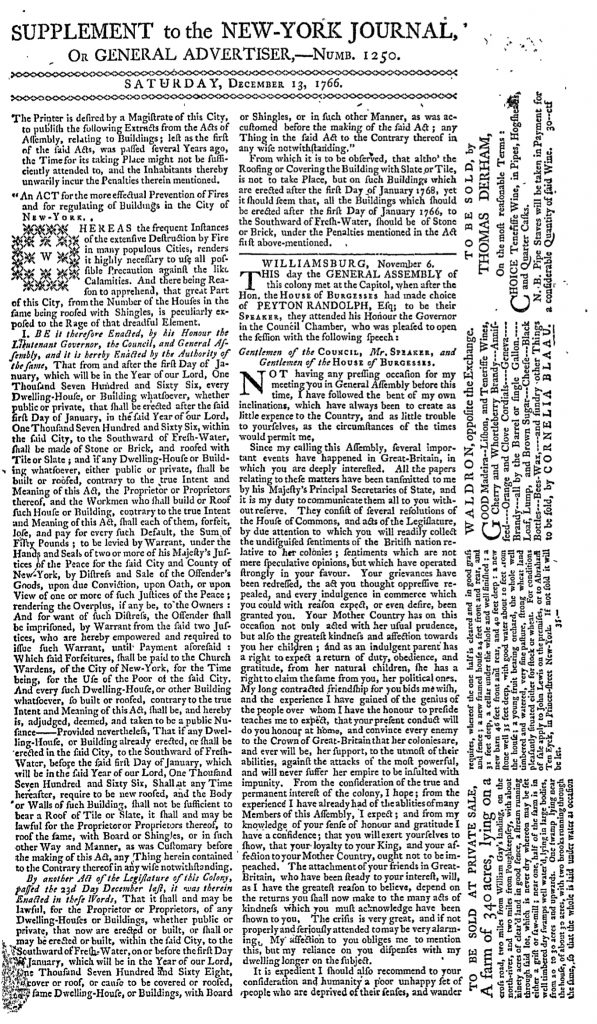
Thomas Derham’s advertisement for “CHOICE Teneriffe Wine” occupied a rather unique position on the first page of the Supplement to the New-York Journal, printed two days after that week’s regular issue of December 11. It appeared in the upper right corner, but the entire advertisement had been rotated ninety degrees counterclockwise, such that it was printed perpendicularly to the two columns that comprised the majority of the news and advertising on the page. A narrow column of text – actually four columns, each rotated ninety degrees counterclockwise – appeared on the right side of the page.

dec-14-12131766-full-page-new-york-journal-supplement
Supplement to the New-York Journal (December 13, 1766).

When I first encountered this striking image when consulting the digitized reproductions of eighteenth-century newspaper made available via Readex, I suspected that I knew how to explain it, having examined something similar in the New-Hampshire Gazette earlier this year. It looked as though the supplement had been printed on a smaller broadsheet than the regular issue, reducing the number of columns, but the industrious printer rotated some of the text to squeeze in as much news and advertising as possible. There was no way to know for certain that this was the case, however, without examining original copies of the supplement and standard issues of the New-York Journal from 1766. Readex does not supply metadata about the measurements of broadsheets and columns, nor do I fault the company for not providing this information since it would be prohibitively expensive to collect and code. This is an instance in which working with digital surrogates hides information about the sources that would have been apparent from just a glance at the original. For the record, unless a ruler appeared in every frame of the microfilm reproduction of the New-York Journal, I would have encountered the same difficulty. The shortcoming is not specific to digitization but rather to any sort of surrogate that removes the researcher from interacting with the text in its material form.

Besides, as much as I appreciate the convenience of working with so many digitized newspapers as I pursue this project, sometimes it’s nice to have an excuse for working with the originals. Upon examining the American Antiquarian Society’s copy of the New-York Journal I learned that my assumption was indeed correct. John Holt used a smaller sheet for the supplement (8 & ½ inches by 14 inches rather than 10 inches by 15 & ½ inches). He maintained the same column width, 2 & 7/8 inches, but did not have sufficient space for a third column, at least not unless he rotated some of the text in order to make it fit on the narrower page. Each of the four columns in the “bonus” column measured 2 & 7/8 inches. All of the text from those miniature, rotated columns appeared in a previous issue of the New-York Journal. Holt did not need to set new type; he simply moved around advertisements that had been set already.

Did readers take special notice of Thomas Derham’s advertisement because of its rather unique placement on the page? Possibly, but whatever additional interest it may have generated cannot reasonably be attributed to any sort of intentional effort to produce an innovative layout to draw attention to advertising. Instead, the printer was practical and pragmatic when putting together the December 13 supplement. Examining the original allows me to make such claims with confidence, while the digital surrogate alone could not resolve my questions or point me in the direct of the best possible interpretation to explain the interesting placement of Derham’s advertisement.

December 13

What was advertised in a colonial American newspaper 250 years ago today?

dec-13-12131766-providence-gazette
Providence Gazette (December 13, 1766).

“BEST Bohea Tea for 5s. and 4d. per Pound.”

Nicholas Tillinghast’s short advertisement for “Bohea Tea,” “an Assortment of Nails, and sundry other Goods” was one of the few advertisements in the December 13, 1766, issue of the Providence Gazette. Only six advertisements appeared in that issue. Four of them promoted consumer goods and services: Tillinghast’s notice, a modified advertisement for the New-England Almanack (with the second half outlining a dispute with printers from Boston removed, presumably for lack of space), an announcement of a vendue sale (or auction) of household goods and books from the estate of Samuel Pierpoint, and Joseph and William Russell’s full-page advertisement (making its third appearance). One of the other advertisements described a “House, Wharf, and Cooper’s Shop” for sale, while the final one offered to “carry Freight at half price” aboard the General Conway when it sailed for New York (this time set within a column rather than tilted in the margin).

In terms of numbers, readers of the Providence Gazette were exposed to very few advertisements in the December 13 issue. Every since the publication had been revived the previous August it carried relatively few advertisements, especially compared to newspaper printed in the larger port cities, Boston, Charleston, Philadelphia, and New York. Yet the Providence Gazette steadily gained advertisers during the fall of 1766, making the relatively low number of six, one of them placed by the printers themselves, rather anomalous.

The numbers, however, do not tell the entire story. In terms of column inches or proportion of the issue devoted to advertising, the December 13 edition held steady with recent issues. After all, the Russells’ full-page advertisement took up a quarter of the issue by itself, raising intriguing questions. Did that oversized advertisement displace other advertising that might otherwise have appeared? Did Sarah Goddard and Company continue to insert that advertisement because they lacked for others to publish? Nearly a dozen advertisements of varying lengths appeared on the final page of the previous issue, suggesting that other merchants and shopkeepers in Providence wished to market their wares in the local newspaper. Did the Russells pay such handsome fees for their full-page advertisement that the printers dismissed other advertisements, at least for an issue or two? (Significantly, they did not reduce the amount of space given to news coverage or print a supplement to disseminate a backlog of advertising). Did the repeated inclusion of a full-page advertisement generate prestige for the newspaper or serve as an advertisement for inserting more advertising, thus making it worth temporarily displacing other commercial notices? To what extent did Joseph and William Russell’s full-page advertisement reshape other advertising within the Providence Gazette and beyond?

December 12

Who was the subject of an advertisement in a colonial American newspaper 250 years ago today?

dec-12-12121766-south-carolina-and-american-general-gazette
South-Carolina and American General Gazette (December 12, 1766).

“RAN AWAY … NERO … many scars about his head.”

Woodcuts frequently accompanied advertisements offering slaves for sale or warning about runaway slaves. As a result, images of Africans and African Americans appeared in newspapers regularly, in contrast to white colonists who were rarely illustrated with visual images. These woodcuts did not depict particular enslaved men, women, or children. Instead, they were stock devices used interchangeably, erasing the individuality of any of the slaves they purported to represent. Significantly, images of black bodies appeared in eighteenth-century newspapers at all because Africans and African Americans were marketed as commodities, just as the multitude of woodcuts depicting ships represented imported goods.

Last week I discovered that I have access to digitized copies of the South-Carolina and American General Gazette, a newspaper not previously incorporated into the Adverts 250 Project. As a result, today I chose to feature an advertisement from that newspaper rather than one either of the other two published 250 years ago today. Both the New-London Gazette and, especially, the New-Hampshire Gazette have contributed a good number of advertisements to this project over the past year. Featuring an advertisement from the South-Carolina and American General Gazette not only increases the number of newspaper included in this project, it also further augments the geographic scope of the project, bringing the number of newspapers printed in Charleston, South Carolina, in 1766 that have since been digitized to three. This rivals Boston with four, New York with three, and Philadelphia with two.

As I perused the December 12, 1766, edition of the South-Carolina and American General Gazette to make my selection for today, I was drawn to this runaway slave advertisement because of the woodcut. This is not the first time that I have examined a woodcut depicting a slave, but this one had an interesting aspect that was not part of similar woodcuts in other newspapers. The torso of the escaped slave was emblazoned with a capital “R,” presumably for “runaway.” The imaginary slave’s body was marked, almost as if it had been branded, while the actual slave – Nero, a sawyer and woodcutter – was also marked with “many scars about his head.” Advertisements for runaway slaves usually included some sort of physical description that allowed readers to scrutinize the black bodies they encountered beyond the pages of the newspaper. Those descriptions often included marks that had been inflicted upon them by masters and overseers. Nero’s scars may have derived from African cultural traditions or they may have been the result of his labors as a sawyer and woodcutter, but it was just as likely that they were indications of punishment and mistreatment. The real Nero was not marked with a capital “R,” but his body may have born other evidence of his enslavement.

Slavery Advertisements Published December 12, 1766

The Slavery Adverts 250 Project chronicles the role of newspaper advertising in perpetuating slavery in the era of the American Revolution. The project seeks to reveal the ubiquity of slavery in eighteenth-century life from New England to Georgia by republishing advertisements about enslaved people – for sale as individuals or in groups, wanted to purchase or for hire for short periods, runaways who liberated themselves, and those who were subsequently captured and confined in jails and workhouses – in daily digests on this site as well as in real time via the @SlaveAdverts250 Twitter feed, utilizing twenty-first-century media to stand in for the print media of the eighteenth century.

The project aims to provide modern audiences with a sense of just how often colonizers encountered these advertisements in their daily lives. Enslaved men, women, and children appeared in print somewhere in the colonies almost every single day. Those advertisements served as a constant backdrop for social, cultural, economic, and political life in colonial and revolutionary America. Colonizers who did not purport to own enslaved people were still confronted with slavery as well as invited to maintain the system by purchasing enslaved men, women, and children or assisting in the capture of so-called “runaways” who sought to free themselves from bondage. The frequency of these newspaper advertisements suggests just how embedded slavery was in colonial and revolutionary American culture in everyday interactions beyond the printed page.

These advertisements also testify to the experiences of enslaved men, women, and children, though readers must consider that those experiences have been remediated through descriptions offered by enslavers rather than enslaved people themselves. Often unnamed in the advertisements, enslaved men, women, and children were not invisible or unimportant in early America.

These advertisements appeared in colonial American newspapers 250 years ago today.

dec-12-south-carolina-and-american-general-gazette-slavery-1
South-Carolina and American General Gazette (December 12, 1766).

**********

dec-12-south-carolina-and-american-general-gazette-slavery-2
South-Carolina and American General Gazette (December 12, 1766).

**********

dec-12-south-carolina-and-american-general-gazette-slavery-3
South-Carolina and American General Gazette (December 12, 1766).

**********

dec-12-south-carolina-and-american-general-gazette-slavery-4
South-Carolina and American General Gazette (December 12, 1766).

**********

dec-12-south-carolina-and-american-general-gazette-slavery-5
South-Carolina and American General Gazette (December 12, 1766).

December 11

What was advertised in a colonial American newspaper 250 years ago today?

dec-11-12111766-pennsylvania-journal
Pennsylvania Journal (December 11, 1766).

“Philip Coleman peddler, my husband; for some time past has eloped from me.”

Many colonists experienced geographic mobility during the eighteenth century. Even as some used their ability to move from place to place to seize opportunities and improve their lot in life, others found such mobility problematic, especially in the cases of slaves and indentured servants who ran away from their masters.

While advertisements for unfree laborers constituted the vast majority of runaway advertisements in the eighteenth century, advertisements for wives who had “eloped from” (rather than with) their husbands appeared with such frequency that no one would have considered them extraordinary in any particular way. In the larger urban ports newspapers sometimes featured multiple advertisements concerning runaway wives in a single issue, usually following a set formula announcing that a woman had “eloped from” her husband, that she had behaved poorly before her departure, and, perhaps most importantly, that merchants, shopkeepers, and others were not to extend her credit or otherwise allow her to make purchases on her husband’s account.

Advertisements for runaway husbands, on the other hand, were much more rare. Elizabeth Coleman published her advertisement about “Philip Coleman peddler, my husband,” only after he had “eloped from” her. That would have been bad enough, but he also made efforts to publicly damage her reputation “by inserting in the publick paper an advertisement very much to my prejudice.”

Elizabeth Coleman was not in a position to replicate the standard advertisement for a runaway wife; as a married woman, a feme covert, she could not instruct others not to trust her husband on her account. Instead, she resorted to defending herself in no uncertain terms. She lamented that her husband’s advertisement “scandalously vilified my character.” It presented accusations “contrary to my known character.” As a feme covert, Elizabeth would not have owned property independently of her husband; her reputation – her character – was her most valuable possession. Given the very public aspects of the rupture in the Coleman household, Elizabeth may have needed an unsullied reputation more than ever just for her everyday survival.

Just as her husband had used the power of the press to level accusations against her, Elizabeth Coleman published a counter advertisement as her means of “justifying myself.” Unlike advertisements for runaway wives that relied solely on the word of the husband, Elizabeth relied on her community to affirm her declarations concerning her character and her relationship with her husband. Philip’s advertisement was “villanous and false, which is well know to al- my neighbours.”

N.B. I am examining newspapers printed in Philadelphia in the summer and fall of 1766 in hopes of identifying Philip Coleman’s original advertisement.

Slavery Advertisements Published December 11, 1766

The Slavery Adverts 250 Project chronicles the role of newspaper advertising in perpetuating slavery in the era of the American Revolution. The project seeks to reveal the ubiquity of slavery in eighteenth-century life from New England to Georgia by republishing advertisements about enslaved people – for sale as individuals or in groups, wanted to purchase or for hire for short periods, runaways who liberated themselves, and those who were subsequently captured and confined in jails and workhouses – in daily digests on this site as well as in real time via the @SlaveAdverts250 Twitter feed, utilizing twenty-first-century media to stand in for the print media of the eighteenth century.

The project aims to provide modern audiences with a sense of just how often colonizers encountered these advertisements in their daily lives. Enslaved men, women, and children appeared in print somewhere in the colonies almost every single day. Those advertisements served as a constant backdrop for social, cultural, economic, and political life in colonial and revolutionary America. Colonizers who did not purport to own enslaved people were still confronted with slavery as well as invited to maintain the system by purchasing enslaved men, women, and children or assisting in the capture of so-called “runaways” who sought to free themselves from bondage. The frequency of these newspaper advertisements suggests just how embedded slavery was in colonial and revolutionary American culture in everyday interactions beyond the printed page.

These advertisements also testify to the experiences of enslaved men, women, and children, though readers must consider that those experiences have been remediated through descriptions offered by enslavers rather than enslaved people themselves. Often unnamed in the advertisements, enslaved men, women, and children were not invisible or unimportant in early America.

These advertisements appeared in colonial American newspapers 250 years ago today.

dec-11-massachusetts-gazette-slavery-1
Massachusetts Gazette (December 11, 1766).

**********

dec-11-new-york-journal-slavery-1
New-York Journal (December 11, 1766).

**********

dec-11-new-york-journal-slavery-2
New-York Journal (December 11, 1766).

**********

dec-11-new-york-journal-slavery-3
New-York Journal (December 11, 1766).

**********

dec-11-pennsylvania-gazette-slavery-1
Pennsylvania Gazette (December 11, 1766).

**********

dec-11-pennsylvania-gazette-slavery-2
Pennsylvania Gazette (December 11, 1766).

**********

dec-11-pennsylvania-gazette-slavery-3
Pennsylvania Gazette (December 11, 1766).

**********

dec-11-pennsylvania-gazette-supplement-slavery-1
Supplement to the Pennsylvania Gazette (December 11, 1766).

**********

dec-11-pennsylvania-gazette-supplement-slavery-2
Supplement to the Pennsylvania Gazette (December 11, 1766).

**********

dec-11-pennsylvania-gazette-supplement-slavery-3
Supplement to the Pennsylvania Gazette (December 11, 1766).

**********

dec-11-virginia-gazette-pd-slavery-1
Virginia Gazette [Purdie & Dixon] (December 11, 1766).

**********

dec-11-virginia-gazette-pd-slavery-2
Virginia Gazette [Purdie & Dixon] (December 11, 1766)

**********

dec-11-virginia-gazette-pd-slavery-3
Virginia Gazette [Purdie & Dixon] (December 11, 1766).

**********

dec-11-virginia-gazette-pd-slavery-4
Virginia Gazette [Purdie & Dixon] (December 11, 1766).

**********

dec-11-virginia-gazette-pd-slavery-5
Virginia Gazette [Purdie & Dixon] (December 11, 1766).

**********

dec-11-virginia-gazette-pd-slavery-6
Virginia Gazette [Purdie & Dixon] (December 11, 1766).

**********

dec-11-virginia-gazette-pd-slavery-7
Virginia Gazette [Purdie & Dixon] (December 11, 1766).

**********

dec-11-virginia-gazette-pd-slavery-8
Virginia Gazette [Purdie & Dixon] (December 11, 1766).

**********

dec-11-virginia-gazette-pd-slavery-9
Virginia Gazette [Purdie & Dixon] (December 11, 1766).

**********

dec-11-virginia-gazette-pd-slavery-10
Virginia Gazette [Purdie & Dixon] (December 11, 1766).

**********

dec-11-virginia-gazette-rind-slavery-1
Virginia Gazette [Rind] (December 11, 1766).

**********

dec-11-virginia-gazette-rind-slavery-2
Virginia Gazette [Rind] (December 11, 1766).

**********

dec-11-virginia-gazette-rind-slavery-3
Virginia Gazette [Rind] (December 11, 1766).

**********

dec-11-virginia-gazette-rind-slavery-4
Virginia Gazette [Rind] (December 11, 1766).

**********

dec-11-virginia-gazette-rind-supplement-slavery-1
Supplement to the Virginia Gazette [Rind] (December 11, 1766).

**********

dec-11-virginia-gazette-rind-supplement-slavery-2
Supplement to the Virginia Gazette [Rind] (December 11, 1766).

**********

dec-11-virginia-gazette-rind-supplement-slavery-3
Supplement to the Virginia Gazette [Rind] (December 11, 1766).

**********

dec-11-virginia-gazette-rind-supplement-slavery-4
Supplement to the Virginia Gazette [Rind] (December 11, 1766).

December 10

What was advertised in a colonial American newspaper 250 years ago today?

dec-10-12101765-georgia-gazette
Georgia Gazette (December 10, 1766).

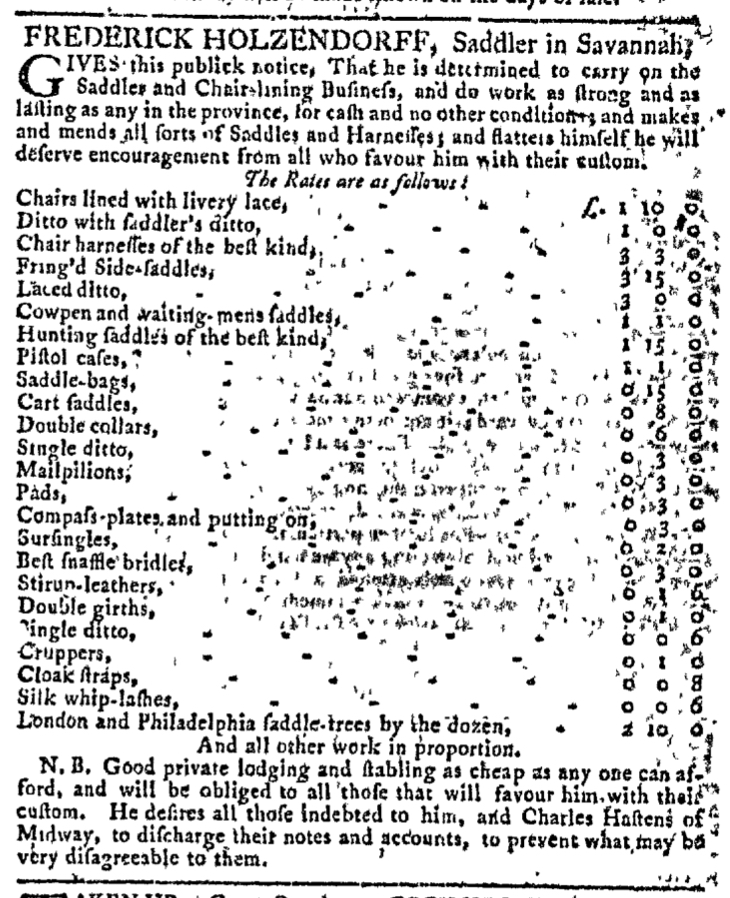
“Chairs lined with livery lace,     –     –     £.1   10   0.”

With the exception of subscription notices for books, prints, and other printed items, eighteenth-century advertisements rarely included prices for goods offered for sale. Merchants and shopkeepers sometimes indicated prices for limited numbers of items listed in their lengthy advertisements, but rarely did they associate specific prices with more than two or three products. Instead, they tended to promise low and competitive prices. Merchants who sold wholesale also indicated they offered discounts to those who purchased in bulk. Sometimes producers and suppliers published shorter advertisements that promoted just one or two commodities and indicated specific prices. Rarely, however, did an advertisement listing more than half a dozen items include prices for each of those items.

Frederick Holzendorff, a saddler in Savannah, took a unique approach to his advertisement when he specified prices for every items listed in his advertisement, from “Fring’d Side-saddles” (his most expensive product at 3 pounds and 15 shillings) to “Silk whip-lashes” and “Single girths” (his least expensive at only 6 pence each). The saddler let prospective customers know exactly what they could expect to pay for “Chairs lined with livery lace,” “Cart saddles,” “Best snaffle bridles,” and nearly two dozen other products. This allowed for comparison shopping, but may have also attracted customers who remembered approximately how much they paid for similar goods when they previously dealt with any of Holzendorff’s competitors.

Such an advertisement represented an investment by the saddler. In column inches it was the longest advertisement that appeared in the December 10, 1766, issue of the Georgia Gazette, thanks to the table that carefully listed one product per line along with its price in pounds, shillings, and pence. In and of itself, the table of “Rates” for each item visually distinguished Holzendorff’s advertisement from others. Though a couple of the dense real estate and legal notices may have had higher word counts, Holzendorff’s advertisement had more words than any that offered consumer goods and services.

Holzendorff experimented with indicating a price for every item he listed in his advertisement, presumably believing that this strategy would attract sufficient business to offset any additional costs of his lengthy advertisement compared to the shorter notices that appeared in his local newspaper.