May 16

What was advertised in a colonial American newspaper 250 years ago today?

May 16 - 5:16:1767 Providence Gazette
Providence Gazette (May 16, 1767)

“Customers coming from the Westward, may save both Time and Shoe-Leather by calling at their aforesaid Shops.”

Playful patter was not usually part of eighteenth-century advertisements, but James Brown and Benoni Pearce needed to do something to compensate for the location of their shops “On the West Side of the Great-Bridge … in Providence.” That put them beyond the center of the small city, founded on the east side of the basin created by the confluence of the Woonasquatucket and Moshassuck Rivers. A map drawn by a British military surveyor, published in London in 1777, shows that Providence primarily stretched along the east side of the basin. This included a fort and the college (now Brown University). However, some colonists built homes and businesses on the west side of the basin. The Great Bridge, first constructed in 1711 and widened in 1744, connected one side of basin to the other.

May 16 - Detail of Map
Detail of Charles Blaskowitz, A Topographical Chart of the Bay of Narraganset in the Province of New England (London: Engraved and Printed for William Faden, 1777). Courtesy Library of Congress.

Realizing that many of their competitors were clustered along the streets on the east side, Brown and Pearce decided to promote their location as a convenience for some of the readers of the Providence Gazette. Especially for those who resided beyond the small port, the shopkeepers “think that their Customers coming from the Westward, may save both Time and Shoe-Leather by calling at their aforesaid Shops.” There was no need to cross the Great Bridge! Doing so, the shopkeepers slyly hinted, wasted valuable time and resources when they could simply choose from among the “neat Assortment of GOODS, suitable for the Season” that Brown and Pearce stocked in their shops. At the same time, the shopkeepers did not want their neighbors to the east to feel unwelcome. They pledged that “those on the other Side, will be well paid for crossing the Pavements, and be kindly received and well used.” It was a waste of time (and shoe leather!) to cross the bridge to visit the shops to the east, but well worth the time to cross in the opposite direction. Other virtues, including good service and a kind reception, more than made up for any inconvenience or extra time spent reaching their shops.

The banter in Brown and Pearce’s advertisement made it memorable. They did not consider it necessary to enumerate their assortment of goods or make detailed promises about low prices. Instead, they let their affable demeanor do the work of attracting customers to “the West Side of the Great-Bridge” to do their shopping.
May 15

What was advertised in a colonial American newspaper 250 years ago today?

May 15 - 5:15:1767 New-London Gazette
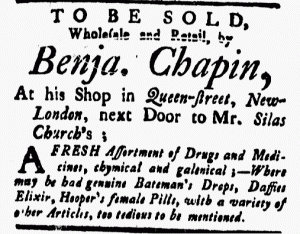
New-London Gazette (May 15, 1767).

“TO BE SOLD … At his Shop in Queen-street, New-London.”

Throughout the winter and early spring in 1767 very few advertisements for consumer goods appeared in the New-London Gazette. When May arrived, the newspaper experienced a resurgence in that category of advertising, though it must be noted that this amounted to a fairly small number of paid notices compared to newspapers printed in larger cities. Still, the publication took on a slightly different tone as retailers turned to its pages to promote their wares to prospective customers.

While small in number, advertisements for consumer goods in the May 15 issue covered a wide variety of products. Richard Ransom announced that he made and sold spinning wheels and various sorts of furniture “in the neatest and best Manner.” Robert Douglass, Jr., advertised that he “MAKES and Sells Goldsmith’s and Jeweller’s Work.” Benjamin Chapin hawked “ A FRESH Assortment of Drugs and Medicines, chymical and galenical.” For his part, Christopher Lessingwell had recently imported “A GENERAL assortment of English Goods, which he will Sell cheap.” Ebenezer Coburn specialized in “Iron-Mongery, and Cutlery Ware.”

Although this selection of advertisements may not seem particularly impressive compared to the volume that appeared in newspapers – and special advertising supplements! – in Boston, Charleston, New York, and Philadelphia, regular readers of the New-London Gazette would have noticed a striking increase in advertising aimed at consumers. That several appeared in the pages of the New-London Gazette simultaneously may have directed greater attention to all of them collectively. One may have been fairly easy to overlook, but multiple advertisements promoting consumer culture had the effect of reinforcing each other, even if that had not been the intention of the advertisers themselves.

What accounted for advertisements for consumer goods once again appearing alongside paid legal notices and advertisements for runaway servants, horses “to cover,” and real estate for sale? Was it merely a change in seasons? To what extent did shopkeepers and artisans continue to promote their wares in the New-London Gazette? Did the diversity of advertisements in the May 15 issue prompt others to insert their own marketing appeals? How did advertising practices in smaller towns compare to those in bustling urban ports? These are some of the questions I would like to address as I continue to track how advertising functioned in New London and its newspaper.

Slavery Advertisements Published May 15, 1767

The Slavery Adverts 250 Project chronicles the role of newspaper advertising in perpetuating slavery in the era of the American Revolution. The project seeks to reveal the ubiquity of slavery in eighteenth-century life from New England to Georgia by republishing advertisements about enslaved people – for sale as individuals or in groups, wanted to purchase or for hire for short periods, runaways who liberated themselves, and those who were subsequently captured and confined in jails and workhouses – in daily digests on this site as well as in real time via the @SlaveAdverts250 Twitter feed, utilizing twenty-first-century media to stand in for the print media of the eighteenth century.

The project aims to provide modern audiences with a sense of just how often colonizers encountered these advertisements in their daily lives. Enslaved men, women, and children appeared in print somewhere in the colonies almost every single day. Those advertisements served as a constant backdrop for social, cultural, economic, and political life in colonial and revolutionary America. Colonizers who did not purport to own enslaved people were still confronted with slavery as well as invited to maintain the system by purchasing enslaved men, women, and children or assisting in the capture of so-called “runaways” who sought to free themselves from bondage. The frequency of these newspaper advertisements suggests just how embedded slavery was in colonial and revolutionary American culture in everyday interactions beyond the printed page.

These advertisements also testify to the experiences of enslaved men, women, and children, though readers must consider that those experiences have been remediated through descriptions offered by enslavers rather than enslaved people themselves. Often unnamed in the advertisements, enslaved men, women, and children were not invisible or unimportant in early America.

These advertisements appeared in colonial American newspapers 250 years ago today.

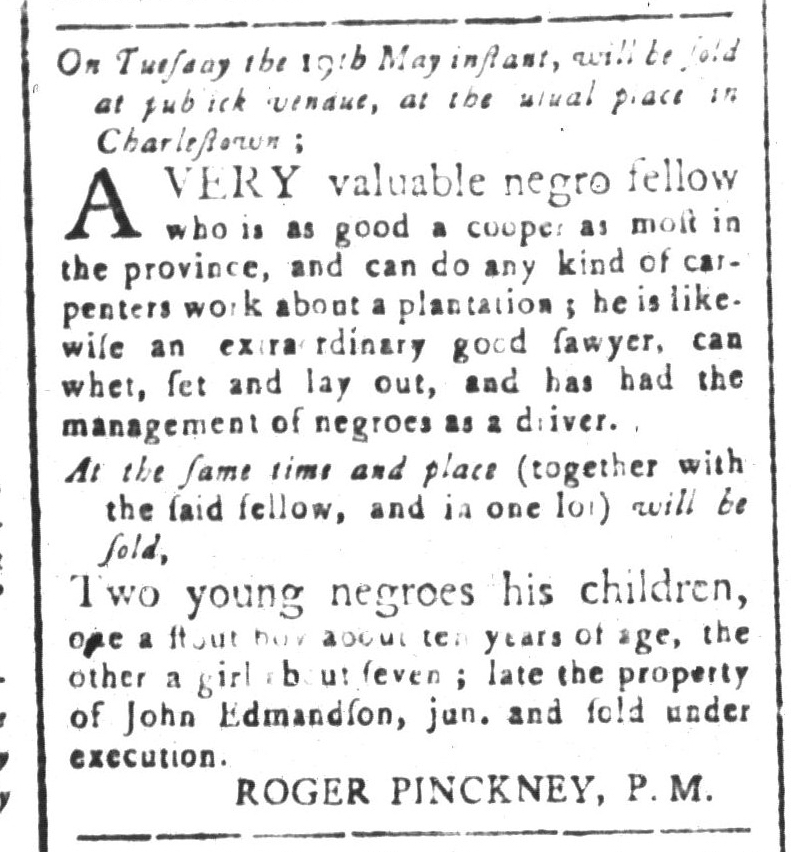
May 15 - South-Carolina and American General Gazette Slavery 1
South-Carolina and American General Gazette (May 15, 1767).

**********

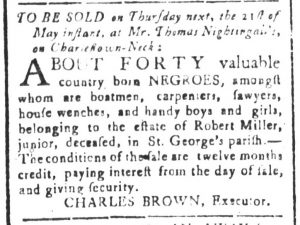
May 15 - South-Carolina and American General Gazette Slavery 2
South-Carolina and American General Gazette (May 15, 1767).

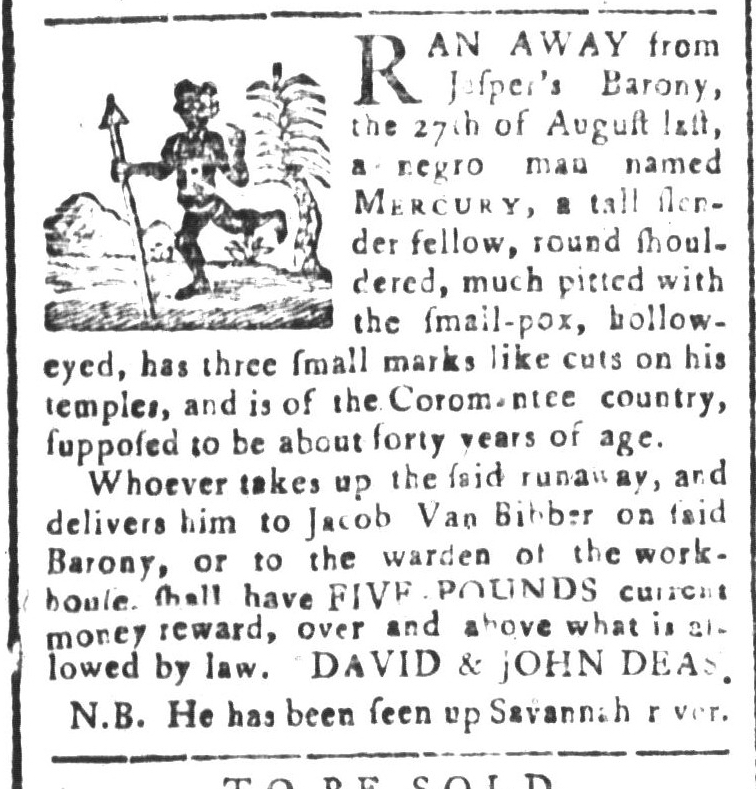
**********May 15 - South-Carolina and American General Gazette Slavery 3

**********

May 15 - South-Carolina and American General Gazette Slavery 4
South-Carolina and American General Gazette (May 15, 1767).

**********

May 15 - South-Carolina and American General Gazette Slavery 5
South-Carolina and American General Gazette (May 15, 1767).

**********

May 15 - South-Carolina and American General Gazette Slavery 6
South-Carolina and American General Gazette (May 15, 1767).

**********

May 15 - South-Carolina and American General Gazette Slavery 7
South-Carolina and American General Gazette (May 15, 1767).

**********

May 15 - South-Carolina and American General Gazette Slavery 8
South-Carolina and American General Gazette (May 15, 1767).

**********

May 15 - South-Carolina and American General Gazette Slavery 9A
South-Carolina and American General Gazette (May 15, 1767).

**********

May 15 - South-Carolina and American General Gazette Slavery 9B
Continuation of previous advertisement from South-Carolina and American General Gazette (May 15, 1767).

**********

May 15 - South-Carolina and American General Gazette Slavery 10
South-Carolina and American General Gazette (May 15, 1767).

May 14

What was advertised in a colonial American newspaper 250 years ago today?

May 14 - 5:14:1767 Massachusetts Gazette
Massachusetts Gazette (May 14, 1767).

“They are much the same in all the Stores.”

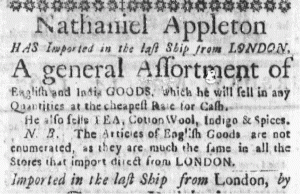
Many eighteenth-century shopkeepers promoted their merchandise by publishing extensive lists of their inventory. They presented potential customers with a multitude of choices amongst the “general Assortment of English and India GOODS” they imported. Three shopkeepers – Joshua Blanchard, Joshua Gardner and Company, and Clement Jackson – each inserted list-style advertisements that extended half a column or more in the May 14, 1767, issue of the Massachusetts Gazette. Each named dozens of items that readers could purchase in their shops.

Nathaniel Appleton saw little sense in paying for such extensive advertisements, especially not when his competitors already did so. Yet he did not want to lose any prospective customers who might assume that his failure to list so many goods indicated that he had an inferior selection. To that end, he supplemented his assertion that he carried a “general Assortment” of goods with a nota bene that offered further explanation: “The Articles of English Goods are not enumerated, as they are much the same in all the Stores that import direct from LONDON.”

Appleton poked at his competitors, suggesting that one of the most popular marketing methods employed by other shopkeepers might be pointless. He carried the same goods as his competitors but had the good sense not to attempt to manipulate potential consumers with efforts to overwhelm them with extensive advertisements. He acknowledged standardization in consumer culture, noting that retailers generally depended on the same suppliers.

Appleton was not the only retailer to critique lengthy list-style advertisements. Just ten days earlier Gilbert Deblois’ advertisement in the Boston Evening-Post proclaimed that his inventory “consist[ed] of every Article that has been mentioned in the most lengthy Advertisements,” though that did not prevent him for providing an abbreviated list of his own. A couple of months earlier Benjamin Thurber and Edward Thurber inserted a notice in the Providence Gazette in which they announced that they stocked “too many [goods] … to enumerate each Particular in an Advertisement.” In addition, refusing to take on the costs of doing so allowed them to keep their prices low. At the beginning of the year, Joshua Blanchard deployed a similar argument as he lambasted the list-style advertisements published by his competitors: “The VERY LOW Price at which he sells will not afford a lengthy Advertisement, enumerating every Particular, even to Pins and Needles.” Blachard apparently had a change of heart. His lengthy advertisement “enumerating” dozens of items “Imported from LONDON” appeared immediately to the right of Appleton’s notice in the May 14 issue. Blanchard paid for his advertisement, but Appleton benefited from its proximity to his own.

Eighteenth-century advertisers like Appleton played with the conventions developing around consumer marketing, sometimes critiquing them if they thought doing so might result in some advantage or attract customers bored with the usual sorts of appeals.

Slavery Advertisements Published May 14, 1767

The Slavery Adverts 250 Project chronicles the role of newspaper advertising in perpetuating slavery in the era of the American Revolution. The project seeks to reveal the ubiquity of slavery in eighteenth-century life from New England to Georgia by republishing advertisements about enslaved people – for sale as individuals or in groups, wanted to purchase or for hire for short periods, runaways who liberated themselves, and those who were subsequently captured and confined in jails and workhouses – in daily digests on this site as well as in real time via the @SlaveAdverts250 Twitter feed, utilizing twenty-first-century media to stand in for the print media of the eighteenth century.

The project aims to provide modern audiences with a sense of just how often colonizers encountered these advertisements in their daily lives. Enslaved men, women, and children appeared in print somewhere in the colonies almost every single day. Those advertisements served as a constant backdrop for social, cultural, economic, and political life in colonial and revolutionary America. Colonizers who did not purport to own enslaved people were still confronted with slavery as well as invited to maintain the system by purchasing enslaved men, women, and children or assisting in the capture of so-called “runaways” who sought to free themselves from bondage. The frequency of these newspaper advertisements suggests just how embedded slavery was in colonial and revolutionary American culture in everyday interactions beyond the printed page.

These advertisements also testify to the experiences of enslaved men, women, and children, though readers must consider that those experiences have been remediated through descriptions offered by enslavers rather than enslaved people themselves. Often unnamed in the advertisements, enslaved men, women, and children were not invisible or unimportant in early America.

These advertisements appeared in colonial American newspapers 250 years ago today.

May 14 - New-York Gazette Weekly Post-Boy Slavery 1
New-York Gazette: Or, the Weekly Post-Boy (May 14, 1767).

**********

May 14 - New-York Gazette Weekly Post-Boy Slavery 2
New-York Gazette: Or, the Weekly Post-Boy (May 14, 1767).

**********

May 14 - New-York Journal Slavery 1
New-York Journal (May 14, 1767).

**********

May 14 - Pennsylvania Gazette Slavery 1
Pennsylvania Gazette (May 14, 1767).

**********

May 14 - Pennsylvania Gazette Slavery 2
Pennsylvania Gazette (May 14, 1767).

**********

May 14 - Pennsylvania Gazette Supplement Slavery 1
Supplement to the Pennsylvania Gazette (May 14, 1767).

**********

May 14 - Pennsylvania Gazette Supplement Slavery 2
Supplement to the Pennsylvania Gazette (May 14, 1767).

**********

May 14 - Pennsylvania Gazette Supplement Slavery 3
Supplement to the Pennsylvania Gazette (May 14, 1767).

**********

May 14 - Virginia Gazette Slavery 1
Virginia Gazette (May 14, 1767).

**********

May 14 - Virginia Gazette Slavery 2
Virginia Gazette (May 14, 1767).

**********

May 14 - Virginia Gazette Slavery 3
Virginia Gazette (May 14, 1767).

**********

May 14 - Virginia Gazette Slavery 4
Virginia Gazette (May 14, 1767).

**********

May 14 - Virginia Gazette Slavery 5
Virginia Gazette (May 14, 1767).

**********

May 14 - Virginia Gazette Slavery 6
Virginia Gazette (May 14, 1767).

**********

May 14 - Virginia Gazette Slavery 7
Virginia Gazette (May 14, 1767).

May 13

What was advertised in a colonial American newspaper 250 years ago today?

May 13 - 5:13:1767 South-Carolina Gazette and Country Journal Extraordinary
South-Carolina Gazette and Country Journal Extraordinary (May 13, 1767).

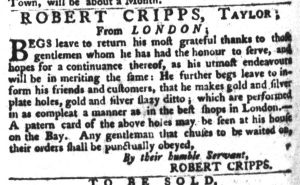
“A patern card of the above holes may be seen at his house.”

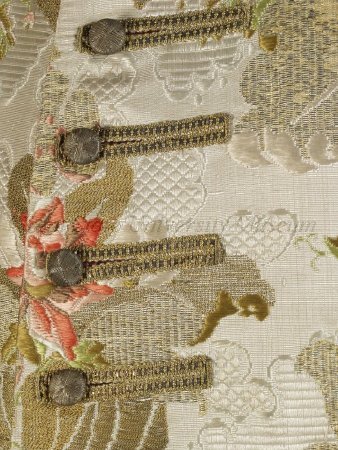
Robert Cripps, a tailor originally from London, used his advertisement in the South-Carolina Gazette and Country Journal to draw attention to another form of marketing intended to entice potential clients to avail themselves of his services. After announcing that he “makes gold and silver plate holes, gold and silver slazy [holes],” he informed readers that “A patern card of the above holes may be seen at his house on the Bay.” Print culture accounted for much of the marketing in eighteenth-century America as advertisers distributed trade cards, billheads, and catalogs and inserted notices in newspapers and on magazine wrappers, but print was not the only – or even always the best – way to generate interest and incite demand. Material culture offered an attractive and viable alternative.

No matter how articulate or elaborate Cripps and other tailors could have been in describing their work in advertisements, doing so certainly could not have compared to allowing potential customers to examine finished work for themselves. Pattern cards provided a means of making this possible that had several advantages. Tailors and customers did not have to handle finished garments made for other clients, nor did tailors need to keep extensive inventory on hand. Instead, pattern cards allowed them to demonstrate an array of possibilities. Pattern cards presented consumers with an array of choices similar to the “assortment of goods” that commonly appeared in lengthy list-style advertisements placed by shopkeepers. In selecting the style of buttonholes that fit their taste and budget, clients asserted control over interactions with those they hired as well as, ultimately, their appearance rather than settling for whatever wares tailors might have otherwise foisted on them. Cripps could construct garments that were distinctive and special, but he did so at the direction of his clients who made a variety of choices about their apparel, including the type of buttonholes they selected from the pattern card. The pattern card was a useful tool, not only because it presented samples but perhaps more importantly because it excited potential clients’ imaginations and stoked their desire and demand for Cripps’ tailoring services.

**********

May 13 - British Plate Hole
Button and plate hole from British waistcoat, 1740s. (Courtesy Metropolitan Museum of Art.)

While the “plate holes” in this advertisement were familiar to eighteenth-century consumers, they are no longer part of the lexicon of most modern consumers when they purchase clothing. I turned to specialists in the histories of textiles and fashion for assistance in determining what Cripps meant. Kimberly Alexander, Gina Barrett, and the pseudonymous Scrapiana graciously and insightfully pointed me in the right direction via a conversation on Twitter last week.  Barrett drew my attention to both of the garments pictured here.

May 13 - French Plate Hole
Buttons and plate holes from French waistcoat, ca. 1760s. (Courtesy Kent State University Museum.)

“Plate holes” referred to buttonholes created by stitching over flat metal plates on either side of the hole. See, for example, a British waistcoat from the 1740s now in the collections of the Metropolitan Museum. For an even more elaborate example, see the circa 1760 French waistcoat at the Kent State University Museum. In contrast, “slazy” holes did not have metal plates.

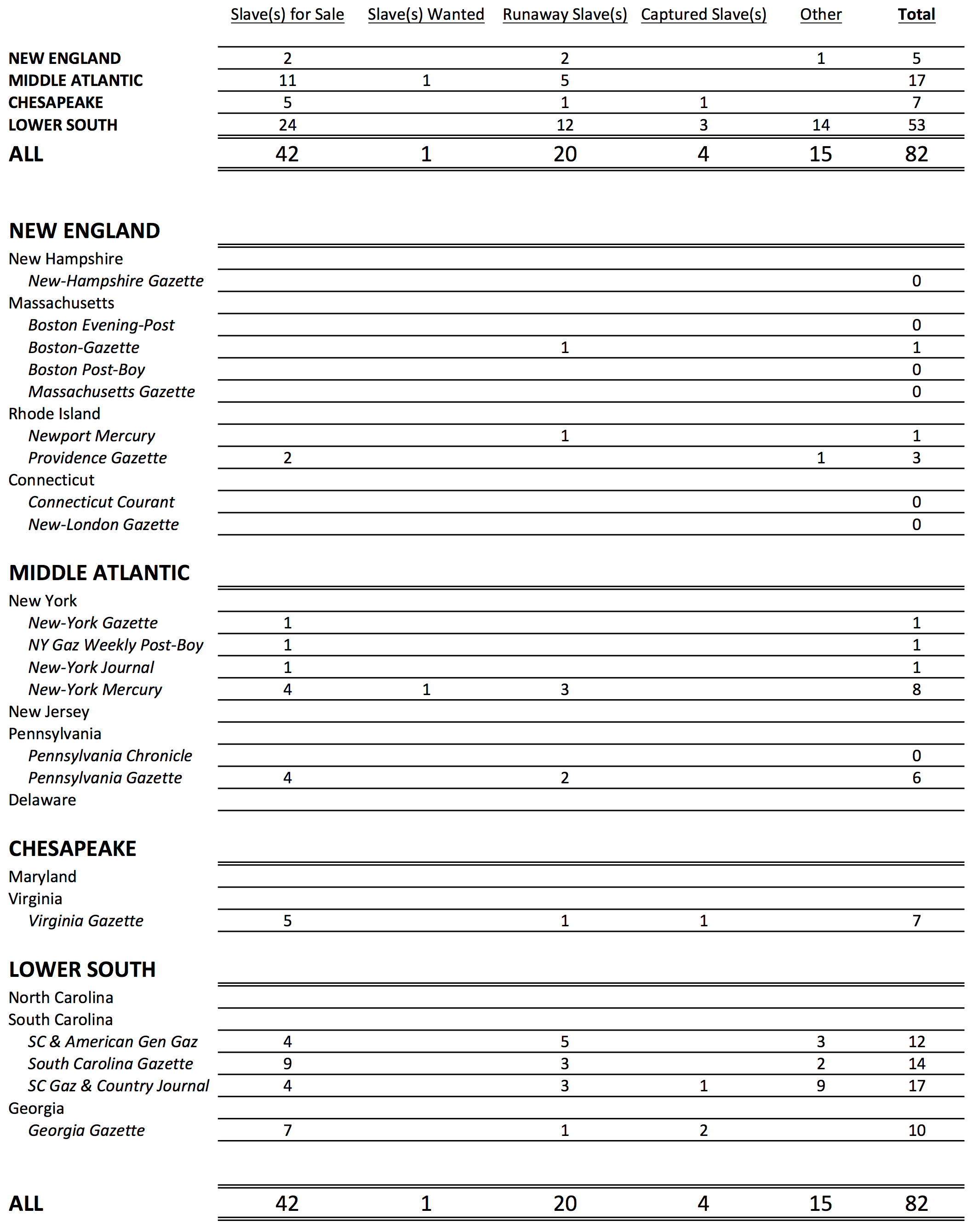
Summary of Slavery Advertisements Published May 7-13, 1767

These tables indicate how many advertisements for slaves appeared in colonial American newspapers during the week of May 7-13, 1767.

Note:  These tables are as comprehensive as currently digitized sources permit, but they may not be an exhaustive account.  They includes all newspapers that have been digitized and made available via Accessible Archives, Colonial Williamsburg’s Digital Library, and Readex’s America’s Historical Newspapers.  There are several reasons some newspapers may not have been consulted:

  • Issues that are no longer extant;
  • Issues that are extant but have not yet been digitized (including the Pennsylvania Journal); and
  • Newspapers published in a language other than English (including the Wochentliche Philadelphische Staatsbote).

**********

Slavery Advertisements Published May 7-13, 1767:  By Date

Slavery Adverts Tables 1767 By Date May 7

**********

Slavery Advertisements Published May 7-13, 1767:  By Region

Slavery Adverts Tables 1767 By Region May 7

Slavery Advertisements Published May 13, 1767

The Slavery Adverts 250 Project chronicles the role of newspaper advertising in perpetuating slavery in the era of the American Revolution. The project seeks to reveal the ubiquity of slavery in eighteenth-century life from New England to Georgia by republishing advertisements about enslaved people – for sale as individuals or in groups, wanted to purchase or for hire for short periods, runaways who liberated themselves, and those who were subsequently captured and confined in jails and workhouses – in daily digests on this site as well as in real time via the @SlaveAdverts250 Twitter feed, utilizing twenty-first-century media to stand in for the print media of the eighteenth century.

The project aims to provide modern audiences with a sense of just how often colonizers encountered these advertisements in their daily lives. Enslaved men, women, and children appeared in print somewhere in the colonies almost every single day. Those advertisements served as a constant backdrop for social, cultural, economic, and political life in colonial and revolutionary America. Colonizers who did not purport to own enslaved people were still confronted with slavery as well as invited to maintain the system by purchasing enslaved men, women, and children or assisting in the capture of so-called “runaways” who sought to free themselves from bondage. The frequency of these newspaper advertisements suggests just how embedded slavery was in colonial and revolutionary American culture in everyday interactions beyond the printed page.

These advertisements also testify to the experiences of enslaved men, women, and children, though readers must consider that those experiences have been remediated through descriptions offered by enslavers rather than enslaved people themselves. Often unnamed in the advertisements, enslaved men, women, and children were not invisible or unimportant in early America.

These advertisements appeared in colonial American newspapers 250 years ago today.

May 13 - Georgia Gazette Slavery 1
Georgia Gazette (May 13, 1767).

**********

May 13 - Georgia Gazette Slavery 2
Georgia Gazette (May 13, 1767).

**********

May 13 - Georgia Gazette Slavery 3
Georgia Gazette (May 13, 1767).

**********

May 13 - Georgia Gazette Slavery 4
Georgia Gazette (May 13, 1767).

**********

May 13 - Georgia Gazette Slavery 5
Georgia Gazette (May 13, 1767).

**********

May 13 - Georgia Gazette Slavery 6
Georgia Gazette (May 13, 1767).

**********

May 13 - Georgia Gazette Slavery 7
Georgia Gazette (May 13, 1767).

**********

May 13 - Georgia Gazette Slavery 8
Georgia Gazette (May 13, 1767).

**********

May 13 - Georgia Gazette Slavery 9
Georgia Gazette (May 13, 1767).

**********

May 13 - Georgia Gazette Slavery 10
Georgia Gazette (May 13, 1767).

**********

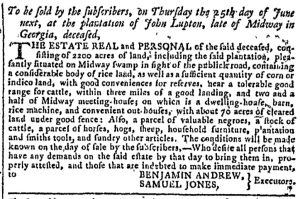
May 13 - South-Carolina Gazette and Country Journal Extraordinary Slavery 1
South-Carolina Gazette and Country Journal Extraordinary (May 13, 1767).

**********

May 13 - South-Carolina Gazette and Country Journal Extraordinary Slavery 2
South-Carolina Gazette and Country Journal Extraordinary (May 13, 1767).

**********

May 13 - South-Carolina Gazette and Country Journal Extraordinary Slavery 3
South-Carolina Gazette and Country Journal Extraordinary (May 13, 1767).

May 12

What was advertised in a colonial American newspaper 250 years ago today?

May 12 - 5:12:1767 South-Carolina Gazette and Country Journal
South-Carolina Gazette and Country Journal (May 12, 1767).

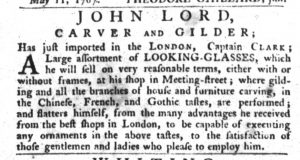
“Gilding and all the branches of house and furniture carving.”

John Lord earned his living as a carver and gilder, but he also sold imported looking glasses, “either with or without frames, at his shop in Meeting-street” in Charleston. He likely constructed, carved, and gilded some of those frames in his own shop, replicating styles currently popular in London.

By his own account, Lord was skilled at his craft. He was capable of “gilding and all the branches of house and furniture carving, in the Chinese, French, and Gothic tastes.” In the same way that shopkeepers presented potential customers with an array of choices, Lord also catered to potential clients’ desire to express themselves through the types of ornamentation they selected for their furniture and homes. His invocation of “Chinese, French, and Gothic tastes” also echoed styles for exotic housewares, including decorative arts and imported porcelain tea sets and dishes, popular among eighteenth-century consumers who participated in increasingly global circuits of trade. Potential customers who already possessed imported Chinese porcelain, for instance, could commission looking glass frames or tables or sideboards with similar or matching elements to achieve a sense of cohesion and style.

In contrast to many other artisans who advertised in colonial newspapers, Lord did not indicate his origins. See, for example, the notice placed by “WHITING, SADLER, FROM LONDON,” that appeared immediately below Lord’s advertisement. Still, the carver and gilder asserted a connection to cosmopolitan center of the empire, reporting that because of “the many advantages he received from the best shops in London” that he was “capable of executing any ornaments in the above tastes, to the satisfaction of those gentlemen and ladies who please to employ him.” Lord suggested that he completed an apprenticeship in London or that he had worked alongside skilled artisans in notable workshops before migrating across the Atlantic. He had not learned his trade in the colonies; instead, he benefited from the cachet accrued by hinting that he had superior training compared to his provincial competitors. Closer connections to workshops in London could also mean that he developed better understandings of current fashions.

Charleston was one of the largest cities in Britain’s North American colonies, yet its residents still looked to London as they participated in consumer culture, adopted new fashions, and decorated their homes. In that context, John Lord took advantage of his previous experience working in “the best shops in London” to market his services as a carver and gilder.

Slavery Advertisements Published May 12, 1767

The Slavery Adverts 250 Project chronicles the role of newspaper advertising in perpetuating slavery in the era of the American Revolution. The project seeks to reveal the ubiquity of slavery in eighteenth-century life from New England to Georgia by republishing advertisements about enslaved people – for sale as individuals or in groups, wanted to purchase or for hire for short periods, runaways who liberated themselves, and those who were subsequently captured and confined in jails and workhouses – in daily digests on this site as well as in real time via the @SlaveAdverts250 Twitter feed, utilizing twenty-first-century media to stand in for the print media of the eighteenth century.

The project aims to provide modern audiences with a sense of just how often colonizers encountered these advertisements in their daily lives. Enslaved men, women, and children appeared in print somewhere in the colonies almost every single day. Those advertisements served as a constant backdrop for social, cultural, economic, and political life in colonial and revolutionary America. Colonizers who did not purport to own enslaved people were still confronted with slavery as well as invited to maintain the system by purchasing enslaved men, women, and children or assisting in the capture of so-called “runaways” who sought to free themselves from bondage. The frequency of these newspaper advertisements suggests just how embedded slavery was in colonial and revolutionary American culture in everyday interactions beyond the printed page.

These advertisements also testify to the experiences of enslaved men, women, and children, though readers must consider that those experiences have been remediated through descriptions offered by enslavers rather than enslaved people themselves. Often unnamed in the advertisements, enslaved men, women, and children were not invisible or unimportant in early America.

These advertisements appeared in colonial American newspapers 250 years ago today.

May 12 - South-Carolina Gazette and Country Journal Slavery 1
South-Carolina Gazette and Country Journal (May 12, 1767).

**********

May 12 - South-Carolina Gazette and Country Journal Slavery 2
South-Carolina Gazette and Country Journal (May 12, 1767).

**********

May 12 - South-Carolina Gazette and Country Journal Slavery 3
South-Carolina Gazette and Country Journal (May 12, 1767).

**********

May 12 - South-Carolina Gazette and Country Journal Slavery 4
South-Carolina Gazette and Country Journal (May 12, 1767).

**********

May 12 - South-Carolina Gazette and Country Journal Slavery 5
South-Carolina Gazette and Country Journal (May 12, 1767).

**********

May 12 - South-Carolina Gazette and Country Journal Slavery 6
South-Carolina Gazette and Country Journal (May 12, 1767).

**********

May 12 - South-Carolina Gazette and Country Journal Slavery 7
South-Carolina Gazette and Country Journal (May 12, 1767).

**********

May 12 - South-Carolina Gazette and Country Journal Slavery 8
South-Carolina Gazette and Country Journal (May 12, 1767).

**********

May 12 - South-Carolina Gazette and Country Journal Slavery 9
South-Carolina Gazette and Country Journal (May 12, 1767).

**********

May 12 - South-Carolina Gazette and Country Journal Slavery 10
South-Carolina Gazette and Country Journal (May 12, 1767)

**********

May 12 - South-Carolina Gazette and Country Journal Slavery 11
South-Carolina Gazette and Country Journal (May 12, 1767).

**********

May 12 - South-Carolina Gazette and Country Journal Slavery 12
South-Carolina Gazette and Country Journal (May 12, 1767).

**********

May 12 - South-Carolina Gazette and Country Journal Slavery 13
South-Carolina Gazette and Country Journal (May 12, 1767).

**********

May 12 - South-Carolina Gazette and Country Journal Slavery 14
South-Carolina Gazette and Country Journal (May 12, 1767).