March 3

What was advertised in a colonial American newspaper 250 years ago today?

“FRENCH SCHOOL.”
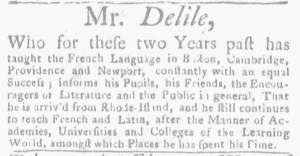
Massachusetts Gazette and Boston Weekly News-Letter (March 3, 1774).

In late February 1774, Mr. Delile, a French tutor, returned to the pages of Boston’s newspapers to alert readers that he had returned to the area and “continues to teach French and Latin.”  In an advertisement in the February 24 edition of the Massachusetts Gazette and Boston Weekly News-Letter, he reminded residents that “for these two Years past [he] has taught the French language in Boston, Cambridge, Providence and Newport.”  He had previously taken to the public prints in two colonies to keep current and prospective pupils advised to his whereabouts, explaining to students in Massachusetts, some of them presumably enrolled at Harvard College, that the “Present Vacation at Cambridge” meant “he can be absent without an Injury to his Pupils.”  He pledged to return to the area to guide them in their studies.  His new advertisement underscored his previous affiliation with Harvard students and his desire to once again teach them and their peers.  He declared that he provided lessons “after the Manner of Academies, Universities and Colleges of the Learning World, amongst which Places he has spent his Time.”  Delile offered a proper curriculum, drawing on his own experience and familiarity with educational institutions of the era.

Massachusetts Gazette and Boston Weekly News-Letter (March 3, 1774).

A week after Delile’s notice appeared, Francis Vandale published his own advertisement for a “FRENCH SCHOOL” in the March 3 edition of the Massachusetts Gazette and Boston Weekly News-Letter.  Although they competed for some of the same clients, Vandale took a different approach than Delile.  Rather than targeting young men studying at Harvard, Vandale sought “Gentlemen or Ladies” as pupils.  Instead of promoting his method of instruction, he emphasized the genteel qualities of the French language and the social standing his students could achieve under his direction.  He conjured an image of how “the French Language when taught agreeable to its native Purity & Elegance, is acquired with that becoming Ease and Gracefulness, as renders it truly Ornamental.”  His pupils, through the “Ease and Gracefulness” that Vandale’s tutelage instilled in them, took on the qualities of the language itself.  He did not mention any prior affiliations with academies or colleges, instead “profess[ing] to be a compleat Master of [French] in all its original Beauty and Propriety, entirely free from any false Mixture or bad Pronunciation.”  For Vandale, speaking French was not an academic exercise but rather a means of artistic expression.

Residents of Boston, Cambridge, and nearby towns who wished to learn or improve their French encountered more than one option when they perused the pages of the Massachusetts Gazette and Boston Weekly News-Letter.  They could take into account both the reputations and methods of Delile and Vandale when deciding if they wished to hire the services of either French tutor.
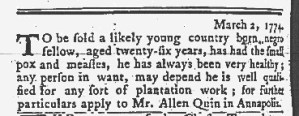
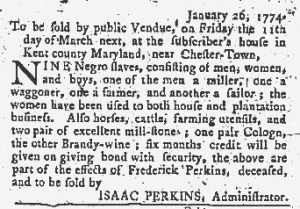
Slavery Advertisements Published March 3, 1774

GUEST CURATOR:  Grace Crowley

The Slavery Adverts 250 Project chronicles the role of newspaper advertising in perpetuating slavery in the era of the American Revolution. The project seeks to reveal the ubiquity of slavery in eighteenth-century life from New England to Georgia by republishing advertisements about enslaved people – for sale as individuals or in groups, wanted to purchase or for hire for short periods, runaways who liberated themselves, and those who were subsequently captured and confined in jails and workhouses – in daily digests on this site as well as in real time via the @SlaveAdverts250 Twitter feed, utilizing twenty-first-century media to stand in for the print media of the eighteenth century.

The project aims to provide modern audiences with a sense of just how often colonizers encountered these advertisements in their daily lives. Enslaved men, women, and children appeared in print somewhere in the colonies almost every single day. Those advertisements served as a constant backdrop for social, cultural, economic, and political life in colonial and revolutionary America. Colonizers who did not purport to own enslaved people were still confronted with slavery as well as invited to maintain the system by purchasing enslaved men, women, and children or assisting in the capture of so-called “runaways” who sought to free themselves from bondage. The frequency of these newspaper advertisements suggests just how embedded slavery was in colonial and revolutionary American culture in everyday interactions beyond the printed page.

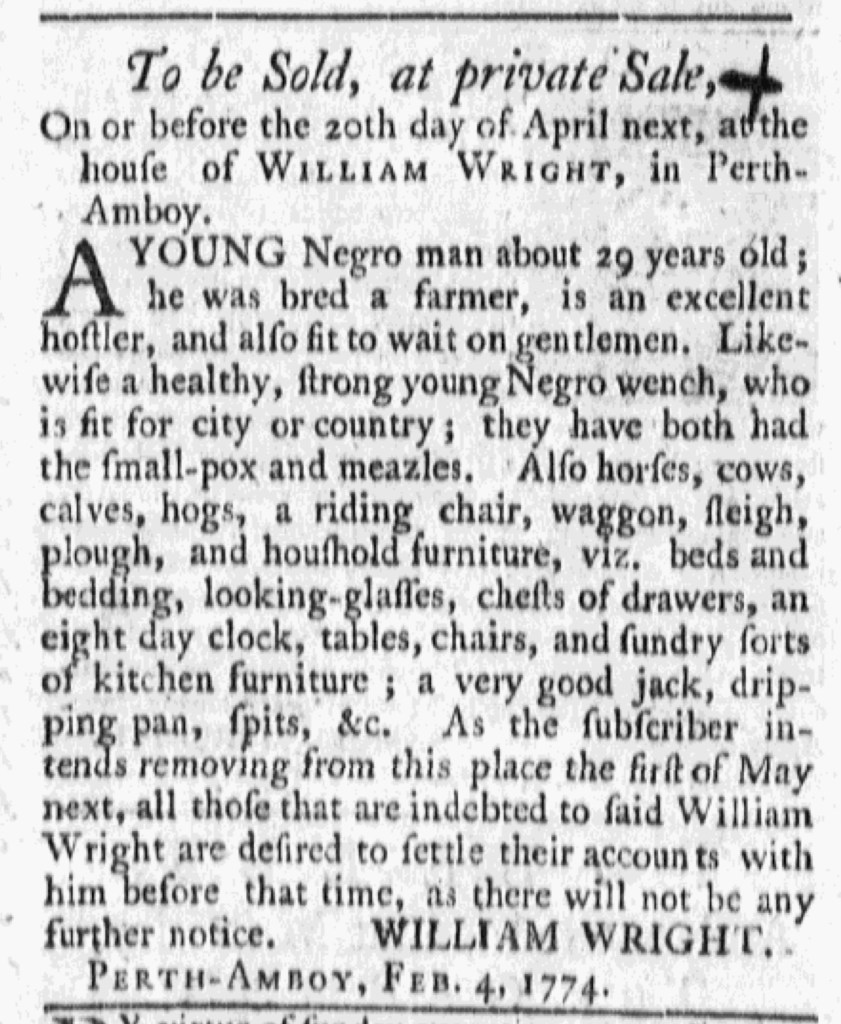
These advertisements also testify to the experiences of enslaved men, women, and children, though readers must consider that those experiences have been remediated through descriptions offered by enslavers rather than enslaved people themselves. Often unnamed in the advertisements, enslaved men, women, and children were not invisible or unimportant in early America.

These advertisements appeared in colonial American newspapers 250 years ago today.

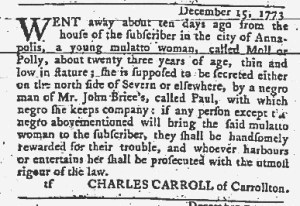
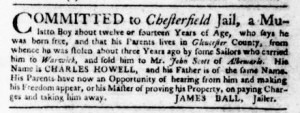
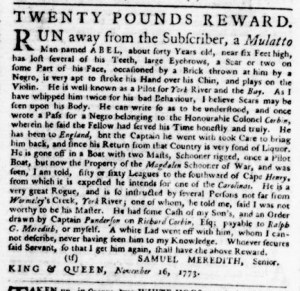
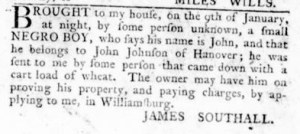
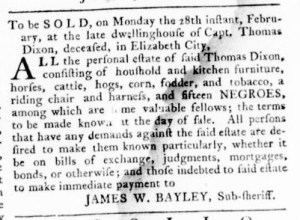
Maryland Gazette (March 3, 1774).

**********

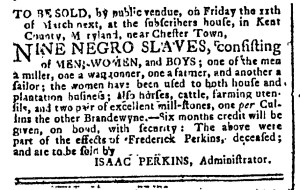
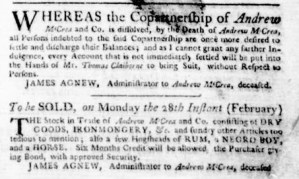
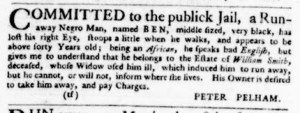
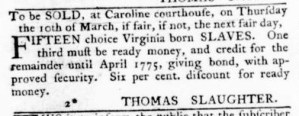
Maryland Gazette (March 3, 1774).

**********

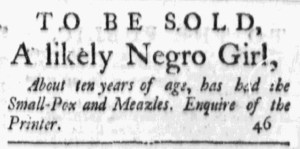
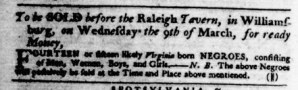
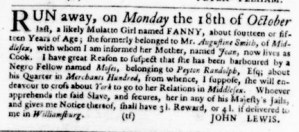
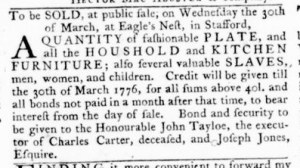
Maryland Gazette (March 3, 1774).

**********

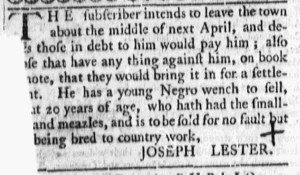
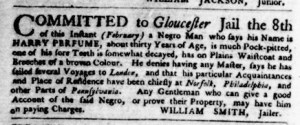
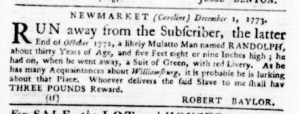
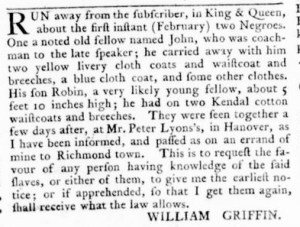
Maryland Journal (March 3, 1774).

**********

Rivington’s New-York Gazetteer (March 3, 1774).

**********

Rivington’s New-York Gazetteer (March 3, 1774).

**********

Supplement to Rivington’s New-York Gazetteer (March 3, 1774).

**********

Supplement to Rivington’s New-York Gazetteer (March 3, 1774).

**********

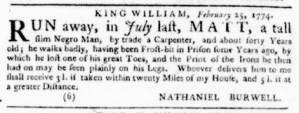
Virginia Gazette [Purdie and Dixon] (March 3, 1774).

**********

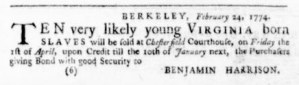
Virginia Gazette [Purdie and Dixon] (March 3, 1774).

**********

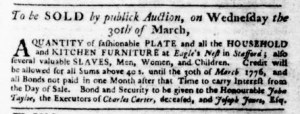
Virginia Gazette [Purdie and Dixon] (March 3, 1774).

**********

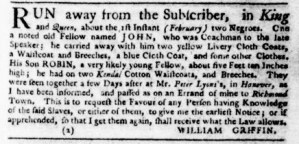
Virginia Gazette [Purdie and Dixon] (March 3, 1774).

**********

Virginia Gazette [Purdie and Dixon] (March 3, 1774).

**********

Virginia Gazette [Purdie and Dixon] (March 3, 1774).

**********

Virginia Gazette [Purdie and Dixon] (March 3, 1774).

**********

Virginia Gazette [Purdie and Dixon] (March 3, 1774).

**********

Virginia Gazette [Purdie and Dixon] (March 3, 1774).

**********

Virginia Gazette [Purdie and Dixon] (March 3, 1774).

**********

Virginia Gazette [Purdie and Dixon] (March 3, 1774).

**********

Virginia Gazette [Purdie and Dixon] (March 3, 1774).

**********

Virginia Gazette [Purdie and Dixon] (March 3, 1774).

**********

Virginia Gazette [Purdie and Dixon] (March 3, 1774).

**********

Virginia Gazette [Purdie and Dixon] (March 3, 1774).

**********

Virginia Gazette [Rind] (March 3, 1774).

**********

Virginia Gazette [Rind] (March 3, 1774).

**********

Virginia Gazette [Rind] (March 3, 1774).

**********

Virginia Gazette [Rind] (March 3, 1774).

**********

Virginia Gazette [Rind] (March 3, 1774).

**********

Virginia Gazette [Rind] (March 3, 1774).

March 2

What was advertised in a colonial American newspaper 250 years ago today?

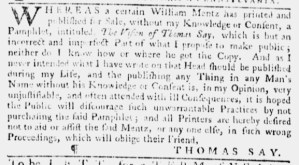
Pennsylvania Gazette (March 2, 1774).

“It is hoped the Public will discourage such unwarrantable Practices by not purchasing the said Pamphlet.”

In the winter of 1774, William Mentz published The Visions of a Certain Tho. Say, of the City of Philadelphia, Which He Saw in a Trance.  That pamphlet did not receive attention in the public prints because Mentz advertised it but instead because Thomas Say ran notices repudiating the work.  On March 2, Say inserted advertisements in the Pennsylvania Gazette and the Pennsylvania Journal.  Five days later, he ran the same notice in Dunlap’s Pennsylvania Packet.  He was so intent on disseminating his message as widely as possible that he invested in advertisements in all three of the English-language newspapers published in Philadelphia at the time.

Mentz did not advertise the pamphlet, so Say’s notices may have generated more attention than anything else.  Did they have the intended effect?  Did colonizers refrain from purchasing the pamphlet because Say reacted so strongly to its publication?  Or did the controversy whet their appetites to see what was contained within its pages?  Say denounced “a certain Mentz [who] has printed and published for Sale, without my Knowledge or Consent, a Pamphlet … which is but an incorrect and imperfect Part of what I propose to make public.”  Furthermore, Say did not know “how or where he got the Copy.”  He excoriated Mentz: “publishing any Thing in any Man’s Name without his Knowledge or Consent is, in my Opinion, very unjustifiable, and often attended with ill Consequences.”  Addressing the public, Say made a plea that they “will discourage such unwarrantable Practices by not purchasing said Pamphlet.”  He also requested that printers neither aid nor assist Mentz “in such wrong Proceedings.”

Did that incite instead of quell demand for the pamphlet?  Mentz issued a second version, The Visions of a Certain Thomas Say, of the City of Philadelphia, Which He Saw in a Trance: To Which Is Added, Another Vision. By the Late Reverend Isaac Watts, D.D.  Perhaps he did so because Say’s unintended marketing of the pamphlet yielded interest in it.  On the other hand, Say may have managed to inhibit sales, prompting Mentz to package the pamphlet with a similar item by a popular author in hopes of rescuing the endeavor from financial failure.  Either way, the visibility that the pamphlet received in Philadelphia’s newspapers came solely from Say’s efforts to constrain sales rather than marketing undertaken by the publisher.
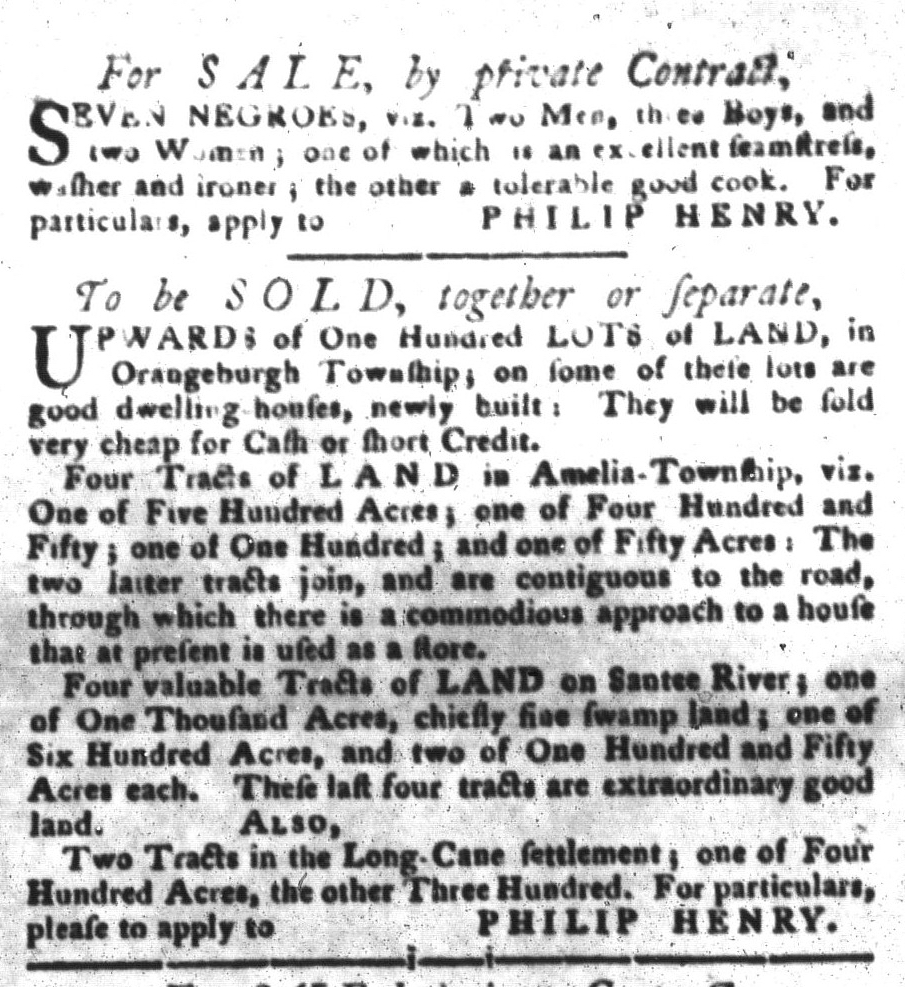
Slavery Advertisements Published March 2, 1774

The Slavery Adverts 250 Project chronicles the role of newspaper advertising in perpetuating slavery in the era of the American Revolution. The project seeks to reveal the ubiquity of slavery in eighteenth-century life from New England to Georgia by republishing advertisements about enslaved people – for sale as individuals or in groups, wanted to purchase or for hire for short periods, runaways who liberated themselves, and those who were subsequently captured and confined in jails and workhouses – in daily digests on this site as well as in real time via the @SlaveAdverts250 Twitter feed, utilizing twenty-first-century media to stand in for the print media of the eighteenth century.
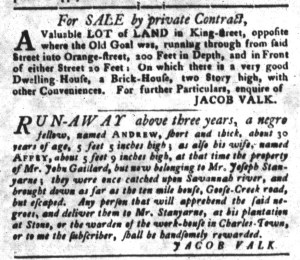
The project aims to provide modern audiences with a sense of just how often colonizers encountered these advertisements in their daily lives. Enslaved men, women, and children appeared in print somewhere in the colonies almost every single day. Those advertisements served as a constant backdrop for social, cultural, economic, and political life in colonial and revolutionary America. Colonizers who did not purport to own enslaved people were still confronted with slavery as well as invited to maintain the system by purchasing enslaved men, women, and children or assisting in the capture of so-called “runaways” who sought to free themselves from bondage. The frequency of these newspaper advertisements suggests just how embedded slavery was in colonial and revolutionary American culture in everyday interactions beyond the printed page.

These advertisements also testify to the experiences of enslaved men, women, and children, though readers must consider that those experiences have been remediated through descriptions offered by enslavers rather than enslaved people themselves. Often unnamed in the advertisements, enslaved men, women, and children were not invisible or unimportant in early America.

These advertisements appeared in colonial American newspapers 250 years ago today.

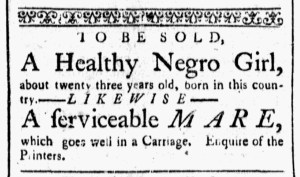
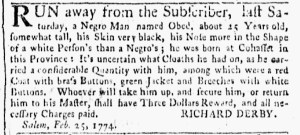
Essex Journal (March 2, 1774).

**********

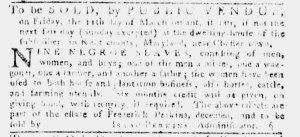
Pennsylvania Gazette (March 2, 1774).

March 1

What was advertised in a colonial American newspaper 250 years ago today?

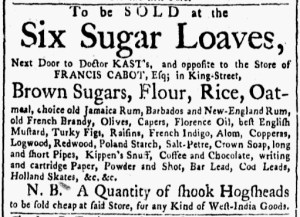
Essex Gazette (March 1, 1774).

“To be SOLD at the Six Sugar Loaves.”

It was an unusual headline for an advertisement.  The name of the store served as the headline, distinguishing it from the other notices in the March 1, 1774, edition of the Essex Gazette.  In newspapers throughout the colonies, the name of the merchant, shopkeeper, or artisan often appeared as the headline.  Such was the case for advertisements placed by John Appleton, Benjamin Coats, George Deblois, John Prince, and Nathaniel Sparhawk in that issue of the Essex Gazette.  Sometimes the merchandise, product, or service served as the headline, as in Walter P. Bartlett’s notice promoting “Garden Seeds,” Ezekiel Price’s advertisement for “INSURANCE,” and auctioneer W.P. Bartlett’s notice about an upcoming “PUBLIC VENDUE.”

In contrast, an unnamed advertiser advised readers of the Essex Gazette that he or she sold a variety of groceries and other wares “at the Six Sugar Loaves … in King-Street.”  No doubt the name of the shop matched the image on a sign that marked its location.  Other advertisements did not mention shop signs and only a couple made any reference to anything like a shop name.  Price gave his location as “the Insurance-Office” and Appleton stated that his store was located “next Door above the PRINTING-OFFICE.”  In both instances, the name described the primary enterprise undertaken at each business.  The “Six Sugar Loaves” suggested only one of the many commodities sold in that shop.  The inventory in the advertisement led with “Brown Sugars” yet also included “Flour, Rice, Oatmeal,” a variety of spirits, olives, “Turkey Figs, Raisins,” “Coffee and Chocolate,” and even soap, pipes, and “Powder and Shot.”  The sign that gave its name to the store depicted one kind of merchandise sold there.

Appearing in a large font, the “Six Sugar Loaves” may have been as prominently visible on the page of the Essex Gazetteas the sign it represented was on King Street in Salem.  Its inclusion in a newspaper advertisement testifies to the visual landscape of commerce and consumer culture that colonizers encountered as they traversed the streets of port cities on the eve of the American Revolution.  Very few of those signs survive today, but advertisements catalog their extensive use in early America.

Slavery Advertisements Published March 1, 1774

The Slavery Adverts 250 Project chronicles the role of newspaper advertising in perpetuating slavery in the era of the American Revolution. The project seeks to reveal the ubiquity of slavery in eighteenth-century life from New England to Georgia by republishing advertisements about enslaved people – for sale as individuals or in groups, wanted to purchase or for hire for short periods, runaways who liberated themselves, and those who were subsequently captured and confined in jails and workhouses – in daily digests on this site as well as in real time via the @SlaveAdverts250 Twitter feed, utilizing twenty-first-century media to stand in for the print media of the eighteenth century.

The project aims to provide modern audiences with a sense of just how often colonizers encountered these advertisements in their daily lives. Enslaved men, women, and children appeared in print somewhere in the colonies almost every single day. Those advertisements served as a constant backdrop for social, cultural, economic, and political life in colonial and revolutionary America. Colonizers who did not purport to own enslaved people were still confronted with slavery as well as invited to maintain the system by purchasing enslaved men, women, and children or assisting in the capture of so-called “runaways” who sought to free themselves from bondage. The frequency of these newspaper advertisements suggests just how embedded slavery was in colonial and revolutionary American culture in everyday interactions beyond the printed page.

These advertisements also testify to the experiences of enslaved men, women, and children, though readers must consider that those experiences have been remediated through descriptions offered by enslavers rather than enslaved people themselves. Often unnamed in the advertisements, enslaved men, women, and children were not invisible or unimportant in early America.

These advertisements appeared in colonial American newspapers 250 years ago today.

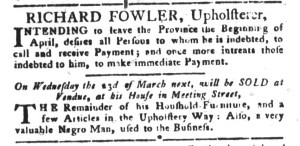
Essex Gazette (March 1, 1774).

**********

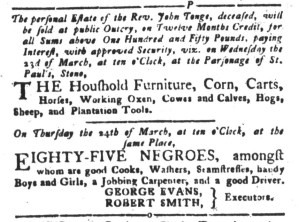
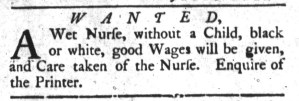
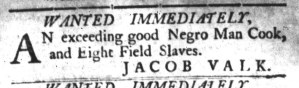
South-Carolina Gazette and Country Journal (March 1, 1774).

**********

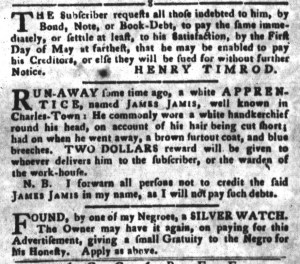
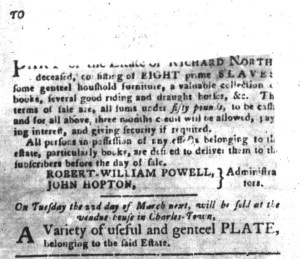
South-Carolina Gazette and Country Journal (March 1, 1774).

**********

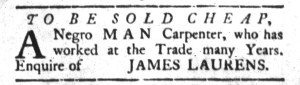
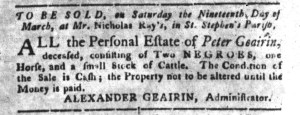
South-Carolina Gazette and Country Journal (March 1, 1774).

**********

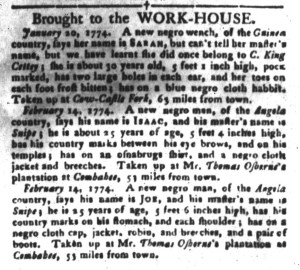
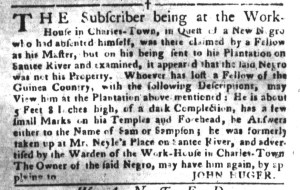
South-Carolina Gazette and Country Journal (March 1, 1774).

**********

South-Carolina Gazette and Country Journal (March 1, 1774).

**********

South-Carolina Gazette and Country Journal (March 1, 1774).

**********

South-Carolina Gazette and Country Journal (March 1, 1774).

**********

South-Carolina Gazette and Country Journal (March 1, 1774).

**********

South-Carolina Gazette and Country Journal (March 1, 1774).

**********

South-Carolina Gazette and Country Journal (March 1, 1774).

**********

South-Carolina Gazette and Country Journal (March 1, 1774).

**********

South-Carolina Gazette and Country Journal (March 1, 1774).

**********

South-Carolina Gazette and Country Journal (March 1, 1774).