March 9

GUEST CURATOR:  Grace Crowley

What was advertised in a colonial American newspaper 250 years ago today?

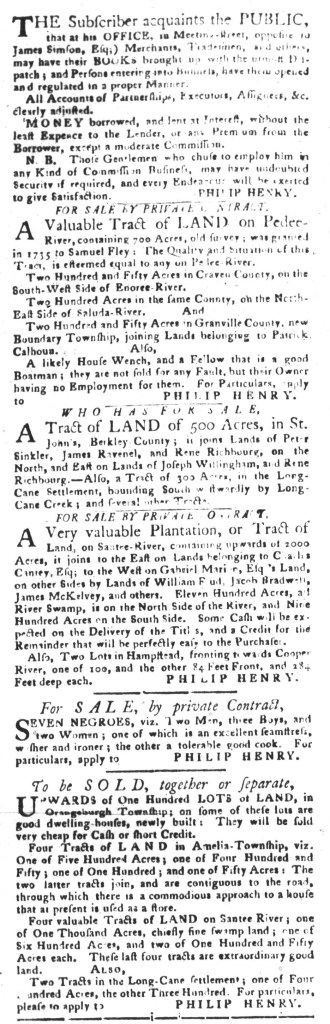
Pennsylvania Journal (March 9, 1774).

“A LIBRARIAN IS wanted by the LIBRARY COMPANY of Philadelphia.”

What caught my eye about this advertisement was the need for a librarian at the Library Company of Philadelphia, as I have been working with Laura Wasowicz, the curator of children’s literature at the American Antiquarian Society, for my independent research project for my capstone history seminar. I was interested in what the Library Company of Philadelphia was in the eighteenth century and I was excited to find out the Library Company, sometimes known as the LCP, is still alive and well today! According to their website, the LCP is America’s “first successful lending library and oldest cultural institution,” founded by Benjamin Franklin and the members of the Junto in 1731. The Junto Club was a collection of friends, including Benjamin Franklin, who met on Friday evenings to discuss different issues regarding morals, politics, or philosophy. These men were a collection of tradesmen and artisans who were interested in the common good for themselves and their society and were dedicated to finding ways to bring improvements to both. Members of the Junto were devoted readers and believed that if more people in their community had access to books they were reading, it would motivate those people to think and learn on their own, which could improve society.

Franklin wanted the public to have easy access to books since, at this time, books were not readily available and if available were extremely expensive. The members of the Junto themselves, most of them artisans, were not able to afford these books on their own either. Franklin and fifty other shareholders decided to collaborate and contribute forty shillings to buy the original collection of books and ten shillings every year to grow the library’s collection. The Junto was a catalyst for many public projects including this first lending library, the Library Company of Philadelphia.

The collection has grown throughout many different eras of American society and remains open to a variety of readers, from high school students to senior scholars. The Library Company of Philadelphia serves as a library full of resources that focus on American society and culture from the seventeenth century through the nineteenth century. Their mission is to increase the public understanding of American history by preserving and sharing the materials in their collection.

**********

ADDITIONAL COMMENTARY:  Carl Robert Keyes

The edition of the Pennsylvania Journal that first carried the Library Company of Philadelphia’s advertisement seeking a librarian also carried several advertisements for books, some of them available from printers and booksellers, others in the press, and some proposed for publication if enough subscribers reserved copies.  Throughout the colonies, printers and other members of the book trade sometimes placed a disproportionate amount of advertising in newspapers.

Subscription proposals outnumbered other advertisements for books in that issue of the Pennsylvania Journal.  One presented to the “GENTLEMEN and LADIES of America. PROPOALS For PRINTING by SUBSCRIPTION, THE History of the Life and Adventures OF Mr. DUNCAN CAMPBELL, (Born DEAF and DUMB).”  It would go to press “as soon as a sufficient number of SUBSCRIBERS offer.”  To entice them, the proposals promised “a curious well engraven PLATE, shewing the method how the deaf and dumb may obtain the knowledge, and be taught to read and write any language.”  For booksellers and shopkeepers who might be inclined to purchase by volume for retail, “Those who subscribe for twelve Books [would] have a thirteenth gratis.”  Another subscription proposal offered “THE CELEBRATED American EDITION OF THE WORKS OF FLAVIUS JOSEPHUS.”  Those who chose to have their volumes bound “shall have their names at large on the inside of the cover, done in Gold Letters.”  In addition, James Rivington promoted his edition of “NEW VOYAGE ROUND THE WORLD,” detailing Captain James Cook’s voyage on the Endeavour from 1768 through 1771.

By way of updating subscribers, James Humhreys, Jr., informed them that “STERNE’s WORKS” had been delayed due to “an unlucky accident, by which he has been confined and disabled from work for some weeks past.”  He pledged that the first volume was “now almost finished, and will be published in a few weeks, embellished with an elegant copper-plate Frontispiece.”  The printer also hawked a “New Edition of Whittenhall’s Latin Grammar” and “several other School Books.”  Elsewhere in that issue of Pennsylvania Journal, Robert Bell announced an “EXHIBITION of NEW and OLD BOOKS BY AUCTION.”  He anticipated the sale would last “eight or ten evenings.”  Readers could bid and acquire books from various genres, including “Arts, Sciences, History, Divinity, Biography, … Poetry, Classics, Voyages, Travels, [and] Novels.”  One advertisement even discouraged readers from purchasing a book.  Thomas Say once again ran his notice pleading with the public to refrain from buying William Mentz’s unauthorized edition of “The Vision of Thomas Say.”

Perhaps some of these books eventually found their way into the collections of the Library Company of Philadelphia, either in the eighteenth century when printers originally published and sold them or in subsequent years as the Library Company collected early American imprints and became a major research library.  Advertisements placed by printers, the Library Company, and even the aggrieved Thomas Say all testified to the contours of print culture in the largest city in the colonies on the eve of the American Revolution.
Welcome, Guest Curator Grace Crowley

Grace Crowley is a senior double majoring in History and Secondary Education at Assumption University in Worcester, Massachusetts. Her interest in history includes history from the “bottom up,” switching the focus of history to everyday people living through historical events.

On campus, Grace is an active member of the Assumption community. She is an Admissions Ambassador, Orientation Leader, First Year COMPASS Facilitator, and a Student Ambassador for Alumni. She also serves as the Student Leader of the new ASPIRE Program. For the past two summers, Grace has worked as the Student Leader of the Argentinian Summer Exchange Program that Assumption hosts every summer. Grace worked with more than fifty high school students from Argentina and their teachers who came to take classes and immerse themselves in American culture for the month of July.

Grace is also an active member of Hound Sound A Capella, the National Honor Society of Leadership and Success, and Phi Alpha Theta, the National History Honor Society.

In the future, Grace hopes to pursue a career in higher education, focusing on the success of students in their academic lives and beyond. She would also like to visit all of her students in Argentina.

Welcome, guest curator Grace Crowley!

Slavery Advertisements Published March 9, 1774

GUEST CURATOR:  Grace Crowley

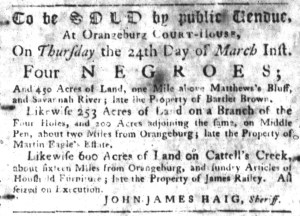
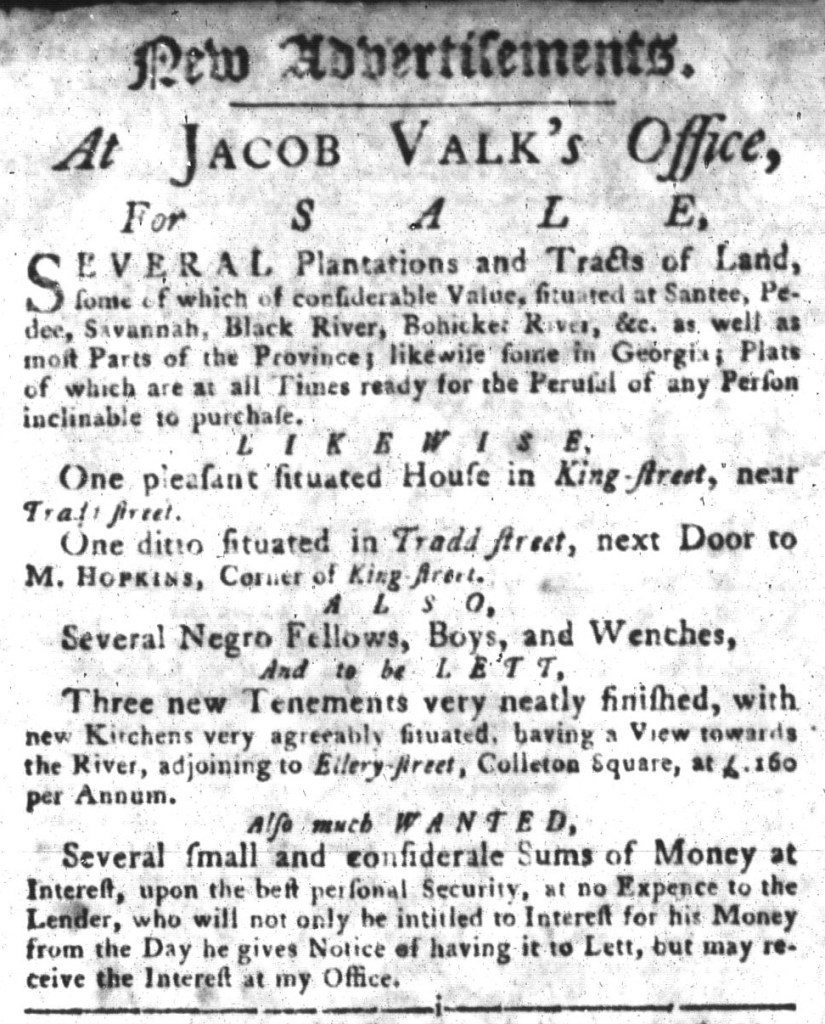
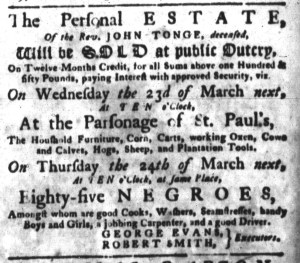
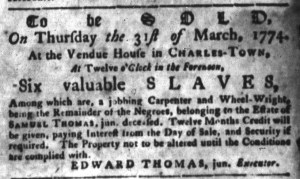
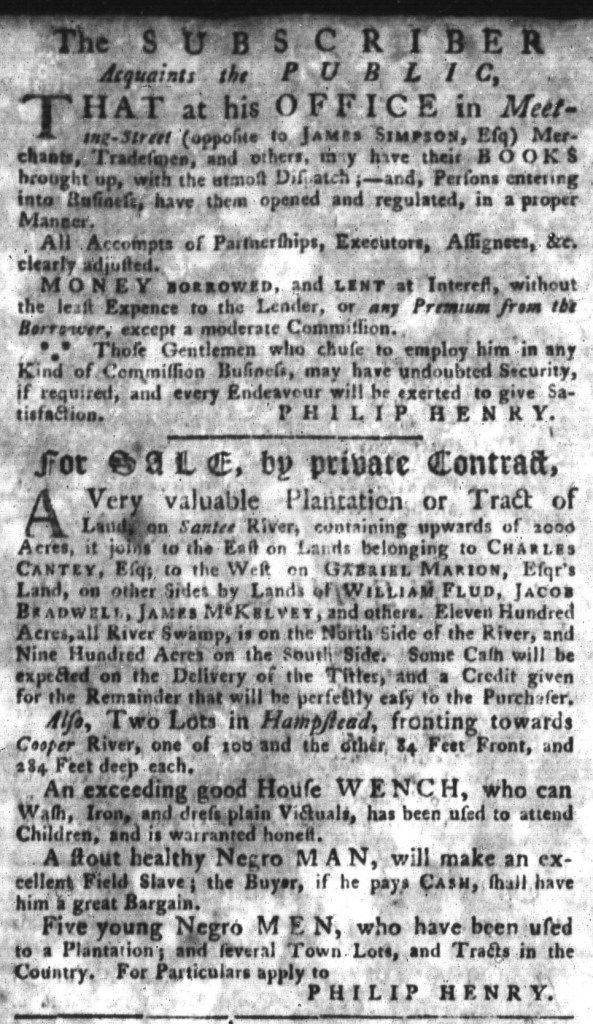
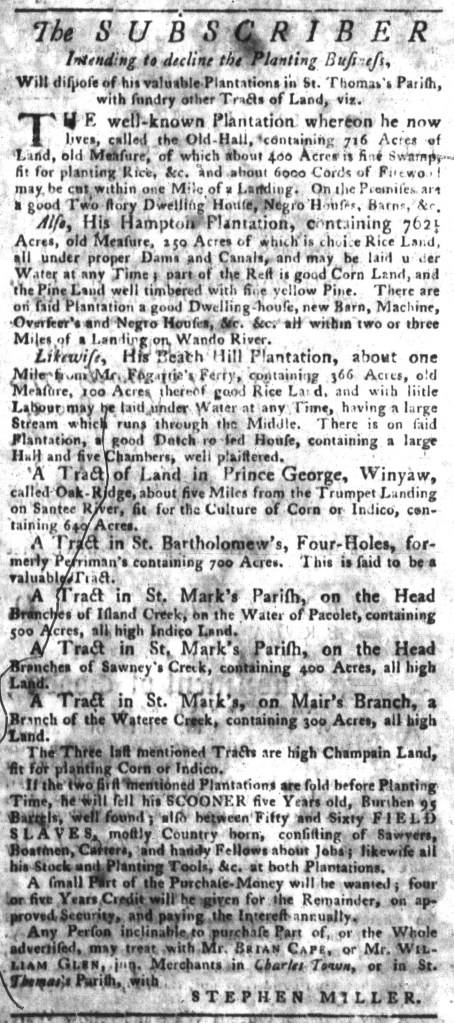
The Slavery Adverts 250 Project chronicles the role of newspaper advertising in perpetuating slavery in the era of the American Revolution. The project seeks to reveal the ubiquity of slavery in eighteenth-century life from New England to Georgia by republishing advertisements about enslaved people – for sale as individuals or in groups, wanted to purchase or for hire for short periods, runaways who liberated themselves, and those who were subsequently captured and confined in jails and workhouses – in daily digests on this site as well as in real time via the @SlaveAdverts250 Twitter feed, utilizing twenty-first-century media to stand in for the print media of the eighteenth century.
The project aims to provide modern audiences with a sense of just how often colonizers encountered these advertisements in their daily lives. Enslaved men, women, and children appeared in print somewhere in the colonies almost every single day. Those advertisements served as a constant backdrop for social, cultural, economic, and political life in colonial and revolutionary America. Colonizers who did not purport to own enslaved people were still confronted with slavery as well as invited to maintain the system by purchasing enslaved men, women, and children or assisting in the capture of so-called “runaways” who sought to free themselves from bondage. The frequency of these newspaper advertisements suggests just how embedded slavery was in colonial and revolutionary American culture in everyday interactions beyond the printed page.

These advertisements also testify to the experiences of enslaved men, women, and children, though readers must consider that those experiences have been remediated through descriptions offered by enslavers rather than enslaved people themselves. Often unnamed in the advertisements, enslaved men, women, and children were not invisible or unimportant in early America.

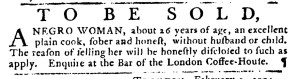
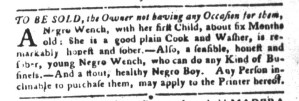
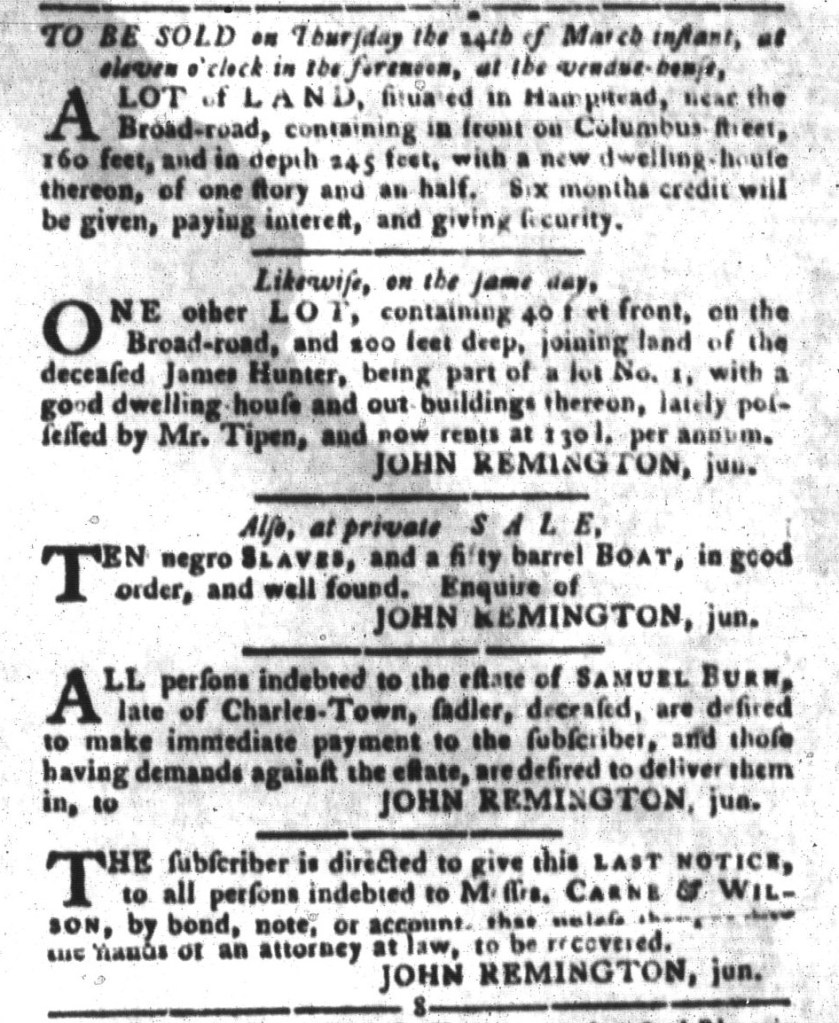
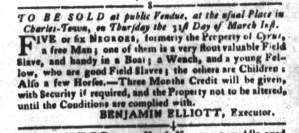
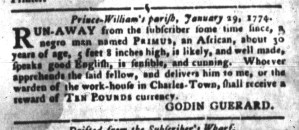
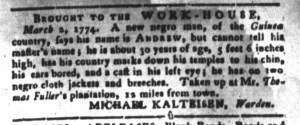
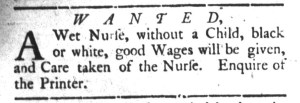
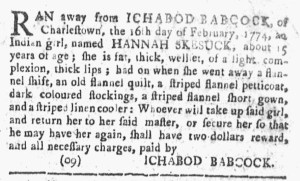
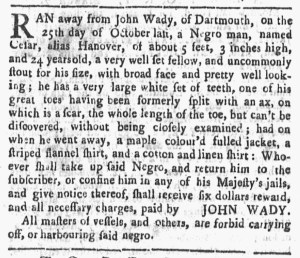
These advertisements appeared in colonial American newspapers 250 years ago today.

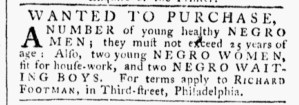
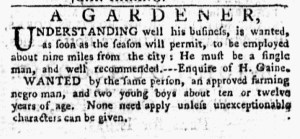
Pennsylvania Gazette (March 9, 1774).

**********

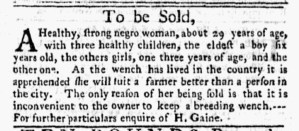
Pennsylvania Gazette (March 9, 1774).

**********

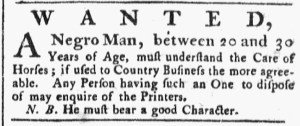
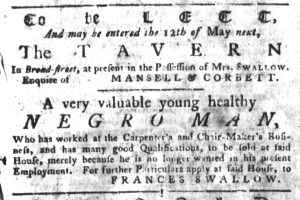
Pennsylvania Journal (March 9, 1774).

March 8

What was advertised in a colonial American newspaper 250 years ago today?

Connecticut Courant (March 8, 1774).

“Best Bohea TEA, Such as Fishes never drink!!”

Nearly three months after the destruction of tea now known as the Boston Tea Party, William Beadle of Wethersfield, Connecticut, published an advertisement that alluded to the event.  “Best Bohea TEA, Such as Fishes never drink!!” he proclaimed in a notice in the March 8, 1774, edition of the Connecticut Courant.  Two manicules, one at each end, directed readers to the phrase “Such as Fishes never drink!!”  The double exclamation points gave the comment even more exuberance, especially considering that exclamation points rarely appeared in eighteenth-century newspaper notices.  Beadle’s advertisement certainly differed from those placed by merchants and shopkeepers who assured prospective customers and the public that they did not stock tea and, by extension, opposed Parliament’s attempts to impose duties on the colonies.

What message did Beadle intend for readers of the Connecticut Courant?  What kind of commentary did he offer about consumer politics?  James R. Fichter examines Beadle’s advertisement in his recently published Tea: Consumption, Politics, and Revolution, 1773-1776.  Fichter indicates that Beadle’s neighbors “knew him as a man … who dabbled in dark and ambiguous humor.”  Some of that humor was on display in his previous advertisements.  Perhaps Beadle made a joke “at the expense of the Boston tea partiers or the drinkers deprived of their tea.”  After all, humor about the destruction of the tea already spread.  As Fichter recounts, Peter Oliver, a noted loyalist, reported that “some Bostonians abstained from eating local fish ‘because they had drank of the East India Tea.’”  Was Beadle taking a political position and mocking the excesses of patriots in Boston and other cities and towns who stopped selling tea?  Fichter also suggests that Beadle could have been “drawing attention to Connecticut not having a tea boycott” or he might have meant that he carried Dutch tea smuggled into the colonies.  Consumers could purchase and drink such tea with a clear conscience since it had not been subject to Parliament’s duties.  Yet Beadle may not have been making a political argument at all.  Perhaps he just wanted to publish the boldest advertisement, gain the most attention, and garner the most customers among merchants and shopkeepers who continued to advertise and sell tea in Connecticut.  According to Fichter, “Tea advertising remained common in Connecticut, and Beadle bore little burden for his cheek: he placed generic advertisements for tea throughput the spring and summer of 1774 and early 1775.”[1]

**********

[1] James R. Fichter, Tea: Consumption, Politics, and Revolution, 1773-1776 (Cornell University Press, 2023).

Slavery Advertisements Published March 8, 1774

GUEST CURATOR:  Grace Crowley

The Slavery Adverts 250 Project chronicles the role of newspaper advertising in perpetuating slavery in the era of the American Revolution. The project seeks to reveal the ubiquity of slavery in eighteenth-century life from New England to Georgia by republishing advertisements about enslaved people – for sale as individuals or in groups, wanted to purchase or for hire for short periods, runaways who liberated themselves, and those who were subsequently captured and confined in jails and workhouses – in daily digests on this site as well as in real time via the @SlaveAdverts250 Twitter feed, utilizing twenty-first-century media to stand in for the print media of the eighteenth century.

The project aims to provide modern audiences with a sense of just how often colonizers encountered these advertisements in their daily lives. Enslaved men, women, and children appeared in print somewhere in the colonies almost every single day. Those advertisements served as a constant backdrop for social, cultural, economic, and political life in colonial and revolutionary America. Colonizers who did not purport to own enslaved people were still confronted with slavery as well as invited to maintain the system by purchasing enslaved men, women, and children or assisting in the capture of so-called “runaways” who sought to free themselves from bondage. The frequency of these newspaper advertisements suggests just how embedded slavery was in colonial and revolutionary American culture in everyday interactions beyond the printed page.

These advertisements also testify to the experiences of enslaved men, women, and children, though readers must consider that those experiences have been remediated through descriptions offered by enslavers rather than enslaved people themselves. Often unnamed in the advertisements, enslaved men, women, and children were not invisible or unimportant in early America.

These advertisements appeared in colonial American newspapers 250 years ago today.

Essex Gazette (March 8, 1774).

**********

South-Carolina Gazette and Country Journal (March 8, 1774).

**********

South-Carolina Gazette and Country Journal (March 8, 1774).

**********

South-Carolina Gazette and Country Journal (March 8, 1774).

**********

South-Carolina Gazette and Country Journal (March 8, 1774).

**********

South-Carolina Gazette and Country Journal (March 8, 1774).

**********

South-Carolina Gazette and Country Journal (March 8, 1774).

**********

South-Carolina Gazette and Country Journal (March 8, 1774).

**********

South-Carolina Gazette and Country Journal (March 8, 1774).

**********

South-Carolina Gazette and Country Journal (March 8, 1774).

**********

South-Carolina Gazette and Country Journal (March 8, 1774).

**********

South-Carolina Gazette and Country Journal (March 8, 1774).

**********

South-Carolina Gazette and Country Journal (March 8, 1774).

March 7

What was advertised in a colonial American newspaper 250 years ago today?

Massachusetts Gazette and Boston Post-Boy (March 7, 1774).

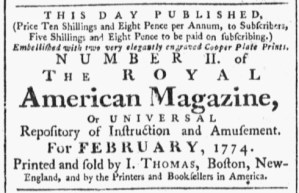
“THE first number of the ROYAL AMERICAN MAGAZINE is come to hand.”

It took time to distribute copies of Isaiah Thomas’s new Royal American Magazine to subscribers beyond Boston.  For months, the industrious printer advertised the project in newspapers from New Hampshire to Maryland, calling on prospective subscribers to add their names to the roster and prospective contributors to forward their “LUCUBRATIONS” to include among its contents.  Misfortune delayed publication of the first issue.  Thomas finally announced that the January 1774 issue was available on February 7.  It was not the inaugural issue alone that fell behind schedule.  A month later, Thomas informed subscribers that “NUMBER II. Of THE ROYAL American Magazine” was “THIS DAY PUBLISHED” and sold at his printing office and “by the Printers and Booksellers in America.”

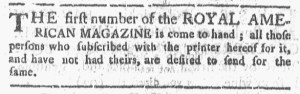
Newport Mercury (March 7, 1774).

The same day that notice ran in the Massachusetts Gazette and Boston Post-Boy, the Newport Mercury carried a short advertisement about the previous issue: “THE first number of the ROYAL AMERICAN MAGAZINE is come to hand; all those persons who subscribed with the printer hereof for it, and have not had theirs, are desired to send for the same.”  It was the first time that an advertisement for the magazine appeared in a newspaper outside of Massachusetts since Thomas took the Royal American Magazine to press.  He advertised widely in Boston’s newspapers and the Essex Journal, a newspaper he operated in partnership with Henry-Walter Tinges in Newburyport, but not elsewhere.  Solomon Southwick, the printer of the Newport Mercury, became the first of Thomas’s associates to mention the magazine in the public prints after publication commenced.

Subscribers in Boston may have expected to receive the January issue sometime in January and the February issue sometime in February, but subscribers who lived at any distance had no such expectation.  Southwick’s notice suggests that some subscribers likely received the January issue sometime in February, but others did not get their hands on it until March.  Given the logistics of shipping books, pamphlets, newspapers, and magazines to other cities and towns, subscribers in Connecticut, New York, Pennsylvania, Maryland, and other colonies understood they would experience some delay in receiving their copies of the Royal American Magazine.  Subscribers in many places eventually had access to the same content as their counterparts in Boston, but that imagined community of readers consumed the essays and poetry in the new magazine on a staggered schedule.

Slavery Advertisements Published March 7, 1774

GUEST CURATOR:  Grace Crowley

The Slavery Adverts 250 Project chronicles the role of newspaper advertising in perpetuating slavery in the era of the American Revolution. The project seeks to reveal the ubiquity of slavery in eighteenth-century life from New England to Georgia by republishing advertisements about enslaved people – for sale as individuals or in groups, wanted to purchase or for hire for short periods, runaways who liberated themselves, and those who were subsequently captured and confined in jails and workhouses – in daily digests on this site as well as in real time via the @SlaveAdverts250 Twitter feed, utilizing twenty-first-century media to stand in for the print media of the eighteenth century.
The project aims to provide modern audiences with a sense of just how often colonizers encountered these advertisements in their daily lives. Enslaved men, women, and children appeared in print somewhere in the colonies almost every single day. Those advertisements served as a constant backdrop for social, cultural, economic, and political life in colonial and revolutionary America. Colonizers who did not purport to own enslaved people were still confronted with slavery as well as invited to maintain the system by purchasing enslaved men, women, and children or assisting in the capture of so-called “runaways” who sought to free themselves from bondage. The frequency of these newspaper advertisements suggests just how embedded slavery was in colonial and revolutionary American culture in everyday interactions beyond the printed page.

These advertisements also testify to the experiences of enslaved men, women, and children, though readers must consider that those experiences have been remediated through descriptions offered by enslavers rather than enslaved people themselves. Often unnamed in the advertisements, enslaved men, women, and children were not invisible or unimportant in early America.

These advertisements appeared in colonial American newspapers 250 years ago today.

Dunlap’s Pennsylvania Packet (March 7, 1774).

**********

Massachusetts Gazette and Boston Post-Boy (March 7, 1774).

**********

Massachusetts Gazette and Boston Post-Boy (March 7, 1774).

**********

Newport Mercury (March 7, 1774).

**********

Newport Mercury (March 7, 1774).

**********

New-York Gazette and Weekly Mercury (March 7, 1774).

**********

New-York Gazette and Weekly Mercury (March 7, 1774).

**********

Supplement to the New-York Gazette and Weekly Mercury (March 7, 1774).

**********

Supplement to the New-York Gazette and Weekly Mercury (March 7, 1774).

**********

South-Carolina Gazette (March 7, 1774).

**********

South-Carolina Gazette (March 7, 1774).

**********

South-Carolina Gazette (March 7, 1774).

**********

South-Carolina Gazette (March 7, 1774).

**********

South-Carolina Gazette (March 7, 1774).

**********

South-Carolina Gazette (March 7, 1774).

**********

South-Carolina Gazette (March 7, 1774).

**********

South-Carolina Gazette (March 7, 1774).

**********

South-Carolina Gazette (March 7, 1774).

**********

South-Carolina Gazette (March 7, 1774).

**********

South-Carolina Gazette (March 7, 1774).

**********

South-Carolina Gazette (March 7, 1774).

March 6

What was advertised in a colonial American newspaper 250 years ago this week?

Supplement to Rivington’s New-York Gazetteer (March 3, 1774).

“All kinds of Windsor Chairs.”

On and off for several months, Thomas Ash, a “WINDSOR CHAIR MAKER, At the Corner below St. Paul’s Church, In the Broad Way,” adorned his advertisement in Rivington’s New-York Gazetteer with a woodcut depicting the item that he made and sold.  In contrast to Abel Buell’s advertisement featuring an image of a gun in the Connecticut Journal, Ash’s woodcut was not the only woodcut commissioned by an advertiser to appear in the March 3, 1774, edition of Rivington’s newspaper.  Elsewhere in that issue, Nesbitt Deane once again ran an advertisement featuring a tricorne hat with his name on a banner unfurled beneath it.  George Webster, “GROCER, AT THE SIGN OF THE Three Sugar Loaves & Scales,” included an image of three sugar loaves, two shorter ones flanking a taller one, enclosed within a simple border.

Those were not the only visual flourishes intended to draw attention to some of the advertisements in Rivington’s New-York Gazetteer.  Decorative borders became a trademark of that newspaper.  In the March 3 edition, five advertisements had such borders, including those placed by Richard Sause for merchandise at his “Hardware, Jewellery and Cutlery Store, John Siemon, a furrier, for muffs and tippets, John Simnet for cleaning and repairing watches, and S. Sp. Skinner for rum distilled in New York.  Except for Simnet, all those advertisers had experience running other notices with decorative borders, as the links indicate.  Simnet previously placed an identical advertisement, including the border. Sause and Siemon also sometimes ran advertisements with woodcuts tied to their businesses.  Indeed, Siemon did so in the New-York Journal published the same day, choosing one method of adding visual interest in one newspaper and another method in the other.  Webster was the fifth advertiser to use a border of decorative type, taking advantage of both methods in a single newspaper notice.

All the woodcuts and borders in Rivington’s New-York Gazetteer made its pages more vibrant than those in the Connecticut Journal.  Advertisements with woodcuts and borders still stood out from others since most did not have either of those features, yet they collectively contributed to a cohesive look that distinguished newspapers published in busy ports from those printed in smaller towns.

March 5

What was advertised in a colonial American newspaper 250 years ago today?

Providence Gazette (March 5, 1774).

“The Advertiser once had a small Sign of a Sugarloaf affixed to his little Shop.”

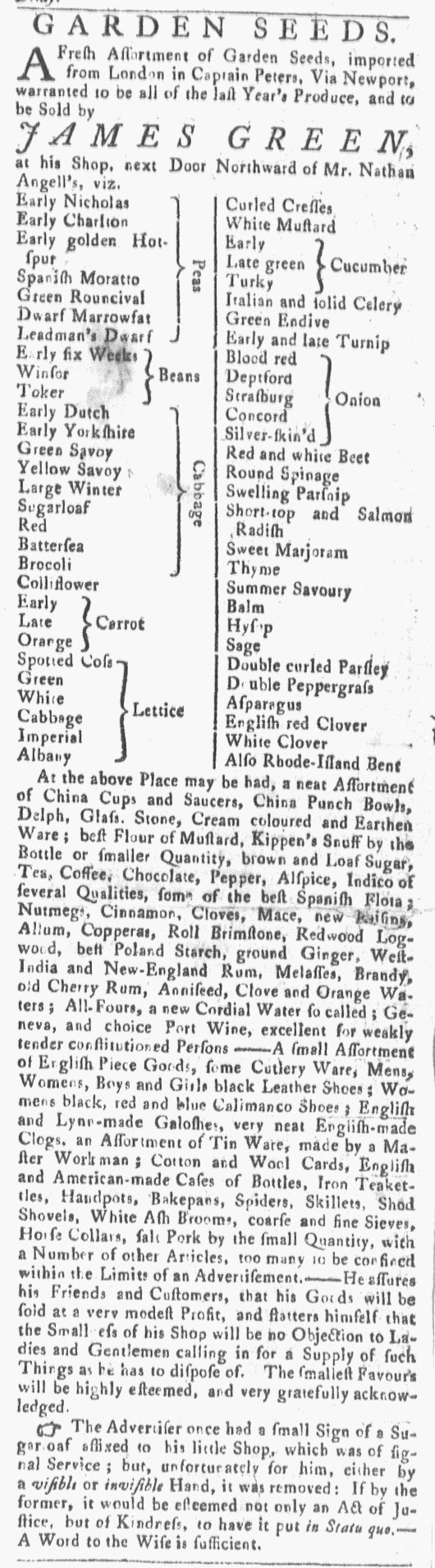
As spring approached in 1774, advertisements for “GARDEN SEEDS” appeared in newspapers in New England.  John White was the first to advertise in Boston, soon joined by Susanna Renken, Elizabeth Clark, Elizabeth Greenleaf, Elizabeth Nowell, and other women who annually announced they sold seeds in the city’s newspapers.  As Abel Buell hawked firearms in the Connecticut Journal, Nathan Beers promoted “Garden Seeds, Both of English and American Growth.”  In Rhode Island, James Green placed an extensive advertisement for a “Fresh Assortment of Garden Seeds” in the Providence Gazette, as he had done the previous year.  The format distinguished it from other notices, the various types of peas, beans, cabbage, carrot, lettuce, cucumber, and onion clustered together and labeled by category.

Unlike most other seed sellers, Green also marketed all sorts of housewares, garments, and groceries in his advertisement.  That significantly contributed to the length of a notice that extended more than two-thirds of a column.  Green stocked everything from “a neat Assortment of China Cups and Saucers” and “Womens black, red and blue Calimanco Shoes” to “best Four of Mustard” and “Kippen’s Snuff by the Bottle or smaller Quantity.”  Yet that was not all.  He asserted that his inventory included “a Number of other Articles, too many to be confined within the Limits of an Advertisement.”  A newspaper notice could not contain all the choices Green made available to consumers!  The shopkeeper also made an appeal to price, “assur[ing] his Friends and Customers, that his Goods will be sold at a very modest Profit.”  Conversationally, he confided that he “flatters himself that the Smallness of his Shop will be no Objection to Ladies and Gentlemen calling in for a Supply of such Things he has to dispose of.”
All of that was standard for advertisements in newspapers published throughout the colonies.  A final note, however, discussed unusual circumstances that agitated the shopkeeper.  “The Advertiser once had a small Sign of a Sugarloaf affixed to his little Shop,” Green noted.  In marking his location, it “was of signal Service.”  Yet the sign no longer adorned his shop: “unfortunately for him, either by a visible or invisible Hand, it was removed.”  Perhaps bad weather, an “invisible Hand, had carried it away, but if that was not the case, if some prankster had taken it then Green petitioned for its return: “it would be esteemed not only an Act of Justice, but of Kindness, to have it put in Status quo.”  Using an eighteenth-century version of “no questions asked,” he declared that “A Word to the Wise is sufficient.”  If anyone knew what had happened to the sign, he hoped that they would encourage whoever had it to put it back where it belonged.  Green was not interested in the details of where his sign had been or who took it, only its return to its rightful place as the emblem designating his place of business.  The shopkeeper made an aside in his newspaper advertisement to tend to other forms of marketing associated with his shop in Providence.

March 4

What was advertised in a colonial American newspaper 250 years ago today?

Connecticut Journal (March 4, 1774).

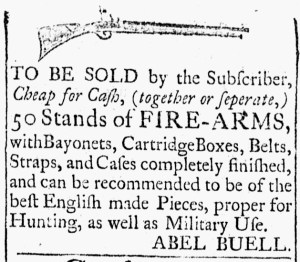
“50 Stands of FIRE-ARMS, with Bayonets.”

The image distinguished the advertisement from most of the others that ran in the March 4, 1774, edition of the Connecticut Journal.  A woodcut depicting a gun adorned Abel Buell’s advertisement for “50 Stands of FIRE-ARMS, with Bayonets, Cartridge Boxes, Belts, Straps, and Cases completely finished.”  Only two other images appeared in that issue, a post rider on a horse in the masthead, as usual, and a house in an advertisement in a real estate advertisement.  Printers supplied stock images of houses, horses, ships, and enslaved people when they matched the contents of the notices in their newspapers.  Advertisers interested in other images, including those that replicated their shop signs or represented their merchandise, commissioned the woodcuts and then had exclusive use of them.  In some instances, such advertisers in towns with more than one newspaper sometimes collected their woodcuts from one printing office and delivered them to another when they chose to advertise in multiple publications.

Buell’s woodcut was noteworthy for other reasons.  Not especially sophisticated to modern eyes, it was a rarity in the Connecticut Journal.  Newspapers in urban ports tended to carry a greater number of images commissioned by advertisers, but Thomas Green and Samuel Green in New Haven did not handle that many special orders.  That made Buell’s woodcut all the more innovative and eye-catching in that particular newspaper.  In addition, it did not correspond to his trade.  In previous advertisements, he described himself as a “GOLDSMITH in New-Haven” and listed a variety of jewelry available at his shop.  Yet as spring approached in 1774, he marketed dozens of “the best English made Pieces, proper for Hunting, as well as Military Use.”  Buell made an investment in a woodcut unrelated to his primary occupation, though he may have produced it himself rather than commissioning it.  His skills included engraving.  A decade earlier, according to the Library of Congress, he “used his skill as an engraver to produce counterfeit colonial paper currency, a crime for which he was tried and convicted.”  Following that incident, he put his skills to better use, producing “the very first map of the newly independent United States compiled, printed, and published in America by an America.”  Perhaps along the way he made a woodcut to enliven his advertisement for firearms in the Connecticut Journal.