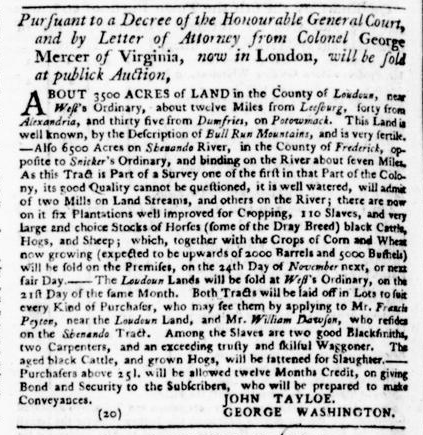
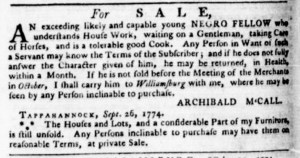
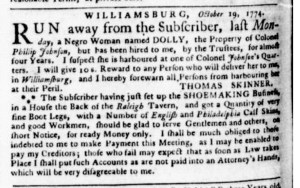
October 25

What was advertised in a colonial American newspaper 250 years ago today?
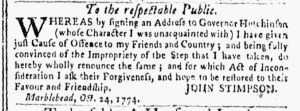
Essex Gazette (October 25, 1774).

“By Signing an Address to Governor Hutchinson … I have given just Cause of Offence.”

It was another plea for forgiveness for exercising poor judgment, at best, or expressing unsavory political views by signing an address to Thomas Hutchinson that thanked him for his service as governor of Massachusetts.  At the end of October 1774, John Stimpson of Marblehead took to the pages of the Essex Gazette to a acknowledge to “the respectable Public” that he had “given just Cause of Offence to my Friends and Country” when he had done so.  He explained that he “was unacquainted” with Hutchinson’s character the previous spring, but in the time that elapsed since then he became “fully convinced of the Impropriety of the Step that I have taken.”  That being the case, he placed an advertisement to “wholly renounce the same” as well as seek forgiveness for that “Act of Inconsideration.”  Ultimately, Stimpson “hope[d] to be restored to their Favour and Friendship.”

He was not the first to insert an open letter in the Essex Gazette or other newspapers for that purpose.  Thomas Kidder published a similar apology in the Boston-Gazette in July 1774.  Samuel Flagg and Joseph Lee each did so in the Essex Gazette three weeks before Stimpson did.  Flagg’s extensive message to his “Fellow Citizens and Countrymen” incorporated an editorial on the “unjust and oppressive” legislation imposed by Parliament.  Others published similar missives explaining their error, assuring the public that they were not admirers of Hutchinson (and, by extension, the Tory perspective on current events), and asking for forgiveness so they could restore their standing within their communities.

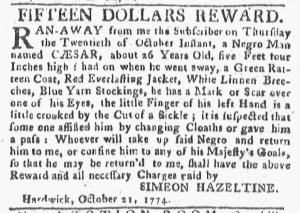
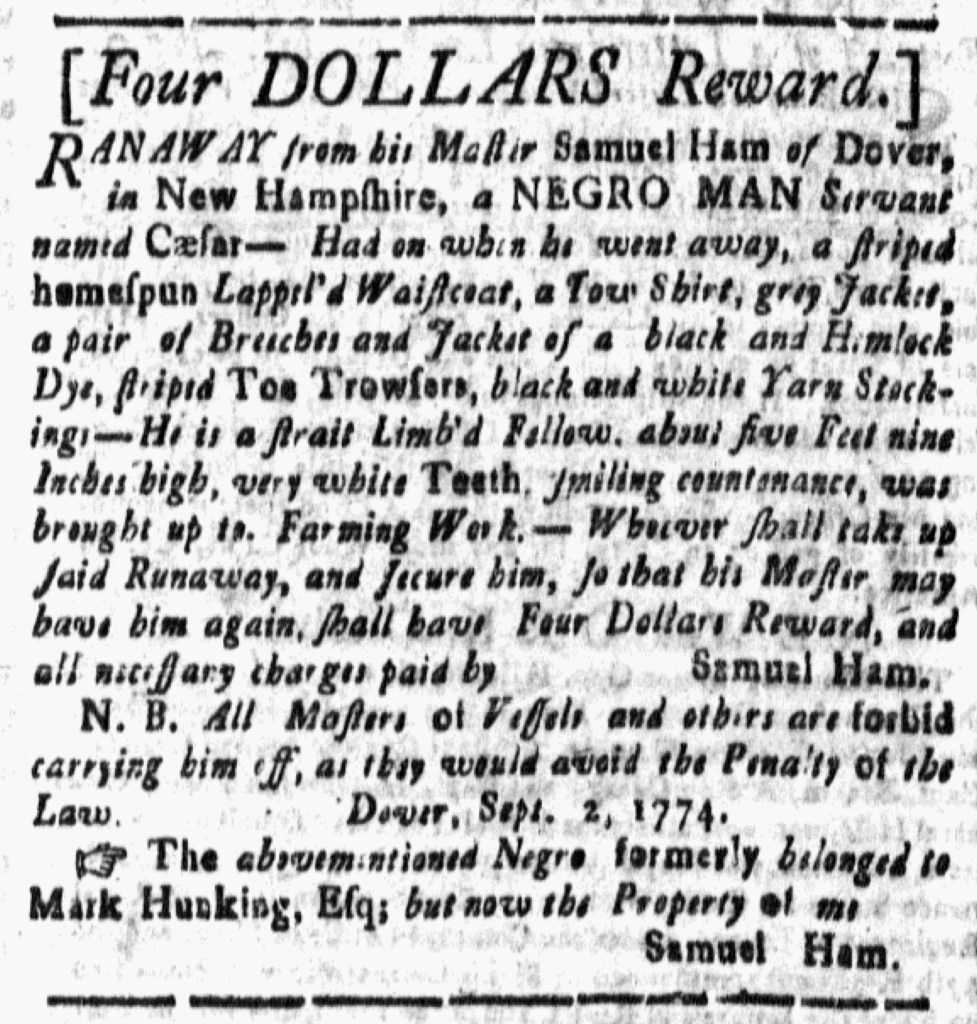
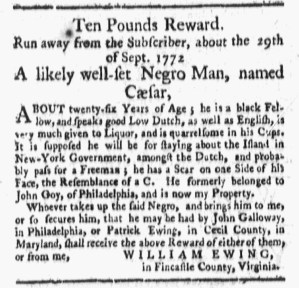
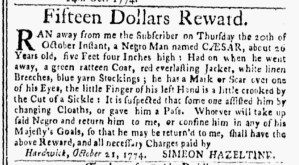
Stimpson’s version of what was becoming a familiar feature in the newspapers did not appear among the news and editorials.  Samuel Hall and Ebenezer Hall, the patriot printers of the Essex Gazette, did not treat it as a letter to the editor to include alongside local news.  Instead, it ran between an advertisement offering a reward for the capture and return of an enslaved man, Caesar, who liberated himself from his enslaver, and a real estate notice announcing the sale of a house and land in Long Wharf Lane in Salem.  Stimpson’s message to “the respectable public” was an advertisement, a paid notice.  The Halls did not extend the opportunity to seek absolution for free.  They may have experienced a bit of satisfaction in generating revenue from someone who made such a poor decision in initially offering support to the royal governor so unpopular among Patriots.
Slavery Advertisements Published October 25, 1774

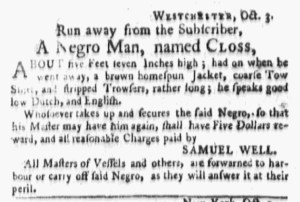
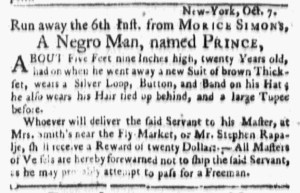
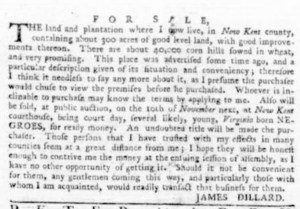
The Slavery Adverts 250 Project chronicles the role of newspaper advertising in perpetuating slavery in the era of the American Revolution. The project seeks to reveal the ubiquity of slavery in eighteenth-century life from New England to Georgia by republishing advertisements about enslaved people – for sale as individuals or in groups, wanted to purchase or for hire for short periods, runaways who liberated themselves, and those who were subsequently captured and confined in jails and workhouses – in daily digests on this site as well as in real time via the @SlaveAdverts250 Twitter feed, utilizing twenty-first-century media to stand in for the print media of the eighteenth century.

The project aims to provide modern audiences with a sense of just how often colonizers encountered these advertisements in their daily lives. Enslaved men, women, and children appeared in print somewhere in the colonies almost every single day. Those advertisements served as a constant backdrop for social, cultural, economic, and political life in colonial and revolutionary America. Colonizers who did not purport to own enslaved people were still confronted with slavery as well as invited to maintain the system by purchasing enslaved men, women, and children or assisting in the capture of so-called “runaways” who sought to free themselves from bondage. The frequency of these newspaper advertisements suggests just how embedded slavery was in colonial and revolutionary American culture in everyday interactions beyond the printed page.

These advertisements also testify to the experiences of enslaved men, women, and children, though readers must consider that those experiences have been remediated through descriptions offered by enslavers rather than enslaved people themselves. Often unnamed in the advertisements, enslaved men, women, and children were not invisible or unimportant in early America.

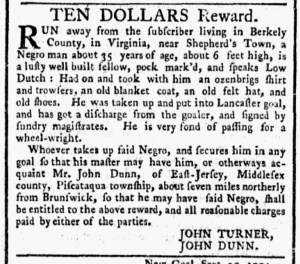
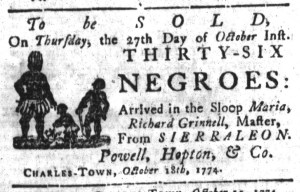
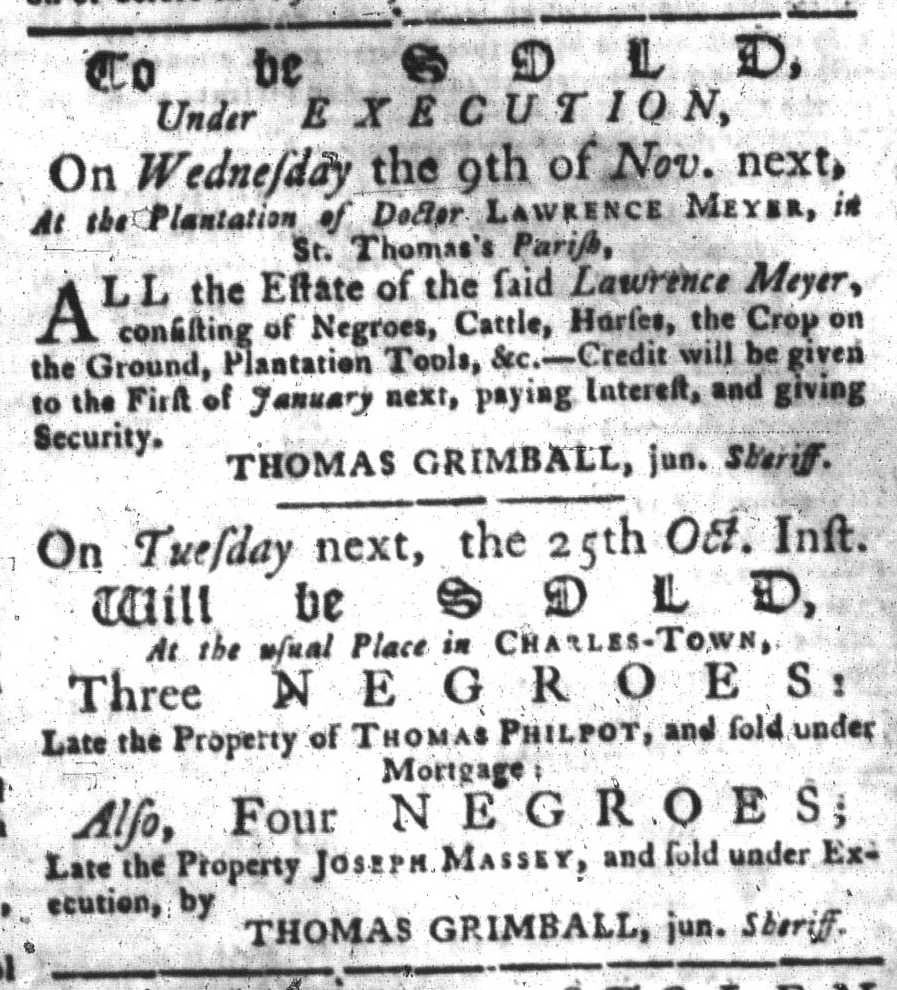
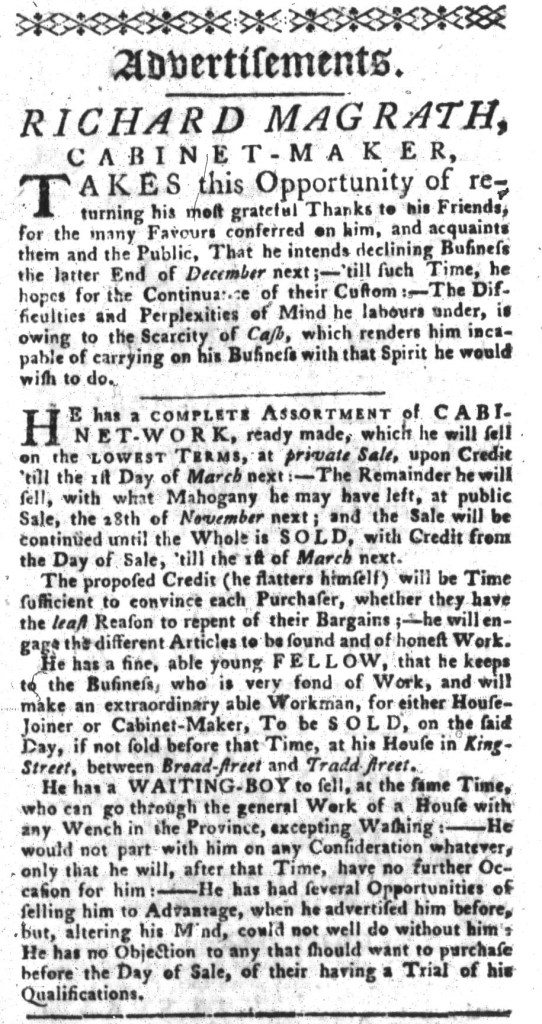
These advertisements appeared in colonial American newspapers 250 years ago today.

Essex Gazette (October 25, 1774).

**********

Essex Gazette (October 25, 1774).

**********

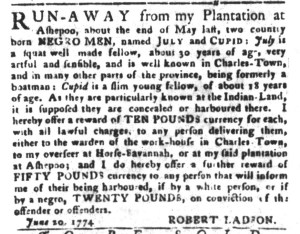
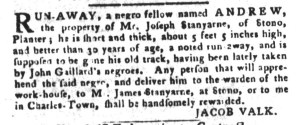
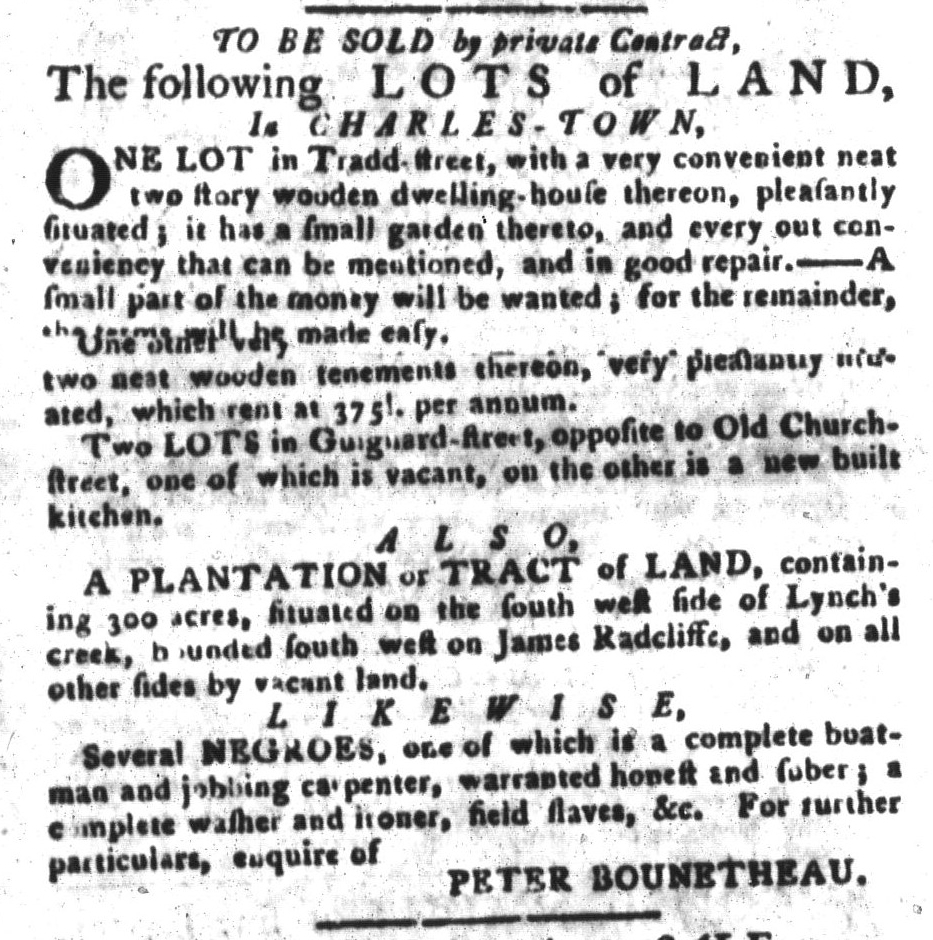
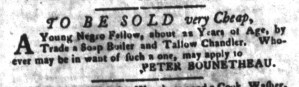
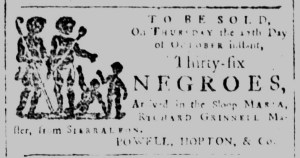
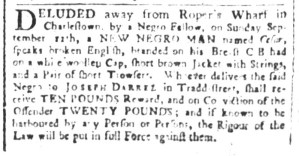
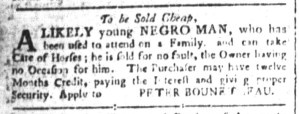
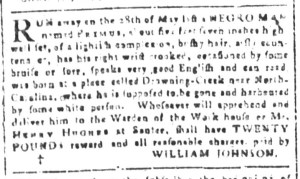
South-Carolina Gazette and Country Journal (October 25, 1774).

**********

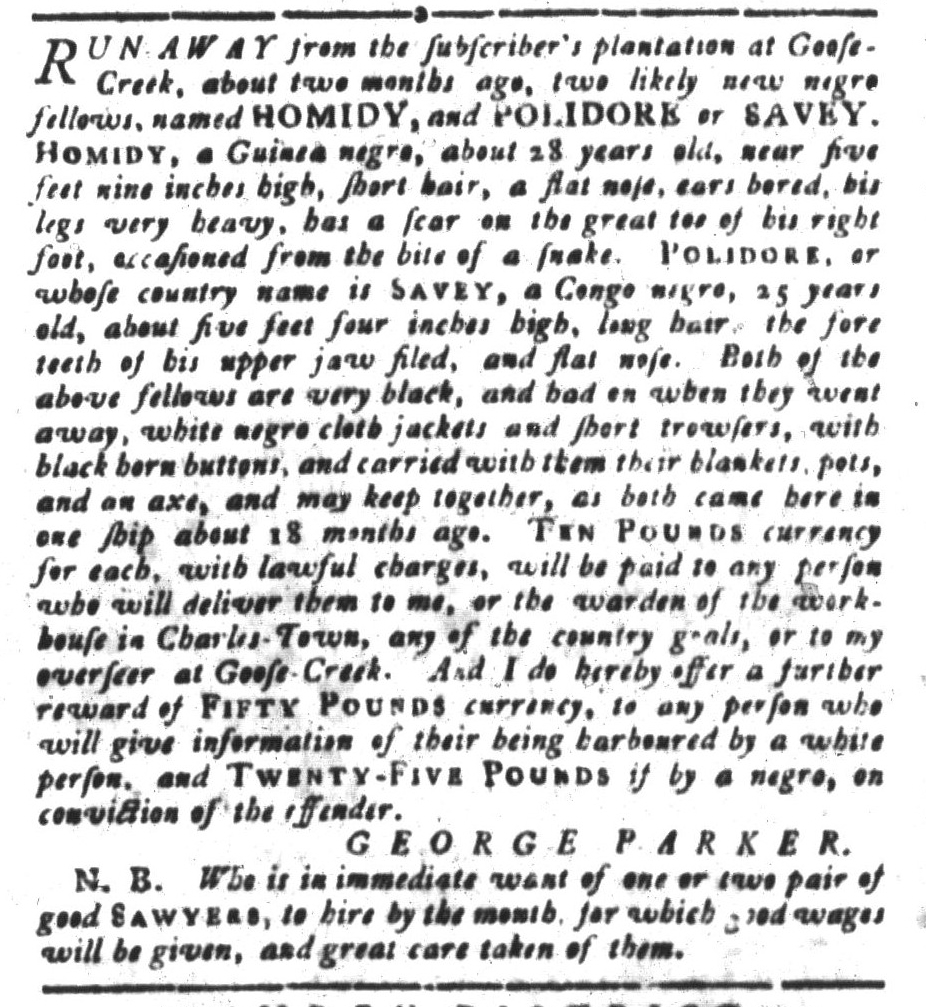
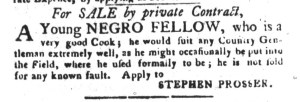
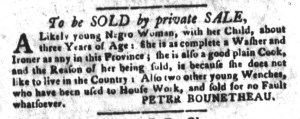
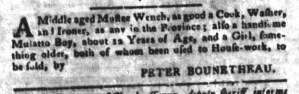
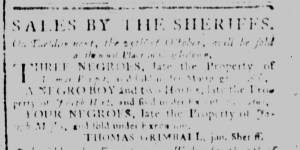
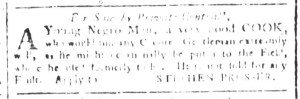
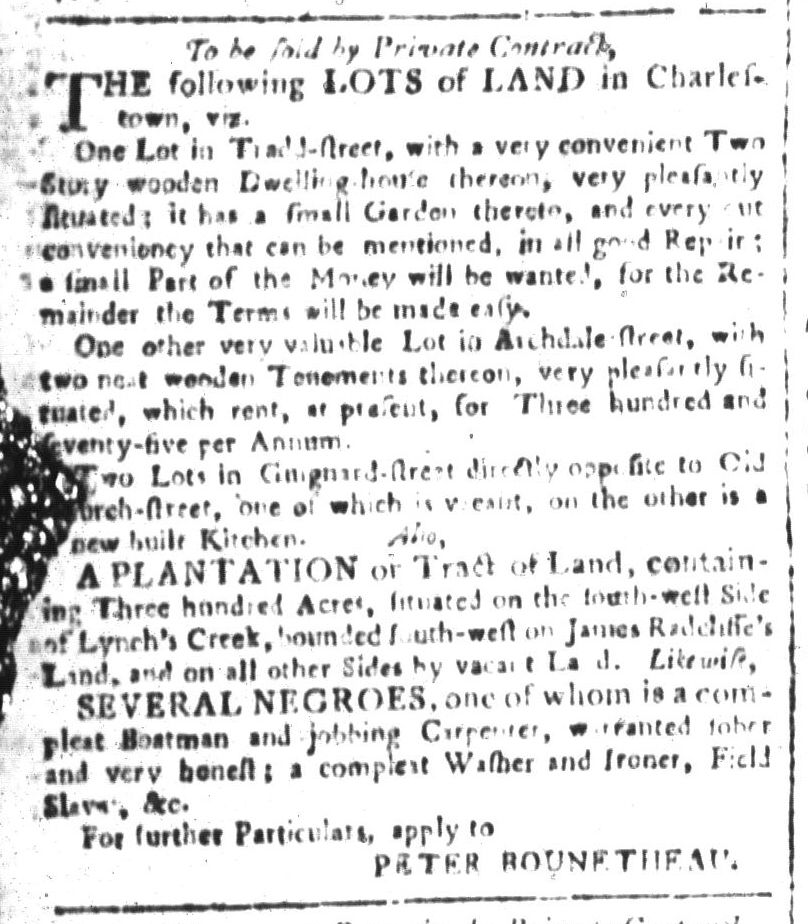
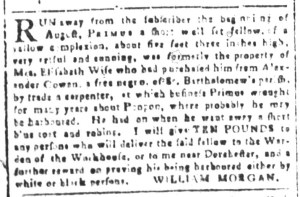
South-Carolina Gazette and Country Journal (October 25, 1774).

**********

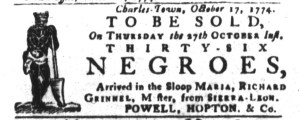
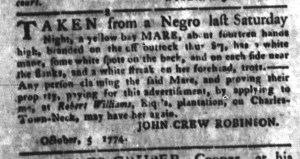
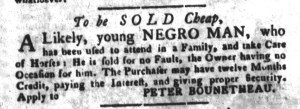
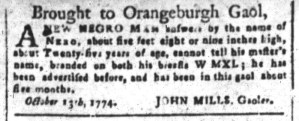
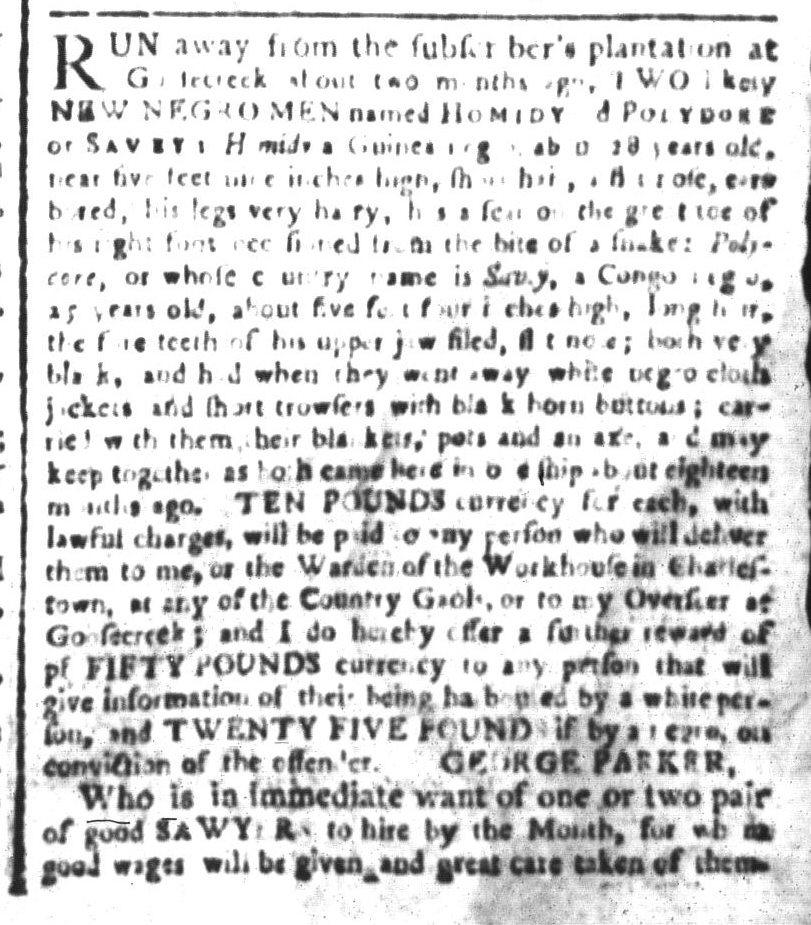
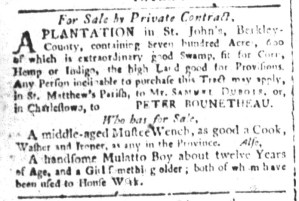
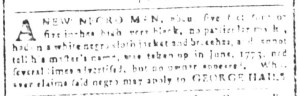
South-Carolina Gazette and Country Journal (October 25, 1774).

**********

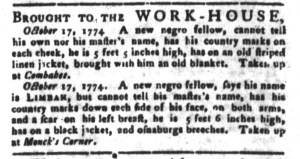
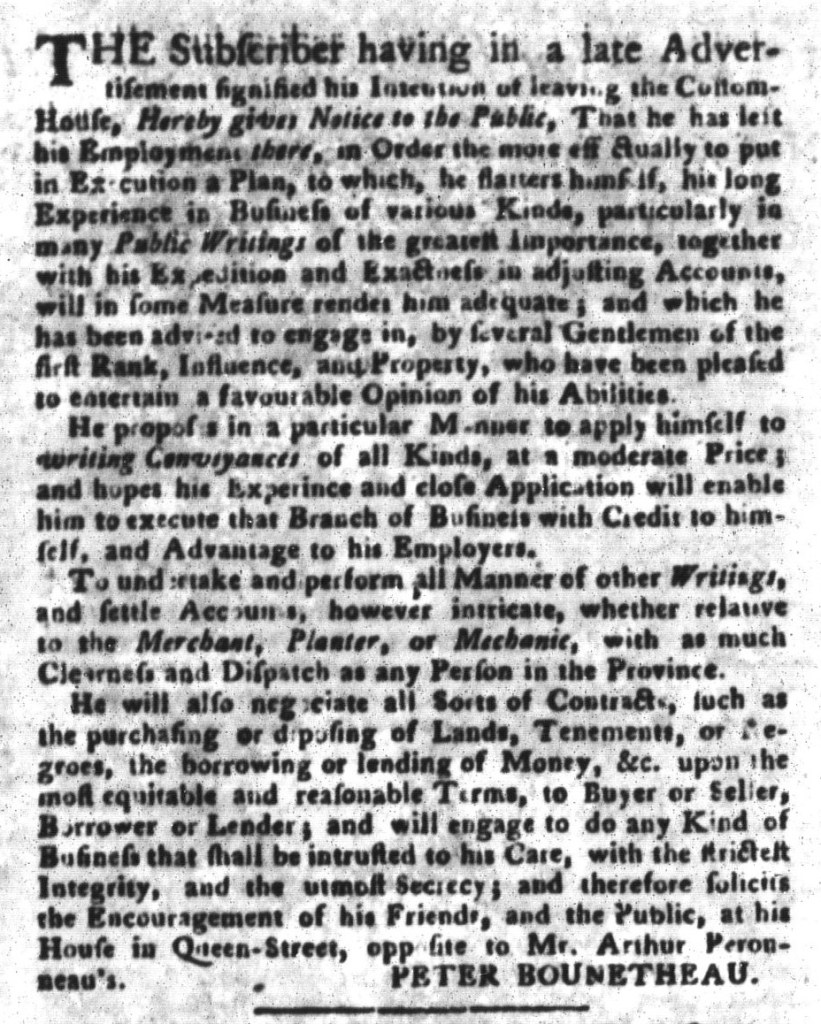
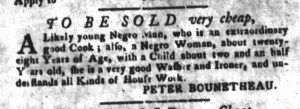
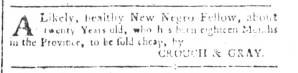
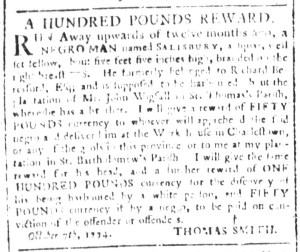
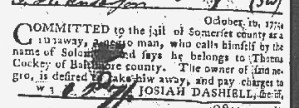
South-Carolina Gazette and Country Journal (October 25, 1774).

**********

South-Carolina Gazette and Country Journal (October 25, 1774).

**********

South-Carolina Gazette and Country Journal (October 25, 1774).

**********

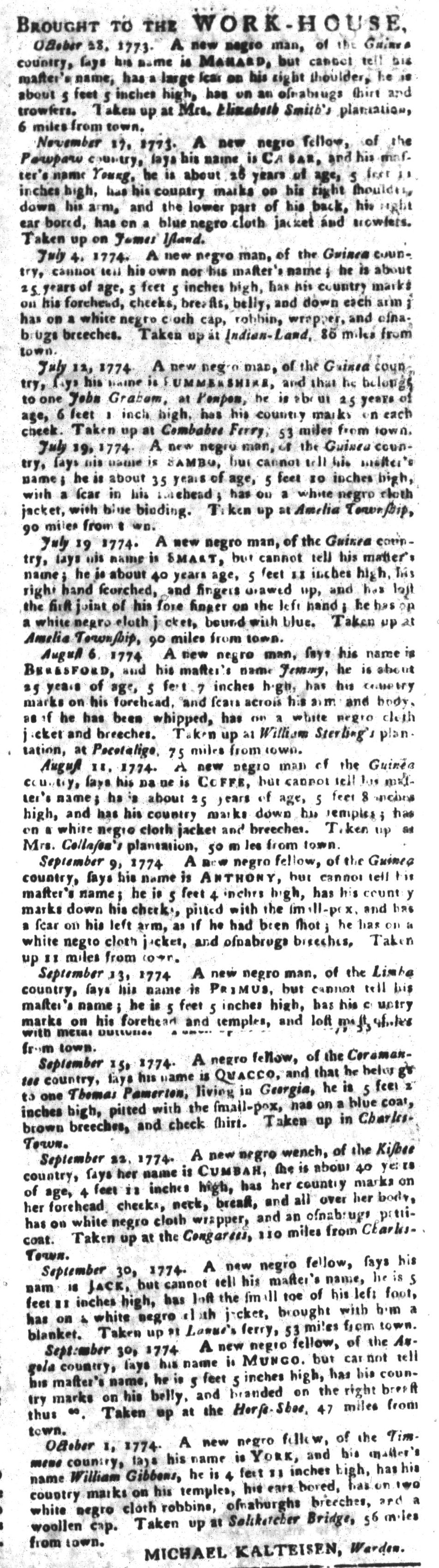
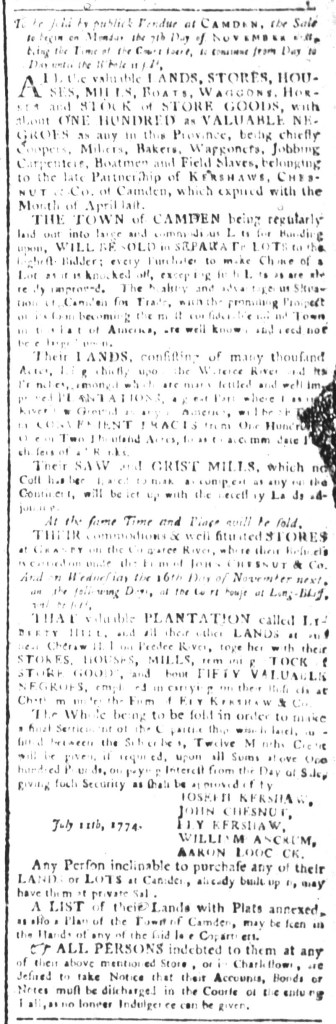
Supplement to the South-Carolina Gazette and Country Journal (October 25, 1774).

**********

Supplement to the South-Carolina Gazette and Country Journal (October 25, 1774).

**********

Supplement to the South-Carolina Gazette and Country Journal (October 25, 1774).

**********

Supplement to the South-Carolina Gazette and Country Journal (October 25, 1774).

**********

Supplement to the South-Carolina Gazette and Country Journal (October 25, 1774).

**********

Supplement to the South-Carolina Gazette and Country Journal (October 25, 1774).

**********

Supplement to the South-Carolina Gazette and Country Journal (October 25, 1774).

**********

Supplement to the South-Carolina Gazette and Country Journal (October 25, 1774).

**********

Supplement to the South-Carolina Gazette and Country Journal (October 25, 1774).

October 24

What was advertised in a colonial American newspaper 250 years ago today?

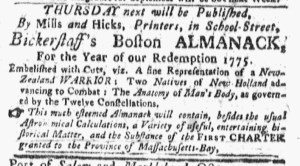
Boston Evening-Post (October 24, 1774).

This much esteemed Almanack will contain … the FIRST CHARTER granted to the Province of Massachusetts-Bay.”

On October 24, 1774, Nathaniel Mills and John Hicks, the printers of the Massachusetts Gazette and Boston Post-Boy, took to the pages of their own newspaper as well as the Boston Evening-Post to announce that they would publish “Bickerstaff’s Boston ALMANACK, For the Year of our Redemption 1775” later in the week.  A few weeks earlier, “Isaac Bickerstaff” ran a notice promoting the almanac and requesting that proprietors of “new Houses of Entertainment” submit their names to the printing office “immediately” for inclusion in the list of taverns in the forthcoming almanac.  Although the imaginary Bickerstaff was the purported author, Benjamin West provided the astronomical calculations and the printers compiled the rest of the contents.
Once Mills and Hicks were tavernkeepers a few weeks to submit updates before they moved forward with printing the almanac.  As they prepared for publication, they promoted the images that accompanied the pamphlet.  Three woodcuts “Embellished” it: “A fine Representation of a New-Zealand WARRIOR: Two Natives of New Holland advancing to Combat: [and] The Anatomy of Man’s Body, as governed by the Twelve Constellations.”  The anatomy was a standard image incorporated into many almanacs, while the depictions of indigenous warriors from Australia (known at the time as New Holland) and New Zealand reflected the fascination with James Cook’s voyage aboard the Endeavour from 1768 through 1771.  Accounts of that mission to the Pacific Ocean to observe the transit of Venus across the sun in 1769 had been advertised widely in American newspapers in recent years.  Whether or not they purchased books that documented Cook’s endeavor, readers were likely familiar with it from newspaper accounts and conversation.
Yet Mills and Hicks did not focus solely on images depicting people in faraway places to market their almanac.  They also referenced current events and local politics.  “This much esteemed Almanack,” the printers declared, “will contain … a Variety of useful, entertaining historical Matter, and the Substance of the FIRST CHARTER granted to the Province of Massachusetts-Bay.”  That charter, granted by Charles I in 1669, had particular importance in the fall of 1774 because Parliament recently revoked the more recent charter, granted by William and Mary in 1691, via the Massachusetts Government Act, one of the Coercive Acts passed in retaliation for the Boston Tea Party.  That legislation gave more authority to a governor appointed by the king, significantly reducing the role that colonizers formerly played in governing themselves under both charters.  In publishing the “FIRST CHARTER” and disseminating it widely in a pamphlet that readers would consult throughout the coming year, Mills and Hicks gave colonizers ready access to an important historical document and provided a ready reminder of the ideals of government that had been long practiced in the colony and recently overturned by a spiteful Parliament.  The printers practiced politics in choosing to include the charter among the contents of the almanac.

Slavery Advertisements Published October 24, 1774

The Slavery Adverts 250 Project chronicles the role of newspaper advertising in perpetuating slavery in the era of the American Revolution. The project seeks to reveal the ubiquity of slavery in eighteenth-century life from New England to Georgia by republishing advertisements about enslaved people – for sale as individuals or in groups, wanted to purchase or for hire for short periods, runaways who liberated themselves, and those who were subsequently captured and confined in jails and workhouses – in daily digests on this site as well as in real time via the @SlaveAdverts250 Twitter feed, utilizing twenty-first-century media to stand in for the print media of the eighteenth century.

The project aims to provide modern audiences with a sense of just how often colonizers encountered these advertisements in their daily lives. Enslaved men, women, and children appeared in print somewhere in the colonies almost every single day. Those advertisements served as a constant backdrop for social, cultural, economic, and political life in colonial and revolutionary America. Colonizers who did not purport to own enslaved people were still confronted with slavery as well as invited to maintain the system by purchasing enslaved men, women, and children or assisting in the capture of so-called “runaways” who sought to free themselves from bondage. The frequency of these newspaper advertisements suggests just how embedded slavery was in colonial and revolutionary American culture in everyday interactions beyond the printed page.

These advertisements also testify to the experiences of enslaved men, women, and children, though readers must consider that those experiences have been remediated through descriptions offered by enslavers rather than enslaved people themselves. Often unnamed in the advertisements, enslaved men, women, and children were not invisible or unimportant in early America.

These advertisements appeared in colonial American newspapers 250 years ago today.

Boston-Gazette (October 24, 1774).

**********

Connecticut Courant (October 24, 1774).

**********

Dunlap’s Pennsylvania Packet (October 24, 1774).

**********

New-York Gazette and Weekly Mercury (October 24, 1774).

**********

New-York Gazette and Weekly Mercury (October 24, 1774).

**********

South-Carolina Gazette (October 24, 1774).

**********

South-Carolina Gazette (October 24, 1774).

**********

South-Carolina Gazette (October 24, 1774).

**********

South-Carolina Gazette (October 24, 1774).

**********

South-Carolina Gazette (October 24, 1774).

October 23

What was advertised in a colonial American newspaper 250 years ago this week?

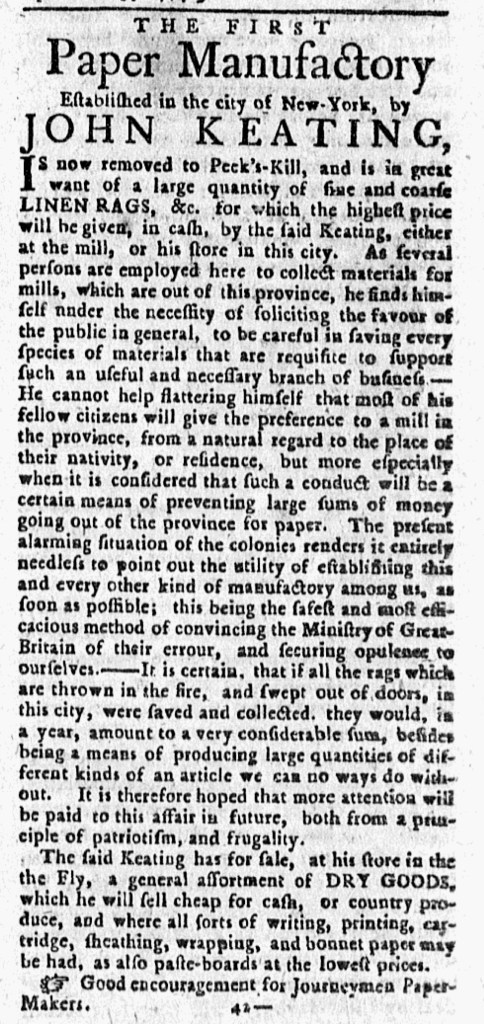
Supplement to the New-York Journal (October 20, 1774).

“This being the safest and most efficacious method of convincing the Ministry of Great-Britain of their errour.”

John Keating frequently advertised the “FIRST Paper Manufactory Established in the city of New-York” in the late 1760s and early 1770s.  He often updated his advertisement, yet he incorporated familiar themes about patriotism and supporting the local economy.  He also encouraged readers to save linen rags to make into paper, underscoring that they could play an important role in the production of paper made in the colonies as well as its consumption.

Such was the case in an advertisement in the supplement that accompanied the October 20, 1774, edition of the New-York Journal.  Keating opened with an announcement that his enterprise “is in great want of a large quantity of fine and coarse LINEN RAGS.”  He encouraged “the public in general, to be careful in saving every species of materials that are requisite to support such a useful and necessary branch of business.”  In previous advertisements, he offered instructions for collecting and saving rags as part of the rituals of household management, entrusting women in particular with supplying the resources necessary for the operation of the local paper mill and, in the process, lauding the patriotic spirit of those who heeded his call.  In this instance, he did not distinguish men and women, instead stating that when it came to choosing which paper to consume “that most of his fellow citizens will give the preference to a mill in the province … when it is considered that such a conduct will be a certain means of preventing large sums of money going out of the province.”  In addition to supporting the local economy, Keating asserted that the “present alarming situation of the colonies renders it entirely needless to point out the utility of establishing this and every other kind of manufactory among us, as soon as possible.”  Such a plan, he declared, was “the safest and most efficacious method of convincing the Ministry of Great-Britain of their error, and securing opulence to ourselves.”  Keating effortlessly connected politics, commerce, and the livelihoods and good fortune of colonizers who benefited from domestic manufactures as alternatives to imported goods.  He did so once again with a plea “that more attention will be paid to this affair in the future, both from a principle of patriotism, and frugality.”  In so doing, Keating presented a multitude of reasons for readers to support American industry and buy American products as the imperial crisis intensified.

October 22

What was advertised in a colonial American newspaper 250 years ago today?

Providence Gazette (October 22, 1774).

“On Wednesday next will be published, and sold by the Printer hereof, WEST’s ALMANACK.”

Although he sometimes ran advertisements on the first page of his newspapers, John Carter, the printer of the Providence Gazette, opted to place all of them at the end of the October 22, 1774, edition.  News filled most of the first three pages, with the final third of the last column on the third page given to advertising and then the entire fourth page as well.  As usual, the news concluded with local updates, including accounts of sheep being sent to the “distressed Towns of Boston and Charlestown” to relieve the residents while the Boston Port Act remained in effect and coverage of the capture of a suspected burglar.

As readers finished with the news, they immediately encountered an advertisement for “WEST’s ALMANACK, For the Year of our Lord 1775” before paid notices submitted by Carter’s customers.  That advertisement announced that the printer would publish and sell the almanac on the following Wednesday, the first mention of Benjamin West’s almanac for the coming year in the Providence Gazette.  The public likely anticipated its publication and marketing since West, an astronomer and mathematician, had been collaborating with the printer of the Providence Gazette for more than a decade.  The partnership began before Carter became the proprietor of the newspaper, passing from printer to printer as the Providence Gazette changed hands.  West initially worked with William Goddard, followed by Sarah Goddard, before Carter ran the printing office.

For his part, Carter often gave advertisements for the works that he printed, whether books or West’s almanac, a privileged place.  Sometimes they appeared as the first item on the first page, while other times he positioned them as the first item following the news.  Either way, he increased the chances that readers would see and take note of advertisements that promoted his own endeavors in the printing office.

October 21

What was advertised in a colonial American newspaper 250 years ago today?

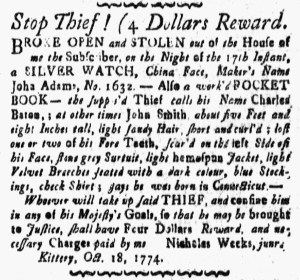
New-Hampshire Gazette (October 21, 1774).

Stop Thief!

Sometimes advertisements in colonial newspapers could have doubled as an eighteenth-century version of a local police blotter.  The October 21, 1774, edition of the New-Hampshire Gazette, for instance, included an advertisement that raised an alarm: “Stop Thief!”  Nicholas Weeks, Jr., reported that four days earlier someone “BROKE OPEN” his house in Kittery and stole a silver watch and a pocketbook.  Weeks alleged that the burglar was a man who sometimes went by the name Charles Baton and other times by John Smith.  No matter which alias the culprit used, the public could recognize him by his “light sandy Hair, short and curl’d,” missing front teeth, and the scars on the left side of his face.  Weeks offered a reward to anyone who “will take up said THIEF, and confine him in any of his Majesty’s [Jails], so that he may be brought to Justice.”

In another column on the same page, John Davenport of Portsmouth also proclaimed, “Stop Thief.”  Sometime during the night of October 12, a “THIEF or Thieves … broke open” his shop and stole a variety of merchandise, “some Cash,” and about five gallons of rum.  The shopkeeper listed several of the stolen items, hoping that would help in identifying the criminals if they attempted to sell them.  After all, theft gave some people an alternate means of participating in the transatlantic consumer revolution that extended to even small towns in the colonies.  Like Weeks, Davenport offered a reward to readers who “shall discover and bring to Justice” the perpetrators.  In yet another advertisement, Nicholas Boussard described a “St[r]ayed or Stolen” horse that went missing in Exeter.  He did not know for certain that someone took the “dark Bay HORSE,” but he did not dismiss the possibility.

Such incidents usually did not receive coverage among the news items in colonial newspapers, yet inserting advertisements allowed colonizers to bring them to the attention of the public and enlist the aid of the community in recovering stolen goods and prosecuting the offenders.  Advertisements delivered local news.

Slavery Advertisements Published October 21, 1774

The Slavery Adverts 250 Project chronicles the role of newspaper advertising in perpetuating slavery in the era of the American Revolution. The project seeks to reveal the ubiquity of slavery in eighteenth-century life from New England to Georgia by republishing advertisements about enslaved people – for sale as individuals or in groups, wanted to purchase or for hire for short periods, runaways who liberated themselves, and those who were subsequently captured and confined in jails and workhouses – in daily digests on this site as well as in real time via the @SlaveAdverts250 Twitter feed, utilizing twenty-first-century media to stand in for the print media of the eighteenth century.

The project aims to provide modern audiences with a sense of just how often colonizers encountered these advertisements in their daily lives. Enslaved men, women, and children appeared in print somewhere in the colonies almost every single day. Those advertisements served as a constant backdrop for social, cultural, economic, and political life in colonial and revolutionary America. Colonizers who did not purport to own enslaved people were still confronted with slavery as well as invited to maintain the system by purchasing enslaved men, women, and children or assisting in the capture of so-called “runaways” who sought to free themselves from bondage. The frequency of these newspaper advertisements suggests just how embedded slavery was in colonial and revolutionary American culture in everyday interactions beyond the printed page.

These advertisements also testify to the experiences of enslaved men, women, and children, though readers must consider that those experiences have been remediated through descriptions offered by enslavers rather than enslaved people themselves. Often unnamed in the advertisements, enslaved men, women, and children were not invisible or unimportant in early America.

These advertisements appeared in colonial American newspapers 250 years ago today.

New-Hampshire Gazette (October 21, 1774).

**********

South-Carolina and American General Gazette (October 21, 1774).

**********

South-Carolina and American General Gazette (October 21, 1774).

**********

South-Carolina and American General Gazette (October 21, 1774).

**********

South-Carolina and American General Gazette (October 21, 1774).

**********

South-Carolina and American General Gazette (October 21, 1774).

**********

South-Carolina and American General Gazette (October 21, 1774).

**********

South-Carolina and American General Gazette (October 21, 1774).

**********

South-Carolina and American General Gazette (October 21, 1774).

**********

South-Carolina and American General Gazette (October 21, 1774).

**********

South-Carolina and American General Gazette (October 21, 1774).

**********

South-Carolina and American General Gazette (October 21, 1774).

**********

South-Carolina and American General Gazette (October 21, 1774).

**********

South-Carolina and American General Gazette (October 21, 1774).

**********

South-Carolina and American General Gazette (October 21, 1774).

**********

South-Carolina and American General Gazette (October 21, 1774).

**********

South-Carolina and American General Gazette (October 21, 1774).

**********

South-Carolina and American General Gazette (October 21, 1774).

**********

South-Carolina and American General Gazette (October 21, 1774).

**********

South-Carolina and American General Gazette (October 21, 1774).

October 20

What was advertised in a colonial American newspaper 250 years ago today?

Rivington’s New-York Gazetteer (October 20, 1774).

“We [were] suddenly and unwarily drawn in to sign a certain paper published in Mr. Rivington’s Gazetteer.”

Abraham Miller, William Crooker, James Jameson, and a dozen other men from the town of Rye had second thoughts about signing their names to an open letter that appeared as the first item on the first page of the October 13, 1774, edition of Rivington’s New-York Gazetteer.  That letter, initially endorsed by more than eighty men, stated, “WE … being much concerned with the unhappy situation of public affairs think it our duty to our King and country to declare, that we have not been concerned in any resolutions entered into, or measures taken, with regard to the disputes at present at present subsisting with the mother country.”  As other colonizers had participated in protests or proposed responses to the Coercive Acts, these men claimed that they had remained neutral, not taking any action or expressing any views on the matter.  Furthermore, they did not appreciate what they had observed happening in their communities and in the public prints.  “[W]e also testify,” the letter continued, “our dislike to many hot and furious proceedings, in consequence of said disputes, which we think are more likely to ruin this once happy country, than remove grievances, if any there are.”  In conclusion, they declared “our great desire and full resolution to live and die peaceable subjects to our gracious sovereign King George the third, and his laws.”

That letter apparently elicited responses that at least some of the men who affixed their signatures did not expect … and they experienced those unhappy responses very quickly.  Just four days after the letter appeared in print, Miller, Crooker, Jameson, and others signed another letter, that one backpedaling on the sentiments expressed in the first one.  The new letter ran as an advertisement, not a letter to the editor, in the October 20 edition of Rivington’s New-York Gazetteer.  The men who signed it moved quickly to submit it in time to appear in the first issue published after the one that carried the initial letter.  In addition, they paid to make sure that it found a place in the newspaper.  They claimed that they had been “suddenly and unwarily drawn in to sign a certain paper published in Mr. Rivington’s Gazetteer.”  When he published an advertisement in the Boston-Gazette to apologize for signing an address to Governor Hutchinson a few months earlier, Thomas Kidder claimed that he had sone so “suddenly and inadvertently.”  Colonizers who regretted expressing Tory sympathies suggested that they did not hold those views but had only signed their names in haste without taking the time to read and contemplate what they were signing.  After “mature deliberation,” Miller, Crooker, Jameson, and others realized “that we acted preposterously, and without adverting properly to the matter in dispute, between the mother country and her colonies.”  They apologized, asserting that they “are therefore sorry that we ever had any concern in said paper,” the original letter, “and we do by these presents utterly disclaim every part thereof, except our expressions of loyalty to the Kind, and obedience to the constitutional laws of the realm.”  They calculated that disavowal would be sufficient to satisfy most patriots who had made their lives difficult.  After all, few clamored for declaring independence in the fall of 1774.  Most colonizers still wanted a redress of their grievances with Parliament and looked to the king to intervene on their behalf.  They believed that the “constitutional laws of the realm” supported their cause, if applied appropriately.  Miller, Crooker, Jameson, and others did not go as far as endorsing “any resolutions entered into, or measures taken” in protest, but they did run an advertisement to advise the public that they did not discourage or disdain such actions.

Slavery Advertisements Published October 20, 1774

The Slavery Adverts 250 Project chronicles the role of newspaper advertising in perpetuating slavery in the era of the American Revolution. The project seeks to reveal the ubiquity of slavery in eighteenth-century life from New England to Georgia by republishing advertisements about enslaved people – for sale as individuals or in groups, wanted to purchase or for hire for short periods, runaways who liberated themselves, and those who were subsequently captured and confined in jails and workhouses – in daily digests on this site as well as in real time via the @SlaveAdverts250 Twitter feed, utilizing twenty-first-century media to stand in for the print media of the eighteenth century.

The project aims to provide modern audiences with a sense of just how often colonizers encountered these advertisements in their daily lives. Enslaved men, women, and children appeared in print somewhere in the colonies almost every single day. Those advertisements served as a constant backdrop for social, cultural, economic, and political life in colonial and revolutionary America. Colonizers who did not purport to own enslaved people were still confronted with slavery as well as invited to maintain the system by purchasing enslaved men, women, and children or assisting in the capture of so-called “runaways” who sought to free themselves from bondage. The frequency of these newspaper advertisements suggests just how embedded slavery was in colonial and revolutionary American culture in everyday interactions beyond the printed page.

These advertisements also testify to the experiences of enslaved men, women, and children, though readers must consider that those experiences have been remediated through descriptions offered by enslavers rather than enslaved people themselves. Often unnamed in the advertisements, enslaved men, women, and children were not invisible or unimportant in early America.

These advertisements appeared in colonial American newspapers 250 years ago today.

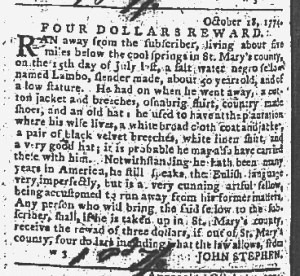
Maryland Gazette (October 20, 1774).

**********

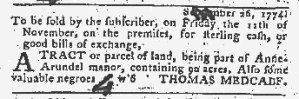
Maryland Gazette (October 20, 1774).

**********

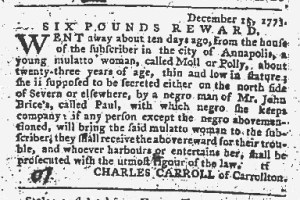
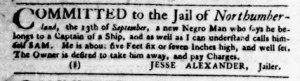
Maryland Gazette (October 20, 1774).

**********

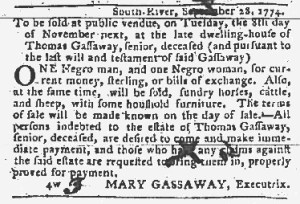
Maryland Gazette (October 20, 1774).

**********

Maryland Gazette (October 20, 1774).

**********

Maryland Gazette (October 20, 1774).

**********

Maryland Gazette (October 20, 1774).

**********

Massachusetts Gazette and Boston Weekly News-Letter (October 20, 1774).

**********

New-York Journal (October 20, 1774).

**********

New-York Journal (October 20, 1774).

**********

New-York Journal (October 20, 1774).

**********

Rivington’s New-York Gazetteer (October 20, 1774).

**********

Rivington’s New-York Gazetteer (October 20, 1774).

**********

Rivington’s New-York Gazetteer (October 20, 1774).

**********

Rivington’s New-York Gazetteer (October 20, 1774).

**********

Rivington’s New-York Gazetteer (October 20, 1774).

**********

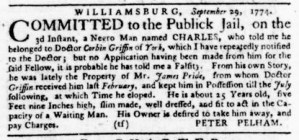
Virginia Gazette [Pinkney] (October 20, 1774).

**********

Virginia Gazette [Pinkney] (October 20, 1774).

**********

Virginia Gazette [Pinkney] (October 20, 1774).

**********

Virginia Gazette [Pinkney] (October 20, 1774).

**********

Virginia Gazette [Pinkney] (October 20, 1774).

**********

Virginia Gazette [Pinkney] (October 20, 1774).

**********

Virginia Gazette [Pinkney] (October 20, 1774).

**********

Virginia Gazette [Pinkney] (October 20, 1774).

**********

Virginia Gazette [Pinkney] (October 20, 1774).

**********

Virginia Gazette [Pinkney] (October 20, 1774).

**********

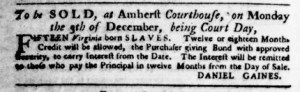
Virginia Gazette [Purdie and Dixon] (October 20, 1774).

**********

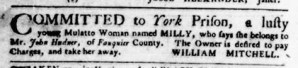
Virginia Gazette [Purdie and Dixon] (October 20, 1774).

**********

Virginia Gazette [Purdie and Dixon] (October 20, 1774).

**********

Virginia Gazette [Purdie and Dixon] (October 20, 1774).

**********

Virginia Gazette [Purdie and Dixon] (October 20, 1774).

**********

Virginia Gazette [Purdie and Dixon] (October 20, 1774).

**********

Virginia Gazette [Purdie and Dixon] (October 20, 1774).

**********

Virginia Gazette [Purdie and Dixon] (October 20, 1774).

**********

Virginia Gazette [Purdie and Dixon] (October 20, 1774).

**********

Virginia Gazette [Purdie and Dixon] (October 20, 1774).

**********

Supplement to the Virginia Gazette [Purdie and Dixon] (October 20, 1774).

**********

Supplement to the Virginia Gazette [Purdie and Dixon] (October 20, 1774).