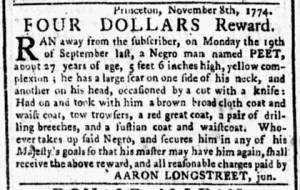
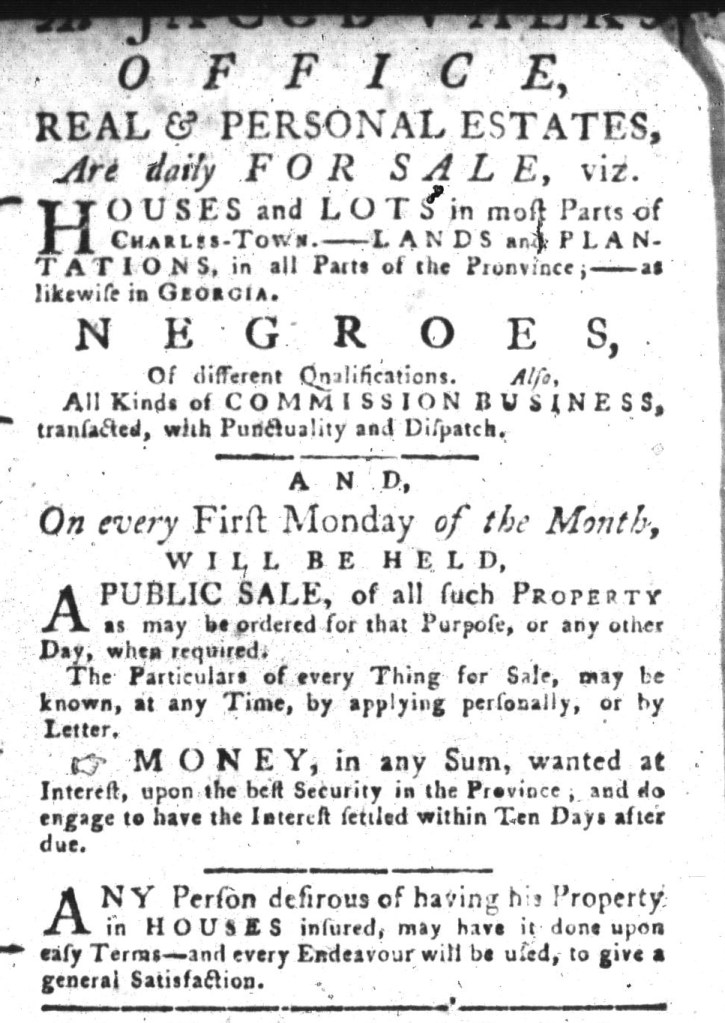
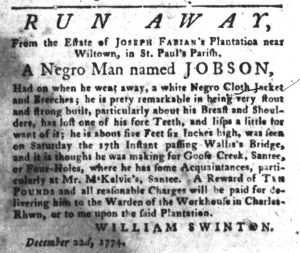
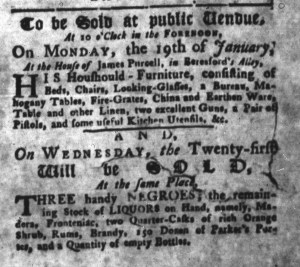
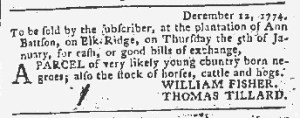
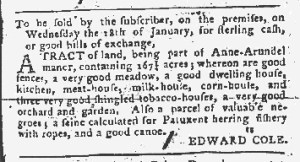
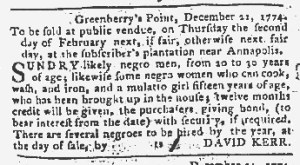
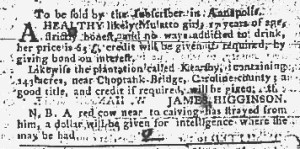
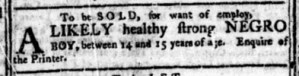
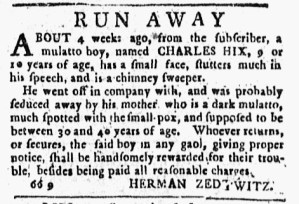
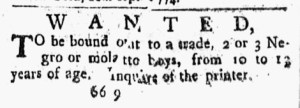
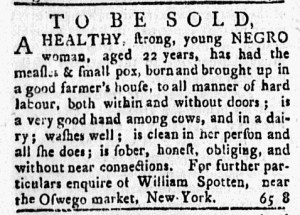
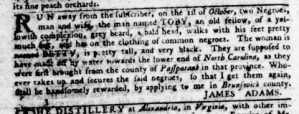
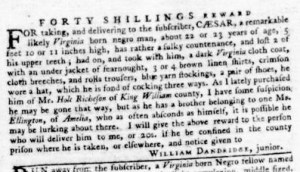
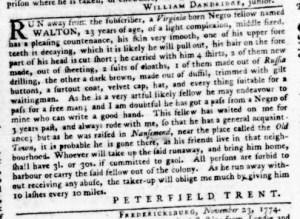
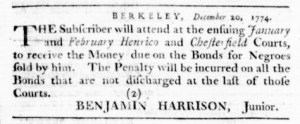
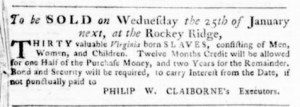
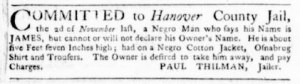
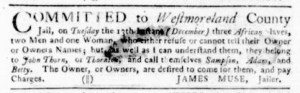
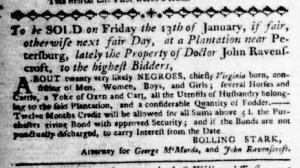
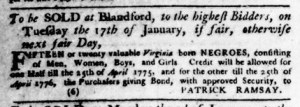
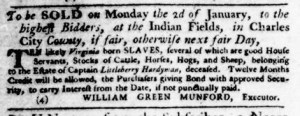
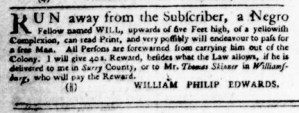
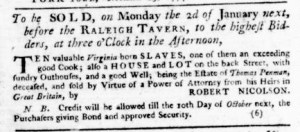
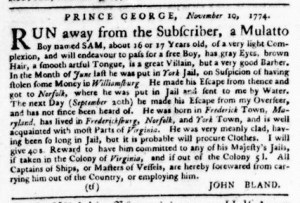
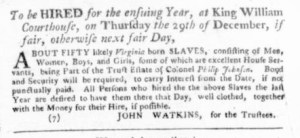
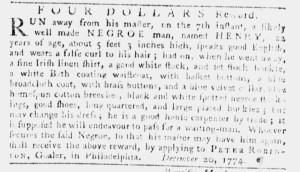
The Slavery Adverts 250 Project chronicles the role of newspaper advertising in perpetuating slavery in the era of the American Revolution. The project seeks to reveal the ubiquity of slavery in eighteenth-century life from New England to Georgia by republishing advertisements about enslaved people – for sale as individuals or in groups, wanted to purchase or for hire for short periods, runaways who liberated themselves, and those who were subsequently captured and confined in jails and workhouses – in daily digests on this site as well as in real time via the @SlaveAdverts250 Twitter feed, utilizing twenty-first-century media to stand in for the print media of the eighteenth century.
The project aims to provide modern audiences with a sense of just how often colonizers encountered these advertisements in their daily lives. Enslaved men, women, and children appeared in print somewhere in the colonies almost every single day. Those advertisements served as a constant backdrop for social, cultural, economic, and political life in colonial and revolutionary America. Colonizers who did not purport to own enslaved people were still confronted with slavery as well as invited to maintain the system by purchasing enslaved men, women, and children or assisting in the capture of so-called “runaways” who sought to free themselves from bondage. The frequency of these newspaper advertisements suggests just how embedded slavery was in colonial and revolutionary American culture in everyday interactions beyond the printed page.
These advertisements also testify to the experiences of enslaved men, women, and children, though readers must consider that those experiences have been remediated through descriptions offered by enslavers rather than enslaved people themselves. Often unnamed in the advertisements, enslaved men, women, and children were not invisible or unimportant in early America.
These advertisements appeared in colonial American newspapers 250 years ago today.
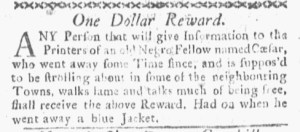
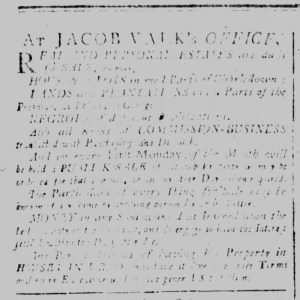
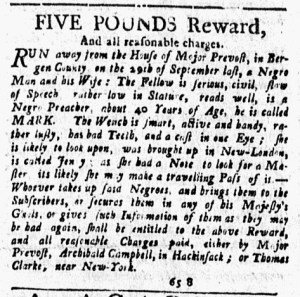
Boston-Gazette (December 26, 1774).
**********
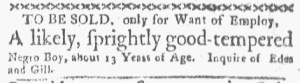
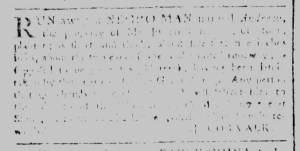
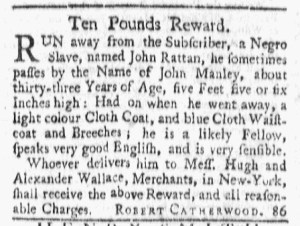
Boston-Gazette (December 26, 1774).
**********
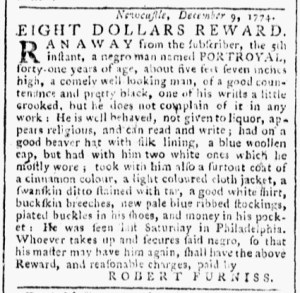
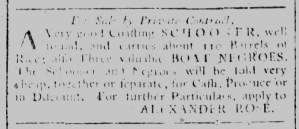
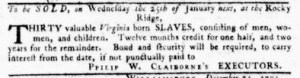
Dunlap’s Pennsylvania Packet (December 26, 1774).
**********
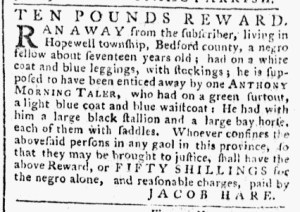
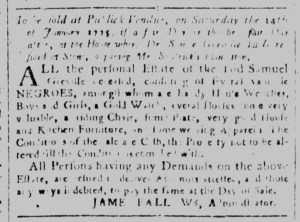
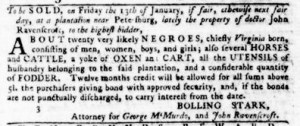
Dunlap’s Pennsylvania Packet (December 26, 1774).
**********
New-York Gazette and Weekly Mercury (December 26, 1774).
What was advertised in a colonial American newspaper 250 years ago this month?
Boston Evening-Post (December 26, 1774).
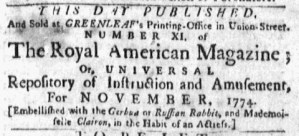
“THIS DAY PUBLISHED … The Royal American Magazine … For NOVEMBER, 1774.”
Joseph Greenleaf published a new issue of the Royal American Magazine and advertised sporadically in December 1774. Perhaps the troubles that Boston experienced in the wake of the Boston Port Act, the Massachusetts Government Act, and the other Coercive Acts played a role in placing advertisements without the same attention to developing a marketing strategy that Isaiah Thomas had sometimes shown when he first launched the magazine, though the original publisher had also advertised somewhat haphazardly in his final months as proprietor before transferring the publication to Greenleaf. In general, Thomas had been much more intentional about advertising in the early stages when he sought subscribers than he had been once the magazine began circulating to readers.
As previously noted, Greenleaf advertised on November 17 that he would publish the October edition of the Royal American Magazine the following day, but no subsequent advertisements appeared in any of Boston’s newspapers until December 5. On that day, the Boston-Evening Post ran a notice that declared, “THIS DAY PUBLISHED … The Royal American Magazine … For OCTOBER, 1774.” To entice readers, Greenleaf noted that the issue was “Embellished with an elegant Engraving of the Dancing Bishops.” Eighteenth-century readers knew that “THIS DAY PUBLISHED” meant that a book, pamphlet, almanac, magazine, or other item was available for sale, not necessarily that it had been published on that day. As a result, Greenleaf could have published and circulated the October edition any time between November, if he had not met any delays after his previous advertisement, and December 5.
Three days later, Greenleaf placed advertisements in both the Massachusetts Gazette and Boston Weekly News-Letterand the Massachusetts Spy. In the former, he hawked the October edition of the magazine, “Embellished with an elegant Engraving.” That notice did not describe the engraving, but it did indicate that Greenleaf continued to take in subscribers. A much shorter advertisement in the Massachusetts Spy announced, “To-morrow will be published, by J. GREENLEAF, THE Royal American Magazine, No. XI. For NOVEMBER, 1774.” Subsequent advertisements suggest that Greenleaf did indeed publish the new edition in the next few days. That meant that whatever difficulties he experienced in the past month, he was nearly on time in delivering the November issue of the Royal American Magazine. In the eighteenth-century, magazines usually came out at the end of the month or the first week of the next month rather than in advance of the date on the cover.
During the following week, Greenleaf inserted advertisements for the November edition of the Royal American Magazine in four of the five newspapers published in Boston at the time. Rather than submit identical copy to the printing offices, he devised four variations, starting with one that ran in the Boston Evening-Post on December 12. In that one, he stated that the November issue was “THIS DAY PUBLISHED” and promoted two engravings, “the Gerubaor Russian Rabbit, and Mademoiselle Clarion, in the Habit of an Actress.” (Paul Revere produced all the engravings for the Royal American Magazine, though neither Thomas nor Greenleaf ever identified him in their advertisements.) On December 16, the Massachusetts Gazette and Boston Weekly News-Letter and the Massachusetts Spy, each published a day later than usual, both ran advertisements about the Royal American Magazine, though this time about the same edition. The advertisement in the Massachusetts Gazette and Boston Weekly News-Letter merely updated the month and issue number, presumably using type already set for the previous advertisement. The compositor for the Massachusetts Spy seemingly did something similar, updating the first line to read “This day was published, by J. GREENLEAF” instead of ““To-morrow will be published, by J. GREENLEAF.” The “T” in “THE Royal American Magazine,” slightly out of alignment in both advertisements suggests that was the case. Finally, the Boston-Gazettecarried a brief advertisement on December 19: “Just Published (No. XI) The Royal American Magazine, For November 1774, at Greenleaf’s Printing-Office, near the Market, Boston.”
Greenleaf inserted advertisements in the Boston Evening-Post and the Massachusetts Gazette and Boston Weekly News-Letter a second time, but not the Boston-Gazette and the Massachusetts Spy. For some reason, two weeks passed between the first and second appearance of those notices that did run twice. Still, Greenleaf pursued a more extensive advertising campaign for the Royal American Magazine in December than November, increasing to nine advertisements compared to only four. Although not as robust as some months, these marketing efforts gave the magazine’s November edition greater visibility in the public prints.
**********
“THIS DAY PUBLISHED … Royal American Magazine … For OCTOBER, 1774”
December 5 – Boston Evening-Post (first appearance)
“JUST PUBLISHED … Royal American Magazine … For OCTOBER, 1774”
December 8 – Massachusetts Gazette and Boston Weekly News-Letter (first appearance)
“To-Morrow will be published … Royal American Magazine … NOVEMBER, 1774”
December 8 – Massachusetts Spy (first appearance)
“THIS DAY PUBLISHED … Royal American Magazine … For NOVEMBER, 1774”
December 12 – Boston Evening-Post (first appearance)
December 26 – Boston Evening-Post (second appearance)
“JUST PUBLISHED … Royal American Magazine … For NOVEMBER, 1774”
December 16 – Massachusetts Gazette and Boston Weekly News-Letter (first appearance)
December 29 – Massachusetts Gazette and Boston Weekly News-Letter (second appearance)
“This day was published … Royal American Magazine … NOVEMBER, 1774”
December 16 – Massachusetts Spy (first appearance)
“Just Published (No. XI) The Royal American Magazine, For November 1774”
What was advertised in a colonial American newspaper 250 years ago today?
Providence Gazette (December 24, 1774).
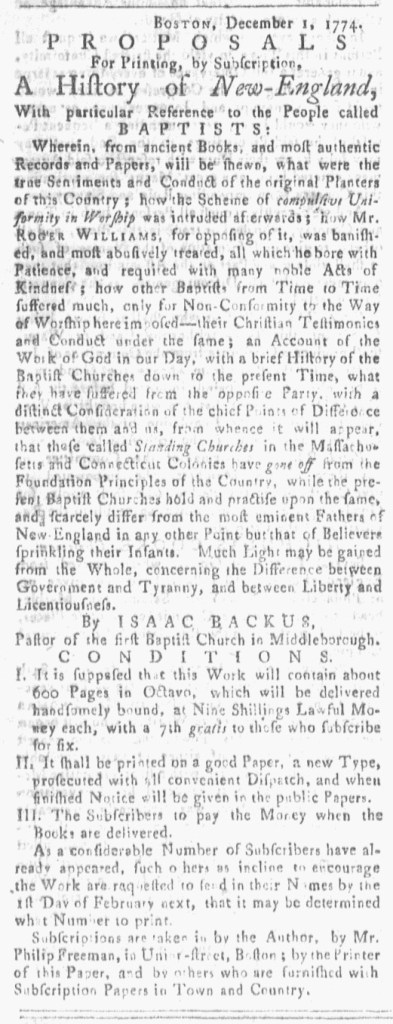
“A History of New-England, With particular Reference to the People called BAPTISTS.”
A subscription proposal for “A History of New-England, With particular Reference to the People called BAPTISTS” appeared among the various advertisements in the December 24, 1774, edition of the Providence Gazette. Dated “BOSTON, December 1,” it described a work in which Isaac Backus, “Pastor of the first Baptist Church in Middleborough,” consulted “ancient Books, and most authentic Records and Papers” to demonstrate the “true Sentiments and Conduct of the original Planters of this Country” and how the “Scheme of compulsive Uniformity in Worship was intruded afterwards.” The book included a “brief History of the Baptist Churches down to the present time” and “what they have suffered from the opposite Party, with a distinct Consideration of the chief Points of Difference between them and us, from whence it will appear, that those called Standing Churches in Massachusetts and Connecticut Colonies have gone off from the Foundation Principles of the Country.” As the imperial crisis intensified, Backus offered his own interpretation of the “Difference between Government and Tyranny, and between Liberty and Licentiousness” when it came to how Baptists had comported themselves and been treated in New England. Positioning Roger Williams as a protagonist in his narrative, the minister expected to attract subscribers in Rhode Island.
Beyond the contents of the volume, Backus promoted the “CONDITIONS” for publication that subscribers could expect. He anticipated that the book “will contain about 600 Pages in Octavo, which will be delivered handsomely bound.” Furthermore, they “shall be printed on good Paper” with a “new Type” to enhance legibility. Each copy cost nine shillings, though Backus offered a free seventh copy “to those who subscribe for six,” whether to gift to friends or retail in shops and bookstores. Subscribers did not need to make any payments in advance; sometimes subscription proposals called for deposits to help defray the initial costs of printing, but Backus stated that subscribers would “pay the Money when the Books are delivered.” Rather than raising funds, he intended for the proposals to gauge interest in the project and incite demand. To that end, he confided that a “considerable Number of Subscribers have already appeared.” Given the popularity of the book, Backus suggested, prospective subscribers did not want to miss an opportunity to reserve their own copies. They could submit their names to Backus or an associate in Boston or the printer of the Providence Gazette. In addition, the minister disseminated “Subscription Papers in Town and Country,” enlisting the aid of local agents in displaying his marketing materials.
Backus called for subscribers “to send in their Names by the 1st Day of February next, that it may be determined what Number to print.” Distributing subscription proposals did not always result in books going to press. In this case, Backus apparently found a sufficient number of subscribers to make the project viable, yet he did not publish the book as quickly as intended. Given the circumstances, an imperial crisis that became a war between the colonies and Britain in the spring of 1775, Backus published the first of three volumes in 1777 and the other two over the course of two decades. That first volume covered the period through 1690. The second, published in 1784, extended from 1690 to 1784, including “a concise view of the American war, and of the conduct of the Baptists therein, with the present state of their churches.” In 1796, Backus published the final volume, a church history that covered the period from 1783 through 1796 that featured a “particular history of the Baptist churches in the five states of New-England.” The project extended far beyond what he described in the subscription proposals the minister circulated in December 1774.
What was advertised in a colonial American newspaper 250 years ago today?
New-Hampshire Gazette (December 23, 1774).
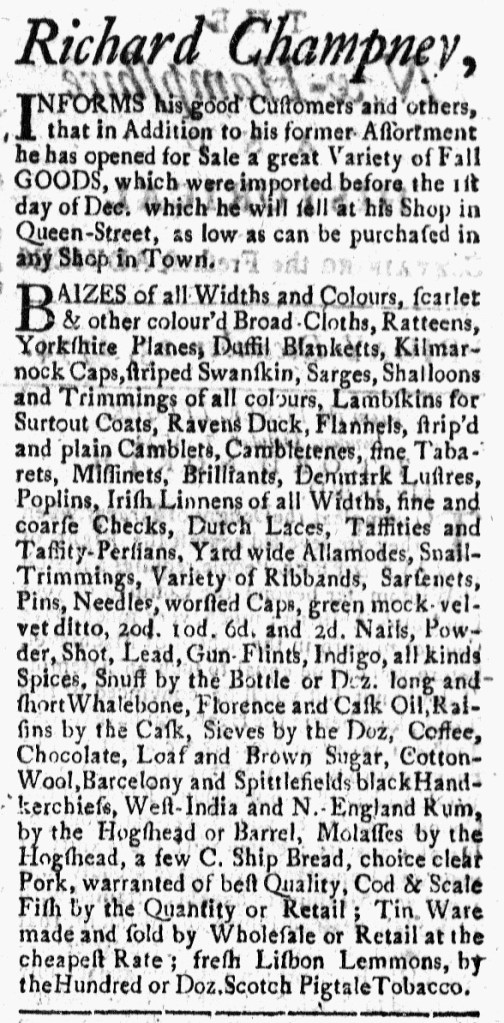
“Fall GOODS, which were imported before the 1st of Dec.”
Richard Champney’s advertisement in the December 23, 1774, edition of the New-Hampshire Gazette looked like many others that had appeared in that newspaper and others throughout the colonies for about two decades. The shopkeeper emphasized that he stocked “a great Variety of Fall GOODS” and promised competitive prices, declaring that consumers could acquire his merchandise “as low as can be purchased in any Shop in Town.” To demonstrate the array of choices he offered, he devoted most of his advertisement to an extensive list that included “BAIZES of all Widths and Colours,” “Shalloons and Trimmings of all colours,” “strip’d and plain Camblets,” “fine and coarse Checks,” a “Variety of Ribbands,” “worsted Caps,” and “Barcelony and Spittlefields black Handkerchiefs.” Although many of those textiles and accessories may not be immediately familiar to modern readers, they resonated with readers immersed in the consumer revolution of the eighteenth century. They fluently spoke the language of consumption.
Despite the similarities with longstanding forms of advertising, Champney’s notice included one detail that distinguished it from what he would have published even a month earlier. Although he had “opened” a new stock to supplement his “former Assortment,” those new goods “were imported before the 1st day of Dec[ember].” That clarification was important for the shopkeeper to bring to the attention of prospective customers in Portsmouth and nearby towns and anyone who might read the New-Hampshire Gazette far and wide. Champney explicitly specified that he observed the Continental Association, a nonimportation agreement adopted by the First Continental Congress that went into effect on December 1. Since he had received this “great Variety of Fall GOODS” before that date, he could sell them with a clear conscience. Similarly, consumers could purchase them without worrying whether they aided the shopkeeper in breaking the agreement. For many years advertisers had noted when they imported their merchandise as a means of assuring prospective customers that they carried new items of the latest styles and taste. After December 1, 1774, however, when a shipment arrived had political significance and new sorts of ramifications for both advertisers and buyers.
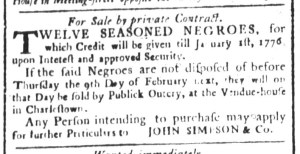
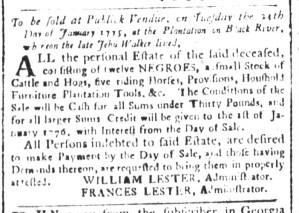
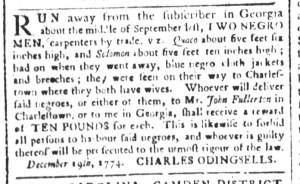
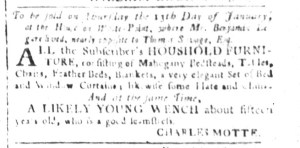
The Slavery Adverts 250 Project chronicles the role of newspaper advertising in perpetuating slavery in the era of the American Revolution. The project seeks to reveal the ubiquity of slavery in eighteenth-century life from New England to Georgia by republishing advertisements about enslaved people – for sale as individuals or in groups, wanted to purchase or for hire for short periods, runaways who liberated themselves, and those who were subsequently captured and confined in jails and workhouses – in daily digests on this site as well as in real time via the @SlaveAdverts250 Twitter feed, utilizing twenty-first-century media to stand in for the print media of the eighteenth century.
The project aims to provide modern audiences with a sense of just how often colonizers encountered these advertisements in their daily lives. Enslaved men, women, and children appeared in print somewhere in the colonies almost every single day. Those advertisements served as a constant backdrop for social, cultural, economic, and political life in colonial and revolutionary America. Colonizers who did not purport to own enslaved people were still confronted with slavery as well as invited to maintain the system by purchasing enslaved men, women, and children or assisting in the capture of so-called “runaways” who sought to free themselves from bondage. The frequency of these newspaper advertisements suggests just how embedded slavery was in colonial and revolutionary American culture in everyday interactions beyond the printed page.
These advertisements also testify to the experiences of enslaved men, women, and children, though readers must consider that those experiences have been remediated through descriptions offered by enslavers rather than enslaved people themselves. Often unnamed in the advertisements, enslaved men, women, and children were not invisible or unimportant in early America.
These advertisements appeared in colonial American newspapers 250 years ago today.
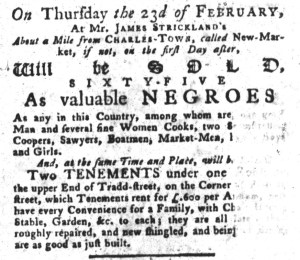
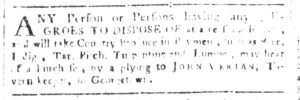
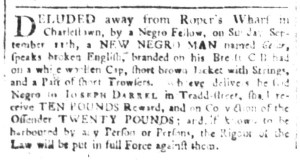
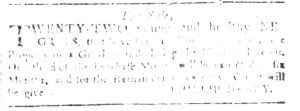
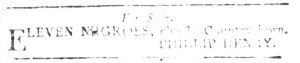
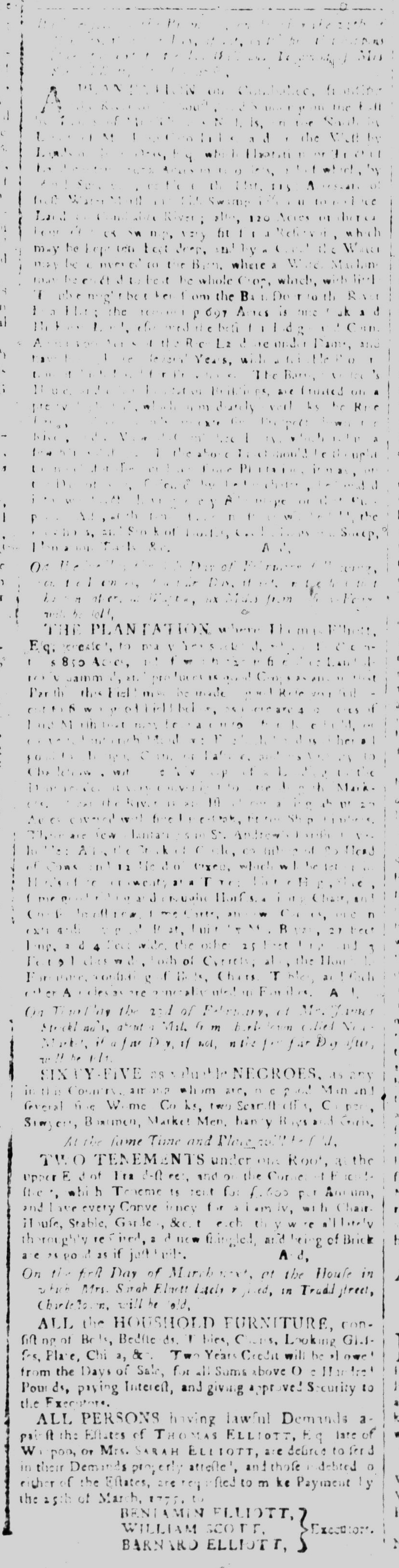
South-Carolina and American General Gazette (December 23, 1774).
**********
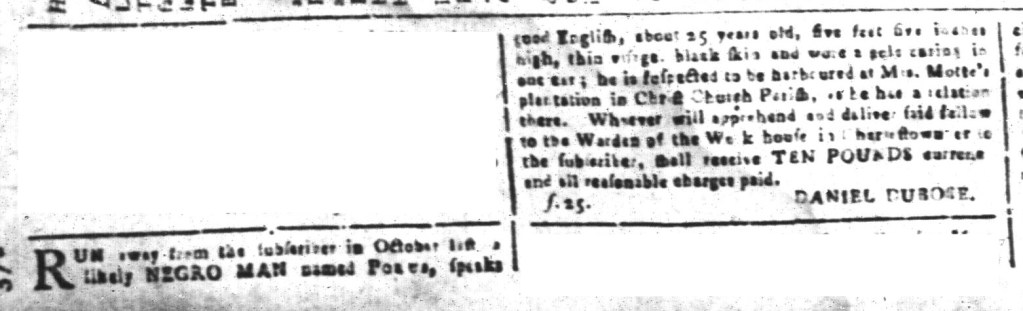
South-Carolina and American General Gazette (December 23, 1774).
**********
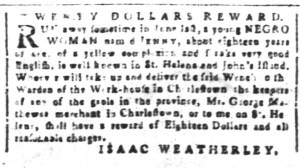
South-Carolina and American General Gazette (December 23, 1774).
**********
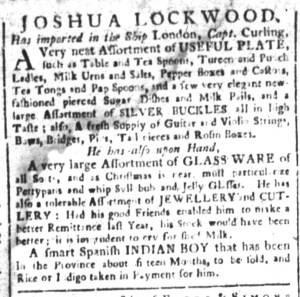
South-Carolina and American General Gazette (December 23, 1774).
**********
South-Carolina and American General Gazette (December 23, 1774).
**********
South-Carolina and American General Gazette (December 23, 1774).
**********
South-Carolina and American General Gazette (December 23, 1774).
**********
South-Carolina and American General Gazette (December 23, 1774).
**********
South-Carolina and American General Gazette (December 23, 1774).
**********
South-Carolina and American General Gazette (December 23, 1774).
**********
South-Carolina and American General Gazette (December 23, 1774).
**********
South-Carolina and American General Gazette (December 23, 1774).
**********
South-Carolina and American General Gazette (December 23, 1774).
**********
South-Carolina and American General Gazette (December 23, 1774).
**********
South-Carolina and American General Gazette (December 23, 1774).
**********
South-Carolina and American General Gazette (December 23, 1774).
**********
South-Carolina and American General Gazette (December 23, 1774).
**********
South-Carolina and American General Gazette (December 23, 1774).
**********
South-Carolina and American General Gazette (December 23, 1774).
**********
South-Carolina and American General Gazette (December 23, 1774).
**********
South-Carolina and American General Gazette (December 23, 1774).
**********
South-Carolina and American General Gazette (December 23, 1774).
**********
South-Carolina and American General Gazette (December 23, 1774).
**********
South-Carolina and American General Gazette (December 23, 1774).
**********
South-Carolina and American General Gazette (December 23, 1774).
**********
South-Carolina and American General Gazette (December 23, 1774).
**********
South-Carolina and American General Gazette (December 23, 1774).
**********
South-Carolina and American General Gazette (December 23, 1774).
**********
South-Carolina and American General Gazette (December 23, 1774).
**********
South-Carolina and American General Gazette (December 23, 1774).
**********
South-Carolina and American General Gazette (December 23, 1774).
**********
South-Carolina and American General Gazette (December 23, 1774).
What was advertised in a colonial American newspaper 250 years ago today?
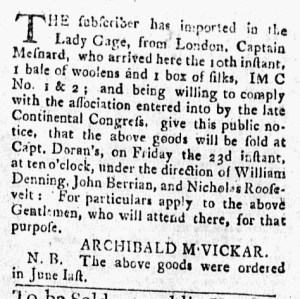
New-York Journal (December 22, 1774).
“Willing to comply with the association entered into by the late Continental Congress.”
When a shipment of “1 bale of woolens and 1 box of silks” arrived in New York via the Lady Gage on December 10, 1774, Archibald McVickar surrendered the good to the local Committee of Inspection and placed an advertisement to that effect in the New-York Journal. He declared that he was “willing to comply with the association entered into by the late Continental Congress.” Accordingly, those goods “will be sold … under the direction of William Denning, John Berrian, and Nicholas Roosevelt.” Anyone wishing to learn more about the sale should “apply to the above Gentlemen” rather than to the McVickar.
McVickar abided by the Continental Association, a nonimportation agreement enacted by the First Continental Congress in response to the Coercive Acts. In particular, the tenth article stated, “In Case any Merchant, Trader, or other Persons, shall import any Goods or Merchandise after the first Day of December [1774], and before the first Day of February next, the same ought forthwith, at the Election of the Owner, to be either reshipped or delivered up to the Committee of the County or town wherein they shall be imported, to be stored at the Risk of the Importer, until the Non-importation Agreement shall cease, or be sold under the Direction of the Committee aforesaid.” In other words, McVickar had three options since his shipment arrived on December 10. He could return it, turn the goods over to the committee to store until the nonimportation agreement ended, or turn the goods over to the committee to sell.
McVickar chose the final option. The Continental Association made further provisions that he would be reimbursed for the cost of the goods yet could not earn any profit on them. Instead, any profit was to be applied to relief efforts for Boston where the harbor had been closed and blockaded since the Boston Port Act went into effect on June 1. McVickar added a nota bene to clarify that the “goods were ordered in June last.” At that time, colonizers suspected that a nonimportation agreement might go into effect in the future, but the First Continental Congress had not yet met or composed and disseminated the Continental Association. McVickar suggested that he had not deliberately attempted to get around that agreement, as he further demonstrated in asserting that he was “willing to comply with the association.” Whatever he lost in profit, he gained in staying in the good graces of members of the community who supported the Patriot cause.
The Slavery Adverts 250 Project chronicles the role of newspaper advertising in perpetuating slavery in the era of the American Revolution. The project seeks to reveal the ubiquity of slavery in eighteenth-century life from New England to Georgia by republishing advertisements about enslaved people – for sale as individuals or in groups, wanted to purchase or for hire for short periods, runaways who liberated themselves, and those who were subsequently captured and confined in jails and workhouses – in daily digests on this site as well as in real time via the @SlaveAdverts250 Twitter feed, utilizing twenty-first-century media to stand in for the print media of the eighteenth century.
The project aims to provide modern audiences with a sense of just how often colonizers encountered these advertisements in their daily lives. Enslaved men, women, and children appeared in print somewhere in the colonies almost every single day. Those advertisements served as a constant backdrop for social, cultural, economic, and political life in colonial and revolutionary America. Colonizers who did not purport to own enslaved people were still confronted with slavery as well as invited to maintain the system by purchasing enslaved men, women, and children or assisting in the capture of so-called “runaways” who sought to free themselves from bondage. The frequency of these newspaper advertisements suggests just how embedded slavery was in colonial and revolutionary American culture in everyday interactions beyond the printed page.
These advertisements also testify to the experiences of enslaved men, women, and children, though readers must consider that those experiences have been remediated through descriptions offered by enslavers rather than enslaved people themselves. Often unnamed in the advertisements, enslaved men, women, and children were not invisible or unimportant in early America.
These advertisements appeared in colonial American newspapers 250 years ago today.
What was advertised in a colonial American newspaper 250 years ago today?
Essex Journal (December 21, 1774).
“Intend to enlarge the paper equal to any in the province the year ensuing.”
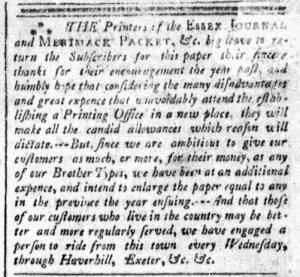
The Essex Journal and Merimack Packet: Or The Massachusetts and New-Hampshire General Advertiser completed its first year of publication with its December 21, 1774, edition. For the last time, the masthead stated, “VOL. I.” The compositor updated that to “VOL. II” the following week. Isaiah Thomas and Henry-Walter Tinges launched the newspaper, published in Newburyport, with a free preview issue on December 4, 1773, then commenced weekly publication on December 29. Thomas withdrew from the partnership in August 1774, about the same time that he transferred proprietorship of the Royal American Magazine to Joseph Greenleaf. Ezra Lunt joined Tinges in publishing the Essex Journal without a disruption in distributing the newspaper to subscribers. Despite those disruptions and the “many disadvantages and great expence that unavoidably attend the establishing a Printing Office in a new place,” the Essex Journal made it through its first year and continued into a second.
In a notice in the final issue of Volume I, Lunt and Tinges announced their plans to improve and expand the newspaper. They proclaimed that they “are ambitious to give our customers as much, or more, for their money, as any of our Brother Types” who published the Essex Gazette in Salem, the New-Hampshire Gazette in Portsmouth, or any of the five newspapers printed in Boston at the time. To that end, Lunt and Tinges confided, “we have been at an additional expence, and intend to enlarge the paper equal to any in the province the year ensuing.” Furthermore, they sought to improve the newspaper for subscribers in other ways. In order that “those of our customers who live in the country may be better and more regularly served, we have engaged a person to ride from this town every Wednesday, through Haverhill, Exeter,” and other towns. Lunt and Tinges published the Essex Journal on Wednesdays. As soon as the ink dried, they gave copies to a postrider to deliver to subscribers throughout the countryside, improving on the services provided throughout the previous year.
Printers often noted when their newspapers completed another year of publication, often marking the occasion with calls for subscribers and others to settle overdue accounts. Lunt and Tinges did not make any mention of subscribers who were delinquent in making payment. Instead, they expressed their appreciation and sketched their plans for the next year, hoping to increase support and enthusiasm for the newest newspaper published in Massachusetts.
The Slavery Adverts 250 Project chronicles the role of newspaper advertising in perpetuating slavery in the era of the American Revolution. The project seeks to reveal the ubiquity of slavery in eighteenth-century life from New England to Georgia by republishing advertisements about enslaved people – for sale as individuals or in groups, wanted to purchase or for hire for short periods, runaways who liberated themselves, and those who were subsequently captured and confined in jails and workhouses – in daily digests on this site as well as in real time via the @SlaveAdverts250 Twitter feed, utilizing twenty-first-century media to stand in for the print media of the eighteenth century.
The project aims to provide modern audiences with a sense of just how often colonizers encountered these advertisements in their daily lives. Enslaved men, women, and children appeared in print somewhere in the colonies almost every single day. Those advertisements served as a constant backdrop for social, cultural, economic, and political life in colonial and revolutionary America. Colonizers who did not purport to own enslaved people were still confronted with slavery as well as invited to maintain the system by purchasing enslaved men, women, and children or assisting in the capture of so-called “runaways” who sought to free themselves from bondage. The frequency of these newspaper advertisements suggests just how embedded slavery was in colonial and revolutionary American culture in everyday interactions beyond the printed page.
These advertisements also testify to the experiences of enslaved men, women, and children, though readers must consider that those experiences have been remediated through descriptions offered by enslavers rather than enslaved people themselves. Often unnamed in the advertisements, enslaved men, women, and children were not invisible or unimportant in early America.
These advertisements appeared in colonial American newspapers 250 years ago today.
What was advertised in a colonial American newspaper 250 years ago today?
Essex Gazette (December 20, 1774).
“I find the retaining said Commission is contrary to the Sentiments of the Publick in general.”
The December 20, 1774, edition of the Essex Gazette, published in Salem, carried three advertisements in which residents of Marblehead disavowed commissions granted to them by the former governor, Thomas Hutchinson. Nathaniel Lindsey, for instance, declared, “I find the retaining said Commissions is contrary to the Sentiments of the Publick in general, as well as inconsistent with my private Opinion.” He carefully asserted that his politics aligned with the principles espoused by Patriots, though such an assertion may have been performative rather than authentic. Either way, Lindsey distanced himself from his affiliation with the unpopular former governor, proclaiming, “I will not act any farther under said Commission, neither will I receive any Commission or act under any Authority whatsoever, that proceeds from any Creature which appears to have two Faces.” In other words, he did not find the current administration trustworthy to act in the interests of the colonies instead of Parliament. “I am a Well-Wisher to my Country and Town,” Lindsey concluded.
Ebenezer Graves and Samuel Trevett published the other two notices with similar messages. Indeed, their advertisements featured identical wording except for the first line. Graves stated that he “some Time since received a military Commission from the late infamous Governor Hutchinson,” while Trevett similarly declared, “I was so unhappy as to receive a military Commission from the late infamous Governor Hutchinson.” Each of them acknowledged that the “Commission has been continued by his successor,” General Thomas Gage. Graves and Trevett used identical language throughout the remainder of their notices: “I hereby publish a full Resignation of said Commission, as I conceive it inconsistent with the Laws of God and the Welfare of my Country, to hold it under the Command of such an enemy of my Country’s Liberties.” Hutchinson enforced the Coercive Acts, including the Boston Port Act, the Massachusetts Government Act, and the Quartering Act.
These advertisements resembled the apologies that many colonizers published to distance themselves from an address to Governor Hutchinson that they signed upon his departure for England. They claimed that they signed in haste, not having carefully read or fully comprehended the document. As William Huntting Howell has noted, many of the apologies featured identical language, leading him to argue that the signatories were not necessarily sincere but merely wanted to return to the good graces of their neighbors. Furthermore, Howell argues, what mattered most to Patriots was the public expression of allegiance to their cause, finding that more important for shaping public opinion than the true conversion of any individual. When Lindsay, Graves, and Trevett ran advertisements resigning their military commissions, they perhaps followed a similar path as their counterparts who apologized for signing the address to Hutchinson.