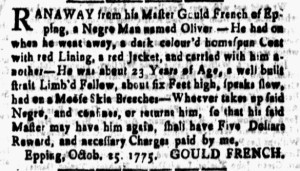
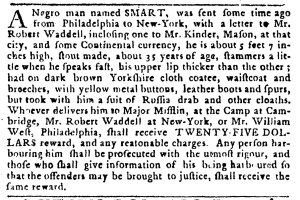
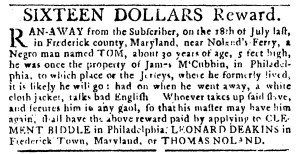
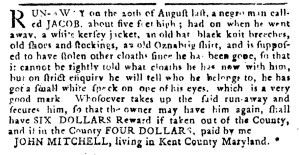
Slavery Advertisements Published November 9, 1775

GUEST CURATOR: Massimo Sgambati

The Slavery Adverts 250 Project chronicles the role of newspaper advertising in perpetuating slavery in the era of the American Revolution. The project seeks to reveal the ubiquity of slavery in eighteenth-century life from New England to Georgia by republishing advertisements about enslaved people – for sale as individuals or in groups, wanted to purchase or for hire for short periods, runaways who liberated themselves, and those who were subsequently captured and confined in jails and workhouses – in daily digests on this site as well as in real time via the @SlaveAdverts250 Twitter feed, utilizing twenty-first-century media to stand in for the print media of the eighteenth century.

The project aims to provide modern audiences with a sense of just how often colonizers encountered these advertisements in their daily lives. Enslaved men, women, and children appeared in print somewhere in the colonies almost every single day. Those advertisements served as a constant backdrop for social, cultural, economic, and political life in colonial and revolutionary America. Colonizers who did not purport to own enslaved people were still confronted with slavery as well as invited to maintain the system by purchasing enslaved men, women, and children or assisting in the capture of so-called “runaways” who sought to free themselves from bondage. The frequency of these newspaper advertisements suggests just how embedded slavery was in colonial and revolutionary American culture in everyday interactions beyond the printed page.

These advertisements also testify to the experiences of enslaved men, women, and children, though readers must consider that those experiences have been remediated through descriptions offered by enslavers rather than enslaved people themselves. Often unnamed in the advertisements, enslaved men, women, and children were not invisible or unimportant in early America.

From compiling an archive of digitized eighteenth-century newspapers to identifying advertisements about enslaved men, women, and children in those newspapers to preparing images of each advertisement to posting this daily digest, Massimo Sgambati served as guest curator for this entry. He completed this work as part of the Summer Scholars Program, funded by a fellowship from the D’Amour College of Liberal Arts and Sciences at Assumption University in Worcester, Massachusetts, in Summer 2025.

These advertisements appeared in colonial American newspapers 250 years ago today.
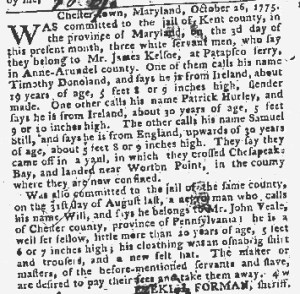
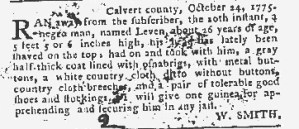
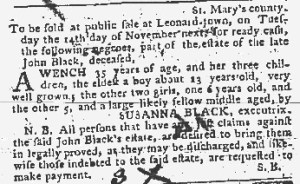
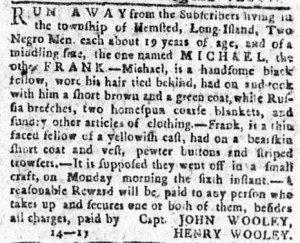
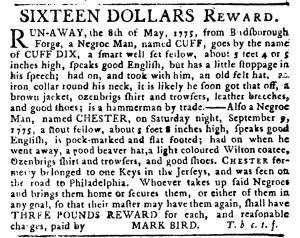
Maryland Gazette (November 9, 1775)

**********
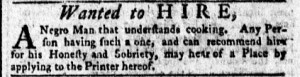
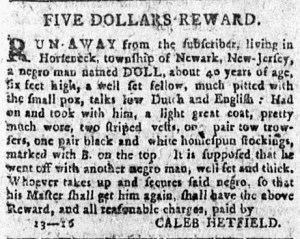
Maryland Gazette (November 9, 1775)

**********
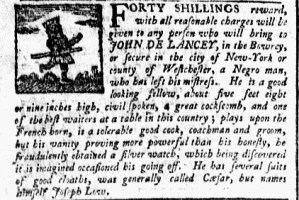
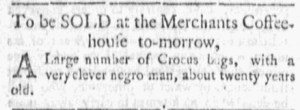
Maryland Gazette (November 9, 1775)

**********
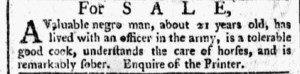
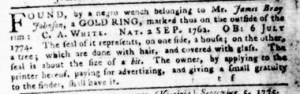
Maryland Gazette (November 9, 1775)

**********
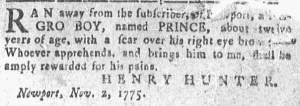
Maryland Gazette (November 9, 1775)

**********

Maryland Gazette (November 9, 1775)

**********

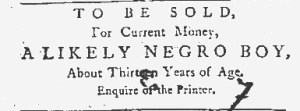
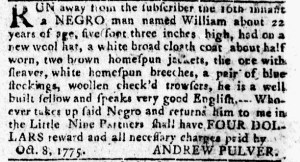
New-England Chronicle (November 9, 1775)

**********

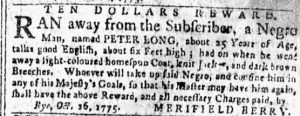
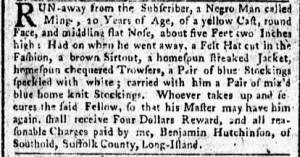
New-York Journal (November 9, 1775)

**********

New-York Journal (November 9, 1775)

**********
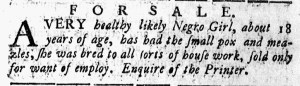
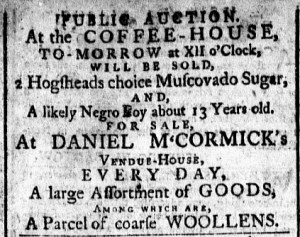
Rivington’s New-York Gazetteer (November 9, 1775)

**********
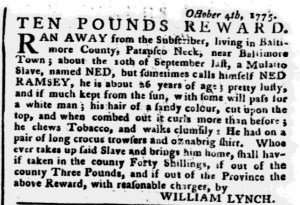
Rivington’s New-York Gazetteer (November 9, 1775)

**********
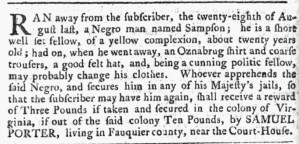
Rivington’s New-York Gazetteer (November 9, 1775)

**********
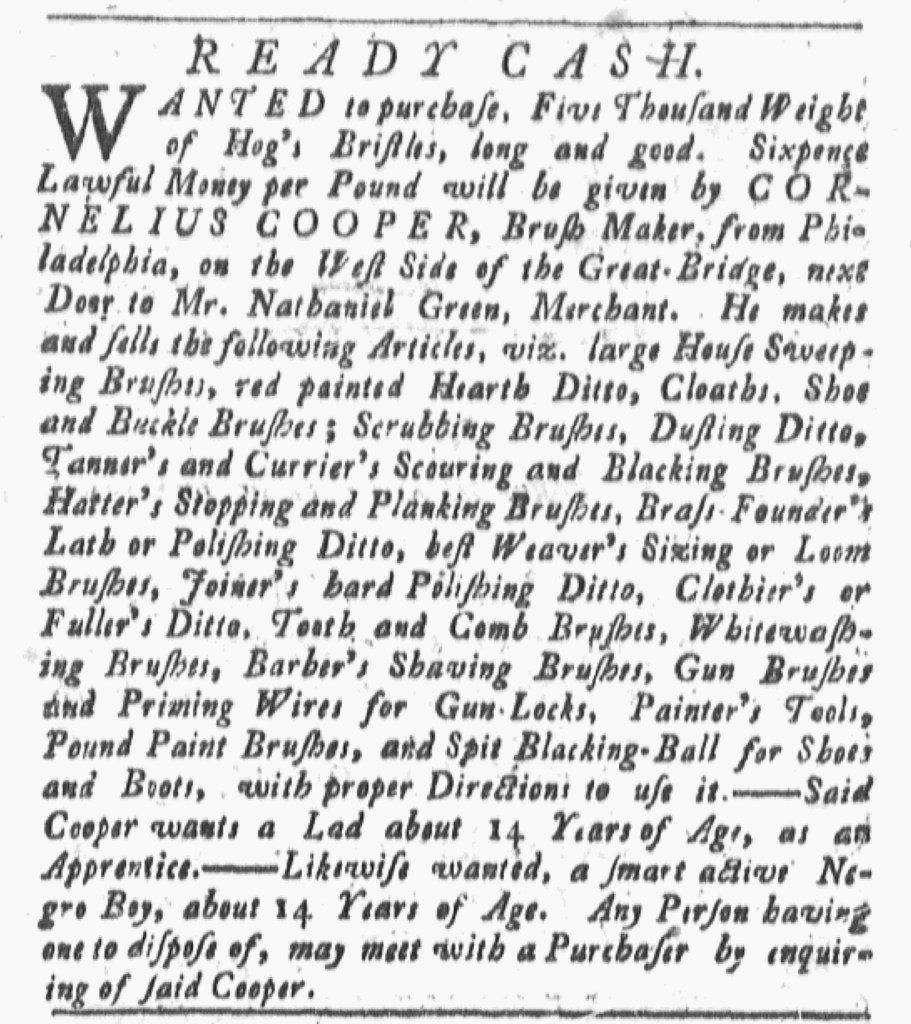
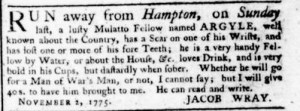
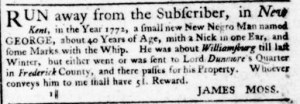
Virginia Gazette [Pinkney] (November 9, 1775)

**********

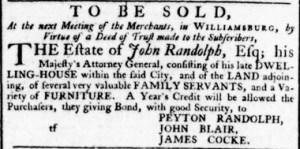
Virginia Gazette [Pinkney] (November 9, 1775)

**********

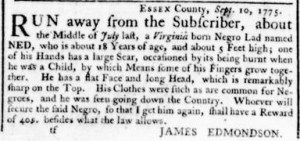
Virginia Gazette [Pinkney] (November 9, 1775)

**********

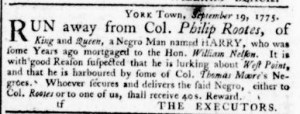
Virginia Gazette [Pinkney] (November 9, 1775)

**********

Virginia Gazette [Pinkney] (November 9, 1775)

November 8

What was advertised in a revolutionary American newspaper 250 years ago today?

Pennsylvania Gazette (November 8, 1775).

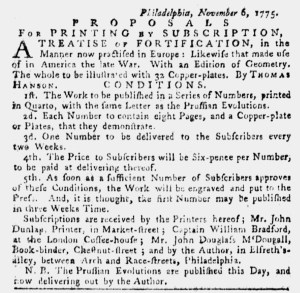
“PROPOSALS FOR PRINTING BY SUBSCRIPTION, A TREATISE OF FORTIFICATION.”

Thomas Hanson announced a new project in the November 8, 1775, editions of the Pennsylvania Gazette and the Pennsylvania Journal.  For several months he had been engaged in soliciting subscribers for his Prussian Evolutions in Actual Engagements, a military manual that garnered the support of both officers and politicians.  With that book “published … and now delivering out by the Author,” Hanson distributed subscription proposals for printing “A TREATISE OF FORTIFICATION, in the Manner now practiced in Europe: Likewise that made use of in America the late War.”  The Prussian Evolutions included thirty copperplate engravings; similarly, this new endeavor would be “illustrated with 32 Copper-plates.”

Hanson adopted a different method for publishing the proposed treatise than he had for the Prussian Evolutions.  Rather than produce a single volume, he planned for the “Work to be published in a Series of Numbers, printed in Quarto, with the same Letter as the Prussian Evolutions,” “Each Number to contain eight Pages, and a Copper-plate or Plates, that they demonstrate,” and “One number to be delivered to the Subscribers every two Weeks.”  Eighteenth-century readers would have been familiar with such “CONDITIONS” for publishing books.  Hanson planned to use the type (“same Letter”) as his first book, giving the two works a similar appearance.  Instead of taking the entire book to press at one time, Hanson planned to print and distribute two sheets (“eight Pages”) and the corresponding illustrations once every two weeks.  Each sheet would have four pages on it, creating a quarto sized book when folded by the printer, bookbinder, or subscriber.  Subscribers paid six pence “per Number” or set of eight pages with corresponding illustrations upon delivery.

Hanson declared that “the Work will be engraved and put to the Press” once “a sufficient Number of Subscribers approves of these Conditions.”  Why did he opt to publish his treatise on fortifications in smaller parts rather than all at once?  Perhaps Hanson had grown frustrated with the delays in publishing the Prussian Evolutions.  In an earlier advertisement, he noted that he first published subscription proposals on May 3, shortly after learning about the battles at Lexington and Concord.  In July, he thought that the book would be completed “in three or four weeks,” yet more than three months passed before the volume was published and ready for delivery.  Printing and distributing a new “Number” every two weeks would keep the project moving forward and the revenues collected upon delivery would likely help as well.  Hanson expected that “the first Number may be published in three Weeks Time,” but it seems that he was disappointed once again.  It does not appear that this proposed project met with the same success as the Prussian Evolutions.  Even if some “Numbers” went to press, no complete volume of the proposed treatise survives today.  Most likely, Hanson did not entice a “sufficient Number of Subscribers.”  According to the American Revolution Institute of the Society of the Cincinnati, he faced a lot of competition.  Presses in Philadelphia produced more than thirty works on military subjects in 1775 and 1776, including Hanson’s Prussian Evolutions.

Slavery Advertisements Published November 8, 1775

GUEST CURATOR: Massimo Sgambati

The Slavery Adverts 250 Project chronicles the role of newspaper advertising in perpetuating slavery in the era of the American Revolution. The project seeks to reveal the ubiquity of slavery in eighteenth-century life from New England to Georgia by republishing advertisements about enslaved people – for sale as individuals or in groups, wanted to purchase or for hire for short periods, runaways who liberated themselves, and those who were subsequently captured and confined in jails and workhouses – in daily digests on this site as well as in real time via the @SlaveAdverts250 Twitter feed, utilizing twenty-first-century media to stand in for the print media of the eighteenth century.

The project aims to provide modern audiences with a sense of just how often colonizers encountered these advertisements in their daily lives. Enslaved men, women, and children appeared in print somewhere in the colonies almost every single day. Those advertisements served as a constant backdrop for social, cultural, economic, and political life in colonial and revolutionary America. Colonizers who did not purport to own enslaved people were still confronted with slavery as well as invited to maintain the system by purchasing enslaved men, women, and children or assisting in the capture of so-called “runaways” who sought to free themselves from bondage. The frequency of these newspaper advertisements suggests just how embedded slavery was in colonial and revolutionary American culture in everyday interactions beyond the printed page.

These advertisements also testify to the experiences of enslaved men, women, and children, though readers must consider that those experiences have been remediated through descriptions offered by enslavers rather than enslaved people themselves. Often unnamed in the advertisements, enslaved men, women, and children were not invisible or unimportant in early America.

From compiling an archive of digitized eighteenth-century newspapers to identifying advertisements about enslaved men, women, and children in those newspapers to preparing images of each advertisement to posting this daily digest, Massimo Sgambati served as guest curator for this entry. He completed this work as part of the Summer Scholars Program, funded by a fellowship from the D’Amour College of Liberal Arts and Sciences at Assumption University in Worcester, Massachusetts, in Summer 2025.

These advertisements appeared in colonial American newspapers 250 years ago today.

New-Hampshire Gazette (November 8, 1775)

**********

New-Hampshire Gazette (November 8, 1775)

**********

New-Hampshire Gazette (November 8, 1775)

**********

Pennsylvania Journal (November 8, 1775)

**********

Pennsylvania Journal (November 8, 1775)

**********

Pennsylvania Journal (November 8, 1775)

**********

Pennsylvania Journal (November 8, 1775)

November 7

What was advertised in a revolutionary American newspaper 250 years ago today?

Pennsylvania Evening Post (November 7, 1775).

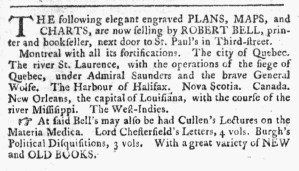
“MAPS … Montreal with all its fortifications.  The city of Quebec.”

Robert Bell, one of the most prominent American booksellers of the eighteenth century, also sold “PLANS, MAPS, and CHARTS” at his shop in Philadelphia.  In an advertisement in the November 7, 1775, edition of the Pennsylvania Evening Post, he promoted maps depicting “Montreal with all its fortifications.  The city of Quebec.  The river St. Laurence, with the operations of the siege of Quebec, under Admiral Saunders and the brave General Wolfe.  The Harbour of Halifax.  Nova Scotia.  Canada.  New Orleans, the capital of Louisiana, with the course of the river Mississippi.  [And] The West-Indies.”

Bell moved from north to south, generally, in listing the places depicted on the maps and charts that he stocked and sold, though he seemingly made a deliberate decision to list Montreal and Quebec before Halifax.  Current events likely influenced that choice.  For its first major military initiative, the Continental Army launched an invasion of Quebec in hopes of capturing the province and convincing its inhabitants to join the American cause.  That territory had been claimed by the French Empire for centuries, but only recently became part of the British Empire as part of the settlement that brought the Seven Years War to an end in 1763.  The Americans suspected that French speakers in Quebec had little loyalty to the British.

Two expeditions conducted a dual-pronged attack on the province.  In late August, an expedition authorized by the Second Continental Congress and commanded by General Richard Montgomery departed Fort Ticonderoga in New York, headed to Montreal.  Colonel Benedict Arnold, disappointed at being passed over to lead that expedition, convinced General George Washington to send another expedition to Quebec City.  Under Arnold’s command, that expedition departed Newburyport, Massachusetts, and made a harrowing journey up the Kennebec River.

At the time that Bell ran his advertisement, Montgomery’s expedition approached Montreal and Arnold’s expedition approached Quebec, though it would take some time for news to arrive in Philadelphia for readers of the Pennsylvania Evening Post.  Yet those readers did know that those expeditions were underway and that Montgomery began a siege of the town and fort of Saint-Jean in September.  Bell believed that some prospective customers were already interested in maps and plans of Montral and Quebec City and that he could incite demand among others by informing them of the items available at his shop.  The maps he sold supplement the news that colonizers read in the public prints.

Slavery Advertisements Published November 7, 1775

GUEST CURATOR: Massimo Sgambati

The Slavery Adverts 250 Project chronicles the role of newspaper advertising in perpetuating slavery in the era of the American Revolution. The project seeks to reveal the ubiquity of slavery in eighteenth-century life from New England to Georgia by republishing advertisements about enslaved people – for sale as individuals or in groups, wanted to purchase or for hire for short periods, runaways who liberated themselves, and those who were subsequently captured and confined in jails and workhouses – in daily digests on this site as well as in real time via the @SlaveAdverts250 Twitter feed, utilizing twenty-first-century media to stand in for the print media of the eighteenth century.

The project aims to provide modern audiences with a sense of just how often colonizers encountered these advertisements in their daily lives. Enslaved men, women, and children appeared in print somewhere in the colonies almost every single day. Those advertisements served as a constant backdrop for social, cultural, economic, and political life in colonial and revolutionary America. Colonizers who did not purport to own enslaved people were still confronted with slavery as well as invited to maintain the system by purchasing enslaved men, women, and children or assisting in the capture of so-called “runaways” who sought to free themselves from bondage. The frequency of these newspaper advertisements suggests just how embedded slavery was in colonial and revolutionary American culture in everyday interactions beyond the printed page.

These advertisements also testify to the experiences of enslaved men, women, and children, though readers must consider that those experiences have been remediated through descriptions offered by enslavers rather than enslaved people themselves. Often unnamed in the advertisements, enslaved men, women, and children were not invisible or unimportant in early America.

From compiling an archive of digitized eighteenth-century newspapers to identifying advertisements about enslaved men, women, and children in those newspapers to preparing images of each advertisement to posting this daily digest, Massimo Sgambati served as guest curator for this entry. He completed this work as part of the Summer Scholars Program, funded by a fellowship from the D’Amour College of Liberal Arts and Sciences at Assumption University in Worcester, Massachusetts, in Summer 2025.

These advertisements appeared in colonial American newspapers 250 years ago today.

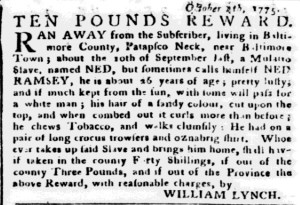
Dunlap’s Maryland Gazette (November 7, 1775)

**********

South-Carolina Gazette (November 7, 1775)

**********

South-Carolina Gazette (November 7, 1775)

**********

South-Carolina Gazette (November 7, 1775)

**********

South-Carolina Gazette (November 7, 1775)

**********

South-Carolina Gazette (November 7, 1775)

**********

South-Carolina Gazette (November 7, 1775)

**********

South-Carolina Gazette (November 7, 1775)

**********

South-Carolina Gazette (November 7, 1775)

November 6

What was advertised in a revolutionary American newspaper 250 years ago today?

Boston-Gazette (November 6, 1775).

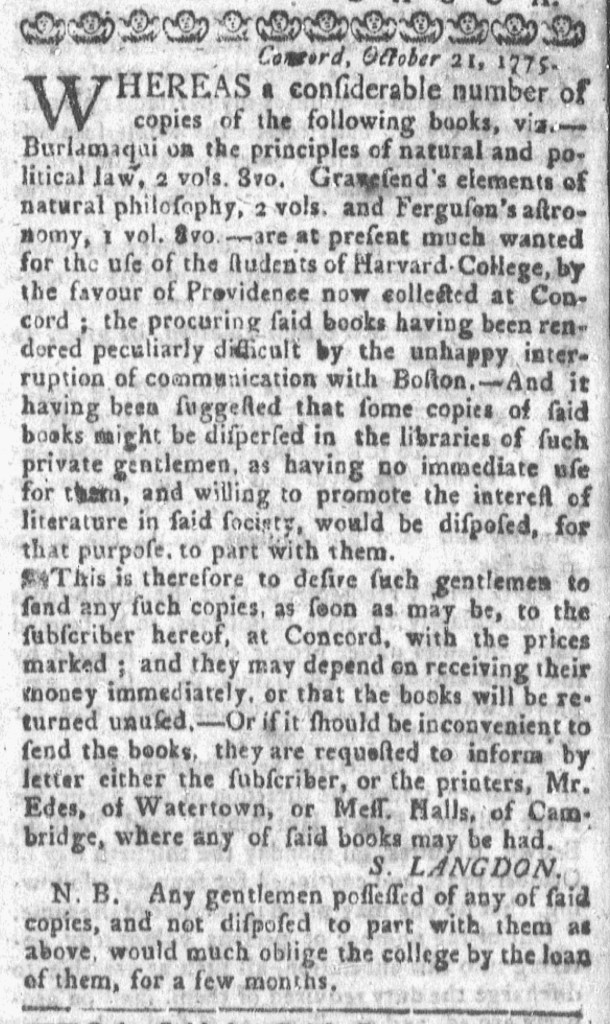
“The following books … are at present much wanted for the use of the students of Harvard College.”

Samuel Langdon, the president of Harvard College, issued a plea in the fall of 1775.  His students needed books!  As he explained in his advertisement in the November 6, 1775, edition of the Boston-Gazette, the college held classes in Concord while the siege of Boston continued … yet students could not acquire many of the texts that they needed because of “the unhappy interruption of communication” and trade with booksellers (and other purveyors of goods and services) in Boston.  Similarly, Benjamin Edes had moved the Boston-Gazette to Watertown following the battles at Lexington and Concord.

Langdon sought “a considerable number of copies” of “Burlamaqui on the principles of natural and political law, 2 vols. 8vo. Gravesend’s elements of natural philosophy, 2 vols. And Ferguson’s astronomy, 1 vol. 8vo.”  In specifying both the number of volumes and the size (“8vo” or octavo) of the books, Langdon made clear that the college preferred certain editions.  He reported that others “suggested” to him “that some copies of said books might be dispersed in the libraries of such private gentlemen” who did not have immediate use for them and thus might be willing to “part with them” to “promote the interest of literature” among the youth attending Harvard College.

Langdon requested that “such gentleman” who did have those books “send any such copies, as soon as may be … with the prices marked.”  They could “depend on receiving their money immediately, or that the books will be returned unused.”  Langdon understood that some readers might not wish to part with volumes from their personal libraries.  Alternately, he suggested that that it would “much oblige the college” if they would loan those volumes “for a few months.”  With classes continuing despite the disruptions caused by the outbreak of hostilities at Lexington and Concord the previous spring, Langdon engaged in an eighteenth-century version of crowdsourcing in his effort to procure books for his students.  The college survived a fire in its library a decade earlier, requesting donations of books to recover.  Now Harvard faced other obstacles and once again turned to the public to provide the books that the college needed.

Slavery Advertisements Published November 6, 1775

GUEST CURATOR: Massimo Sgambati

The Slavery Adverts 250 Project chronicles the role of newspaper advertising in perpetuating slavery in the era of the American Revolution. The project seeks to reveal the ubiquity of slavery in eighteenth-century life from New England to Georgia by republishing advertisements about enslaved people – for sale as individuals or in groups, wanted to purchase or for hire for short periods, runaways who liberated themselves, and those who were subsequently captured and confined in jails and workhouses – in daily digests on this site as well as in real time via the @SlaveAdverts250 Twitter feed, utilizing twenty-first-century media to stand in for the print media of the eighteenth century.

The project aims to provide modern audiences with a sense of just how often colonizers encountered these advertisements in their daily lives. Enslaved men, women, and children appeared in print somewhere in the colonies almost every single day. Those advertisements served as a constant backdrop for social, cultural, economic, and political life in colonial and revolutionary America. Colonizers who did not purport to own enslaved people were still confronted with slavery as well as invited to maintain the system by purchasing enslaved men, women, and children or assisting in the capture of so-called “runaways” who sought to free themselves from bondage. The frequency of these newspaper advertisements suggests just how embedded slavery was in colonial and revolutionary American culture in everyday interactions beyond the printed page.

These advertisements also testify to the experiences of enslaved men, women, and children, though readers must consider that those experiences have been remediated through descriptions offered by enslavers rather than enslaved people themselves. Often unnamed in the advertisements, enslaved men, women, and children were not invisible or unimportant in early America.

From compiling an archive of digitized eighteenth-century newspapers to identifying advertisements about enslaved men, women, and children in those newspapers to preparing images of each advertisement to posting this daily digest, Massimo Sgambati served as guest curator for this entry. He completed this work as part of the Summer Scholars Program, funded by a fellowship from the D’Amour College of Liberal Arts and Sciences at Assumption University in Worcester, Massachusetts, in Summer 2025.

These advertisements appeared in colonial American newspapers 250 years ago today.

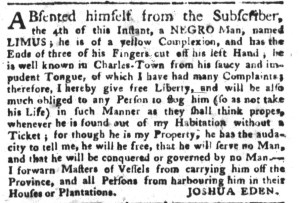
Boston Gazette (November 6, 1775)

**********

Connecticut Courant (November 6, 1775)

**********

Connecticut Courant (November 6, 1775)

**********

New-York Gazette and Weekly Mercury (November 6, 1775)

**********

New-York Gazette and Weekly Mercury (November 6, 1775)

**********

New-York Gazette and Weekly Mercury (November 6, 1775)

**********

New-York Gazette and Weekly Mercury (November 6, 1775)

**********

New-York Gazette and Weekly Mercury (November 6, 1775)

**********

New-York Gazette and Weekly Mercury (November 6, 1775)

**********

New-York Gazette and Weekly Mercury (November 6, 1775)

**********

Newport Mercury (November 6, 1775)

**********

Norwich Packet (November 6, 1775)

November 5

What was advertised in a revolutionary American newspaper 250 years ago this week?

Pennsylvania Evening Post (November 4, 1775).

“A NIGHT SCHOOL.”

“FRENCH ACADEMY.”

Two advertisements in the November 4, 1775, edition of the Pennsylvania Evening Post and its supplement offered opportunities for learning and self-improvement.  In the first notice, Matthew Maguire announced that he had opened a “NIGHT SCHOOL” for “youth of both sexes.”  The curriculum included “the various branches of READING, WRITING and ARITHMETIC,” subjects that both boys and girls typically learned.  Maguire also indicated that he taught “ACCOMPTS [or accounts] in all their different forms, after the latest and most approved methods,” though he did not mention whether he reserved that subject for male students.  Learning how to keep daybooks and ledgers may have been useful for some of the girls and young women who attended Maguire’s school, especially those that attended in the evening because they assisted in running the family business during the day.  Maguire also provided lessons during the day “as usual,” but he specified in a nota bene that he continued admitting “Young ladies only.”  In addition to giving female students a homosocial setting with fewer chances of disruptions, he may he reasoned that most boys and young men who would attend the school he kept in his house in Carter’s Alley did indeed have apprenticeships and other responsibilities during the day.

Supplement to the Pennsylvania Evening Post (November 4, 1775).

In the other advertisement, Francis Daymon, “MASTER of the French and Latin Languages” and “LIBRARIAN of the Philadelphia Public Library” (or the Library Company of Philadelphia), advised prospective pupils that he “HAS opened his FRENCH ACADEMY for the winter season.”  Classes began “punctually at seven o’clock every evening (Saturday excepted),” though it went without saying that he did not give lessons on Sundays.  Daymon delivered lessons “in the Library Room in Carpenters Hall,” the Library Company having moved to the second floor of that building from the Pennsylvania State House when it was completed in 1773.  He presumably admitted students of both sexes since he did not indicate otherwise in his advertisement.  He did note that “Ladies and Gentlemen may be instructed at their places of abode as usual,” an arrangement that allowed his pupils or their parents to determine who would be present.  Unlike Maguire, Daymon offered private lessons, likely setting rates for his students for the convenience of learning in their homes accordingly.

While some of the students who learned reading, writing, arithmetic, and accounts from Maguire could have also sought out French lessons from Daymon, the two schoolmasters cultivated different clienteles.  Maguire emphasized basic skills for everyday use by a wide range of colonizers, while Daymon’s French lessons appealed to genteel residents of Philadelphia and those aspiring to gentility.  With the Continental Association, a nonimportation and nonconsumption agreement, in effect, discourses about fashion had shifted.  Learning French gave some colonizers an alternate way to assert their status.

November 4

What was advertised in a revolutionary American newspaper 250 years ago today?

Supplement to the Pennsylvania Evening Post (November 4, 1775).

“Those gentlemen who have taken subscriptions … are requested to return the lists speedily.”

A notice in the Supplement to the Pennsylvania Evening Post for November 4, 1775, advised that “THOSE gentlemen who intend to subscribe for HANSON’s EVOLUTIONS, and have not sent in their names, are requested to be speedy in forwarding them.”  Thomas Hanson, “Adjutant to the 2d Battalion” and author of the work, expected that the readers he addressed knew that he referred to The Prussian Evolutions in Actual Engagements; Both in Platoons, Sub, and Grand-Divisions; Explaining, all the Different Evolutions, and Manoeuvres, in Firing, Standing, Advancing, and Retreating, Which Were Exhibitted before His Present Majesty, May 8, 1769; and before John Duke of Argyle , on the Links, near Edenburgh, in 1771; with Some Additions, Since that Time, Explained with Thirty Folio Copper-Plates; To Which Is Added, the Prussian Manual Exercise; Also the Theory and Practices of Gunnery.  To include the entire title of the book would have doubled the length of the advertisement!  An advertisement published in July had included most of the title as a means of inciting interest among prospective subscribers.

Hanson had been marketing the book since early May, apparently embarking on the project almost as soon as residents of Philadelphia learned of the battles at Lexington and Concord that took place on April 19.  When he ran the newspaper advertisement in July, he anticipated that the “said work will be completed in three or four weeks from this date,” but it took longer than expected since more than three months later he ran a new advertisement that indicated the “first edition” had not yet been printed.  Subscribers needed to submit their names quickly, Hanson asserted, or else their names would not appear in the subscription list incorporated into the book with the other content.  That subscription list eventually filled five pages and included prominent military officers, such as “His Excellency George Washington” and “His Excellency Philip Schuyler,” and members of the Second Continental Congress, such as “The Honourable Benjamin Franklin” and “The Hon. John Hancock.”  Peyton Randolph also appeared among the list of subscribers, though he died before Hanson published the book.  In his newest advertisement, he once again instructed prospective subscribers to submit their names because “otherwise a list of them cannot be printed.”

In the earlier advertisement, Hanson listed about a dozen local subscription agents who collected orders, including merchants and printers.  This time, he told prospective subscribers that they could submit their names directly to him or “to the bar of the London Coffee-house,” a popular place for gathering to socialize, conduct business, and discuss politics.  Hanson did acknowledge those “gentlemen who have taken subscriptions” and requested that they “return the lists speedily” so he could compile them for publication.  It seemed to be the last chance to submit orders before the book was published.  The title page did not include a date, but historians believe it was printed in late 1775.

Slavery Advertisements Published November 4, 1775

GUEST CURATOR: Massimo Sgambati

The Slavery Adverts 250 Project chronicles the role of newspaper advertising in perpetuating slavery in the era of the American Revolution. The project seeks to reveal the ubiquity of slavery in eighteenth-century life from New England to Georgia by republishing advertisements about enslaved people – for sale as individuals or in groups, wanted to purchase or for hire for short periods, runaways who liberated themselves, and those who were subsequently captured and confined in jails and workhouses – in daily digests on this site as well as in real time via the @SlaveAdverts250 Twitter feed, utilizing twenty-first-century media to stand in for the print media of the eighteenth century.

The project aims to provide modern audiences with a sense of just how often colonizers encountered these advertisements in their daily lives. Enslaved men, women, and children appeared in print somewhere in the colonies almost every single day. Those advertisements served as a constant backdrop for social, cultural, economic, and political life in colonial and revolutionary America. Colonizers who did not purport to own enslaved people were still confronted with slavery as well as invited to maintain the system by purchasing enslaved men, women, and children or assisting in the capture of so-called “runaways” who sought to free themselves from bondage. The frequency of these newspaper advertisements suggests just how embedded slavery was in colonial and revolutionary American culture in everyday interactions beyond the printed page.

These advertisements also testify to the experiences of enslaved men, women, and children, though readers must consider that those experiences have been remediated through descriptions offered by enslavers rather than enslaved people themselves. Often unnamed in the advertisements, enslaved men, women, and children were not invisible or unimportant in early America.

From compiling an archive of digitized eighteenth-century newspapers to identifying advertisements about enslaved men, women, and children in those newspapers to preparing images of each advertisement to posting this daily digest, Massimo Sgambati served as guest curator for this entry. He completed this work as part of the Summer Scholars Program, funded by a fellowship from the D’Amour College of Liberal Arts and Sciences at Assumption University in Worcester, Massachusetts, in Summer 2025.

These advertisements appeared in colonial American newspapers 250 years ago today.

Constitution Gazette (November 4, 1775)

**********

Dunlap’s Maryland Gazette (November 4, 1775)

**********

Pennsylvania Evening Post (November 4, 1775)

**********

Providence Gazette (November 4, 1775)

**********

Providence Gazette (November 4, 1775)

**********

Virginia Gazette [Dixon and Hunter] (November 4, 1775)

**********

Virginia Gazette [Dixon and Hunter] (November 4, 1775)

**********

Virginia Gazette [Dixon and Hunter] (November 4, 1775)

**********

Virginia Gazette [Dixon and Hunter] (November 4, 1775)

**********

Virginia Gazette [Dixon and Hunter] (November 4, 1775)