July 5

What was advertised in a colonial American newspaper 250 years ago today?
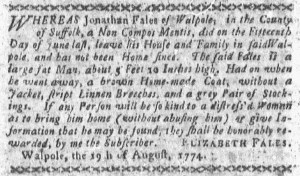
South-Carolina Gazette and Country Journal (July 5, 1774).

“DONATIONS for the Relief of our distressed Brethren in BOSTON, now suffering for the common Cause of AMERICA.”

Parliament intended to punish Boston when it closed and blockaded the harbor, effective June 1, 1774, as punishment for the destruction of the tea the previous December, yet colonizers from New England to Georgia protested what some described as “that unconstitutional Act.”  The Boston Port Act halted trade in what had been a bustling port city.  In early July, a dozen prominent residents of Charleston and other towns in South Carolina published an advertisement that outlined their plans to send aid to Massachusetts.  They described how “MANY generous and charitable Persons in this Colony” were “desirous to send … DONATIONS for the Relief of our distressed Brethren in BOSTON, now suffering for the common Cause of AMERICA.”  Parliament had miscalculated if it believed that other colonies would not react to the Boston Port Act and the other Coercive Acts.  As many colonizers mobilized to protest, contemplating measures that included nonimportation agreements, some directed their attention to assisting the people of Boston whose patriotic spirit put them in the position of enduring Parliament’s retribution.  Bostonians had acted in the interests of all colonizers, so they had earned the support of colonizers near and far.

The committee that collected donations in Charleston described the Boston Port Act as the “most cruel, arbitrary and oppressive Act of the British Parliament.”  As they explained in their advertisement, it prompted them to organize a “laudable” and “necessary” plan to collect donations “for the Benefit of such poor Persons, whose unfortunate Circumstances, occasioned by the Operation of that unconstitutional Act, may be through to stand in most Need of immediate Assistance.”  The committee encouraged other to participate in this endeavor as “a Mark of real Sympathy and Union with our Sister colonies.”  They made that appeal at the same time that John Holt incorporated a “JOIN OR DIE” emblem into the masthead of the New-York Journal, another testament to belief in the “common cause of AMERICA.”  The committee pledged to “faithfully, and as expediously as possible” send donations to “Gentlemen of known Probity, Public Spirit, and Honour in Boston” to distribute as they deemed appropriate.  One member of the committee, Christopher Gadsden, even offered to store and ship rice donated in support of the people of Boston, likely hoping that gesture would inspire others to similar generosity.

News coverage of reactions to the Boston Port Act appeared elsewhere in the July 5 edition of the South-Carolina Gazette ad Country Journal, though the appeal from the committee ran among “NEW ADVERTISEMENTS.”  Throughout the imperial crisis, advertisements often relayed news and opinion that supplemented articles and editorials.  In this instance, the committee collecting aid for Boston made a forceful argument about politics and attempted to shape public opinion concerning current events.  Their advertisement bolstered commentary that readers encountered throughout the newspaper, not solely in the portion for “freshest Advices, both Foreign and Domestic” selected by the printer.

April 21

What was advertised in a colonial American newspaper 250 years ago today?

Rivington’s New-York Gazetteer (April 21, 1774).

“I will requit their kindness by making a bonfire of [the tea].”

The Boston Tea Party serves as the most memorable destruction of tea during the imperial crisis that eventually resulted in thirteen colonies declaring independence from Great Britain, but greater numbers of colonizers participated in bonfires of tea.  Benjamin Booth suggested that he would hold one of those bonfires if anyone in England had the audacity to designate him as the consignee of tea shipped to New York.

He made that bold declaration in an advertisement in the April 21, 1774, edition of the Rivington’s New-York Gazetteer, an advertisement that he felt compelled to place after becoming the subject of vicious rumors.  “[S]ome evil minded persons, with a wicked design no doubt,” he declared, “have reported that I lately received TEA concealed in bales and other packages.”  Booth considered such accusations “trouble enough already” before learning that he had been “appointed … consignee of the tea said to be daily expected, on board the ship London,” an appointment made without his knowledge or permission.  Yet Booth wanted nothing to do with importing tea and all the trouble brewing with it.  That prompted him to make a declaration “once for all” that he “never was, not ever will be knowingly concerned in any contraband goods.”  Furthermore, if anyone had concerns about which commodities he imported and exported, he invited them to examine “the custom-house books, which are PUBLIC RECORDS” to confirm for themselves that Booth “religiously abid[ed] by this determination.”  If that still was not enough to satisfy those who suspected him of operating against the public interest, he stated that “if any person England should treat me so ill, as to consign me any more tea, while the present obstacles remain,” referring to the duties that Parliament imposed, “I will requit their kindness by making a bonfire of it.”  To emphasize the point, he proclaimed that he would do so “in the most public part of the city,” for all to witness, “and with my own hands set fire to the pile.”

Booth was not the first colonizer to resort to an advertisement to communicate his position on tea as the issue reached a boiling point.  Jeremiah Cronin previously did so in the Massachusetts Spy, having a justice of the peace attest to the veracity of his assertions.  Thomas Walley, Peter Boyer, and William Thompson did the same.  Even an associate of John Hancock ran such an advertisement on behalf of the prominent merchant in the New-York Journal even before the Boston Tea Party.  In each of these instances, advertisements provided updates and contributed to the discourse around tea.  Those notices doubled as news items, helping to keep the public informed about developments that did not appear elsewhere in colonial newspapers.

March 10

What was advertised in a colonial American newspaper 250 years ago today?

Massachusetts Spy (March 10, 1774).

“We neither jointly nor separately had any share, interest or property, directly or indirectly in any part of the Tea that came from London in said vessel.”

Thomas Walley, Peter Boyer, and William Thompson needed to do some damage control and salvage their reputations in the wake the second Boston Tea Party.  That trio owned the Fortune, a brig that recently arrived from London. Among its cargo, the ship carried twenty-eight chests of tea “destined for some independent merchants,” according to the Massachusetts Historical Society’s overview of events.  The brig arrived in port on March 6, 1774.  J.L. Bell explains that Walley, Boyer, and Thompson worked with those merchants to request that the tea be returned, but customs officers refused.  Bostonians did not spend weeks debating what to do like they had a few months earlier.

A news item in the March 10, 1774, edition of the Massachusetts Spy reported that “His Majesty Oknookortunkogog King of the Narragansett tribe of Indians, on receiving information of the arrival of another cargo of the cursed weed Tea, immediately summoned his Council.”  Colonizers once again played Indian in their acts of resistance against imperial authority.  The imaginary leader of the Narragansetts “did advise and consent to the immediate destruction” of the tea, “after resolving that the IMPORTATION of this Herb, by ANY persons whatever, was attended with pernicious and dangerous consequences to the lives and properties of all his subjects throughout America.”  The king and council dispatched “the seizor and destroyer-general, and their deputies … to the place where this noxious herb was.”  They made their way to the Fortune on the evening of March 7, where they “emptied every chest … and effectually destroyed the whole” before they “returned to Narrangasett to make report of their doings to his Majesty.”  The Sons of Liberty and their allies maintained the ruse deployed the previous December.

Walley, Boyer, and Thompson’s advertisement appeared immediately below that description of the destruction of another cargo of tea.  They opened by rehearsing the story of “a certain WILLAIM BOWES, Brazier, on Dock-square” who “industriously propagated … a false and scandalous report, that the owners of the brig … have imported a quantity of Tea in that vessel upon their own account.”  Walley, Boyer, and Thompson suspected that Bowes might have even “invented” the story himself rather than repeating gossip he heard elsewhere.  The merchants did not trust his motives at all, claiming that Bowes “impudently asserted” that he knew all about the tea they supposedly imported from London and told the story “with a malignant design … to injure their reputation, and expose them to public resentment.”  As a result, they found it necessary to run an advertisement “in vindication of themselves from the vile and groundless aspersion of that impertinent medler in other men’s matters.”  Although they had tried to defuse the situation by assisting merchants who shipped cargo on their vessel in receiving permission to return the tea to London, they had not been aware in advance that the Fortune carried tea.  They wished to make that clear.

To that end they published a “deposition” which explicitly stated, “WE the subscribers, owners of the brig Fortune, do solemnly declare that we neither jointly nor separately had any share, interest or property, directly or indirectly in any part of the Tea that came from London in said vessel.”  Just as Jeremiah Cronin had done when facing allegations that he acted against the interests of the patriots, Walley, Boyer, and Thompson enlisted the aid of a justice of the peace to lend credibility to their explanation of what occurred.  Edmund Quincy asserted that the merchants “personally appeared and made oath to the truth of the above declaration.”  As was often the case in early American newspapers, the section devoted to news did not contain all the information about current events.  Instead, readers garnered valuable information from an advertisement as well.

November 13

What was advertised in a colonial American newspaper 250 years ago today?

Maryland Journal (November 13, 1773).

“Mr. RATHELL thankfully acknowledges the receipt of a Letter signed ‘a Friend to Literary Institutions.’”

Joseph Rathell’s “PROPOSALS FOR ESTABLISHING A CIRCULATING LIBRARY IN BALTIMORE-TOWN appeared once again in the November 13, 1773, edition of the Maryland Journal.  So did William Aikman’s address “To the LADIES and GENTLEMEN of the Town of BALTIMORE concerning his efforts to establish a circulating library in Annapolis and deliver books to subscribers in Baltimore.  Aikman reported that he heard from prospective subscribers that they had concerns about “the trouble and risk they run of procuring and returning the books.”  To assuage such anxieties, he devised a plan for subscribers in Baltimore to submit orders and return books to a local merchant who would then forward them to Annapolis via a weekly packet ship.  Aikman planned to charge a dollar for delivery service in addition to the subscription fees.  Rathell mocked the additional fee in an advertisement that ran in the same issue of the Maryland Journal as Aikman’s notice.  He seemingly knew about Aikman’s advertisement before it appeared in print, perhaps tipped off by a friend in the printing office.

Whether or not that was the case, Rathell did receive other assistance from the Maryland Journal in marketing his circulating library.  The local news items included a blurb about his efforts and the response from residents of the city so far.  The blurb ran immediately below “SHIP NEWS” and before “PRICES CURRENT at BALTIMORE,” a prime spot for merchants and other readers to notice it.  It related that Rathell “thankfully acknowledges the receipt of a Letter signed ‘a Friend to Literary Institutions,’ enclosing the Names of sundry Ladies and Gentlemen, as Subscribers to his intended CIRCULATING LIBRARY.”  Readers may have doubted the veracity of this report, dismissing it as mere puffery.  Those who continued reading encountered commentary from Rathell that might have more appropriately appeared among the advertisements.  For instance, he pledged that “he will be particularly exact in selecting the Books, in which he will be principally governed by Gentlemen of known literary Skill, in Philadelphia, and New-York.”  In so doing, he directed attention away from Aikman’s library in Annapolis in favor of larger and more cosmopolitan port cities.  He also directly solicited requests from prospective subscribers to his library, proclaiming that “any Commands addressed to Mr. Rathell, directing his Attention to particular, scarce, or curious Publications, &c. shall meet due Regard.”  This advertisement masqueraded as a news item, supplementing the proposals that Rathell published elsewhere in the newspaper.  He could have incorporated all of the information into a single notice, but a news item doubled as an endorsement of his enterprise.  In the end, it did not matter.  Rathell did not manage to launch a circulating library in Baltimore.  Aikman had more success with his endeavor in Annapolis, at least prior to the Revolutionary War.

August 28

What was advertised in a colonial American newspaper 250 years ago today?

Providence Gazette (August 28, 1773).

“A large Quantity of Ordure, supposed to have been taken from some Privy-House Vault.”

Samuel Young and William Tyler were not happy.  Who could blame them?  Who, that is, except for “some evil-minded Person or Persons” who had befouled their well?  Upon making an unpleasant discovery, Tyler and Young took to the pages of the Providence Gazette with an advertisement describing how the perpetrators had, “in a most filthy Manner, bedaub[ed] the Stones, Curb and Bucket, of Tyler and Young’s Well, with a large Quantity of Ordure.”  The victims of such a disgusting act of vandalism suspected that the miscreants had taken the excrement “from some Privy-House Vault.”  What explained such an assault?  Tyler and Young attributed it to “the Instigation of the Devil.”

The aggrieved colonizers did not exclude any possible suspects, describing the “Party or Parties concerned” as “he, she, or they.”  Whoever was responsible for carrying out the devil’s work, Tyler and Young wanted them held accountable.  They had not published their advertisement to advise the public about what had happened to their well but rather to enlist the aid of anyone with information that would allow them to identify or “discover” the perpetrators that they “may be brought to Justice.”  Tyler and Young offered a reward, conditional on the conviction of the “Offender or Offenders.”

As was often the case, an advertisement supplied readers with a combination of local news and gossip … and perhaps even a bit of amusement, depending on their predilections for scatological humor or how they felt about Tyler and Young.  Other advertisements in the August 28, 1773, edition of the Providence Gazette also delivered news, gossip, or a combination of the two.  Uzal Green, for instance, advised others not to extend credit to his wife, Martha, because he would not pay any of her bills since she “hath eloped from me, and refuses to return to my Bed and Board.”  Another advertisement recounted how “the Shop of Robert Leonard, Taylor, was feloniously broke open … and robbed.”  That notice offered rewards for recovering the stolen goods and capturing the thief.  In an estate notice, the executors of Dr. Samuel Carew encouraged “all those who have unsettled Accounts” to “pay their respective Debts” or face legal action.  In yet another advertisement, Nehemiah Underwood promised a reward for the capture and return of his sixteen-year-old runaway apprentice, Daniel Sanders.  None of those advertisements may have been as remarkable as Tyler and Young’s effort to identify the villain or villains who defiled their well, but each of them did incorporate local news that did not appear elsewhere in the newspaper.

July 9

Who was the subject of an advertisement in a colonial American newspaper 250 years ago today?

New-London Gazette (July 9, 1773).

“Ran away … a NEGRO Man Slave named PRINCE.”

When “a NEGRO Man Slave named PRINCE” liberated himself by running away from his enslave, John Mulford “of East-Hampton, on Long Island,” in June 1773, the story became frontpage news in the New-London Gazette.  Timothy Green, the printer, did not actually treat the story as news, but he did run Mulford’s advertisement describing Prince and offering a reward for his capture and return on the front page of the July 9 edition of his newspaper.  Prince may have been familiar to some readers since he previously “lived about Six Years with Mr. Daniel Denison, at Stonington, in New-London County,” a roundabout way of saying that Denison enslaved Prince before Mulford did.  Like many other advertisements – from legal notices and estate notices to advertisements about burglaries and thefts to notices about wives who “eloped” from their husbands to advertisements about apprentices, enslaved people, and indentured servants who “ran away” to notices about lotteries that funded public works projects – this one delivered news to readers.  In many instances, advertisements provided more local news than printers inserted elsewhere in their newspapers.

Mulford’s advertisement about Prince was not the only paid notice on the first page of the July 9 edition of the New-London Gazette.  Green (or a compositor who worked in the printing office) positioned a real estate notice, an advertisement for a “variety of Goods suitable for the SEASON” available at a shop in Norwich, and the notice describing Prince as the first items in the first column.  An editorial “Continued from our last” issue filled the rest of the column and the remainder of the page.  Additional advertisements, including one about “two melatto men slaves,” Edward Peters and Rufus Cooper, who liberated themselves from Ezekiel Root of Pittsfield, Massachusetts, appeared on the third and fourth pages.  How did any advertisements land on the front page?  A standard edition of the New-London Gazette and other colonial newspapers consisted of four pages created by printing two on each side of a broadsheet and folding it in half.  Printers usually printed the first and fourth pages on one side, let the ink dry, and then printed the second and third pages on the other side.  Since many advertisements ran for several weeks, printers used type already set when they printed the first and fourth pages, reserving the second and third pages for the latest news that arrived in the printing office.  In this instance, Green selected advertisements and the continuation of an editorial to take to press while he figured out the content for the remaining two pages.  As a result, Prince’s escape and liberation from his enslaver became frontpage news.

June 17

What was advertised in a colonial American newspaper 250 years ago today?

Rivington’s New-York Gazetteer (June 17, 1773).

“A Rogue!  A Rogue!  A Rogue!”

The headline set one advertisement apart from others that appeared in the June 17, 1773, edition of Rivington’s New-York Gazetteer.  Some of those others had headlines like “TO BE SOLD,” “IMPORTED,” “TO BE LETT,” or “WANTED.”  Many deployed the name of the advertiser as the headline, including “ABRAHAM DURYEE,” “ENNIS GRAHAM,” “THOMAS HAZARD,” and “JOSEPH PEARSALL.”  Even the printer used his own name, “JAMES RIVINGTON,” as the headline for his advertisement.  A few headlines provided more specific details, such as “DELAWARE LOTTERY,” “HORSEMANSHIP,” “INDIGO,” “THEATRE,” and “WATCHES.”

One distinctive advertisement paired two headlines, “FIVE POUNDS REWARD” and “A Rogue!  A Rogue!  A Rogue!” The first frequently appeared in advertisements describing and offering rewards for the capture and return of apprentices and indentured servants who ran away from their masters and enslaved people who liberated themselves from their enslavers.  In contrast, the repetition of “A Rogue!  A Rogue!  A Rogue!” set the advertisement apart from any of the others and likely demanded the attention of readers, inciting curiosity about what kind of offenses merited such a headline.

When they set about learning more, readers discovered that the rogue was an “atrocious villain, known by the name of Isaac Vanden Velden” who had recently “imposed on several persons in this city, with bills of exchange, which he has forged in the name of Mr. Paul Hogstraffer, of Albany.”  Even before those incidents, Vanden Velden had a reputation for misconduct in both Philadelphia and Albany, according to the advertisement, and sometimes “pretends to have large rights in land on the Mississippi.  The con artist “talks fast, and affects a good deal of propriety in his conversation,” so much so that he “has a very good address, and appears capable of executing any artful piece of fraud.”  Readers might detect Vander Velden, “a German,” from his speech; although he “speak good English,” he retained “a little of his own country accent.”

A nota bene indicated that the rogue was headed in the direction of Philadelphia.  Given the circulation of Rivington’s New-York Gazetteer well beyond the city, the advertiser hoped that readers put on alert about Vanden Velden would capture and “secure the above impostor in any of his Majesty’s jails, so that he may be brought to justice.”  In this instance, the advertisement with its extraordinary headline served as a public service announcement and a supplement to the news that ran elsewhere in the newspaper.

February 15

What was advertised in a colonial American newspaper 250 years ago today?

Boston-Gazette (February 15, 1773).

“THE Persons who may incline to purchase PATTY HALL’s House … need not be afraid of the Neighbours.”

The feud between Patty Hall and her neighbors continued in the advertisements in the February 15, 1773, edition of the Boston-Gazette.  The altercation first appeared in the public prints when Hall placed a notice offering her house for sale in the February 1 edition of the Boston-Gazette.  She noted that her neighbors made “a great Bustle” in court about “a Piece of Land” associated with the property, but then “dropt the Matter.”  That being the case, she assured “Any Person that inclines to Purchase, may depend that a good Title will be given.”  Hall also accused her neighbors of various acts of vandalism and intimidation, including throwing stones at her.

Hall’s neighbors apparently read or heard about the advertisement.  They did not wait a week to respond in the next issue of the Boston-Gazette.  Instead, they placed notices in the next newspapers published in town, the Massachusetts Gazette and Boston Weekly News-Letter and the Massachusetts Spy on February 4.  Hall’s neighbors sarcastically mentioned the “Politeness” accorded to them before clarifying that the matter had moved to another court and requesting that public “suspend their Judgment” until “Evidences on both Sides are properly examined.”  They also inserted their advertisement in the next issue of the Boston-Gazette on February 8, a week after Hall’s original notice.  It ran immediately above a response from Hall.  She described additional harassment she claimed that she experienced from her neighbors.

Having set the record straight once already, Hall’s neighbors did not feel the need to rush to publish a response to Hall’s latest advertisement.  Instead, they waited for the next edition of the Boston-Gazette on February 15.  In what they framed as a letter to the editors, Hall’s neighbors assured anyone “who may incline to purchase PATTY HALL’s House – with such a Title as she can give – need not be afraid of the Neighbours.”  They asserted that knocking at all hours and other alleged torments “were never heard by the Neighbours” and concluded that “it was all done within Doors.”  That being the case, they declared, Hall was in the best position to identify the real culprits.  Her neighbors recommended that if anyone who purchased the house wished to avoid such intrusions that they “need not keep the same Company” as Hall.

Edes and Gill, the printers of the Boston-Gazette, may have enjoyed the argument between Hall and her neighbors.  They almost certainly appreciated the revenue that their advertisements generated.  In publishing those advertisements, Edes and Gill and the printers of other newspapers abdicated a small amount of editorial control to those who paid to purchase space in their publications.  The advertisements carried news, of a sort, that would not have appeared among the articles and editorials that the printers selected to include elsewhere in their newspapers.  Hall and her neighbors could have relied on rumors and gossip to malign each other, but they realized that advertisements gave them a much larger audience for presenting their grievances to the court of public opinion.

February 8

What was advertised in a colonial American newspaper 250 years ago today?

Boston-Gazette (February 8, 1773).

“MRS. HALL is sensible that the Advertisement in Thursday’s Papers was intended to injure her in the Sale of her House.”

The feud between Patty Hall and her neighbors continued to move back and forth between newspapers.  It began when Hall inserted a notice in the February 1, 1773, edition of the Boston-Gazette.  She accused five of her neighbors of conspiring to drive her out of her house on Hanover Street by making spurious claims in court before dropping the matter and simultaneously vandalizing the house and even throwing stones at her as she passed through her year.  Hall did not give any reason that her neighbors felt such enmity, but she did declare that she could give “a good Title” to anyone who purchased the house.

Rather than waiting a week to respond in the next issue of the Boston-Gazette, Hall’s neighbors inserted a response in the February 4 editions of both the Massachusetts Gazette and Boston Weekly News-Letter and the Massachusetts Spy.  They described themselves as “THE PERSONS mentioned with so much Politeness by Mrs. HALL in her Advertisement” and directed readers to “See Edes and Gill’s last Gazette.”  They advised that the “Conduct of both Parties” would become apparent, “either to their Honor or Disgrace,” upon more extensive examination.  In other words, they cautioned readers not to believe everything that Hall put into print.  At the same time, they warned against trusting the title that Hall offered “until the same shall be determined in a due Course of Law,” clarifying that they had not dropped the case, as Hall indicated, but instead moved it to another court.

Hall had at least one thing in common with her neighbors.  She did not wait to respond in the same newspaper that carried their notice.  She did not allow them that much time to frame the narrative.  Instead, she once again published an advertisement in the Boston-Gazette, this time in the February 8 edition.  Her neighbors apparently decided to insert their advertisement in that newspaper as well.  The compositor conveniently combined the two notices into a single advertisement that told a story for readers.  The format, a short line instead of a full line separating the two notices, allows the possibility that Hall reprinted the advertisement to provide context for her response, but her reference to suspending further advertisements because she had “no Money to trifle with” suggests that she would not have taken on the expense of reprinting an advertisement she found so objectionable.

She certainly meant to acknowledge that “the Advertisement in Thursday’s Papers was intended to injure her in the Sale of her House.”  She intentionally misunderstood the “Compliment to her Politeness,” stressing that she “least intended” any pleasantries because she “knew to whom she was speaking, and chose to address them in a Language they understood.”  She adamantly asserted that she had “no Notion of treating Persons politely” when she suspected them of perpetrating the “dirty Actions” she described in her first advertisements as well as “daubing her Yard and Doors with the most nauseous Filth, beating at her Shutters with Axes and Clubs, and disturbing her with repeated Noises at all Hours of the Night.”  She lamented that she gave her neighbors “no other Provocation” except her “Refusal to cut down Part of her House” until a court determined the true ownership of the land that portion of the dwelling occupied.  Hall claimed that she welcomed a court decision because she was confident that it “will do her Justice, and act without Partiality.”  Beyond the courts, she continued to use the public prints to excoriate her neighbors for their malicious behavior.

Both Hall and her neighbors expected that the public engaged with their version of events across multiple publications and through discussing what they read in one newspaper or another or what their acquaintances told them they had read or heard.  As the adversaries waited for a legal decision from the court, they pursued another sort of vindication in the court of public opinion.

February 4

What was advertised in a colonial American newspaper 250 years ago today?

Massachusetts Gazette and Boston Weekly News-Letter (February 4, 1773).

“The Conduct of the Parties from first to last will best appear … when the Evidences on both Sides are properly examined.”

Printers selected which items appeared among the news and editorials in their newspapers, yet colonizers exercised some amount of editorial authority when they published news in the form of advertisements.  Consider and exchange between Patty Hall and her neighbors in two newspapers published in Boston in the first week of February 1773.

Hall initiated the exchange with an advertisement in the February 1 edition of the Boston-Gazette.  Placing the notice for the purpose of selling a house, Hall seized the opportunity to name several of her neighbors and report that they “made a Complaint to the Selectmen, about a Piece of Land; and they laid it before the Grand Jury; and after making a great Bustle, dropt the Matter.”  The matter being settled, Hall declared that the purchaser “may depend that a good Title will be given.”  According to Hall, that was only the beginning of the trouble she supposedly had with her neighbors.  She claimed that at the same time she “had her Windows broke, Spouts tore down, the Drane stopt,and frequently Stones thrown at all Parts of the House.”  To make matters even worse, she “very nearly escap’d a great Stone thrown at her passing thro’ the Yard.”  She suspected that her neighbors were directly responsible or “employ somebody to do it” and offered a reward to anyone “that will apprehend the Person or Persons concern’d.”

Boston-Gazette (February 1, 1773).

The neighbors that Hall named – “Constable Hale, James Bailey, Samuel Sloan, Retailer, Elizabeth Clarke and Nowell, and Deacon Barrett” – objected to the version of events that Hall published in the Boston-Gazette.  Rather than wait a week to make their rebuttal in the next edition of that newspaper, they inserted their own notice in both the Massachusetts Gazette and Boston Weekly News-Letter and the Massachusetts Spy just three days later.  They identified themselves as “THE PERSON mentioned with so much Politeness by Mrs. HALL in her advertisement, *” and directed readers to “* See Edes and Gill’s last Gazette.”  They offered clarifications about the outcome of the “Bustle” in court, stating that when Hall “gave Notice that the Matter was dropt, she should have added,—  “in order to be taken up at another Court.’”  Unlike Hall, the neighbors considered the matter far from settled.  They encouraged others “to suspend their Judgment both as to the Merits of the Cause and the Title … until the same shall be determined in a due course of law.”  As for the other allegations made by Hall, her neighbors implied that she fabricated the story.  “The Conduct of the Parties from first to last will best appear, either to their Honor or Disgrace,” they asserted, “when the Evidences on both Sides are properly examined.”  In refusing the dignify Hall’s allegations with any more of a response, her neighbors suggested they had no merit.

Hall wished to frame the narrative of her troubles with her neighbors.  Purchasing a paid notice in one of the local newspapers allowed her to do so.  Similarly, those neighbors also bought advertising space to tell their side of the story.  This allowed both parties to bypass the printer-editors of the Boston-Gazette, the Massachusetts Gazette and Boston Weekly News-Letter, and the Massachusetts Spy to determine for themselves what kind of content the public read or heard about as colonizers discussed the altercation that appeared among newspaper advertisements that delivered all kinds of local news.