July 9

What was advertised in a revolutionary American newspaper 250 years ago today?

South-Carolina Gazette and Country Journal Extraordinary (July 9, 1775).

“SOAP and CANDLES as usual.”

It was an exceptionally rare Sunday edition that carried John Benfield’s advertisement for “RUM of all Sorts” and “SOAP and CANDLES as usual,” Ann Durffey’s advertisement offering an enslaved man for sale, and a handful of other advertisements.  Charles Crouch usually published the South-Carolina Gazette and Country Journal on Tuesdays, but news of recent events merited a broadside extraordinary edition on Sunday, July 9.

Throughout the colonies, printers produced issues of their weekly newspapers on every day from Monday through Saturday, many of them choosing which day according to when postriders arrived with weekly newspapers from other towns.  They allowed just enough time to select and reprint news updates, editorials, and letters about current events.  None, however, published their weekly newspaper on Sundays.  Some occasionally distributed supplements or postscripts at some point during the week, but not on Sundays.  That made Crouch’s South-Carolina Gazette Extraordinary for “SUNDAY EVENING, June 9, 1775” truly extraordinary.  The Adverts 250 Project has so far examined advertising from January 1, 1766, through July 9, 1775.  I believe this is the first advertisement from a newspaper published on a Sunday included in the project in nearly a decade.

What prompted Crouch to rush to press with a broadside edition printed on only one side of the sheet?  The Extraordinary included news of the Battle of Bunker Hill, including articles and letters that originated in Cambridge, Massachusetts; Newport, Rhode Island; and Philadelphia.   The news filled two entire columns and spilled over into a second.  A short update with borders composed of ornamental type to draw attention, ran just above the advertisements that accounted for half of the final column.  Although the dateline, “CHARLES-TOWN, JULY 9,” suggested local news, it carried a grave update about recent events in Massachusetts.  “LETTERS from Rhode-Island mention,” Crouch reported, “That there were only 1200 Provincials in the Engagement mentioned under the Cambridge Head, and near 5000 of the King’s Troops; and that the celebrated Dr. Jospeh Warren, was among the Slain of our Brethren” at the Battle of Bunker Hill.  When Crouch decided to deliver that news as soon as he could after receiving it, he also disseminated advertisements that would not otherwise have circulated on a Sunday.  Benfield advertised “SOAP and CANDLES as usual,” yet there was nothing usual about the Extraordinary that carried his advertisement.

South-Carolina Gazette and Country Journal Extraordinary (July 9, 1775).

May 19

Who was the subject of an advertisement in a revolutionary American newspaper 250 years ago today?

South-Carolina Gazette and Country Journal Extraordinary (May 19, 1775).

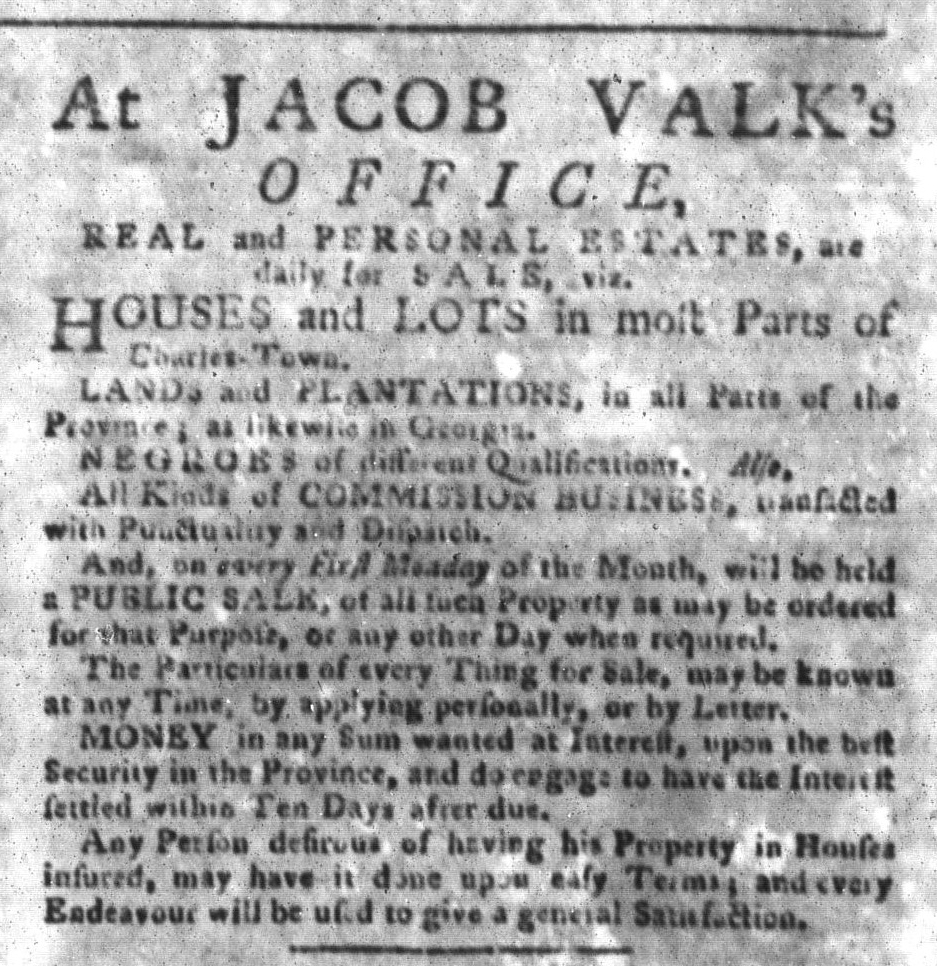
“NEGROES of different Qualifications.”

Charles Crouch usually published the South-Carolina Gazette and Country Journal on Tuesdays in 1775, distributing new issues on a different day than his competitors in Charleston.  Peter Timothy delivered the South-Carolina Gazette on Mondays and Robert Wells and Son presented the South-Carolina and American General Gazette on Fridays.  Yet as information about the battles at Lexington and Concord arrived in Charleston, Crouch published a two-page extraordinary issue on Friday, May 19.  He had first broken the news in the May 9 edition, printing “alarming Intelligence” received via “the Brigantine, Industry, Captain Allen, who sailed the 25th [of April] from Salem.”  Subsequent issues of both the South-Carolina Gazette and Country Journal and the South-Carolina and American Gazette carried news about Lexington and Concord.  (A gap in extant issues between April 10 and May 29 prevents determining when the South-Carolina Gazette reported on those events.)

Many, perhaps most, readers likely heard that British regulars had engaged colonial militia outside of Boston before they read anything in newspapers.  News and rumors spread via word of mouth more quickly than printers could set type, yet readers still clamored for coverage.  After all, the public prints carried more details about what happened, though not all of them were always correct.  Wells and Son printed the South-Carolina and American General Gazette as usual on Friday, May 19, carrying additional news about Lexington and Concord and the aftermath.  Refusing to be scooped, Crouch published his extraordinary issue on the same day.  He specified that the “particulars respecting the Engagement at Lexington, are copied from the Newport Mercury.”

Even as Crouch provided more news for subscribers and the public, he disseminated even more advertisements.  News accounted for only one-quarter of the contents of the May 19 extraordinary issue, with advertisements filling three-quarters of the space.  Those notices included three from Jacob Valk, a broker, looking to facilitate the sales of “ONE of the compleatest WAITING-MEN in the Province,” “Some valuable PLANTATION NEGROES,” and “NEGROES of different Qualifications” at his office.  In another advertisement, William Stitt described Lydia and Phebe, enslaved women who liberated themselves by running away, and offered rewards for their capture and return to bondage.  In yet another, the warden of Charleston’s workhouse described nearly a dozen Black men and women, all of them fugitives seeking freedom, imprisoned there, alerting their enslavers to claim them, pay their expenses, and take them away.  As readers learned more about acts of tyranny and resistance underway in Massachusetts, they also encountered various sorts of advertisements designed to perpetuate the enslavement of Black men and women.  The early American press simultaneously served multiple purposes, regularly featuring a juxtaposition of liberty and slavery that readers conveniently compartmentalized.

July 23

What was advertised in a colonial American newspaper 250 years ago today?

Postscript Extraordinary to the Pennsylvania Journal (July 23, 1774).

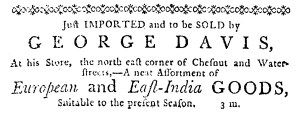
“Just IMPORTED … European and East-India GOODS.”

William Bradford and Thomas Bradford printed and distributed the Pennsylvania Journal on Wednesdays, but in the summer of 1774 they had news of such significance that they opted to issue a Postscript Extraordinary on a Saturday.  It bore the same number, 1650, as the weekly edition from July 20, but a different date, July 23, that confirms that the printers issued it a few days later than the weekly edition.  They had previously printed a two-page Supplement to the Pennsylvania Journal and a two-page Postscript to the Pennsylvania Journal, both dated July 20, that doubled the amount of content in the standard issue.  As the imperial crisis intensified, the Bradfords sought to provide extensive coverage for subscribers and other readers.

At the same time, they scooped the other newspapers printed in English in Philadelphia, Dunlap’s Pennsylvania Packetand the Pennsylvania Gazette.  The Postscript Extraordinary featured news from a “PROVINCIAL MEETING of DEPUTIES chosen by the several Counties in Pennsylvania; held at PHILADELPHIA” on July 15 and continuing for several days.  Dunlap’s Pennsylvania Packet carried the same news, perhaps reprinted from the Postscript Extraordinary, on Monday, July 25, its usual day of publication, two days after the Bradfords had disseminated it.  In turn, the Pennsylvania Gazette provided the same coverage in a Postscript that accompanied the weekly issue on Wednesday, July 27.  All three newspapers carried rhetoric that condemned the Boston Port Act and the anticipated passage of the Massachusetts Government Act as well as proposed instructions for Pennsylvania’s delegates who would attend “a Congress of Deputies from the several Colonies,” now known as the First Continental Congress.

Yet coverage of the meeting of delegates from throughout the colony did not fill both sides of the broadsheet.  A dozen advertisements completed the Postscript Extraordinary.  Disseminating the news provided an occasion provided another opportunity for circulating advertisements placed for various purposes, including notices for “European and East-India GOODS” sold by George Davis and “a large Assortment of DRY GOODS, and CROCKERY” imported by Alexander Bartram.  The Postscript Extraordinary gave those advertisements greater visibility, yet news from the meeting framed how colonizers might think about commerce and consumption in the current political environment.  Among their various resolutions, the deputies from across Pennsylvania’s counties supported a nonimportation agreement if the First Continental Congress determined that a boycott would aid in achieving their political goals.  At the same time, they cautioned that “the venders of Merchandize of every kind within this province, ought not to take advantage of Resolves relating to Non-Importation” by raising prices and gouging customers.  The news put all readers on notice about how to behave as consumers while also warning merchants, shopkeepers, and other purveyors of goods about how they should comport themselves.

June 3

What was advertised in a colonial American newspaper 250 years ago today?

South-Carolina Gazette Extraordinary (June 3, 1774).

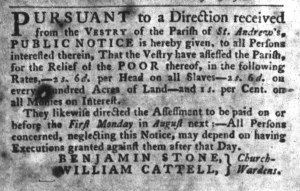
“The Vestry have assessed the Parish, for the Relief of the POOR.”

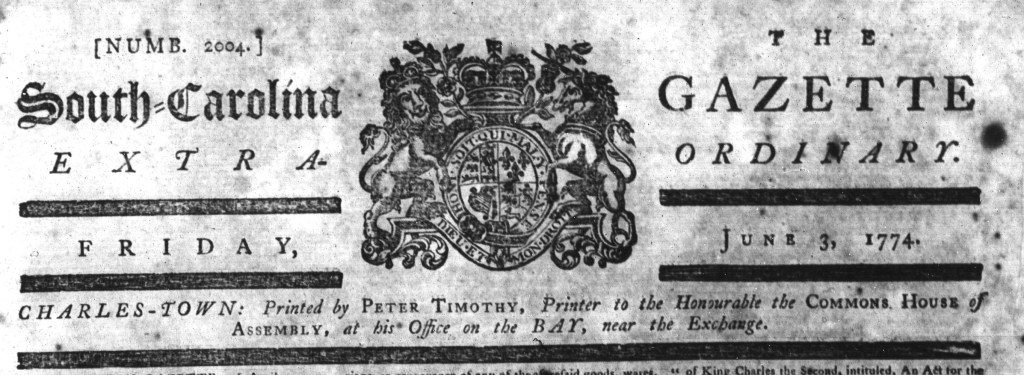
Peter Timothy usually published the South-Carolina Gazette on Mondays in 1774, but upon receiving the text of the Boston Port Act he considered the news momentous enough to merit an extraordinary edition on Friday, June 3.  Word certainly circulated via conversations among colonizers, yet Timothy gave them the opportunity to read the act for themselves and see all the details that might otherwise have been distorted as the news traveled.  The masthead for the extraordinary featured thick black lines, a symbol of mourning that usually signified the death of a prominent official but in this case lamented the death of liberty in the colonies.

The “Act to discontinue … the landing and discharging, lading or shipping of Hoods, Wares, or Merchandize, at the Town, and within the Harbour of Boston” accounted for the entire front page of the extraordinary.  News and editorials originally published in Boston and Philadelphia ran on the second page and most of the third.  Timothy had too much content for a two-page supplement, so he opted for four pages.  That left a page and a half to fill.  The printer opted for advertisements, items with type already set.  He certainly had enough of that kind of content at his printing office.  Advertising comprised three of the twelve columns in the previous standard edition of the South-Carolina Gazette and all four pages of the supplement distributed on the same day.  Yet Timothy may have been selective with which advertisements he chose to deliver with confirmation of the Boston Port Act.  The extraordinary did not include any notices from purveyors of goods and services hawking their wares.  Instead, Timothy chose advertisements that delivered news, including the “PRESENTMENTS of the GRAND-JURORS” for several districts in the colony, an announcement that the Recess Society would hold its quarterly meeting, and a “PUBLIC NOTICE” about taxes “for the Relief of the POOR” in the Parish of St. Andrew’s.  Given the significance of the news that the extraordinary carried, Timothy may have aimed to accompany the Boston Port Act with advertisements that also delivered news rather than attempts to convince consumers to make purchases.  The following Monday, he returned to business as usual with all manner of advertising in the standard issue and supplement published on June 6.

South-Carolina Gazette Extraordinary (June 3, 1774).

January 28

What was advertised in a colonial American newspaper 250 years ago today?

Massachusetts Spy (January 28, 1773).

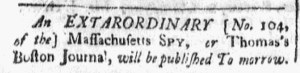
An EXTRAORDINARY … will be published To morrow.”

“Extra!  Extra!  Read all about it!”  That was Isaiah Thomas’s message to readers of the Massachusetts Spy.  The printer included an announcement in the January 28, 1773, edition, alerting subscribers and other readers that “An EXTRAORDINARY [No. 104, of the] Massachusetts SPY, or Thomas’s Boston Journal, will be published To morrow.”  Unlike the supplements and postscripts that sometimes accompanied early American newspapers, Thomas considered the extraordinary, distributed on a Friday, a separate issue.  As he noted in his announcement, it had its own number, 104, following “NUMB. 103,” distributed on Thursdays as usual for the Massachusetts Spy.  Thomas or a compositor who worked in his printing office updated the masthead to include “EXTRAORDINARY.”

The “extra” issue consisted of two pages, compared to four for the weekly standard issues of the Massachusetts Spy and other American newspapers published at the time.  It consisted almost entirely of a single item from the “HOUSE of REPRESENTATIVES” in Boston, along with half a column of news from Salem and one short advertisement for grocery items.  (In similar circumstances, other printers took the opportunity to insert advertisements about the goods and services available at their printing offices.)  The main item that prompted publication of the extraordinary was an “ANSWER to [Governor Thomas Hutchinson’s] SPEECH, to both Houses, at the opening of this session.”  Representatives “ORDERED” that a committee comprised of “Mr. Adams, Mr. Hancock, Mr. Bacon, Col. Bowes, Major Hawley, Capt. Darby, Mr. Philips, Col. Thayer, and Col. Stockbridge” compose that answer.  Members of the committee agreed with the governor that “the government at present is in a very disturbed state.”  They did not, however, identify the same causes.  “[W]e cannot ascribe it to the people’s having adopted unconstitutional principles,” as the governor claimed.  Instead, they believed that problems arose as a result of “the British House of Commons assuming and exercising a power inconsistent with the freedom of the constitution to give and grant the property of the colonists, and appropriate the same without their consent.”

When Thomas published the extraordinary, he already had a reputation as a printer devoted to principles espoused by the patriots.  The masthead for his newspaper described it as “A Weekly, Political, and Commercial PAPER:– Open to ALL Parties, but Influenced by None,” yet immediately below that sentiment appeared this message: “DO THOU Great LIBERTY INSPIRE our Souls,– And make our Lives in THY Possession happy,– Or our Deaths glorious in THY JUST Defence.”  Thomas likely had two reasons for quickly publishing the committee’s response as an extraordinary.  He scooped his competitors while also disseminating rhetoric that matched his own views.  (Most other newspapers printed in Boston included the response as part of their coverage when they distributed their next weekly edition, but that took several days or, in the case of the Massachusetts Gazette and Boston Weekly News-Letter, printed by Loyalist Richard Draper, an entire week.)  Thomas previously published the governor’s speech as an extraordinary, dated and distributed on the same day as the weekly issue on Thursday, January 7.  In so doing, he upheld his pledge that the Massachusetts Spy was “Open to ALL Parties,” yet publishing the governor’s speech also kept colonizers informed about the dangers they faced from the narrative of recent events that Hutchinson constructed.  Releasing the committee’s response as its own extraordinary on a day that no other newspapers were published in Boston and announcing his plans to issue that extraordinary may have garnered more attention more quickly to the version of events that matched Thomas’s own views.  Patriots and imperial officials vied over how to represent what was occurring in Boston and throughout the colonies.  Thomas may have considered getting the committee’s response to the governor in print as quickly as possible an important counteroffensive against the governor’s speech that he published three weeks earlier.

Massachusetts Spy Extraordinary (January 29, 1773).

April 27

What was advertised in a colonial American newspaper 250 years ago today?

South-Carolina Gazette and Country Journal Extraordinary (April 27, 1771).

“He carries on his Business as usual, at his Shop in Broad-Street.”

A standard issue for most newspapers published in colonial America consisted of four pages created by printing two pages on each side of a broadsheet and then folding it in half.  This did not always provide sufficient space for all of the news and advertising on hand, so printers adopted a variety of strategies for producing supplements.  In the past week, the Adverts 250 Project has examined some of the decisions made by printers who had too much content and not enough space.  On April 24, 1771, Robert Wells, printer of the South-Carolina and American General Gazette, distributed a smaller sheet that consisted entirely of advertising along with the standard issue for the week.  The following day, Richard Draper, printer of the Massachusetts Gazette and Boston Weekly News-Letter, inserted a note that “for want of Room” several advertisements “must be deferred till next Week.”  He did, however, issue a supplement that contained “Fresh London Articles” that he received from the captain of a ship that just arrived in port.  In that supplement, Draper scooped other newspapers.

Charles Crouch, printer of the South-Carolina Gazette and Country Journal, took another approach.  On April 27, he published an Extraordinary containing both news and advertising that served as a midweek supplement to his newspaper.  Prior to the American Revolution, most newspapers operated on a weekly publication schedule.  When printers did publish supplements, they usually did so on the same day as the standard issue and distributed them together.  Both Draper and Wells did so with their supplements.  On occasion, however, printers produced supplements, extraordinaries, or postscripts midway through the week.  In such instances, supplements consisted of either news or news and advertising, but rarely just advertising.  Typically, breaking news justified publishing and disseminating midweek supplements, but printers determined that advertising supplements could wait until the usual publication day.

Crouch devoted an entire half sheet to his two-page supplement, unlike Draper and Wells who each opted to conserve resources with smaller sheets.  Crouch could have devised a smaller sheet that featured only news accounts.  Instead, he published news and advertising, further disseminating notices about consumer goods and services, real estate for sale, and ships preparing to sail to England and other colonies.  Did those advertisers pay for the additional insertion?  Or did those advertisements appear gratis?  Answering those questions requires consulting Crouch’s ledgers or other sources beyond the newspaper.  Either way, the midweek supplement increased the amount of advertising (and news) circulating in South Carolina near the end of April 1771.

March 8

What was advertised in a colonial American newspaper 250 years ago today?

Mar 8 - 3:8:1768 South-Carolina Gazette and Country Journal
Addition to the South-Carolina Gazette and Country Journal (March 8, 1768).

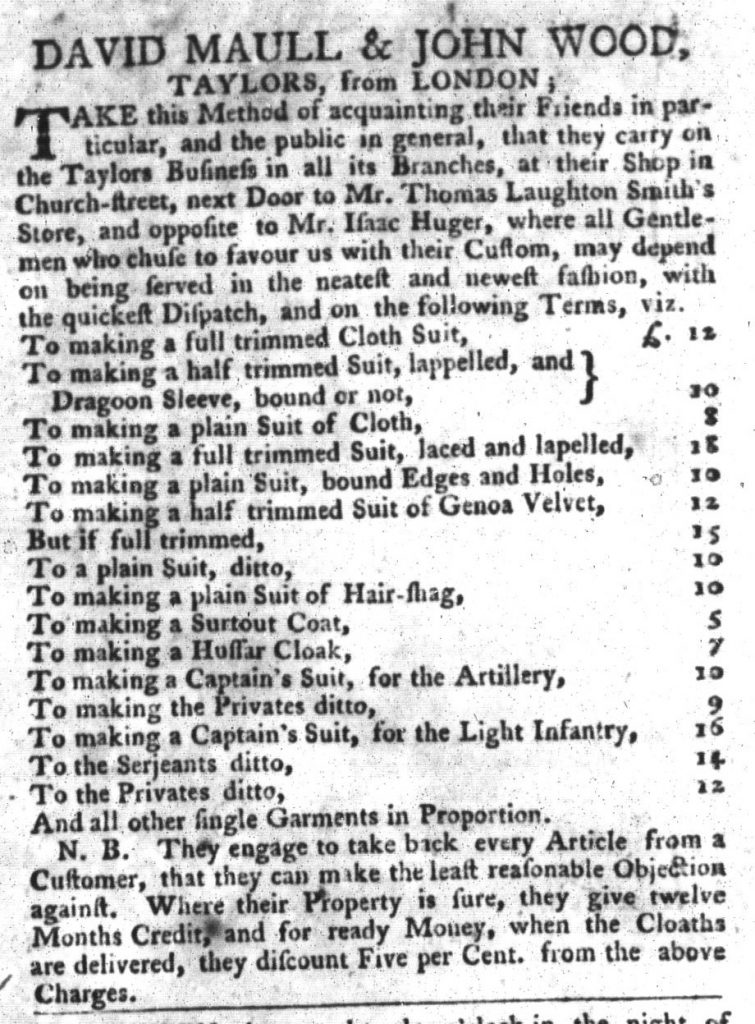
“They carry on the Taylors Business in all its Branches.”

David Maull and John Wood’s advertisement was one of nearly a dozen that appeared in the two-page Addition to the South-Carolina Gazette and Country Journal published by Charles Crouch on March 8, 1768. It accompanied the regular four-page issue of that newspaper and a two-page Supplement. Crouch distributed supplements so often that many readers may have come to expect them as standard, made necessary by the number of advertisements submitted to the printing office. Indeed, the supplements usually contained advertising exclusively, even when advertisements accounted for nearly half of the space in regular issues.

The Addition, however, did not follow this pattern. Only two of the six columns (three on each side of the halfsheet) were filled with advertising. The ninth of John Dickinson’s “LETTERS from a FARMER in PENNSYLVANIA, to the Inhabitants of the BRITISH COLONIES” occupied nearly the entire first page. In it, the “FARMER” explained the necessity of local representation in firmly established assemblies. The Addition also included news from Boston and Philadelphia as well as a poem, “The Batchelor’s Reasons for taking a Wife.”

What Crouch termed an Addition his counterparts in other cities and towns usually called an Extraordinary in their efforts to distinguish such publications from the more common supplements often distributed with the standard issues of their newspapers. Whatever the nomenclature, Crouch’s Addition of March 8, 1768, further establishes a pattern. During the period of the imperial crisis between the imposition of the Stamp Act in 1765 and the outbreak of military hostilities in 1775, the colonies alternately experienced periods of intense discord with Britain and periods of relative calm. In early March 1768 the Townshend Act had been in effect for just over three months. Colonists had commenced non-importation agreements at the beginning of the year. From New England to Georgia, newspapers reported discontent and political outrage, often in supplements and extraordinary issues that proliferated during those times that the imperial crisis intensified.

At most times advertising, especially the revenue it generated for printers, facilitated the dissemination of news and editorial items. Supplements devoted to advertising made delivering the news and other content possible. During periods of conflict, however, publishing the news sometimes led to the broader or more frequent distribution of advertising. Such appears to have been the case with Crouch’s Addition from March 8, 1768. As he went about publishing Dickinson’s “LETTER IX” and news from Boston and Philadelphia, the printer needed to fill an entire halfsheet. The poem took up half a column. Two of the advertisements promoted the printer’s own wares, but the others had previously appeared as paid notices. Perhaps those who placed them paid for this insertion as well. Even if that were the case, the Addition upended the usual relationships between news and advertisements in colonial newspapers. In this case, publishing the news led to readers being exposed to more advertising rather than the usual situation of advertising bringing the news.

February 4

What was advertised in a colonial American newspaper 250 years ago today?

Feb 4 - 2:4:1768 New-York Gazette Weekly Post-Boy Extraordinary
New-York Gazette Extraordinary [New-York Gazette: Or, the Weekly Post-Boy] (February 4, 1768).

“HENDRICK OUDERNAARDE, BROKER, HAS to sell all Sorts of European and West-India Goods.”

Hendrick Oudenaaerde’s advertisement appeared in an Extraordinary issue that supplemented James Parker’s New-York Gazette: Or, the Weekly Post-Boy. Parker published his Gazette (not to be confused with Hugh Gaine’s New-York Gazette and the Weekly Mercury) on Mondays, but explained that circumstances warranted distributing an Extraordinary on Thursday, February 4, 1768. “Letter IX” from the series of “Letters from a FARMER in Pennsylvania, to the Inhabitants of the British Colonies” filled nearly four of the six columns in the Extraordinary; news and advertising filled the remainder. According to Parker, “As the Farmer’s Letters came too late for our Paper on Monday last, in order to oblige our Customers, we have given this additional Gazette, and thereby prevent the room being encroached on, in next Monday’s Paper.” This decision resulted in disseminating a greater amount of advertising – for consumer goods, for runaway slaves, for real estate – to readers of Parker’s Gazette alongside “Letter IX.”

Like many other printers throughout the colonies, Parker reprinted a series of essays, twelve in total, written by John Dickinson in 1767 and 1768. Dickinson, a lawyer and legislator rather than a farmer, argued that Parliament did not have the authority to raise revenues by imposing taxes on the American colonies. He conceded that Parliament could regulate trade, yet stressed that the colonies retained sovereignty over their internal affairs, including taxation. In “Letter IX,” Dickinson addressed the necessity for local representation in established assemblies. Published far and wide, the “Letters” helped to unify colonists in opposition to the Townshend Acts.

Readers of Parker’s Gazette could not consume “Letter IX” without being exposed to the advertisements that accompanied it. Public discourse concerning the political ramifications of Parliament’s policies concerning commerce and other matters contributed to an even wider and more frequent distribution of advertising in the late colonial period. In general, the revenues generated by advertisements made it possible for printers to publish and disseminate the news and editorial items that informed debates and shaped sentiments in the colonies. Broadly speaking, that was the case here: the revenues from the advertisements that regularly appeared in the New-York Gazette: Or, the Weekly Post-Boy allowed Parker to issue the extraordinary issue. However, the printer may not have generated additional revenues from the particular advertisements that appeared in the extraordinary. Advertisers usually paid to have their notices inserted for a certain numbers of weeks. The compositor may have chosen half a dozen advertisements that served as filler to complete the issue, but the printer may have run them gratis for the sake of filling the final page. Advertisers who paid to have their notices inserted for a specified number of weeks would have expected to see them in the regular issues of Parker’s Gazette for that many weeks.

In other words, the revenues from advertising generally supported the publication of news and editorials that shaped colonial discourse during the imperial crisis, yet the imperatives of distributing political content also bolstered an expanded dissemination of advertising.

March 12

What was advertised in a colonial newspaper 250 years ago today?

Mar 12 - 3:12:1766 Providence Gazette Extraordinary Supplement
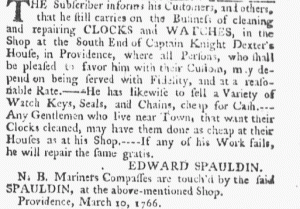
Supplement to A Providence Gazette, Extraordinary (March 12, 1766).

Given the publication history of the Providence Gazette, it is interesting that this advertisement appeared at all.

On March 12, 1766, William Goddard published “A Providence Gazette, Extraordinary.” Note that it was “A Providence Gazette” rather than “The Providence Gazette.” (The most recent issue had featured a masthead proclaiming “Vox Populi, Vox Dei. A PROVIDENCE GAZETTE Extraordinary” nearly seven months earlier on August 24, 1765. Not surprisingly, its contents focused on the then-impending Stamp Act. Regular publication on a weekly schedule had ceased with the issue of May 11, 1765. The newspaper finally resumed weekly publication in August 1766.) The four-page issue included “PROPOSALS for reviving the PROVIDENCE GAZETTE,” assorted news items from throughout the colonies, and testimonials from former and potential customers interested in Goddard resuming publication of the newspaper.

A half dozen or so advertisements appeared in a two-page “SUPPLEMENT to ‘A PROVIDENCE GAZETTE, Extraordinary,’ of Wednesday March 12, 1766.” (Did this supplement accompany the extraordinary issue? Or was it published later? The masthead does not make this clear.)

Edward Spauldin and a handful of other local shopkeepers, artisans, and merchants chose to insert advertisements in a newspaper that was not published on a regular schedule and did not have a slate of subscribers. They may have envisioned that the Extraordinary issue and its SUPPLEMENT would garner a fair amount of attention, allowing them an opportunity to present their goods and services for the consideration of potential customers in the area.

Spauldin’s advertisement was dated “PROVIDENCE, March 10, 1766.” (I checked the previous five issues to confirm that this was a new advertisement rather than one repeated from earlier but with an updated date.) Goddard may have approached him about inserting a commercial notice, but Spauldin ultimately made the decision about advertising in A Providence Gazette. This suggests that he believed in the effectiveness of advertising to incite business in the 1760s. He did not operate his business in an environment of pent-up demand but instead used advertising to create that demand with appeals to price and quality. In addition, he also included a money-back guarantee to get customers through the door: “If any of his Work fails, he will repair the same gratis.”

When “Sarah Goddard, and Company” resumed publication of the Providence Gazette on August 9, 1766, Edward Spaulding placed the same advertisement, except the nota bene had been eliminated and the date was revised to “Providence, August 8, 1766.” Perhaps he attributed new business in March to the original advertisement and decided to give it another try.