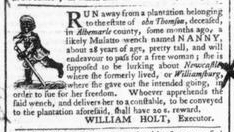
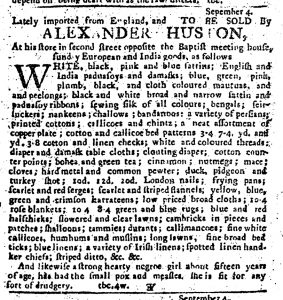
Slavery Advertisements Published September 23, 1766

The Slavery Adverts 250 Project chronicles the role of newspaper advertising in perpetuating slavery in the era of the American Revolution. The project seeks to reveal the ubiquity of slavery in eighteenth-century life from New England to Georgia by republishing advertisements about enslaved people – for sale as individuals or in groups, wanted to purchase or for hire for short periods, runaways who liberated themselves, and those who were subsequently captured and confined in jails and workhouses – in daily digests on this site as well as in real time via the @SlaveAdverts250 Twitter feed, utilizing twenty-first-century media to stand in for the print media of the eighteenth century.

The project aims to provide modern audiences with a sense of just how often colonizers encountered these advertisements in their daily lives. Enslaved men, women, and children appeared in print somewhere in the colonies almost every single day. Those advertisements served as a constant backdrop for social, cultural, economic, and political life in colonial and revolutionary America. Colonizers who did not purport to own enslaved people were still confronted with slavery as well as invited to maintain the system by purchasing enslaved men, women, and children or assisting in the capture of so-called “runaways” who sought to free themselves from bondage. The frequency of these newspaper advertisements suggests just how embedded slavery was in colonial and revolutionary American culture in everyday interactions beyond the printed page.

These advertisements also testify to the experiences of enslaved men, women, and children, though readers must consider that those experiences have been remediated through descriptions offered by enslavers rather than enslaved people themselves. Often unnamed in the advertisements, enslaved men, women, and children were not invisible or unimportant in early America.

These advertisements appeared in colonial American newspapers 250 years ago today.
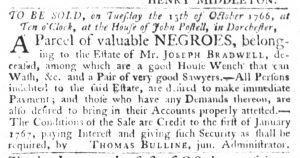
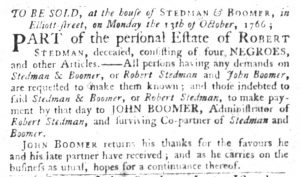
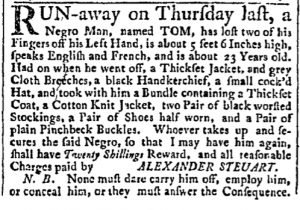
sep-23-sc-gaz-country-journal-slavery-1
South-Carolina Gazette and Country Journal (September 23, 1766).

**********
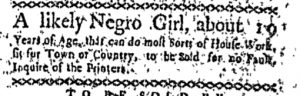
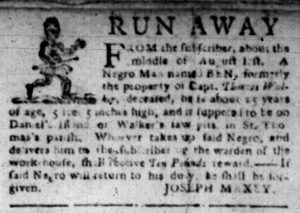
sep-23-sc-gaz-country-journal-slavery-2
South-Carolina Gazette and Country Journal (September 23, 1766).

**********

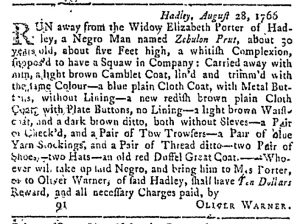
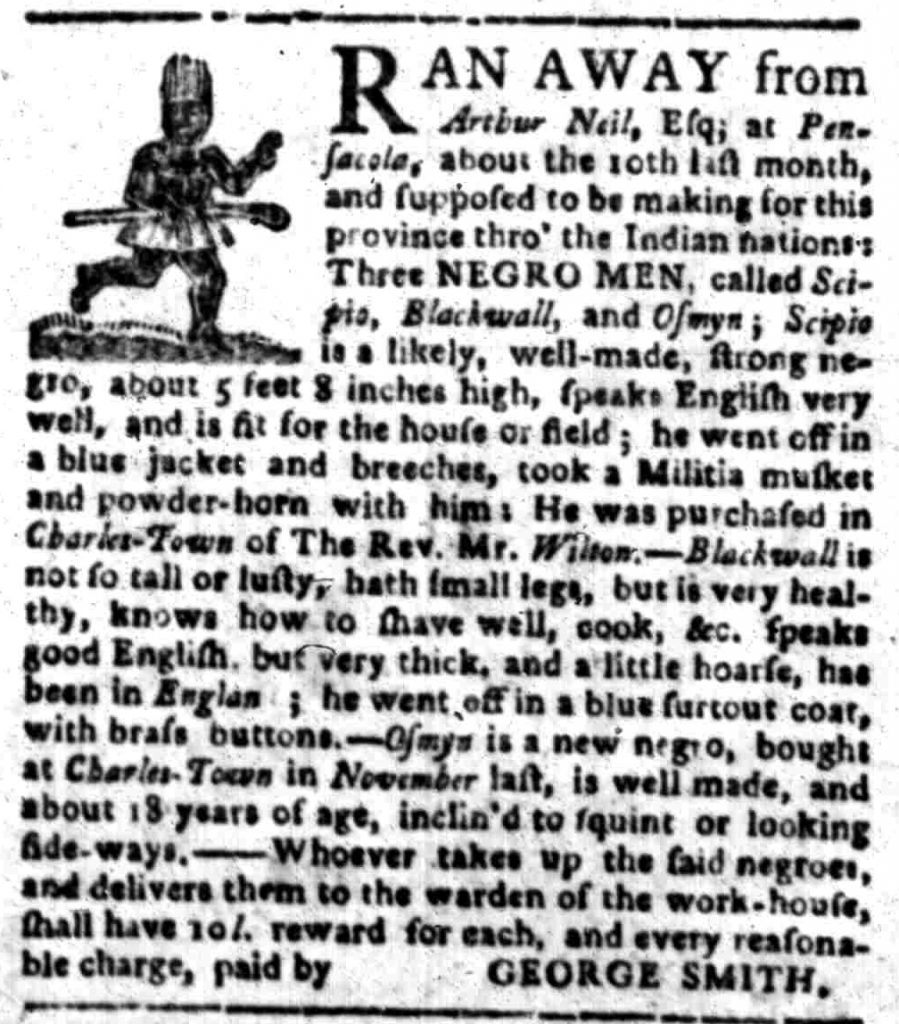
sep-23-sc-gaz-country-journal-slavery-3
South-Carolina Gazette and Country Journal (September 23, 1766).

**********

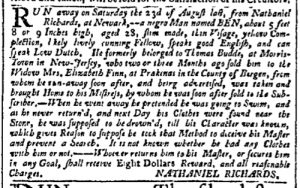
sep-23-sc-gaz-country-journal-slavery-4
South-Carolina Gazette and Country Journal (September 23, 1766).

**********

sep-23-sc-gaz-country-journal-slavery-5
South-Carolina Gazette and Country Journal (September 23, 1766).

**********
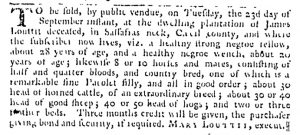
sep-23-sc-gaz-country-journal-slavery-6
South-Carolina Gazette and Country Journal (September 23, 1766).

September 22

What was advertised in a colonial American newspaper 250 years ago today?

sep-22-9221766-new-york-mercury
New-York Mercury (September 22, 1766).

“Mr. KNAPP, with strict Candour, agreeable to the Constitution, and Fundamentals of Law and Equity, will give his Opinion and Advice on any Case.”

Lengthy expositions and sensational narratives by John Coghill Knapp were a fixture among the advertisements that appeared in the New-York Mercury in 1766, giving the impression that the “Attorney at Law” loved to talk in real life and would spare no effort in pursuing the interests of his clients. The preponderance of prose in his advertisements may have been a selling point, demonstrating to potential clients that he left no stone unturned and no contingency unanticipated.

While it may not be completely fair to compare Knapp’s legal philosophy to modern ambulance chasers known for their obnoxiously loud television commercials and flashy billboards, the two both adopted modes of advertising intended to attract as much attention as possible. Force of personality played a part in Knapp’s advertising, but he also resorted to gimmicks to tempt potential customers to avail themselves of his services. He promised to “give his Opinion and Advice on any Case, verbally stated, for One Dollar.” This one-price-fits-all fee structure seemed designed to get as many clients as possible into his office on Rotten Row, especially those nervous about the costs of consulting other attorneys.

Knapp’s fee structure also suggested that he sought to work with common men and women, not just the elite and affluent. In addition to charging one dollar for cases “verbally stated,” he charged “similar easy Terms” for cases in writing, depending on “the Length of papers to peruse, and Number of Questions to solve.” Knapp recognized that many of his potential clients might not have extensive documents (or any at all) related to their legal concerns. He also implicitly acknowledged that some potential clients might be able to read his advertisements but not write much (or anything) about the various situations he described in his advertisement.

Knapp developed an over-the-top persona in his advertisements as he positioned himself as a lawyer who served everyday people.

Slavery Advertisements Published September 22, 1766

The Slavery Adverts 250 Project chronicles the role of newspaper advertising in perpetuating slavery in the era of the American Revolution. The project seeks to reveal the ubiquity of slavery in eighteenth-century life from New England to Georgia by republishing advertisements about enslaved people – for sale as individuals or in groups, wanted to purchase or for hire for short periods, runaways who liberated themselves, and those who were subsequently captured and confined in jails and workhouses – in daily digests on this site as well as in real time via the @SlaveAdverts250 Twitter feed, utilizing twenty-first-century media to stand in for the print media of the eighteenth century.

The project aims to provide modern audiences with a sense of just how often colonizers encountered these advertisements in their daily lives. Enslaved men, women, and children appeared in print somewhere in the colonies almost every single day. Those advertisements served as a constant backdrop for social, cultural, economic, and political life in colonial and revolutionary America. Colonizers who did not purport to own enslaved people were still confronted with slavery as well as invited to maintain the system by purchasing enslaved men, women, and children or assisting in the capture of so-called “runaways” who sought to free themselves from bondage. The frequency of these newspaper advertisements suggests just how embedded slavery was in colonial and revolutionary American culture in everyday interactions beyond the printed page.

These advertisements also testify to the experiences of enslaved men, women, and children, though readers must consider that those experiences have been remediated through descriptions offered by enslavers rather than enslaved people themselves. Often unnamed in the advertisements, enslaved men, women, and children were not invisible or unimportant in early America.

These advertisements appeared in colonial American newspapers 250 years ago today.

sep-22-boston-gazette-slavery-1
Supplement to the Boston-Gazette (September 22, 1766).

**********

sep-22-connecticut-courant-slavery-1
Connecticut Courant (September 22, 1766).

**********

sep-22-new-york-gazette-slavery-1
New-York Gazette (September 22, 1766).

**********
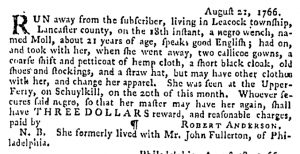
sep-22-new-york-gazette-slavery-2
New-York Gazette (September 22, 1766).

**********
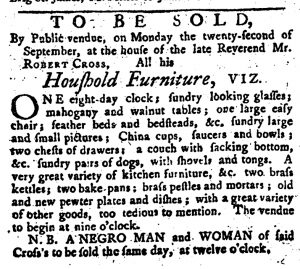
sep-22-new-york-gazette-slavery-3
New-York Gazette (September 22, 1766).

**********

sep-22-new-york-gazette-slavery-4
New-York Gazette (September 22, 1766).

**********

sep-22-new-york-mercury-slavery-1
New-York Mercury (September 22, 1766).

**********

sep-22-new-york-mercury-slavery-2
New-York Mercury (September 22, 1766).

**********

sep-22-south-carolina-gazette-slavery-1
South Carolina Gazette (September 22, 1766).

**********

sep-22-south-carolina-gazette-slavery-2
South Carolina Gazette (September 22, 1766).

**********

sep-22-south-carolina-gazette-slavery-3
South Carolina Gazette (September 22, 1766).

**********

sep-22-south-carolina-gazette-slavery-4
South Carolina Gazette (September 22, 1766).

**********

sep-22-south-carolina-gazette-slavery-5
South Carolina Gazette (September 22, 1766).

**********

sep-22-south-carolina-gazette-slavery-6
South Carolina Gazette (September 22, 1766).

September 21

What was advertised in a colonial American newspaper 250 years ago this week?

sep-21-9201766-providence-gazette
Providence Gazette (September 20, 1766).

“All Kinds of Hollow and other cast Iron Ware.”

Potash production was a widespread enterprise in the colonial period. Advertisements seeking potash or selling a variety of supplies associated with producing potash (including potash kettles, forms certifying the contents of casks containing potash, and manuals for making potash) frequently appeared in colonial newspapers. Today’s advertisement also offered “Pot-Ash Kettles” for sale, directly from the new blast furnace in Scituate, Massachusetts. The weight and bulk of such items made them particularly expensive to import from England.

In addition to potash kettles, the proprietors also sold “all Kinds of Hollow and other cast Iron Ware.” The volume of production of cookware, tools, nails, and other products at local iron works was not sufficient to meet colonists’ needs. Similar items appeared regularly in the lists of goods imported from England in many advertisements during the late colonial period. Still, the blast furnace at Scituate and other iron works competed with an expanding volume of imported items; locally produced goods could be “supplied on the lowest Terms” because they did not need to be transported across the Atlantic. As the colonies increasingly objected to new imperial regulations, such locally manufactured goods became even more attractive. Many Americans wished to encourage such enterprises, realizing that the colonies were not self-sufficient in this regard but instead depended on British imports. Patronizing the blast furnace in Scituate thus took on political tones in addition to fulfilling commercial and economic needs.

To learn more about iron production in the colonial period, visit the blast furnace at Saugus Iron Works National Historic Site, located northeast of Boston.

September 20

What was advertised in a colonial American newspaper 250 years ago today?

sept-20-9201766-providence-gazette
Providence Gazette (September 20, 1766).

“To be RUN … by any Horse, Mare, or Gelding.”

Yesterday’s advertisement promoted a lottery for “SUNDRY Millinery Goods” at Joseph Calvert’s vendue house in Williamsburg. After weighing the risks and taking a chance, participants acquired an assortment of goods that they could keep for their own use or resell to others, further extending networks of commerce and distribution of goods in the colonies.

Today’s advertisement also invited readers to take a chance and perhaps win a prize, “a good pinchbeck WATCH, valued at Sixteen Dollars” awarded to the owner of “any Horse, Mare, or Gelding, in the County of Providence” that won a race to be held a little over a week later. Unlike the advertisement for Calvert’s lottery sale, this notice did not – and could not – indicate participants’ odds of winning the prize. It all depended on which horses (and how) many entered. The sponsors required that each entrant “pay one Dollar, upon entering his Horse,” presumably hoping to attract more than enough to balance the value of the watch to be given as the prize.

During the second half of the eighteenth century advertisements for goods and services increasingly placed consumption within a culture of entertainment, especially for those with sufficient wealth and leisure. Although this advertisement did not sell any particular merchandise or services, it did inform colonists of opportunities to be entertained. Those who owned fast horses could participate, but many others could also gather in Cranston to watch the run. The race and anticipation of which horse would win the prize for its owner offered the most excitement, but the entire event offered an entertaining experience, an opportunity to socialize with others and to see and be seen before and after the horses and riders competed. Anyone hoping to win the pinchbeck watch was most likely attired in the sorts of fashionable clothing and accouterments advertised elsewhere in the same issue of the newspaper. Gathering for this event allowed for consumption to become even more conspicuous.

September 19

What was advertised in a colonial American newspaper 250 years ago today?

sep-19-9191766-virginia-gazette
Virginia Gazette (September 19, 1766).

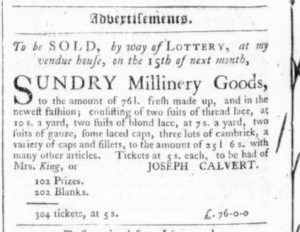
“To be SOLD, by way of LOTTERY … SUNDRY Millinery Goods.”

Joseph Calvert operated a vendue (or auction) house, where he likely sold some of his own wares but also earned commissions for assisting other entrepreneurs to sell their merchandise. The latter appears to have been the case in this instance, considering that the advertisement directed potential customers interested in “SUNDRY Millinery Goods” to see “Mrs. King.” The advertisement listed a variety of goods, many of them certainly imported. Yet describing the “Millinery Goods” as “fresh made up, and in the newest fashion” suggested that King was not merely a shopkeeper who sold goods that arrived readymade. She likely also worked as a milliner herself, making or modifying “a variety of caps and fillets … with many other articles.”

The vendue master and the milliner advertised a scheme designed to liquidate King’s merchandise and guarantee revenues of £76. Rather than hold an auction that might yield lower bids, they instead sponsored a lottery. King’s inventory would be divided into 102 lots to be distributed as prizes for winners. Only 304 tickets were to be sold, thus guaranteeing participants that each ticket had approximately a one-in-three chance of winning a prize (rather than being one of the “Blanks”). Presumably, the merchandise had been divided into lots of varying values with certain prizes much more significant windfalls for winners than others.

Colonists regularly bought and sold goods by vendue in the eighteenth century. Auctions were often forms of entertainment, but Calvert and King introduced an additional layer of excitement and anticipation in their attempt to incite interest in the “SUNDRY Millinery Goods.” Selling these items “by way of LOTTERY” may have attracted buyers willing to gamble on huge rewards for a modest investment, buyers that may not have been interested or able to participate in bidding at a traditional auction.

Slavery Advertisements Published September 19, 1766

The Slavery Adverts 250 Project chronicles the role of newspaper advertising in perpetuating slavery in the era of the American Revolution. The project seeks to reveal the ubiquity of slavery in eighteenth-century life from New England to Georgia by republishing advertisements about enslaved people – for sale as individuals or in groups, wanted to purchase or for hire for short periods, runaways who liberated themselves, and those who were subsequently captured and confined in jails and workhouses – in daily digests on this site as well as in real time via the @SlaveAdverts250 Twitter feed, utilizing twenty-first-century media to stand in for the print media of the eighteenth century.

The project aims to provide modern audiences with a sense of just how often colonizers encountered these advertisements in their daily lives. Enslaved men, women, and children appeared in print somewhere in the colonies almost every single day. Those advertisements served as a constant backdrop for social, cultural, economic, and political life in colonial and revolutionary America. Colonizers who did not purport to own enslaved people were still confronted with slavery as well as invited to maintain the system by purchasing enslaved men, women, and children or assisting in the capture of so-called “runaways” who sought to free themselves from bondage. The frequency of these newspaper advertisements suggests just how embedded slavery was in colonial and revolutionary American culture in everyday interactions beyond the printed page.

These advertisements also testify to the experiences of enslaved men, women, and children, though readers must consider that those experiences have been remediated through descriptions offered by enslavers rather than enslaved people themselves. Often unnamed in the advertisements, enslaved men, women, and children were not invisible or unimportant in early America.

These advertisements appeared in colonial American newspapers 250 years ago today.

sep-19-new-hampshire-gazette-slavery-1
New-Hampshire Gazette (September 19, 1766).

**********

sep-19-virginia-gazette-slavery-1
Virginia Gazette (September 19, 1766).

**********

sep-19-virginia-gazette-slavery-2
Virginia Gazette (September 19, 1766).

**********

sep-19-virginia-gazette-slavery-3
Virginia Gazette (September 19, 1766).

**********

sep-19-virginia-gazette-slavery-4
Virginia Gazette (September 19, 1766).

**********

sep-19-virginia-gazette-slavery-5
Virginia Gazette (September 19, 1766).

**********

sep-19-virginia-gazette-slavery-6
Virginia Gazette (September 19, 1766).

**********

sep-19-virginia-gazette-slavery-7
Virginia Gazette (September 19, 1766).

September 18

What was advertised in a colonial American newspaper 250 years ago today?

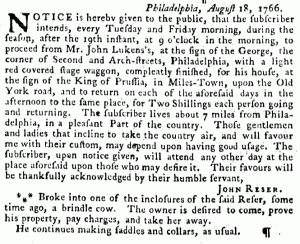
sep-18-9181766-pennsylvania-gazette
Pennsylvania Gazette (September 18, 1766).

“Those gentlemen and ladies that incline to take the country air … may depend upon having good usage.”

Residents of Philadelphia and other urban centers engaged in an increasing number of leisure activities during the eighteenth century. Just as consumer culture dramatically expanded during the period, so did the sorts of activities that those with time and money could pursue. Dancing and fencing masters tutored students of all ages. Men and women met for meals or tea at houses of entertainment, establishments that often tried to draw in patrons with musicians or fireworks. Some proprietors cultivated gardens for visitors to explore. Others promoted their own hospitality and the conversations they facilitated as hosts and hostesses.

John Reser, who earned part of his living “making saddles and collars,” offered another option to “gentlemen and ladies” who had leisure time and looked to be entertained in new and novel ways. On Tuesdays and Fridays he sponsored an excursion along the “Old York road” from Philadelphia to his house “at the sign of the King of Prussia, in Miles-Town.” Reser promoted several aspects of this excursion, including traveling through “a pleasant Part of the country” that looked much different from the point of departure at “the corner of Second and Arch-streets” in Philadelphia. He promised to serve them well as they “take the country air.” Even the means of travel was intended to be part of the experience: “a light red covered stage wagon, completely finished.” It appears that Reser may have been attempting to make sure residents in and around Philadelphia would be sure to recognize this conveyance, giving his enterprise more visibility and prestige.

Joining this excursion meant committing some time for the fourteen-mile round trip, restricting the number of potential patrons. Although Reser does not explicitly state that he served food and drink at “his house, at the sign of the King of Prussia,” other sources indicate that he was issued a license to operate a tavern in Bristol Township on August 10, 1765. Sponsoring excursions for residents of Philadelphia “to take the country air” twice a week may have been a means of augmenting the business at his tavern.

John Reser’s excursions from Philadelphia into the countryside were part of a growing selection of leisure activities that gained popularity in the second half of the eighteenth century, heralding the rise of the tourism industry.

Slavery Advertisements Published September 18, 1766

The Slavery Adverts 250 Project chronicles the role of newspaper advertising in perpetuating slavery in the era of the American Revolution. The project seeks to reveal the ubiquity of slavery in eighteenth-century life from New England to Georgia by republishing advertisements about enslaved people – for sale as individuals or in groups, wanted to purchase or for hire for short periods, runaways who liberated themselves, and those who were subsequently captured and confined in jails and workhouses – in daily digests on this site as well as in real time via the @SlaveAdverts250 Twitter feed, utilizing twenty-first-century media to stand in for the print media of the eighteenth century.

The project aims to provide modern audiences with a sense of just how often colonizers encountered these advertisements in their daily lives. Enslaved men, women, and children appeared in print somewhere in the colonies almost every single day. Those advertisements served as a constant backdrop for social, cultural, economic, and political life in colonial and revolutionary America. Colonizers who did not purport to own enslaved people were still confronted with slavery as well as invited to maintain the system by purchasing enslaved men, women, and children or assisting in the capture of so-called “runaways” who sought to free themselves from bondage. The frequency of these newspaper advertisements suggests just how embedded slavery was in colonial and revolutionary American culture in everyday interactions beyond the printed page.

These advertisements also testify to the experiences of enslaved men, women, and children, though readers must consider that those experiences have been remediated through descriptions offered by enslavers rather than enslaved people themselves. Often unnamed in the advertisements, enslaved men, women, and children were not invisible or unimportant in early America.

These advertisements appeared in colonial American newspapers 250 years ago today.

sep-18-massachusetts-gazette-slavery-1
Massachusetts Gazette (September 18, 1766).

**********

sep-18-massachusetts-gazette-slavery-2
Massachusetts Gazette (September 18, 1766).

**********

sep-18-pennsylvania-gazette-slavery-1
Pennsylvania Gazette (September 18, 1766).

**********

sep-18-pennsylvania-gazette-slavery-2
Pennsylvania Gazette (September 18, 1766).

**********

sep-18-pennsylvania-gazette-slavery-3
Pennsylvania Gazette (September 18, 1766).

**********

sep-18-pennsylvania-gazette-slavery-5
Pennsylvania Gazette (September 18, 1766).

**********

sep-18-pennsylvania-gazette-slavery-4
Supplement to the Pennsylvania Gazette (September 18, 1766).

**********

sep-18-pennsylvania-journal-slavery-1
Pennsylvania Journal (September 18, 1766).

**********

sep-18-pennsylvania-journal-slavery-2
Pennsylvania Journal (September 18, 1766).

**********

sep-18-pennsylvania-journal-slavery-3
Pennsylvania Journal (September 18, 1766).

**********

sep-18-pennsylvania-journal-slavery-4
Pennsylvania Journal (September 18, 1766).

**********

sep-18-pennsylvania-journal-slavery-5
Pennsylvania Journal (September 18, 1766).

**********

sep-18-pennsylvania-journal-slavery-6
Supplement to the Pennsylvania Journal (September 18, 1766).

Introducing the Slavery Adverts 250 Project

Today is the first day of a twelve-week project being undertaken by students in my Colonial America course at Assumption College. The Slavery Adverts 250 Project seeks to identify and republish every advertisement that offered slaves for sale or reported runaways printed in colonial newspapers exactly 250 years ago. Unlike the Adverts 250 Project, which examines one advertisement each day, the Slavery Adverts 250 Project will feature multiple advertisements on most days, drawing from every colonial newspaper that has been digitized and made available to my students via Accessible Archives, Colonial Williamsburg’s Digital Library, and Readex’s America’s Historical Newspapers.

Each advertisement will appear individually via the Slavery Adverts 250 Project’s Twitter account (@SlaveAdverts250). In addition, all of the advertisements published on a given day will appear together in a single entry on the Adverts 250 Project’s blog. Individual advertisements will not be analyzed separately; instead, my students and I are creating an archive to be consulted for an essay about slavery in colonial America that will be their final exam at the end of the semester.

Each student will serve as curator of the Slavery Adverts 250 Project for one week. The curator will be responsible for identifying all relevant advertisements, posting them to the project’s Twitter account, and compiling statistics about how many advertisements were included in the project during their week. I am serving as curator during the first week, to establish the project and to troubleshoot any difficulties before turning the project over to my students.

This research project is both experimental and collaborative. I expect that I will learn just as much as my students do as we work together to gather and republish these advertisements. Throughout the project, we will ask ourselves a series of questions about what these advertisements tell us about slavery and its role in everyday life and commerce in colonial America.

  • What do these advertisements tell us about the experiences of enslaved men, women, and children?
  • What do these advertisements tell us about the experiences and attitudes of other colonists?
  • How often did advertisements featuring slaves appear in colonial newspapers?
  • Are regional differences apparent in the numbers, types, or content of advertisements featuring slaves?
  • What do these advertisements reveal that deviates from our expectations?

In the process of pursuing these questions, my students should enhance their research skills, gain experience using primary sources, and improve their information literacy. For many of them, this will also be part of a general introduction to digital humanities projects. Each student will also serve as guest curator of the Adverts 250 Project, taking on additional responsibilities that also move their coursework beyond the traditional classroom.