September 7

What was advertised in a colonial American newspaper 250 years ago today?

Sep 7 - 9:7:1768 Georgia Gazette
Georgia Gazette (September 7, 1768).

“THE subscriber WILL OPEN A SCHOOL FOR DANCING.”

Compared to bustling cities like Boston, Charleston, New York, and Philadelphia, the more recent settlement at Savannah was a relatively small port with significantly fewer residents in 1768. Yet it was not so small that dancing masters thought it futile to attempt to cultivate a market for their services among the local elite and those who aspired to join their ranks. John Revear, for instance, placed an advertisement in the September 7, 1768, edition of the Georgia Gazette to announce that he would “OPEN A SCHOOL FOR DANCING” on the following day.

Revear welcomed various types of pupils. The majority of his advertisement focused on his lessons for children, but a brief nota bene indicated that he took “grown persons” as pupils as well. The dancing master offered daytime classes for children on Thursdays and Fridays “from the hours of ten to twelve, and from three to five.” This allowed him time to provide private lessons throughout the rest of the week. Such lessons could take place at the school, but Revear advised that “Any gentleman or lady may be taught at their own house” if they preferred. In addition, he kept “an evening school … from six to nine” for adults who did not have leisure time during the day for private lessons.

In crafting his advertisement, Revear played on the anxieties of parents who might send their children to his dancing school. He noted that he taught “all the celebrated dances that are used in polite academies,” signaling that young people needed his instruction or they risked public embarrassment when they displayed their lack of familiarity with this genteel pastime. Yet Revear likely intended that this warning resonate with others besides parents attending to the best interests of their children. Adults who had concerns about whether they had mastered the latest steps could ease their minds by signing up for lessons themselves. The option for private instruction in the home further reduced the possibility of awkward comportment in public spaces. Once students had mastered the steps they could gracefully display their skills.

Revear encouraged a sense of uneasiness even as he provided a means for relieving it. He prompted prospective pupils to imagine “polite assemblies” and the many sorts of “celebrated dances” that were part of their gatherings. He leveraged existing worries, realizing that some residents of Savannah did not wish to think of themselves as any less sophisticated than those who participated in the “polite assemblies” in Charleston or Philadelphia or other cosmopolitan American ports (just as residents of those cities constantly strove to demonstrate that they were as fashionable and genteel as if they lived in London).
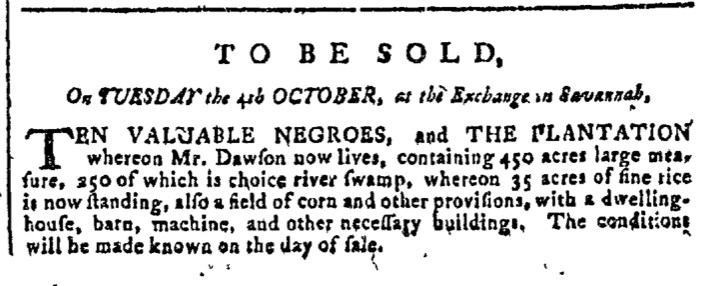
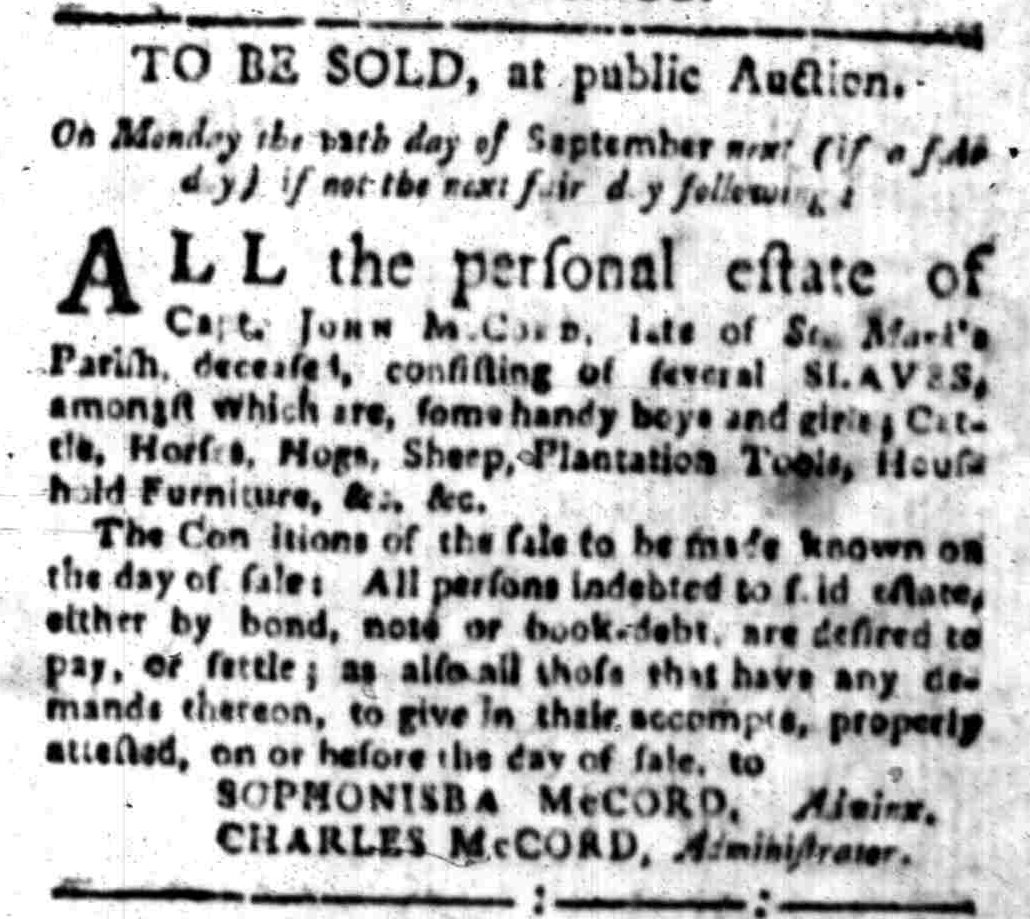
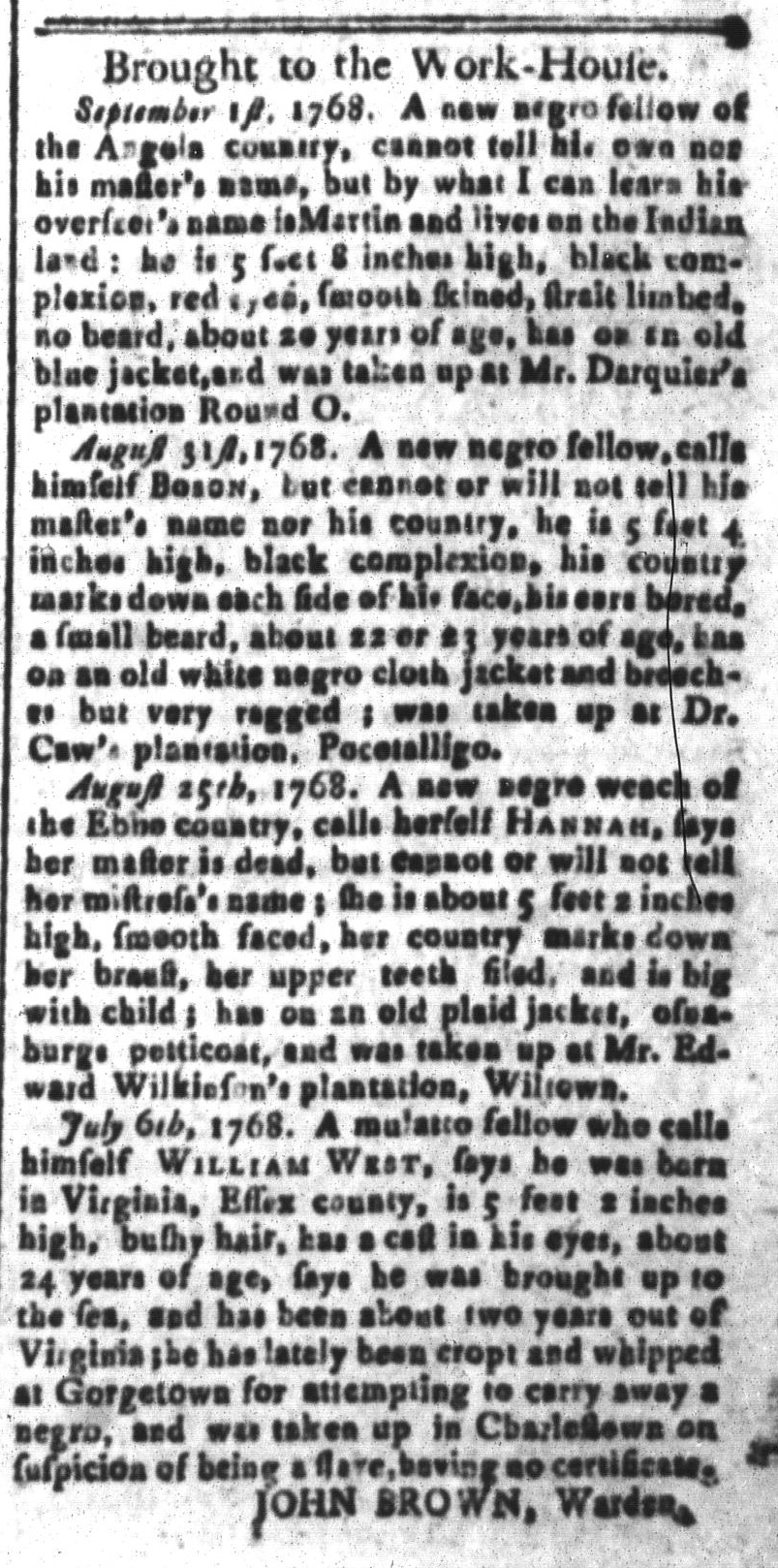
Slavery Advertisements Published September 7, 1768

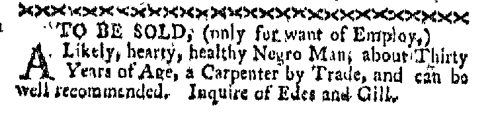
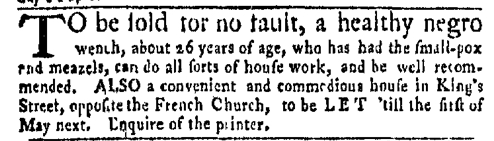
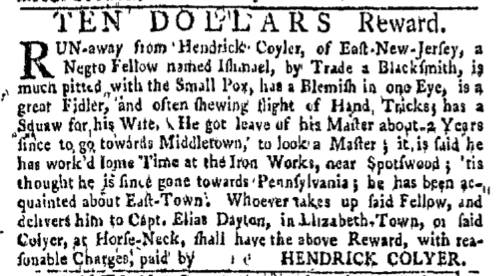
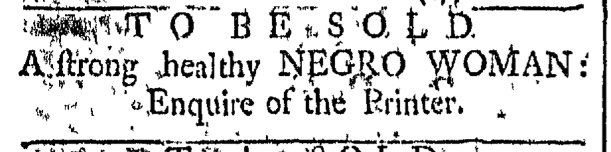
The Slavery Adverts 250 Project chronicles the role of newspaper advertising in perpetuating slavery in the era of the American Revolution. The project seeks to reveal the ubiquity of slavery in eighteenth-century life from New England to Georgia by republishing advertisements for slaves – for sale, wanted to purchase, runaways, captured fugitives – in daily digests on this site as well as in real time via the @SlaveAdverts250 Twitter feed, utilizing twenty-first-century media to stand in for the print media of the eighteenth century.

The project aims to provide modern audiences with a sense of just how often colonists encountered these advertisements in their daily lives. Enslaved men, women, and children appeared in print somewhere in the colonies almost every single day. Those advertisements served as a constant backdrop for social, cultural, economic, and political life in colonial and revolutionary America. Colonists who did not own slaves were still confronted with slavery as well as invited to maintain the system by purchasing slaves or assisting in the capture of runaways. The frequency of these newspaper advertisements suggests just how embedded slavery was in colonial and revolutionary American culture in everyday interactions beyond the printed page.

These advertisements also testify to the experiences of enslaved men, women, and children, though readers must consider that those experiences have been remediated through descriptions offered by slaveholders rather than the slaves themselves. Often unnamed in the advertisements, enslaved men, women, and children were not invisible or unimportant in early America.

These advertisements appeared in colonial American newspapers 250 years ago today.

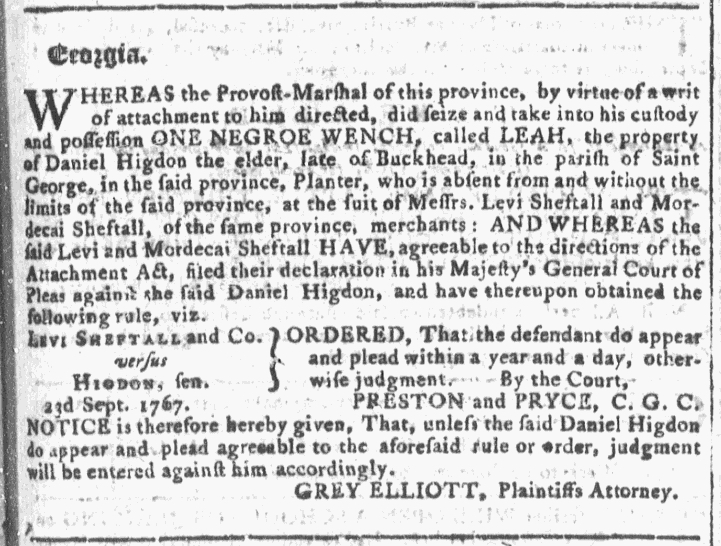
Sep 7 - Georgia Gazette Slavery 1
Georgia Gazette (September 7, 1768).

**********

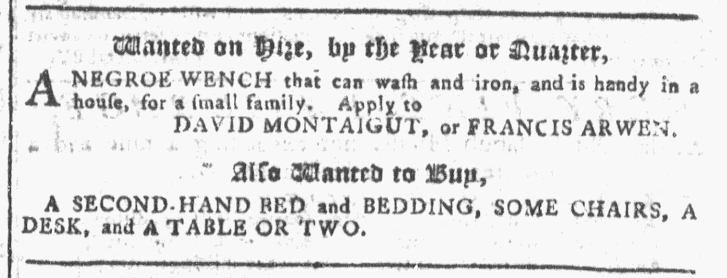
Sep 7 - Georgia Gazette Slavery 2
Georgia Gazette (September 7, 1768).

**********

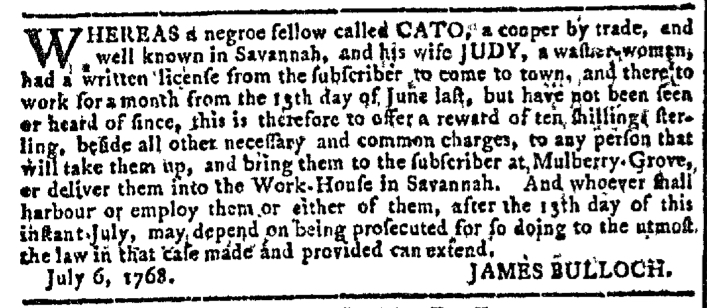
Sep 7 - Georgia Gazette Slavery 3
Georgia Gazette (September 7, 1768).

**********

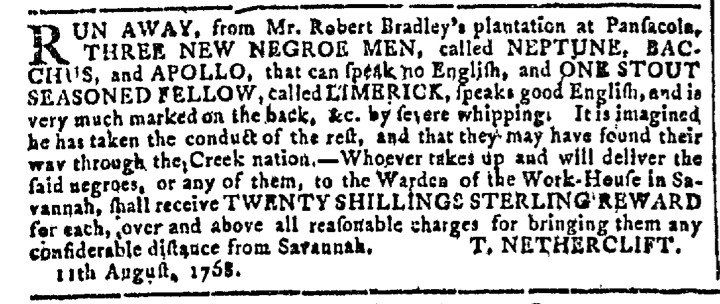
Sep 7 - Georgia Gazette Slavery 4
Georgia Gazette (September 7, 1768).

**********

Sep 7 - Georgia Gazette Slavery 5
Georgia Gazette (September 7, 1768).

**********

Sep 7 - Georgia Gazette Slavery 6
Georgia Gazette (September 7, 1768).

**********

Sep 7 - Georgia Gazette Slavery 7
Georgia Gazette (September 7, 1768).

**********

Sep 7 - Georgia Gazette Slavery 8
Georgia Gazette (September 7, 1768).

September 6

What was advertised in a colonial American newspaper 250 years ago today?

Sep 6 - 9:6:1768 South-Carolina Gazette and Country Journal Page 3
South-Carolina Gazette and Country Journal (September 6, 1768).

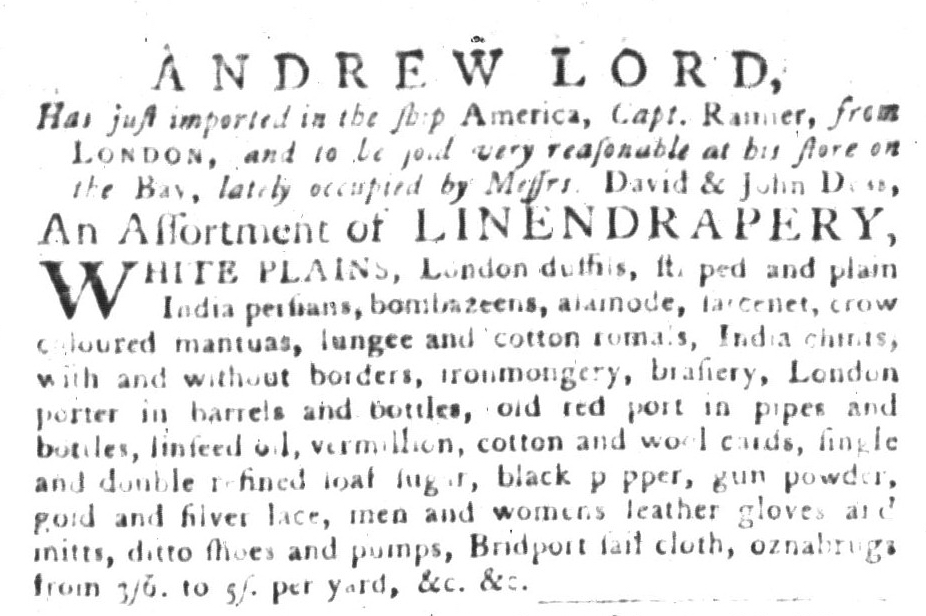
“ANDREW LORD, Has just imported …”

In September 1768 Andrew Lord experimented with a marketing strategy deployed by relatively few merchants and shopkeepers prior to the American Revolution. He placed multiple advertisements in a single issue of the South-Carolina Gazette and Country Journal, improving the likelihood that readers would notice at least one of them. For readers and prospective customers who happened to notice both, this further increased Lord’s visibility in the Charleston marketplace, making it difficult to overlook his significance in the local commercial landscape. Publishing multiple advertisements enhanced his name recognition.

Printers frequently crowded newspapers with advertisements for their own goods and services, exercising one of the privileges of operating the press, but merchants, shopkeepers, artisans, and others were slow to follow their lead. Financial considerations certainly played a role. Advertisers not affiliated with the newspaper did, after all, have to pay to have their notices inserted, but that alone does not sufficiently explain their failure to appreciate how to better take advantage of the power of the press in presenting their goods and services to prospective customers. After all, many advertisers made significant investments when they inserted lengthy notices that listed vast arrays of merchandise.

Sep 6 - 9:6:1768 South-Carolina Gazette and Country Journal Page 4
South-Carolina Gazette and Country Journal (September 6, 1768).

Lord could have done the same. He could have combined his two advertisements into a single advertisement. Doing so would have had the advantage of making his assortment of merchandise seem even more expansive by taking up more space on a single page. Yet he opted for two distinct advertisements instead. Since most printers charged by the length, Lord incurred the same costs whether he published one longer advertisement or two shorter ones. Given the choice, he determined that two shorter notices better suited his purposes. One appeared on the third page of the September 6 edition of the South-Carolina Gazette and Country Journal, the other on the fourth page. This bolstered his presence in the newspaper, further solidifying his reputation as a merchant of note in the bustling port of Charleston. The appeals Lord made in his advertisements did not distinguish him from his competitors, but the reiteration of his name in a single issue did.

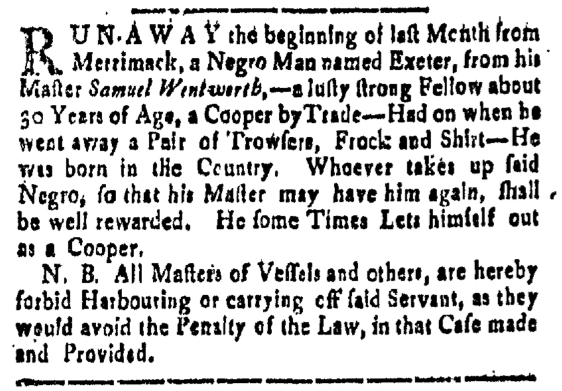
Slavery Advertisements Published September 6, 1768

The Slavery Adverts 250 Project chronicles the role of newspaper advertising in perpetuating slavery in the era of the American Revolution. The project seeks to reveal the ubiquity of slavery in eighteenth-century life from New England to Georgia by republishing advertisements for slaves – for sale, wanted to purchase, runaways, captured fugitives – in daily digests on this site as well as in real time via the @SlaveAdverts250 Twitter feed, utilizing twenty-first-century media to stand in for the print media of the eighteenth century.

The project aims to provide modern audiences with a sense of just how often colonists encountered these advertisements in their daily lives. Enslaved men, women, and children appeared in print somewhere in the colonies almost every single day. Those advertisements served as a constant backdrop for social, cultural, economic, and political life in colonial and revolutionary America. Colonists who did not own slaves were still confronted with slavery as well as invited to maintain the system by purchasing slaves or assisting in the capture of runaways. The frequency of these newspaper advertisements suggests just how embedded slavery was in colonial and revolutionary American culture in everyday interactions beyond the printed page.

These advertisements also testify to the experiences of enslaved men, women, and children, though readers must consider that those experiences have been remediated through descriptions offered by slaveholders rather than the slaves themselves. Often unnamed in the advertisements, enslaved men, women, and children were not invisible or unimportant in early America.

These advertisements appeared in colonial American newspapers 250 years ago today.

Sep 6 - South-Carolina Gazette and Country Journal Slavery 1
South-Carolina Gazette and Country Journal (September 6, 1768).

**********

Sep 6 - South-Carolina Gazette and Country Journal Slavery 2
South-Carolina Gazette and Country Journal (September 6, 1768).

**********

Sep 6 - South-Carolina Gazette and Country Journal Slavery 3
South-Carolina Gazette and Country Journal (September 6, 1768).

**********

Sep 6 - South-Carolina Gazette and Country Journal Slavery 4
South-Carolina Gazette and Country Journal (September 6, 1768).Enter a caption

**********

Sep 6 - South-Carolina Gazette and Country Journal Slavery 5
South-Carolina Gazette and Country Journal (September 6, 1768).

September 5

What was advertised in a colonial American newspaper 250 years ago today?

Sep 5 - 9:5:1768 Newport Gazette
Newport Mercury (September 5, 1768).

“He will clean a Clock and keep it in good Repair three Years for One Dollar.”

When Robert Proud turned to the Newport Gazette to advertise that he “cleans Clocks and Watches” late in the summer of 1768, he determined that he needed to do more than promote the low prices he charged for his services. After proclaiming that he performed his work “as cheap as any One in America,” he listed his prices and laid a service plan for prospective customers. That plan included an initial cleaning as well as keeping clocks and watches “in good Repair” for a specified period. For clocks set his rate at “three Years for One Dollar” and for watches at “Half a Dollar [for] for One Year.” Most clock- and watchmakers, like other artisans, did not publish their fees in their advertisements. Proud backed up his assertion about his low prices by putting them on display for prospective customers to assess as they made a decision about whether to visit his shop. Some of his competitors occasionally offered to undertake additional repairs if customers were not satisfied with their initial efforts, but they usually limited such guarantees to a single year. By comparison, Proud’s service plan – three years for clocks – was quite generous.

That was enough to distinguish Proud from others who cleaned and repaired clocks and watches, yet he further elaborated on the service prospective customers could expect to receive in his efforts to attract their patronage. He efficiently completed his work, completing most jobs in a single day. For items dropped off in the morning, Proud either had them ready that evening or “next Day at farthest.” Prospective customers could expect the work done in a timely manner rather than consigning their clocks and watches to linger in Proud’s workshop. Furthermore, they did not need to interact with him directly in order to receive quality service, an appeal that Proud made especially for “any Person in the Country [who] will favour him with their Work.” Anyone who chose to have their clocks and watches delivered to his workshop rather than visiting in person and interacting directly with Proud could still “depend on being as well used as if present.”

Proud concluded his advertisement with a very different sort of appeal: he noted that he had fallen on hard times. “The Business is now so small,” he lamented, “that without some Increase, he cannot a get a comfortable Subsistence for his Family.” The situation was so dire that even though he had served the Newport community for twenty years that “from Necessity, [he] must, in a short Time, leave this his native Place, to seek his Bread elsewhere.” Proud pivoted from laying out his innovative service plan to attempting to provoke sympathy from readers. It must have been difficult to acknowledge his financial insecurity in the public prints, but by pairing that disclosure with his detailed service plan Proud suggested that he did not make false promises. Instead, prospective customers could depend on him following through on efficiently repairing their clocks and watches and returning them in a timely manner. His livelihood and the “Subsistence for his Family” was at stake if he did not deliver on the services and service plan he described in his advertisement.

Slavery Advertisements Published September 5, 1768

The Slavery Adverts 250 Project chronicles the role of newspaper advertising in perpetuating slavery in the era of the American Revolution. The project seeks to reveal the ubiquity of slavery in eighteenth-century life from New England to Georgia by republishing advertisements for slaves – for sale, wanted to purchase, runaways, captured fugitives – in daily digests on this site as well as in real time via the @SlaveAdverts250 Twitter feed, utilizing twenty-first-century media to stand in for the print media of the eighteenth century.

The project aims to provide modern audiences with a sense of just how often colonists encountered these advertisements in their daily lives. Enslaved men, women, and children appeared in print somewhere in the colonies almost every single day. Those advertisements served as a constant backdrop for social, cultural, economic, and political life in colonial and revolutionary America. Colonists who did not own slaves were still confronted with slavery as well as invited to maintain the system by purchasing slaves or assisting in the capture of runaways. The frequency of these newspaper advertisements suggests just how embedded slavery was in colonial and revolutionary American culture in everyday interactions beyond the printed page.

These advertisements also testify to the experiences of enslaved men, women, and children, though readers must consider that those experiences have been remediated through descriptions offered by slaveholders rather than the slaves themselves. Often unnamed in the advertisements, enslaved men, women, and children were not invisible or unimportant in early America.

These advertisements appeared in colonial American newspapers 250 years ago today.

Sep 5 - Boston Post-Boy Slavery 1
Boston Post-Boy (September 5, 1768).

**********

Sep 5 - Boston Post-Boy Slavery 2
Boston Post-Boy (September 5, 1768).

**********

Sep 5 - Boston-Gazette Slavery 1
Boston-Gazette (September 5, 1768).

**********

Sep 5 - New-York Gazette Weekly Mercury Slavery 1
New-York Gazette and Weekly Mercury (September 5, 1768).

**********

Sep 5 - New-York Gazette Weekly Mercury Slavery 2
New-York Gazette and Weekly Mercury (September 5, 1768).

**********

Sep 5 - New-York Gazette Weekly Mercury Slavery 3
New-York Gazette and Weekly Mercury (September 5, 1768).

**********

Sep 5 - New-York Gazette Weekly Mercury Supplement Slavery 1
Supplement to the New-York Gazette and Weekly Mercury (September 5, 1768).

**********

Sep 5 - Newport Mercury Slavery 1
Newport Mercury (September 5, 1768).

**********

Sep 5 - Newport Mercury Slavery 2
Newport Mercury (September 5, 1768).

**********

Sep 5 - Newport Mercury Slavery 3
Newport Mercury (September 5, 1768).

**********

Sep 5 - South-Carolina Gazette Slavery 1
South-Carolina Gazette (September 5, 1768).

**********

Sep 5 - South-Carolina Gazette Slavery 2
South-Carolina Gazette (September 5, 1768).

September 4

What was advertised in a colonial American newspaper 250 years ago this week?

Sep 4 - 9:1:1768 Pennsylvania Gazette
Supplement to the Pennsylvania Gazette (September 1, 1768).

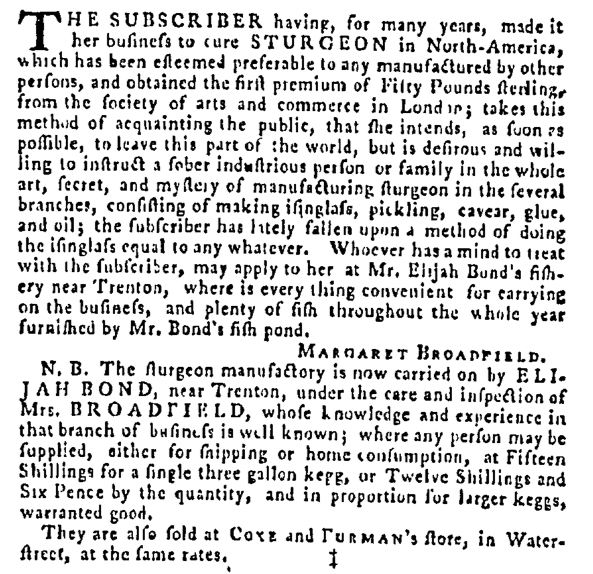
“Under the inspection of Mrs. BROADFIELD, whose knowledge and experience in that branch of business is well known.”

Margaret Broadfield was not exceptional for having placed an advertisement in the Pennsylvania Gazette in the late summer of 1768, though female entrepreneurs were certainly disproportionately underrepresented among advertisers in newspapers published throughout the colonies. Especially in bustling port cities, women pursued a variety of occupations but relatively few promoted their businesses in the public prints. Still, female shopkeepers, milliners, seamstresses, and others placed advertisements frequently enough that readers were accustomed to seeing women appearing alongside men among the paid notices in colonial newspapers, just as they were accustomed to encountering women working alongside men when they traversed the streets of cities and towns.

What did make Broadfield’s advertisement exceptional was the authority she asserted over a male colleague. When women and men appeared together in eighteenth-century advertisements, the copy often suggested that women played subordinate roles to their male counterparts. Such advertisements implied that women in business labored under appropriate supervision by husbands, sons, or other male relations. That was not the case with Broadfield. She made it clear that she exercised authority over a male associate, Elijah Bond, at least when it came to preparing sturgeon for the market.

For many years Broadfield had “made it her business to cure STURGEON in North-America.” The quality of her product had been widely acknowledged. Local consumers, according to Broadfield, considered her sturgeon and its associated products “preferable to any manufactured by other persons.” Those products included pickled sturgeon, caviar, glue, oil, and isinglass (a gelatin used in making jellies and glue and for clarifying ale). Yet it was not just customers in the colonies who had recognized the quality of the various commodities she marketed. Broadfield had “obtained the first premium of Fifty Pounds sterling, from the society of arts and commerce in London” for her abilities in “manufacturing sturgeon in the several branches.”

Broadfield was preparing to leave the colonies. She advertised in hopes of finding a successor to take over her business permanently, either a “sober industrious person” or a family whom she could teach “the whole art, secret, and mystery of manufacturing sturgeon in the several branches.” For the moment, however, one of her suppliers, Elijah Bond, carried on her business in addition to operating his own fishery near Trenton. He did so “under the care and inspection of Mrs. BROADFIELD, whose knowledge and experience in that branch of business is well known.” It was Broadfield’s expertise that gave value to the sturgeon products offered for sale, whether purchased from Bond near Trenton or from shopkeepers in Philadelphia. Few advertisements depicted women exercising such authority over male associates in eighteenth-century America, but they were not completely unknown. Broadfield deemed her own skill and reputation the most important elements for selling her products and, ultimately, transferring her business to another entrepreneur.

September 3

What was advertised in a colonial American newspaper 250 years ago today?

Sep 3 - 9:3:1768 Providence Gazette
Providence Gazette (September 3, 1768).

“We have a sensible Pleasure in finding, that our weekly Publications, have hitherto afforded general and entire Satisfaction.”

With the exception of two extraordinary issues (extras) published on August 24, 1765, and March 12, 1766, the Providence Gazette went on hiatus between May 11, 1765, and August 9, 1766. Some of this period coincided with the Stamp Act, but other factors played a role as well. The Providence Gazette halted publication nearly six months before the Stamp Act went into effect and did not resume until a couple of months after colonists learned that it had been repealed. When Sarah Goddard and Company revived the Providence Gazette they explained that “the Procrastination of a weekly Paper in this Town, was unavoidably owing to the inadequate Number of Subscribers to carry it on with Credit, and to defray the necessary Charges that will always attend such an Undertaking.” By early August 1766 they had enough subscribers to risk printing weekly issues once again, thus offering an important service to the public. As they explained in an address in the first issue upon commencing publication once again, “the Productions of the Press have ever been esteemed one of the principal Means of defending the glorious Cause of Liberty.”

A year later, Sarah Goddard and Company inserted a short notice to “inform their candid Readers, this this Week’s Paper compleats the Year since the PROVIDENCE GAZTTE, &c. was revived.” They encouraged subscribers, advertisers, and others to settle accounts, but also invited the further “Encouragement” of those who understood the importance of a having a newspaper published in Providence. A year later, the publishers – now Sarah Goddard and John Carter – composed a lengthier acknowledgment that ran for several weeks. Rather than merely calling on readers to pay their bills, Goddard and Carter had three purposes. First, they thanked their “Friends” who had “patronized and endeavoured to promote the Success of this Paper.” Then they pledged to continue serving the public in general and their readers in particular by further improving upon a newspaper that had “hitherto afforded general and entire Satisfaction.” They vowed that “no Pains or Expence shall be spared,” but they also requested “the Assistance of Gentlemen of Learning and Ingenuity.” The usefulness of the Providence Gazette to all readers depended on the publishers’ ability to acquire interesting and timely content to better inform the public. Goddard and Carter invited readers to become correspondents who submitted items for publication. Only after expressing their gratitude for past favors and their plans for further improvements did Goddard and Carter turn to settling accounts. In so doing, they underscored that their ability to serve the public depended on debtors paying their bills.

Many eighteenth-century printers inserted similar notices alongside other advertisements that appeared in their publications. They called for payment, but argued that readers, advertisers, and others also performed a service to the public when they settled accounts. Such transactions were not strictly a private matter. Instead, they had repercussions that reverberated throughout the community, determining whether or not a newspaper continued publication and pursuing its mission to keep the public informed and vigilant.

September 2

What was advertised in a colonial American newspaper 250 years ago today?

Sep 2 - 9:2:1768 New-Hampshire Gazette
New-Hampshire Gazette (September 2, 1768).

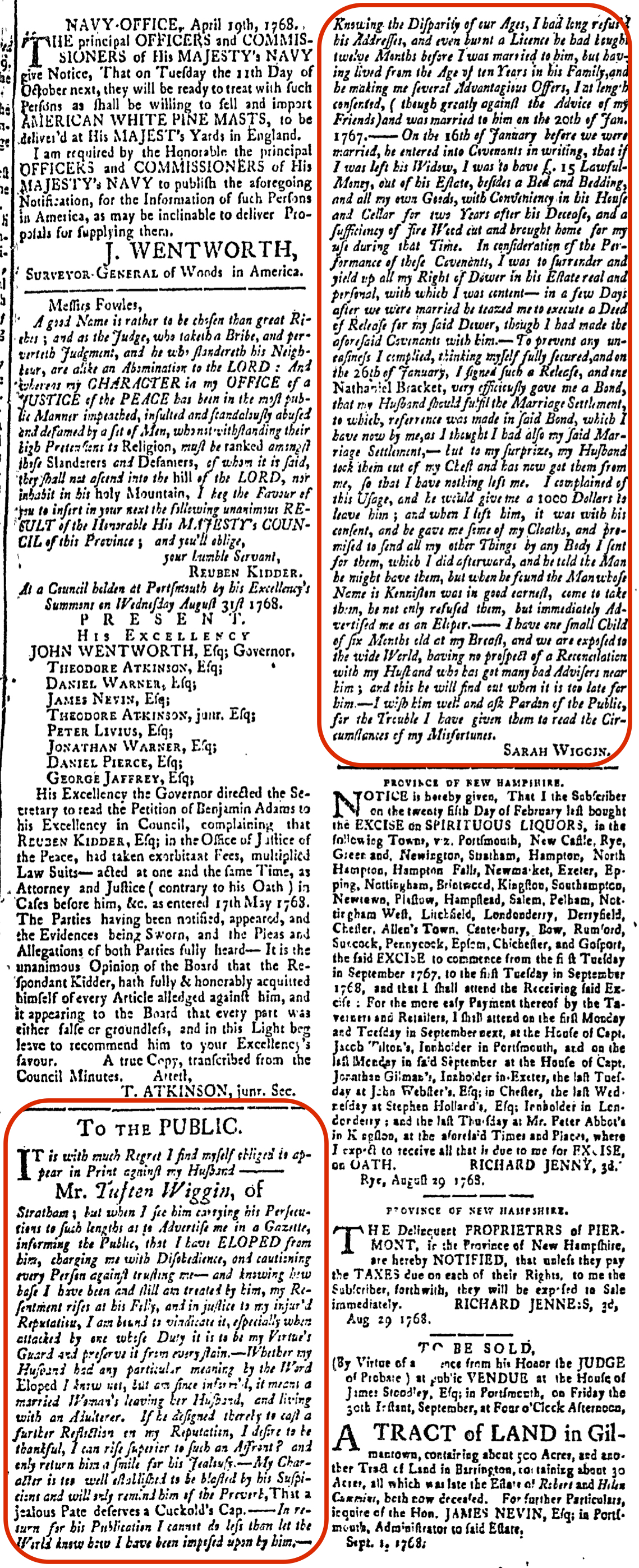
“IT is with much Regret I find myself obliged to appear in Print against my Husband.”

A week ago the Adverts 250 Project featured a preview of “Mrs. Sarah Wiggenss APPEAL to the Public representing her Husband’s Advertising her in this Paper.” That preview took the form of a notice inserted by the printers in the final issue of the New-Hampshire Gazette published in August 1768. Upon learning that her husband, Tuften, had placed an advertisement in the previous issue to advise the public that he would no longer pay any debts contracted by her because she had “ELoped from me … and refuses to live with me as an obedient Wife,” Sarah submitted her own advertisement to tell her side of the story. It “came too late” to the printing office to appear in the August 26 edition, but the printers promoted it as a feature that readers should anticipate “in our next.” The printers did not merely acknowledge that they would publish Sarah’s response. Instead, they disclosed that “it will appear how greatly she has been injured and imposed upon” by Tuften. By inciting interest in this domestic dispute laid before the public, the printers likely hoped to increase readership of the New-Hampshire Gazette and reap the benefits of placing their newspaper before the eyes of greater numbers of colonists.

Sarah detailed response to her husband’s short advertisement made for lively reading. First, she apologized for even having to place a notice in the public prints. “IT is with much Regret,” she lamented, “I find myself obliged to appear in Print against my Husband.” However, she was stunned that Tuften had even placed an advertisement and, in the process, implied that she had committed adultery. She had been betrayed by her husband, “one whose Duty it is to be my Virtue’s Guard and preserve it from every stain.” That was only one way in which Tuften had failed as a husband, but it was sufficient for Sarah to defend herself in view of the entire community. Given “how base I have been and still am treated by him,” Sarah proclaimed, “my Resentment rises at his Folly, and in justice to my injur’d Reputation, I am bound to vindicate it.” She then revealed that Tuften had courted her for some time. She initially refused his advances, but eventually consented to marry him in January 1767, “though greatly against the Advice of my Friends.” At that point Tuften apparently became more interested in the property Sarah brought into the marriage than in his bride herself. He stole her “Marriage Settlement” out of her chest, depriving her of the legal document that offered financial protection in the event that she became a widow. Having surrendered her “Right of Dower” to Tuften’s estate, Sarah now had “nothing left me.” This provoked a heated argument that culminated in her departure, but “with his consent.” According to Sarah, she took some clothing with her and Tuften “promised to send all my other Things by any Body I sent for them.” When she sent a man named Kenniston to collect her belongings, Tuften became enraged and refused to hand over anything. Instead, he placed the advertisement accusing Sarah of departing without his permission and refusing to heed his authority as head of the household. Most upsetting to Sarah, the advertisement implied she committed adultery. In the wake of Tuften demanding that others not to extend credit to his wife, she relied on sympathy to overcome those instructions. She bemoaned her current condition: “I have one small Child of six Months old at my Breast, and we are exposed to the wide World, having no prospect of a Reconciliation with my Husband.” She concluded with one more apology for making a private matter so public, asking “Pardon of the Public, for the Trouble I have given them to read the Circumstances of my Misfortunes.” That Sarah found herself in the position to make such an apology painted an even more unflattering portrait of perfidious husband.

Extending three-quarters of a column, Sarah Wiggin’s “APPEAL” rivaled news items printed elsewhere in the issue for length. If the printers charged to insert this response, they certainly increased their advertising revenue for the week. Even if they did not charge but instead treated her response as a letter intended to inform the public of interesting news, they still stood to generate additional revenue. Printing such a salacious story likely captivated readers, perhaps even drawing the attention of some who did not regularly peruse the pages of the New-Hampshire Gazette but took a prurient interest in observing this drama unfold. More readers, for whatever reason, meant wider circulation and the potential to sell even more advertising space.

Slavery Advertisements Published September 2, 1768

The Slavery Adverts 250 Project chronicles the role of newspaper advertising in perpetuating slavery in the era of the American Revolution. The project seeks to reveal the ubiquity of slavery in eighteenth-century life from New England to Georgia by republishing advertisements for slaves – for sale, wanted to purchase, runaways, captured fugitives – in daily digests on this site as well as in real time via the @SlaveAdverts250 Twitter feed, utilizing twenty-first-century media to stand in for the print media of the eighteenth century.

The project aims to provide modern audiences with a sense of just how often colonists encountered these advertisements in their daily lives. Enslaved men, women, and children appeared in print somewhere in the colonies almost every single day. Those advertisements served as a constant backdrop for social, cultural, economic, and political life in colonial and revolutionary America. Colonists who did not own slaves were still confronted with slavery as well as invited to maintain the system by purchasing slaves or assisting in the capture of runaways. The frequency of these newspaper advertisements suggests just how embedded slavery was in colonial and revolutionary American culture in everyday interactions beyond the printed page.

These advertisements also testify to the experiences of enslaved men, women, and children, though readers must consider that those experiences have been remediated through descriptions offered by slaveholders rather than the slaves themselves. Often unnamed in the advertisements, enslaved men, women, and children were not invisible or unimportant in early America.

These advertisements appeared in colonial American newspapers 250 years ago today.

Sep 2 - New-Hampshire Gazette Slavery 1
New-Hampshire Gazette (September 2, 1768).

**********

Sep 2 - New-London Gazette Slavery 1
New-London Gazette (September 2, 1768).

**********

Sep 2 - South-Carolina and American General Gazette Slavery 1
South-Carolina and American General Gazette (September 2, 1768).

**********

Sep 2 - South-Carolina and American General Gazette Slavery 2
South-Carolina and American General Gazette (September 2, 1768).

**********

Sep 2 - South-Carolina and American General Gazette Slavery 3
South-Carolina and American General Gazette (September 2, 1768).

**********

Sep 2 - South-Carolina and American General Gazette Slavery 4
South-Carolina and American General Gazette (September 2, 1768).

**********

Sep 2 - South-Carolina and American General Gazette Slavery 5
South-Carolina and American General Gazette (September 2, 1768).

**********

Sep 2 - South-Carolina and American General Gazette Slavery 6
South-Carolina and American General Gazette (September 2, 1768).

**********

Sep 2 - South-Carolina and American General Gazette Slavery 7
South-Carolina and American General Gazette (September 2, 1768).

**********

Sep 2 - South-Carolina and American General Gazette Slavery 8
South-Carolina and American General Gazette (September 2, 1768).

**********

Sep 2 - South-Carolina and American General Gazette Slavery 9
South-Carolina and American General Gazette (September 2, 1768).