December 7

“EQUAL, if not SUPERIOR, to any imported from ENGLAND. Witness our Hands.”

Dec 7 - 12:7:1769 Pennsylvania Gazette
Pennsylvania Gazette (December 7, 1769).

When colonists adopted nonimportation agreements to protest duties imposed on imported paper, glass, lead, paint, and tea by the Townshend Acts, many also advocated encouraging “domestic manufactures,” goods produced in the colonies. In turn, readers encountered newspaper advertisements that marketed goods made locally or elsewhere in North America rather than imported from England with greater frequency in the late 1760s. Advertisers often asserted that their domestic manufactures were equal or even superior in quality to imported goods. Some even proclaimed that reputable judges had affirmed their claims.

An advertisement that ran in the December 7, 1769, edition of the Pennsylvania Gazette included an actual testimonial for “STEEL” (or iron) produced by Humphreys and Zane. Twenty-two residents of Philadelphia signed the testimonial, collectively endorsing Humphreys and Zane’s steel for readers. One, John Fox, even included his occupation, cutler, to give greater weight to his endorsement. As an artisan who worked with metal, he was particularly well positioned to assess the quality of steel produced locally.

The testimonial first reported that the signers had “made use” of various kinds of “COUNTRY STEEL,” having good experience with some but “a great Deal otherwise” with others. After acknowledging that some steel produced in the colonies did not meet their standards, the signers declared that “upon a late Trial of the STEEL, made by HUMPHREYS and ZANE, we have used it for different Kinds of Work; some of us have tried it in the very best of edged Tools, and do find that it is EQUAL, if not SUPERIOR, to any imported from ENGLAND.” Readers who needed to acquire steel or items made of iron did not have to sacrifice quality when choosing Humphrey and Zane’s steel or items made from it. This eliminated one of the potential pitfalls associated with encouraging domestic manufactures.

While other advertisers made general references to their domestic manufactures receiving accolades from qualified judges, Humphreys and Zane were among the first American advertisers to market their product with a testimonial. They did not ask prospective customers simply to trust their assurances concerning the quality of their product. Instead, they marshaled nearly two dozen artisans and others who staked their own reputations in promoting “STEEL, made by HUMPHREYS and ZANE.”
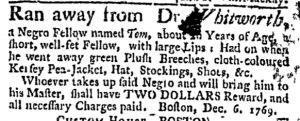
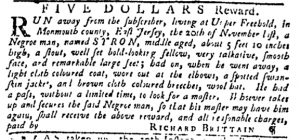
Slavery Advertisements Published December 7, 1769

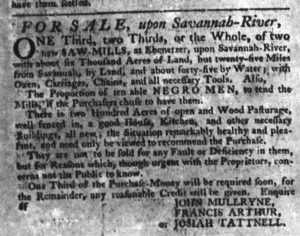
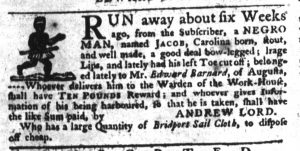
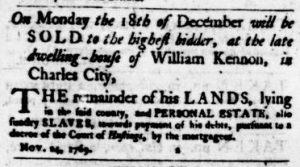
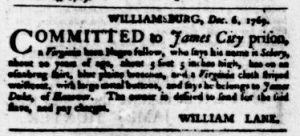
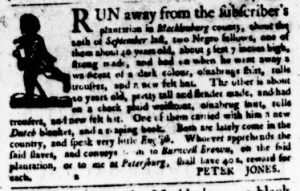
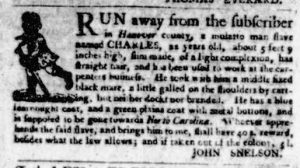
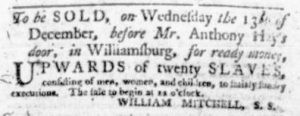
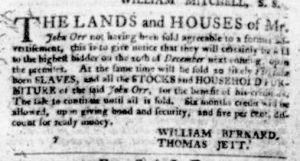
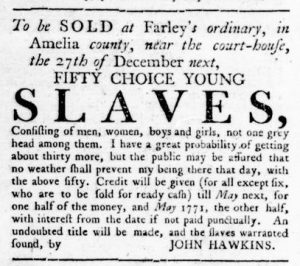
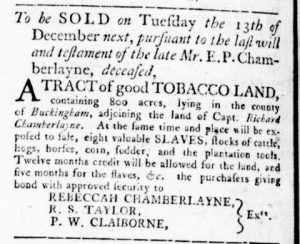
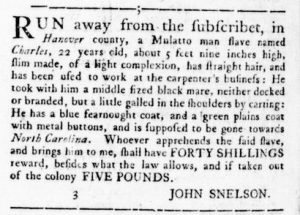
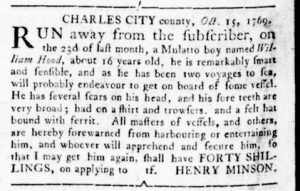
The Slavery Adverts 250 Project chronicles the role of newspaper advertising in perpetuating slavery in the era of the American Revolution. The project seeks to reveal the ubiquity of slavery in eighteenth-century life from New England to Georgia by republishing advertisements for slaves – for sale, wanted to purchase, runaways, captured fugitives – in daily digests on this site as well as in real time via the @SlaveAdverts250 Twitter feed, utilizing twenty-first-century media to stand in for the print media of the eighteenth century.

The project aims to provide modern audiences with a sense of just how often colonists encountered these advertisements in their daily lives. Enslaved men, women, and children appeared in print somewhere in the colonies almost every single day. Those advertisements served as a constant backdrop for social, cultural, economic, and political life in colonial and revolutionary America. Colonists who did not own slaves were still confronted with slavery as well as invited to maintain the system by purchasing slaves or assisting in the capture of runaways. The frequency of these newspaper advertisements suggests just how embedded slavery was in colonial and revolutionary American culture in everyday interactions beyond the printed page.

These advertisements also testify to the experiences of enslaved men, women, and children, though readers must consider that those experiences have been remediated through descriptions offered by slaveholders rather than the slaves themselves. Often unnamed in the advertisements, enslaved men, women, and children were not invisible or unimportant in early America.

These advertisements appeared in colonial American newspapers 250 years ago today.

Dec 7 - Massachusetts Gazette and Boston Weekly News-Letter Slavery 1
Massachusetts Gazette and Boston Weekly News-Letter (December 7, 1769).

**********

Dec 7 - Pennsylvania Gazette Slavery 1
Pennsylvania Gazette (December 7, 1769).

**********

Dec 7 - Pennsylvania Gazette Slavery 2
Pennsylvania Gazette (December 7, 1769).

**********

Dec 7 - South-Carolina Gazette Slavery 1
South-Carolina Gazette (December 7, 1769).

**********

Dec 7 - South-Carolina Gazette Slavery 2
South-Carolina Gazette (December 7, 1769).

**********

Dec 7 - South-Carolina Gazette Slavery 3
South-Carolina Gazette (December 7, 1769).

**********

Dec 7 - South-Carolina Gazette Slavery 4
South-Carolina Gazette (December 7, 1769).

**********

Dec 7 - South-Carolina Gazette Slavery 5
South-Carolina Gazette (December 7, 1769).

**********

Dec 7 - South-Carolina Gazette Slavery 6
South-Carolina Gazette (December 7, 1769).

**********

Dec 7 - South-Carolina Gazette Slavery 7
South-Carolina Gazette (December 7, 1769).

**********

Dec 7 - South-Carolina Gazette Slavery 8
South-Carolina Gazette (December 7, 1769).

**********

Dec 7 - South-Carolina Gazette Slavery 9
South-Carolina Gazette (December 7, 1769).

**********

Dec 7 - Virginia Gazette Purdie and Dixon Slavery 1
Virginia Gazette [Purdie and Dixon] (December 7, 1769).

**********

Dec 7 - Virginia Gazette Purdie and Dixon Slavery 2
Virginia Gazette [Purdie and Dixon] (December 7, 1769).

**********

Dec 7 - Virginia Gazette Purdie and Dixon Slavery 3
Virginia Gazette [Purdie and Dixon] (December 7, 1769).

**********

Dec 7 - Virginia Gazette Purdie and Dixon Slavery 4
Virginia Gazette [Purdie and Dixon] (December 7, 1769).

**********

Dec 7 - Virginia Gazette Purdie and Dixon Slavery 5
Virginia Gazette [Purdie and Dixon] (December 7, 1769).

**********

Dec 7 - Virginia Gazette Purdie and Dixon Slavery 6
Virginia Gazette [Purdie and Dixon] (December 7, 1769).

**********

Dec 7 - Virginia Gazette Purdie and Dixon Slavery 7
Virginia Gazette [Purdie and Dixon] (December 7, 1769).

**********

Dec 7 - Virginia Gazette Purdie and Dixon Slavery 8
Virginia Gazette [Purdie and Dixon] (December 7, 1769).

**********

Dec 7 - Virginia Gazette Purdie and Dixon Slavery 9
Virginia Gazette [Purdie and Dixon] (December 7, 1769).

**********

Dec 7 - Virginia Gazette Purdie and Dixon Slavery 10
Virginia Gazette [Purdie and Dixon] (December 7, 1769).

**********

Dec 7 - Virginia Gazette Purdie and Dixon Slavery 11
Virginia Gazette [Purdie and Dixon] (December 7, 1769).

**********

Dec 7 - Virginia Gazette Rind Slavery 1
Virginia Gazette [Rind] (December 7, 1769).

**********

Dec 7 - Virginia Gazette Rind Slavery 2
Virginia Gazette [Rind] (December 7, 1769).

**********

Dec 7 - Virginia Gazette Rind Slavery 3
Virginia Gazette [Rind] (December 7, 1769).

**********

Dec 7 - Virginia Gazette Rind Slavery 4
Virginia Gazette [Rind] (December 7, 1769).

**********

Dec 7 - Virginia Gazette Rind Slavery 5
Virginia Gazette [Rind] (December 7, 1769).

**********

Dec 7 - Virginia Gazette Rind Slavery 6
Virginia Gazette [Rind] (December 7, 1769).

**********

Dec 7 - Virginia Gazette Rind Slavery 7
Virginia Gazette [Rind] (December 7, 1769).

**********

Dec 7 - Virginia Gazette Rind Slavery 8
Virginia Gazette [Rind] (December 7, 1769).

**********

Dec 7 - Virginia Gazette Rind Slavery 9
Virginia Gazette [Rind] (December 7, 1769).

**********

Dec 7 - Virginia Gazette Rind Slavery 10
Virginia Gazette [Rind] (December 7, 1769).

**********

Dec 7 - Virginia Gazette Rind Slavery 11
Virginia Gazette [Rind] (December 7, 1769).

**********

Dec 7 - Virginia Gazette Rind Slavery 12
Virginia Gazette [Rind] (December 7, 1769).

**********

Dec 7 - Virginia Gazette Rind Slavery 13
Virginia Gazette [Rind] (December 7, 1769).

December 6

What was advertised in a colonial American newspaper 250 years ago today?

Dec 6 - 12:6:1769 Georgia Gazette
Georgia Gazette (December 6, 1769).

“HAS JUST IMPORTED, in the ship Georgia Packet, Capt. George Anderson, from London.”

Colonial merchants and shopkeepers often informed prospective customers of the origins of their goods, including how they arrived in the colonies. In an advertisement in the December 6, 1769, edition of the Georgia Gazette, for instance, Samuel Douglass noted that he “HAS JUST IMPORTED” new merchandise “in the ship Georgia Packet, Capt. George Anderson, from London.” Douglass was not alone in noting that he replenished his inventory with goods transported via the Georgia Packet. Lewis Johnson hawked “A FRESH SUPPLY OF MEDICINES” that was “IMPORTED in the Georgia Packet, Capt. Anderson, from London.” Similarly, Reid, Storr, and Reid listed dozens of items “JUST IMPORTED, in the Ship Georgia Packet, Capt. George Anderson, from London.” Since advertisements ran for weeks or sometimes even months, this information helped consumers determine how recently merchants and shopkeepers had acquired their goods. They consulted the shipping news from the customs house to make those determinations.

The shipping news in the December 6 issue identified several vessels that “ENTERED INWARDS at the CUSTOM-HOUSE” in the past week, including “Ship Georgia Packet, George Anderson, London.” Readers saw for themselves that Douglass, Johnson, and Reid, Storr, and Reid did indeed carry a “FRESH SUPPLY” of goods “JUST IMPORTED.” All three advertisements ran on the same page as the shipping news, facilitating consultation. Douglass’s advertisement even appeared directly below news from the customs house. The shipping news also supplement advertisements placed by other merchants and shopkeepers. Rowland Chambers, for example, sold flour, produce, and other commodities “On board the sloop Charlotte,” which the shipping news indicated “ENTERED INWARDS” from New York just two days earlier.

A proliferation of advertisements for consumer goods appeared in the December 6 edition of the Georgia Gazette. Details about the origins of those goods incorporated into the advertisements in combination with the shipping news confirm why the newspaper suddenly had more such advertisements than in recent weeks. While providing information about the vessel that transported the goods might seem quaint to twenty-first-century readers, it served an important purpose for consumers in eighteenth-century America. After consulting the shipping news, they could make their own assessments about some of the claims made in advertisements and then choose which shops to visit accordingly.

Slavery Advertisements Published December 6, 1769

The Slavery Adverts 250 Project chronicles the role of newspaper advertising in perpetuating slavery in the era of the American Revolution. The project seeks to reveal the ubiquity of slavery in eighteenth-century life from New England to Georgia by republishing advertisements for slaves – for sale, wanted to purchase, runaways, captured fugitives – in daily digests on this site as well as in real time via the @SlaveAdverts250 Twitter feed, utilizing twenty-first-century media to stand in for the print media of the eighteenth century.

The project aims to provide modern audiences with a sense of just how often colonists encountered these advertisements in their daily lives. Enslaved men, women, and children appeared in print somewhere in the colonies almost every single day. Those advertisements served as a constant backdrop for social, cultural, economic, and political life in colonial and revolutionary America. Colonists who did not own slaves were still confronted with slavery as well as invited to maintain the system by purchasing slaves or assisting in the capture of runaways. The frequency of these newspaper advertisements suggests just how embedded slavery was in colonial and revolutionary American culture in everyday interactions beyond the printed page.

These advertisements also testify to the experiences of enslaved men, women, and children, though readers must consider that those experiences have been remediated through descriptions offered by slaveholders rather than the slaves themselves. Often unnamed in the advertisements, enslaved men, women, and children were not invisible or unimportant in early America.

These advertisements appeared in colonial American newspapers 250 years ago today.

Dec 6 - Georgia Gazette Slavery 1
Georgia Gazette (December 6, 1769).

**********

Dec 6 - Georgia Gazette Slavery 2
Georgia Gazette (December 6, 1769).

**********

Dec 6 - Georgia Gazette Slavery 3
Georgia Gazette (December 6, 1769).

December 5

What was advertised in a colonial American newspaper 250 years ago today?

Dec 5 - 12:5:1769 Essex Gazette
Essex Gazette (December 5, 1769).

PHILO’s Essex Almanack, For the Year 1770.”

The December 5, 1769, edition of the Essex Gazette included two advertisements for almanacs. A brief notice announcing that “Low’s Almanack, for 1770, is to be sold by the Printer hereof” ran once again on the final page. A more extensive notice about “PHILO’s Essex Almanack, For the Year 1770” appeared on the third page. It stated that the almanac would be published on the following Friday and sold by Samuel Hall, the printer of the Essex Gazette. The advertisement also offered an overview of the almanac’s contents: “besides the usual astronomical Calculations, about Thirty Pieces, religious, political, philosophical, historical, proverbial satyrical, humorous, witty, sarcastical, and comical,— interspersed with a Variety of instructive Sentences, excellent Cautions, and profitable Sayings.” In previewing the contents, Hall deployed a common marketing strategy intended to incite interest in almanacs. Printers, authors, booksellers, and other retailers did so in hopes of distinguishing their almanacs from the many others available in the colonial marketplace.

In Massachusetts alone, colonists could chose from among at least eight different almanacs for 1770 published by local printers, according to Milton Drake’s bibliography of early American almanacs.[1] (Reprints and variant titles brought the total to ten.) With the exception of Philo’s Essex Almanack printed in Salem by Samuel Hall, all were printed in Boston. Hall also printed the Essex Gazette, the colony’s only newspaper not published in Boston. This may help to explain the different treatment Philo’s Essex Almanack and Low’s Astronomical Diary, or Almanack for 1770 received in the advertisements in the Essex Gazette. When it came to selling the latter, Hall served as a retailer and local agent for Kneeland and Adams. He likely had less interest in giving over space in his newspaper to promoting that almanac, especially when he had his own publication soon to come off the press. He exercised his prerogative as printer to give the advertisement for his own almanac a privileged place in the Essex Gazette, placing it immediately after the shipping news from the customs house in the December 5 edition. It was thus the first advertisement of any sort that readers encountered if they began on the first page and skimmed through the contents in order.

Like most of the other advertisements that ran in the Essex Gazette, this one was relatively streamlined compared to some that appeared in other newspapers. The title page of Philo’s Essex Almanack indicated that it had been “Calculated for the Meridian of SALEM, in NEW-ENGLAND, Lat. 42 D. 35 M. North,” making it the only almanac specific to that location … yet Hall did not acknowledge this in his advertisement as a means of capturing the local market.[2] Hall intended to sell the almanac “wholesale and Retail,” according to the advertisement, but he listed the prices on the title page rather than in the newspaper. While he certainly put more effort into marketing his own almanac over others, Hall still neglected to adopt strategies that other printers, authors, and booksellers sometimes included in their advertisements. Given that many other almanacs were well established in a crowded marketplace, this may help to explain why Philo’s Essex Almanack did not appear in a new edition the following year.

**********

[1] Milton Drake, Almanacs of the United States (New York: Scarecrow Press, 1962), 306-307.

[2] Philo’s Essex Almanack, for the Year of Our Lord Christ, 1770 (Salem, Massachusetts: Samuel Hall, 1769).

December 4

What was advertised in a colonial American newspaper 250 years ago today?

Dec 4 - 12:4:1769 New-York Gazette or Weekly Post-Boy
New-York Gazette or Weekly Post-Boy (December 4, 1769).

“Stage-Waggons.”

Eighteenth-century newspapers featured few visual images. Many had some sort of device in the masthead, but usually delivered the news unadorned. Advertisements sometimes included images, but those were the exception rather than the rule. Those that did have woodcuts relied on stock images that belonged to the printer, primarily ships for notices about vessels preparing to depart, horses for advertisements about breeding, houses for real estate notices, and men or women fleeing for advertisements about apprentices and indentured servants who ran away or enslaved people who escaped. Such woodcuts were used interchangeably for advertisements from the appropriate genre. Other images that accompanied advertisements usually appeared because advertisers commissioned a woodcut specific to their business, either replicating their shop signs or depicting their most notable products.

When Joseph Crane and Josiah F. Davenport turned to the pages of the New-York Gazette or Weekly Post-Boy to advertise the stagecoach service they operated between New York and Philadelphia, they included a woodcut depicting a team of horses pulling a covered wagon. This was not one of the standard stock images, suggesting that Crane and Davenport had commissioned it for exclusive use in their advertisements. However, in their advertisements for “Stage-Waggons” that ran between New York and Philadelphia, John Mercereau and John Barnhill published what appeared to be the same image. This was not merely a case of using the woodcut in an advertisement that appeared on one page and then using it again in another advertisement on a page printed on the other side of the sheet. In the December 4, 1769, edition of the New-York Gazette or Weekly Post-Boy, Crane and Davenport’s advertisement featuring the woodcut ran on the same page as Mercereau and Barnhill’s advertisement featuring the woodcut. They had to have been printed simultaneously, indicating that James Parker, the printer, possessed more than one woodcut depicting horses pulling wagons, just as he had multiple woodcuts of ships and houses. It seems unlikely that Crane and Davenport or Mercereau and Barnhill would have commissioned a woodcut that looked so nearly identical to one used by a competitor as to be indistinguishable. Apparently Parker’s collection of stock images was at least a little bit larger than the frequent reiteration of the most common woodcuts suggested. That did not, however, significantly alter the frequency of visual images accompanying either news or advertising in his newspaper. His publication, like other colonial newspapers, consisted almost exclusively of text and a limited number of stock images. That made any visual image, but especially those seen infrequently, all the more notable.

Dec 4 - 12:4:1769 Woodcuts New-York Gazette or Weekly Post-Boy
New-York Gazette or Weekly Post-Boy (December 4, 1769).

Slavery Advertisements Published December 4, 1769

The Slavery Adverts 250 Project chronicles the role of newspaper advertising in perpetuating slavery in the era of the American Revolution. The project seeks to reveal the ubiquity of slavery in eighteenth-century life from New England to Georgia by republishing advertisements for slaves – for sale, wanted to purchase, runaways, captured fugitives – in daily digests on this site as well as in real time via the @SlaveAdverts250 Twitter feed, utilizing twenty-first-century media to stand in for the print media of the eighteenth century.

The project aims to provide modern audiences with a sense of just how often colonists encountered these advertisements in their daily lives. Enslaved men, women, and children appeared in print somewhere in the colonies almost every single day. Those advertisements served as a constant backdrop for social, cultural, economic, and political life in colonial and revolutionary America. Colonists who did not own slaves were still confronted with slavery as well as invited to maintain the system by purchasing slaves or assisting in the capture of runaways. The frequency of these newspaper advertisements suggests just how embedded slavery was in colonial and revolutionary American culture in everyday interactions beyond the printed page.

These advertisements also testify to the experiences of enslaved men, women, and children, though readers must consider that those experiences have been remediated through descriptions offered by slaveholders rather than the slaves themselves. Often unnamed in the advertisements, enslaved men, women, and children were not invisible or unimportant in early America.

These advertisements appeared in colonial American newspapers 250 years ago today.

Dec 4 - Boston Evening-Post Slavery 1
Boston Evening-Post (December 4, 1769).

**********

Dec 4 - Boston-Gazette Slavery 1
Boston-Gazette (December 4, 1769).

**********

Dec 4 - Massachusetts Gazette and Boston Post-Boy Slavery 1
Massachusetts Gazette and Boston Post-Boy (December 4, 1769).

**********

Dec 4 - Massachusetts Gazette and Boston Post-Boy Slavery 2
Massachusetts Gazette and Boston Post-Boy (December 4, 1769).

**********

Dec 4 - New-York Gazette and Weekly Mercury Slavery 1
New-York Gazette and Weekly Mercury (December 4, 1769).

**********

Dec 4 - New-York Gazette and Weekly Mercury Slavery 2
New-York Gazette and Weekly Mercury (December 4, 1769).

**********

Dec 4 - New-York Gazette and Weekly Mercury Slavery 3
New-York Gazette and Weekly Mercury (December 4, 1769).

**********

Dec 4 - New-York Gazette and Weekly Mercury Slavery 4
New-York Gazette and Weekly Mercury (December 4, 1769).

**********

Dec 4 - Newport Mercury Slavery 1
Newport Mercury (December 4, 1769).

**********

Dec 4 - Pennsylvania Chronicle Slavery 1
Pennsylvania Chronicle (December 4, 1769).

**********

Dec 4 - Pennsylvania Chronicle Slavery 2
Pennsylvania Chronicle (December 4, 1769).

**********

Dec 4 - South-Carolina and American General Gazette Slavery 1
South-Carolina and American General Gazette (December 4, 1769).

**********

Dec 4 - South-Carolina and American General Gazette Slavery 2
South-Carolina and American General Gazette (December 4, 1769).

**********

Dec 4 - South-Carolina and American General Gazette Slavery 3
South-Carolina and American General Gazette (December 4, 1769).

**********

Dec 4 - South-Carolina and American General Gazette Slavery 4
South-Carolina and American General Gazette (December 4, 1769).

**********

Dec 4 - South-Carolina and American General Gazette Slavery 5
South-Carolina and American General Gazette (December 4, 1769).

**********

Dec 4 - South-Carolina and American General Gazette Slavery 6
South-Carolina and American General Gazette (December 4, 1769).

**********

Dec 4 - South-Carolina and American General Gazette Slavery 7
South-Carolina and American General Gazette (December 4, 1769).


December 3

What was advertised in a colonial American newspaper 250 years ago this week?

Dec 3 - 11:30:1769 Massachusetts Gazette and Boston Weekly News-Letter
Massachusetts Gazette and Boston Weekly News-Letter (November 30, 1769).

All the above is the Produce & Manufacture of North-America.”

John Gore sold paint and supplies at his shop at “the Sign of the PAINTERS ARMS, in Queen-Street” in Boston in the late 1760s and early 1770s, a curious time to peddle those products. In addition to imported paper, tea, glass, and lead, the Townshend Acts imposed duties on imported paint. In response to such taxes, colonists in Boston and other cities and towns organized nonimportation agreements that covered a vast array of goods. They intended to use economic pressure to convince Parliament to repeal the Townshend Acts.

Given how politics affected commerce, Gore quite carefully enumerated the items he offered for sale at his shop. He led his advertisement with linseed oil, turpentine, varnish, lacquer, and “very good red, black and yellow Paints.” He then explicitly stated that “All the above is the Produce & Manufacture of North-America.” In other words, he had not violated the nonimportation agreement; prospective customers could safely purchase those items from him without sacrificing their own political principles. Furthermore, he demonstrated his commitment to the cause by offering “domestic manufactures” as an alternative to imported goods. In addition to the Townshend duties, colonists in Boston and elsewhere expressed concern about a trade imbalance with Britain. Many advocated producing goods in the colonies as a means of reducing dependence on imports. Buying and selling goods produced in North America thus served several purposes, including boosting local economies and providing employment for the colonists who made those goods. Advertisers often listed such outcomes when they simultaneously encouraged consumers to purchase domestic manufactures to achieve political purposes. Although Gore did not do so in this advertisement, he likely expected that many readers would make such arguments on his behalf, having encountered them so often in public discourse.

Selling goods produced in the colonies, however, did not prevent Gore from peddling imported goods as well. After first promoting merchandise from North America, Gore then noted that he also carried “An Assortment of Colours” but carefully explained that they had been “imported before the Agreement of the Merchants for Non-importation took Place.” Gore still had inventory imported from England to sell. Rather than take a loss, he stated the terms under which he had acquired those goods. Their presence alongside “the Produce & Manufacture of North-America” quietly testified to the fact that even though colonists attempted to devise appropriate substitutes for many imported goods they were not positioned to sustain themselves. Political rhetoric did not necessarily reflect the realities of commerce, production, and consumption in eighteenth-century America. Gore structured his advertisement to assert as much political virtue as possible in an imperfect situation.

December 2

What was advertised in a colonial American newspaper 250 years ago today?

Dec 2 - 12:2:1769 Providence Gazette
Providence Gazette (December 2, 1769).

“The Shop of the Subscribers was broke open, and sundry Things stolen.”

Several advertisements relayed stories of theft in the December 2, 1769, edition of the Providence GazetteEach had previously appeared, but the thieves had not been captured nor had the stolen goods been recovered.  In a notice dated October 17, Stephen Hopkins reported the theft of a cloak and wig.  Hall and Metcalf placed their own notice, dated November 4, to report that their shop “was broke open, and sundry Things stolen from thence.”  Jabez Bowen, Sr., even deployed a headline for his advertisement: “A THEFT.”  Dated November 11, Bowen’s notice listed several items of clothing stolen when his house was “broke open.”  By December 2, the stories in these advertisements became familiar to readers of the Providence Gazette.

The thefts in these advertisements may have helped to shape the contents of other parts of the newspaper. The December 2 edition began with an item addressed to the printer of the Providence Gazette.  “At a Time when Houses, Shops and Warehouses, are so frequently broke open,” an unnamed correspondent proclaimed, “and so many Thefts and Robberies are committed, both in Town and Country, by wicked vagrant Persons, unlawfully strolling about from Place to Place, perhaps it may tend to the public Good … in your next Paper to insert the following LAW concerning VAGRANTS, that it may be more generally known.”  A statute then filled the remainder of the column, excepting two lines announcing that the printer sold blanks.

Not only did advertisements seem to influence coverage of the news, the inclusion of this law helped establish a theme that ran through the entire issue.  Readers who perused it from start to finish first encountered the statute on the first page, Bowen’s notice and Hopkins’s notice on the third page, and Hall and Metcalf’s notice on the final page.  Even if they passed over the statute quickly, encountering the advertisements about thefts may have prompted some readers to return to the first page to read the statute more carefully.  The featured advertisements often demonstrate that news items and advertisements informed each other when it came to the imperial crisis and nonimportation agreements; however, those were not the only instances of advertisements relaying news or working in tandem with news.  Other sorts of current events inspired coverage that moved back and forth between news and advertising in colonial newspapers.

December 1

What was advertised in a colonial American newspaper 250 years ago today?

Dec 1 - 12:1:1769 New-Hampshire Gazette
New-Hampshire Gazette (December 1, 1769).

“A Stage from Portsmouth to Boston.”

When Joseph S. Hart established “a Stage from Portsmouth to Boston,” he inserted an advertisement in the New-Hampshire Gazette to provide the particulars to prospective clients. He offered to carry passengers, but also acknowledged that he accepted freight as well. Hart included a schedule, informing readers that he departed Portsmouth for Boston on Fridays and then departed Boston for the return trip on Tuesdays. Each journey began at “about Eight o’Clock in the Morning” in order to allow for a full day of travel.

Although Hart’s stage began or ended each trip at either his house in Portsmouth or “Thomas Hubbart’s in King Street, Boston, at the Sign of Admiral Vernon,” he allowed for other destinations for the convenience of his clients. He pledged to deliver passengers wherever they wished to go. Similarly, those shipping “Bundles” could send them wherever they wished, rather than having to arrange for recipients to retrieve them from Hubbart at the Sign of Admiral Vernon. He did not, however, indicate that he picked up passengers or packages in Boston or Portsmouth, though that may have been negotiable upon contacting Hart to engage his services.

In addition to offering such convenience to passengers and other clients, Hart imbued his entire enterprise with an atmosphere of good service. He carried passengers and goods “with Dispatch” and promised that “All Persons who favour me with their Custom may depend upon being well used.” In making such assertions, Hart repeated sentiments often deployed in newspaper advertisements for consumer goods and services. Although he used formulaic words and phrases, he also communicated to prospective clients that he understood their expectations and that they should anticipate the same attention and quality service from him that they received from other entrepreneurs who had been established for quite some time. Indeed, for this new endeavor Hart assured prospective clients that he would deliver a pleasant experience as part of delivering them to their destinations.