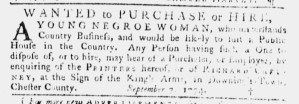
September 19

What was advertised in a colonial American newspaper 250 years ago today?
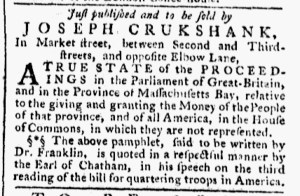
Dunlap’s Pennsylvania Packet (September 19, 1774).

“The above pamphlet … is quoted in a respectful manner by the Earl of Chatham.”

Two weeks after the First Continental Congress commenced its meetings in Philadelphia, Joseph Crukshank took to the pages of Dunlap’s Pennsylvania Gazette to advertise that he had “Just published … A TRUE STATE of the PROCEEDINGS in the Parliament of Great-Britain, and in the Province of Massachusetts Bay, relative to the giving and granting the Money of the People of that province, and of all America, in the House of Commons, in which they are not represented.”  As was often the case, the extensive title simultaneously provided an overview of the pamphlet’s contents and served as advertising copy.

Yet that was not the only appeal made in this advertisement.  Crukshank, the printer of this American edition of a work originally published in London, sought to entice buyers with additional information.  “The above pamphlet, said to be written by Dr. Franklin,” he informed readers, “is quoted in a respectful manner by the Earl of Chatham, in his speech on the third reading of the bill for quartering troops in America.”  Colonizers had long celebrated William Pitt the Elder for his advocacy on their behalf, doing so once again when he considered the wisdom of the Quartering Act, one of the Coercive Acts that Parliament passed in the wake of the Boston Tea Party.  Historians have determined that Arthur Lee compiled the pamphlet from material furnished by Benjamin Franklin.

The title of the pamphlet, including its reference to the colonies lacking direct representation in Parliament, buttressed the arguments presented in letters and editorials that ran elsewhere in the September 19, 1774, edition of Dunlap’s Pennsylvania Packet.  On its own, the advertisement operated as a miniature editorial among the other content of the newspaper.  Scholars debate the extent that political pamphlets shaped public opinion, some arguing that newspapers reached many more people.  Compared to pamphlets, newspapers were inexpensive, plus they circulated widely.  Yet advertisements for political pamphlets did important work, even if few readers opted to purchase or read those pamphlets.  The advertisements contributed to an impression of the discourse taking place, signaling to readers what others believed about current events and why they should prefer one position over another.  Most readers of Dunlap’s Pennsylvania Packet never purchased Crukshank’s American edition of a political pamphlet originally published in London, yet the advertisement relayed information about the position taken by a popular politician and made an argument about the colonies’ lack of representation in Parliament.  The advertisement became part of the news environment.

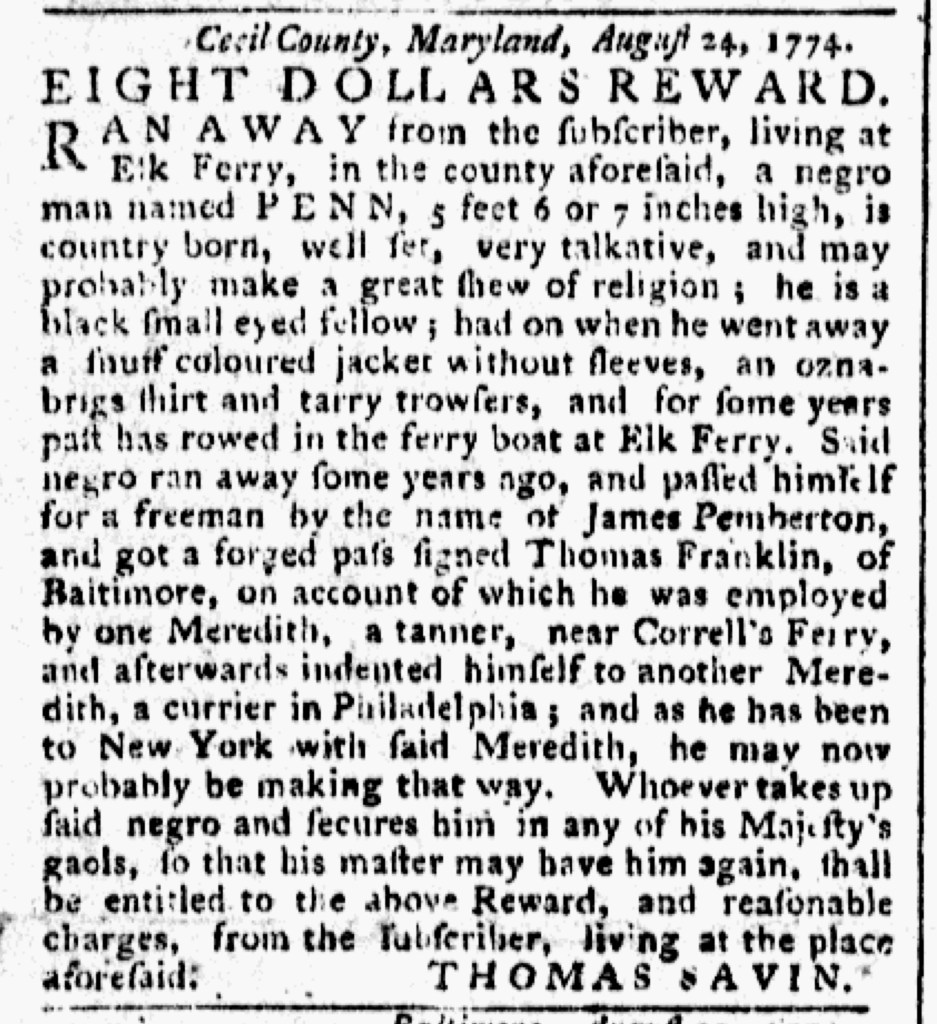
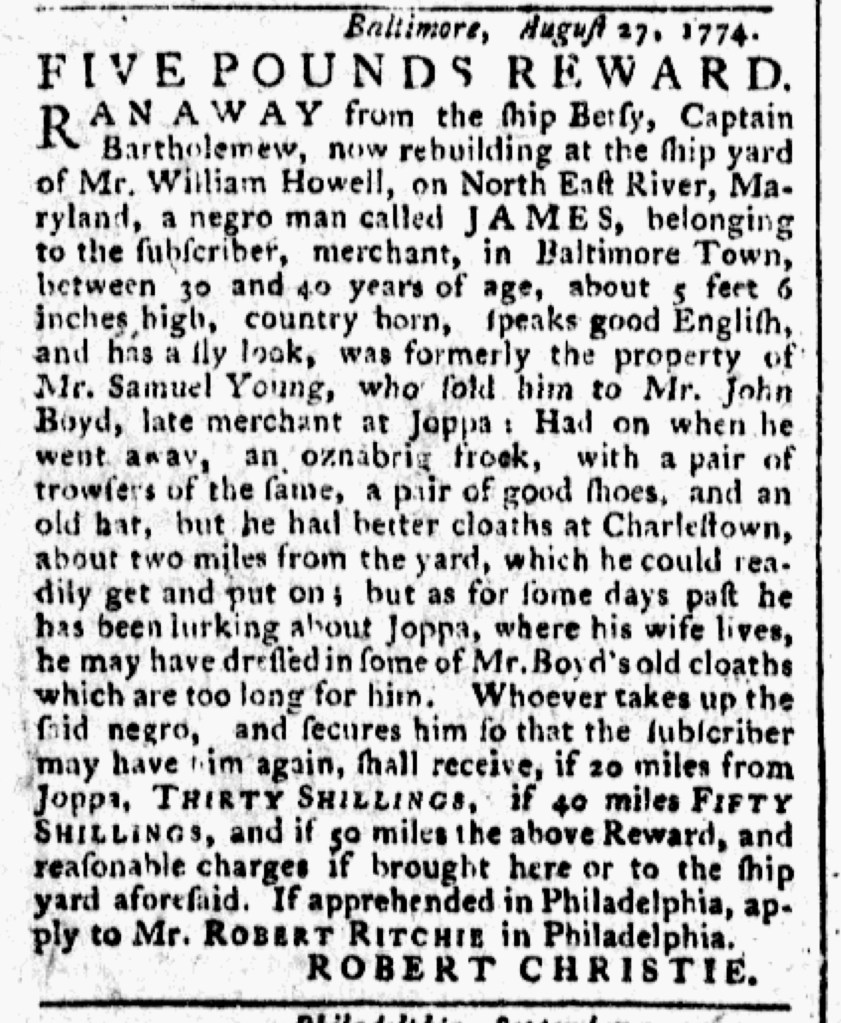
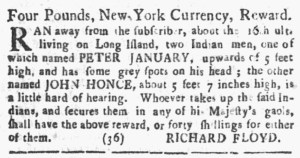
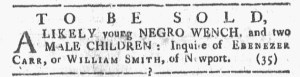
Slavery Advertisements Published September 19, 1774

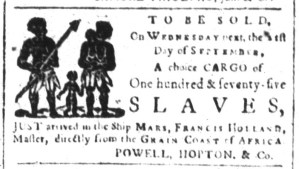
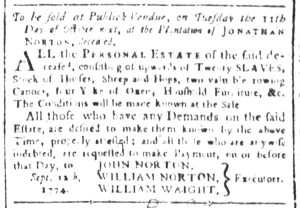
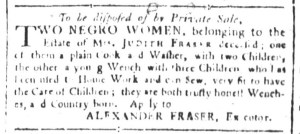
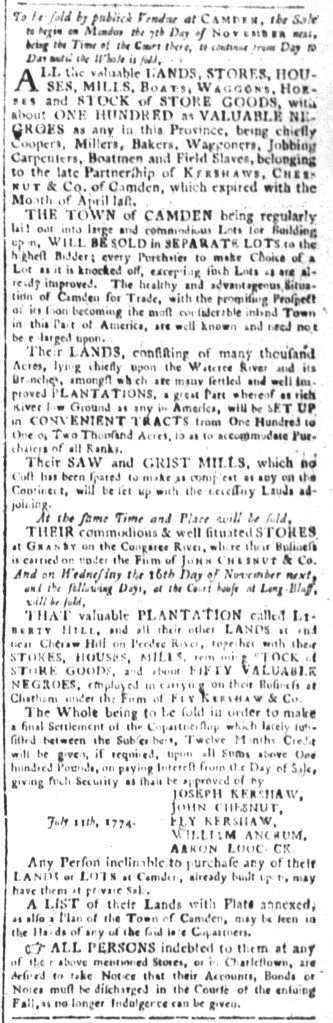
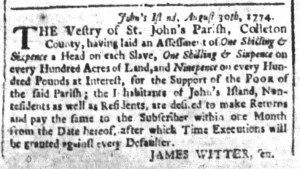
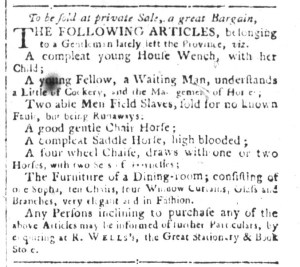
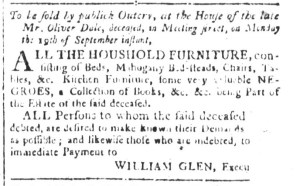
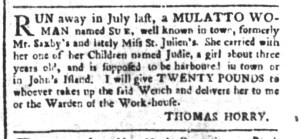
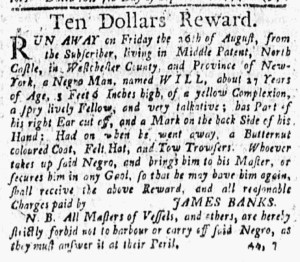
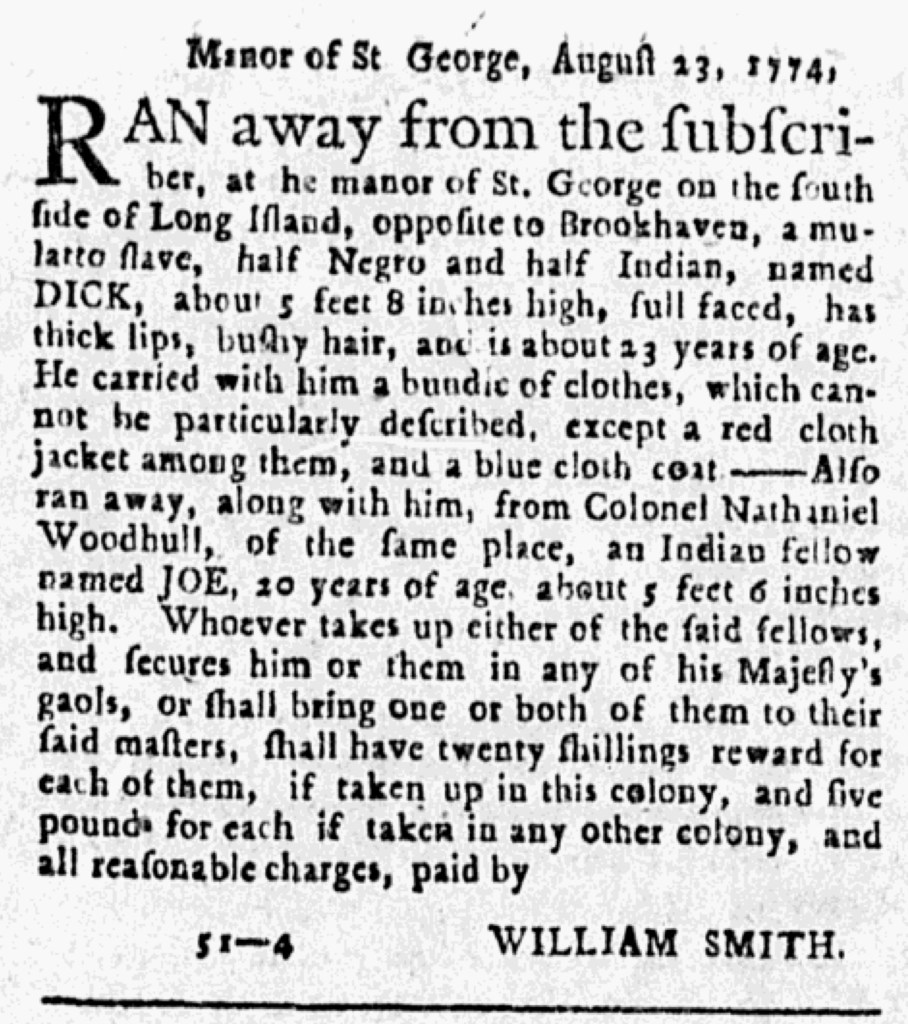
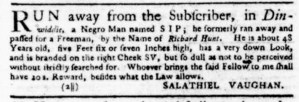
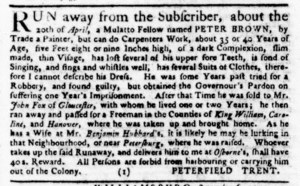
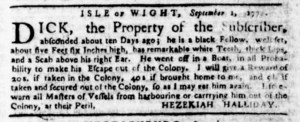
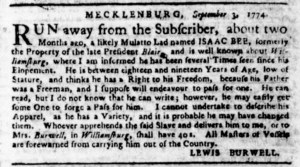
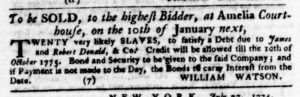
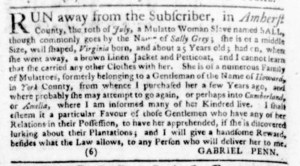
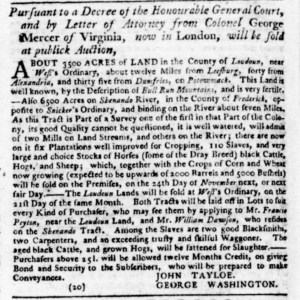
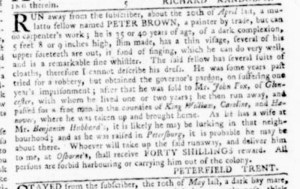
The Slavery Adverts 250 Project chronicles the role of newspaper advertising in perpetuating slavery in the era of the American Revolution. The project seeks to reveal the ubiquity of slavery in eighteenth-century life from New England to Georgia by republishing advertisements about enslaved people – for sale as individuals or in groups, wanted to purchase or for hire for short periods, runaways who liberated themselves, and those who were subsequently captured and confined in jails and workhouses – in daily digests on this site as well as in real time via the @SlaveAdverts250 Twitter feed, utilizing twenty-first-century media to stand in for the print media of the eighteenth century.

The project aims to provide modern audiences with a sense of just how often colonizers encountered these advertisements in their daily lives. Enslaved men, women, and children appeared in print somewhere in the colonies almost every single day. Those advertisements served as a constant backdrop for social, cultural, economic, and political life in colonial and revolutionary America. Colonizers who did not purport to own enslaved people were still confronted with slavery as well as invited to maintain the system by purchasing enslaved men, women, and children or assisting in the capture of so-called “runaways” who sought to free themselves from bondage. The frequency of these newspaper advertisements suggests just how embedded slavery was in colonial and revolutionary American culture in everyday interactions beyond the printed page.

These advertisements also testify to the experiences of enslaved men, women, and children, though readers must consider that those experiences have been remediated through descriptions offered by enslavers rather than enslaved people themselves. Often unnamed in the advertisements, enslaved men, women, and children were not invisible or unimportant in early America.

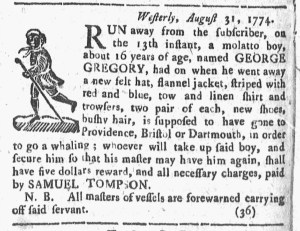
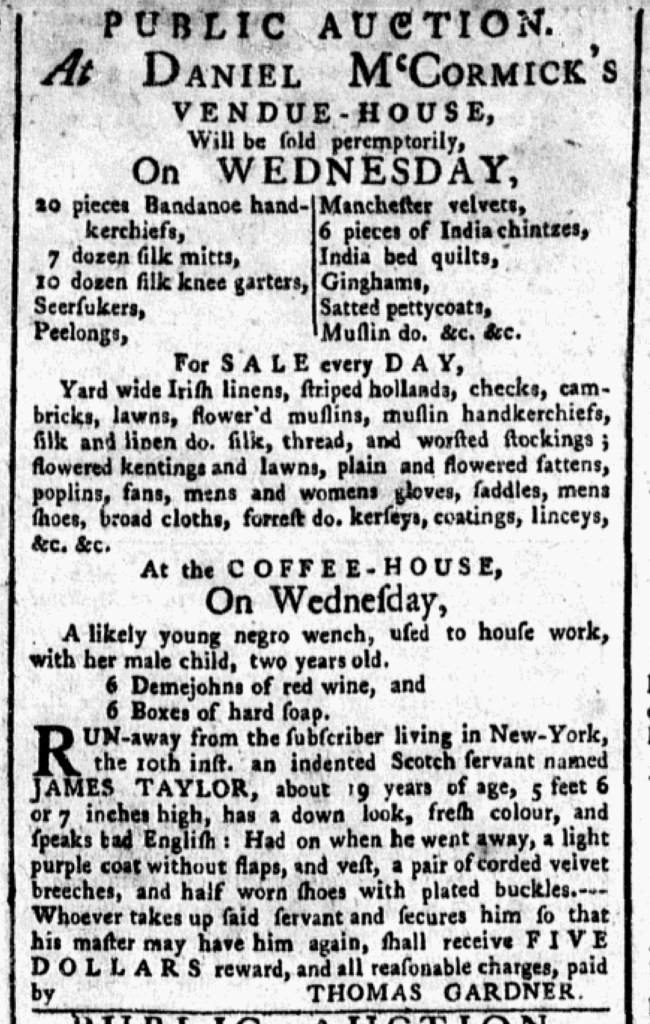
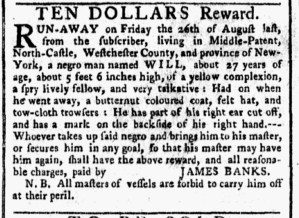
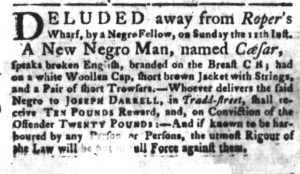
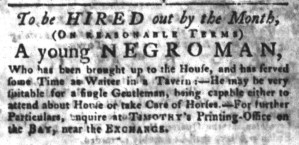
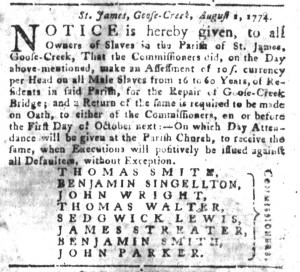
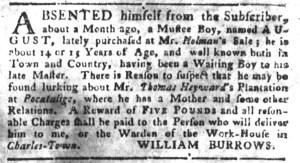
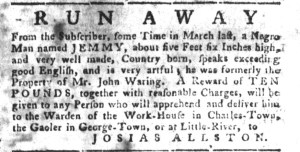
These advertisements appeared in colonial American newspapers 250 years ago today.

Boston Evening-Post (September 19, 1774).

**********

Postscript to Dunlap’s Pennsylvania Packet (September 19, 1774).

**********

Postscript to Dunlap’s Pennsylvania Packet (September 19, 1774).

**********

Newport Mercury (September 19, 1774).

**********

Newport Mercury (September 19, 1774).

**********

Newport Mercury (September 19, 1774).

**********

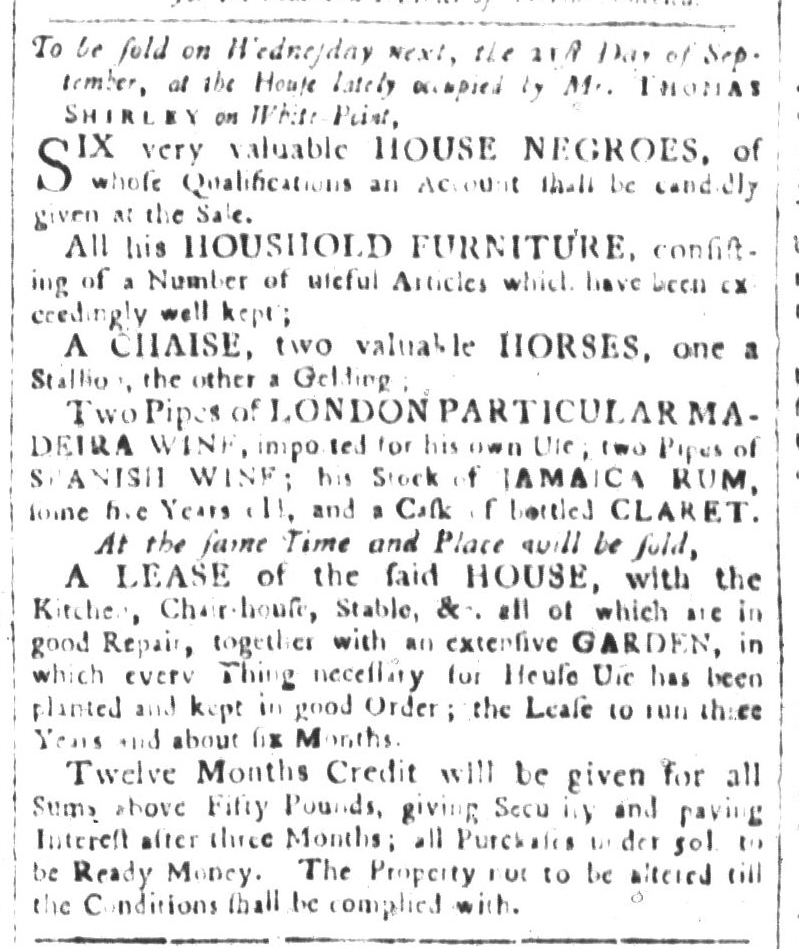
New-York Gazette and Weekly Mercury (September 19, 1774).

**********

New-York Gazette and Weekly Mercury (September 19, 1774).

**********

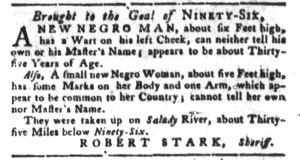
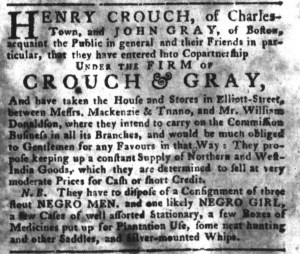
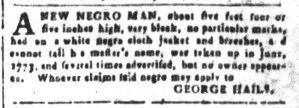
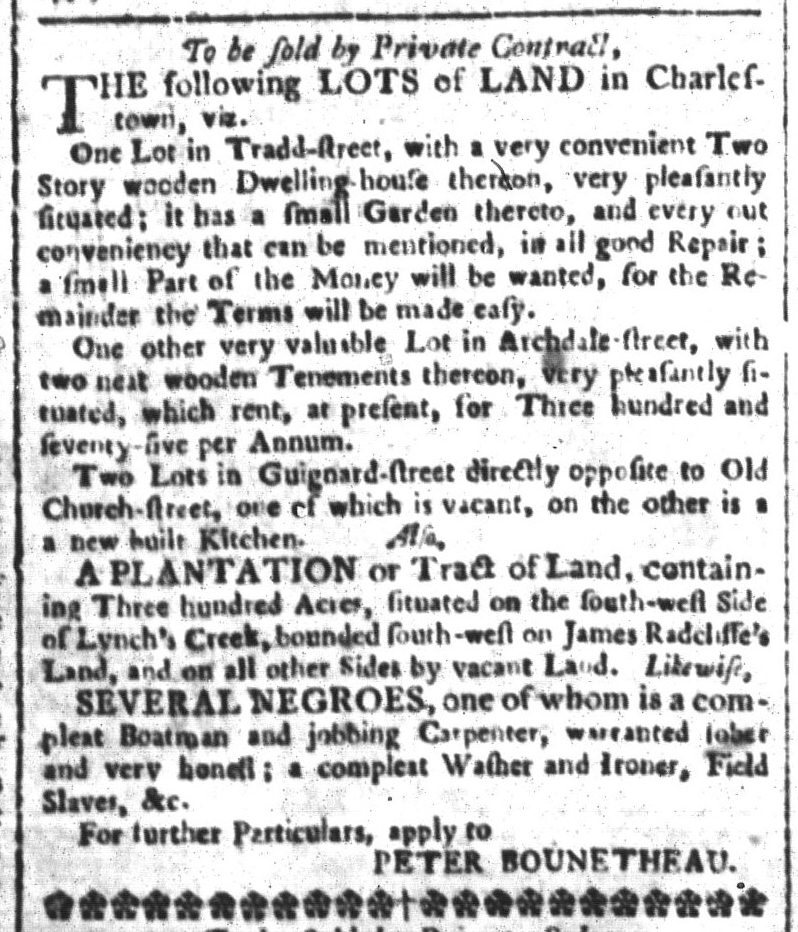
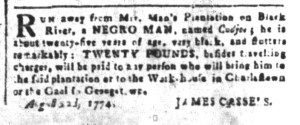
South-Carolina Gazette (September 19, 1774).

**********

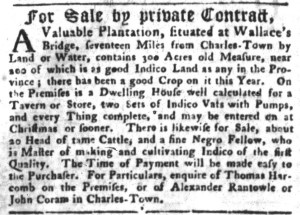
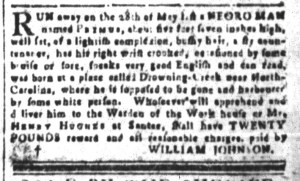
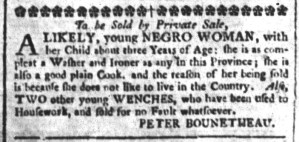
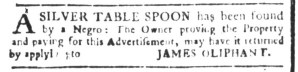
South-Carolina Gazette (September 19, 1774).

**********

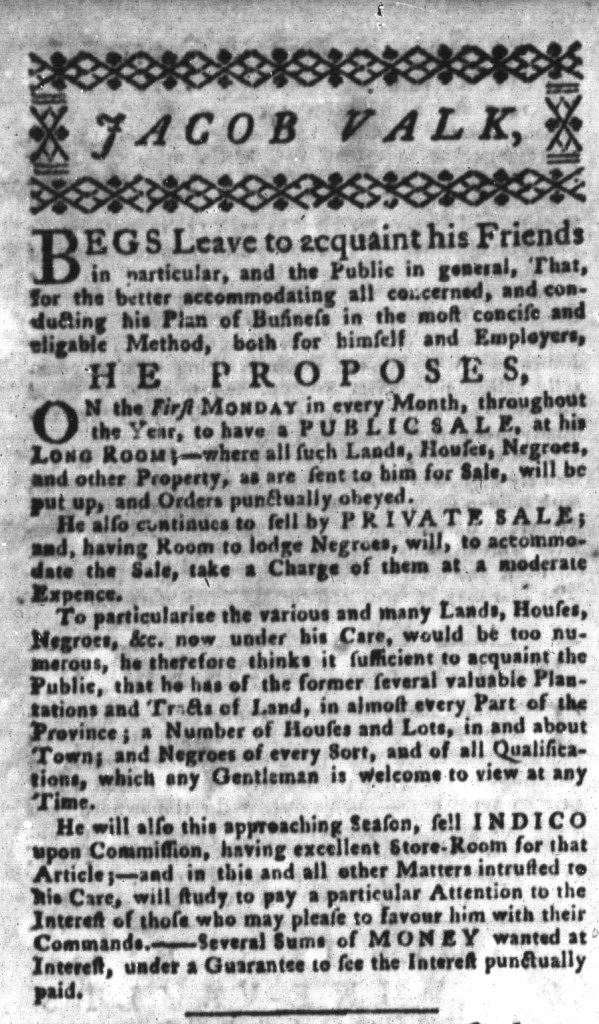
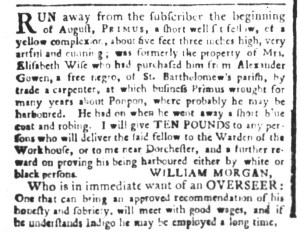
South-Carolina Gazette (September 19, 1774).

**********

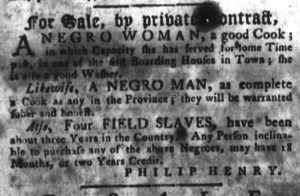
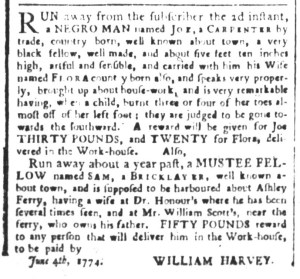
South-Carolina Gazette (September 19, 1774).

**********

South-Carolina Gazette (September 19, 1774).

**********

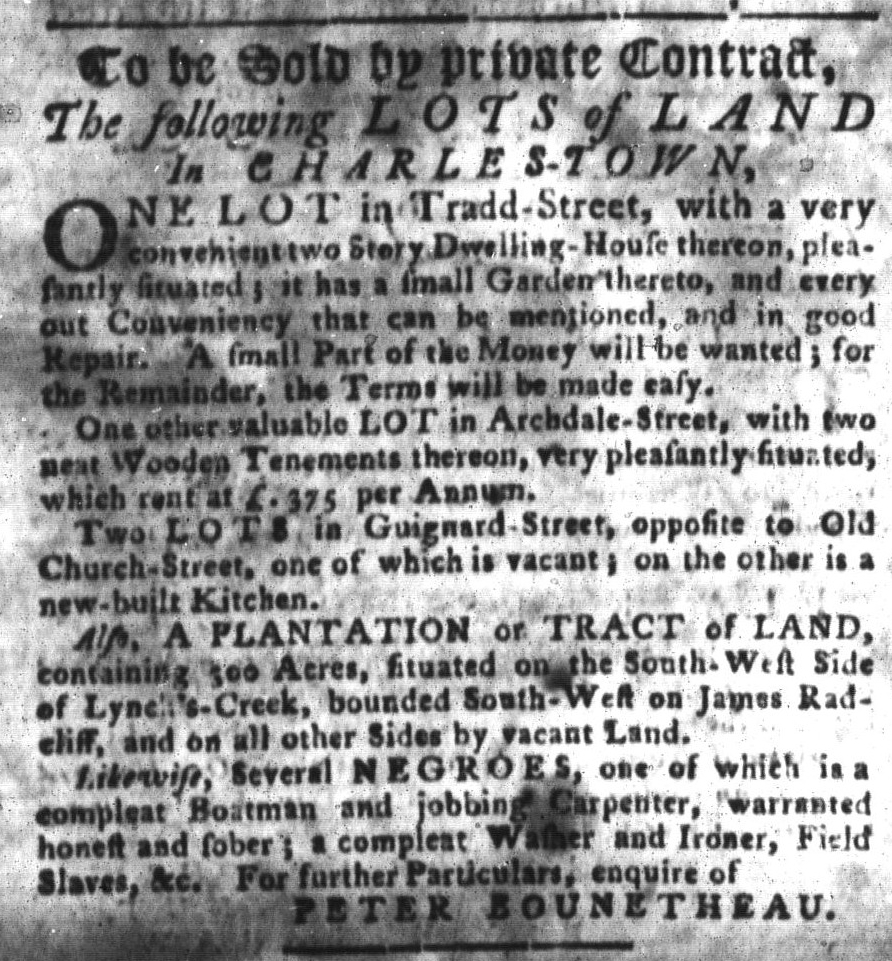
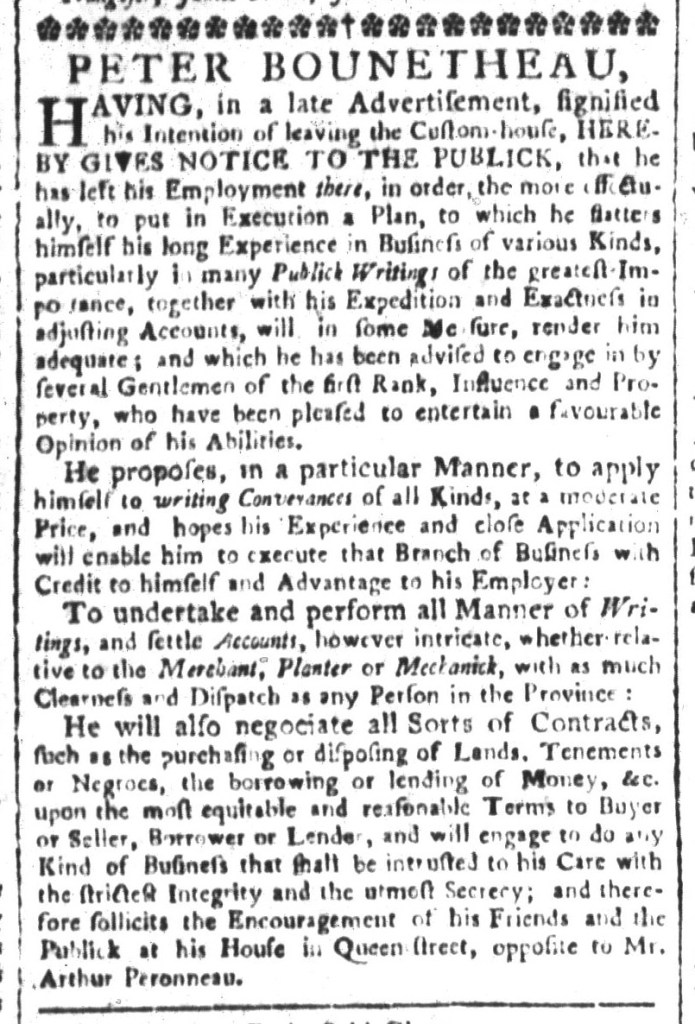
Supplement to the South-Carolina Gazette (September 19, 1774).

**********

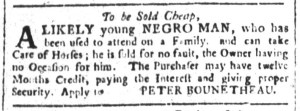
Supplement to the South-Carolina Gazette (September 19, 1774).

**********

Supplement to the South-Carolina Gazette (September 19, 1774).

**********

Supplement to the South-Carolina Gazette (September 19, 1774).

**********

Supplement to the South-Carolina Gazette (September 19, 1774).

**********

Supplement to the South-Carolina Gazette (September 19, 1774).

**********

Supplement to the South-Carolina Gazette (September 19, 1774).

**********

Supplement to the South-Carolina Gazette (September 19, 1774).

**********

Supplement to the South-Carolina Gazette (September 19, 1774).

**********

Supplement to the South-Carolina Gazette (September 19, 1774).

**********

Supplement to the South-Carolina Gazette (September 19, 1774).

**********

Supplement to the South-Carolina Gazette (September 19, 1774).

**********

Supplement to the South-Carolina Gazette (September 19, 1774).

**********

Supplement to the South-Carolina Gazette (September 19, 1774).

September 18

What was advertised in a colonial American magazine 250 years ago this month?

Advertising wrapper enclosing Royal American Magazine, July 1774 (published September 15, 1774).

“A concise, but just, representation of the hardships and sufferings of the town of BOSTON.”

An advertisement in the September 15, 1774, edition of the Massachusetts Spy informed readers that “NUMBER VII of the ROYAL AMERICAN MAGAZINE” was “This day published” and “will be ready to be delivered, to-morrow, to the subscribers.”  The notice referred to the July edition.  Isaiah Thomas, the original publisher, had always been behind in circulating new issues of the magazine, putting Joseph Greenleaf, the new proprietor, in a position to catch up.  The July issue was his first, published just three weeks after the first announcement that he now oversaw the magazine.

Like other eighteenth-century magazines, the Royal American Magazine did not feature advertisements interspersed among its contents, yet that did not mean that it lacked advertising altogether.  First Thomas and then Greenleaf distributed each issue enclosed in blue paper wrappers that featured advertisements.  In the last quarter of the century, other magazine publishers did the same.  The wrappers protected each issue until subscribers had six of them bound into a volume, though bookbinders usually removed the wrappers and other advertising ephemera, such as trade cards, subscription proposals, and book catalogs, within them.  Bound volumes preserved in research libraries give the impression that advertising was not part of eighteenth-century magazines, yet intact individual issues demonstrate that was not the case at all.

Advertising wrapper enclosing Royal American Magazine, July 1774 (published September 15, 1774).

Over time, the kinds of advertisements on the wrappers evolved to include an array of goods and services, but in the 1770s they almost exclusively came from the book trades and, especially, the publisher of the magazine.  Such was the case with the Royal American Magazine.  The wrappers for the July 1774 issue had a message to the subscribers from Thomas, the same one that announced the change of publisher in the Massachusetts Spy, an advertisement for “A LETTER to a FRIEND: GIVING a concise, but just, representation of the hardships of the town of BOSTON” sold at Greenleaf’s printing office, and a list of books and printed blanks also available from the publisher of the magazine.  The wrappers for the June 1774 edition had included advertisers not affiliated with the magazine, yet still members of the book trades.  Benjamin Edes and John Gill, printers of the Boston-Gazette, advertised “OBSERVATIONS on the ACT of PARLIAMENT, commonly called the BOSTON PORT BILL,” the legislation that resulted in the “hardships of the town” outlined in the pamphlet Greenleaf promoted.  Nathaniel Mills and John Hicks, printers of the Massachusetts Gazette and Boston Post-Boy, advertised an array of books they stocked, while Bernard Romans outlined his “PROPOSALS For printing by Subscription, A CONCISE Natural HISTORY of EAST and WEST FLORIDA.”

The Adverts 250 Project has tracked newspaper advertisements concerning the Royal American Gazette from Thomas’s first mention of his intention to circulate subscription proposals through the publication of the first six issues and transferring the magazine to a new publisher.  That story, however, has not examined the Royal American Magazine as a delivery mechanism for advertising.  Subsequent entries will take a closer look at the advertisements that appeared on the magazine’s wrappers throughout its run.

September 17

What was advertised in a colonial American newspaper 250 years ago today?

Addition to the South-Carolina Gazette (September 17, 1774).

“MRS. WINDSOR … has declined being connected with Mrs. SAGE, in a Boarding-School.”

In an advertisement that ran in a midweek supplement to the South-Carolina Gazette, Ann Sage announced that she opened a “New Boarding-School, FOR YOUNG LADIES” on September 15, 1774.  The curriculum included “READING, TAMBOUR, EMBROIDERY, and all Kinds of NEEDLE-WORK.”  Sage presumably taught reading and those feminine arts herself.  For an additional price, students could learn “WRITING, ARITHMETIC, DANCING and MUSIC.”  Sage may have provided some of that instruction, but another advertisement suggests that she hired tutors to supplement the lessons she provided.

Immediately below Sage’s notice, Mrs. Windsor declared that she “declined being connected with Mrs. SAGE, in a Boarding-School; which is to be opened on the 15th.”  Dated September 1, Windsor’s advertisement previously appeared separately from Sage’s announcement, including in the September 13 edition of the South-Carolina Gazette and Country Journal.  She did not elaborate on her reasons for not joining Sage’s endeavor, instead advising “her FRIENDS in particular, and the PUBLIC in general” that she “continues, as usual, to instruct Young LADIES upon the HARPSICHORD.”  Windsor requested the “Continuance of the Patronage and Encouragement of her Friends and Acquaintances.”  She had her own enterprise to oversee.

What was Windsor’s purpose in even mentioning Sage’s school in her advertisement?  She could have sought pupils without commenting on her refusal to be affiliated with the boarding school.  Perhaps Sage had attempted to recruit Windsor as a partner in the endeavor rather than merely a tutor who occasionally gave lessons to students who paid additional fees.  In that case, Sage may not have had time to continue offering lessons to her existing clientele.  Her newspaper notice made it clear that she wished to continue those relationships as well as gain new students.  Yet the details she provided (and those she did not) hinted at an untold story, perhaps some interesting gossip, especially when Windsor’s advertisement appeared immediately below Sage’s notice.  The “Friends and Acquaintances” that Windsor thanked for the “Continuance of [their] Patronage and Encouragement” (and other readers as well) otherwise may not have thought anything about Windsor’s other prospects, but her intervention in the public prints could have prompted some to discreetly ask questions here and there to discover if they had missed out on something interesting.

September 16

What was advertised in a colonial American newspaper 250 years ago today?

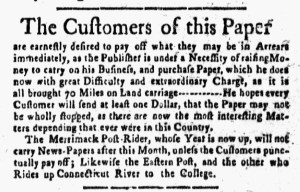
New-Hampshire Gazette (September 16, 1774).

“There are now the most interesting Matters depending that ever were in this Country.”

Colonial printers frequently ran advertisements asking customers, especially subscribers, to pay their overdue bills.  Daniel Fowle, the printer of the New-Hampshire Gazette, seemed to do so more often than others.  Such advertisements became a regular feature in his newspaper.  One appeared in the September 16, 1774, edition of the New-Hampshire Gazette.  This time, Fowle pleaded that the “Customers of this Paper” are earnestly desired to pay off what they may be in Arrears immediately, as the Publisher is under a Necessity of raising Money to carry on his Business.”  The fate of the newspaper, Fowle’s ability to continue publishing it, was at stake.  In part, that was because he apparently experienced a disruption in his supply of paper, acquiring it “with Difficulty and extraordinary Charge, as it is all brought 70 Miles on Land carriage.”  The printer did not go into greater detail on that point, though at various times in the past he had suggested that he used only paper produced in the colonies rather than paper imported from England.  The blockade of Boston, one of Parliament’s responses to the Boston Tea Party, may have affected Fowle’s route for receiving paper produced in another colony.

Even if subscribers could not settle accounts, Fowle requested that they “send at least one Dollar, that the Paper may not be wholly stopped, as there are the most interesting Matters depending that ever were in this Country.”  The printer recognized that the imperial crisis had intensified with the Boston Port Act and the rest of the Coercive Acts.  Earlier in the month, the First Continental Congress commenced its meeting in Philadelphia, deliberating about a unified response across the colonies.  Discussion and debates also took place in communities near and far.  That same issue of the New-Hampshire Gazette carried updates from Philadelphia, New London, Hartford, Newport, Boston, Salem, and other towns in Massachusetts.  Local news included coverage of a tea consignee in Portsmouth refusing to accept the shipment, diverting it to Halifax rather than cause a scene.  Yet that article also warned, “In future no such Indulgence will be allowed to the Enemies of America.”  Momentous events were underway.  Fowle did not know what would happen next, but he assured subscribers that they did not want to lose access to the news he supplied if they did not pay what they owed.

Slavery Advertisements Published September 16, 1774

The Slavery Adverts 250 Project chronicles the role of newspaper advertising in perpetuating slavery in the era of the American Revolution. The project seeks to reveal the ubiquity of slavery in eighteenth-century life from New England to Georgia by republishing advertisements about enslaved people – for sale as individuals or in groups, wanted to purchase or for hire for short periods, runaways who liberated themselves, and those who were subsequently captured and confined in jails and workhouses – in daily digests on this site as well as in real time via the @SlaveAdverts250 Twitter feed, utilizing twenty-first-century media to stand in for the print media of the eighteenth century.

The project aims to provide modern audiences with a sense of just how often colonizers encountered these advertisements in their daily lives. Enslaved men, women, and children appeared in print somewhere in the colonies almost every single day. Those advertisements served as a constant backdrop for social, cultural, economic, and political life in colonial and revolutionary America. Colonizers who did not purport to own enslaved people were still confronted with slavery as well as invited to maintain the system by purchasing enslaved men, women, and children or assisting in the capture of so-called “runaways” who sought to free themselves from bondage. The frequency of these newspaper advertisements suggests just how embedded slavery was in colonial and revolutionary American culture in everyday interactions beyond the printed page.

These advertisements also testify to the experiences of enslaved men, women, and children, though readers must consider that those experiences have been remediated through descriptions offered by enslavers rather than enslaved people themselves. Often unnamed in the advertisements, enslaved men, women, and children were not invisible or unimportant in early America.

These advertisements appeared in colonial American newspapers 250 years ago today.

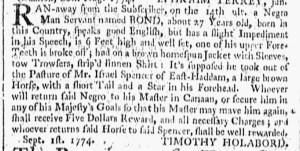
Connecticut Gazette (September 16, 1774).

**********

Connecticut Journal (September 16, 1774).

**********

Supplement to the Connecticut Journal (September 16, 1774).

**********

South-Carolina and American General Gazette (September 16, 1774).

**********

South-Carolina and American General Gazette (September 16, 1774).

**********

South-Carolina and American General Gazette (September 16, 1774).

**********

South-Carolina and American General Gazette (September 16, 1774).

**********

South-Carolina and American General Gazette (September 16, 1774).

**********

South-Carolina and American General Gazette (September 16, 1774).

**********

South-Carolina and American General Gazette (September 16, 1774).

**********

South-Carolina and American General Gazette (September 16, 1774).

**********

South-Carolina and American General Gazette (September 16, 1774).

**********

South-Carolina and American General Gazette (September 16, 1774).

**********

South-Carolina and American General Gazette (September 16, 1774).

**********

South-Carolina and American General Gazette (September 16, 1774).

**********

South-Carolina and American General Gazette (September 16, 1774).

**********

South-Carolina and American General Gazette (September 16, 1774).

**********

South-Carolina and American General Gazette (September 16, 1774).

**********

South-Carolina and American General Gazette (September 16, 1774).

**********

South-Carolina and American General Gazette (September 16, 1774).

**********

South-Carolina and American General Gazette (September 16, 1774).

**********

South-Carolina and American General Gazette (September 16, 1774).

**********

South-Carolina and American General Gazette (September 16, 1774).

**********

South-Carolina and American General Gazette (September 16, 1774).

**********

South-Carolina and American General Gazette (September 16, 1774).

**********

South-Carolina and American General Gazette (September 16, 1774).

**********

South-Carolina and American General Gazette (September 16, 1774).

**********

South-Carolina and American General Gazette (September 16, 1774).

**********

South-Carolina and American General Gazette (September 16, 1774).

**********

South-Carolina and American General Gazette (September 16, 1774).

**********

South-Carolina and American General Gazette (September 16, 1774).

**********

South-Carolina and American General Gazette (September 16, 1774).

**********

South-Carolina and American General Gazette (September 16, 1774).

**********

South-Carolina and American General Gazette (September 16, 1774).

**********

South-Carolina and American General Gazette (September 16, 1774).

September 15

Who was the subject of an advertisement in a colonial American newspaper 250 years ago today?

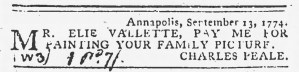
Maryland Gazette (September 15, 1774).

“MR. ELIE VALLETTE, PAY ME FOR PAINTING YOUR FAMILY PICTURE.”

Charles Willson Peale followed through on his threat.  He had placed an advertisement in the September 8, 1774, edition of the Maryland Gazette warning that “IF a certain E.V. does not immediately pay for his family picture, his name shall be published at full length in the next paper.”  The subject of the painter’s notice had not heeded it, perhaps mistakenly believing that Peale would not have the audacity to actually do what he suggested.  If that was the case, he miscalculated because a week later the very first advertisement in the next issue of the Maryland Gazette proclaimed, “MR. ELIE VALLETTE, PAY ME FOR PAINTING YOUR FAMILY PICTURE.”  Using all capital letters signaled the artist’s frustration; it also called greater attention to the advertisement.
Another advertisement involving Vallette appeared on the next page of the newspaper.  That one, which had first appeared four months earlier, promoted the Deputy Commissary’s Guide, a book that Vallette had authored and invested many months in acquiring subscribers before taking it to press.  He had advertised extensively in the Maryland Gazette.  His name did not happen to appear in the most recent advertisement; instead, it gave the title of the book and featured an endorsement by William Fitzhugh, the colony’s commissary general.  Martha J. King suggests that Vallette did not place the advertisement for the Deputy Commissary’s Guide, asserting that Anne Catherine Greene, the printer of both the Maryland Gazette and Vallette’s book, ran that notice.[1]  To whatever extent Vallette was or was not involved in continuing to advertise the Deputy Commissary’s Guide following publication, he was proud enough of his achievement as an author that the book with its engraved title page appeared in the foreground of the family portrait Peale painted.  Peale’s notices may not have been the kind of acclaim that Vallette desired, but the painter had given him public notice after seeking payment in private letters for several months.

Readers of the Maryland Gazette witnessed one side of the feud as it escalated from one week to the next in September 1774.  Some may have found the spectacle entertaining, a good bit of gossip.  Now that he had been named in the public prints, how would Vallette react?  Would the disagreement escalate even more?  Readers had a new reason to peruse the advertisements in the next edition of the Maryland Gazette.

**********

[1] Martha J. King, “The Printer and the Painter: Portraying Print Culture in an Age of Revolution,” Transactions of the American Philosophical Society 109, no. 5 (2021): 79.

Slavery Advertisements Published September 15, 1774

The Slavery Adverts 250 Project chronicles the role of newspaper advertising in perpetuating slavery in the era of the American Revolution. The project seeks to reveal the ubiquity of slavery in eighteenth-century life from New England to Georgia by republishing advertisements about enslaved people – for sale as individuals or in groups, wanted to purchase or for hire for short periods, runaways who liberated themselves, and those who were subsequently captured and confined in jails and workhouses – in daily digests on this site as well as in real time via the @SlaveAdverts250 Twitter feed, utilizing twenty-first-century media to stand in for the print media of the eighteenth century.

The project aims to provide modern audiences with a sense of just how often colonizers encountered these advertisements in their daily lives. Enslaved men, women, and children appeared in print somewhere in the colonies almost every single day. Those advertisements served as a constant backdrop for social, cultural, economic, and political life in colonial and revolutionary America. Colonizers who did not purport to own enslaved people were still confronted with slavery as well as invited to maintain the system by purchasing enslaved men, women, and children or assisting in the capture of so-called “runaways” who sought to free themselves from bondage. The frequency of these newspaper advertisements suggests just how embedded slavery was in colonial and revolutionary American culture in everyday interactions beyond the printed page.

These advertisements also testify to the experiences of enslaved men, women, and children, though readers must consider that those experiences have been remediated through descriptions offered by enslavers rather than enslaved people themselves. Often unnamed in the advertisements, enslaved men, women, and children were not invisible or unimportant in early America.

These advertisements appeared in colonial American newspapers 250 years ago today.

Maryland Gazette (September 15, 1774).

**********

Maryland Gazette (September 15, 1774).

**********

Supplement to the Maryland Gazette (September 15, 1774).

**********

Supplement to the Maryland Gazette (September 15, 1774).

**********

Supplement to the Maryland Gazette (September 15, 1774).

**********

New-York Journal (September 15, 1774).

**********

New-York Journal (September 15, 1774).

**********

Norwich Packet (September 15, 1774).

**********

Rivington’s New-York Gazetteer (September 15, 1774).

**********

Virginia Gazette [Purdie and Dixon] (September 15, 1774).

**********

Virginia Gazette [Purdie and Dixon] (September 15, 1774).

**********

Virginia Gazette [Purdie and Dixon] (September 15, 1774).

**********

Virginia Gazette [Purdie and Dixon] (September 15, 1774).

**********

Virginia Gazette [Purdie and Dixon] (September 15, 1774).

**********

Virginia Gazette [Purdie and Dixon] (September 15, 1774).

**********

Virginia Gazette [Purdie and Dixon] (September 15, 1774).

**********

Virginia Gazette [Purdie and Dixon] (September 15, 1774).

**********

Virginia Gazette [Purdie and Dixon] (September 15, 1774).

**********

Virginia Gazette [Rind] (September 15, 1774).

**********

Virginia Gazette [Rind] (September 15, 1774).

**********

Virginia Gazette [Rind] (September 15, 1774).

**********

Virginia Gazette [Rind] (September 15, 1774).

**********

Virginia Gazette [Rind] (September 15, 1774).

**********

Virginia Gazette [Rind] (September 15, 1774).

September 14

What was advertised in a colonial American newspaper 250 years ago today?

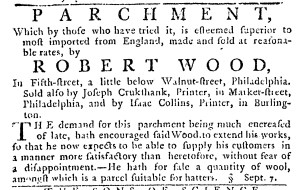
Pennsylvania Journal (September 14, 1774).

“PARCHMENT … esteemed superior to most imported from England.”

In September 1774, Robert Wood took to the pages of Dunlap’s Pennsylvania Packet and the Pennsylvania Journal to promote the parchment that he made in Philadelphia.  To entice prospective customers, he resorted to a variety of appeals.  Most significantly, he invoked customer satisfaction, seeking to convince readers not yet familiar with his product that he already gained a positive reputation among those who had used it.  For instance, he declared that “those who have tried it” considered his parchment “superior to most imported from England.”  He previously encouraged readers to “Buy American” in another advertisement more than two years earlier.  As the First Continental Congress convened in Philadelphia to consider how to respond to the Coercive Acts, including the possibility of another round of nonimportation pacts, Wood had a head start in presenting a “domestic manufacture,” an item produced in the colonies, as an alternative to imported parchment.  Customers did not have to sacrifice quality, plus they could acquire Wood’s parchment “at reasonable rates.”
To further bolster his reputation, Wood declared that the demand for his parchment had “much encreased of late.”  Those familiar with it wished to purchase it in greater quantities, at least according to Wood, another testimonial to the quality of the product.  Wood was prepared to meet the demand, having “extend[ed] his works, so that he now expects to be able to supply his customers in a manner more satisfactory than heretofore.”  Serving his customers included establishing a distribution network for their convenience in acquiring his parchment.  Joseph Crukshank, a printer in Philadelphia, sold Wood’s parchment, as did Isaac Collins, a printer in Burlington, New Jersey.  Taking all of this into consideration, Wood confidently declared that consumers who purchased and used his parchment could do so “without fear of a disappointment.”  He did not make an argument in favor of domestic manufactures as explicitly as he had in other advertisements, but perhaps he did not consider it necessary at a time that the imperial crisis had intensified so significantly.  Stating that his parchment had been “esteemed superior” to English imports sufficiently made the connection for readers, allowing Wood to focus on the demand for his product rather than convince prospective customers of their duty to privilege American products as a means of practicing politics.
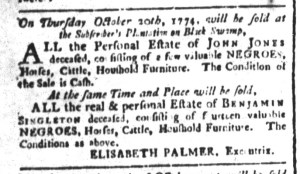
Slavery Advertisements Published September 14, 1774

The Slavery Adverts 250 Project chronicles the role of newspaper advertising in perpetuating slavery in the era of the American Revolution. The project seeks to reveal the ubiquity of slavery in eighteenth-century life from New England to Georgia by republishing advertisements about enslaved people – for sale as individuals or in groups, wanted to purchase or for hire for short periods, runaways who liberated themselves, and those who were subsequently captured and confined in jails and workhouses – in daily digests on this site as well as in real time via the @SlaveAdverts250 Twitter feed, utilizing twenty-first-century media to stand in for the print media of the eighteenth century.

The project aims to provide modern audiences with a sense of just how often colonizers encountered these advertisements in their daily lives. Enslaved men, women, and children appeared in print somewhere in the colonies almost every single day. Those advertisements served as a constant backdrop for social, cultural, economic, and political life in colonial and revolutionary America. Colonizers who did not purport to own enslaved people were still confronted with slavery as well as invited to maintain the system by purchasing enslaved men, women, and children or assisting in the capture of so-called “runaways” who sought to free themselves from bondage. The frequency of these newspaper advertisements suggests just how embedded slavery was in colonial and revolutionary American culture in everyday interactions beyond the printed page.

These advertisements also testify to the experiences of enslaved men, women, and children, though readers must consider that those experiences have been remediated through descriptions offered by enslavers rather than enslaved people themselves. Often unnamed in the advertisements, enslaved men, women, and children were not invisible or unimportant in early America.

These advertisements appeared in colonial American newspapers 250 years ago today.

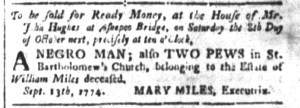
Pennsylvania Gazette (September 14, 1774).