September 25

What was advertised in a colonial American newspaper 250 years ago this week?
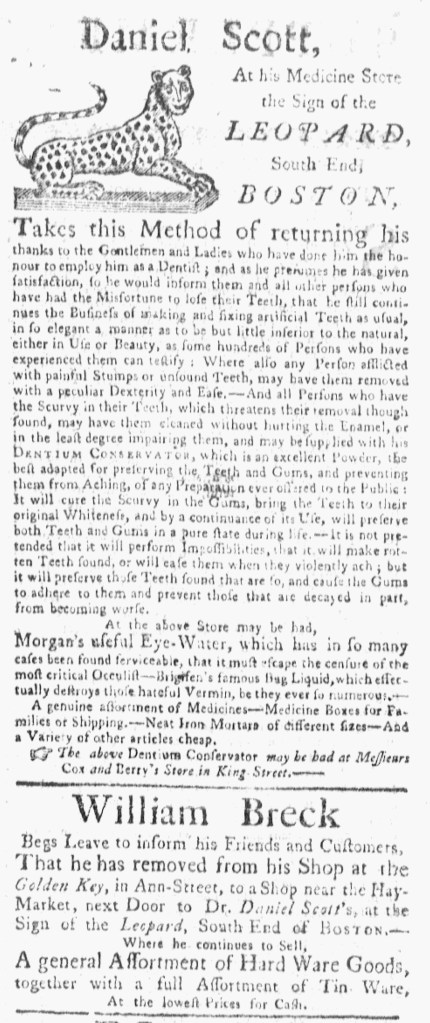
Boston Evening-Post (September 19, 1774).

“Next Door to Dr. Daniel Scott’s, at the Sign of the Leopard.”

In the fall of 1774, William Breck ran an advertisement “to inform his Friends and Customers” that he had moved to a new location.  They would no longer find him at his shop “at the Golden Key, in Ann-street” but instead at a shop “near the Hay-Market, next Door to Dr. Daniel Scott’s at the Sign of the Leopard, South-End of BOSTON.”  Even though he moved, he “continues to sell, as usual, A general Assortment of Hard-Ware GOODS … at the lowest Prices.”

Breck’s advertisement documented some of the visual culture of commerce that residents and visitors encountered as they traversed the streets of the busy port.  Both devices, the Golden Key and the Sign of the Leopard, had also circulated more widely via other media.  Breck distributed an engraved trade card that included an image of an ornate key suspended within a cartouche above a list of the merchandise he stocked “at the Golden Key near the draw-Bridge.”  Paul Revere produced the trade card in the late 1760s, yet Breck might have given out copies well into the 1770s.  (Mary Symonds, a milliner in Philadelphia, commissioned a similar trade card in 1768.  She wrote a receipted bill on the back of one of them in 1770.)  Breck’s advertisement ran on its own in the September 22 edition of the Massachusetts Gazette and Boston Weekly News-Letter, but it just happened to appear immediately below Scott’s advertisement for his “Medicine Store” at “the Sign of the LEOPARD” featuring a woodcut depicting a leopard in the September 19 edition of the Boston Evening-Post.  That image had been circulating in that newspaper for several months, making the Sign of the Leopard an attractive option when Breck decided to include a familiar landmark to help orient customers to his new location.

Breck did not mention whether the Golden Key moved with him or remained as a fixture on Ann Street, marking the location for the next tenant in his former shop.  He had previously made quite an investment in associating the image with his business.  Engraved trade cards, after all, were much more expensive than newspaper advertisements, handbills, and broadsides.  Did he surrender an aspect of the branding associated with his business for many years when he relocated?
September 24

What was advertised in a colonial American newspaper 250 years ago today?
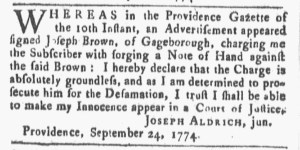
Providence Gazette (September 24, 1774).

“I am determined to prosecute him for the Defamation.”

Defamation!  That was the defense Joseph Aldrich, Jr., made against allegations that appeared in the September 10, 1774, edition of the Providence Gazette.  The original accusation and Aldrich’s response both ran as advertisements.  It started with one that read, “I JOSEPH BROWN, of Gageborough, in the County of Berkshire, and Province of the Massachusetts-Bay, give this public Notice, that Joseph Aldrich, jun. of Gloucester, in the County of Providence, hath forged or counterfeited a Note of Hand against me the said Joseph Brown, for Ninety odd Pounds Lawful Money.”  The notice offered a warning: “All Persons are therefore cautioned against taking any Assignment of said Note, as I am determined to prosecute for the Forgery, instead of paying the Contents.”

Aldrich apparently did not become aware of what Brown charged right away since he did not respond in the next issue of Providence Gazette, but not much time passed before he either read Brown’s advertisement or someone told him about it. That spurred the aggrieved Aldrich into action.  He placed his own advertisement that cited the notice “charging me the Subscriber with forging a Note of Hand against the said Brown” and asserting that “the Charge is absolutely groundless.”  Just as Brown stated that he intended to take the matter to court, so did Aldrich.  “I am determined to prosecute him for the Defamation,” he declared, confident that “I shall be able to make my Innocence appear in a Court of Justice.”

Yet it was not a “Court of Justice” that mattered immediately; it was the court of public opinion that Aldrich sought to sway.  Brown had damaged his reputation, perhaps imperiling his ability to conduct business and support his family.  For Aldrich, the most important news in the September 10 edition of the Providence Gazette appeared among the advertisements, not among the articles and editorials that so animated readers as the imperial crisis intensified.  Paying to run a notice gave Brown access to the public prints to share his version of events involving the supposedly forged and counterfeit note.  In turn, taking out his own notice allowed Aldrich to defend himself against that calumny.  In both instances, advertisements doubled as local news.

September 23

What was advertised in a colonial American newspaper 250 years ago today?

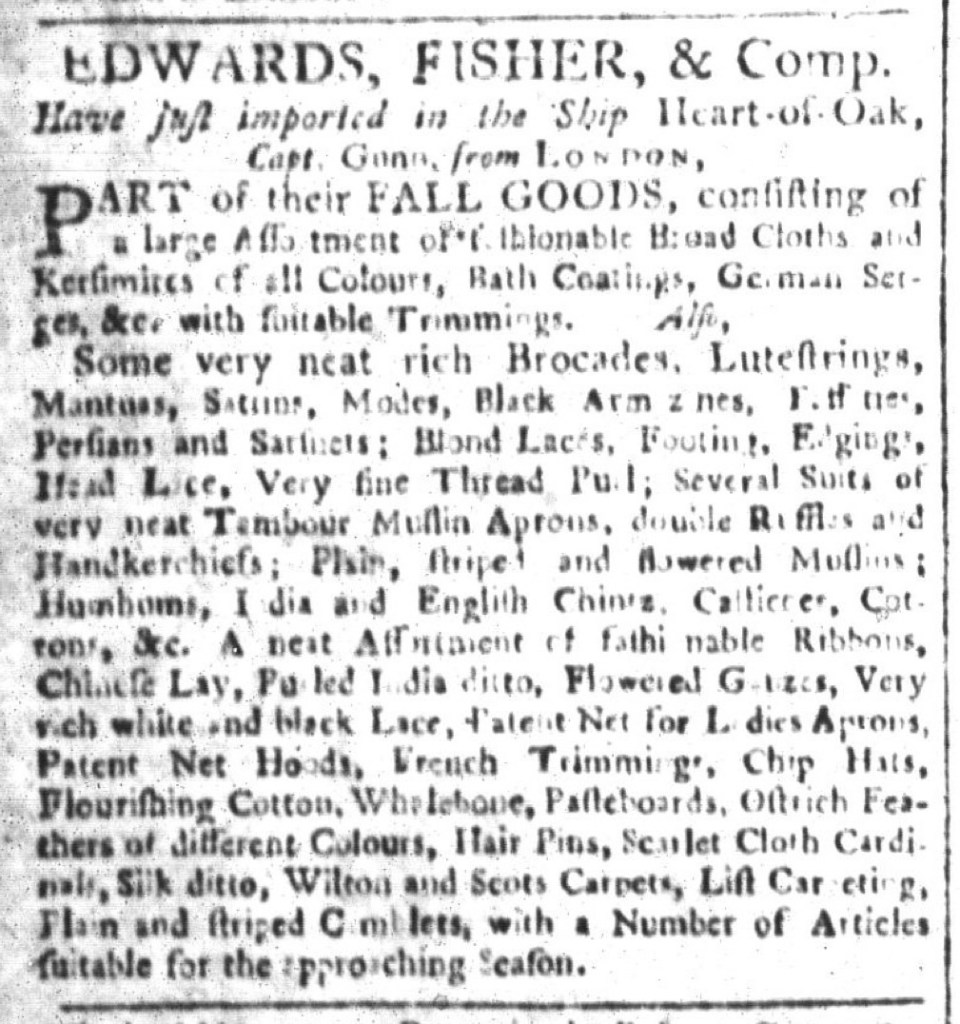
South-Carolina and American General Gazette (September 23, 1774).

“Just imported … from LONDON, PART of their FALL GOODS.”

Like many other merchants and shopkeepers, Edwards, Fisher, and Company in Charleston updated their merchandise with the changing of the seasons.  With the arrival of fall in 1774, they ran advertisements in the South-Carolina and American General Gazette, the South-Carolina Gazette, and the South-Carolina Gazette and Country Journal to announce that they had “just imported” a “large Assortment” of textiles and other items.  This new inventory accounted for “PART of their FALL GOODS,” suggesting that they would continue to supplement their wares as ships arrived from London.

Edwards, Fisher, and Company may have believed that they had a narrow window of opportunity to import and sell these goods.  Earlier in the month, a competitor acknowledged that “a Non-importation Agreement will undoubtedly soon take Place here,” encouraging consumers (“Ladies” in particular) to shop while they had the chance.  The First Continental Congress had recently convened in Philadelphia to discuss coordinated measures in response to the Coercive Acts.  Their deliberations would result in the Continental Association, a nonimportation, nonconsumption, and nonexportation agreement set to go into effect on December 1.  In late September, merchants, shopkeepers, and consumers in Charleston and other American cities and towns did not yet know exactly which measures the First Continental Congress would adopt, but they reasonably anticipated that importing and purchasing goods would be constrained in the coming months.

That gave Edwards, Fisher, and Company an opportunity to sell the “Number of Articles suitable for the approaching Season” that had already arrived as “PART of their FALL GOODS.”  They probably kept their fingers crossed that other shipments would arrive from London before news of a nonimportation agreement arrived from Philadelphia.  They sought to entice prospective customers with an extensive list of their wares, describing them as “fashionable” more than once.  What consumers would consider fashionable, however, evolved when nonimportation agreements went into effect.  Homespun textiles produced in the colonies rather than “very neat rich Brocades” and other imported fabrics became fashionable because of the political principles they communicated.  Edwards, Fisher, and Company would have to content with that another day; for the moment, they could continue following familiar strategies for marketing imported textiles and other goods.

Slavery Advertisements Published September 23, 1774

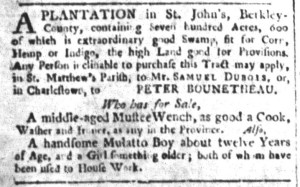
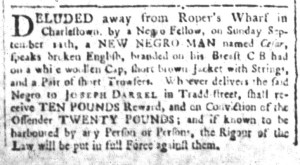
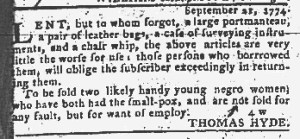
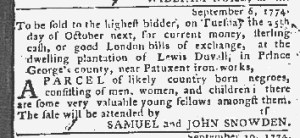
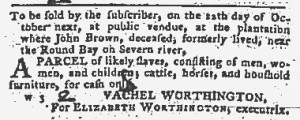
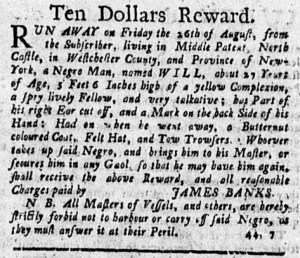
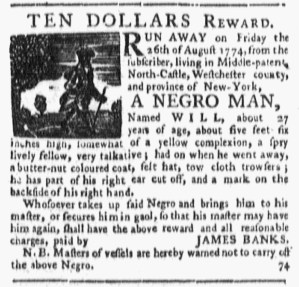
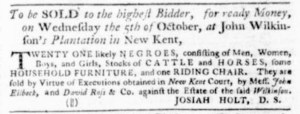
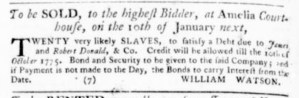
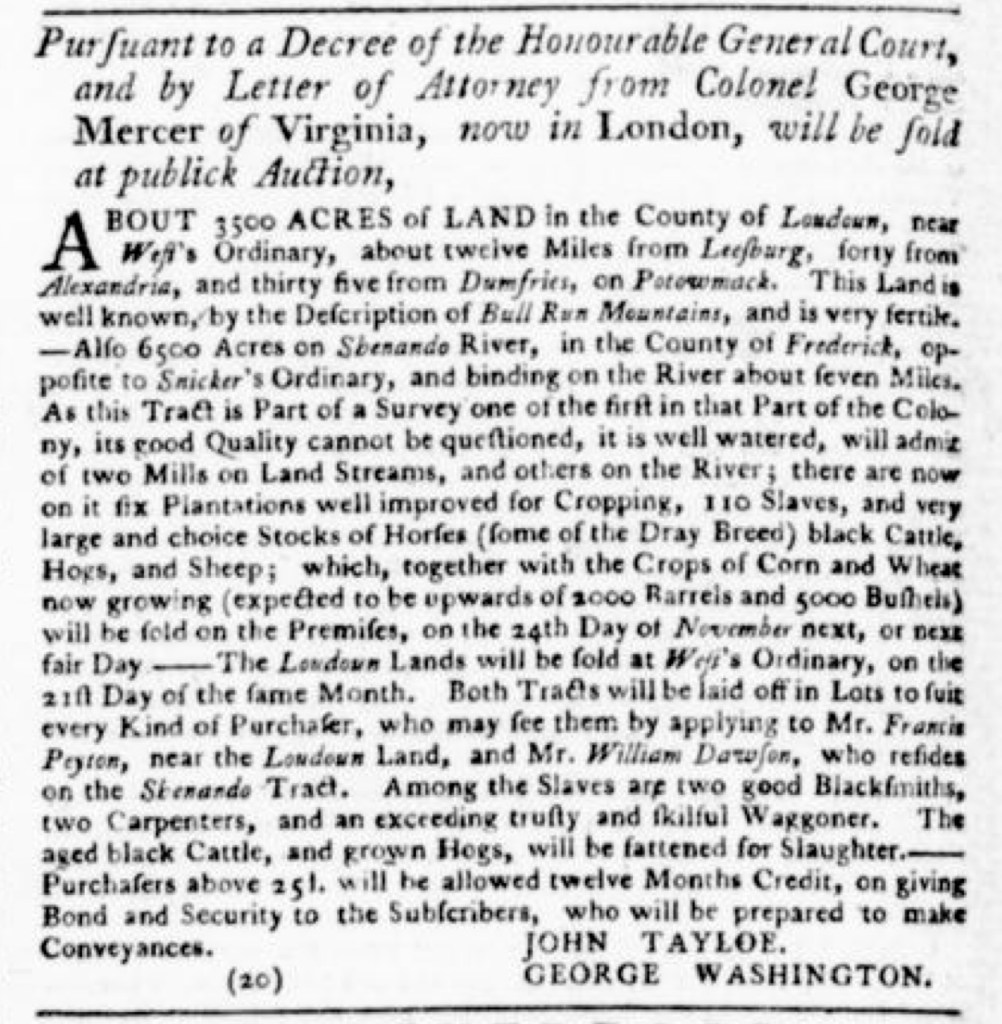
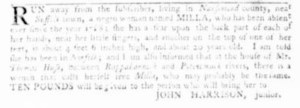
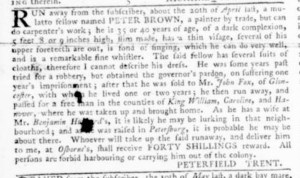
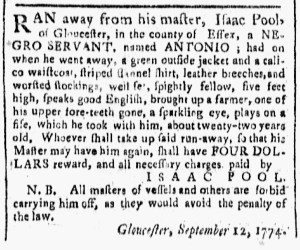
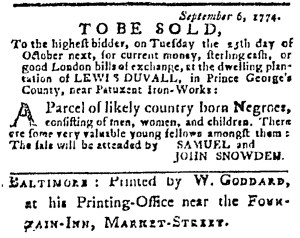
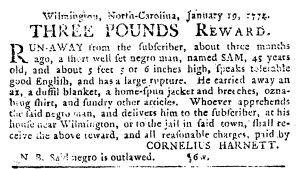
The Slavery Adverts 250 Project chronicles the role of newspaper advertising in perpetuating slavery in the era of the American Revolution. The project seeks to reveal the ubiquity of slavery in eighteenth-century life from New England to Georgia by republishing advertisements about enslaved people – for sale as individuals or in groups, wanted to purchase or for hire for short periods, runaways who liberated themselves, and those who were subsequently captured and confined in jails and workhouses – in daily digests on this site as well as in real time via the @SlaveAdverts250 Twitter feed, utilizing twenty-first-century media to stand in for the print media of the eighteenth century.

The project aims to provide modern audiences with a sense of just how often colonizers encountered these advertisements in their daily lives. Enslaved men, women, and children appeared in print somewhere in the colonies almost every single day. Those advertisements served as a constant backdrop for social, cultural, economic, and political life in colonial and revolutionary America. Colonizers who did not purport to own enslaved people were still confronted with slavery as well as invited to maintain the system by purchasing enslaved men, women, and children or assisting in the capture of so-called “runaways” who sought to free themselves from bondage. The frequency of these newspaper advertisements suggests just how embedded slavery was in colonial and revolutionary American culture in everyday interactions beyond the printed page.

These advertisements also testify to the experiences of enslaved men, women, and children, though readers must consider that those experiences have been remediated through descriptions offered by enslavers rather than enslaved people themselves. Often unnamed in the advertisements, enslaved men, women, and children were not invisible or unimportant in early America.

These advertisements appeared in colonial American newspapers 250 years ago today.

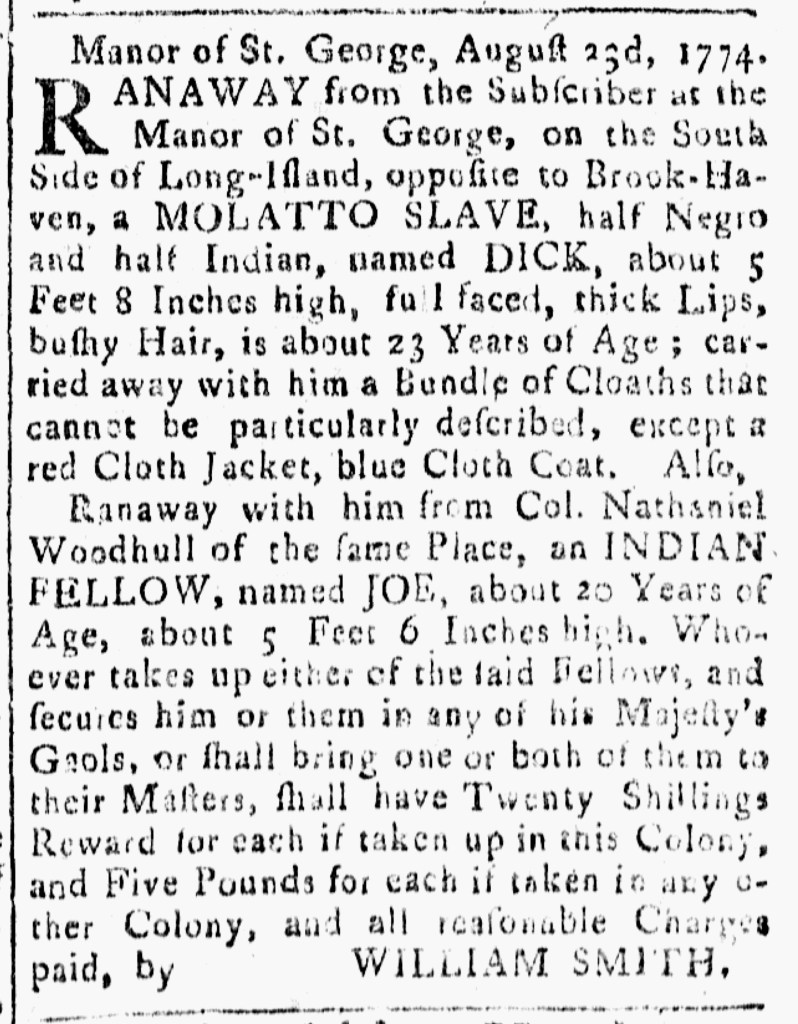
Connecticut Journal (September 23, 1774).

**********

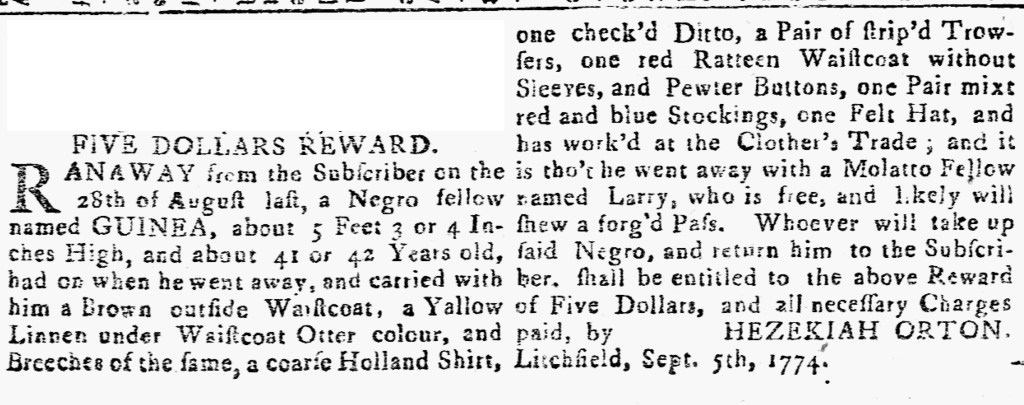
Connecticut Journal (September 23, 1774).

**********

South-Carolina and American General Gazette (September 23, 1774).

**********

South-Carolina and American General Gazette (September 23, 1774).

**********

South-Carolina and American General Gazette (September 23, 1774).

**********

South-Carolina and American General Gazette (September 23, 1774).

September 22

What was advertised in a colonial American newspaper 250 years ago today?

Maryland Gazette (September 22, 1774).

“YES, YOU SHALL BE PAID; BUT NOT BEFORE YOU HAVE LEARNED TO BE LESS INSOLENT.”

The saga continued.  Elie Vallette, the clerk of the Prerogative Court in Annapolis and author of the Deputy Commissary’s Guide, did not bow to the public shaming that Charles Willson Peale, the painter, undertook in the pages of the Maryland Gazette in September 1774.  Earlier in the year, Peale had painted a family portrait for Vallette and then attempted through private correspondence to get the clerk to pay what he owed.  When Vallette did not settle accounts, Peale turned to the public prints.  He started with a warning shot in the September 8 edition of the Maryland Gazette: “IF a certain E.V. does not immediately pay for his family picture, his name shall be published at full length in the next paper.”  Peale meant it.  He did not allow for any delay in Vallette taking note of the advertisement and acting on it.  A week later, he followed through on his threat, resorting to all capitals to underscore his point, draw more attention to his advertisement, and embarrass the recalcitrant clerk.  “MR. ELIE VALLETTE,” Peale proclaimed in his advertisement, “PAY ME FOR PAINTING YOUR FAMILY PICTURE.”

That still did not do the trick.  Instead, it made Vallette double down on delaying payment.  He responded to Peale’s advertisement, attempting to put the young painter in his place.  In a notice also in all capitals, he lectured, “MR. CHARLES WILSON PEALE; ALIAS CHARLES PEALE – YES, YOU SHALL BE PAID; BUT NOT BEFORE YOU HAVE LEARNED TO BE LESS INSOLENT.”  Vallette sought to shift attention away from his own debt by critiquing the decorum of an artist he considered of inferior status.  That strategy may have worked, though only for a moment.  Peale’s advertisement did not run in the next issue of the Maryland Gazette.  That could have been because Peale instructed the printer, Anne Catharine Green, to remove his notice and returned to working with Vallette privately.  Even if that was the case, it was only temporary.  “MR. ELIE VALLETTE, PAY ME FOR PAINTING YOUR FAMILY PICTURE” appeared once again in the October 6 edition.  Peale was not finished with his insolence.  He placed the advertisement again on October 13 and 20.  Vallette did not run his notice a second time, perhaps considering it beneath him to continue to engage Peale in the public prints.  He had, after all, made his point, plus advertisements cost money.  That being the case, the painter eventually discontinued his notice.  Martha J. King notes that Vallette “eventually settled his account about a year later.”[1]  For a time, advertisements in the only newspaper printed in Annapolis became the forum for a very public airing of Peale’s private grievances and Vallette’s haughty response.

**********

[1] Martha J. King, “The Printer and the Painter: Portraying Print Culture in an Age of Revolution,” Transactions of the American Philosophical Society 109, no. 5 (2021): 79.

Slavery Advertisements Published September 22, 1774

The Slavery Adverts 250 Project chronicles the role of newspaper advertising in perpetuating slavery in the era of the American Revolution. The project seeks to reveal the ubiquity of slavery in eighteenth-century life from New England to Georgia by republishing advertisements about enslaved people – for sale as individuals or in groups, wanted to purchase or for hire for short periods, runaways who liberated themselves, and those who were subsequently captured and confined in jails and workhouses – in daily digests on this site as well as in real time via the @SlaveAdverts250 Twitter feed, utilizing twenty-first-century media to stand in for the print media of the eighteenth century.

The project aims to provide modern audiences with a sense of just how often colonizers encountered these advertisements in their daily lives. Enslaved men, women, and children appeared in print somewhere in the colonies almost every single day. Those advertisements served as a constant backdrop for social, cultural, economic, and political life in colonial and revolutionary America. Colonizers who did not purport to own enslaved people were still confronted with slavery as well as invited to maintain the system by purchasing enslaved men, women, and children or assisting in the capture of so-called “runaways” who sought to free themselves from bondage. The frequency of these newspaper advertisements suggests just how embedded slavery was in colonial and revolutionary American culture in everyday interactions beyond the printed page.

These advertisements also testify to the experiences of enslaved men, women, and children, though readers must consider that those experiences have been remediated through descriptions offered by enslavers rather than enslaved people themselves. Often unnamed in the advertisements, enslaved men, women, and children were not invisible or unimportant in early America.

These advertisements appeared in colonial American newspapers 250 years ago today.

Maryland Gazette (September 22, 1774).

**********

Maryland Gazette (September 22, 1774).

**********

Maryland Gazette (September 22, 1774).

**********

Maryland Gazette (September 22, 1774).

**********

Supplement to the New-York Journal (September 22, 1774).

**********

Rivington’s New-York Gazetteer (September 22, 1774).

**********

Virginia Gazette [Purdie and Dixon] (September 22, 1774).

**********

Virginia Gazette [Purdie and Dixon] (September 22, 1774).

**********

Virginia Gazette [Purdie and Dixon] (September 22, 1774).

**********

Virginia Gazette [Purdie and Dixon] (September 22, 1774).

**********

Virginia Gazette [Purdie and Dixon] (September 22, 1774).

**********

Virginia Gazette [Purdie and Dixon] (September 22, 1774).

**********

Virginia Gazette [Purdie and Dixon] (September 22, 1774).

**********

Virginia Gazette [Purdie and Dixon] (September 22, 1774).

**********

Virginia Gazette [Purdie and Dixon] (September 22, 1774).

**********

Virginia Gazette [Rind] (September 22, 1774).

**********

Virginia Gazette [Rind] (September 22, 1774).

**********

Virginia Gazette [Rind] (September 22, 1774).

**********

Virginia Gazette [Rind] (September 22, 1774).

**********

Virginia Gazette [Rind] (September 22, 1774).

September 21

What was advertised in a colonial American newspaper 250 years ago today?

Pennsylvania Gazette (September 21, 1774).

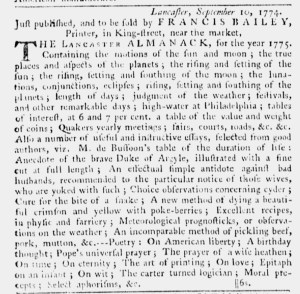
“THE LANCASTER ALMANACK, for the year 1775.”

It was a sign of the changing seasons.  As the summer of 1774 came to a close, the first advertisements for almanacs for 1775 began to appear in newspapers, part of an annual ritual.  Each year printers deployed advertisements in weekly periodicals to hawk their annual periodicals.  Francis Bailey, a printer in Lancaster, was among the first to do so in 1774, placing notices in the Pennsylvania Gazette and the Pennsylvania Journal on September 21.  Readers still had more than three months to acquire their almanacs before the new year, yet each year many printers saw opportunities to increase sales and beat their competitors by making the useful and entertaining pamphlets available in the late summer and early fall.  That also allowed plenty of time for shopkeepers to purchase in volume, often receiving a discount, to stock and sell to their own customers.

For his part, Bailey relied on the contents of the “LANCASTER ALMANACK, for the year 1775” in generating the copy for his advertisement, adopting a common practice among printers of almanacs.  It was his first endeavor in printing and marketing an almanac, having opened a printing office Lancaster in 1771 and initially focusing on job printing.  Bailey realized that printing an almanac of his own could be a lucrative venture, supplementing the other sources of revenue in his printing office.  Some of the contents he could compile on his own, such as the essays and poetry, but he needed a mathematician or astronomer to supply the astronomical calculations, including “the motions of the sun and moon; the true places and aspects of the planets; the rising and setting of the sun; [and] the rising, setting and southing of the moon.”  The title page listed Anthony Sharp as the author of those astronomical calculations, though, as was the case with many other almanacs, the author was a pseudonym.  According to the entry in the American Antiquarian Society’s catalog, Anthony Sharp was “a pseudonym found only in the almanacs published by Bailey.”  Furthermore, the “calculations throughout duplicate those in Father Abraham’s almanack for 1775 (Philadelphia) whose title page states that it is [David] Rittenhouse’s work.”

Each year colonizers in and near Lancaster had ready access to various almanacs published by the several printers in Philadelphia, yet Bailey recognized his chance to give them an option for a local edition.  He established a relationship with a noted astronomer to provide the tables, then advertised his Lancaster Almanack before the Philadelphia editions went to press.  The success of his venture depended in part on making his new almanac available to local customers before they had an option to purchase any of the alternatives that would come off the presses in Philadelphia.

Slavery Advertisements Published September 21, 1774

The Slavery Adverts 250 Project chronicles the role of newspaper advertising in perpetuating slavery in the era of the American Revolution. The project seeks to reveal the ubiquity of slavery in eighteenth-century life from New England to Georgia by republishing advertisements about enslaved people – for sale as individuals or in groups, wanted to purchase or for hire for short periods, runaways who liberated themselves, and those who were subsequently captured and confined in jails and workhouses – in daily digests on this site as well as in real time via the @SlaveAdverts250 Twitter feed, utilizing twenty-first-century media to stand in for the print media of the eighteenth century.

The project aims to provide modern audiences with a sense of just how often colonizers encountered these advertisements in their daily lives. Enslaved men, women, and children appeared in print somewhere in the colonies almost every single day. Those advertisements served as a constant backdrop for social, cultural, economic, and political life in colonial and revolutionary America. Colonizers who did not purport to own enslaved people were still confronted with slavery as well as invited to maintain the system by purchasing enslaved men, women, and children or assisting in the capture of so-called “runaways” who sought to free themselves from bondage. The frequency of these newspaper advertisements suggests just how embedded slavery was in colonial and revolutionary American culture in everyday interactions beyond the printed page.

These advertisements also testify to the experiences of enslaved men, women, and children, though readers must consider that those experiences have been remediated through descriptions offered by enslavers rather than enslaved people themselves. Often unnamed in the advertisements, enslaved men, women, and children were not invisible or unimportant in early America.

These advertisements appeared in colonial American newspapers 250 years ago today.

Essex Journal (September 21, 1774).

**********

Maryland Journal (September 21, 1774).

**********

Pennsylvania Gazette (September 21, 1774).

**********

Postscript to the Pennsylvania Gazette (September 21, 1774).

September 20

Who was the subject of an advertisement in a colonial American newspaper 250 years ago today?

South-Carolina Gazette and Country Journal (September 20, 1774).

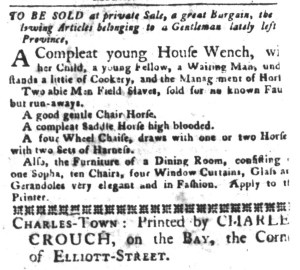
“TO BE SOLD … Two able Men Field Slaves … Apply to the Printer.”

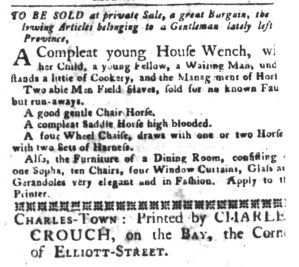
On behalf of a customer, “a Gentleman lately left the Province,” Charles Crouch, the printer of the South-Carolina Gazette and Country Journal, advertised a variety of “Articles” available “at private Sale, a great Bargain.”  Those articles included horses, a carriage with two sets of harnesses and “the Furniture of a Dining Room, consisting of one Sopha, ten Chairs, four Window Curtains, Glass and Gerandoles.”  Crouch informed interested parties that they should “Apply to the Printer,” taking on the role of broker and intermediary.

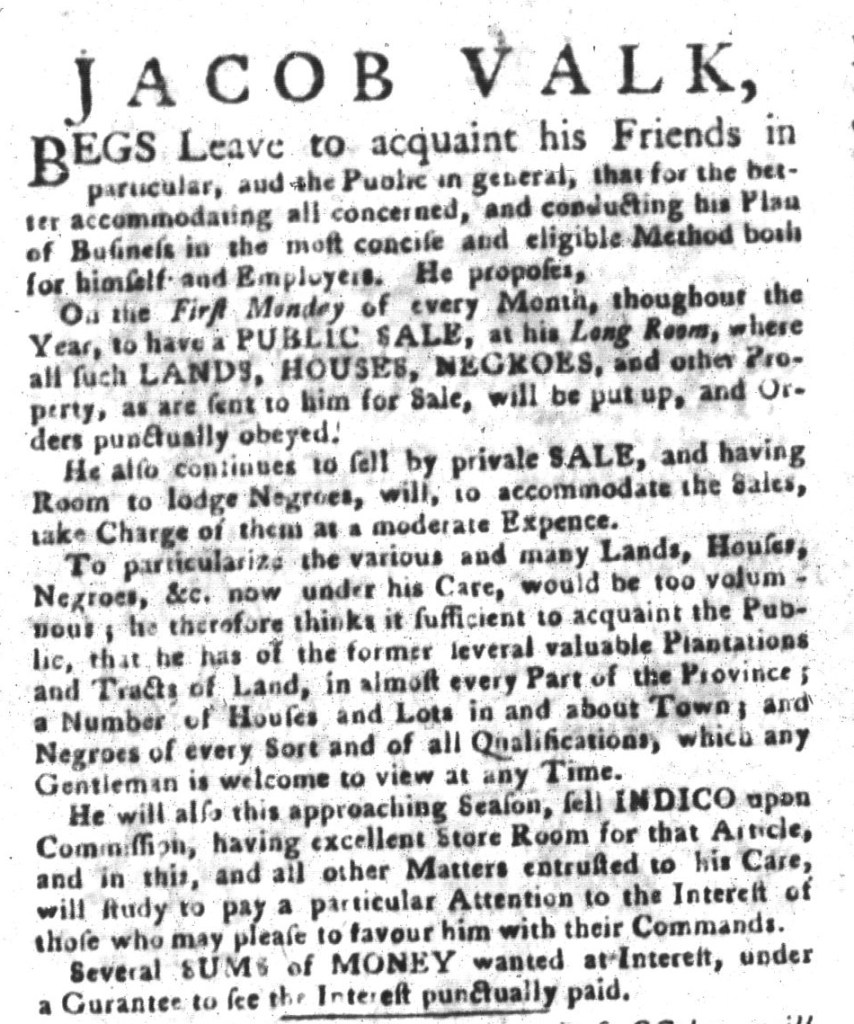
In addition to the horses and housewares, the “Articles” for sale also include people treated as commodities.  The list commenced with a “compleat young House [Woman], with her Child, a young Fellow, a Waiting Man, understands a little of Cookery, and the Management of Horses” and “Two able Men Field Slaves, sold for no known Fault but run-aways.” Crouch, the printer, facilitated the sale of those enslaved people, perhaps even earning a commission.  He certainly generated revenue from running the advertisement in his newspaper, along with more than a dozen advertisements concerning enslaved people in the September 20, 1774, edition of the South-Carolina Gazette and Country Journal.  Peter Bounetheau and Jacob Valk, brokers of “LANDS, HOUSES, NEGROES, and other Property,” placed many of the others, making them good customers for the newspaper.  In this instance, however, Crouch acted as a slave broker, assuming responsibilities beyond printing and disseminating the advertisement.  The placement of the colophon underscored that was the case.  It appeared immediately below the advertisement: “CHARLES-TOWN: Printed by CHARLES CROUCH, on the BAY, the Corner of ELLIOTT-STREET.”

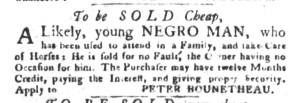
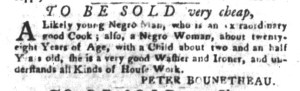
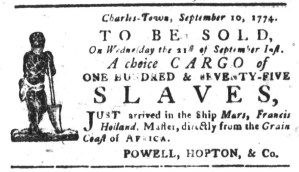
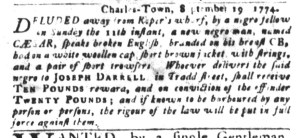
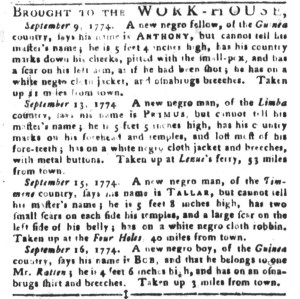
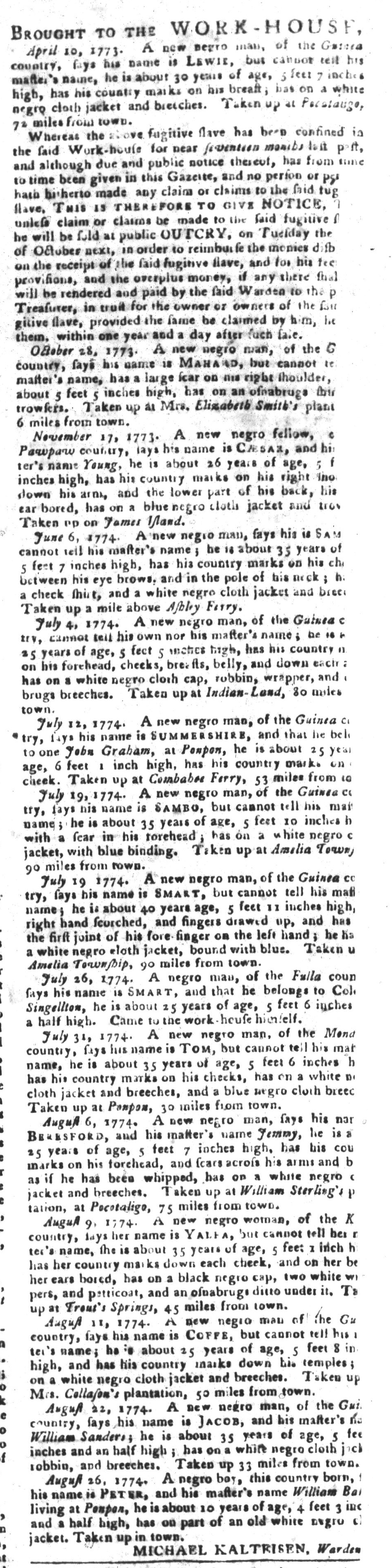
Two days ago, the Slavery Adverts 250 Project, a companion to the Adverts 250 Project, marked eight years of identifying, remediating, and republishing advertisements about enslaved people originally published in American newspapers 250 years ago that day.  To date, the project includes more than 27,000 advertisements place for various purposes, such as enslaved people for sale, enslaved people wanted to purchase or hire, and descriptions of enslaved people who liberated themselves by running away from their enslavers (as two of the enslaved men in today’s advertisement had done at some point, perhaps captured and returned to slavery as a result of the surveillance encouraged by a newspaper advertisement).  In many instances, advertisements offering enslaved people for sale incorporated some variation of “enquire of the printer.”  From New England to Georgia, printers like Crouch provided an information infrastructure for perpetuating slavery and the slave trade and even served as agents who brokered sales of enslaved men, women, and children.

Slavery Advertisements Published September 20, 1774

The Slavery Adverts 250 Project chronicles the role of newspaper advertising in perpetuating slavery in the era of the American Revolution. The project seeks to reveal the ubiquity of slavery in eighteenth-century life from New England to Georgia by republishing advertisements about enslaved people – for sale as individuals or in groups, wanted to purchase or for hire for short periods, runaways who liberated themselves, and those who were subsequently captured and confined in jails and workhouses – in daily digests on this site as well as in real time via the @SlaveAdverts250 Twitter feed, utilizing twenty-first-century media to stand in for the print media of the eighteenth century.

The project aims to provide modern audiences with a sense of just how often colonizers encountered these advertisements in their daily lives. Enslaved men, women, and children appeared in print somewhere in the colonies almost every single day. Those advertisements served as a constant backdrop for social, cultural, economic, and political life in colonial and revolutionary America. Colonizers who did not purport to own enslaved people were still confronted with slavery as well as invited to maintain the system by purchasing enslaved men, women, and children or assisting in the capture of so-called “runaways” who sought to free themselves from bondage. The frequency of these newspaper advertisements suggests just how embedded slavery was in colonial and revolutionary American culture in everyday interactions beyond the printed page.

These advertisements also testify to the experiences of enslaved men, women, and children, though readers must consider that those experiences have been remediated through descriptions offered by enslavers rather than enslaved people themselves. Often unnamed in the advertisements, enslaved men, women, and children were not invisible or unimportant in early America.

These advertisements appeared in colonial American newspapers 250 years ago today.

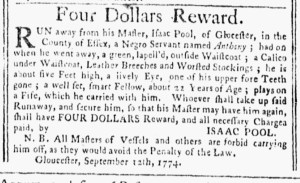
Essex Gazette (September 20, 1774).

**********

Essex Gazette (September 20, 1774).

**********

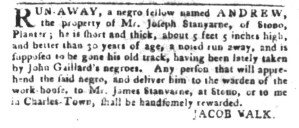
South-Carolina Gazette and Country Journal (September 20, 1774).

**********

South-Carolina Gazette and Country Journal (September 20, 1774).

**********

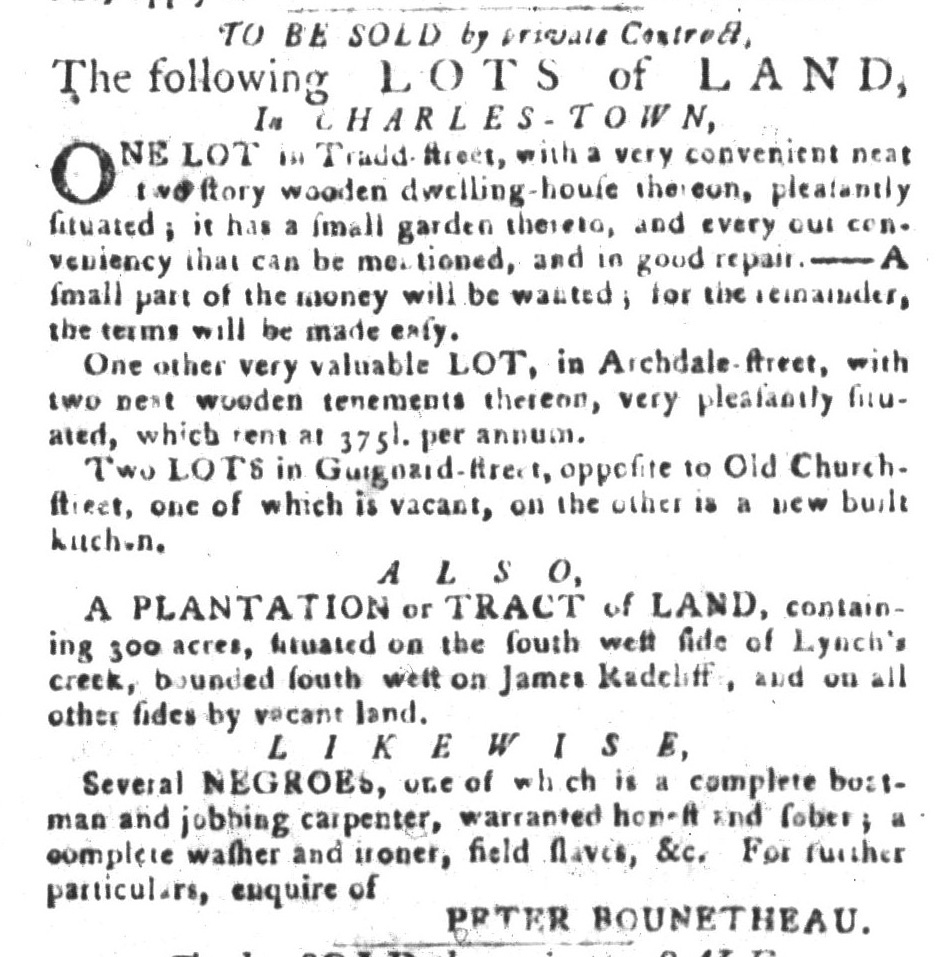
South-Carolina Gazette and Country Journal (September 20, 1774).

**********

South-Carolina Gazette and Country Journal (September 20, 1774).

**********

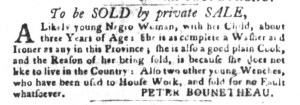
South-Carolina Gazette and Country Journal (September 20, 1774).

**********

South-Carolina Gazette and Country Journal (September 20, 1774).

**********

South-Carolina Gazette and Country Journal (September 20, 1774).

**********

South-Carolina Gazette and Country Journal (September 20, 1774).

**********

South-Carolina Gazette and Country Journal (September 20, 1774).

**********

South-Carolina Gazette and Country Journal (September 20, 1774).

**********

South-Carolina Gazette and Country Journal (September 20, 1774).

**********

South-Carolina Gazette and Country Journal (September 20, 1774).

**********

South-Carolina Gazette and Country Journal (September 20, 1774).