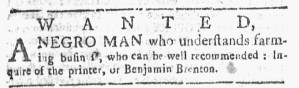
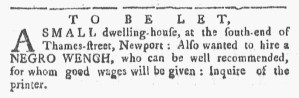
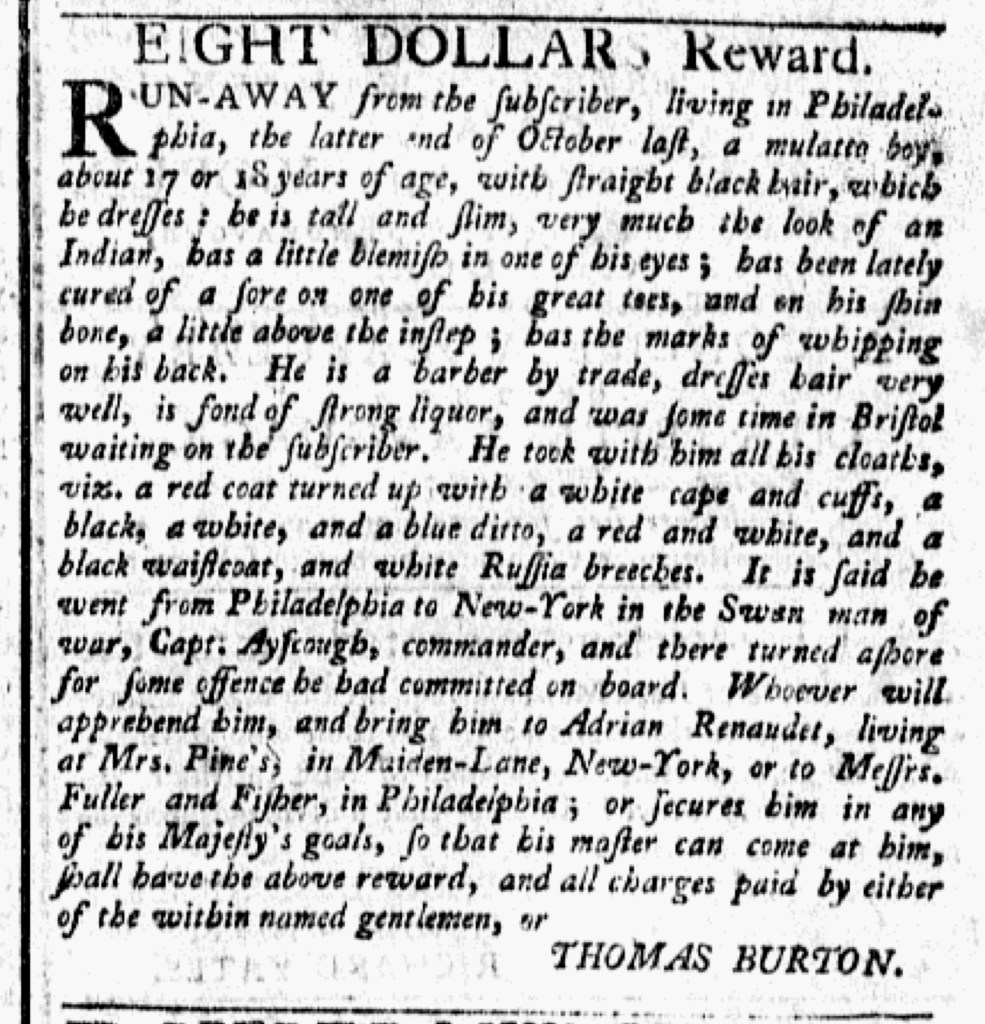
Slavery Advertisements Published January 13, 1775

The Slavery Adverts 250 Project chronicles the role of newspaper advertising in perpetuating slavery in the era of the American Revolution. The project seeks to reveal the ubiquity of slavery in eighteenth-century life from New England to Georgia by republishing advertisements about enslaved people – for sale as individuals or in groups, wanted to purchase or for hire for short periods, runaways who liberated themselves, and those who were subsequently captured and confined in jails and workhouses – in daily digests on this site as well as in real time via the @SlaveAdverts250 Twitter feed, utilizing twenty-first-century media to stand in for the print media of the eighteenth century.

The project aims to provide modern audiences with a sense of just how often colonizers encountered these advertisements in their daily lives. Enslaved men, women, and children appeared in print somewhere in the colonies almost every single day. Those advertisements served as a constant backdrop for social, cultural, economic, and political life in colonial and revolutionary America. Colonizers who did not purport to own enslaved people were still confronted with slavery as well as invited to maintain the system by purchasing enslaved men, women, and children or assisting in the capture of so-called “runaways” who sought to free themselves from bondage. The frequency of these newspaper advertisements suggests just how embedded slavery was in colonial and revolutionary American culture in everyday interactions beyond the printed page.

These advertisements also testify to the experiences of enslaved men, women, and children, though readers must consider that those experiences have been remediated through descriptions offered by enslavers rather than enslaved people themselves. Often unnamed in the advertisements, enslaved men, women, and children were not invisible or unimportant in early America.

These advertisements appeared in colonial American newspapers 250 years ago today.
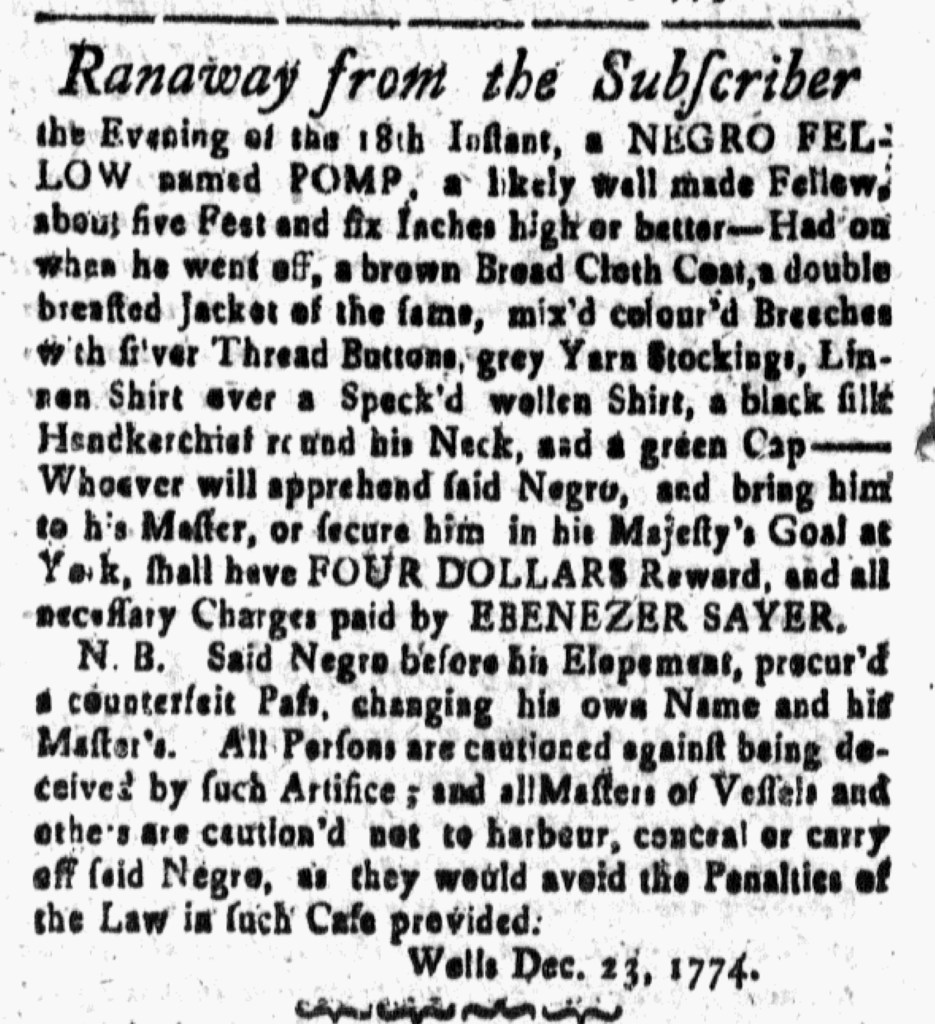
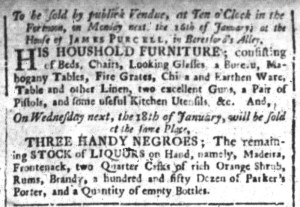
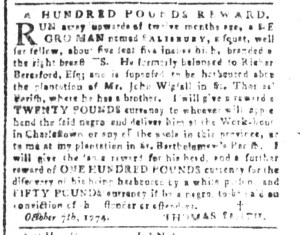
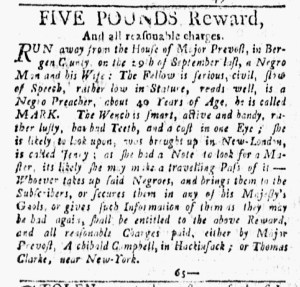
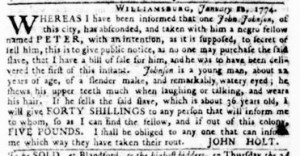
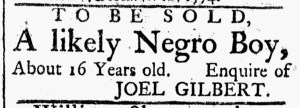
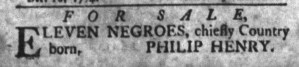
Connecticut Gazette (January 13, 1775).

**********

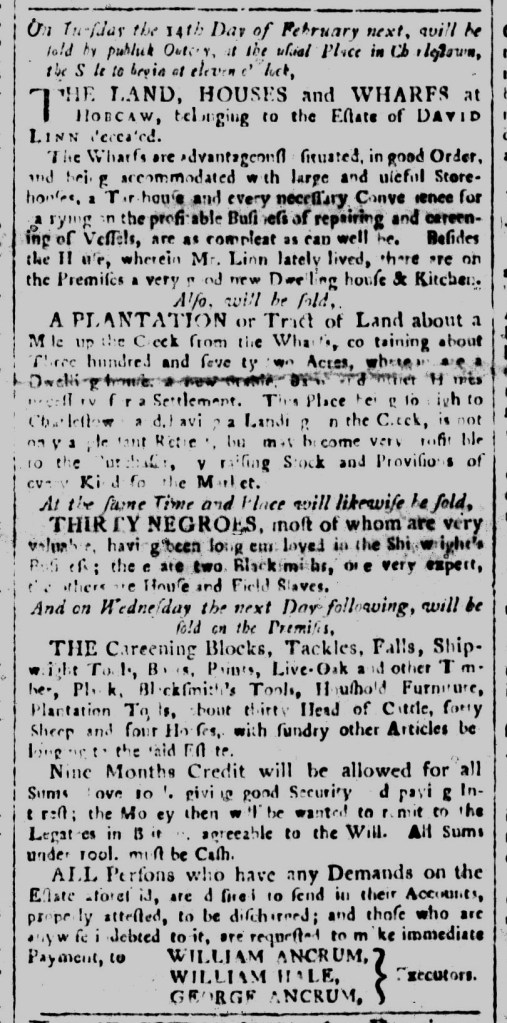
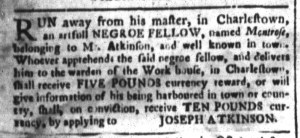
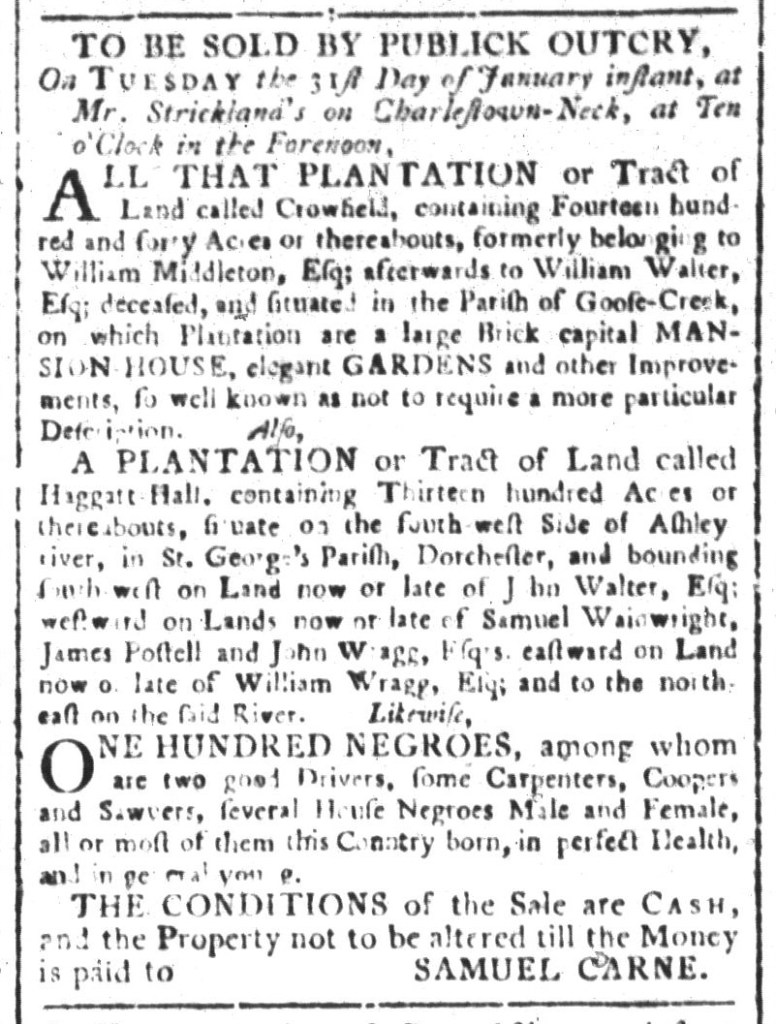
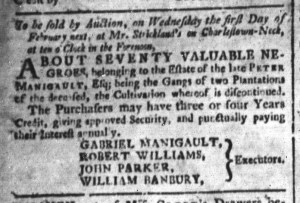
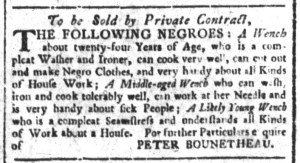
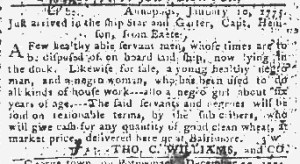
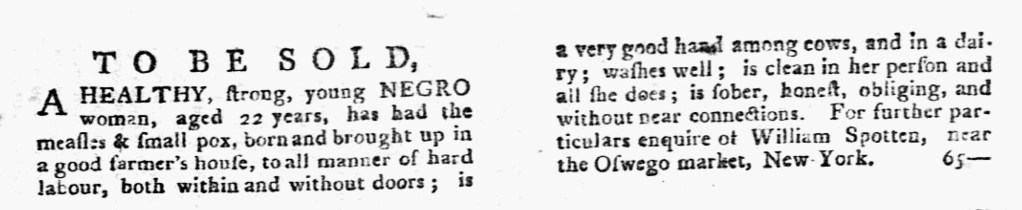
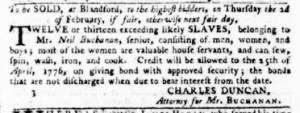
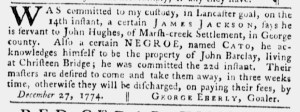
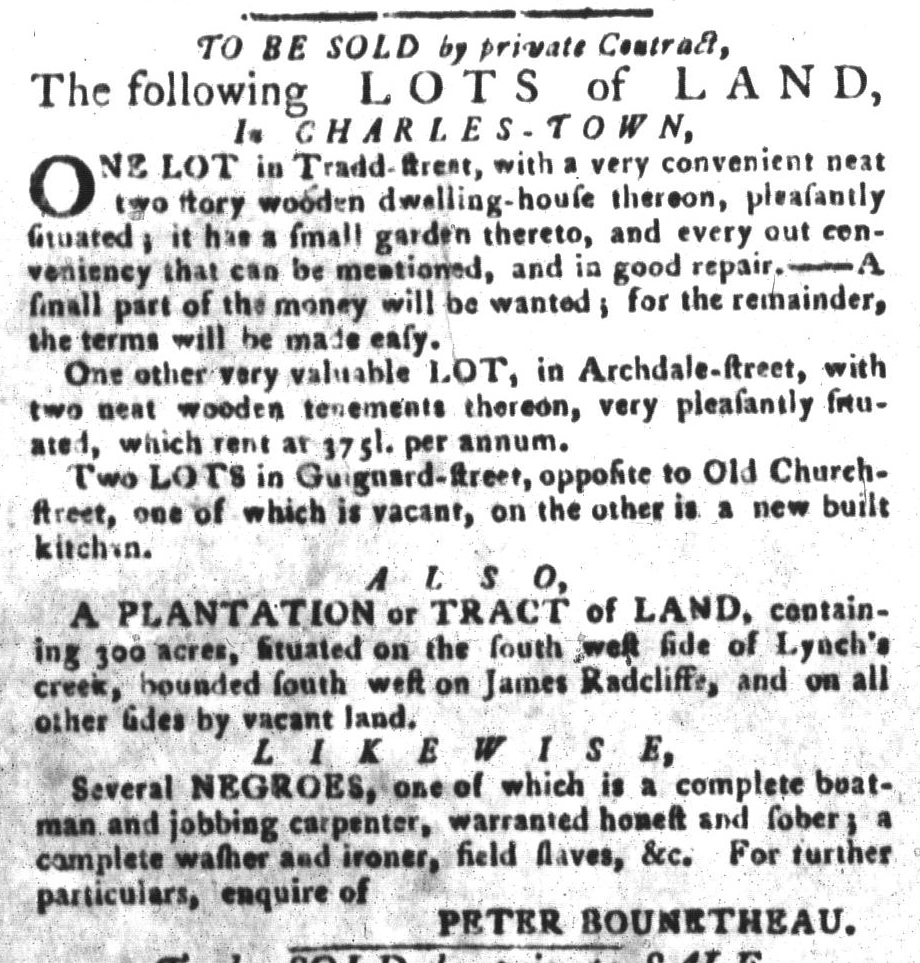
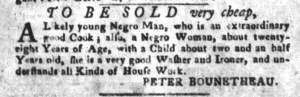
South-Carolina and American General Gazette (January 13, 1775).

**********

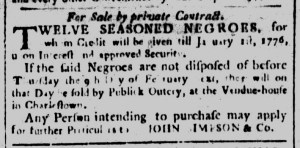
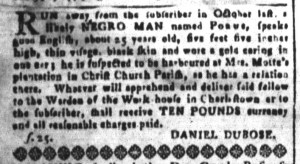
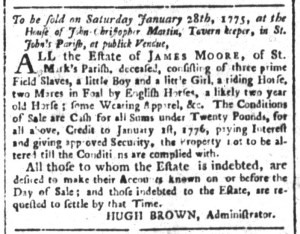
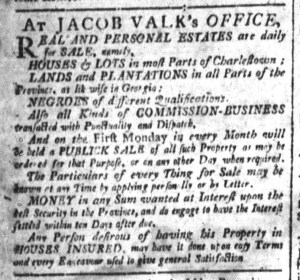
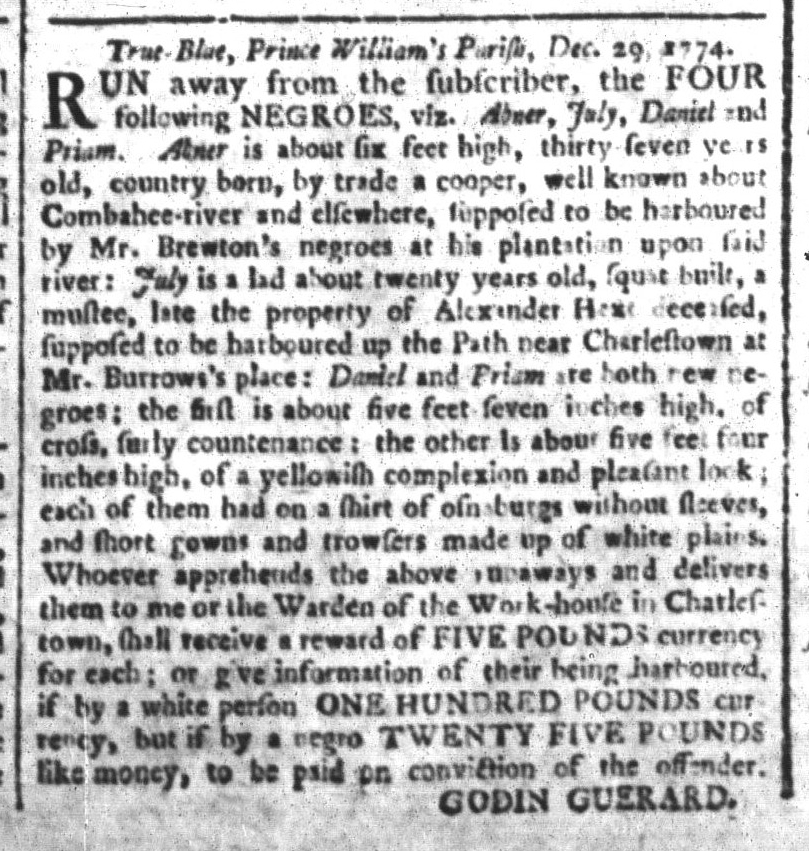
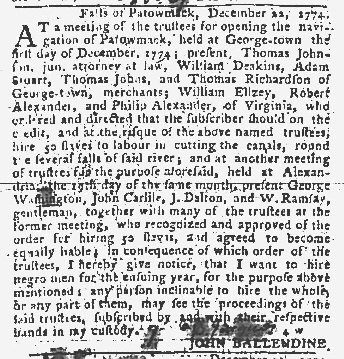
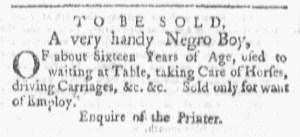
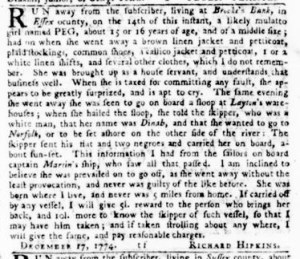
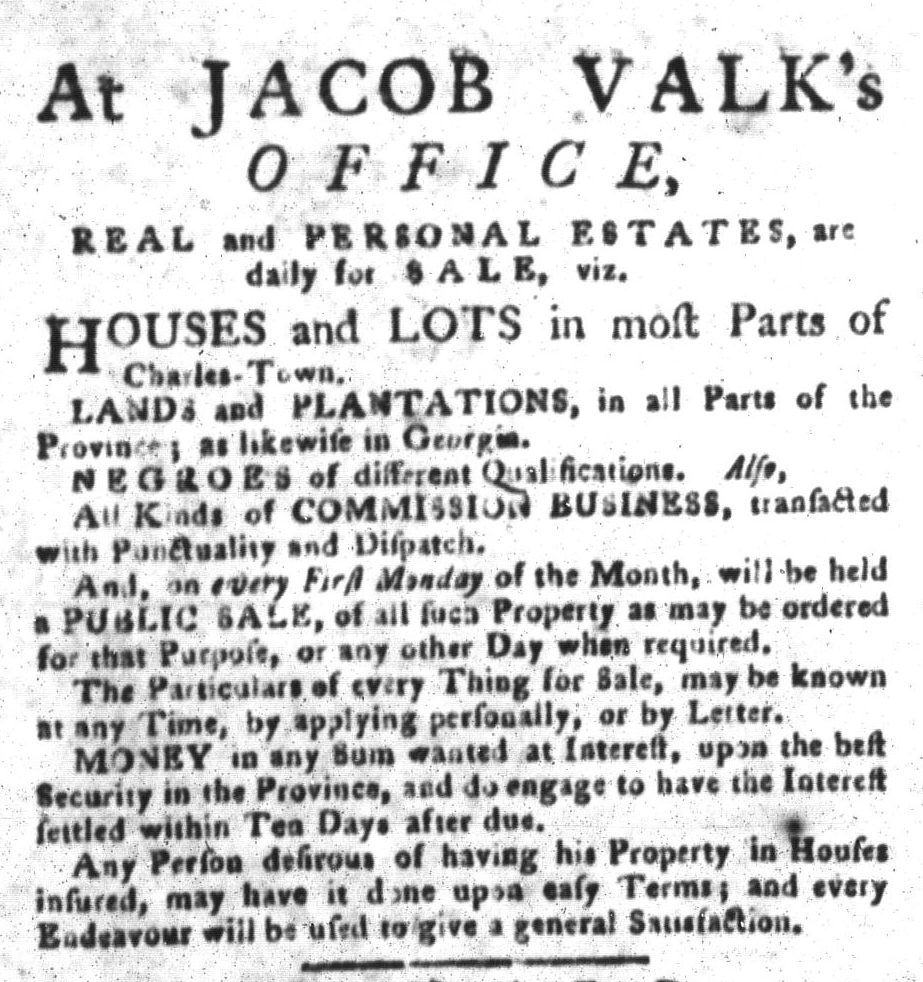
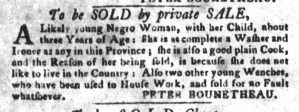
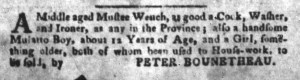
South-Carolina and American General Gazette (January 13, 1775).

**********
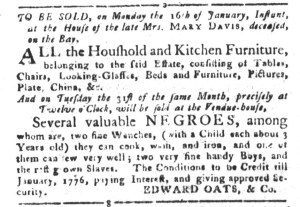
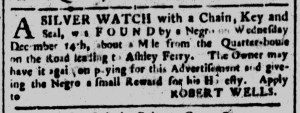
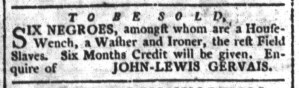
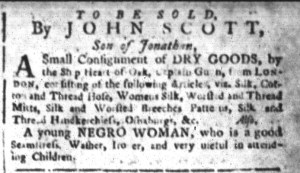
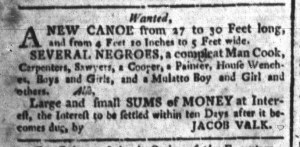
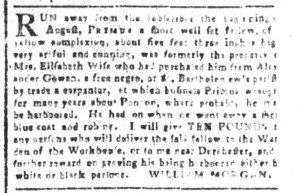
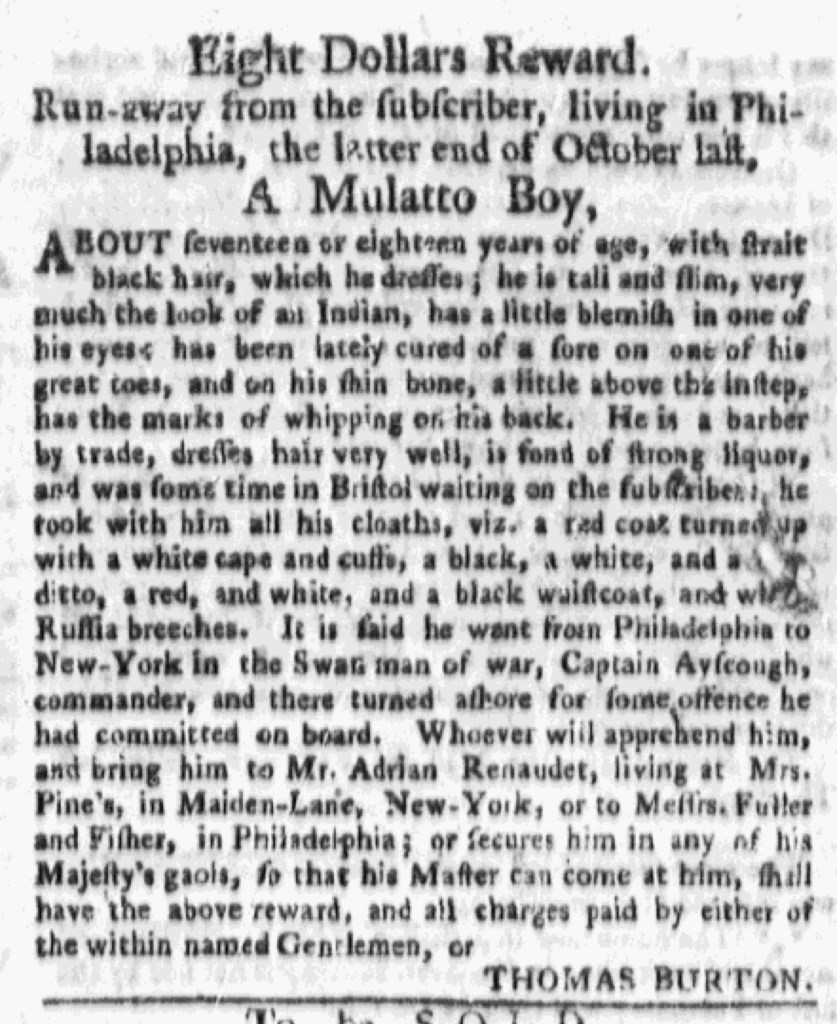
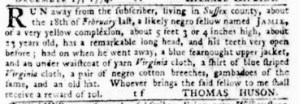
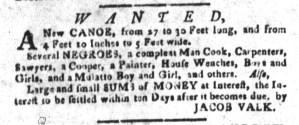
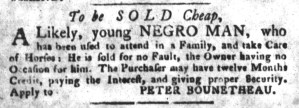
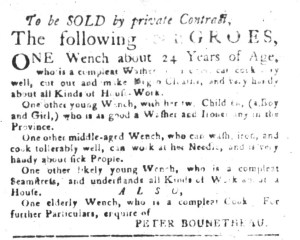
South-Carolina and American General Gazette (January 13, 1775).

**********
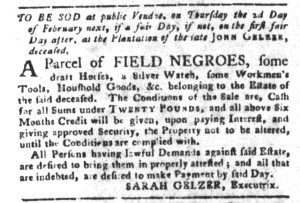
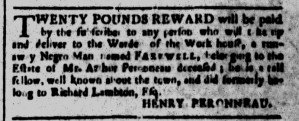
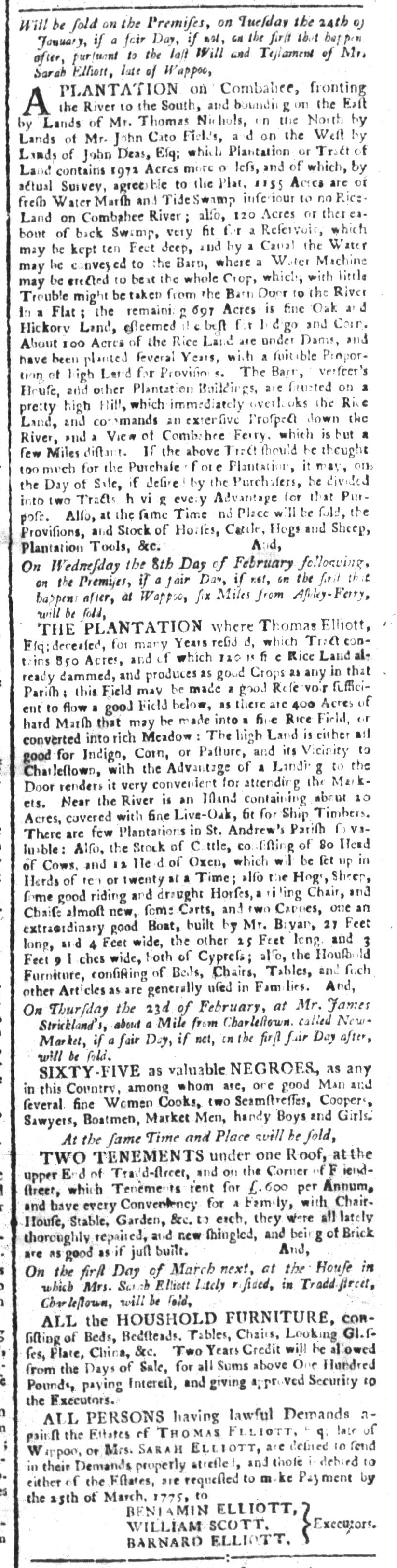
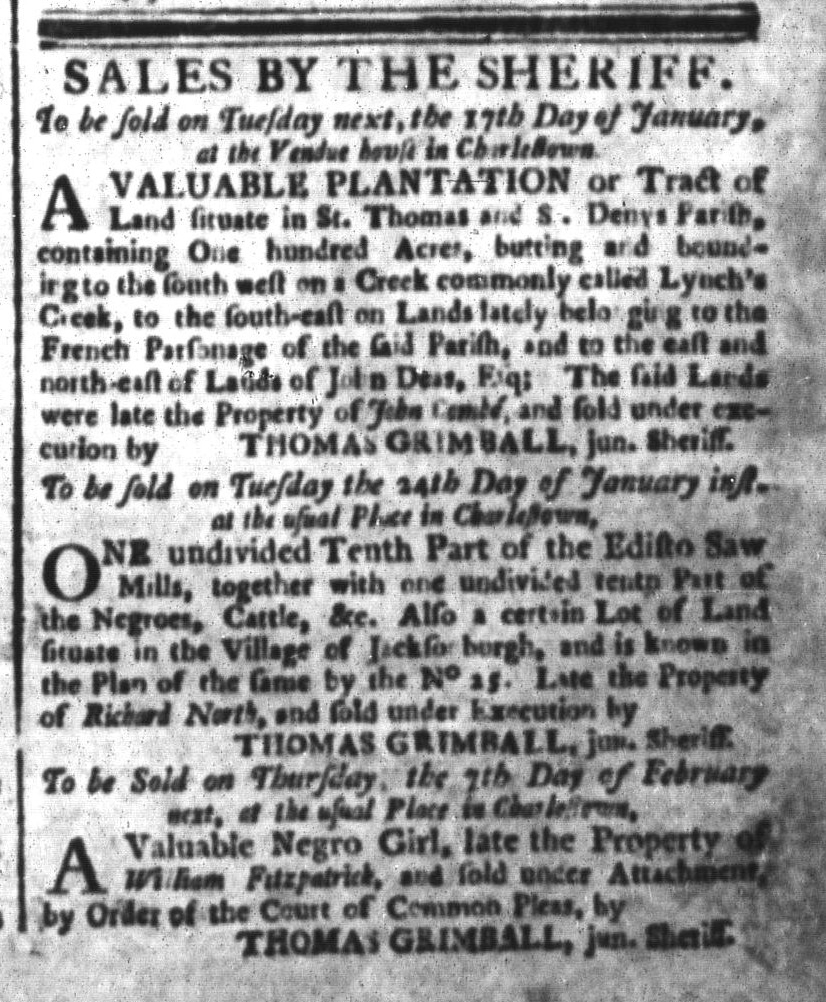
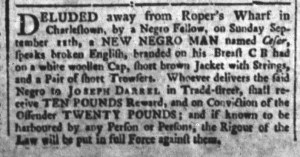
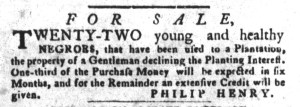
South-Carolina and American General Gazette (January 13, 1775).

**********
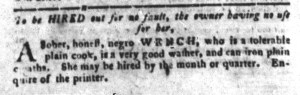
South-Carolina and American General Gazette (January 13, 1775).

**********
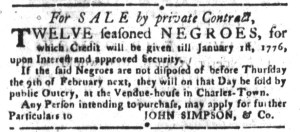
South-Carolina and American General Gazette (January 13, 1775).

**********
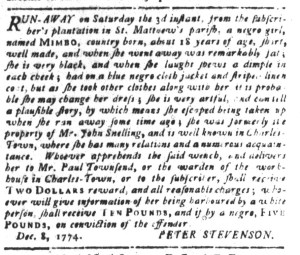
South-Carolina and American General Gazette (January 13, 1775).

**********
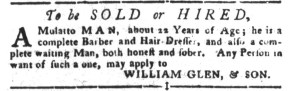
South-Carolina and American General Gazette (January 13, 1775).

**********
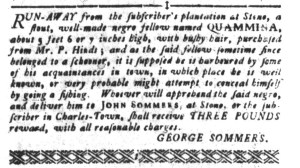
South-Carolina and American General Gazette (January 13, 1775).

**********
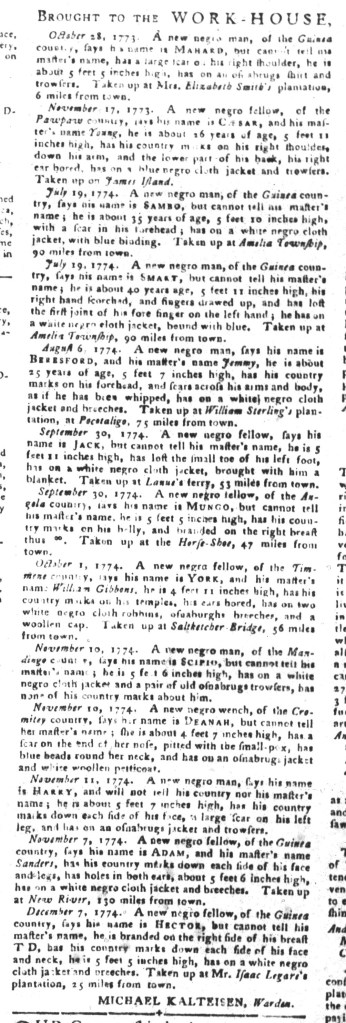
South-Carolina and American General Gazette (January 13, 1775).

**********
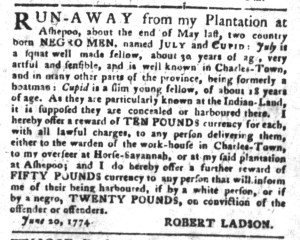
South-Carolina and American General Gazette (January 13, 1775).

**********

South-Carolina and American General Gazette (January 13, 1775).

**********

South-Carolina and American General Gazette (January 13, 1775).

**********

South-Carolina and American General Gazette (January 13, 1775).

**********

South-Carolina and American General Gazette (January 13, 1775).

**********

South-Carolina and American General Gazette (January 13, 1775).

**********

South-Carolina and American General Gazette (January 13, 1775).

**********

South-Carolina and American General Gazette (January 13, 1775).

**********

South-Carolina and American General Gazette (January 13, 1775).

**********

South-Carolina and American General Gazette (January 13, 1775).

**********

South-Carolina and American General Gazette (January 13, 1775).

**********

South-Carolina and American General Gazette (January 13, 1775).

January 12

What was advertised in a colonial American newspaper 250 years ago today?

Supplement to the New-York Journal (January 12, 1775).

“A GENERAL and complete assortment of MUFFS and TIPPETS.”

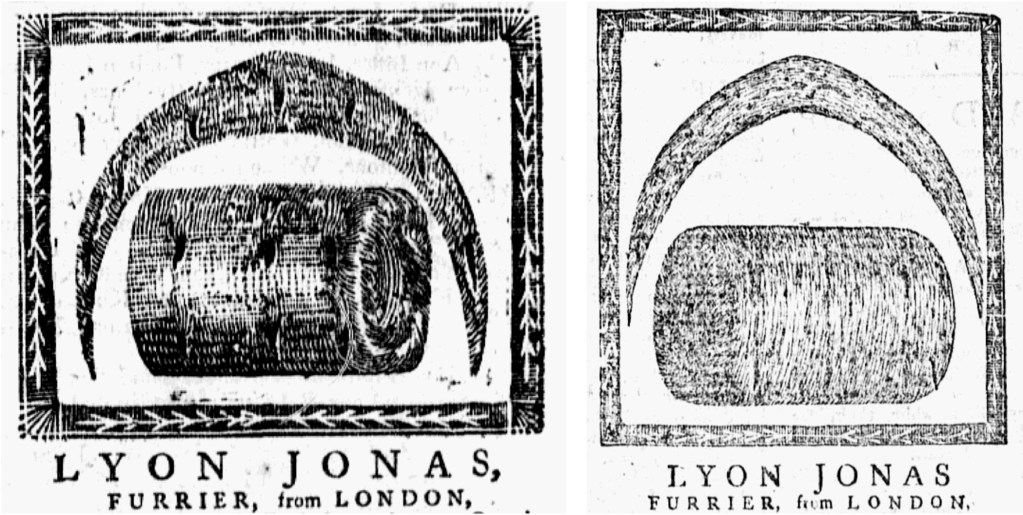
Lyon Jonas, a “FURRIER, from LONDON,” was consistent in his advertising in two newspapers published in New York on the eve of the American Revolution.  He ran notices with identical copy in the New-York Gazette and Weekly Mercury in November 1774 and the New-York Journal in January 1775.  As was often the case when advertisers purchased space in more than one publication, the notices featured variations in format at the discretion of the compositor, including line breaks and capitalization.  Otherwise, the copy in Jonas’s advertisement was identical.  Rather than writing it out twice, the furrier may very well have clipped his advertisement from one newspaper to submit to the printing office of the other.

The two notices featured another striking similarity.  Both were adorned with a woodcut depicting a muff and a tippet enclosed within a decorative border, the size of the image accounting for approximately half of the space of the advertisement and certainly drawing attention.  Advertisers commissioned such distinctive woodcuts to promote their businesses, making additional investments in their marketing efforts.  In most instances that they incorporated images into advertisements in more than one newspaper, they collected their woodcut from one printing office and delivered it to another.

Jonas, however, commissioned a second woodcut.  Though similar at a glance, enough so that consumers would recognize the devise that represented Jonas’s business, the woodcuts had several variations.  The one in the New-York Gazette and Weekly Mercury was rectangular while the one in the New-York Journal was nearly a square.  The borders had different decorative elements, especially the corners.  The muffs faced opposite directions.  The ends of the tipped almost touched the border in the woodcut in the New-York Journal, but much more space appeared between the ends and the border in the version in the New-York Gazette and Weekly Mercury.

Most advertisers who adorned their newspaper notices with custom images limited their investment to one woodcut, transferring it from printing office to printing office when they wished to include those images in more than one publication.  Jonas, however, opted for a second woodcut.  Doing so allowed him, if he wished, to circulate advertisements with identical copy accompanied by distinctive images in two newspapers simultaneously without having to worry about the logistics of the printing offices sharing a single woodcut.

Left: New-York Gazette and Weekly Mercury (November 21, 1774); Right: Supplement to the New-York Journal (January 12, 1775).

Slavery Advertisements Published January 12, 1775

The Slavery Adverts 250 Project chronicles the role of newspaper advertising in perpetuating slavery in the era of the American Revolution. The project seeks to reveal the ubiquity of slavery in eighteenth-century life from New England to Georgia by republishing advertisements about enslaved people – for sale as individuals or in groups, wanted to purchase or for hire for short periods, runaways who liberated themselves, and those who were subsequently captured and confined in jails and workhouses – in daily digests on this site as well as in real time via the @SlaveAdverts250 Twitter feed, utilizing twenty-first-century media to stand in for the print media of the eighteenth century.

The project aims to provide modern audiences with a sense of just how often colonizers encountered these advertisements in their daily lives. Enslaved men, women, and children appeared in print somewhere in the colonies almost every single day. Those advertisements served as a constant backdrop for social, cultural, economic, and political life in colonial and revolutionary America. Colonizers who did not purport to own enslaved people were still confronted with slavery as well as invited to maintain the system by purchasing enslaved men, women, and children or assisting in the capture of so-called “runaways” who sought to free themselves from bondage. The frequency of these newspaper advertisements suggests just how embedded slavery was in colonial and revolutionary American culture in everyday interactions beyond the printed page.

These advertisements also testify to the experiences of enslaved men, women, and children, though readers must consider that those experiences have been remediated through descriptions offered by enslavers rather than enslaved people themselves. Often unnamed in the advertisements, enslaved men, women, and children were not invisible or unimportant in early America.

These advertisements appeared in colonial American newspapers 250 years ago today.

Maryland Gazette (January 12, 1775).

**********

Maryland Gazette (January 12, 1775).

**********

Maryland Gazette (January 12, 1775).

**********

Maryland Gazette (January 12, 1775).

**********

Maryland Gazette (January 12, 1775).

**********

Maryland Gazette (January 12, 1775).

**********

Massachusetts Spy (January 12, 1775).

**********

New-York Journal (January 12, 1775).

**********

Supplement to the New-York Journal (January 12, 1775).

**********

Supplement to the New-York Journal (January 12, 1775).

**********

Supplement to the New-York Journal (January 12, 1775).

**********

Rivington’s New-York Gazetteer (January 12, 1775).

**********

Rivington’s New-York Gazetteer (January 12, 1775).

**********

Virginia Gazette [Pinkney] (January 12, 1775).

**********

Virginia Gazette [Pinkney] (January 12, 1775).

**********

Virginia Gazette [Pinkney] (January 12, 1775).

**********

Virginia Gazette [Pinkney] (January 12, 1775).

**********

Virginia Gazette [Pinkney] (January 12, 1775).

**********

Virginia Gazette [Pinkney] (January 12, 1775).

**********

Virginia Gazette [Pinkney] (January 12, 1775).

**********

Virginia Gazette [Pinkney] (January 12, 1775).

January 11

GUEST CURATOR:  Nicholas Arruda

What was advertised in a colonial American newspaper 250 years ago today?

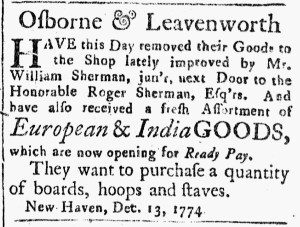
Connecticut Journal (January 11, 1775).

“A fresh Assortment of European & India GOODS.”

Osborne and Leavenworth advertised a “fresh Assortment of European & India GOODS” in the Connecticut Journalon January 11, 1775.  Their advertisement was dated December 13, 1774, very shortly after the implementation of the Continental Association on December 1.  In October 1774, the First Continental Congress organized that nonimportation agreement in response to the oppressive policies of Great Britain, especially the Coercive Acts.  Osborne and Leavenworth may have been undertaking a clearance sale on stock acquired prior to the importation ban.  In The Colonial Merchants and the American Revolution, 1763-1776, Arthur M. Schlesinger observes that merchants had to comply with boycott agreements while they had preexisting inventories to manage.  He observes that “the enforcement of non-importation agreements placed merchants in a precarious position, compelling them to balance between patriotic compliance and economic survival.”[1]  Osborne and Leavenworth probably advertised goods imported before the Continental Association went into effect and colonists refused to import British goods as a sign of unity.

**********

ADDITIONAL COMMENTARY:  Carl Robert Keyes

Osborne and Leavenworth’s advertisement does indeed raise questions about when they received their goods compared to when the Continental Association went into effect.  They placed their notice to advise prospective customers that they had moved to a new location and received a new shipment that they “are now opening.”  They did not specify when that “fresh Assortment” arrived, though they likely hoped that readers would assume they acquired their wares before December 1.  After all, it took time to unpack goods and prepare them for sale, especially when setting up shop in a new location.  Alternately, the goods may have arrived in the colonies, likely New York, prior to December 1 before merchants there dispatched them to Osborne and Leavenworth in New Haven.

The date that appeared in their advertisement made it possible to reach the conclusion that they peddled only wares imported before December 1.  Other merchants and shopkeepers who advertised in the same issue of the Connecticut Journal did not give any indication about when they received merchandise that they promoted as new arrivals.  Jeremiah Atwater, for instance, “just received a fresh Assortment of GOODS.”  Similarly, Anthony Perit “just received a large and general Assortment of English and India GOODS.”  Yet neither of them included any dates nor mentioned the Continental Association.  Josiah Burr proclaimed that he “just receiv’d a large Assortment of GOODS” and gave an extensive list of imported textiles, housewares, and groceries (including tea) in an advertisement dated “Jan. 1775,” well after the Continental Association commenced.  Perhaps each of these local retailers had received new goods from merchants in New York rather than directly from English ports.  After all, five out of six ships that the custom house in New Haven listed as “ENTERED IN” in the January 11 edition of the Connecticut Journal arrived from New York.  In that case, neither advertisers nor readers may have been concerned about breaking the prohibition on buying and selling imported goods.  Six weeks after the Continental Association went into effect, advertisements for consumer goods in the Connecticut Journal looked much the same as they had for years, unlike some advertisements in newspapers published in major ports that announced the sales of imported goods under the direction of local Committees of Inspection.

**********

[1] Arthur M. Schlesinger, The Colonial Merchants and the American Revolution, 1763-1776 (New York: Frederick Ungar Publishing Company, 1957), 240.

Welcome, Guest Curator Nicholas Arruda

Nicholas Arruda is a junior at Assumption University.  He is pursuing a major in History with a double minor in Education and Medieval and Early Modern Studies.  He attained the rank of Eagle Scout in 2021.  On campus, he is the manager of the Men’s Basketball team and a recipient of the Light the Way Scholarship.  Beyond campus, he has an internship doing archival work at the Worcester Historical Museum.  He also participated in “Living in New England in the Age of Revolutions,” the 2024 American Studies Seminar sponsored by the American Antiquarian Society.  Nicholas made his contributions to the Adverts 250 Project and the Slavery Adverts 250 Project while enrolled in HIS 359 Revolutionary America, 1763-1815, in Fall 2024.

Welcome, guest curator Nicholas Arruda!

Slavery Advertisements Published January 11, 1775

The Slavery Adverts 250 Project chronicles the role of newspaper advertising in perpetuating slavery in the era of the American Revolution. The project seeks to reveal the ubiquity of slavery in eighteenth-century life from New England to Georgia by republishing advertisements about enslaved people – for sale as individuals or in groups, wanted to purchase or for hire for short periods, runaways who liberated themselves, and those who were subsequently captured and confined in jails and workhouses – in daily digests on this site as well as in real time via the @SlaveAdverts250 Twitter feed, utilizing twenty-first-century media to stand in for the print media of the eighteenth century.

The project aims to provide modern audiences with a sense of just how often colonizers encountered these advertisements in their daily lives. Enslaved men, women, and children appeared in print somewhere in the colonies almost every single day. Those advertisements served as a constant backdrop for social, cultural, economic, and political life in colonial and revolutionary America. Colonizers who did not purport to own enslaved people were still confronted with slavery as well as invited to maintain the system by purchasing enslaved men, women, and children or assisting in the capture of so-called “runaways” who sought to free themselves from bondage. The frequency of these newspaper advertisements suggests just how embedded slavery was in colonial and revolutionary American culture in everyday interactions beyond the printed page.

These advertisements also testify to the experiences of enslaved men, women, and children, though readers must consider that those experiences have been remediated through descriptions offered by enslavers rather than enslaved people themselves. Often unnamed in the advertisements, enslaved men, women, and children were not invisible or unimportant in early America.

These advertisements appeared in colonial American newspapers 250 years ago today.

Connecticut Journal (January 11, 1775).

**********

Pennsylvania Gazette (January 11, 1775).

January 10

What was advertised in a colonial American newspaper 250 years ago today?

South-Carolina Gazette and Country Journal (January 10, 1775).

“The Negro Caesar’s Cure for Poison.”

On January 10, 1775, Charles Crouch, the printer of the South-Carolina Gazette and Country Journal, advertised “THE SOUTH-CAROLINA ALMANACK, or Lady’s and Gentleman’s DIARY for the Year of our Lord Christ 1775.”  Like many other printers who promoted almanacs, he attempted to incite interest by listing the contents, including the usual astronomical calculations, “High Water at Charles-Town,” “Days for holding Courts in South-Carolina and Georgia,” “Lists of Public Officers,” and a “Description of the Roads throughout the Continent.”  This almanac contained all sorts of useful information for readers to reference throughout the year.

In addition to the contents, Crouch printed a poem that resonated with current events.  That poem (or perhaps a longer version) presumably appeared in the almanac, a piece of inspiration to inculcate support for the American cause.  As the imperial crisis intensified in the wake of the Coercive Acts and the meeting of the First Continental Congress, the poem called on “AMERICANS! for Freedom firmly join, / Unite your Councils, and your Force combine, / Disarm Oppression — prune Ambition’s Wings, / And stifle Tories, e’er they dart their Stings.”  While the poem in Crouch’s advertisement lamented the loss of “Rights and Liberties” for colonizers, the printer simultaneously disseminated two dozen advertisements about enslaved people in that edition of the South-Carolina Gazette and Country Journal and the supplement that accompanied it.  Yet readers did not need to look beyond the advertisement for the almanac to find references to enslaved people.  The contents included “The Negro Caesar’s Cure for Poison, and the Bite of a Rattle-Snake,” appropriating African knowledge just as so many of the advertisements appropriated African labor.  The exploitation of enslaved people that contributed to the welfare and prosperity of colonizers occurred along multiple trajectories.  Although agricultural labor on plantations has been the most visible of those, newspaper advertisements and other primary sources demonstrate that enslaved Africans and African Americans provided all sorts of knowledge and skilled labor, ranging from remedies like Caesar’s cures for poison and rattlesnake bites to the work undertaken by enslaved coopers, carpenters, cooks, and seamstresses.

Slavery Advertisements Published January 10, 1775

The Slavery Adverts 250 Project chronicles the role of newspaper advertising in perpetuating slavery in the era of the American Revolution. The project seeks to reveal the ubiquity of slavery in eighteenth-century life from New England to Georgia by republishing advertisements about enslaved people – for sale as individuals or in groups, wanted to purchase or for hire for short periods, runaways who liberated themselves, and those who were subsequently captured and confined in jails and workhouses – in daily digests on this site as well as in real time via the @SlaveAdverts250 Twitter feed, utilizing twenty-first-century media to stand in for the print media of the eighteenth century.

The project aims to provide modern audiences with a sense of just how often colonizers encountered these advertisements in their daily lives. Enslaved men, women, and children appeared in print somewhere in the colonies almost every single day. Those advertisements served as a constant backdrop for social, cultural, economic, and political life in colonial and revolutionary America. Colonizers who did not purport to own enslaved people were still confronted with slavery as well as invited to maintain the system by purchasing enslaved men, women, and children or assisting in the capture of so-called “runaways” who sought to free themselves from bondage. The frequency of these newspaper advertisements suggests just how embedded slavery was in colonial and revolutionary American culture in everyday interactions beyond the printed page.

These advertisements also testify to the experiences of enslaved men, women, and children, though readers must consider that those experiences have been remediated through descriptions offered by enslavers rather than enslaved people themselves. Often unnamed in the advertisements, enslaved men, women, and children were not invisible or unimportant in early America.

These advertisements appeared in colonial American newspapers 250 years ago today.

Essex Gazette (January 10, 1775).

**********

South-Carolina Gazette and Country Journal (January 10, 1775).

**********

South-Carolina Gazette and Country Journal (January 10, 1775).

**********

South-Carolina Gazette and Country Journal (January 10, 1775).

**********

South-Carolina Gazette and Country Journal (January 10, 1775).

**********

South-Carolina Gazette and Country Journal (January 10, 1775).

**********

South-Carolina Gazette and Country Journal (January 10, 1775).

**********

South-Carolina Gazette and Country Journal (January 10, 1775).

**********

Supplement to the South-Carolina Gazette and Country Journal (January 10, 1775).

**********

Supplement to the South-Carolina Gazette and Country Journal (January 10, 1775).

**********

Supplement to the South-Carolina Gazette and Country Journal (January 10, 1775).

**********

Supplement to the South-Carolina Gazette and Country Journal (January 10, 1775).

**********

Supplement to the South-Carolina Gazette and Country Journal (January 10, 1775).

**********

Supplement to the South-Carolina Gazette and Country Journal (January 10, 1775).

**********

Supplement to the South-Carolina Gazette and Country Journal (January 10, 1775).

**********

Supplement to the South-Carolina Gazette and Country Journal (January 10, 1775).

**********

Supplement to the South-Carolina Gazette and Country Journal (January 10, 1775).

**********

Supplement to the South-Carolina Gazette and Country Journal (January 10, 1775).

**********

Supplement to the South-Carolina Gazette and Country Journal (January 10, 1775).

**********

Supplement to the South-Carolina Gazette and Country Journal (January 10, 1775).

**********

Supplement to the South-Carolina Gazette and Country Journal (January 10, 1775).

**********

Supplement to the South-Carolina Gazette and Country Journal (January 10, 1775).

**********

Supplement to the South-Carolina Gazette and Country Journal (January 10, 1775).

**********

Supplement to the South-Carolina Gazette and Country Journal (January 10, 1775).

January 9

What was advertised in a colonial American newspaper 250 years ago today?

Maryland Journal (January 9, 1775).

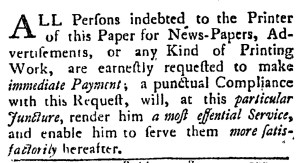
“ALL Persons indebted to the Printer … are earnestly requested to make immediate Payment.”

Among the advertisements that filled the first page of the January 9, 1775, edition of the Maryland Gazette, William Goddard inserted his own notice that requested “ALL Persons indebted to the Printer of this Paper for News-Papers, Advertisements, or any Kind of Printing Work … make immediate Payment.”  Printers often placed such notices calling on subscribers to settle accounts and, sometimes, incorporating overdue payments for other services.

The inclusion of “Advertisements” in Goddard’s notice raises questions about the business model usually associated with colonial printers.  Historians of the early American press have long asserted that printers extended credit for subscriptions while demanding payment in advance for advertisements.  Accordingly, advertising represented the real revenue in publishing newspapers.  Yet several printers periodically called on customers to pay for “Advertisements.”  Those notices, however, do not make clear what they meant by “Advertisements.”  They may have referred to paid notices that appeared in their newspapers, in which case some printers deviated from the (standard?) practice of requiring payment in advance, but they might have instead meant handbills, broadsides, and other advertising media that many printers stated that they could prepare on short notice.

In the colophon at the bottom of the final page, Goddard gave the location of his printing office in Baltimore, “where ADVERTISEMENTS, for ready Money only, and SUBSCRIPTIONS for this PAPER … are taken in.”  That suggests that Goddard did indeed have a policy of insisting on payment for advertisements before printing them in the Maryland Journal.  Does that definitively mean that “Advertisements” in his call for customers to pay their bills meant handbills and broadsides and not newspaper notices?  Not necessarily.  Goddard may have invoked a relatively new policy.  The colophon that asserted that he inserted advertisements “for ready Money only” had been in use for about three months, since October 1774, but prior to that he had used a streamlined version that did not mention any of the services he provided.  In its entirety, it read: “BALTIMORE: Printed by W. GODDARD, at his Printing-Office near the FOUNTAIN-INN, MARKET-STREET.”  Perhaps Goddard previously extended credit to advertisers but changed his policy when too many took advantage.  His notice and his colophons do not give a straightforward answer but instead suggest that the business practices of some printers may have been more complex than often assumed.

Maryland Journal (January 9, 1775).

Slavery Advertisements Published January 9, 1775

The Slavery Adverts 250 Project chronicles the role of newspaper advertising in perpetuating slavery in the era of the American Revolution. The project seeks to reveal the ubiquity of slavery in eighteenth-century life from New England to Georgia by republishing advertisements about enslaved people – for sale as individuals or in groups, wanted to purchase or for hire for short periods, runaways who liberated themselves, and those who were subsequently captured and confined in jails and workhouses – in daily digests on this site as well as in real time via the @SlaveAdverts250 Twitter feed, utilizing twenty-first-century media to stand in for the print media of the eighteenth century.

The project aims to provide modern audiences with a sense of just how often colonizers encountered these advertisements in their daily lives. Enslaved men, women, and children appeared in print somewhere in the colonies almost every single day. Those advertisements served as a constant backdrop for social, cultural, economic, and political life in colonial and revolutionary America. Colonizers who did not purport to own enslaved people were still confronted with slavery as well as invited to maintain the system by purchasing enslaved men, women, and children or assisting in the capture of so-called “runaways” who sought to free themselves from bondage. The frequency of these newspaper advertisements suggests just how embedded slavery was in colonial and revolutionary American culture in everyday interactions beyond the printed page.

These advertisements also testify to the experiences of enslaved men, women, and children, though readers must consider that those experiences have been remediated through descriptions offered by enslavers rather than enslaved people themselves. Often unnamed in the advertisements, enslaved men, women, and children were not invisible or unimportant in early America.

These advertisements appeared in colonial American newspapers 250 years ago today.

Boston Evening-Post (January 9, 1775).

**********

Connecticut Courant (January 9, 1775).

**********

Connecticut Courant (January 9, 1775).

**********

Connecticut Courant (January 9, 1775).

**********

Newport Mercury (January 9, 1775).

**********

Newport Mercury (January 9, 1775).

**********

New-York Gazette and Weekly Mercury (January 9, 1775).