December 20

What was advertised in a revolutionary American newspaper 250 years ago today?

Pennsylvania Journal (December 20, 1775).

“Any person desirous of information concerning the character … of Mrs. Brodeau, may apply to … B. FRANKLIN.”

When she arrived in Philadelphia, “Mrs. BRODEAU, from England,” placed advertisements in the Pennsylvania Gazette and the Pennsylvania Journal as a means of “acquainting her friends and the public in general, that she has opened a boarding school in Walnut-street.”  She sought pupils of a certain status, pledging that “young ladies will be genteelly boarded, and taught to read and speak the French and English language; the tambour embroidery, and every kind of useful and ornamental needle work.”  In addition to the curriculum, Brodeau promoted her supervision of her charges, stating that she “hopes to prove by her assiduity and attention to the morals and behaviour of these ladies entrusted to her care, that she in some measure merits the recommendations she has been favoured with from her native country.”  Like many other schoolmasters and schoolmistresses who advertised in Philadelphia’s newspapers during the era of the American Revolution, Brodeau emphasized moral development as well as curriculum.[1]

The parents and guardians of prospective students did not have to take Brodeau’s word for it.  Instead, she inserted a testimonial from Robert Morris, the influential merchant, and Benjamin Franklin, the retired printer turned politician and diplomat.  “Any person desirous of information concerning the character and recommendations of Mrs. Brodeau,” they stated, “may apply to either of us.”  According to Claude-Anne Lopez, associated editor of the Papers of Benjamin Franklin, that was, “so far as we know, the only time that Franklin backed an enterprise of that kind with his name.”[2]  Lopez further explains that Anna Brodeau “suddenly and rather mysteriously appeared in Philadelphia with a baby daughter in her arms,”[3] yet “[n]othing is known about a Mr. Brodeau.”  If residents of Philadelphia had any concerns about Brodeau’s background, the endorsement from Franklin and Morris likely countered their concerns.  Still, the advertisement apparently did not garner as much response as Brodeau hoped when she placed it in the December 6 edition of the Pennsylvania Gazette, the newspaper that Franklin formerly printed.  Two weeks later she placed the same advertisement in the Pennsylvania Journal.  Those efforts helped launch her boarding school.  By the end of the Revolutionary War, Franklin’s daughter, Sarah Bache, wrote to her father that Brodeau “has made a handsome fortune.”  Despite the disruptions of the war, she established her boarding school and her reputation.  Lopez chronicles other accolades for Brodeau that appeared in print, including a poem by an anonymous contributor to the Columbian Magazine in 1786 and her obituary in the National Intelligencer in 1836.  With words of support from Franklin and Morris, Brodeau soon “attracted students from the best families in Philadelphia.”[4]  Her marketing incorporated the eighteenth-century version of a celebrity endorsement.

**********

[1] Carl Robert Keyes, “Selling Gentility and Pretending Morality: Education and Newspaper Advertisements in Philadelphia, 1765-1775,” Pennsylvania Magazine of History and Biography 141, no. 3 (October 2017): 245-274.

[2] Claude-Anne Lopez, “Benjamin Franklin and William Dodd: A New Look at an Old Vause Célèbre,” Proceedings of the American Philosophical Society 129, no. 3 (September 1985): 262.

[3] Lopez, “Benjamin Franklin and William Dodd,” 262, 263.

[4]Lopez, “Benjamin Franklin and William Dodd,” 263.
Slavery Advertisements Published December 20, 1775

GUEST CURATOR: Massimo Sgambati

The Slavery Adverts 250 Project chronicles the role of newspaper advertising in perpetuating slavery in the era of the American Revolution. The project seeks to reveal the ubiquity of slavery in eighteenth-century life from New England to Georgia by republishing advertisements about enslaved people – for sale as individuals or in groups, wanted to purchase or for hire for short periods, runaways who liberated themselves, and those who were subsequently captured and confined in jails and workhouses – in daily digests on this site as well as in real time via the @SlaveAdverts250 Twitter feed, utilizing twenty-first-century media to stand in for the print media of the eighteenth century.
The project aims to provide modern audiences with a sense of just how often colonizers encountered these advertisements in their daily lives. Enslaved men, women, and children appeared in print somewhere in the colonies almost every single day. Those advertisements served as a constant backdrop for social, cultural, economic, and political life in colonial and revolutionary America. Colonizers who did not purport to own enslaved people were still confronted with slavery as well as invited to maintain the system by purchasing enslaved men, women, and children or assisting in the capture of so-called “runaways” who sought to free themselves from bondage. The frequency of these newspaper advertisements suggests just how embedded slavery was in colonial and revolutionary American culture in everyday interactions beyond the printed page.

These advertisements also testify to the experiences of enslaved men, women, and children, though readers must consider that those experiences have been remediated through descriptions offered by enslavers rather than enslaved people themselves. Often unnamed in the advertisements, enslaved men, women, and children were not invisible or unimportant in early America.

From compiling an archive of digitized eighteenth-century newspapers to identifying advertisements about enslaved men, women, and children in those newspapers to preparing images of each advertisement to posting this daily digest, Massimo Sgambati served as guest curator for this entry. He completed this work as part of the Summer Scholars Program, funded by a fellowship from the D’Amour College of Liberal Arts and Sciences at Assumption University in Worcester, Massachusetts, in Summer 2025.

These advertisements appeared in colonial American newspapers 250 years ago today.

Maryland Journal (December 20, 1775)

December 19

What was advertised in a revolutionary American newspaper 250 years ago today?

Dunlap’s Maryland Gazette (December 19, 1775).

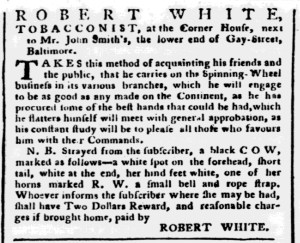
“He carries on the Spinning-Wheel business in its various branches.”

In the final weeks of 1775, Robert White, a tobacconist in Baltimore, diversified his business.  He inserted an advertisement in the December 19 edition of Dunlap’s Maryland Gazette that announced that “he carries on the Spinning-Wheel business in its various branches.”  Why would a tobacconist decide to go into that line of business?  The Continental Association, a nonimportation and nonconsumption agreement devised by the Furst Continental Congress, remained in effect.  It called on colonizers to replace imported goods, including textiles, with alternatives produced in the colonies.  That meant more time spent spinning, a domestic chore that gained political significance.  Women styled Daughters of Liberty in newspaper accounts participated in public spinning bees to demonstrate their patriotism and inspire others to follow their example in their own homes.  To do so, they needed the right equipment.  White saw an expanding market for spinning wheels.

He was not alone in marketing equipment for producing homespun cloth.  His advertisement happened to appear immediately above Fergus McIllroy’s notice promoting “LOOMS made properly, for carrying on the Linen and Woolen Weaving-business.”  McIllroy, a “House Joiner,” also pursued a new line of work, though in his case doing so did not depart nearly as much from his primary occupation.  In addition, he reported that he had previously constructed more than two hundred looms in Ireland before migrating to the colonies.  White, the tobacconist, did not invoke such experience when it came to spinning wheels, yet he confidently proclaimed that he “will engage” his spinning wheels “to be as good as any made on the Continent” because “he has procured some of the best hands that could be had.”  In turn, White “flatters himself” that his workers and the spinning wheels they produced “will meet with general approbation” or approval from customers.  The tobacconist apparently served as a supervisor, an entrepreneur who established a business when he identified need for it during difficult time yet did not participate in making the spinning wheels.  Instead, in overseeing his new business, he pledged that “his constant study will be to please all those who favours him with their Commands.”  With no resolution in sight for the imperial crisis that became a war the previous April, White’s advertisement likely resonated with readers who understand the political implications of a tobacconist deciding to produce spinning wheels.

December 18

What was advertised in a revolutionary American newspaper 250 years ago today?

Connecticut Courant (December 18, 1775).

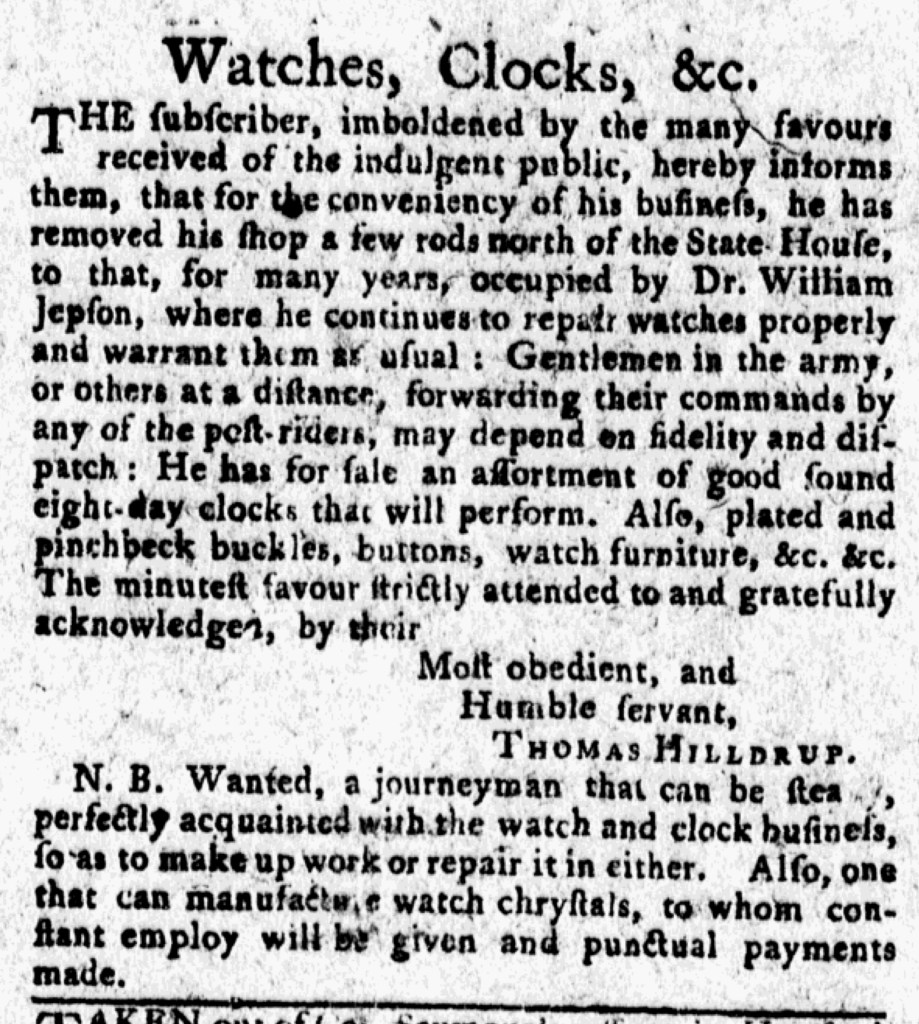
“Gentlemen in the army … forwarding their commands by any of the post-riders, may depend on fidelity and dispatch.”

Thomas Hilldrup, a watch- and clockmaker, had a history of running engaging advertisements in newspapers printed in Connecticut in the 1770s.  He once again took to the pages of the Connecticut Courant and Hartford Weekly Intelligenceron December 18, 1775, this time informing existing and prospective clients that he had moved to a new location.  In framing this announcement, he asserted that he had already built a reputation and earned the trust of many customers.  Having been “imboldened by the many favours received of the indulgent public,” Hilldrup declared, he “hereby informs them that for the conveniency of his business, he has removed his shop a few rods north of the State-House, to that, for many years, occupied by Dr. William Jepson.”  He supplemented this announcement with assurances about his skill and the quality of his work, stating that he “continues to repair watches properly and warrant them as usual.”

Realizing that the Connecticut Courant circulated far beyond Hartford, Hilldrup took the opportunity to address “Gentlemen in the army, or others at a distance.”  Like other watchmakers, he provided mail order services for cleaning and repairs.  He promised those clients that by “forwarding their commands by any of the post-riders” they “may depend on fidelity and dispatch.”  As the Continental Army continued the siege of Boston, Hilldrup may have known that some of the clients he served in recent years too part in that endeavor.  In an unfamiliar place that experienced some of the most significant disruptions during the first year of the Revolutionary War, they may have been at a loss to identify local artisans that they trusted to do repairs and perform routine maintenance.  That might have made Hilldrup’s mail order service look especially attractive.  The watchmaker likely also hoped that others enlisted in the army (as well as “others at a distance”) who had not previously availed themselves of his services would be influenced by his claim that he already established a robust clientele, those “many favours received of the indulgent public” that he invoked at the beginning of his advertisement.  Whether or not this strategy proved effective, Hilldrup envisioned “Gentlemen in the army” as a new category of customers to target in his marketing.  The Revolutionary War presented opportunities to savvy entrepreneurs as well as challenges and disruptions.

Slavery Advertisements Published December 18, 1775

GUEST CURATOR: Massimo Sgambati

The Slavery Adverts 250 Project chronicles the role of newspaper advertising in perpetuating slavery in the era of the American Revolution. The project seeks to reveal the ubiquity of slavery in eighteenth-century life from New England to Georgia by republishing advertisements about enslaved people – for sale as individuals or in groups, wanted to purchase or for hire for short periods, runaways who liberated themselves, and those who were subsequently captured and confined in jails and workhouses – in daily digests on this site as well as in real time via the @SlaveAdverts250 Twitter feed, utilizing twenty-first-century media to stand in for the print media of the eighteenth century.

The project aims to provide modern audiences with a sense of just how often colonizers encountered these advertisements in their daily lives. Enslaved men, women, and children appeared in print somewhere in the colonies almost every single day. Those advertisements served as a constant backdrop for social, cultural, economic, and political life in colonial and revolutionary America. Colonizers who did not purport to own enslaved people were still confronted with slavery as well as invited to maintain the system by purchasing enslaved men, women, and children or assisting in the capture of so-called “runaways” who sought to free themselves from bondage. The frequency of these newspaper advertisements suggests just how embedded slavery was in colonial and revolutionary American culture in everyday interactions beyond the printed page.

These advertisements also testify to the experiences of enslaved men, women, and children, though readers must consider that those experiences have been remediated through descriptions offered by enslavers rather than enslaved people themselves. Often unnamed in the advertisements, enslaved men, women, and children were not invisible or unimportant in early America.

From compiling an archive of digitized eighteenth-century newspapers to identifying advertisements about enslaved men, women, and children in those newspapers to preparing images of each advertisement to posting this daily digest, Massimo Sgambati served as guest curator for this entry. He completed this work as part of the Summer Scholars Program, funded by a fellowship from the D’Amour College of Liberal Arts and Sciences at Assumption University in Worcester, Massachusetts, in Summer 2025.

These advertisements appeared in colonial American newspapers 250 years ago today.

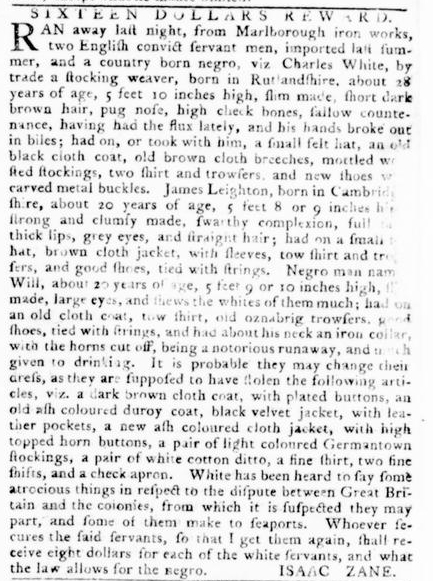
Boston Gazette (December 18, 1775)

**********

Dunlap’s Pennsylvania Packet (December 18, 1775)

**********

New-York Gazette and Weekly Mercury (December 18, 1775)

**********

New-York Gazette and Weekly Mercury (December 18, 1775)

December 17

What was advertised in a revolutionary American newspaper 250 years ago this week?

Providence Gazette (December 16, 1775).

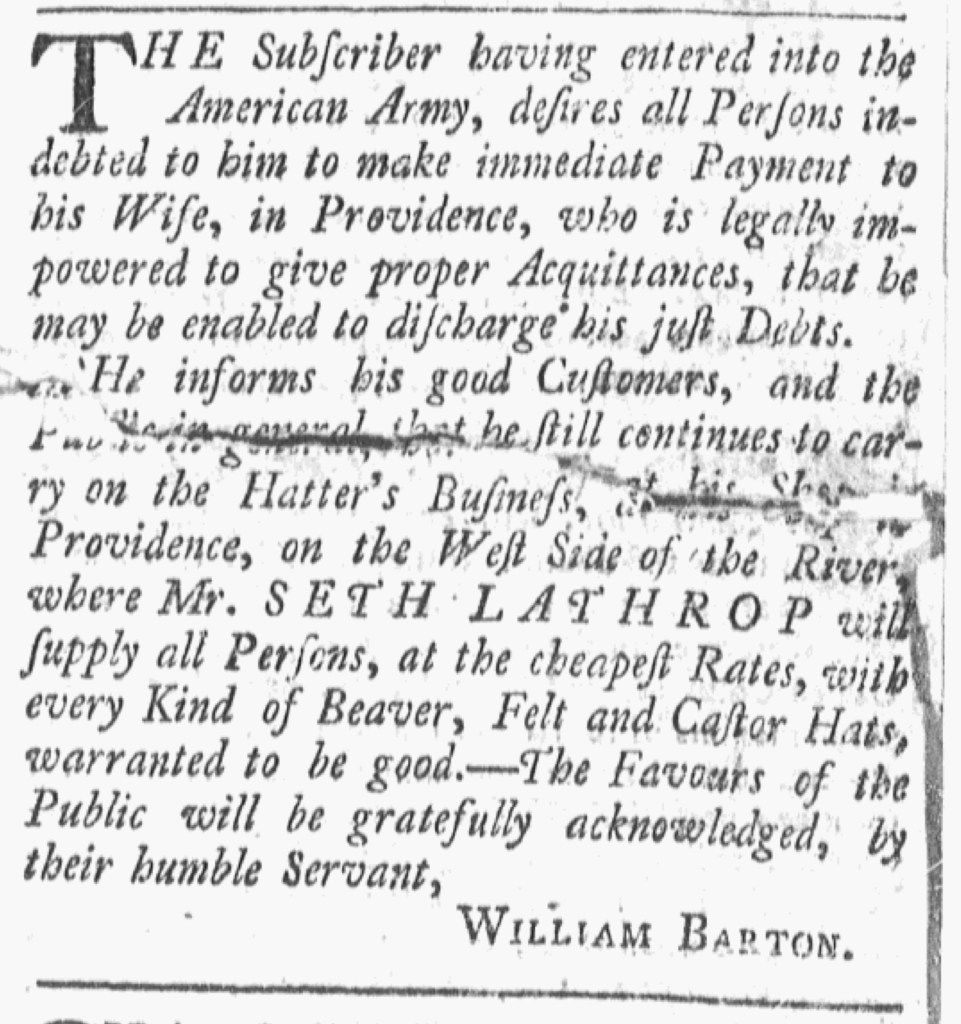
“THE Subscriber having entered into the American Army, desires all Persons indebted to him to make immediate Payment to his Wife.”

When William Barton, a hatter in Providence, “entered into the American Army” in 1775, he ran a newspaper advertisement that delegated responsibilities to his wife and a business associate.  He requested that “all Persons to indebted to him … make immediate Payment to his Wife, … who is legally impowered to give proper Acquittances, that he may be enabled to discharge his just Debts.”  It may not have been the first time that his unnamed wife oversaw accounts for the Barton household and her husband’s shop.  Like many other wives of shopkeepers and artisans, she could have had experience assisting her husband by tending to customers while he was busy or away from the shop.  She did not, however, assume responsibility for making sales during her husband’s extended absence while he served in the Continental Army, at least not initially.

Instead, Barton “inform[ed] his good Customers, and the Public in general, that he still continues to carry on the Hatter’s Business, at his Shop … where Mr. SETH LATHROP will supply all Person … with every Kind of Beaver, Felt and Castor Hats.”  Barton did not indicate whether Lathrop previously played a role in the business.  Had Lathrop been an employee or an apprentice who now ran the shop while Barton was away?  Did he take new orders and make new hats according to the tastes of Barton’s “good Customers” and new clients who responded to the advertisement?  Or did he merely sell hats already in stock when Barton enlisted in the army?  Barton’s notice did promise low prices, “the cheapest Rates,” and made assurances about the quality of the hats available at the shop, proclaiming that they were “warranted to be good.”

Barton also declared, “The Favours of the Public will be gratefully acknowledged, by their humble Servant.”  Although he deployed language that often appeared in newspaper advertisement to conclude his notice, he may have intended that his introduction would entice both his existing “good Customers” as well as new customers to support his business and, in doing so, his wife and their household.  Barton likely hoped to leverage his service in the “American Army” as a selling point for his hats.  After all, he chose to disclose that information first, making sure that it framed the overview of his shop that remained open during his absence.  Some advertisers espoused support for the American cause in their newspaper advertisements.  More significantly, Barton demonstrated his commitment to his political principles through his enlistment.  That merited special consideration for his “Hatter’s Business, at his Shop” that remained open in Providence.

December 16

What was advertised in a revolutionary American newspaper 250 years ago today?

Pennsylvania Evening Post (December 16, 1775).

“A TREATISE … on the treatment of wounds and fractures, with a short APPENDIX on camp and military hospitals.”

Even before the battles at Lexington and Concord, advertisements for military manuals appeared in colonial newspapers.  The number of manuals available to the public and the frequency of the advertisements both increased following the outbreak of hostilities.  Yet not all the manuals on the market addressed military discipline and maneuvers.  In the December 16, 1775, edition of the Pennsylvania Evening Post, George Weed promoted “A TREATISE, entitled plain and concise practical remarks on the treatment of wounds and fractures, with a short APPENDIX on camp and military hospitals, principally designed for the use of young military surgeons, in North-America.  By JOHN JONES, M.D. Professor of Surgery, King’s College, New-York.”  As was often the case when advertising books, Weed did not generate advertising copy but instead used the lengthy title of the book to promote it in the public prints.  He likely sold copies of an edition printed by John Holt in New York.  The treatise apparently met with such success that Robert Bell, a prominent printer and bookseller in Philadelphia, decided to publish another edition in 1776.

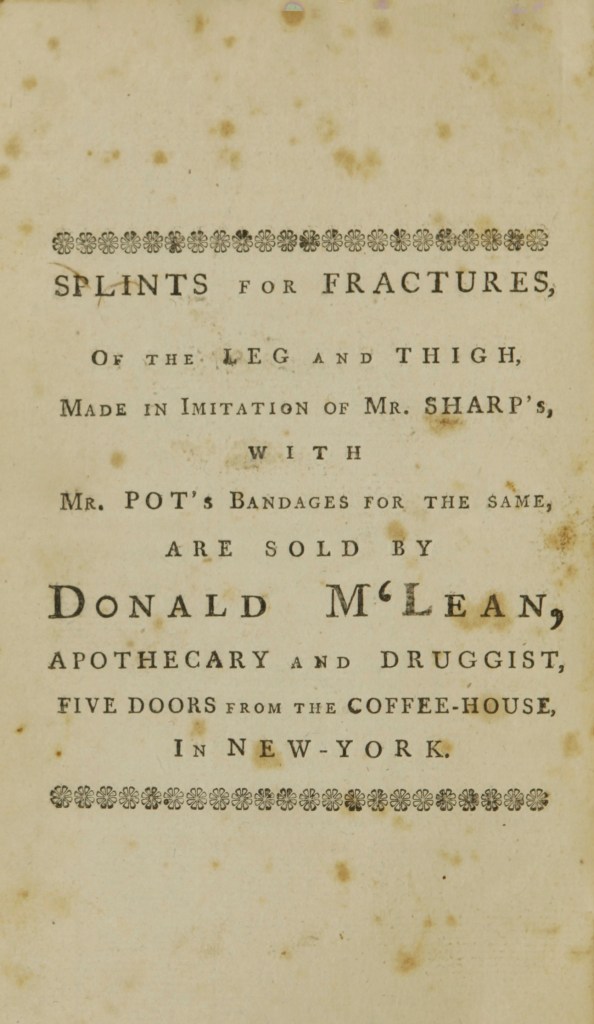
Advertisement in John Jones, Plain and Concise Practical Remarks on the Treatment of Wounds and Fractures (New York: John Holt, 1775), 96.

The book itself became a vehicle for distributing additional advertising.  Printers and booksellers frequently inserted their own advertisements in books, pamphlets, and almanacs, yet that was not the case with this medical treatise.  Instead, it featured an advertisement from a medical practitioner that resonated with the contents of the book.  After the treatise and appendix, a full-page advertisement informed readers that “SPLINTS FOR FRACTURES, OF THE LEG AND THIGH, MADE IN IMMITATION OF MR. SHARP’S, WITH MR. POT’S BANDAGES FOR THE SAME, ARE SOLD BY DONALD M ‘LEAN, APOTHECARY AND DRUGGIST, FIVE DOORS FROM THE COFFEE-HOUSE, IN NEW YORK.”  Two lines of fleurettes, one above and below, adorned the advertisement.  Today, readers expect to encounter promotions for books and related products incorporated into books by publishers, yet that marketing strategy was not invented by the modern publishing industry.  Instead, it dates to the eighteenth century and earlier as printers, booksellers, and other entrepreneurs devised many kinds of advertising media.  The Adverts 250 Project focused primarily on advertisements that appeared in eighteenth-century newspapers for several reasons, including their abundance and frequency, yet early Americans encountered many forms of advertising, including broadsides, billheads, catalogs, trade cards, and advertisements inserted in books.

Slavery Advertisements Published December 16, 1775

GUEST CURATOR: Massimo Sgambati

The Slavery Adverts 250 Project chronicles the role of newspaper advertising in perpetuating slavery in the era of the American Revolution. The project seeks to reveal the ubiquity of slavery in eighteenth-century life from New England to Georgia by republishing advertisements about enslaved people – for sale as individuals or in groups, wanted to purchase or for hire for short periods, runaways who liberated themselves, and those who were subsequently captured and confined in jails and workhouses – in daily digests on this site as well as in real time via the @SlaveAdverts250 Twitter feed, utilizing twenty-first-century media to stand in for the print media of the eighteenth century.

The project aims to provide modern audiences with a sense of just how often colonizers encountered these advertisements in their daily lives. Enslaved men, women, and children appeared in print somewhere in the colonies almost every single day. Those advertisements served as a constant backdrop for social, cultural, economic, and political life in colonial and revolutionary America. Colonizers who did not purport to own enslaved people were still confronted with slavery as well as invited to maintain the system by purchasing enslaved men, women, and children or assisting in the capture of so-called “runaways” who sought to free themselves from bondage. The frequency of these newspaper advertisements suggests just how embedded slavery was in colonial and revolutionary American culture in everyday interactions beyond the printed page.

These advertisements also testify to the experiences of enslaved men, women, and children, though readers must consider that those experiences have been remediated through descriptions offered by enslavers rather than enslaved people themselves. Often unnamed in the advertisements, enslaved men, women, and children were not invisible or unimportant in early America.

From compiling an archive of digitized eighteenth-century newspapers to identifying advertisements about enslaved men, women, and children in those newspapers to preparing images of each advertisement to posting this daily digest, Massimo Sgambati served as guest curator for this entry. He completed this work as part of the Summer Scholars Program, funded by a fellowship from the D’Amour College of Liberal Arts and Sciences at Assumption University in Worcester, Massachusetts, in Summer 2025.

These advertisements appeared in colonial American newspapers 250 years ago today.

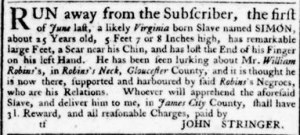
Pennsylvania Ledger (December 16, 1775)

**********

Providence Gazette (December 16, 1775)

**********

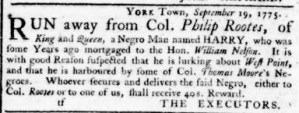
Virginia Gazette [Dixon and Hunter] (December 16, 1775)

**********

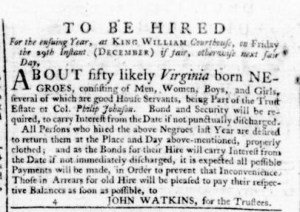
Virginia Gazette [Dixon and Hunter] (December 16, 1775)

**********

Virginia Gazette [Dixon and Hunter] (December 16, 1775)

**********

Virginia Gazette [Dixon and Hunter] (December 16, 1775)

**********

Virginia Gazette [Dixon and Hunter] (December 16, 1775)

**********

Virginia Gazette [Dixon and Hunter] (December 16, 1775)

**********

Virginia Gazette Supplement [Dixon and Hunter] (December 16, 1775)

**********

Virginia Gazette Supplement [Dixon and Hunter] (December 16, 1775)

December 15

What was advertised in a revolutionary American newspaper 250 years ago today?

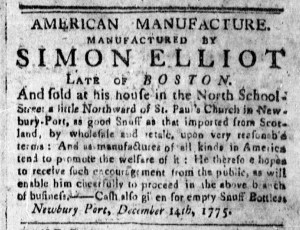
Essex Journal (December 15, 1775).

“Manufactures of all kinds in America tend to promote the welfare of it.”

In December 1775, Simon Elliott took to the pages of the Essex Journal, printed in Newburyport, Massachusetts, to promote the snuff that he made in that town.  He published his advertisement as the siege of Boston continued, much of the copy testifying to the imperial crisis that had become a war with the skirmishes at Lexington and Concord the previous April.

The advertisement featured an elaborate headline.  Indeed, it had a primary headline and a secondary headline, like many other newspaper advertisements.  Elliot’s name, centered and all in capital letters of a larger font than anything else in that issue of the Essex Journal except the name of the newspaper in the masthead, demanded attention.  It was the second line of three, the other two also centered and in capital letters but smaller fonts: “MANUFACTURED BY / SIMON ELLIOT / LATE OF BOSTON.”  A secondary headline, “AMERICAN MANUFACTURE,” appeared above the headline that made Elliot’s name so prominent.

Like so many other artisans when they moved to new towns and introduced themselves to prospective customers, Elliot mentioned his origins.  Usually, “OF BOSTON” sufficed, but in this instance “LATE OF BOSTON” likely indicated that he had been displaced from that city recently.  Many residents chose to leave following the outbreak of hostilities.  In the early days of the siege of Boston, the Sons of Liberty and General Gage negotiated an exchange that allowed Loyalists to enter and others to depart.  In the following months, newspapers throughout New England carried advertisements by entrepreneurs “from Boston,” a diaspora of refugees displaced at the beginning of the Revolutionary War.

In addition to signaling the hardships he recently faced, Elliot also promoted the quality of the snuff that he made in Newburyport, asserting it was “as good Snuff as that imported from Scotland.”  That was no small claim since tobacco processed into snuff in Scotland had a superior reputation at the time.  Yet Elliot had more to say about his “AMERICAN MANUFACTURE” and why consumers should favor it over others.  Echoing the Continental Association, a nonimportation agreement devised by the First Continental Congress, and popular discourses of the last decade, Elliot declared that “as manufactures of all kinds in America tend to promote the welfare of it: He therefore hopes to receive such encouragement from the public” to support his new enterprise.  Supporters of the American cause, he suggested, had a civic duty to purchase the snuff that he made in Newburyport as well as support other entrepreneurs who produced domestic manufactures.

Slavery Advertisements Published December 15, 1775

GUEST CURATOR: Massimo Sgambati

The Slavery Adverts 250 Project chronicles the role of newspaper advertising in perpetuating slavery in the era of the American Revolution. The project seeks to reveal the ubiquity of slavery in eighteenth-century life from New England to Georgia by republishing advertisements about enslaved people – for sale as individuals or in groups, wanted to purchase or for hire for short periods, runaways who liberated themselves, and those who were subsequently captured and confined in jails and workhouses – in daily digests on this site as well as in real time via the @SlaveAdverts250 Twitter feed, utilizing twenty-first-century media to stand in for the print media of the eighteenth century.

The project aims to provide modern audiences with a sense of just how often colonizers encountered these advertisements in their daily lives. Enslaved men, women, and children appeared in print somewhere in the colonies almost every single day. Those advertisements served as a constant backdrop for social, cultural, economic, and political life in colonial and revolutionary America. Colonizers who did not purport to own enslaved people were still confronted with slavery as well as invited to maintain the system by purchasing enslaved men, women, and children or assisting in the capture of so-called “runaways” who sought to free themselves from bondage. The frequency of these newspaper advertisements suggests just how embedded slavery was in colonial and revolutionary American culture in everyday interactions beyond the printed page.

These advertisements also testify to the experiences of enslaved men, women, and children, though readers must consider that those experiences have been remediated through descriptions offered by enslavers rather than enslaved people themselves. Often unnamed in the advertisements, enslaved men, women, and children were not invisible or unimportant in early America.

From compiling an archive of digitized eighteenth-century newspapers to identifying advertisements about enslaved men, women, and children in those newspapers to preparing images of each advertisement to posting this daily digest, Massimo Sgambati served as guest curator for this entry. He completed this work as part of the Summer Scholars Program, funded by a fellowship from the D’Amour College of Liberal Arts and Sciences at Assumption University in Worcester, Massachusetts, in Summer 2025.

These advertisements appeared in colonial American newspapers 250 years ago today.

South-Carolina and American General Gazette (December 15, 1775)

**********

South-Carolina and American General Gazette (December 15, 1775)

**********

South-Carolina and American General Gazette (December 15, 1775)

**********

South-Carolina and American General Gazette (December 15, 1775)

**********

South-Carolina and American General Gazette (December 15, 1775)

**********

South-Carolina and American General Gazette (December 15, 1775)

**********

South-Carolina and American General Gazette (December 15, 1775)

**********

South-Carolina and American General Gazette (December 15, 1775)

**********

South-Carolina and American General Gazette (December 15, 1775)

**********

South-Carolina and American General Gazette (December 15, 1775)

**********

South-Carolina and American General Gazette (December 15, 1775)

**********

South-Carolina and American General Gazette (December 15, 1775)

**********

South-Carolina and American General Gazette (December 15, 1775)

**********

South-Carolina and American General Gazette (December 15, 1775)

**********

South-Carolina and American General Gazette (December 15, 1775)

**********

South-Carolina and American General Gazette (December 15, 1775)

**********

Virginia Gazette [Purdie] (December 15, 1775)

**********

Virginia Gazette [Purdie] (December 15, 1775)

**********

Virginia Gazette [Purdie] (December 15, 1775)

**********

Virginia Gazette [Purdie] (December 15, 1775)

**********

Virginia Gazette [Purdie] (December 15, 1775)

**********

Virginia Gazette [Purdie] (December 15, 1775)

**********

Virginia Gazette [Purdie] (December 15, 1775)

**********

Virginia Gazette [Purdie] (December 15, 1775)

**********

Virginia Gazette [Purdie] (December 15, 1775)

**********

Virginia Gazette [Purdie] (December 15, 1775)