December 14

What was advertised in a revolutionary American newspaper 250 years ago today?
New-England Chronicle (December 14, 1775).

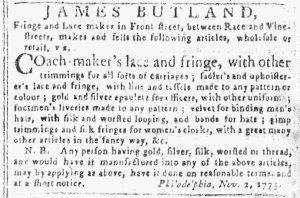
“Fringe and Lace maker in Front street, between Race and Vine-streets, … Philadelphia.”

James Butland, a “Fringe and Lace maker,” placed several newspaper advertisements in 1775.  In February, he inserted an advertisement in the Pennsylvania Journal, advising prospective customers that he “Continues to make and sell” all sorts of fringes and laces equal in quality to any imported from England.  He also assured the public that “no advantage shall be taken on account of the troubles between Britain and America,” signaling that he abided by the Continental Association and did not raise prices once that nonimportation agreement went into effect.  In July, he placed a new advertisement in the Pennsylvania Evening Post, once again promoting his fringes and laces made in Philadelphia.  He also requested “unfashionable” scraps “not fit for sale,” asserting that he could upcycle them into new pieces.

In December, he published another advertisement.  Like the others, it included a list of the types of fringes and laces he made, including “Coach-maker’s lace and fringe, with other trimmings for all sorts of carriages; sadler’s and upholsterer’s lace and fringe, with line and tassels made to any pattern or colour; gold and silver epaulets for officers, with other uniforms, [and] footmen’s liveries made to any pattern.”  In a nota bene, Butland invited “Any person having gold, silver, silk, worsted or thread” who would like it “manufactured into any of the above articles” to apply to his shop “between Race and Vine-streets” in Philadelphia.  It was much like the advertisements he previously published … except for the newspaper that carried it.  This notice appeared in the New-England Chronicle, printed in Cambridge as the siege of Boston continued.  Other advertisements in the December 14 edition came from towns in the vicinity, including Beverly, Braintree, Brookline, Cambridge, Concord, Danvers, Gloucester, Medford, Menotomy, Newton, Plymouth, Roxbury, Salem, Topsfield, Waltham, and Woburn.  One concerning a stray horse came from Epping, New Hampshire.  Like other newspapers, the New-England Chronicle served an entire region, yet advertisements for artisans (or shopkeepers or merchants) in cities and towns beyond that region rarely appeared in any colonial newspapers.  Printers and booksellers often distributed subscription proposals and other advertisements more widely in their efforts to incite enough demand and generate enough sales to make their projects viable.  Other advertisers, however, focused on cultivating local clienteles.  Even those who offered mail order goods and services lived and worked within the region served by the newspapers that carried their advertisements.  That made Butland’s advertisement for fringe and lace made in Philadelphia in the New-England Chronicle quite unusual, raising questions without easy answers.  Why did he choose to advertise in that newspaper?  How did that fit into his overall marketing strategy?  How effective did he anticipate his advertisement would be?
Slavery Advertisements Published December 14, 1775

GUEST CURATOR: Massimo Sgambati

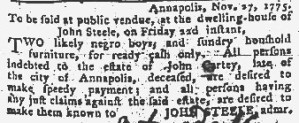
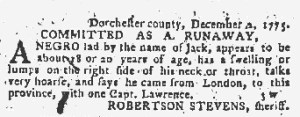
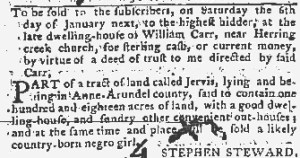
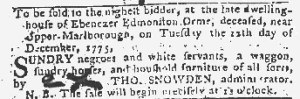
The Slavery Adverts 250 Project chronicles the role of newspaper advertising in perpetuating slavery in the era of the American Revolution. The project seeks to reveal the ubiquity of slavery in eighteenth-century life from New England to Georgia by republishing advertisements about enslaved people – for sale as individuals or in groups, wanted to purchase or for hire for short periods, runaways who liberated themselves, and those who were subsequently captured and confined in jails and workhouses – in daily digests on this site as well as in real time via the @SlaveAdverts250 Twitter feed, utilizing twenty-first-century media to stand in for the print media of the eighteenth century.

The project aims to provide modern audiences with a sense of just how often colonizers encountered these advertisements in their daily lives. Enslaved men, women, and children appeared in print somewhere in the colonies almost every single day. Those advertisements served as a constant backdrop for social, cultural, economic, and political life in colonial and revolutionary America. Colonizers who did not purport to own enslaved people were still confronted with slavery as well as invited to maintain the system by purchasing enslaved men, women, and children or assisting in the capture of so-called “runaways” who sought to free themselves from bondage. The frequency of these newspaper advertisements suggests just how embedded slavery was in colonial and revolutionary American culture in everyday interactions beyond the printed page.

These advertisements also testify to the experiences of enslaved men, women, and children, though readers must consider that those experiences have been remediated through descriptions offered by enslavers rather than enslaved people themselves. Often unnamed in the advertisements, enslaved men, women, and children were not invisible or unimportant in early America.

From compiling an archive of digitized eighteenth-century newspapers to identifying advertisements about enslaved men, women, and children in those newspapers to preparing images of each advertisement to posting this daily digest, Massimo Sgambati served as guest curator for this entry. He completed this work as part of the Summer Scholars Program, funded by a fellowship from the D’Amour College of Liberal Arts and Sciences at Assumption University in Worcester, Massachusetts, in Summer 2025.

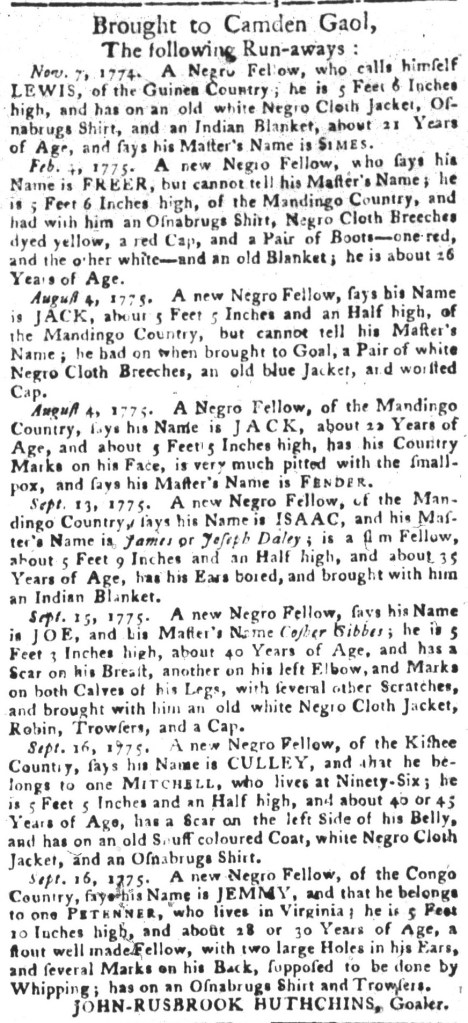
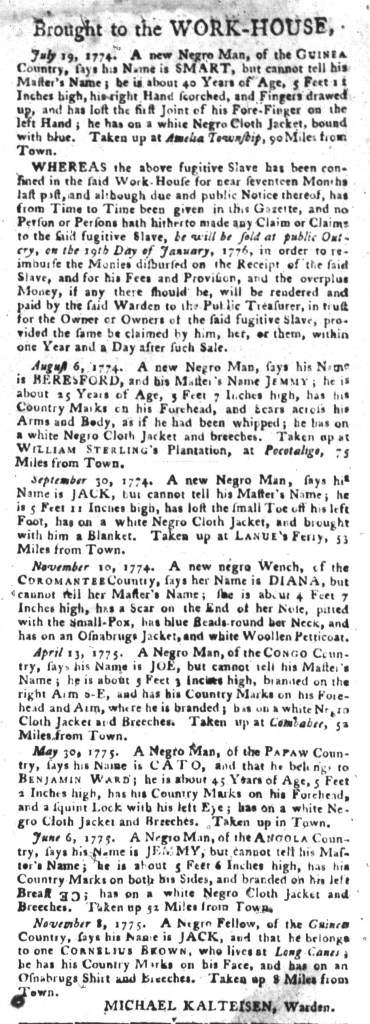
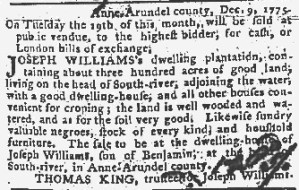
These advertisements appeared in colonial American newspapers 250 years ago today.

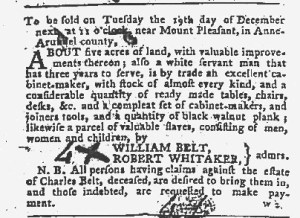
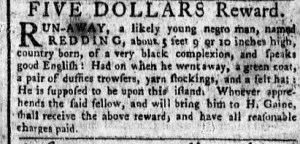
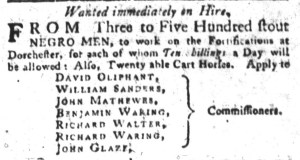
Maryland Gazette (December 14, 1775)

**********

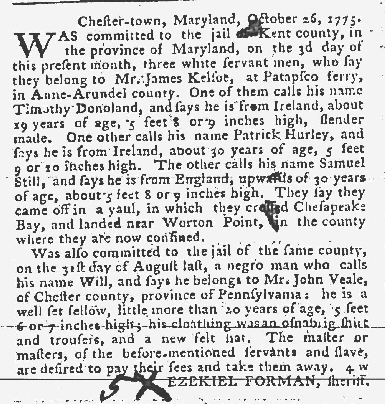
Maryland Gazette (December 14, 1775)

**********

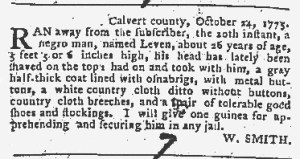
Maryland Gazette (December 14, 1775)

**********

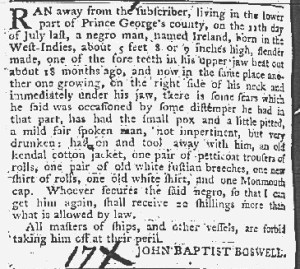
Maryland Gazette (December 14, 1775)

**********

Maryland Gazette (December 14, 1775)

**********

Maryland Gazette (December 14, 1775)

**********

Maryland Gazette (December 14, 1775)

**********

Maryland Gazette (December 14, 1775)

**********

Maryland Gazette (December 14, 1775)

**********

Maryland Gazette (December 14, 1775)

**********

New-England Chronicle (December 14, 1775)

**********

New-England Chronicle (December 14, 1775)

**********

New-England Chronicle (December 14, 1775)

December 13

What was advertised in a revolutionary American newspaper 250 years ago today?

Connecticut Journal (December 13, 1775).

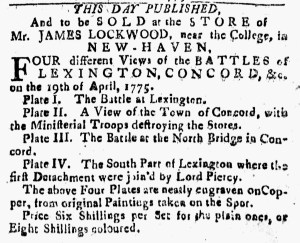
“FOUR different Views of the BATTLES of LEXINGTON, [and] CONCORD.”

The marketing of memorabilia that commemorated events associated with the American Revolution began before the Second Continental Congress declared independence.  Shortly after the Boston Massacre, for instance, Paul Revere, Henry Pelham, and others produced and advertised images depicting the “BLOODY MASSACRE perpetrated in King-Street.”  Revere also marketed a “Copper-Plate PRINT, containing a View of Part of the Town of Boston in New-England, and British Ships of War landing their Troops in the Year 1768.”  As the imperial crisis intensified, Charles Reak and Samuel Okey advertised a print depicting “that truly staunch Patriot, the Hon. SAMUEL ADAMS, of Boston.”  The production of commemorative items accelerated following the battles at Lexington and Concord in April 1775 and the Battle of Bunker Hill in June 1775.

In December 1775, James Lockwood advertised “FOUR different Views of the BATTLES of LEXINGTON, CONCORD, &c. on the 19th of April, 1775.”  He provided a short description of each: “The Battle at Lexington,” “A View of the Town of Concord with the Ministerial Troops destroying the Stores,” “The Battle at the North Bridge in Concord,” and “The South Part of Lexington where the first Detachment were join’d by Lord Percy.”  Lockwood promoted both the quality and accuracy of the prints, noting that the “Four Plates are neatly engraved on Copper, from original Paintings taken on the Spot.”  He almost certainly stocked and sold a series of prints engraved by Amos Doolittle based on paintings by Ralph Earl.  Although Lockwood may have sold the prints separately on request, he promoted them as a package, charging six shillings for as set of “the plain ones” or eight shillings for “coloured” prints.  This collection of prints supplemented news coverage of the battles, helping educate colonizers about recent events, yet many consumers may have desired them as symbols of their patriotism and support of the American cause to display in their homes and offices.  During the first year of the Revolutionary War, the marketing of images that celebrated Americans who defended their towns and their liberties likely encouraged some colonizers to imagine declaring independence rather than merely seeking a redress of grievances.

Slavery Advertisements Published December 13, 1775

GUEST CURATOR: Massimo Sgambati

The Slavery Adverts 250 Project chronicles the role of newspaper advertising in perpetuating slavery in the era of the American Revolution. The project seeks to reveal the ubiquity of slavery in eighteenth-century life from New England to Georgia by republishing advertisements about enslaved people – for sale as individuals or in groups, wanted to purchase or for hire for short periods, runaways who liberated themselves, and those who were subsequently captured and confined in jails and workhouses – in daily digests on this site as well as in real time via the @SlaveAdverts250 Twitter feed, utilizing twenty-first-century media to stand in for the print media of the eighteenth century.

The project aims to provide modern audiences with a sense of just how often colonizers encountered these advertisements in their daily lives. Enslaved men, women, and children appeared in print somewhere in the colonies almost every single day. Those advertisements served as a constant backdrop for social, cultural, economic, and political life in colonial and revolutionary America. Colonizers who did not purport to own enslaved people were still confronted with slavery as well as invited to maintain the system by purchasing enslaved men, women, and children or assisting in the capture of so-called “runaways” who sought to free themselves from bondage. The frequency of these newspaper advertisements suggests just how embedded slavery was in colonial and revolutionary American culture in everyday interactions beyond the printed page.

These advertisements also testify to the experiences of enslaved men, women, and children, though readers must consider that those experiences have been remediated through descriptions offered by enslavers rather than enslaved people themselves. Often unnamed in the advertisements, enslaved men, women, and children were not invisible or unimportant in early America.

From compiling an archive of digitized eighteenth-century newspapers to identifying advertisements about enslaved men, women, and children in those newspapers to preparing images of each advertisement to posting this daily digest, Massimo Sgambati served as guest curator for this entry. He completed this work as part of the Summer Scholars Program, funded by a fellowship from the D’Amour College of Liberal Arts and Sciences at Assumption University in Worcester, Massachusetts, in Summer 2025.

These advertisements appeared in colonial American newspapers 250 years ago today.

Pennsylvania Gazette (December 13, 1775)


Pennsylvania Gazette (December 13, 1775)


Pennsylvania Journal (December 13, 1775)


Pennsylvania Journal (December 13, 1775)


Pennsylvania Journal (December 13, 1775)


Virginia Gazette [Pinkney] (December 13, 1775)

December 12

What was advertised in a revolutionary American newspaper 250 years ago today?

Pennsylvania Evening Post (December 12, 1775).

“HARE’s and Co. best DRAUGHT and BOTTLED AMERICAN PORTER.”

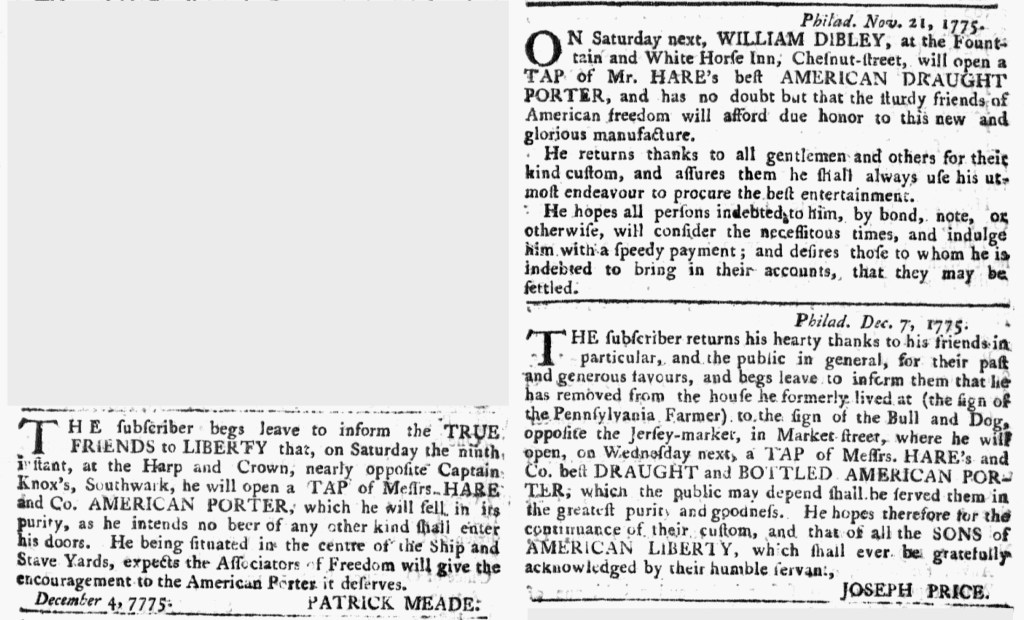
In December 1775, Philadelphia tavernkeeper Joseph Price ran an advertisement to express his gratitude to “his friends in particular, and the public in general,” while simultaneously alerting them that he had moved to a new location.  They could now find him at “the sign of the Bull and Dog” on Market Street rather than at “the sign of the Pennsylvania Farmer.”  To entice readers to visit his new location, he announced that “he will open … a TAP of Messrs. HARE’s and Co. best DRAUGHT and BOTTLED AMERICAN PORTER, which the public may depend shall be served them in the greatest purity and goodness.”

Price was not the only tavernkeeper promoting Hare and Company’s American porter, nor was he the only one associating that beer with support for the American cause.  He proclaimed that he “hopes … all the SONS of AMERICAN LIBERTY” would affirm their commitment by choosing Hare and Company’s American porter.  Price joined two other tavernkeepers who already promoted that brew.  All three of them placed advertisements in the December 12, 1775, edition of the Pennsylvania Evening Post.  William Dibley’s advertisement ran immediately above Price’s notice.  He confidently declared that he “has no doubt but that the sturdy friends of American freedom will afford due honor to this new and glorious manufacture.”  Immediately to the left of Price’s advertisement, Patrick Meade stated that he “expects the Associators of Freedom will give the encouragement to the American Porter it deserves.”  Readers who did not know much about Hare and Company’s American porter encountered endorsement after endorsement, encouraging them to take note of a beer that local tavernkeepers promoted over any others.  Tavernkeepers usually did not mention which brewers supplied their beer, making these advertisements even more noteworthy.  For their part, Hare and Company did not need to do any advertising of their own when they had such eager advocates for their American porter encouraging the public to demonstrate their political principles through the choices they made when they placed their orders at taverns in Philadelphia and nearby Southwark.

Slavery Advertisements Published December 12, 1775

GUEST CURATOR: Massimo Sgambati

The Slavery Adverts 250 Project chronicles the role of newspaper advertising in perpetuating slavery in the era of the American Revolution. The project seeks to reveal the ubiquity of slavery in eighteenth-century life from New England to Georgia by republishing advertisements about enslaved people – for sale as individuals or in groups, wanted to purchase or for hire for short periods, runaways who liberated themselves, and those who were subsequently captured and confined in jails and workhouses – in daily digests on this site as well as in real time via the @SlaveAdverts250 Twitter feed, utilizing twenty-first-century media to stand in for the print media of the eighteenth century.

The project aims to provide modern audiences with a sense of just how often colonizers encountered these advertisements in their daily lives. Enslaved men, women, and children appeared in print somewhere in the colonies almost every single day. Those advertisements served as a constant backdrop for social, cultural, economic, and political life in colonial and revolutionary America. Colonizers who did not purport to own enslaved people were still confronted with slavery as well as invited to maintain the system by purchasing enslaved men, women, and children or assisting in the capture of so-called “runaways” who sought to free themselves from bondage. The frequency of these newspaper advertisements suggests just how embedded slavery was in colonial and revolutionary American culture in everyday interactions beyond the printed page.

These advertisements also testify to the experiences of enslaved men, women, and children, though readers must consider that those experiences have been remediated through descriptions offered by enslavers rather than enslaved people themselves. Often unnamed in the advertisements, enslaved men, women, and children were not invisible or unimportant in early America.

From compiling an archive of digitized eighteenth-century newspapers to identifying advertisements about enslaved men, women, and children in those newspapers to preparing images of each advertisement to posting this daily digest, Massimo Sgambati served as guest curator for this entry. He completed this work as part of the Summer Scholars Program, funded by a fellowship from the D’Amour College of Liberal Arts and Sciences at Assumption University in Worcester, Massachusetts, in Summer 2025.

These advertisements appeared in colonial American newspapers 250 years ago today.

New-Hampshire Gazette (December 12, 1775)

December 11

What was advertised in a revolutionary American newspaper 250 years ago today?

South-Carolina Gazette (December 11, 1775).

“The Times make it uncertain how long he will be able to keep his Store open in Town.”

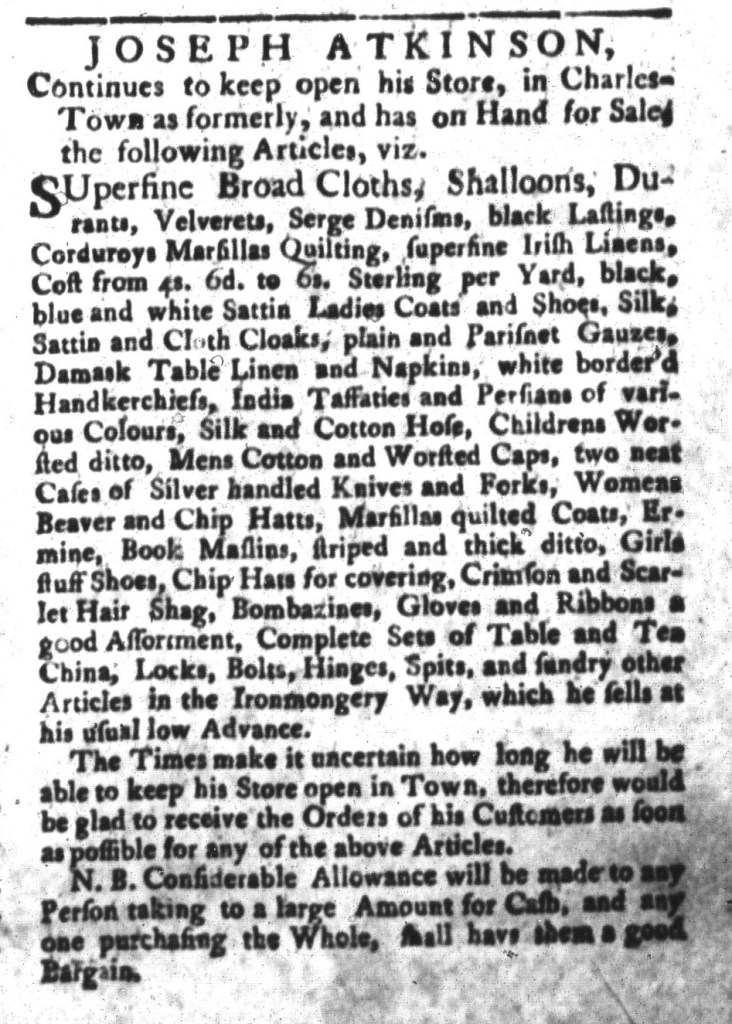
Joseph Atkinson placed an advertisement in the December 11, 1775, edition of the South-Carolina Gazette to advise prospective customers that he “Continues to keep open his Store, in Charles-Town as formerly.”  He listed an array of merchandise, including a variety of textiles, “Mens Cotton and Worsted Caps, two Cases of Silver handled Knives and Forks, Womens Beaver and Chip Hats, … Gloves and Ribbons a good Assortment, Complete Sets of Table and Tea China, … and sundry other Articles in the Ironmongery Way.”  Atkinson sought to liquidate his stock, declaring that “Considerable Allowance will be made to any Person taking to a large Amount for Cash.”  Furthermore, “any one purchasing the Whole, shall have them at a good Bargain.”

The shopkeeper also confessed that the “Times make it uncertain how long he will be able to keep his Store open in Town.”  He declared that he “therefore would be glad to receive the Orders of his Customers as soon as possible.”  To underscore the point about uncertain times, the items on the first page of that issue featured updates from the Second Continental Congress in Philadelphia and the colony’s own congress, including a call for provisions “to supply the REGIMENT of ARTILLERY in the Service of this Colony.”  What Atkinson and readers of the South-Carolina Gazette did not know was that the newspaper would soon cease publication.  The December 11 edition became the last known issue, though Clarence S. Brigham reports it “was followed by one other number, probably Dec[ember] 18.”[1]  Peter Timothy, the printer, revived the newspapers as the Gazette of the State of South-Carolina sixteen months later, on April 9, 1777.  As the title indicates, the colonies declared independence by the time Timothy resumed publishing his newspaper.

The demise of the South-Carolina Gazette meant less news and advertising circulating in that colony and the region.  Four months earlier, the South-Carolina Gazette and Country Journal folded.  Now only the South-Carolina and American General Gazette remained.  For nearly a decade, three competing newspapers served Charleston and the rest of the colony, many issues devoting more space to advertising than news.  Although the South-Carolina and American General Gazette continued publication, with occasional suspensions, until February 28, 1781, issues published after 1775 have not been preserved and digitized for wider access.  That means that advertisements from South Carolina, including the urban port of Charleston, will no longer be part of the Adverts 250 Project and the Slavery Adverts 250 Project.  As the projects continue to tell stories about the era of the American Revolution, they will focus on New England, New York, Pennsylvania, and the Chesapeake, drawing on those newspapers that continued publication (or commenced publication during the Revolutionary War) and that have been preserved and digitized.  So many stories remain to be told, but, for a time, South Carolina will be largely absent from this project’s featured advertisements.

**********

[1] Clarence S. Brigham, History and Bibliography of American Newspapers, 1690-1820 (Worcester: American Antiquarian Society, 1947), 1038.

Slavery Advertisements Published December 11, 1775

GUEST CURATOR: Massimo Sgambati

The Slavery Adverts 250 Project chronicles the role of newspaper advertising in perpetuating slavery in the era of the American Revolution. The project seeks to reveal the ubiquity of slavery in eighteenth-century life from New England to Georgia by republishing advertisements about enslaved people – for sale as individuals or in groups, wanted to purchase or for hire for short periods, runaways who liberated themselves, and those who were subsequently captured and confined in jails and workhouses – in daily digests on this site as well as in real time via the @SlaveAdverts250 Twitter feed, utilizing twenty-first-century media to stand in for the print media of the eighteenth century.

The project aims to provide modern audiences with a sense of just how often colonizers encountered these advertisements in their daily lives. Enslaved men, women, and children appeared in print somewhere in the colonies almost every single day. Those advertisements served as a constant backdrop for social, cultural, economic, and political life in colonial and revolutionary America. Colonizers who did not purport to own enslaved people were still confronted with slavery as well as invited to maintain the system by purchasing enslaved men, women, and children or assisting in the capture of so-called “runaways” who sought to free themselves from bondage. The frequency of these newspaper advertisements suggests just how embedded slavery was in colonial and revolutionary American culture in everyday interactions beyond the printed page.

These advertisements also testify to the experiences of enslaved men, women, and children, though readers must consider that those experiences have been remediated through descriptions offered by enslavers rather than enslaved people themselves. Often unnamed in the advertisements, enslaved men, women, and children were not invisible or unimportant in early America.

From compiling an archive of digitized eighteenth-century newspapers to identifying advertisements about enslaved men, women, and children in those newspapers to preparing images of each advertisement to posting this daily digest, Massimo Sgambati served as guest curator for this entry. He completed this work as part of the Summer Scholars Program, funded by a fellowship from the D’Amour College of Liberal Arts and Sciences at Assumption University in Worcester, Massachusetts, in Summer 2025.

These advertisements appeared in colonial American newspapers 250 years ago today.

Boston Gazette (December 11, 1775)

**********

Dunlap’s Pennsylvania Packet (December 11, 1775)

**********

New-York Gazette and Weekly Mercury (December 11, 1775)

**********

New-York Gazette and Weekly Mercury (December 11, 1775)

**********

New-York Gazette and Weekly Mercury (December 11, 1775)

**********

New-York Gazette and Weekly Mercury (December 11, 1775)

**********

New-York Gazette and Weekly Mercury (December 11, 1775)

**********

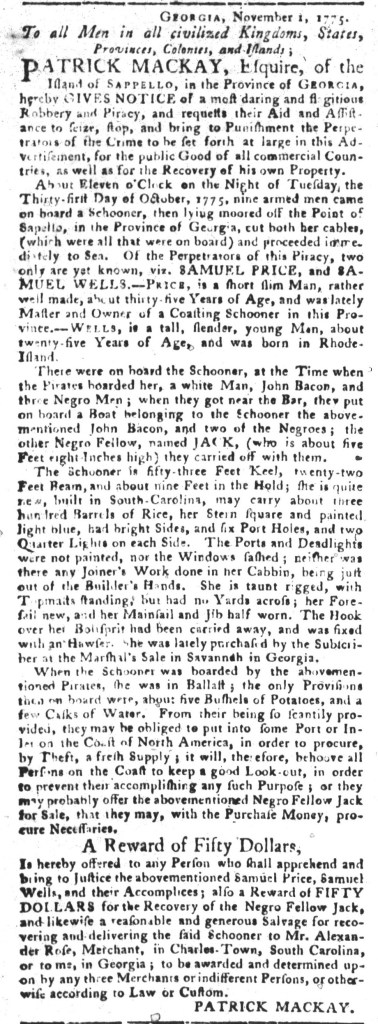
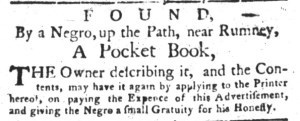
South-Carolina Gazette (December 11, 1775)

**********

South-Carolina Gazette (December 11, 1775)

**********

South-Carolina Gazette (December 11, 1775)

**********

South-Carolina Gazette (December 11, 1775)

**********

South-Carolina Gazette (December 11, 1775)

**********

South-Carolina Gazette (December 11, 1775)

**********

South-Carolina Gazette (December 11, 1775)

December 10

What was advertised in a revolutionary American newspaper 250 years ago this week?

Pennsylvania Evening Post (December 9, 1775).

“JUST published, and may be had of the printer hereof, JOURNAL of the PROCEEDINGS of the CONGRESS.”

Like other printers, Benjamin Towne sold books to supplement the revenue he generated from newspaper subscriptions, advertisements, and job printing.  In a brief advertisement in the December 9, 1775, edition of the Pennsylvania Evening Post he announced, “JUST published, and may be had of the printer hereof, JOURNAL of the PROCEEDINGS of the CONGRESS, held at Philadelphia May 10, 1775.  Also that new and interesting work, of great merit and integrity, BURGH’s POLITICAL DISQUISITIONS.”

Three days earlier, on a Wednesday, William Bradford and Thomas Bradford, the printers of the Pennsylvania Journal, advertised that they would publish and sell the journal of the proceedings of the Second Continental Congress from May through August starting “On FRIDAY Next.”  On Saturday, Towne became the first bookseller other than the Bradfords to announce that he had copies for sale.  In this instance, as in so many other advertisements for books and pamphlets that appeared in early American newspapers, the phrases “JUST published” and “may be had of the printer hereof” did not both apply to the printer who placed the notice.  Instead, “JUST published” merely informed readers that a work was now available.  Such was the case for the journal of the proceedings of the Second Continental Congress as well as for the American edition of James Burgh’s Political Disquisitions, published by Robert Bell.  Towne did not take up Bell’s invitation to “All the Printers on the continent to insert “the whole” of a lengthy advertisement with an address from “The American Editor to his Countrymen” in his newspaper even though Bell promised to pay for such consideration with cash or books.  Towne may have expected that prospective customers were already familiar with Bell’s marketing efforts from other newspapers printed in Philadelphia.  Towne likely sold other books at his printing office, yet he did not choose to include any others in his advertisement.  Instead, the printer opted to promote books that resonated with current events, believing that they would draw customers to his shop.  He could hawk other books once readers arrived to examine the volumes that he advertised.

December 9

What was advertised in a revolutionary American newspaper 250 years ago today?

Pennsylvania Evening Post (December 9, 1775).

“He will open a TAP of Messrs. HARE’s and Co. AMERICAN PORTER.”

Patrick Meade aimed to create some anticipation among prospective patrons who might visit his tavern, the Harp and Crown, in Southwark on the outskirts of Philadelphia.  In an advertisement that first appeared in the Pennsylvania Evening Post on December 5, 1775, he announced that “on Saturday the ninth … he will open a TAP of Messrs. HARE and Co. AMERICAN PORTER.”  Hare and Company had been building a reputation for their brew.  Two weeks earlier, William Dibley, the proprietor of the Fountain and White Horse Inn in Philadelphia, advertised that he “will open a TAP of Mr. HARE’s best AMERICAN DRAUGHT PORTER.”  Meade’s advertisement ran again on December 9, the day he tapped the celebrated porter.

Meade and Dibley deployed similar marketing strategies to entice “gentlemen and others” to visit their establishments and drink Hare and Company’s porter.  Dibley proclaimed that he “has no doubt but that the sturdy friends of American freedom will afford due honor to this new and glorious manufacture.”  Meade addressed “the TRUE FRIENDS to LIBERTY” and emphasized his location, “situated in the center of the Ship and Stave Yards,” and declared that he “expects the Associators of Freedom will give the encouragement to the American Porter it deserves.”  Meade went all in on promoting Hare and Company’s porter, asserting that “he intends no beer of any other kind shall enter his doors,” especially not porters and other beers imported from England.  The tavernkeeper made a porter brewed in America the exclusive choice for his patron, likely expecting that the lack of other options mattered less to prospective patrons when they gather to drink, socialize, and discuss politics and current events than demonstrating their patriotism by consuming a porter brewed in America.  Meade stated that he would sell Hare and Company’s “AMERICAN PORTER … in its purity,” signaling the quality of the beverage.  Meade issued both an invitation and a challenge: who could desire any beer other than one brewed in America in support of the American cause?