Slavery Advertisements Published March 22, 1768

GUEST CURATOR:  Jonathan Bisceglia

The Slavery Adverts 250 Project chronicles the role of newspaper advertising in perpetuating slavery in the era of the American Revolution. The project seeks to reveal the ubiquity of slavery in eighteenth-century life from New England to Georgia by republishing advertisements for slaves – for sale, wanted to purchase, runaways, captured fugitives – in daily digests on this site as well as in real time via the @SlaveAdverts250 Twitter feed, utilizing twenty-first-century media to stand in for the print media of the eighteenth century.

The project aims to provide modern audiences with a sense of just how often colonists encountered these advertisements in their daily lives. Enslaved men, women, and children appeared in print somewhere in the colonies almost every single day. Those advertisements served as a constant backdrop for social, cultural, economic, and political life in colonial and revolutionary America. Colonists who did not own slaves were still confronted with slavery as well as invited to maintain the system by purchasing slaves or assisting in the capture of runaways. The frequency of these newspaper advertisements suggests just how embedded slavery was in colonial and revolutionary American culture in everyday interactions beyond the printed page.

These advertisements also testify to the experiences of enslaved men, women, and children, though readers must consider that those experiences have been remediated through descriptions offered by slaveholders rather than the slaves themselves. Often unnamed in the advertisements, enslaved men, women, and children were not invisible or unimportant in early America.

These advertisements appeared in colonial American newspapers 250 years ago today.
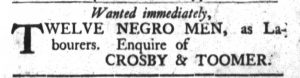
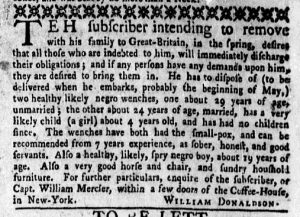
Mar 22 - South-Carolina Gazette and Country Journal Slavery 1
South-Carolina Gazette and Country Journal (March 22, 1768).

**********

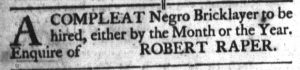
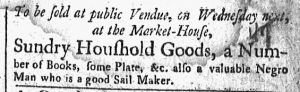
Mar 22 - South-Carolina Gazette and Country Journal Slavery 2
South-Carolina Gazette and Country Journal (March 22, 1768).

**********

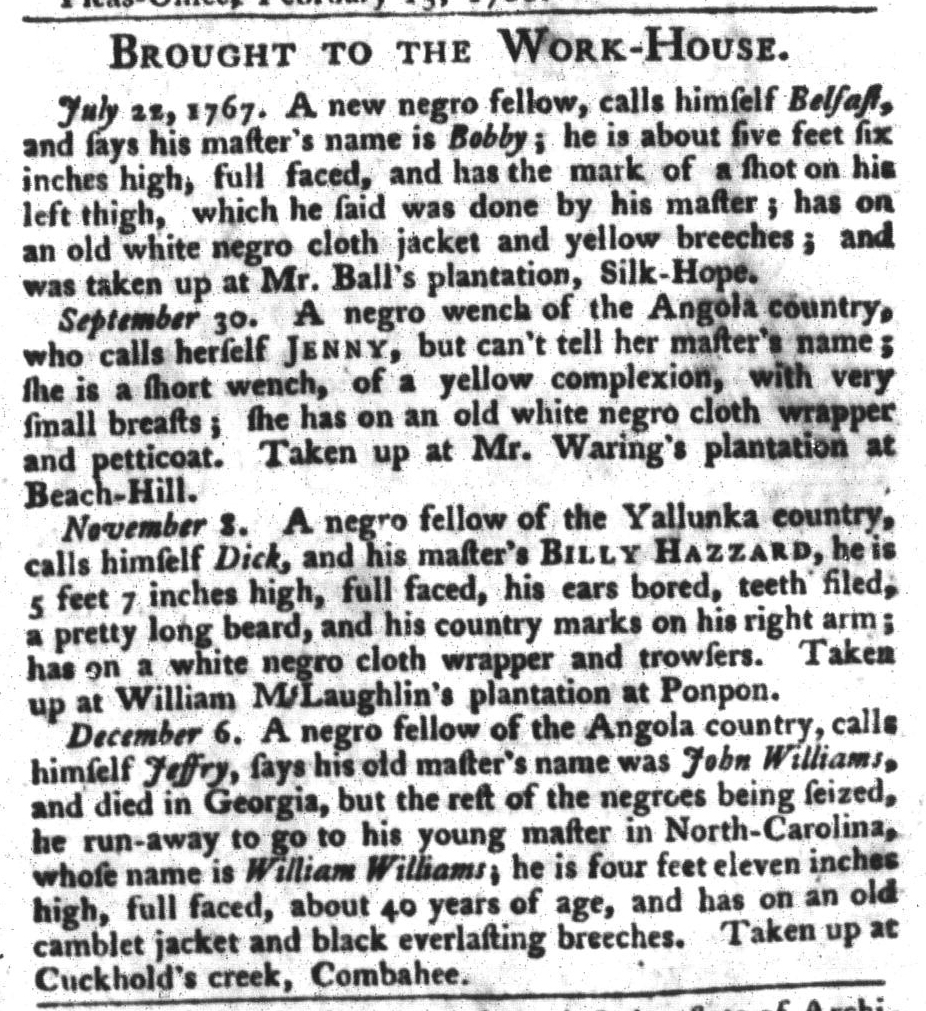
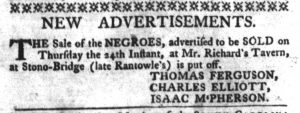
Mar 22 - South-Carolina Gazette and Country Journal Slavery 3
South-Carolina Gazette and Country Journal (March 22, 1768).

**********

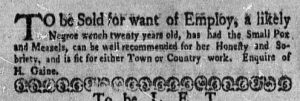
Mar 22 - South-Carolina Gazette and Country Journal Slavery 4
South-Carolina Gazette and Country Journal (March 22, 1768).

**********

Mar 22 - South-Carolina Gazette and Country Journal Slavery 5
South-Carolina Gazette and Country Journal (March 22, 1768).

**********

Mar 22 - South-Carolina Gazette and Country Journal Slavery 6
South-Carolina Gazette and Country Journal (March 22, 1768).

**********
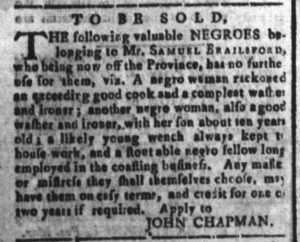
Mar 22 - South-Carolina Gazette and Country Journal Slavery 7
South-Carolina Gazette and Country Journal (March 22, 1768).

**********
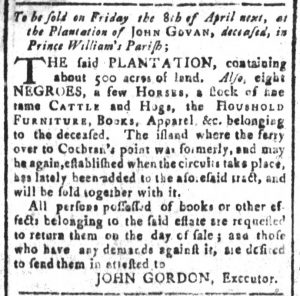
Mar 22 - South-Carolina Gazette and Country Journal Slavery 8
South-Carolina Gazette and Country Journal (March 22, 1768).

**********
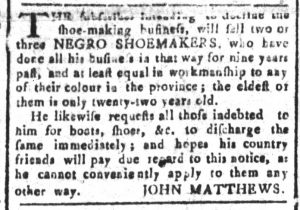
Mar 22 - South-Carolina Gazette and Country Journal Slavery 9
South-Carolina Gazette and Country Journal (March 22, 1768).

**********

Mar 22 - South-Carolina Gazette and Country Journal Slavery 10
South-Carolina Gazette and Country Journal (March 22, 1768).

**********

Mar 22 - South-Carolina Gazette and Country Journal Slavery 11
South-Carolina Gazette and Country Journal (March 22, 1768).

**********
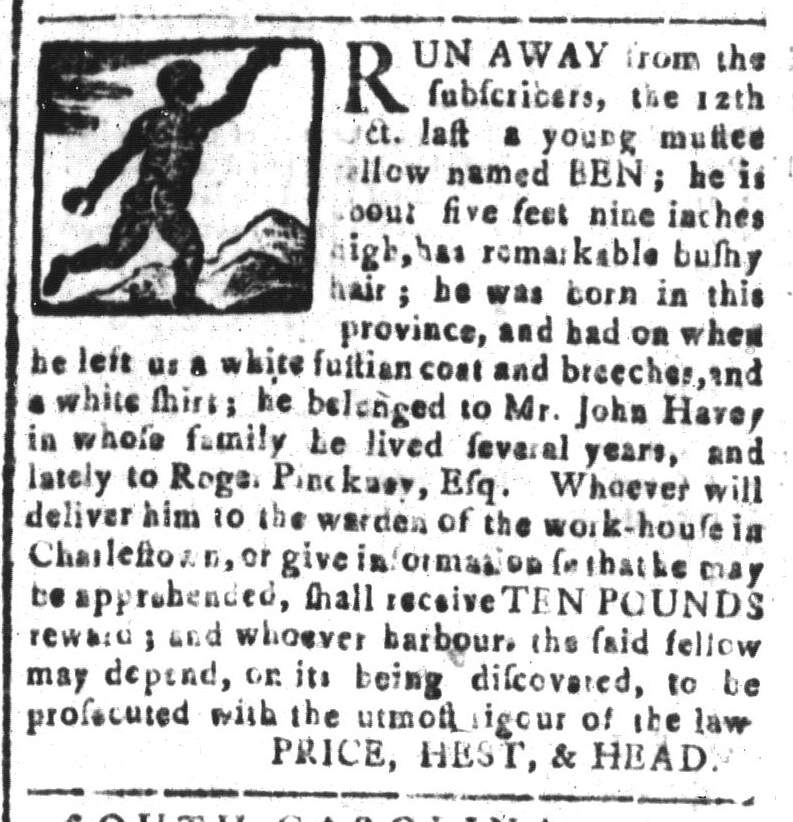
Mar 22 - South-Carolina Gazette and Country Journal Slavery 12
South-Carolina Gazette and Country Journal (March 22, 1768).

**********

Mar 22 - South-Carolina Gazette and Country Journal Slavery 13
South-Carolina Gazette and Country Journal (March 22, 1768).

**********

Mar 22 - South-Carolina Gazette and Country Journal Slavery 14
South-Carolina Gazette and Country Journal (March 22, 1768).

**********

Mar 22 - South-Carolina Gazette and Country Journal Slavery 15
South-Carolina Gazette and Country Journal (March 22, 1768).

March 21

What was advertised in a colonial American newspaper 250 years ago today?

Mar 21 - 3:21:1768 Connecticut Courant
Connecticut Courant (March 21, 1768).

“(For other Advertisements, see the Suppliment.)”

Compared to newspapers published in most other towns and cities, Hartford’s Connecticut Courant featured relatively little advertising. The March 21, 1768, edition devoted even less space to advertisements than usual, presumably because the printer, Thomas Green, opted to insert “Letter X” of John Dickinson’s “LETTERS from a FARMER in Pennsylvania, to the Inhabitants of the British Colonies” in its entirety. Only five advertisements appeared in the issue, a short notice from the “Treasury-Office” immediately below the masthead as the first item in the first column on the first page and four others that comprised less than a column on the third page.

Samuel Gilbert’s notice concerning “A good, convenient Dwelling-House and Garden” for sale or rent was the last of those advertisements. “Letter X” filled the remainder of the issue, but Green first inserted an announcement at the conclusion of Gilbert’s advertisement: “(For other Advertisements, see the Suppliment.)” These directions suggest that Green did indeed have other paid notices to disseminate to the public, but the copy of the Connecticut Courant photographed and digitized by Readex for its America’s Historical Newspapers database does not include a supplement. The database does include, however, a nearly complete run of that newspaper for 1768, lacking only two of the issues printed on each Monday of the year. (Gaps in the issue numbers make it clear that two are indeed missing.) Readex reproduced supplements to other issues when they were among the collections of the libraries and archives that partnered with the company in making these historical sources more widely available and accessible. That the database does not include the supplement for the March 21, 1768, edition of the Connecticut Courant suggests that no extant copy had been located. This is disappointing but hardly surprising. We are fortunate to have an almost complete archive of the Connecticut Courant, a situation that demonstrates that newspapers were less ephemeral than other printed media that disseminated advertising in eighteenth-century America. The traces of other forms of advertising, including broadsides and catalogs, mentioned in early American newspapers, printers’ ledgers, and other sources indicate that our collections of newspapers and their advertisements will always be much more complete than our collections of other advertising media from the period.

An ephemeral advertising supplement that disappeared over time, however, might not be the only explanation. Alternately, Green may have gotten ahead of himself when he advised readers to consult the supplement for other advertisements. The printer may have intended to publish and distribute an additional half sheet, a common practice for other newspapers but less common for the Connecticut Courant, but ultimately ran out of time or determined that he did not have sufficient advertising content to merit the expenditure of resources. Green may have announced a supplement that has not survived to the twenty-first century because it never actually existed in the eighteenth century. Our archive of the Connecticut Courant may be more complete than the evidence from the period otherwise suggests. The announcement concerning an advertising supplement may testify to the aspirations of the printer rather than the work he accomplished.

Slavery Advertisements Published March 21, 1768

GUEST CURATOR:  Jonathan Bisceglia

The Slavery Adverts 250 Project chronicles the role of newspaper advertising in perpetuating slavery in the era of the American Revolution. The project seeks to reveal the ubiquity of slavery in eighteenth-century life from New England to Georgia by republishing advertisements for slaves – for sale, wanted to purchase, runaways, captured fugitives – in daily digests on this site as well as in real time via the @SlaveAdverts250 Twitter feed, utilizing twenty-first-century media to stand in for the print media of the eighteenth century.

The project aims to provide modern audiences with a sense of just how often colonists encountered these advertisements in their daily lives. Enslaved men, women, and children appeared in print somewhere in the colonies almost every single day. Those advertisements served as a constant backdrop for social, cultural, economic, and political life in colonial and revolutionary America. Colonists who did not own slaves were still confronted with slavery as well as invited to maintain the system by purchasing slaves or assisting in the capture of runaways. The frequency of these newspaper advertisements suggests just how embedded slavery was in colonial and revolutionary American culture in everyday interactions beyond the printed page.

These advertisements also testify to the experiences of enslaved men, women, and children, though readers must consider that those experiences have been remediated through descriptions offered by slaveholders rather than the slaves themselves. Often unnamed in the advertisements, enslaved men, women, and children were not invisible or unimportant in early America.

These advertisements appeared in colonial American newspapers 250 years ago today.

Mar 21 - Boston Evening-Post Slavery 1
Boston Evening-Post (March 21, 1768).

**********

Mar 21 - Boston-Gazette Slavery 1
Boston-Gazette (March 21, 1768).

**********

Mar 21 - New-York Gazette Weekly Mercury Slavery 1
New-York Gazette and Weekly Mercury (March 21, 1768).

**********

Mar 21 - New-York Gazette Weekly Mercury Slavery 2
New-York Gazette and Weekly Mercury (March 21, 1768).

**********

Mar 21 - New-York Gazette Weekly Mercury Slavery 3
New-York Gazette and Weekly Mercury (March 21, 1768).

**********

Mar 21 - New-York Gazette Weekly Mercury Supplement Slavery 1
New-York Gazette and Weekly Mercury (March 21, 1768).

**********

Mar 21 - New-York Gazette Weekly Mercury Supplement Slavery 2
New-York Gazette and Weekly Mercury (March 21, 1768).

**********

Mar 21 - Newport Mercury Slavery 1
Newport Gazette (March 21, 1768).

**********

Mar 21 - Newport Mercury Slavery 2
Newport Gazette (March 21, 1768).

**********

Mar 21 - South Carolina Gazette Slavery 1
South Carolina Gazette (March 21, 1768).

**********

Mar 21 - South Carolina Gazette Slavery 2
South Carolina Gazette (March 21, 1768).

**********

Mar 21 - South Carolina Gazette Slavery 3
South Carolina Gazette (March 21, 1768).

**********

Mar 21 - South Carolina Gazette Slavery 4
South Carolina Gazette (March 21, 1768).

**********

Mar 21 - South Carolina Gazette Slavery 5
South Carolina Gazette (March 21, 1768).

**********

Mar 21 - South Carolina Gazette Slavery 6
South Carolina Gazette (March 21, 1768).

March 20

What was advertised in a colonial American newspaper 250 years ago this week?

Mar 20 - 3:17:1768 Virginia Gazette Purdie and Dixon
Virginia Gazette [Purdie and Dixon] (March 17, 1768).

“ADVERTISEMENTS (of a moderate Length) inserted in it for 3s. the first Week, and 2s. each Week after.”

Alexander Purdie and John Dixon published the Virginia Gazette in Williamsburg in 1768. William Rind also published the Virginia Gazette in Williamsburg in 1768, though it was not the same newspaper despite bearing the same name. The printers competed for subscribers, readers, and advertisers as well as customers for job printing. Most eighteenth-century printers did not regularly list their rates for subscriptions or advertisements in their newspapers, but Purdie and Dixon did so in the colophon of their Virginia Gazette, as did Rind in the colophon of his Virginia Gazette.

Not surprisingly, the competitors set the same rates. An annual subscription cost 12 shillings and 6 pence. Advertisements were much more lucrative for printers. Purdie and Dixon specified that colonists could have “ADVERTISEMENTS (of a moderate Length) inserted … for 3s. the first Week, and 2s. each Week after.” Rind named the same prices, though he also offered a further clarification: “long ones in Proportion.” Among eighteenth-century printers who did publish their advertising rates that was a standard practice. Purdie and Dixon most likely adopted the same practice even if they did not underscore it in the colophon of their Virginia Gazette. What qualified as an advertisement “of a moderate Length” likely depended on negotiations between printer and advertiser. Neither Purdie and Dixon nor Rind indicated whether they defined length by the number of words or the amount of space on the page or both. Although the two would have been roughly proportional, inserting woodcuts or deploying several lines of type set in larger font did occupy more space.

These rates reveal that advertising could generate significant revenues that contributed to making it possible for printers to publish their newspapers and disseminate news and other content, including editorial pieces like the tenth missive in the “LETTERS From a FARMER in Pennsylvania to the inhabitants of the British colonies” that appeared in both Virginia Gazettes on March 17, 1768. In “Letter X,” John Dickinson warned about the progression of tyranny that colonists could expect if the current abuses by Parliament were not challenged but instead became precedent for future governance from the other side of the Atlantic.

At 12 pence per shilling, a subscription to either Virginia Gazette cost 150 pence total, just under 3 pence per issue. An advertisement, however, cost twelve times as much, three shillings, just for its first insertion. This model, advertising funding the distribution of other content, continued into the nineteenth century and beyond with the introduction of new media made possible by advancing technologies. Although we take this system for granted today and even lament the intrusion of advertising into practically every aspect of daily life, colonists depended on advertising for its role in delivering the news at a crucial point in American history. Advertising provided an important alternate revenue stream for printers, helping them to spread news and editorial content during the imperial crisis that eventually resulted in the American Revolution.

March 19

What was advertised in a colonial American newspaper 250 years ago today?

Mar 19 - 3:19:1768 Providence Gazette
Providence Gazette (March 19, 1768).

“Their assortment is very large.”

In their efforts to convince prospective customers of the many choices available at their shop at “the Sign of the GOLDEN EAGLE,” Joseph Russell and William Russell placed an advertisement exceptional for its length in the March 19, 1768, edition of the Providence Gazette. Unlike most advertisements in colonial newspapers, their list of goods extended more than a column, dominating the third page of the issue. In it, the Russells named everything from “Beautiful black figured sattin” to “Paper hangings for rooms” to “Pewter dishes and plates” to “The best Scotch snuff.” In effect, they presented a catalog of their merchandise to the public.

Yet the Russells did not merely list their extensive inventory. They also provided descriptions that further developed their marketing strategy. For instance, rather than listing “Irish linens” they instead proclaimed that they stocked “A Large and neat assortment of Irish Linens, of all widths and prices.” They emphasized variety for other types of goods as well, including “A neat and genteel assortment of dark ground calicoes and chintz,” “a neat assortment of brass candlesticks,” “A large assortment of saddlers ware, Compleat assortment of shoemakers tools, A large assortment of files,” “A beautiful assortment of china cups and saucers,” and “A variety of new fashioned stuffs.”

In addition, the Russells promoted the selection of colors available for many of their textiles and adornments, such as “Single and double damask of all colours,” “Sewing silk of all colours, Silk knee straps of all colours,” and “German serges of all colours.” For other items they emphasized variations in price, including “Black Barcelona handkerchiefs of all prices,” “Shaloons, tammies and durants, of all prices,” “Mens common worsted [silk hose] of al prices,” and “Ivory and horn combs of all prices.” They combined those appeals when describing “Broadcloths of all colours and prices,” encouraging potential customers to imagine all the possible varieties.

When it came to housewares and tools, the Russells highlighted variations in sizes and types, suggesting consumers could find items that fit their tastes, needs, and desires. These included “Brass kettles of all sizes,” “Snuff boxes of all sorts,” “Looking glasses of all sizes,” “Blankets of all widths,” “Gimblets of all sizes,” “Brads and tacks of all sorts,” and “Hinges, locks and latches of all sorts and sizes.” They provided even more detail about “THE very best hemp cordage, of all sizes, from a ratline to a 4 and an half inch rope.”

In their brief remarks that followed this list of goods the Russells even more explicitly made an appeal to consumer choice: “As their assortment is very large, customers will have the advantage of a fine choice.” In so doing, they confirmed the strategies they had adopted concerning the space the advertisement occupied on the page and the reiteration of words that emphasized a wide selection of goods throughout the notice.

Slavery Advertisements Published March 19, 1768

GUEST CURATOR:  Jonathan Bisceglia

The Slavery Adverts 250 Project chronicles the role of newspaper advertising in perpetuating slavery in the era of the American Revolution. The project seeks to reveal the ubiquity of slavery in eighteenth-century life from New England to Georgia by republishing advertisements for slaves – for sale, wanted to purchase, runaways, captured fugitives – in daily digests on this site as well as in real time via the @SlaveAdverts250 Twitter feed, utilizing twenty-first-century media to stand in for the print media of the eighteenth century.

The project aims to provide modern audiences with a sense of just how often colonists encountered these advertisements in their daily lives. Enslaved men, women, and children appeared in print somewhere in the colonies almost every single day. Those advertisements served as a constant backdrop for social, cultural, economic, and political life in colonial and revolutionary America. Colonists who did not own slaves were still confronted with slavery as well as invited to maintain the system by purchasing slaves or assisting in the capture of runaways. The frequency of these newspaper advertisements suggests just how embedded slavery was in colonial and revolutionary American culture in everyday interactions beyond the printed page.

These advertisements also testify to the experiences of enslaved men, women, and children, though readers must consider that those experiences have been remediated through descriptions offered by slaveholders rather than the slaves themselves. Often unnamed in the advertisements, enslaved men, women, and children were not invisible or unimportant in early America.

These advertisements appeared in colonial American newspapers 250 years ago today.

Mar 19 - Providence Gazette Slavery 1
Providence Gazette (March 19, 1768).

March 18

What was advertised in a colonial American newspaper 250 years ago today?

Mar 18 - 3:18:1768 Connecticut Journal
Connecticut Journal (March 18, 1768).

“A Quantity of Good Dutch Clover Seed, to be sold by Richard Woodhull, in New-Haven.”

Richard Woodhull’s advertisement for “A Quantity of Good Dutch Clover Seed” benefited from its fairly unique yet conspicuous placement in the March 18, 1768, edition of the Connecticut Journal. Unlike some printers who reserved certain pages for news items and other pages for advertisements, brothers Thomas Green and Samuel Green distributed news and advertising throughout the entire issue, though only news and the masthead appeared on the first page. The second, third, and fourth pages all featured both news and paid notices, with news first and advertising filling in the remainder of the page. In other words, readers encountered news and then advertising when they perused the page from left to right. On the second and fourth pages, advertisements comprised nearly the entire final column. On the third page, however, a single paid notice appeared at the bottom of the last column …

… except for Woodhull’s advertisement, a short announcement printed on the far right of the page. The type had been rotated to run perpendicular to the rest of the text, replicating a strategy sometimes deployed by printers and compositors in other colonial newspapers. In this instance, however, the execution was rather clumsy in comparison. The text of Woodhull’s advertisement was positioned flush against the contents of the third column rather than set slightly to the right with at least a narrow strip of white space separating them. Unfortunately, examining a digital surrogate does not allow for any assessment of whether this was done out of necessity to fit the size of the sheet or if the Greens had sufficient margins that they could have moved Woodhull’s advertisement to the right and away from the third column. The March 18 edition was only issue “No. 22” of the Connecticut Journal. Given that the Greens had been publishing the newspaper for less than six months, they still may have been experimenting to determine their preferred format when it came to graphic design and visual aspects.

Alternately, the Greens may have resorted to squeezing Woodhull’s advertisement on the third page because they neglected to insert it when they set the type for the columns. The same advertisement appeared in the March 11 edition (in what appears to be the same size font, though working with a digital surrogate makes it impossible to definitively state that was the case), but in four lines in a column with other advertisements. The spacing between words seems to be replicated in the perpendicular insertion the following week, suggesting that the Greens at some point took four lines of type that had already been set and positioned them side by side to make a single line. A new version of the advertisement, completely reset and extending only three lines, appeared in a regular column in the March 25 issue. Yet another version, again completely reset but this time in only two lines, was inserted as the final item the last column in the April 1 issue before the advertisement was discontinued in subsequent issues.

Woodhull may have requested these variations as a means of drawing attention to his advertisements, but it seems more likely that they resulted from the Greens working through their practices for the publication process for what was a relatively new endeavor. Although Thomas had more than a decade of experience as a printer, setting up shop with his brother Samuel was a new enterprise. The two may have been working out a system for operating their business and organizing tasks. Whatever the reason for the awkward insertion of Woodhull’s advertisement, it had the effect of making his notice difficult to overlook. Casual observers could not help but notice the strange line of text, in larger font, set perpendicular to the rest when they glanced at the page. Those who actively read the news from Boston or the shipping news from New Haven’s Custom House could not have missed Woodhull’s advertisement. Whether done intentionally or not, the unusual typography made Woodhull’s advertisement more visible to potential customers.

Slavery Advertisements Published March 18, 1768

GUEST CURATOR:  Jonathan Bisceglia

The Slavery Adverts 250 Project chronicles the role of newspaper advertising in perpetuating slavery in the era of the American Revolution. The project seeks to reveal the ubiquity of slavery in eighteenth-century life from New England to Georgia by republishing advertisements for slaves – for sale, wanted to purchase, runaways, captured fugitives – in daily digests on this site as well as in real time via the @SlaveAdverts250 Twitter feed, utilizing twenty-first-century media to stand in for the print media of the eighteenth century.

The project aims to provide modern audiences with a sense of just how often colonists encountered these advertisements in their daily lives. Enslaved men, women, and children appeared in print somewhere in the colonies almost every single day. Those advertisements served as a constant backdrop for social, cultural, economic, and political life in colonial and revolutionary America. Colonists who did not own slaves were still confronted with slavery as well as invited to maintain the system by purchasing slaves or assisting in the capture of runaways. The frequency of these newspaper advertisements suggests just how embedded slavery was in colonial and revolutionary American culture in everyday interactions beyond the printed page.

These advertisements also testify to the experiences of enslaved men, women, and children, though readers must consider that those experiences have been remediated through descriptions offered by slaveholders rather than the slaves themselves. Often unnamed in the advertisements, enslaved men, women, and children were not invisible or unimportant in early America.

These advertisements appeared in colonial American newspapers 250 years ago today.

Mar 18 - New-London Gazette Slavery 1
New-London Gazette (March 18, 1768).

**********

Mar 18 - South-Carolina and American General Gazette Slavery 1
South-Carolina and American General Gazette (March 18, 1768).

**********

Mar 18 - South-Carolina and American General Gazette Slavery 2
South-Carolina and American General Gazette (March 18, 1768).

**********

Mar 18 - South-Carolina and American General Gazette Slavery 3
South-Carolina and American General Gazette (March 18, 1768).

**********

Mar 18 - South-Carolina and American General Gazette Slavery 4
South-Carolina and American General Gazette (March 18, 1768).

**********

Mar 18 - South-Carolina and American General Gazette Slavery 5
South-Carolina and American General Gazette (March 18, 1768).

**********

Mar 18 - South-Carolina and American General Gazette Slavery 6
South-Carolina and American General Gazette (March 18, 1768).

**********

Mar 18 - South-Carolina and American General Gazette Slavery 7
South-Carolina and American General Gazette (March 18, 1768).

**********

Mar 18 - South-Carolina and American General Gazette Slavery 8
South-Carolina and American General Gazette (March 18, 1768).

**********

Mar 18 - South-Carolina and American General Gazette Slavery 9
South-Carolina and American General Gazette (March 18, 1768).

**********

Mar 18 - South-Carolina and American General Gazette Slavery 10
South-Carolina and American General Gazette (March 18, 1768).

**********

Mar 18 - South-Carolina and American General Gazette Slavery 11
South-Carolina and American General Gazette (March 18, 1768).

**********

Mar 18 - South-Carolina and American General Gazette Slavery 12
South-Carolina and American General Gazette (March 18, 1768).

**********

Mar 18 - South-Carolina and American General Gazette Slavery 13
South-Carolina and American General Gazette (March 18, 1768).

**********

Mar 18 - South-Carolina and American General Gazette Slavery 14
South-Carolina and American General Gazette (March 18, 1768).

**********

Mar 18 - South-Carolina and American General Gazette Slavery 15
South-Carolina and American General Gazette (March 18, 1768).

**********

Mar 18 - South-Carolina and American General Gazette Slavery 16
South-Carolina and American General Gazette (March 18, 1768).

March 17

What was advertised in a colonial American newspaper 250 years ago today?

Mar 17 - 3:17:1768 Pennsylvania Gazette
Pennsylvania Gazette (March 17, 1768).

“HENRY STUBER, DRUGGIST in Lancaster.”

Although he ran a shop in Lancaster, Henry Stuber sought local customers by placing advertisements for his “FRESH and universal supply of DRUGS and MEDICINES” in the Pennsylvania Gazette, printed in Philadelphia more than fifty miles to the east. His advertisements demonstrate the reach of colonial newspapers in an era before most towns had printing presses and local newspapers. Lancaster did not have its own newspaper in 1768. Instead, English-speaking residents treated those printed in Philadelphia – the Pennsylvania Chronicle, the Pennsylvania Gazette, and the Pennsylvania Journal – as their local newspapers, while others who spoke German read the Wochentliche Philadelphische Staatsbote printed in Germantown, just outside of Philadelphia. As the titles of the English-language newspapers suggest, they served the entire colony of Pennsylvania – and beyond. Colonists in Delaware and portions of New Jersey and Maryland also considered these regional newspapers to be their local publications, reading them and inserting advertisements in them.

Stuber relied on the extensive geographic distribution of the Pennsylvania Gazette when he composed his advertisement. Realizing that he would probably not attract many customers from the busy port where residents had access to many apothecary shops, he instead targeted customers who lived in the hinterlands. In particular, he addressed “Doctors in the country” who were likely to purchase in volume, informing them that it “will be much easier to get [medicines] from Lancaster” than from Philadelphia. He also promoted his wares to “families who live at a distance from a Doctor” in towns and villages throughout the colony. He supplied “medicine boxes, with ample directions” so they could tend to their own minor ailments as necessary. In addition to convenience, he suggested other benefits: acquiring drugs from his shop could be done with “much less risk” and “will save the expence of so far carriage.” Just in case skeptical prospective customers assumed that the prices would already reflect the costs Stuber paid for transporting his inventory to Lancaster, he assured readers that “he will sell as cheap as any one in Philadelphia.”

That Henry Stuber, a “DRUHGGIST in Lancaster,” opted to advertise in a newspaper printed in Philadelphia in hopes of enticing customers from throughout the countryside testifies to the wide dissemination and readership of eighteenth-century newspapers. Those publications not only delivered information far and wide but also facilitated commerce beyond the largest and busiest port cities.

Summary of Slavery Advertisements Published March 11-17, 1768

These tables indicate how many advertisements for slaves appeared in colonial American newspapers during the week of March 11-17, 1768.

Note:  These tables are as comprehensive as currently digitized sources permit, but they may not be an exhaustive account.  They includes all newspapers that have been digitized and made available via Accessible Archives, Colonial Williamsburg’s Digital Library, and Readex’s America’s Historical Newspapers.  There are several reasons some newspapers may not have been consulted:

  • Issues that are no longer extant;
  • Issues that are extant but have not yet been digitized (including the Pennsylvania Journal); and
  • Newspapers published in a language other than English (including the Wochentliche Philadelphische Staatsbote).

**********

Slavery Advertisements Published March 11-17, 1768:  By Date

Slavery Adverts Tables 1768 By Date Mar 11

**********

Slavery Advertisements Published March 11-17, 1768:  By Region

Slavery Adverts Tables 1768 By Region Mar 11