Slavery Advertisements Published June 9, 1768

The Slavery Adverts 250 Project chronicles the role of newspaper advertising in perpetuating slavery in the era of the American Revolution. The project seeks to reveal the ubiquity of slavery in eighteenth-century life from New England to Georgia by republishing advertisements for slaves – for sale, wanted to purchase, runaways, captured fugitives – in daily digests on this site as well as in real time via the @SlaveAdverts250 Twitter feed, utilizing twenty-first-century media to stand in for the print media of the eighteenth century.

The project aims to provide modern audiences with a sense of just how often colonists encountered these advertisements in their daily lives. Enslaved men, women, and children appeared in print somewhere in the colonies almost every single day. Those advertisements served as a constant backdrop for social, cultural, economic, and political life in colonial and revolutionary America. Colonists who did not own slaves were still confronted with slavery as well as invited to maintain the system by purchasing slaves or assisting in the capture of runaways. The frequency of these newspaper advertisements suggests just how embedded slavery was in colonial and revolutionary American culture in everyday interactions beyond the printed page.

These advertisements also testify to the experiences of enslaved men, women, and children, though readers must consider that those experiences have been remediated through descriptions offered by slaveholders rather than the slaves themselves. Often unnamed in the advertisements, enslaved men, women, and children were not invisible or unimportant in early America.

These advertisements appeared in colonial American newspapers 250 years ago today.

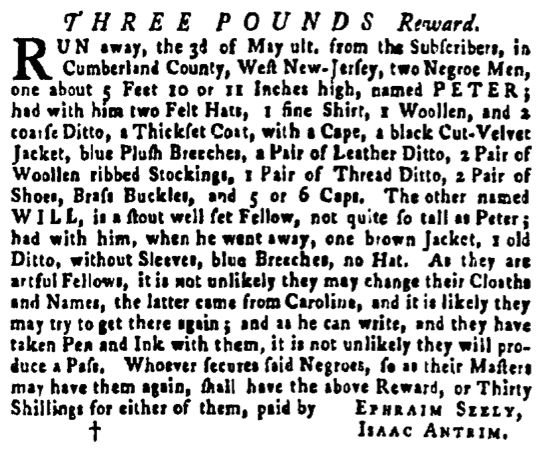
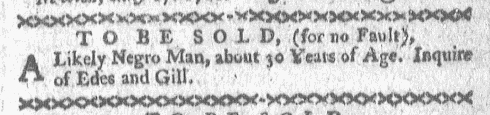
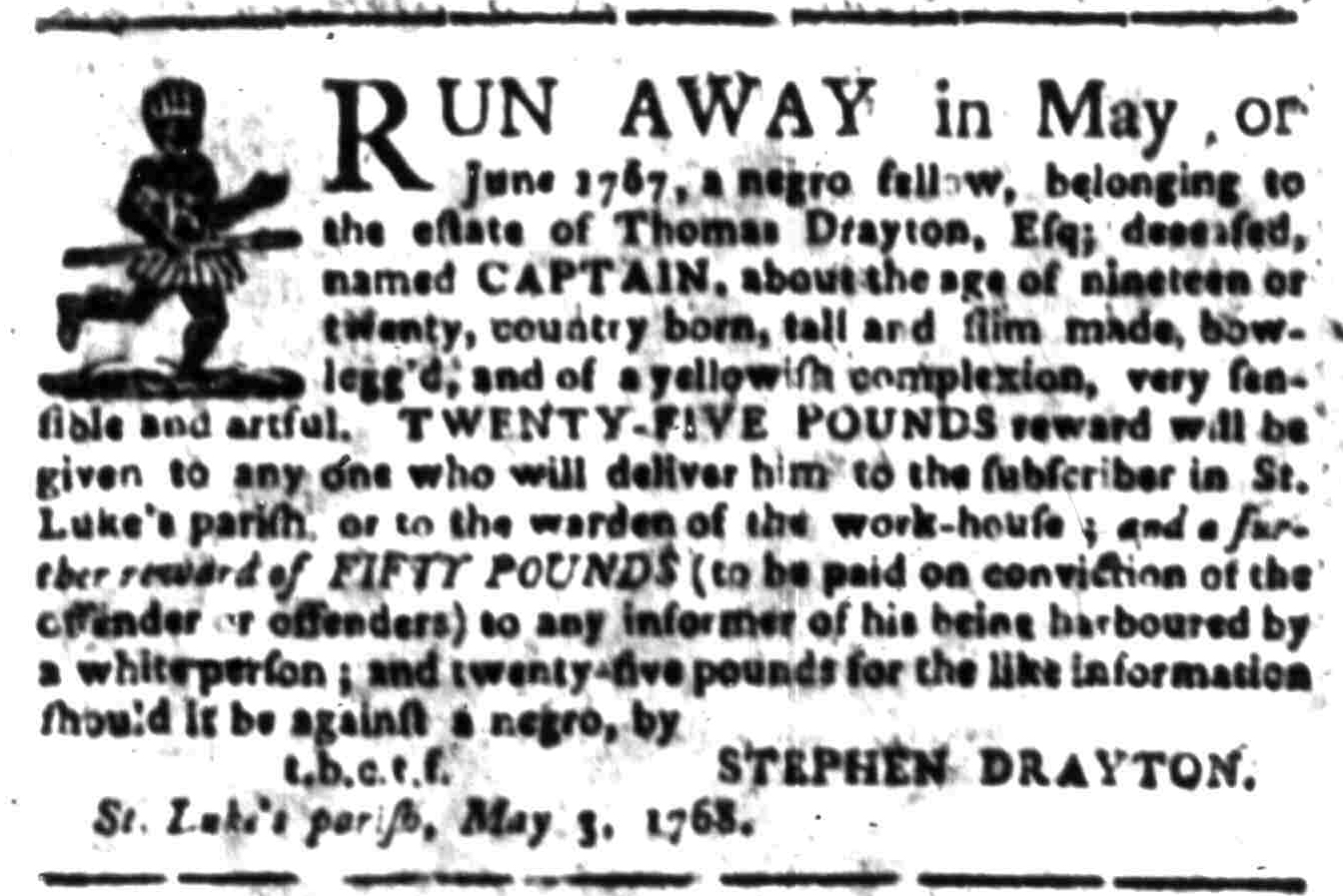
Jun 9 - New-York Journal Slavery 1
New-York Journal (June 9, 1768).

**********
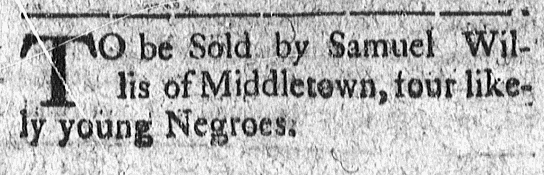
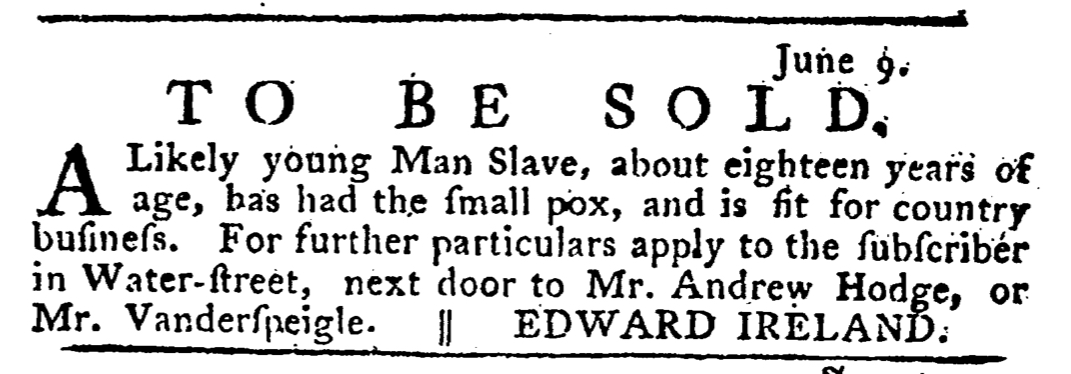
Jun 9 - New-York Journal Slavery 2
New-York Journal (June 9, 1768).

**********

Jun 9 - Pennsylvania Gazette Slavery 1
Pennsylvania Gazette (June 9, 1768).

**********
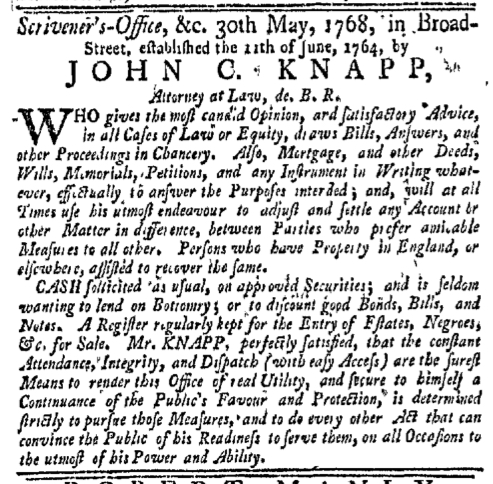
Jun 9 - Pennsylvania Gazette Slavery 2
Pennsylvania Gazette (June 9, 1768).

**********
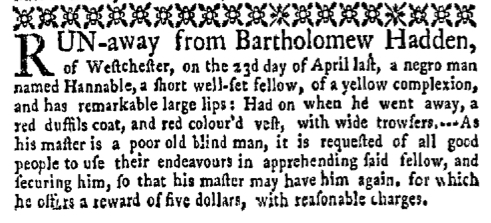
Jun 9 - Pennsylvania Gazette Supplement Slavery 1
Supplement to the Pennsylvania Gazette (June 9, 1768).

**********
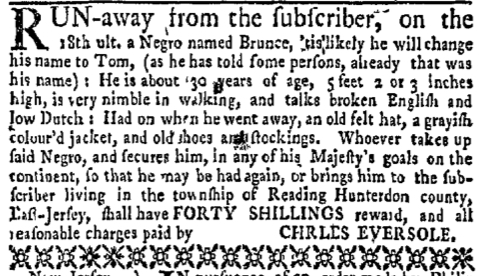
Jun 9 - Pennsylvania Gazette Supplement Slavery 2
Supplement to the Pennsylvania Gazette (June 9, 1768).

**********

Jun 9 - Pennsylvania Gazette Supplement Slavery 3
Supplement to the Pennsylvania Gazette (June 9, 1768).

**********

Jun 9 - Pennsylvania Gazette Supplement Slavery 4
Supplement to the Pennsylvania Gazette (June 9, 1768).

**********

Jun 9 - Pennsylvania Journal Slavery 1
Pennsylvania Journal (June 9, 1768).

**********
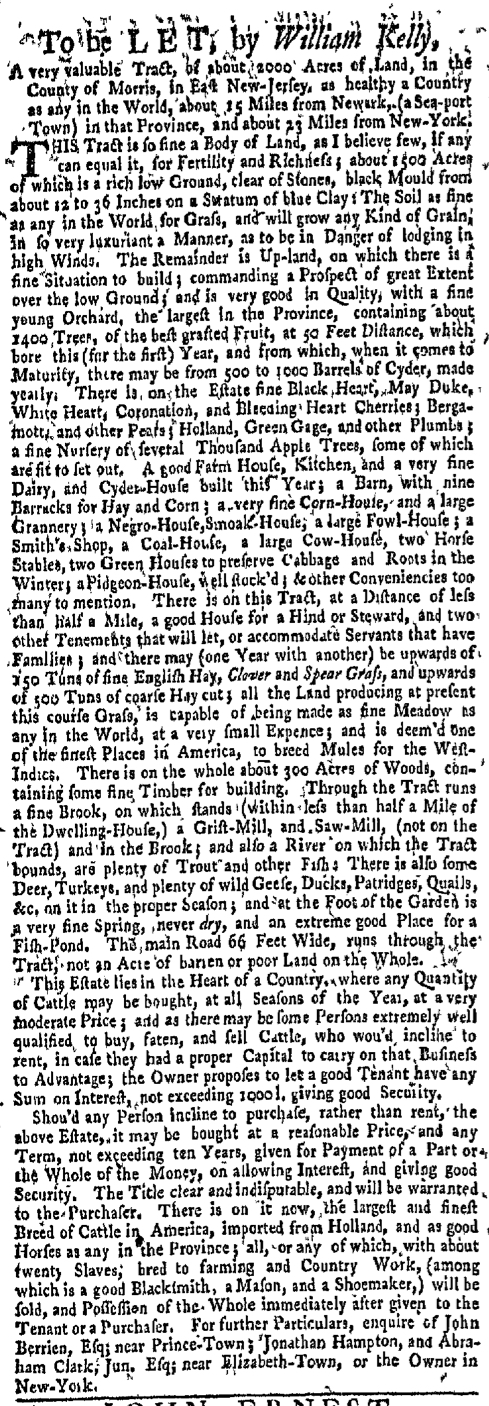
Jun 9 - Pennsylvania Journal Slavery 2
Pennsylvania Journal (June 9, 1768).

**********

Jun 9 - Pennsylvania Journal Slavery 3
Pennsylvania Journal (June 9, 1768).

**********

Jun 9 - Pennsylvania Journal Slavery 4
Pennsylvania Journal (June 9, 1768).

**********

Jun 9 - Virginia Gazette Purdie and Dixon Slavery 1
Virginia Gazette [Purdie & Dixon] (June 9, 1768).

**********

Jun 9 - Virginia Gazette Purdie and Dixon Slavery 2
Virginia Gazette [Purdie & Dixon] (June 9, 1768).

**********

Jun 9 - Virginia Gazette Purdie and Dixon Slavery 3
Virginia Gazette [Purdie & Dixon] (June 9, 1768).

**********

Jun 9 - Virginia Gazette Purdie and Dixon Slavery 4
Virginia Gazette [Purdie & Dixon] (June 9, 1768).

**********

Jun 9 - Virginia Gazette Rind Slavery 1
Virginia Gazette [Rind] (June 9, 1768).

**********

Jun 9 - Virginia Gazette Rind Slavery 2
Virginia Gazette [Rind] (June 9, 1768).

June 8

Who was the subject of an advertisement in a colonial American newspaper 250 years ago today?

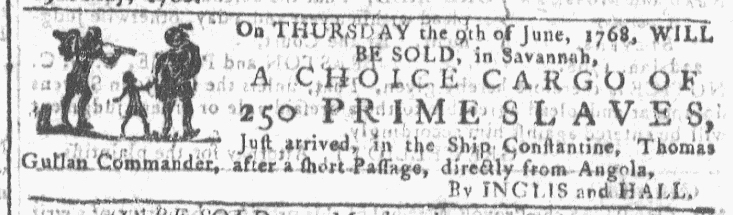
Jun 8 - 6:8:1768 Georgia Gazette
Georgia Gazette (June 8, 1768).

“A CHOICE CARGO OF 250 PRIME SLAVES.”

In early June 1768 merchants Alexander Inglis and Nathaniel Hall advertised the sale of “A CHOICE CARGO OF 250 PRIME SLAVES, Just arrived, in the Ship Constantine, Thomas Gullan Commander, after a short Passage, directly from Angola.” Their advertisement provides various details about a particular slave trading voyage, enough to identify it as Voyage 17665 in Voyages: The Trans-Atlantic Slave Trade Database.

According to the database, the Constantine departed Bristol on April 21, 1767, and sailed to West Central Africa and St. Helena to purchase slaves. The database does not include entries for “Date trade began in Africa” or “Date vessel departed Africa,” but it does specify the “Date vessel arrived with slaves” in Savannah: June 1, 1768, the same day that Inglis and Hall’s advertisement first appeared in the Georgia Gazette. The merchants allowed just over a week before selling their slaves on June 9, allowing them two opportunities to advertise their human cargo in the colony’s only newspaper.

Given that more than a year passed between the beginning of the voyage and the ship’s arrival in Savannah, it appears that the Constantine spent quite some time on the African coast. The voyage for some of the enslaved Africans likely consisted of more than just the Middle Passage between Africa and North America, especially if Inglis and Hall accurately reported a “short Passage” across the Atlantic. Given the notoriously high mortality rates and deterioration of health experienced by survivors of the Middle Passage, Inglis and Hall may have exaggerated the length of the voyage across the ocean. Even so, some of the Africans among the human cargo likely spent weeks or months imprisoned aboard the Constantine before the vessel even departed for Georgia.

The database indicates that Gullan intended to purchase 400 slaves but only embarked approximately 275. According to Inglis and Hall, only 250 disembarked in Savannah. Nearly one in ten died during the Middle Passage. Unfortunately, the known records do not reveal the percentages of men and women or the ages of the enslaved Africans who arrived in the colonies via the Constantine.

The entry for Voyage 17665 does not list the advertisement in the Georgia Gazette as one of the sources, but I suspect that it was incorporated into the secondary source listed in the entry, David Richardson’s Bristol, Africa, and the Eighteenth-Century Slave Trade to America. Other entries do list advertisements from colonial American newspapers, highlighting their role in reconstructing the transatlantic slave trade.

Slavery Advertisements Published June 8, 1768

The Slavery Adverts 250 Project chronicles the role of newspaper advertising in perpetuating slavery in the era of the American Revolution. The project seeks to reveal the ubiquity of slavery in eighteenth-century life from New England to Georgia by republishing advertisements for slaves – for sale, wanted to purchase, runaways, captured fugitives – in daily digests on this site as well as in real time via the @SlaveAdverts250 Twitter feed, utilizing twenty-first-century media to stand in for the print media of the eighteenth century.

The project aims to provide modern audiences with a sense of just how often colonists encountered these advertisements in their daily lives. Enslaved men, women, and children appeared in print somewhere in the colonies almost every single day. Those advertisements served as a constant backdrop for social, cultural, economic, and political life in colonial and revolutionary America. Colonists who did not own slaves were still confronted with slavery as well as invited to maintain the system by purchasing slaves or assisting in the capture of runaways. The frequency of these newspaper advertisements suggests just how embedded slavery was in colonial and revolutionary American culture in everyday interactions beyond the printed page.

These advertisements also testify to the experiences of enslaved men, women, and children, though readers must consider that those experiences have been remediated through descriptions offered by slaveholders rather than the slaves themselves. Often unnamed in the advertisements, enslaved men, women, and children were not invisible or unimportant in early America.

These advertisements appeared in colonial American newspapers 250 years ago today.

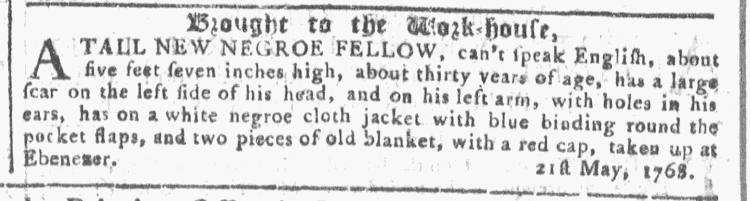
Jun 8 - Georgia Gazette Slavery 1
Georgia Gazette (June 8, 1768).

**********

Jun 8 - Georgia Gazette Slavery 2
Georgia Gazette (June 8, 1768).

**********

Jun 8 - Georgia Gazette Slavery 3
Georgia Gazette (June 8, 1768).

**********

Jun 8 - Georgia Gazette Slavery 4
Georgia Gazette (June 8, 1768).

**********

Jun 8 - Georgia Gazette Slavery 5
Georgia Gazette (June 8, 1768).

**********

Jun 8 - Georgia Gazette Slavery 8
Georgia Gazette (June 8, 1768).

**********

Jun 8 - Georgia Gazette Slavery 6
Georgia Gazette (June 8, 1768).

**********

Jun 8 - Georgia Gazette Slavery 7
Georgia Gazette (June 8, 1768).

June 7

What was advertised in a colonial American newspaper 250 years ago today?

Jun 7 - 6:7:1768 South-Carolina Gazette and Country Journal
South-Carolina Gazette and Country Journal (June 7, 1768).

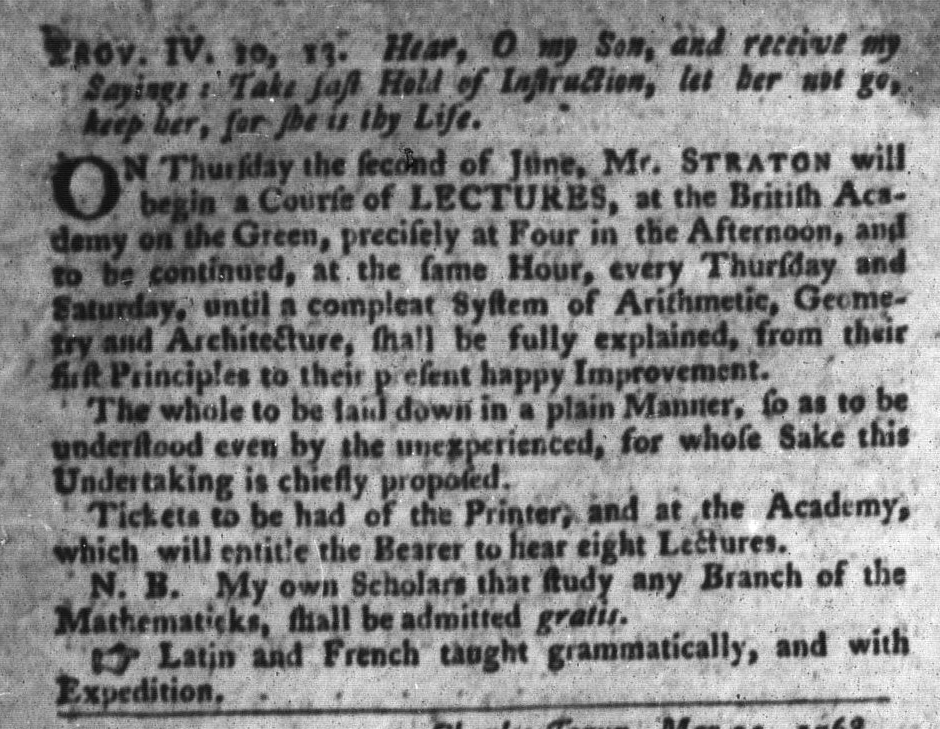
“Mr. STRATON will begin a Course of LECTURES.”

Schoolmaster Osborne Straton frequently advertised his “British Academy on the Green” in the newspapers published in Charleston in the late 1760s. Although he usually sought students who would enroll in his academy, on occasion he offered other opportunities for instruction to the residents of the city. For instance, during the summer of 1768 he delivered “a Course of LECTURES” that took place on Thursday and Saturday afternoons. Straton established a theme for his lecture series, proposing to explicate “a compleat System of Arithmetic, Geometry and Architecture” and promising that each “shall be fully explained, from their first Principles to their Present happy Improvement.”

Compared to the many other schoolmasters and –mistresses that advertised in the South-Carolina Gazette and Country Journal and other newspapers, Straton positioned his British Academy as one of the most elite options available to prospective pupils in the colony. He even concluded his advertisement for the lecture series by noting that he taught Latin and French, reminding regular readers of the extensive curriculum they had encountered in his previous advertisements. For this particular “Course of LECTURES,” however, Straton underscored that he intended to engage general audiences: “The whole to be laid down in a plain Manner so as to be understood even by the unexperienced, for whose Sake this Undertaking is chiefly proposed.” Whether they sought entertainment or elucidation or a combination of the two, Straton invited members of the general public who might not otherwise enroll in his school to benefit from a series of lessons pitched specifically to their level of prior knowledge and experience with the subjects he covered.

Yet he did not throw wide the doors to the British Academy. He expected those who attended the lectures to pay for the experience. He carefully regulated who entered via a system of tickets, sold both by Charles Crouch at the printing office and Straton at the academy. Each ticket “entitle[d] the Bearer to hear eight Lectures.” Straton’s current students who “study any Branch of the Mathematicks” gained free admission, a perquisite of enrolling in his more extensive courses.

The schoolmaster’s verbose advertisements gave readers a sense of the curriculum and teaching style adopted at “the British Academy on the Green.” Even though he oversaw an elite academy, Straton also advertised scholarship opportunities for students who otherwise would not have had the means to enroll in his classes. This lecture series, designed for the benefit of “the unexperienced,” served as another form of outreach to audiences beyond the local gentry. Despite the stuffy persona he frequently cultivated in his advertisements, Starton also managed to communicate an interest in providing educational opportunities for the general public and not just the scions of the elite who could afford to enroll in his academy.

Slavery Advertisements Published June 7, 1768

The Slavery Adverts 250 Project chronicles the role of newspaper advertising in perpetuating slavery in the era of the American Revolution. The project seeks to reveal the ubiquity of slavery in eighteenth-century life from New England to Georgia by republishing advertisements for slaves – for sale, wanted to purchase, runaways, captured fugitives – in daily digests on this site as well as in real time via the @SlaveAdverts250 Twitter feed, utilizing twenty-first-century media to stand in for the print media of the eighteenth century.

The project aims to provide modern audiences with a sense of just how often colonists encountered these advertisements in their daily lives. Enslaved men, women, and children appeared in print somewhere in the colonies almost every single day. Those advertisements served as a constant backdrop for social, cultural, economic, and political life in colonial and revolutionary America. Colonists who did not own slaves were still confronted with slavery as well as invited to maintain the system by purchasing slaves or assisting in the capture of runaways. The frequency of these newspaper advertisements suggests just how embedded slavery was in colonial and revolutionary American culture in everyday interactions beyond the printed page.

These advertisements also testify to the experiences of enslaved men, women, and children, though readers must consider that those experiences have been remediated through descriptions offered by slaveholders rather than the slaves themselves. Often unnamed in the advertisements, enslaved men, women, and children were not invisible or unimportant in early America.

These advertisements appeared in colonial American newspapers 250 years ago today.

Jun 7 - South-Carolina Gazette and Country Journal Slavery 1
South-Carolina Gazette and Country Journal (June 7, 1768).

**********

Jun 7 - South-Carolina Gazette and Country Journal Slavery 2
South-Carolina Gazette and Country Journal (June 7, 1768).

**********

Jun 7 - South-Carolina Gazette and Country Journal Slavery 3
South-Carolina Gazette and Country Journal (June 7, 1768).

**********

Jun 7 - South-Carolina Gazette and Country Journal Slavery 4
South-Carolina Gazette and Country Journal (June 7, 1768).

**********

Jun 7 - South-Carolina Gazette and Country Journal Supplement Slavery 1
Supplement to the South-Carolina Gazette and Country Journal (June 7, 1768).

**********

Jun 7 - South-Carolina Gazette and Country Journal Supplement Slavery 2
Supplement to the South-Carolina Gazette and Country Journal (June 7, 1768).

**********

Jun 7 - South-Carolina Gazette and Country Journal Supplement Slavery 3
Supplement to the South-Carolina Gazette and Country Journal (June 7, 1768).

**********

Jun 7 - South-Carolina Gazette and Country Journal Supplement Slavery 4
Supplement to the South-Carolina Gazette and Country Journal (June 7, 1768).

**********

Jun 7 - South-Carolina Gazette and Country Journal Supplement Slavery 5
Supplement to the South-Carolina Gazette and Country Journal (June 7, 1768).

**********

Jun 7 - South-Carolina Gazette and Country Journal Supplement Slavery 6
Supplement to the South-Carolina Gazette and Country Journal (June 7, 1768).

**********

Jun 7 - South-Carolina Gazette and Country Journal Supplement Slavery 7
Supplement to the South-Carolina Gazette and Country Journal (June 7, 1768).

June 6

What was advertised in a colonial American newspaper 250 years ago today?

Jun 6 - 6:6:1768 New-York Gazette Weekly Post-Boy
New-York Gazette: Or, the Weekly Post- Boy (June 6, 1768).

“His House is very well calculated for an Inn.”

When Josiah F. Davenport opened an inn on Third Street in Philadelphia, he advertised in newspapers published in both Philadelphia and New York. Doing so made sense since he billed “the Bunch of Grapes” as “a genteel House of Entertainment, for Travellers and others, who may depend on the best Fare and civilest Treatment.” Davenport positioned his tavern and inn as a destination not only for visitors to the city but also for local residents “who may have Occasion to meet on Business or Recreation.” In addition to the “best Liquors” and the “elegant and spacious” accommodations for guests, Davenport also promoted the location. He proclaimed that Third Street “is becoming one of the grandest Avenues into this City.” The Bunch of Grapes “stands in the Neighbourhood of many principal Merchants and capital Stores.” Furthermore, it was also located “very near the Market.” Visitors traveling to Philadelphia on business could lodge in an establishment close to their associates, one that also happened to be in a swank neighborhood. Local patrons could also take advantage of the convenient location for conducting business or enjoying the various entertainments at the Bunch of Grapes.

Jun 6 - 6:6:1768 Pennsylvania Chronicle
Pennsylvania Chronicle (June 6, 1768).

Davenport submitted identical copy to the New-York Gazette: Or, the Weekly Post-Boy and the Pennsylvania Chronicle (but the compositors for each made their own decisions about capitalization and italics throughout the advertisement). He also adorned the notice in the Chronicle with a woodcut depicting the sign that marked his establishment, a bunch of grapes suspended from a signpost. He acknowledged that the “large and commodious Inn” he now operated had been “for some time known by the Name of the Bull’s Head.” However, it was now known as the Bunch of Grapes under the management of the new proprietor. The new sign and an image in one of the city’s newspapers helped to cement the switch in branding for the inn. This was especially important considering that the Bull’s Head had established its own reputation for operating at that location.

Davenport realized that the success of the Bunch of Grapes depended on attracting a mixture of customers, both residents of Philadelphia who patronized his “House of Entertainment” for an afternoon or evening and visitors from other places who spent one or more nights. Accordingly, he highlighted a variety of amenities and, especially, the location of the inn in newspapers published in more than one city. Through his marketing efforts, he encouraged travelers to think of the Bunch of Grapes, rather than Philadelphia, as their destination.

Slavery Advertisements Published June 6, 1768

The Slavery Adverts 250 Project chronicles the role of newspaper advertising in perpetuating slavery in the era of the American Revolution. The project seeks to reveal the ubiquity of slavery in eighteenth-century life from New England to Georgia by republishing advertisements for slaves – for sale, wanted to purchase, runaways, captured fugitives – in daily digests on this site as well as in real time via the @SlaveAdverts250 Twitter feed, utilizing twenty-first-century media to stand in for the print media of the eighteenth century.

The project aims to provide modern audiences with a sense of just how often colonists encountered these advertisements in their daily lives. Enslaved men, women, and children appeared in print somewhere in the colonies almost every single day. Those advertisements served as a constant backdrop for social, cultural, economic, and political life in colonial and revolutionary America. Colonists who did not own slaves were still confronted with slavery as well as invited to maintain the system by purchasing slaves or assisting in the capture of runaways. The frequency of these newspaper advertisements suggests just how embedded slavery was in colonial and revolutionary American culture in everyday interactions beyond the printed page.

These advertisements also testify to the experiences of enslaved men, women, and children, though readers must consider that those experiences have been remediated through descriptions offered by slaveholders rather than the slaves themselves. Often unnamed in the advertisements, enslaved men, women, and children were not invisible or unimportant in early America.

These advertisements appeared in colonial American newspapers 250 years ago today.

Jun 6 - Boston Evening-Post Slavery 1
Boston Evening-Post (June 6, 1768).

**********

Jun 6 - Boston-Gazette Supplement Slavery 1
Supplement to the Boston-Gazette (June 6, 1768).

**********

Jun 6 - Boston-Gazette Supplement Slavery 2
Supplement to the Boston-Gazette (June 6, 1768).

**********

Jun 6 - Connecticut Courant Slavery 1
Connecticut Courant (June 6, 1768).

**********

Jun 6 - New-York Gazette Weekly Mercury Slavery 1
New-York Gazette and Weekly Mercury (June 6, 1768).

**********

Jun 6 - New-York Gazette Weekly Mercury Slavery 2
New-York Gazette and Weekly Mercury (June 6, 1768).

**********

Jun 6 - New-York Gazette Weekly Mercury Slavery 3
New-York Gazette and Weekly Mercury (June 6, 1768).

**********

Jun 6 - New-York Gazette Weekly Mercury Slavery 4
New-York Gazette and Weekly Mercury (June 6, 1768).

**********

Jun 6 - New-York Gazette Weekly Mercury Slavery 5
New-York Gazette and Weekly Mercury (June 6, 1768).

**********

Jun 6 - New-York Gazette Weekly Mercury Supplement Slavery 1
Supplement to the New-York Gazette and Weekly Mercury (June 6, 1768).

**********

Jun 6 - New-York Gazette Weekly Mercury Supplement Slavery 2
Supplement to the New-York Gazette and Weekly Mercury (June 6, 1768).

**********

Jun 6 - New-York Gazette Weekly Mercury Supplement Slavery 3
Supplement to the New-York Gazette and Weekly Mercury (June 6, 1768).

**********

Jun 6 - New-York Gazette Weekly Post-Boy Slavery 1
Supplement to the New-York Gazette and Weekly Mercury (June 6, 1768).

**********

Jun 6 - Newport Mercury Slavery 1
Newport Mercury (June 6, 1768).

**********

Jun 6 - Newport Mercury Slavery 2
Newport Mercury (June 6, 1768).

**********

Jun 6 - South Carolina Gazette Slavery 1
South-Carolina Gazette (June 6, 1768).

**********

Jun 6 - South Carolina Gazette Slavery 2
South-Carolina Gazette (June 6, 1768).

**********

Jun 6 - South Carolina Gazette Slavery 3
South-Carolina Gazette (June 6, 1768).

**********

Jun 6 - South Carolina Gazette Slavery 4
South-Carolina Gazette (June 6, 1768).

June 5

What was advertised in a colonial American newspaper 250 years ago this week?

Jun 5 - 6:2:1768 Pennsylvania Journal
Pennsylvania Journal (June 2, 1768).

“JOHN BOYD, Druggist, Has just imported, and now sells, at BALTIMORE TOWN.”

John Boyd placed an advertisement for “A Neat and general assortment of Drugs, and Medicines” in the June 2, 1768, edition of the Pennsylvania Journal.  Unlike many others who advertised consumer goods and services in the Journal, Boyd did not operate a business in Philadelphia.  Instead, he sold his array of remedies “at BALTIMORE TOWN” in neighboring Maryland. Residents of Philadelphia were not the intended audience for Boyd’s advertisement, especially since several druggists and shopkeepers who stocked medicines among their general merchandise served that busy port city.  Some of them, including Nathaniel and John Tweedy and John Sparhawk, advertised in the same issue that carried Boyd’s notice.

Instead, Boyd sought the patronage of other residents of “BALTIMORE TOWN” as well as colonists who lived in the hinterlands between Baltimore and Philadelphia.  He depended on the wide distribution of the Pennsylvania Journal as a regional newspaper that served readers in Pennsylvania, New Jersey, Delaware, Maryland, and beyond. He expected that readers outside Philadelphia would at least skim the advertisements for local content in addition to reading news items that reported on events throughout the colonies, Europe, and the Atlantic world.  Yet he also realized that other advertisers, especially direct competitors who specialized in medicines, often provided mail order services. Accordingly, he assured potential customers that “The Prices will be the same, or as low as in Philadelphia.” Henry Stuber, a druggist in Lancaster, Pennsylvania, made the same promise in his own advertisement that ran once again in the supplement that accompanied the June 2 edition.

Boyd in Baltimore and Stuber in Lancaster vied for local and regional clients by advertising in a newspaper published in Philadelphia, seizing the best option available to them in the middle of the eighteenth century.  Yet that would not be the case for much longer.  Throughout the years of the imperial crisis and the American Revolution the number of newspapers printed in the colonies and the new nation fluctuated yet expanded over time, a trend that only intensified in the final decade of the eighteenth century as printers in an increasing number of cities and towns published local newspapers.  After all, the fate of the republic, an experiment with an uncertain outcome, relied on educated and informed citizens.  Both before and after the Revolution, the revenues from advertisements contributed to the publication and dissemination of the news, even though conceptions of what counted as a local newspaper for the purposes of advertising changed over time.

June 4

What was advertised in a colonial American newspaper 250 years ago today?

Jun 4 - 6:4:1768 New-York Journal
Supplement to the New-York Journal (June 4, 1768).

“The following Advertisement from the London Gazetteer … is inserted as a Curiosity.”

Colonial printers generated content for their newspapers by liberally reprinting items that previously appeared in other newspapers. Much of the news came from newspapers printed in other colonies, but some it also came directly from newspapers printed in London. In making their editorial decisions, printers sometimes chose items intended to inform or to educate, but other times selected items intended solely to entertain. The latter included anecdotes, poems, and even advertisements.

For instance, John Holt reprinted news from London in the Supplement to the New-York Journal distributed on June 4, 1768. He complemented the news from the Public Advertiser and Public Ledger with items intended to edify and to amuse, namely a poem “On JOHN WILKES, Esq; offering himself a Candidate for the County of Middlesex” and an “Advertisement from the London Gazetteer of the 31st of March last.” Holt explained that the advertisement “is inserted as a Curiosity” for his readers.

The advertisement offered colonists a glimpse of popular culture and entertainments available in England. It announced a spectacle that occurred every night (except Sundays) throughout the summer: “HORSEMANSHIP, performed on one, two, and three horses, by Mr. WOLTON, at St. George’s Spaw, at the Dog and Duck in St. George’s Fields Southwark.” The notice listed ten tricks performed by Wolton, including riding “two horses on full speed, standing upright with one foot on each saddle” and making “a flying leap over the bar with two horses, sitting on both saddles.” For added interest, Wolton beat a drum during some of his tricks and fired a pistol during others. To make the event even more spectacular, the proprietors supplied “Proper musick” to set the tone throughout the series of stunts.

Unless they planned a trip across the Atlantic, the readers of the New-York Journal did not have opportunities to witness Wolton’s show of horsemanship during the summer of 1768, but Holt suspected that the advertisement on its own provided some of level of entertainment. Its inclusion in the New-York Journal demonstrates how carefully the printer scoured other newspapers for content he imagined his readers would enjoy. Some colonists likely paid similar attention to the advertisements in their local newspapers, not because they were responsible for filling out the pages but instead because they sought entertainment, either by attending events like fireworks shows and musical performances or simply by reading advertisements that included curious or amusing content.

Slavery Advertisements Published June 4, 1768

The Slavery Adverts 250 Project chronicles the role of newspaper advertising in perpetuating slavery in the era of the American Revolution. The project seeks to reveal the ubiquity of slavery in eighteenth-century life from New England to Georgia by republishing advertisements for slaves – for sale, wanted to purchase, runaways, captured fugitives – in daily digests on this site as well as in real time via the @SlaveAdverts250 Twitter feed, utilizing twenty-first-century media to stand in for the print media of the eighteenth century.

The project aims to provide modern audiences with a sense of just how often colonists encountered these advertisements in their daily lives. Enslaved men, women, and children appeared in print somewhere in the colonies almost every single day. Those advertisements served as a constant backdrop for social, cultural, economic, and political life in colonial and revolutionary America. Colonists who did not own slaves were still confronted with slavery as well as invited to maintain the system by purchasing slaves or assisting in the capture of runaways. The frequency of these newspaper advertisements suggests just how embedded slavery was in colonial and revolutionary American culture in everyday interactions beyond the printed page.

These advertisements also testify to the experiences of enslaved men, women, and children, though readers must consider that those experiences have been remediated through descriptions offered by slaveholders rather than the slaves themselves. Often unnamed in the advertisements, enslaved men, women, and children were not invisible or unimportant in early America.

These advertisements appeared in colonial American newspapers 250 years ago today.

Jun 4 - New-York Journal Supplement Slavery 1
Supplement to the New-York Journal (June 4, 1768).

**********

Jun 4 - Providence Gazette Slavery 1
Providence Gazette (June 4, 1768).