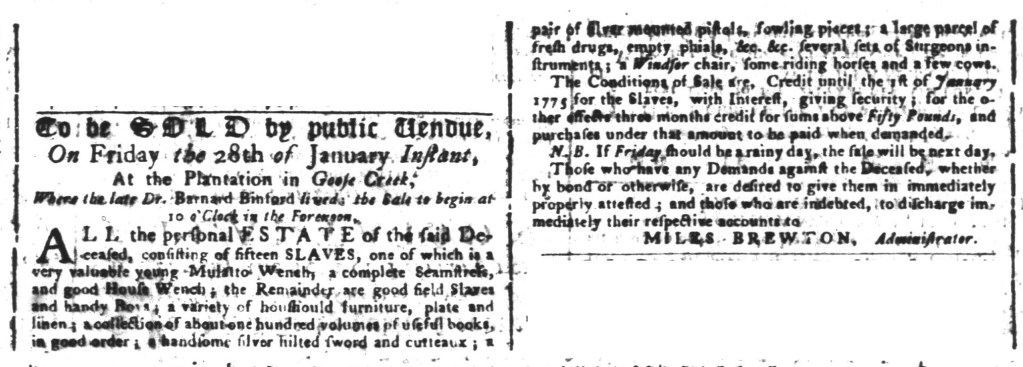
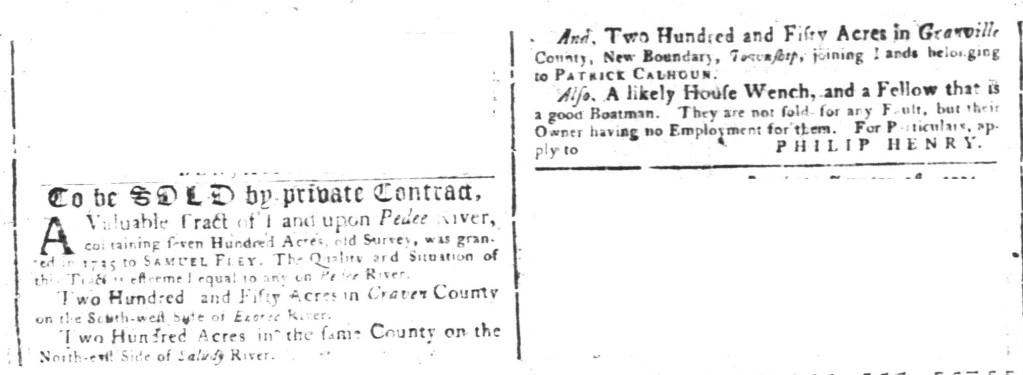
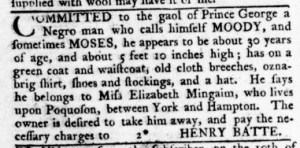
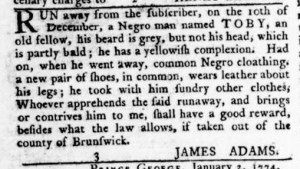
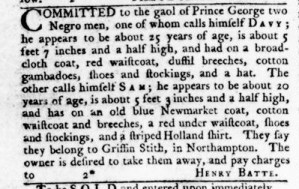
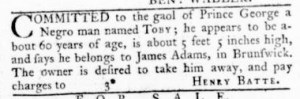
David Alexander is a senior at Assumption University in Worcester, Massachusetts. He is from Smithfield, Rhode Island. David is double majoring in Accounting and History. After three years of being an accounting student, he realized his passion for history. After some contemplation, he decided to pursue the major along with accounting major in progress. His interest in history includes Renaissance Europe as well as the history of indigenous peoples in the Americas. David made his contributions to the Adverts 250 Project and the Slavery Adverts 250 Project while enrolled in HIS 401 Revolutionary America, 1763-1815, in Fall 2023.
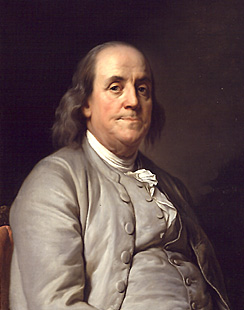
Today is an important day for specialists in early American print culture, for Benjamin Franklin was born on January 17, 1706 (January 6, 1705, Old Style), in Boston. Among his many other accomplishments, Franklin is known as the “Father of American Advertising.” Although I have argued elsewhere that this title should more accurately be bestowed upon Mathew Carey (in my view more prolific and innovative in the realm of advertising as a printer, publisher, and advocate of marketing), I recognize that Franklin deserves credit as well. Franklin is often known as “The First American,” so it not surprising that others should rank him first among the founders of advertising in America.
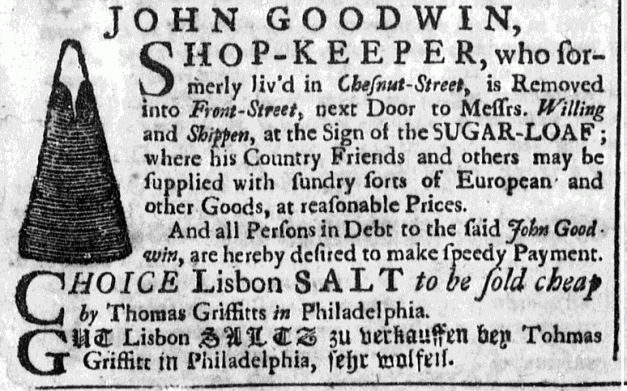
Franklin purchased the Pennsylvania Gazette in 1729. In the wake of becoming printer, he experimented with the visual layout of advertisements that appeared in the weekly newspaper, incorporating significantly more white space and varying font sizes in order to better attract readers’ and potential customers’ attention. Advertising flourished in the Pennsylvania Gazette, which expanded from two to four pages in part to accommodate the greater number of commercial notices.
Advertisements with white space, varying sizes of font, capitals and italics, and a woodcut from Benjamin Franklin’s Pennsylvania Gazette (December 9-16, 1736).
Many historians of the press and print culture in early America have noted that Franklin became wealthy and retired as a printer in favor of a multitude of other pursuits in part because of the revenue he collected from advertising. Others, especially David Waldstreicher, have underscored that this wealth was amassed through participation in the colonial slave trade. The advertisements for goods and services featured in the Pennsylvania Gazette included announcements about buying and selling enslaved men, women, and children as well as notices offering rewards for those who escaped from bondage.
Advertisement for an enslaved woman and an enslaved child from Benjamin Franklin’s Pennsylvania Gazette (December 9-16, 1736).
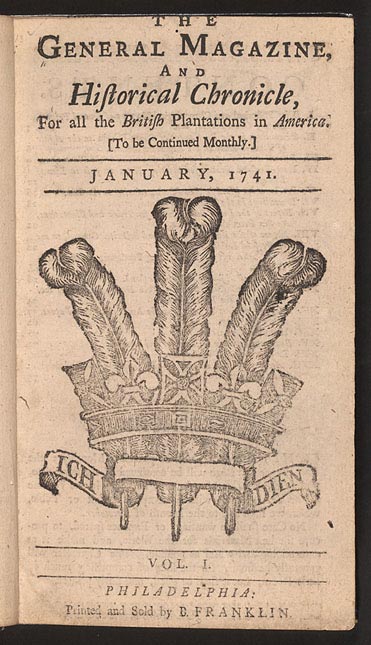
In 1741 Franklin published one of colonial America’s first magazines, The General Magazine and Historical Chronicle, for all the British Plantations in America (which barely missed out on being the first American magazine, a distinction earned by Franklin’s competitor, Andrew Bradford, with The American Magazineor Monthly View of the Political State of the British Colonies). The magazine lasted only a handful of issues, but that was sufficient for Franklin to become the first American printer to include an advertisement in a magazine (though advertising did not become a standard part of magazine publication until special advertising wrappers were developed later in the century — and Mathew Carey was unarguably the master of that medium).
General Magazine and Historical Chronicle, For all the British Plantations in America (January 1741). Library of Congress.
In 1744 Franklin published an octavo-sized Catalogue of Choice and Valuable Books, including 445 entries. This is the first known American book catalogue aimed at consumers (though the Library Company of Philadelphia previously published catalogs listing their holdings in 1733, 1735, and 1741). Later that same year, Franklin printed a Catalogue of Books to Be Sold at Auction.
Franklin pursued advertising through many media in eighteenth-century America, earning recognition as one of the founders of American advertising. Happy 318th birthday, Benjamin Franklin!
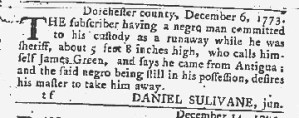
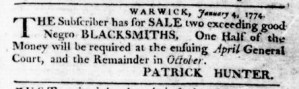
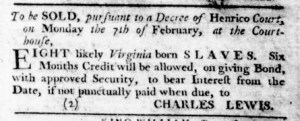
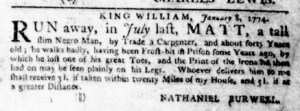
The Slavery Adverts 250 Project chronicles the role of newspaper advertising in perpetuating slavery in the era of the American Revolution. The project seeks to reveal the ubiquity of slavery in eighteenth-century life from New England to Georgia by republishing advertisements about enslaved people – for sale as individuals or in groups, wanted to purchase or for hire for short periods, runaways who liberated themselves, and those who were subsequently captured and confined in jails and workhouses – in daily digests on this site as well as in real time via the @SlaveAdverts250 Twitter feed, utilizing twenty-first-century media to stand in for the print media of the eighteenth century.
The project aims to provide modern audiences with a sense of just how often colonizers encountered these advertisements in their daily lives. Enslaved men, women, and children appeared in print somewhere in the colonies almost every single day. Those advertisements served as a constant backdrop for social, cultural, economic, and political life in colonial and revolutionary America. Colonizers who did not purport to own enslaved people were still confronted with slavery as well as invited to maintain the system by purchasing enslaved men, women, and children or assisting in the capture of so-called “runaways” who sought to free themselves from bondage. The frequency of these newspaper advertisements suggests just how embedded slavery was in colonial and revolutionary American culture in everyday interactions beyond the printed page.
These advertisements also testify to the experiences of enslaved men, women, and children, though readers must consider that those experiences have been remediated through descriptions offered by enslavers rather than enslaved people themselves. Often unnamed in the advertisements, enslaved men, women, and children were not invisible or unimportant in early America.
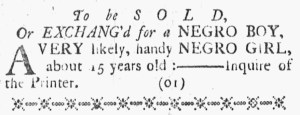
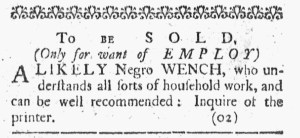
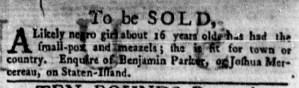
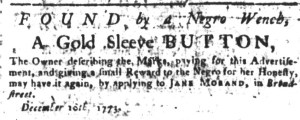
These advertisements appeared in colonial American newspapers 250 years ago today.
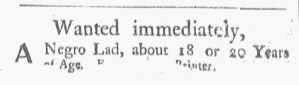
Boston-Gazette (January 17, 1774).
**********
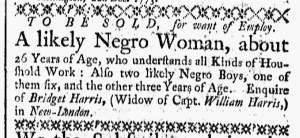
Newport Mercury (January 17, 1774).
**********
Newport Mercury (January 17, 1774).
**********
Supplement to the New-York Gazette and Weekly Mercury (January 17, 1774).
What was advertised in a colonial American newspaper 250 years ago this week?
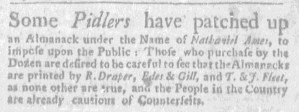
Massachusetts Gazette and Boston Weekly News-Letter (January 13, 1774).
“People in the Country are already cautious of Counterfeits.”
On behalf of his partners, Richard Draper, printer of the Massachusetts Gazette and Boston Weekly News-Letter, placed an advertisement in the January 6, 1774, edition to inform the public that “Ames’s Almanack For the Year 1774, Is now in the Press, and will be ready for Sale” two days later, “on Saturday next.” Customers could acquire copies from Draper, Thomas Fleet and John Fleet, and Benjamin Edes and John Gill. On the following Monday, the Fleets, printers of the Boston Evening-Post, ran an updated version in the January 10 edition of their newspaper, announcing “THIS DAY PUBLISHED. Ames’s Almanack For the Year 1774.” That advertisement also listed all three printing offices. Edes and Gill, printers of the Boston-Gazette, ran a similar advertisement on the same day. Often competitors, those printers collaborated in publishing, advertising, and distributing the popular almanac.
Just a few days later, however, Draper published a very different notice in the January 13 edition of the Massachusetts Gazette and Boston Weekly News-Letter. “Some Pidlers,” he warned, “have patched up an Almanack under the Name of Nathaniel Ames, to impose upon the Public.” Someone not affiliated with those printing offices produced and disseminated counterfeit almanacs! Draper was especially concerned about the impact that would have on sales to retailers who purchased in volume to stock in their shops. “Those who purchase by the dozen,” he cautioned, “are desired to be careful to see that the Almanacks are printed by R. Draper, Edes & Gill, and T. & J. Fleet, as none other are true.” To encourage such vigilance, Draper asserted that “the People in the Country are already cautious of Counterfeits.” In other words, retailers better not think they could pass off the false almanacs to their customers because, according to Draper, those consumers knew which printers produced the authentic version and would not accept any other.
Although the notice did not indicate who printed the “Counterfeits” sold by the peddlers, Draper, the Fleets, and Edes and Gill faced competition for almanacs supposedly authored by Nathaniel Ames from printers in Boston (“Printed and Sold by E[zekiel] Russell”), Hartford (“Reprinted and Sold by Ebenezer Watson”), New Haven (“Reprinted and Sold by Thomas & Samuel Green”), and New London (“Printed and Sold by T[imothy] Green”). It was not the first time the partners encountered other printers attempting to infringe on what they considered their product to market exclusively. A year earlier, they advertised widely that they printed the “only true and correct ALMANACKS” by Ames, inserting a testimonial to that effect into their newspaper notices. The partners showed a similar concern for the effect on sales to retailers, directing “Purchasers, especially by the Quantity, … to be particular in enquiring whether they are printed by” Draper, the Fleets, and Edes and Gill. Several years earlier, on the other hand, they had been the counterfeiters. Almanacs generated significant revenue for early American printers, prompting them to print, to reprint, and to counterfeit the most popular titles.
What was advertised in a colonial American newspaper 250 years ago today?
Providence Gazette (January 15, 1774).
“Clothiers Press-Papers … much superior to any imported from Europe.”
John Waterman sought a clothier, “well experienced in all Parts of the Business,” to work at “the new and most compleat Works in the Colony” of Rhode Island, recently established at “the Paper-Mills in Providence.” According to the advertisement he placed in the January 15, 1774, edition of the Providence Gazette, candidates for the position would have “good Encouragement” if they could produce recommendations for their “Diligence, Steadiness, Activity and Integrity.” Waterman instructed “Any Person with the above Qualifications” to apply at the clothier works at the paper mill.
In addition to seeking an employee, Waterman used his advertisement for another purpose. He inserted a nota bene under his signature, advising the public that he sold “Clothier Press-Papers made by said WATERMAN, as good as any manufactured in America, and much superior to any imported from Europe.” He had deployed the same marketing strategy the previous summer, declaring that his “Clothier Press-Papers” were “equal to any made in America, and far superior to any imported from Europe.” In that advertisement, Waterman listed local agents in Providence, East Greenwich, and Newport, who also sold his product.
Throughout the imperial crisis, many advertisers made “buy American” appeals to consumers. They did so more frequently when relations with Parliament became more strained, but even in times of relative calm some still asserted that colonizers should purchase “domestic manufactures” instead of imported goods. Waterman did not make an explicitly political argument to readers of the Providence Gazette, though they certainly understood the context in which he proclaimed his “Clothiers Press-Papers” were “much superior to any imported from Europe.” Along with the politics, Waterman and others aimed to convince American consumers that they did not have to accept inferior products when they bought goods produced in the colonies. Waterman emphasized quality in his advertisement, likely trusting that readers would reach their own conclusions about other advantages of supporting his enterprise rather than purchasing similar items imported from Europe.
The Slavery Adverts 250 Project chronicles the role of newspaper advertising in perpetuating slavery in the era of the American Revolution. The project seeks to reveal the ubiquity of slavery in eighteenth-century life from New England to Georgia by republishing advertisements about enslaved people – for sale as individuals or in groups, wanted to purchase or for hire for short periods, runaways who liberated themselves, and those who were subsequently captured and confined in jails and workhouses – in daily digests on this site as well as in real time via the @SlaveAdverts250 Twitter feed, utilizing twenty-first-century media to stand in for the print media of the eighteenth century.
The project aims to provide modern audiences with a sense of just how often colonizers encountered these advertisements in their daily lives. Enslaved men, women, and children appeared in print somewhere in the colonies almost every single day. Those advertisements served as a constant backdrop for social, cultural, economic, and political life in colonial and revolutionary America. Colonizers who did not purport to own enslaved people were still confronted with slavery as well as invited to maintain the system by purchasing enslaved men, women, and children or assisting in the capture of so-called “runaways” who sought to free themselves from bondage. The frequency of these newspaper advertisements suggests just how embedded slavery was in colonial and revolutionary American culture in everyday interactions beyond the printed page.
These advertisements also testify to the experiences of enslaved men, women, and children, though readers must consider that those experiences have been remediated through descriptions offered by enslavers rather than enslaved people themselves. Often unnamed in the advertisements, enslaved men, women, and children were not invisible or unimportant in early America.
These advertisements appeared in colonial American newspapers 250 years ago today.
What was advertised in a colonial American newspaper 250 years ago today?
Connecticut Gazette (January 14, 1774).
“ALL Persons indebted to me / are desired to pay, / Or they will sued be, / and that without delay.”
Advertisements calling on colonizers to pay their debts frequently appeared in newspapers from New England to Georgia, including the Connecticut Gazette. On January 14, 1774, for instance, that newspaper carried an estate notice directed to “All Persons indebted to the Estate of the Hon. JONATHAN HUNTINGTON,” asking them “to make speedy Payment, to EBENEZER DEVOTION, Executor.” In addition to that advertisement, another instructed “All Persons indebted toRussell Hubbard, by BOOK or NOTE, whose Debts are of more than one Year’s standing … to settle their respective Accounts and pay off their Notes, without delay, or they may depend on being sued to the next Court.” Given the circulation of the newspaper in New London and beyond, he asserted that he “expects that this will be as sufficient a Warning as if he wrote to each Person separately.”
Seth Wymund Holmes also took to the pages of the public prints in his efforts to encourage his debtors to make good on what they owed. He resorted to a different format than Devotion and Hubbard, making his request (and delivering his threats of legal action) in verse. Holmes composed four stanzas of four lines each. “ALL Persons indebted to me / are desired for to pay,” his poem began, “Or they will sued by, and that without delay.” He appealed to the conscience: “So will the Sum amount: / How can you it abide / To add to your Account / Trouble and Cost beside?” He also lamented how long he carried those debts, incorporating a strategy that appeared in many other advertisements that did not resort to poetry. “As many Debts now standing be, / for seven Years, to croud my Books,” Holmes declared, “I do protest I hate to see / such dull and heavy looks.” In case neither asking debtors to do the right thing nor stating how long he had extended credit without receiving payment worked, Holmes circled back to threatening to sue in the final stanza. “I therefore warn Debtors to come, / and Payment make with speed, / Or they will shortly hear their Doom / in Letters plain to read.”
Holmes certainly did not produce a great work of literature, but that was not his goal. Instead, he sought to draw the attention of those who owed him money. He also aimed to make his message memorable. The format of his advertisement, the amount of white space that remained after setting type for each line, distinguished it from the dense text in so many other notices. Once that aspect of Holmes’s advertisement prompted readers to take a closer look, they may have considered the poem such a novelty that they read each stilted stanza instead of skimming through the notice like they might have done with the advertisements placed by Devotion and Hubbard. Holmes presented something different to readers of the Connecticut Gazette. Whether or not that convinced his debtors to settle accounts, this strategy likely increased the chances that they knew he intended to sue them if they did not.
The Slavery Adverts 250 Project chronicles the role of newspaper advertising in perpetuating slavery in the era of the American Revolution. The project seeks to reveal the ubiquity of slavery in eighteenth-century life from New England to Georgia by republishing advertisements about enslaved people – for sale as individuals or in groups, wanted to purchase or for hire for short periods, runaways who liberated themselves, and those who were subsequently captured and confined in jails and workhouses – in daily digests on this site as well as in real time via the @SlaveAdverts250 Twitter feed, utilizing twenty-first-century media to stand in for the print media of the eighteenth century.
The project aims to provide modern audiences with a sense of just how often colonizers encountered these advertisements in their daily lives. Enslaved men, women, and children appeared in print somewhere in the colonies almost every single day. Those advertisements served as a constant backdrop for social, cultural, economic, and political life in colonial and revolutionary America. Colonizers who did not purport to own enslaved people were still confronted with slavery as well as invited to maintain the system by purchasing enslaved men, women, and children or assisting in the capture of so-called “runaways” who sought to free themselves from bondage. The frequency of these newspaper advertisements suggests just how embedded slavery was in colonial and revolutionary American culture in everyday interactions beyond the printed page.
These advertisements also testify to the experiences of enslaved men, women, and children, though readers must consider that those experiences have been remediated through descriptions offered by enslavers rather than enslaved people themselves. Often unnamed in the advertisements, enslaved men, women, and children were not invisible or unimportant in early America.
These advertisements appeared in colonial American newspapers 250 years ago today.
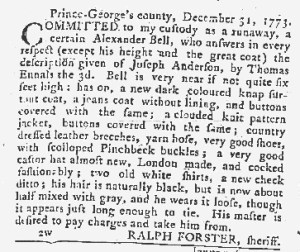
“Alexander Bell, who answers in every respect … the description given of Joseph Anderson.”
Thomas Ennalls offered a reward for the capture and return of “an Irish servant man” who ran away from him in Dorchester County, Maryland, at the end of November 1773. In an advertisement that first ran in the December 16 edition of the Maryland Gazette, Ennalls described Joseph Anderson’s age, appearance, clothing. The runaway, “about thirty years of age,” had “a thin visage” and “wears his own hair tied behind” his head. His apparel included “an old surtout coat, … a knit pattern jacket …, old leather breaches, a pair of ribbed worsted stockings, [and an] English hat cut in the fashion.” Anderson worked as a schoolmaster, but that position of trust did not prevent him from stealing “about eighteen or twenty pounds in cash” when he broke his indenture contract and ran away. Ennalls suspected that the unscrupulous schoolmaster “may change his name.”
Ralph Forster, the sheriff in Prince George’s County, carefully followed advertisements about runaway indentured servants, convict servants, and apprentices that appeared in the Maryland Gazette. He also placed notices about suspected runaways that he detained. In an advertisement that first appeared in the January 13, 1774, edition of the Maryland Gazette, he described “a certain Alexander Bell, who answers in every respect (except his height and the great coat) the description given of Joseph Anderson, by Thomas Ennals.” Bell was “very near if not quite six feet high,” slightly taller than Anderson’s “five feet nine or ten inches high.” If he was indeed Anderson, he had changed his name as Ennalls anticipated and may have sold, traded, or discarded the coat. The rest of the clothing indeed matched, including “a clouded knit pattern jacket, … country dressed leather breeches, yarn hose, [and] a very good castor hat almost new, London made, and cocked fashionably.” Forster’s requested that his prisoner’s “master … pay charges and take him.”
Among the many purposes served by advertisements in eighteenth-century newspapers, colonizers used them as an infrastructure for surveillance and enforcement in their efforts to maintain order when indentured servants, convict servants, and apprentices ran away from their masters. They served a similar purpose for capturing enslaved people who liberated themselves and returning them to their enslavers. Printers enhanced the power and authority already exercised by colonizers like Ennalls and Forster when they sold them space in their newspapers.
The Slavery Adverts 250 Project chronicles the role of newspaper advertising in perpetuating slavery in the era of the American Revolution. The project seeks to reveal the ubiquity of slavery in eighteenth-century life from New England to Georgia by republishing advertisements about enslaved people – for sale as individuals or in groups, wanted to purchase or for hire for short periods, runaways who liberated themselves, and those who were subsequently captured and confined in jails and workhouses – in daily digests on this site as well as in real time via the @SlaveAdverts250 Twitter feed, utilizing twenty-first-century media to stand in for the print media of the eighteenth century.
The project aims to provide modern audiences with a sense of just how often colonizers encountered these advertisements in their daily lives. Enslaved men, women, and children appeared in print somewhere in the colonies almost every single day. Those advertisements served as a constant backdrop for social, cultural, economic, and political life in colonial and revolutionary America. Colonizers who did not purport to own enslaved people were still confronted with slavery as well as invited to maintain the system by purchasing enslaved men, women, and children or assisting in the capture of so-called “runaways” who sought to free themselves from bondage. The frequency of these newspaper advertisements suggests just how embedded slavery was in colonial and revolutionary American culture in everyday interactions beyond the printed page.
These advertisements also testify to the experiences of enslaved men, women, and children, though readers must consider that those experiences have been remediated through descriptions offered by enslavers rather than enslaved people themselves. Often unnamed in the advertisements, enslaved men, women, and children were not invisible or unimportant in early America.
These advertisements appeared in colonial American newspapers 250 years ago today.