January 3

What was advertised in a colonial American newspaper 250 years ago today?

South-Carolina Gazette and Country Journal (January 3, 1775).

Late Pupil to Sir JOSHUA REYNOLD’s, of Leicester Fields, LONDON.”

When John Grafton migrated to Charleston, he introduced himself to his new community with an advertisement in the South-Carolina Gazette and Country Journal.  Like many other artists and artisans, he emphasized his training and credentials since prospective clients were not familiar with him by reputation.  In addition to being a “PORTRAIT PAINTER,” Grafton was “Late Pupil to Sir JOSHUA REYNOLD’s, of Leicester Fields, LONDON.”  Grafton expected that at least some readers would recognize the name of one of the most influential English portrait painters of the eighteenth century.  Reynolds was one of the founders of the Royal Academy of Arts in 1768 and served as its first president.  The following year, George III knighted him.  Grafton sought to benefit from the acclaim achieved by his mentor, asserting that since “he has been under one of the first Masters of that Art in England, and having made [painting portraits] his principal Study for a Number of Years, he shall be able to give general Satisfaction.”  For those who needed more convincing, he had “several Specimens of his Performance on display” for their inspection.

After conferring with other artists in South Carolina, Grafton realized that he likely would not have “constant employ” solely from commissions for portraits.  “[B]eing unwilling to let any Tim slip unimproved” and needing to support himself, he intended to offer lessons in drawing.  Grafton announced that he reserved two days each week for giving “Instructions at his Academy.”  Many tutors, especially those who taught dancing and French, advertised private lessons. Grafton did the same for those who wished to learn to draw, indicating that they could be “initiated at their Houses.”  He also presented his services to schoolmasters and -mistresses interested in adding drawing to their curricula.  What could pupils expect from their lessons with Grafton?  He confidently asserted that he “will engage to make any one that has some Instructions in Drawing, or has the least Genius for Painting, capable of taking their own, or any Person’s Likeness with Crayons, in less than three Months.”  Students could assess their own progress relative to this claim, entering their lessons with the understanding that their skills should improve within months rather than over years thanks to “the most easy and agreeable Manner” of Grafton’s instruction.  They could learn “one of the politest Arts” from a student of an acknowledged master, an endeavor that had its own cachet for the “Ladies and Gentlemen” of South Carolina.

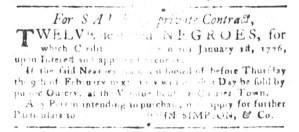
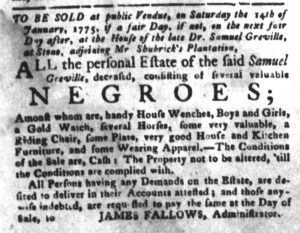
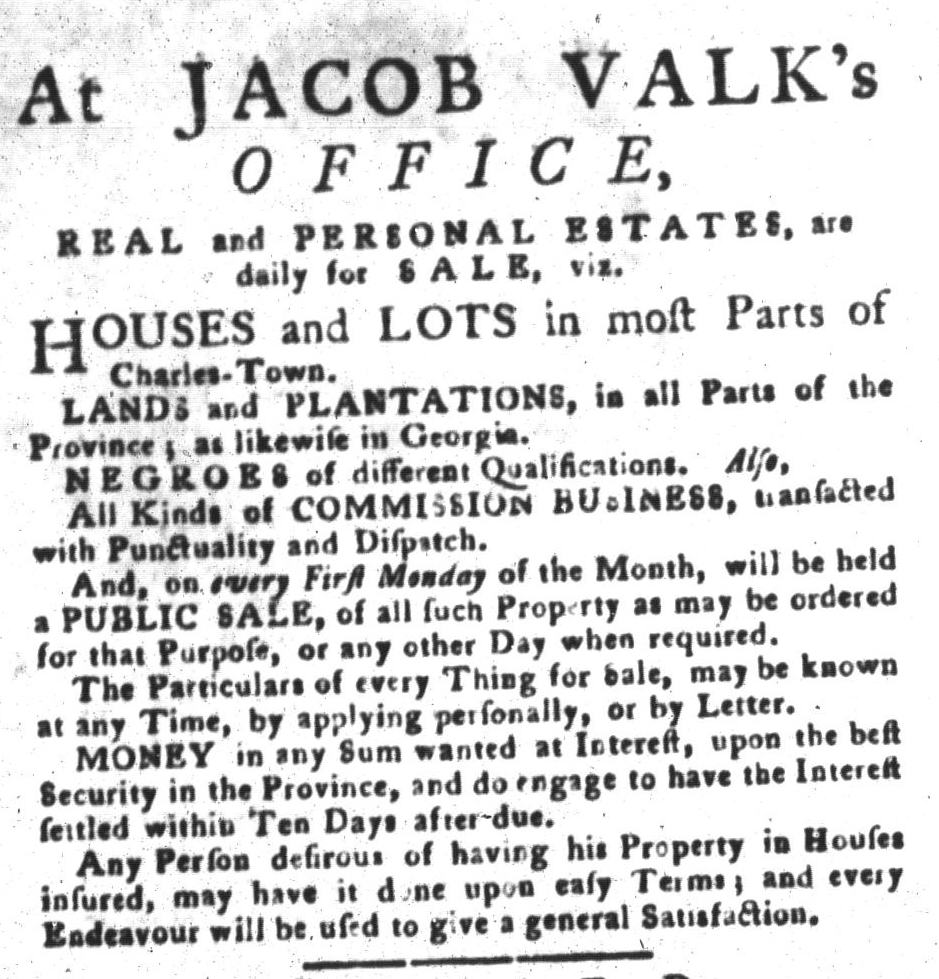
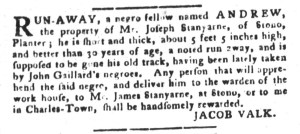
Slavery Advertisements Published January 3, 1775

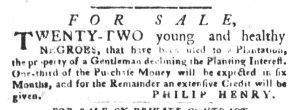
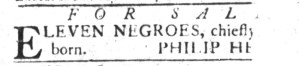
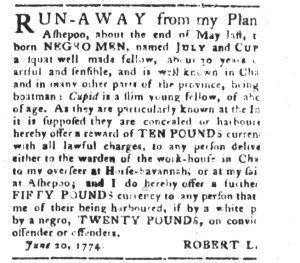
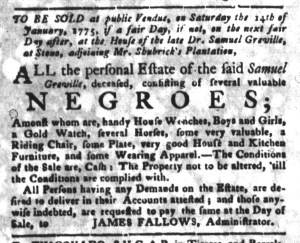
The Slavery Adverts 250 Project chronicles the role of newspaper advertising in perpetuating slavery in the era of the American Revolution. The project seeks to reveal the ubiquity of slavery in eighteenth-century life from New England to Georgia by republishing advertisements about enslaved people – for sale as individuals or in groups, wanted to purchase or for hire for short periods, runaways who liberated themselves, and those who were subsequently captured and confined in jails and workhouses – in daily digests on this site as well as in real time via the @SlaveAdverts250 Twitter feed, utilizing twenty-first-century media to stand in for the print media of the eighteenth century.

The project aims to provide modern audiences with a sense of just how often colonizers encountered these advertisements in their daily lives. Enslaved men, women, and children appeared in print somewhere in the colonies almost every single day. Those advertisements served as a constant backdrop for social, cultural, economic, and political life in colonial and revolutionary America. Colonizers who did not purport to own enslaved people were still confronted with slavery as well as invited to maintain the system by purchasing enslaved men, women, and children or assisting in the capture of so-called “runaways” who sought to free themselves from bondage. The frequency of these newspaper advertisements suggests just how embedded slavery was in colonial and revolutionary American culture in everyday interactions beyond the printed page.
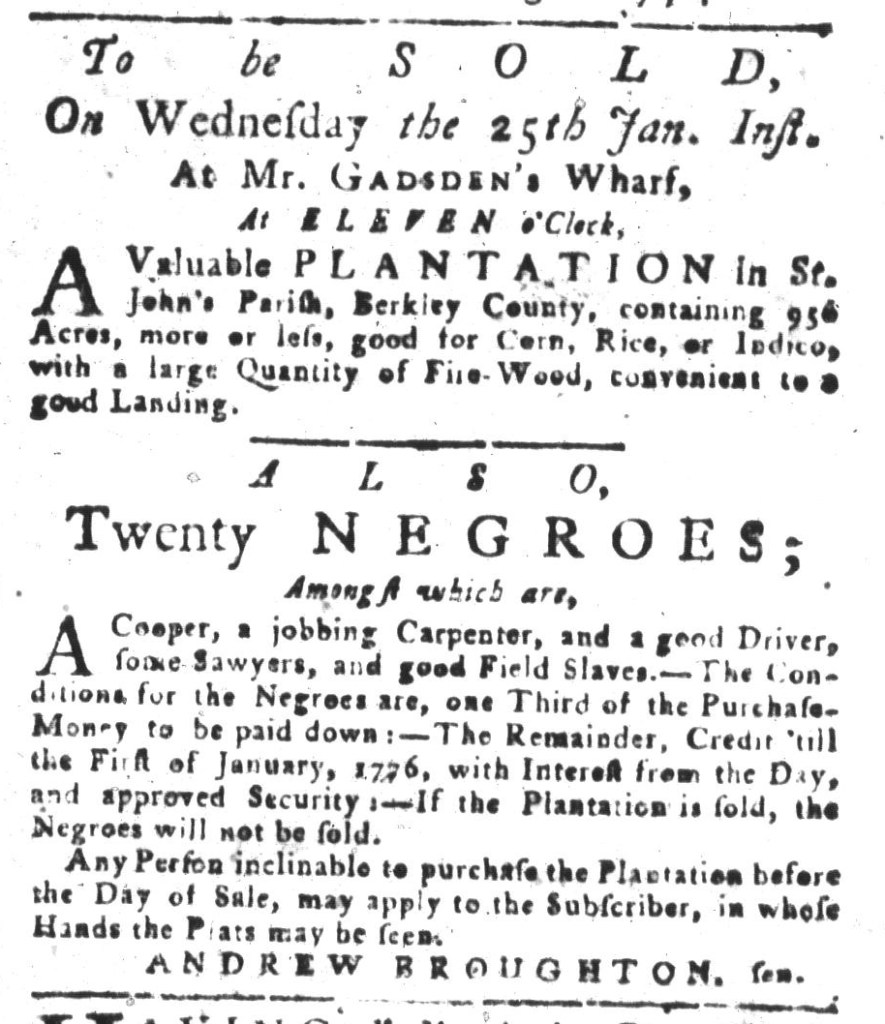
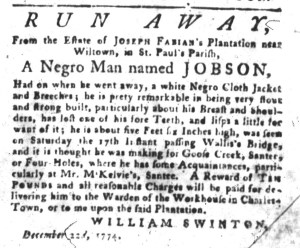
These advertisements also testify to the experiences of enslaved men, women, and children, though readers must consider that those experiences have been remediated through descriptions offered by enslavers rather than enslaved people themselves. Often unnamed in the advertisements, enslaved men, women, and children were not invisible or unimportant in early America.

These advertisements appeared in colonial American newspapers 250 years ago today.

Essex Gazette (January 3, 1775).

**********

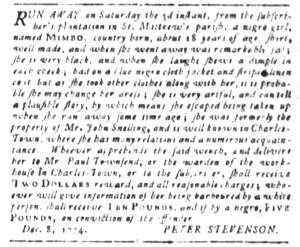
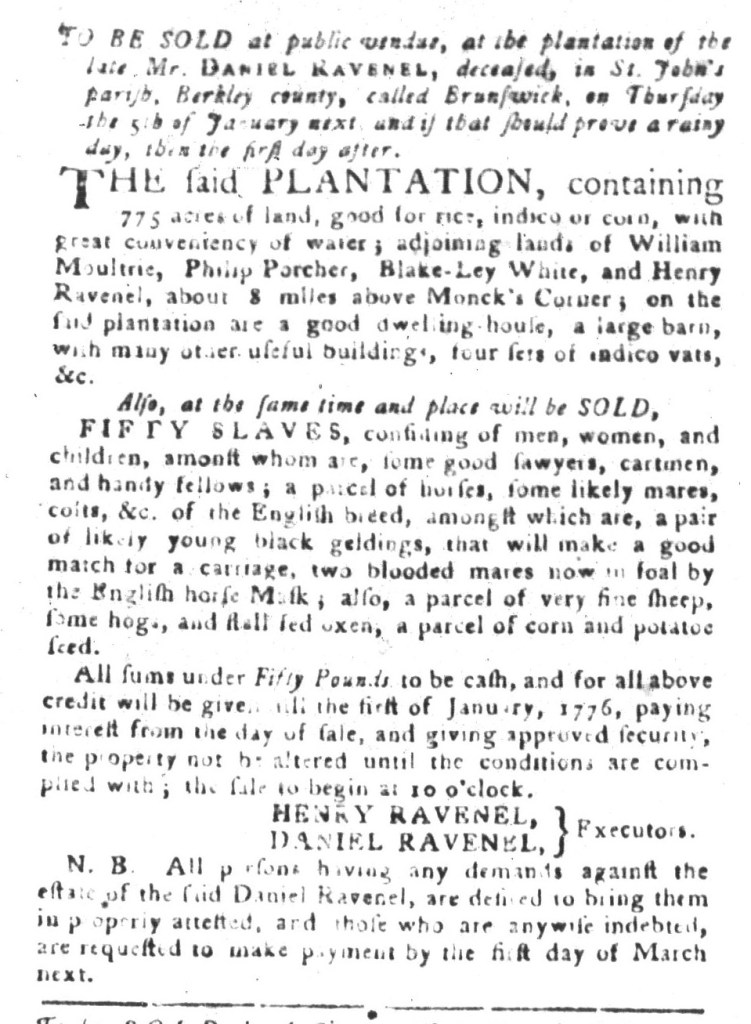
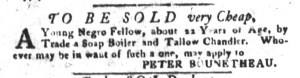
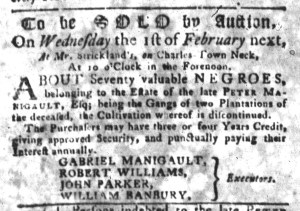
South-Carolina Gazette and Country Journal (January 3, 1775).

**********

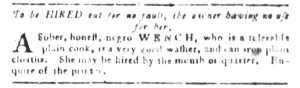
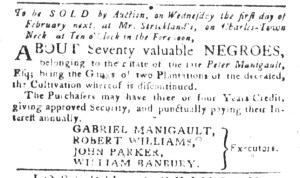
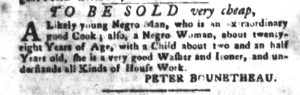
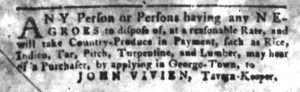
South-Carolina Gazette and Country Journal (January 3, 1775).

**********

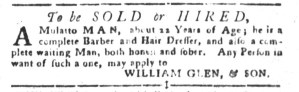
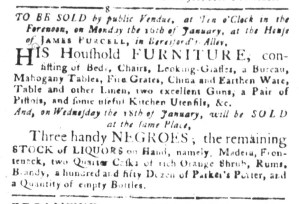
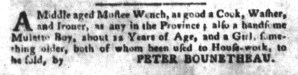
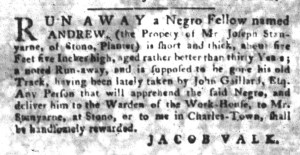
South-Carolina Gazette and Country Journal (January 3, 1775).

**********

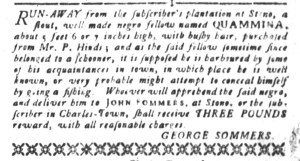
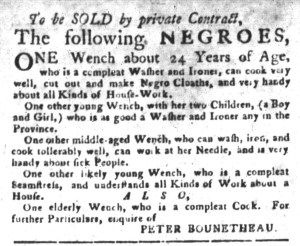
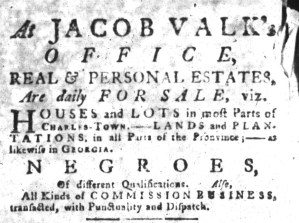
South-Carolina Gazette and Country Journal (January 3, 1775).

**********

South-Carolina Gazette and Country Journal (January 3, 1775).

**********

South-Carolina Gazette and Country Journal (January 3, 1775).

**********

South-Carolina Gazette and Country Journal (January 3, 1775).

**********

South-Carolina Gazette and Country Journal (January 3, 1775).

**********

South-Carolina Gazette and Country Journal (January 3, 1775).

**********

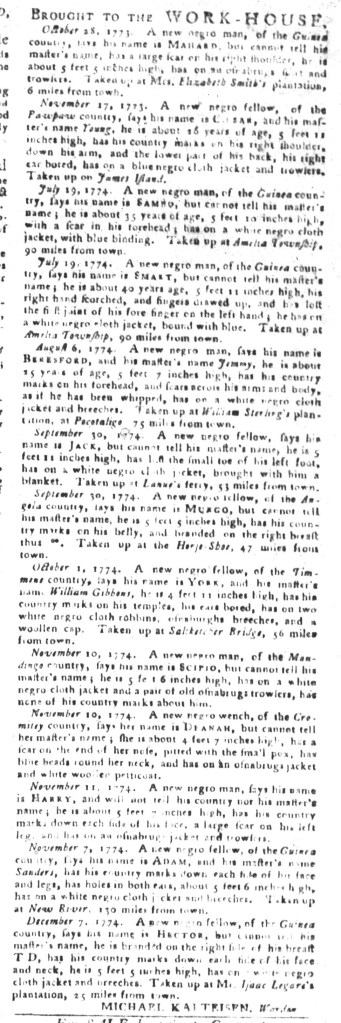
Supplement to the South-Carolina Gazette and Country Journal (January 3, 1775).

**********

Supplement to the South-Carolina Gazette and Country Journal (January 3, 1775).

**********

Supplement to the South-Carolina Gazette and Country Journal (January 3, 1775).

**********

Supplement to the South-Carolina Gazette and Country Journal (January 3, 1775).

**********

Supplement to the South-Carolina Gazette and Country Journal (January 3, 1775).

**********

Supplement to the South-Carolina Gazette and Country Journal (January 3, 1775).

**********

Supplement to the South-Carolina Gazette and Country Journal (January 3, 1775).

**********

Supplement to the South-Carolina Gazette and Country Journal (January 3, 1775).

**********

Supplement to the South-Carolina Gazette and Country Journal (January 3, 1775).

**********

Supplement to the South-Carolina Gazette and Country Journal (January 3, 1775).

**********

Supplement to the South-Carolina Gazette and Country Journal (January 3, 1775).

**********

Supplement to the South-Carolina Gazette and Country Journal (January 3, 1775).

**********

Supplement to the South-Carolina Gazette and Country Journal (January 3, 1775).

**********

Supplement to the South-Carolina Gazette and Country Journal (January 3, 1775).

**********

Supplement to the South-Carolina Gazette and Country Journal (January 3, 1775).

**********

Supplement to the South-Carolina Gazette and Country Journal (January 3, 1775).

**********

Supplement to the South-Carolina Gazette and Country Journal (January 3, 1775).

January 2

What was advertised in a colonial American newspaper 250 years ago today?

Boston-Gazette (January 2, 1775).

The GRAND AMERICAN CONTINENTAL ASSOCIATION … to be pasted up in every Family.”

In the first issue of the Boston-Gazette published in 1775, Benjamin Edes and John Gill, the printers, opened with a notice concerning the Continental Association as the first item in the first column on the first page.  The First Continental Congress had devised that nonimportation, nonconsumption, and nonexportation pact when it met in Philadelphia in September and October 1774, intending for it to go into effect on December 1.  The Continental Association answered the Boston Port Act, the Massachusetts Government Act, and the other Coercive Acts that Parliament had passed in retaliation for the Boston Tea Party, perhaps not expecting a unified response from the colonies.  The First Continental Congress, however, devised a plan that allowed consumers from New England to Georgia to express their political principles through the decisions they made in the marketplace., drawing inspiration from the nonimportation agreements that went into effect to protest the Stamp Act and the duties on imported goods in the Townshend Acts.

Edes and Gill helped to raise awareness of the Continental Association not only through newspaper coverage but also by disseminating copies far and wide.  “ANY Town or District within this Province,” their notice advised, “may be supplied by Edes and Gill, on the shortest Notice, with the GRAND AMERICAN CONTINENTAL ASSOCIATION, printed on one Side of a Sheet of Paper.”  They offered the pact as a broadside “on purpose to be pasted up in every Family.”  The printers wished for local governments to purchase their edition of the Continental Association and distribute them to households for constant reference.  Putting the pact on display demonstrated support for the American cause against Parliament or at least signaled an intention to comply.  Posting it in homes as well as public spaces made it easy to consult, reminding everyone that they had a part to play in the protest.  The Continental Association made decisions about participating in the marketplace inherently political, making it impossible for any individual or household to take a neutral stance.  Edes and Gill recognized that was the case.  Although they stood to generate revenue from selling broadside copies of the Continental Association by the dozen or gross, the political stance they consistently advanced throughout the imperial crisis suggested that increasing awareness of the pact and encouraging compliance with it motivated them as much or even more.

Slavery Advertisements Published January 2, 1775

The Slavery Adverts 250 Project chronicles the role of newspaper advertising in perpetuating slavery in the era of the American Revolution. The project seeks to reveal the ubiquity of slavery in eighteenth-century life from New England to Georgia by republishing advertisements about enslaved people – for sale as individuals or in groups, wanted to purchase or for hire for short periods, runaways who liberated themselves, and those who were subsequently captured and confined in jails and workhouses – in daily digests on this site as well as in real time via the @SlaveAdverts250 Twitter feed, utilizing twenty-first-century media to stand in for the print media of the eighteenth century.

The project aims to provide modern audiences with a sense of just how often colonizers encountered these advertisements in their daily lives. Enslaved men, women, and children appeared in print somewhere in the colonies almost every single day. Those advertisements served as a constant backdrop for social, cultural, economic, and political life in colonial and revolutionary America. Colonizers who did not purport to own enslaved people were still confronted with slavery as well as invited to maintain the system by purchasing enslaved men, women, and children or assisting in the capture of so-called “runaways” who sought to free themselves from bondage. The frequency of these newspaper advertisements suggests just how embedded slavery was in colonial and revolutionary American culture in everyday interactions beyond the printed page.

These advertisements also testify to the experiences of enslaved men, women, and children, though readers must consider that those experiences have been remediated through descriptions offered by enslavers rather than enslaved people themselves. Often unnamed in the advertisements, enslaved men, women, and children were not invisible or unimportant in early America.

These advertisements appeared in colonial American newspapers 250 years ago today.

Boston Evening-Post (January 2, 1775).

**********

Boston-Gazette (January 2, 1775).

**********

Connecticut Courant (January 2, 1775).

**********

Connecticut Courant (January 2, 1775).

**********

Dunlap’s Pennsylvania Packet (January 2, 1775).

**********

Dunlap’s Pennsylvania Packet (January 2, 1775).

**********

Dunlap’s Pennsylvania Packet (January 2, 1775).

**********

Newport Mercury (January 2, 1775).

**********

New-York Gazette and Weekly Mercury (January 2, 1775).

**********

South-Carolina Gazette (January 2, 1775).

**********

South-Carolina Gazette (January 2, 1775).

**********

South-Carolina Gazette (January 2, 1775).

**********

South-Carolina Gazette (January 2, 1775).

**********

South-Carolina Gazette (January 2, 1775).

**********

South-Carolina Gazette (January 2, 1775).

January 1

What was advertised in a colonial American newspaper 250 years ago this week?

Rivington’s New-York Gazetteer (December 29, 1774).

“The American Contest.”

In the final issue of Rivington’s New-York Gazetteer for 1774, James Rivington continued advertising pamphlets “written on the Whig and Tory Side of the Question.”  He inserted an advertisement similar to the “POLITICAL PUBLICATIONS” catalog that he ran on December 15.  Both listed nine tracts that Rivington sold to readers or to “Gentlemen living at a Distance … to distribute amongst their Friends.”  Some of the titles appeared a second time.  Rivington eliminated some, added others, and reorganized the order accordingly.

For instance, a pamphlet documenting the Continental Association, a nonimportation agreement adopted by the First Continental Congress had been first in the previous iteration, but Rivington listed it fourth in the new one.  A new entry led the catalog: “The Congress Canvassed, OR, An Examination into the Conduct of the Delegates, At the Grand Continental Congress, Addressed to the Merchants of New-York, By the FARMER, A.W.”  Rivington had previously advertised that he would soon publish that piece, having included “Free Thoughts on the Proceedings of the Continental Congress” among the “POLITICAL PUBLICATIONS” in his earlier catalog.  That item appeared once again, paired this time with “A full Vindication of the Measures of the Continental Congress IN ANSWER TO Free Thoughts on the Proceedings of the said Congress.”  Again, Rivington had previously advertised “A full Vindication” separately, but collated together “Free Thoughts” and the pamphlet that responded to it in the new catalog.  The enterprising printer aimed to help prospective customers craft a narrative when selecting among his offerings.

Rivington gave this catalog a new headline.  Instead of “POLITICAL PUBLICATIONS,” he called it “The American Contest.”  That dramatic flourish did not exaggerate the tensions in New York and other colonies as the imperial crisis intensified.  Within months, the Revolutionary War would commence with battles at Lexington and Concord in Massachusetts.  As Rivington reported on current events and political debates, he often took a more balance approach than many of his fellow printers who made their support for the Patriot cause very plain.  The masthead for his newspaper proclaimed that it was “PRINTED at his OPEN and UNINFLUENCED PRESS.”  Rivington enacted the same policy for the pamphlets he printed, marketed, and sold.  No other American printer so vigorously represented both perspectives in “The American Contest” in the advertisements in their newspapers.

**********

January 1, 1775, fell on a Sunday.  Colonial printers distributed newspapers every day except Sunday.  The Adverts 250 Project will commence examining advertisements from 1775 tomorrow.