December 3

What was advertised in a revolutionary American newspaper 250 years ago this week?
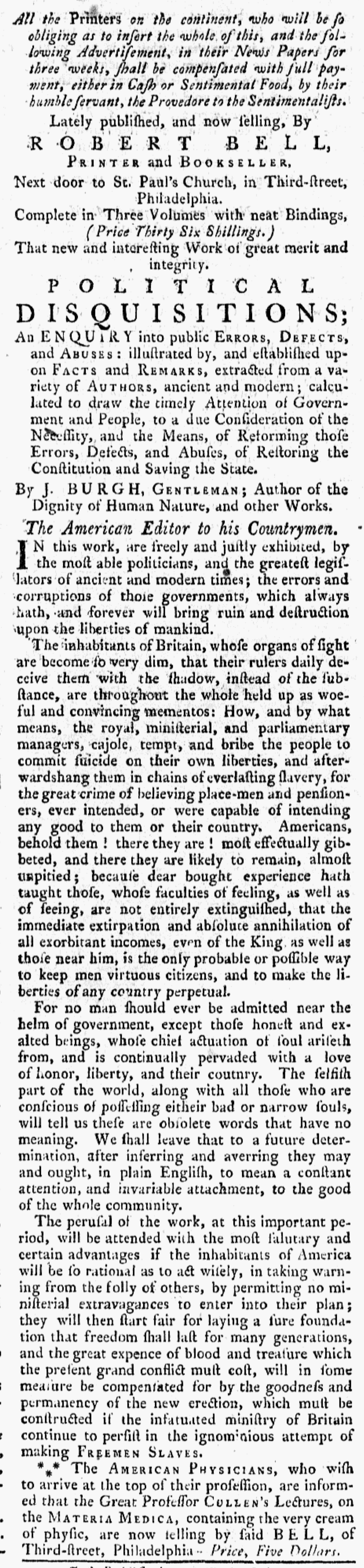
Pennsylvania Ledger (December 2, 1775).

All the Printers … shall be compensated with full payment, either in Cash or Sentimental Food.”

Robert Bell, one of the most prominent American printers and booksellers during the second half of the eighteenth century, frequently distributed subscription proposals for works he wished to publish far and wide.  Such was the case when he marketed an American edition of James Burgh’s Political Disquisitions in 1775.  The extensive secondary title provided an overview of the multi-volume work: “An ENQUIRY into public ERRORS, DEFECTS, and ABUSES: illustrated by, and established upon FACTS and REMARKS, extracted from a variety of AUTHORS, ancient and modern; calculated to draw the timely ATTENTION of Government and People, to a due Consideration of the Necessity, and the Means, of Reforming those Errors, Defects, and Abuses, of Restoring the Constitution and Saving the State.”

Upon publishing the work, Bell set about a new round of marketing.  Once again, he wished to advertise widely.  This time, he appended a note to his advertisement that appeared in the December 2 edition of the Pennsylvania Ledger.  Addressing “All the Printers on the continent,” Bell offered that those “who will be so obliging as to insert the whole of this, and the following Advertisement, in their News Papers for three weeks, shall be compensated with full payment, either in Cash or Sentimental Food, by their humble servant, the Provedore to the Sentimentalists.”  The “following Advertisement” consisted of three portions: a standard notice typical of others for books that appeared in the Pennsylvania Ledger and other newspapers, a lengthy address from “The American Editor to his Countrymen,” and a brief announcement that Bell also sold “the Great Professor CULLEN’s Lectures, on the MATERIA MEDICA” to “AMERICAN PHYSICIANS, who wish to arrive at the top of their profession.”  The standard advertisement included the name of the book and its author, the price (“Thirty Six Shillings”), a description of some of its material aspects (“Three Volumes with neat Bindings”), and where to purchase it.  In the address, Bell asserted, “The perusal of the work, at this important period, will be attended with the most salutary and certain advantages if the inhabitants of America will be so rational as to act wisely, in taking warning from the folly of others, by permitting no ministerial extravagances to enter into their plan.”  They could lay “a sure foundation that freedom shall last for many generations” instead of allowing the current British administration to make “FREEMEN [into] SLAVES.”

The entire advertisement was much longer than most subscription proposals or notices about books already published.  That may have been the reason that Bell appended the note to “All the Printers on the continent.”  In other instances, fellow printers may have published shorter advertisements gratis, but this one required significant space in weekly newspapers that consisted of only four pages.  To increase the chances that printers would reprint it when they saw the advertisement in newspapers that they received through their exchange networks, Bell made sure that they knew that he would compensate them “with full payment, either in Cash or Sentimental Food.”  In other words, he would supply copies of Political Disquisitions or other books he published to those who preferred them rather than cash.  The flamboyant Bell was already known as “the Provedore to the Sentimentalists” from his newspaper advertisements, broadsides, and book catalogs.  He sought to maintain the image he cultivated by including that language in his note to printers, yet he realized that his reputation alone would not convince them to publish such an extensive advertisement.  Accordingly, he promised payment in advance rather than expecting newspaper printers to publish his advertisement as a courtesy, no matter how well their politics might align with those in Bell’s address “to his Countrymen.”
December 2

What was advertised in a revolutionary American newspaper 250 years ago today?

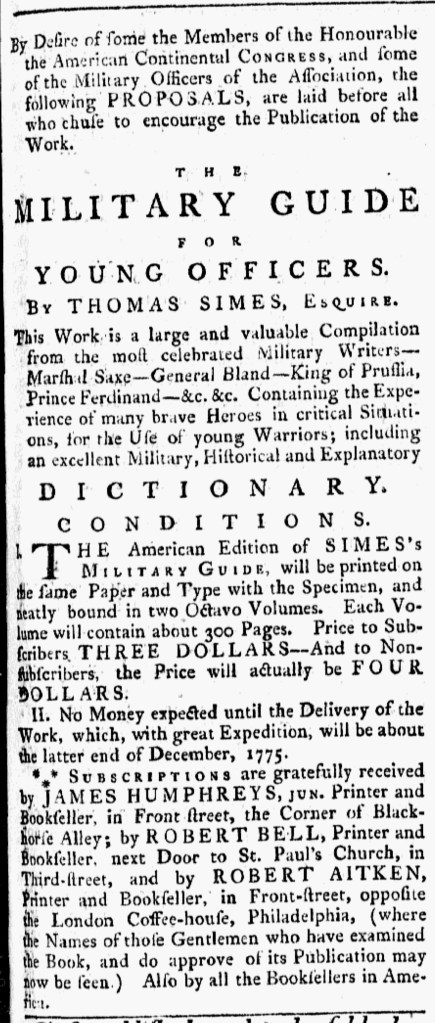
Pennsylvania Ledger (December 2, 1775).

“THE American Edition of SIMES’s MILITARY GUIDE.”

In December 1775, James Humphreys, Jr., Robert Bell, and Robert Aitken collaborated in advertising and publishing The Military Guide for Young Officers by Thomas Simes, making yet another military manual available to the public following the momentous events at Lexington and Concord the previous April.  More recent developments, both military and political, convinced printers that a market existed for military manuals.  According to the introduction to “Books in the Field: Studying the Art of War in Revolutionary America,” an exhibition sponsored by the American Revolution Institute of the Society of the Cincinnati, “a flood of printing began to appear from the American presses.  Much of this activity was centered in Philadelphia, where more than thirty works on military subjects were published in the years 1775 and 1776 alone.”

Of the three of the printer-booksellers who partnered in publishing Simes’s Military Guide, Humphreys was the only one who published a newspaper.  He gave their advertisement a privileged place at the top of the first column on the first page of the December 2, 1775, edition of the Pennsylvania Ledger.  Rather than advertising a book already available for sale, the printer-booksellers distributed subscription proposals, doing so, they claimed, “By Desire of some the Members of the Honourable American Continental CONGRESS, and some of the Military Officers of the Association.”  Readers who wished to reserve copies of the work became subscribers by submitting their names to any of those three printer-booksellers, though they also indicated that “SUBSCRIPTIONS are gratefully received … by all the Booksellers in America.”  Printers, authors, and others in the book trades had more than one reason for circulating subscription proposals.  They hoped to incite greater demand while also learning if sufficient interest existed to make a project viable and, if so, how many copies to produce.

This subscription proposal featured an overview of the contents of the military guide: “a large and valuable Compilation from the most celebrated Miliary Writers … Containing the Experience of many brave Heroes in critical Situations, for the Use of young Warriors” as well as “an excellent Military, Historical and Explanatory DICTIONARY.”  This “American Edition … will be printed on the same Paper and Type with the Specimen, and neatly bound in two Octavo Volumes.”  Apparently, Humphreys, Bell, and Aitken had specimens or samples of the paper and type on display at their printing offices so prospective subscribers could examine them and assess the material quality of the work for themselves before committing to ordering copies.  Printers often circulated specimens along with subscription proposals.  The partners planned to print some surplus copies, expecting that demand would warrant doing so, but encouraged subscribers with a discount.  Those who reserved their copies paid three dollars, but for “Non-subscribers, the Price will actually be FOUR DOLLARS.”  Subscribers did not need to part with their money “until the Delivery of the Work,” anticipated for “the latter end of December, 1775.”  Humphreys, Bell, and Aitken did not take the military manual to press as quickly as they expected.  The imprint on the title page gives the date of publication as 1776.  The partners made one final pitch in the subscription proposals, announcing that “the Names of those Gentlemen who have examined the Book, and do approve of its Publication may now be seen” at Aitken’s printing office.  These marketing efforts apparently helped the partners attract enough subscribers to publish the proposed work.  Not all subscription proposals met with such success.  Current events likely played a role in the outcome when Humphreys, Bell, and Aitken proposed an American edition of The Miliary Guide for Young Officers.

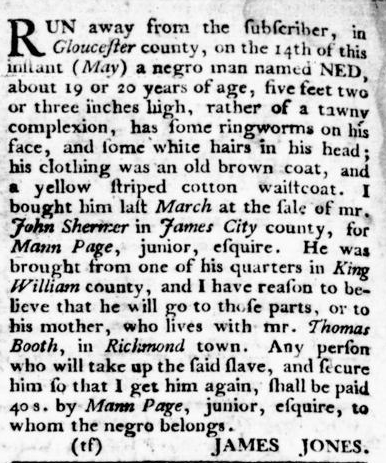
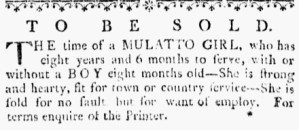
Slavery Advertisements Published December 2, 1775

GUEST CURATOR: Massimo Sgambati

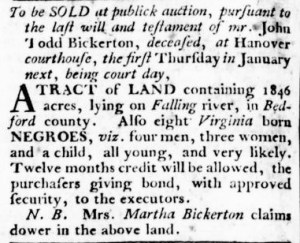
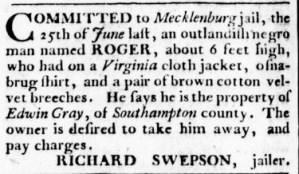
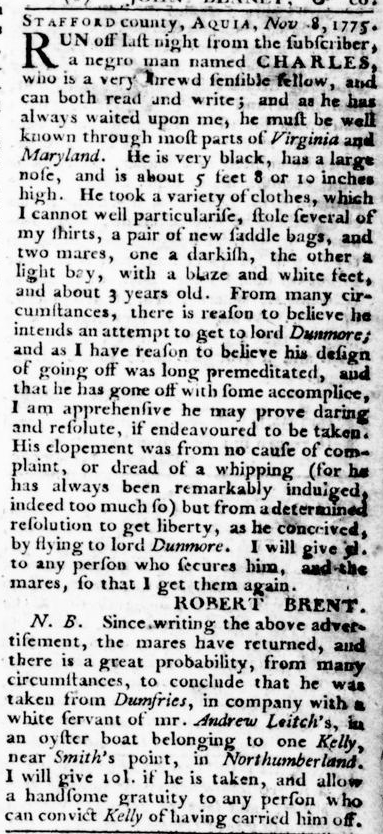
The Slavery Adverts 250 Project chronicles the role of newspaper advertising in perpetuating slavery in the era of the American Revolution. The project seeks to reveal the ubiquity of slavery in eighteenth-century life from New England to Georgia by republishing advertisements about enslaved people – for sale as individuals or in groups, wanted to purchase or for hire for short periods, runaways who liberated themselves, and those who were subsequently captured and confined in jails and workhouses – in daily digests on this site as well as in real time via the @SlaveAdverts250 Twitter feed, utilizing twenty-first-century media to stand in for the print media of the eighteenth century.

The project aims to provide modern audiences with a sense of just how often colonizers encountered these advertisements in their daily lives. Enslaved men, women, and children appeared in print somewhere in the colonies almost every single day. Those advertisements served as a constant backdrop for social, cultural, economic, and political life in colonial and revolutionary America. Colonizers who did not purport to own enslaved people were still confronted with slavery as well as invited to maintain the system by purchasing enslaved men, women, and children or assisting in the capture of so-called “runaways” who sought to free themselves from bondage. The frequency of these newspaper advertisements suggests just how embedded slavery was in colonial and revolutionary American culture in everyday interactions beyond the printed page.

These advertisements also testify to the experiences of enslaved men, women, and children, though readers must consider that those experiences have been remediated through descriptions offered by enslavers rather than enslaved people themselves. Often unnamed in the advertisements, enslaved men, women, and children were not invisible or unimportant in early America.

From compiling an archive of digitized eighteenth-century newspapers to identifying advertisements about enslaved men, women, and children in those newspapers to preparing images of each advertisement to posting this daily digest, Massimo Sgambati served as guest curator for this entry. He completed this work as part of the Summer Scholars Program, funded by a fellowship from the D’Amour College of Liberal Arts and Sciences at Assumption University in Worcester, Massachusetts, in Summer 2025.

These advertisements appeared in colonial American newspapers 250 years ago today.

Pennsylvania Ledger (December 2, 1775)

**********

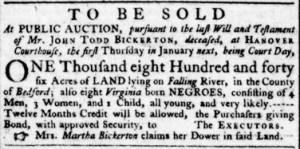
Virginia Gazette [Dixon and Hunter] (December 2, 1775)

**********

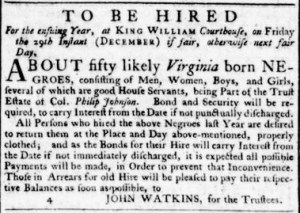
Virginia Gazette [Dixon and Hunter] (December 2, 1775)

**********

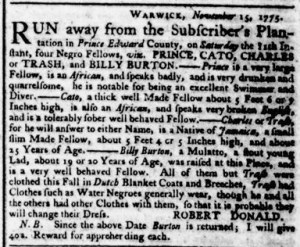
Virginia Gazette [Dixon and Hunter] (December 2, 1775)

**********

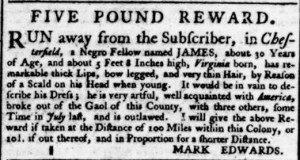
Virginia Gazette [Dixon and Hunter] (December 2, 1775)

**********

Virginia Gazette [Dixon and Hunter] (December 2, 1775)

**********

Virginia Gazette [Dixon and Hunter] (December 2, 1775)

**********

Virginia Gazette [Dixon and Hunter] (December 2, 1775)

**********

Virginia Gazette [Dixon and Hunter] (December 2, 1775)

**********

Virginia Gazette [Dixon and Hunter] (December 2, 1775)

**********

Virginia Gazette [Dixon and Hunter] (December 2, 1775)

December 1

What was advertised in a revolutionary American newspaper 250 years ago today?

Connecticut Gazette (December 1, 1775).

“Sold by the several Post-Riders, and by the Shop-keepers in Town and Country.”

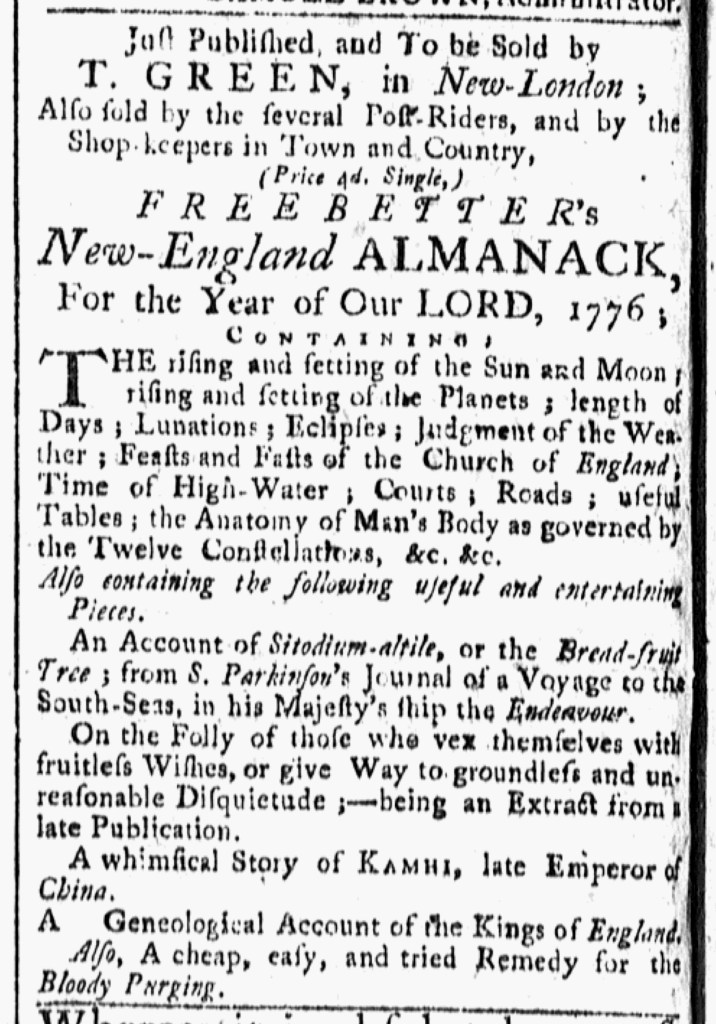
With only a month until the new year began, Timothy Green, the printer of the Connecticut Gazette, advertised “FREEBETTER’s New-England ALMANACK, For the Year of Our LORD, 1776.”  He emphasized items that usually appeared in almanacs and called attention to special features.  The former included the “rising and setting of the Sun and Moon; rising and setting of the Planets; length of Days; Lunations; Eclipses; Judgment of the Weather; Feasts and Fasts of the Chrich of England; Times of High-Water; Courts; Roads; useful Tables; [and] the Anatomy of Man’s Body as governed by the Twelve Constellations.”  The special features included a “whimsical Story of KAHM, late Emperor of China,” and a “Geneological Account of the Kings of England.”  They also included an “Account of Sitodium-altile, or the Bread-fruit Tree; from S. Parkinson’s Journal of a Voyage to the South-Seas, in his Majesty’s ship the Endeavour” and an essay on “the Folly of those who vex themselves with fruitless Wishes, or give Way to groundless and unreasonable Disquietude; –being an Extract from a late Publication.”  Green may have intended those excerpts as teasers to encourage readers to purchase the original works at his printing office in New London.

To acquire the almanac, however, customers did not have to visit Green or send an order to him.  Instead, he advised that “the several Post-Riders” with routes in the region and “the Shop-keepers in Town and Country” also sold “FREEBETTER’s New-England ALMANACK, For … 1776.”  The printer established a distribution network for the useful reference manual.  Shopkeepers often stocked a variety of almanacs so their customers could choose among popular titles.  Printers sometimes offered discount prices for purchasing multiple copies, usually by the dozen or by the hundred.  That allowed retailers to charge competitive prices to generate revenue with small markups over what they paid.  In this instance, Green did not indicate how much shopkeepers paid for the almanac, only that it sold for “4d. Single” or four pence for one copy.  That constrained shopkeepers when it came to marking up prices.  In addition to shopkeepers, “several Post-Riders” sold the almanac.  That arrangement meant greater convenience for customers and, printers hoped, increased sales and circulation.  In the 1770s, printers in New England began mentioning postriders in their advertisements for almanacs and other printed materials, perhaps acknowledging an existing practice or perhaps establishing a new means of engaging with customers.  The price that Green listed in his advertisement also kept customers aware of reasonable prices charged by post riders.

Slavery Advertisements Published December 1, 1775

GUEST CURATOR: Massimo Sgambati

The Slavery Adverts 250 Project chronicles the role of newspaper advertising in perpetuating slavery in the era of the American Revolution. The project seeks to reveal the ubiquity of slavery in eighteenth-century life from New England to Georgia by republishing advertisements about enslaved people – for sale as individuals or in groups, wanted to purchase or for hire for short periods, runaways who liberated themselves, and those who were subsequently captured and confined in jails and workhouses – in daily digests on this site as well as in real time via the @SlaveAdverts250 Twitter feed, utilizing twenty-first-century media to stand in for the print media of the eighteenth century.

The project aims to provide modern audiences with a sense of just how often colonizers encountered these advertisements in their daily lives. Enslaved men, women, and children appeared in print somewhere in the colonies almost every single day. Those advertisements served as a constant backdrop for social, cultural, economic, and political life in colonial and revolutionary America. Colonizers who did not purport to own enslaved people were still confronted with slavery as well as invited to maintain the system by purchasing enslaved men, women, and children or assisting in the capture of so-called “runaways” who sought to free themselves from bondage. The frequency of these newspaper advertisements suggests just how embedded slavery was in colonial and revolutionary American culture in everyday interactions beyond the printed page.

These advertisements also testify to the experiences of enslaved men, women, and children, though readers must consider that those experiences have been remediated through descriptions offered by enslavers rather than enslaved people themselves. Often unnamed in the advertisements, enslaved men, women, and children were not invisible or unimportant in early America.

From compiling an archive of digitized eighteenth-century newspapers to identifying advertisements about enslaved men, women, and children in those newspapers to preparing images of each advertisement to posting this daily digest, Massimo Sgambati served as guest curator for this entry. He completed this work as part of the Summer Scholars Program, funded by a fellowship from the D’Amour College of Liberal Arts and Sciences at Assumption University in Worcester, Massachusetts, in Summer 2025.

These advertisements appeared in colonial American newspapers 250 years ago today.

Connecticut Gazette (December 1, 1775)

**********

Virginia Gazette [Purdie] (December 1, 1775)

**********

Virginia Gazette [Purdie] (December 1, 1775)

**********

Virginia Gazette [Purdie] (December 1, 1775)

**********

Virginia Gazette [Purdie] (December 1, 1775)

**********

Virginia Gazette [Purdie] (December 1, 1775)

**********

Virginia Gazette [Purdie] (December 1, 1775)

**********

Virginia Gazette [Purdie] (December 1, 1775)

**********

Virginia Gazette [Purdie] (December 1, 1775)

**********

Virginia Gazette [Purdie] (December 1, 1775)

**********

Virginia Gazette [Purdie] (December 1, 1775)

**********

Virginia Gazette [Purdie] (December 1, 1775)

**********

Virginia Gazette [Purdie] (December 1, 1775)

**********

Virginia Gazette [Purdie] (December 1, 1775)

**********

Virginia Gazette [Purdie] (December 1, 1775)

**********

Virginia Gazette [Purdie] (December 1, 1775)

**********

Virginia Gazette [Purdie] (December 1, 1775)