Slavery Advertisements Published March 25, 1775

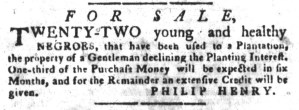
The Slavery Adverts 250 Project chronicles the role of newspaper advertising in perpetuating slavery in the era of the American Revolution. The project seeks to reveal the ubiquity of slavery in eighteenth-century life from New England to Georgia by republishing advertisements about enslaved people – for sale as individuals or in groups, wanted to purchase or for hire for short periods, runaways who liberated themselves, and those who were subsequently captured and confined in jails and workhouses – in daily digests on this site as well as in real time via the @SlaveAdverts250 Twitter feed, utilizing twenty-first-century media to stand in for the print media of the eighteenth century.

The project aims to provide modern audiences with a sense of just how often colonizers encountered these advertisements in their daily lives. Enslaved men, women, and children appeared in print somewhere in the colonies almost every single day. Those advertisements served as a constant backdrop for social, cultural, economic, and political life in colonial and revolutionary America. Colonizers who did not purport to own enslaved people were still confronted with slavery as well as invited to maintain the system by purchasing enslaved men, women, and children or assisting in the capture of so-called “runaways” who sought to free themselves from bondage. The frequency of these newspaper advertisements suggests just how embedded slavery was in colonial and revolutionary American culture in everyday interactions beyond the printed page.

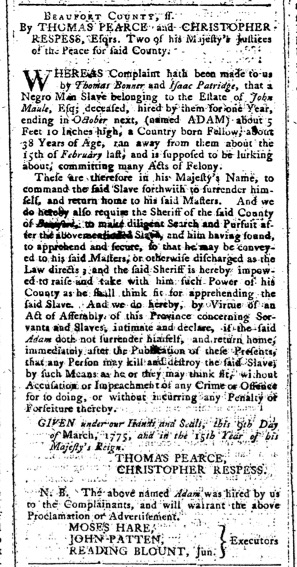
These advertisements also testify to the experiences of enslaved men, women, and children, though readers must consider that those experiences have been remediated through descriptions offered by enslavers rather than enslaved people themselves. Often unnamed in the advertisements, enslaved men, women, and children were not invisible or unimportant in early America.

These advertisements appeared in colonial American newspapers 250 years ago today.
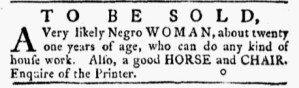
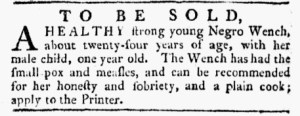
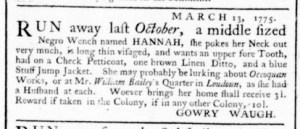
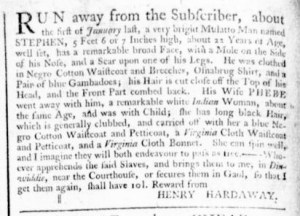
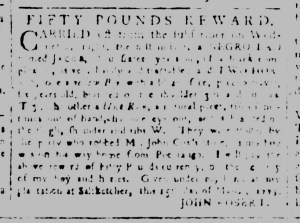
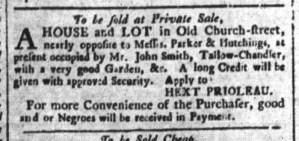
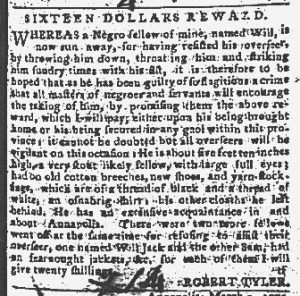
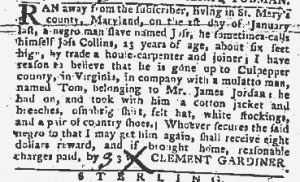
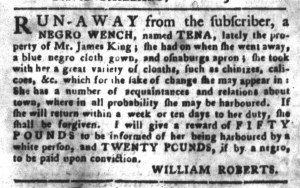
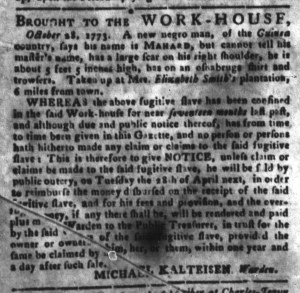
Pennsylvania Ledger (March 25, 1775).

**********
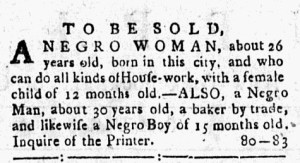
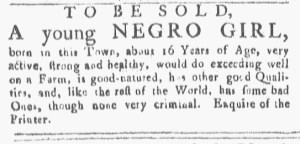
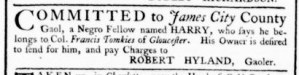
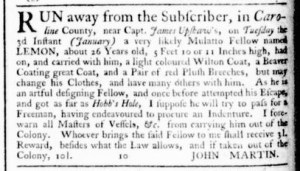
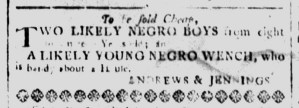
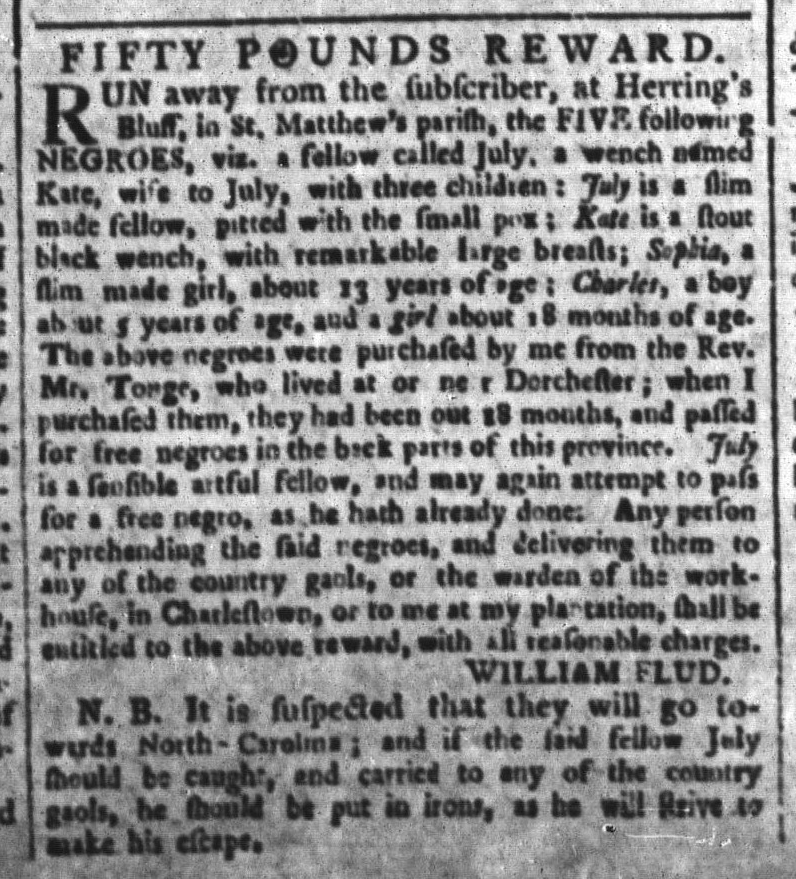
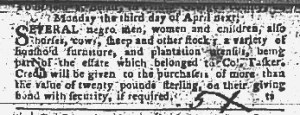
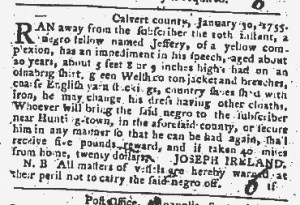
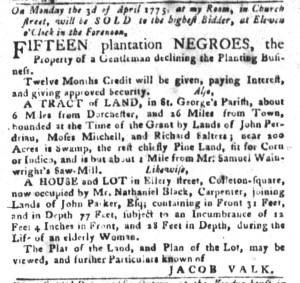
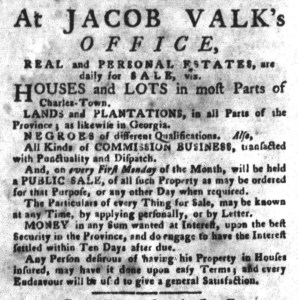
Pennsylvania Ledger (March 25, 1775).

**********
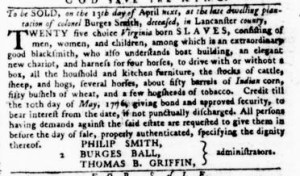
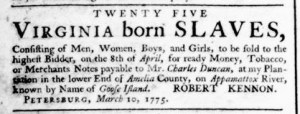
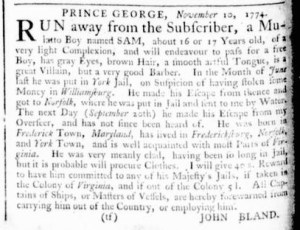
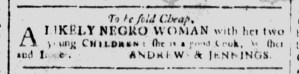
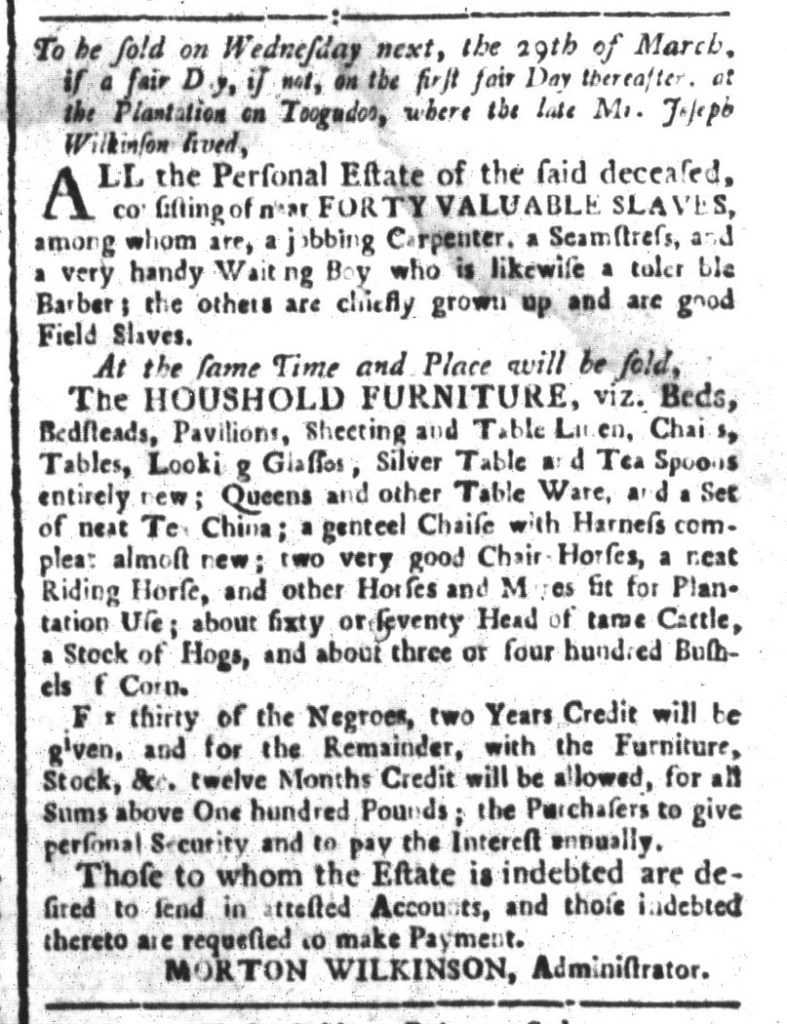
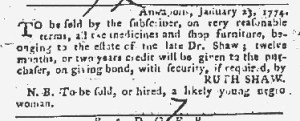
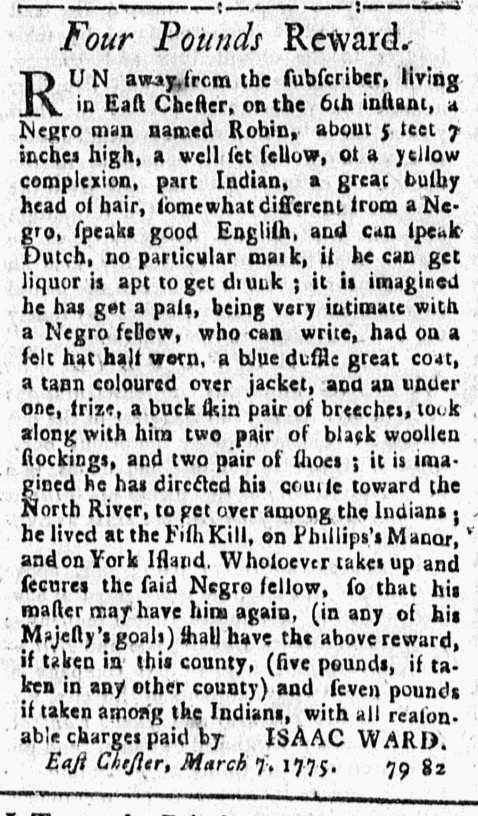
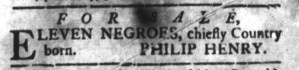
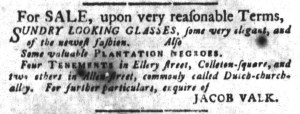
Providence Gazette (March 25, 1775).

**********
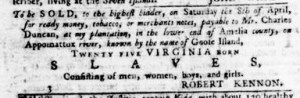
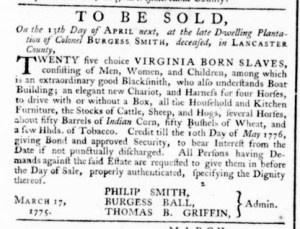
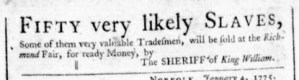
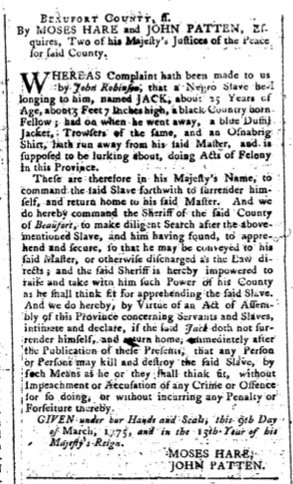
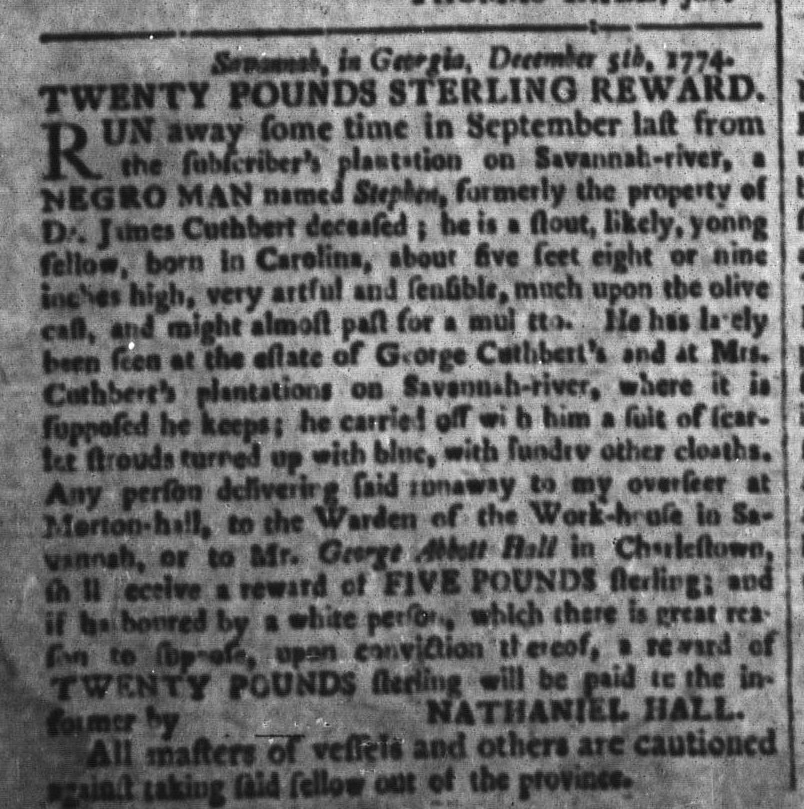
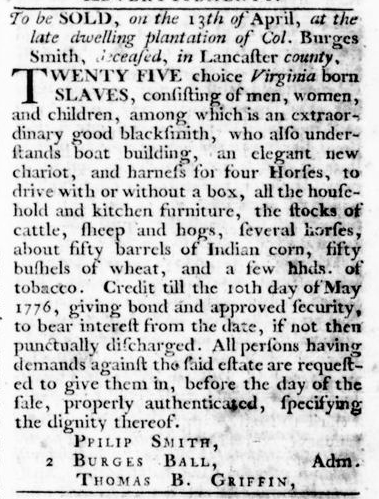
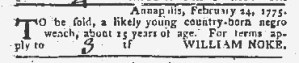
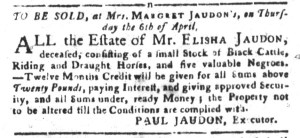
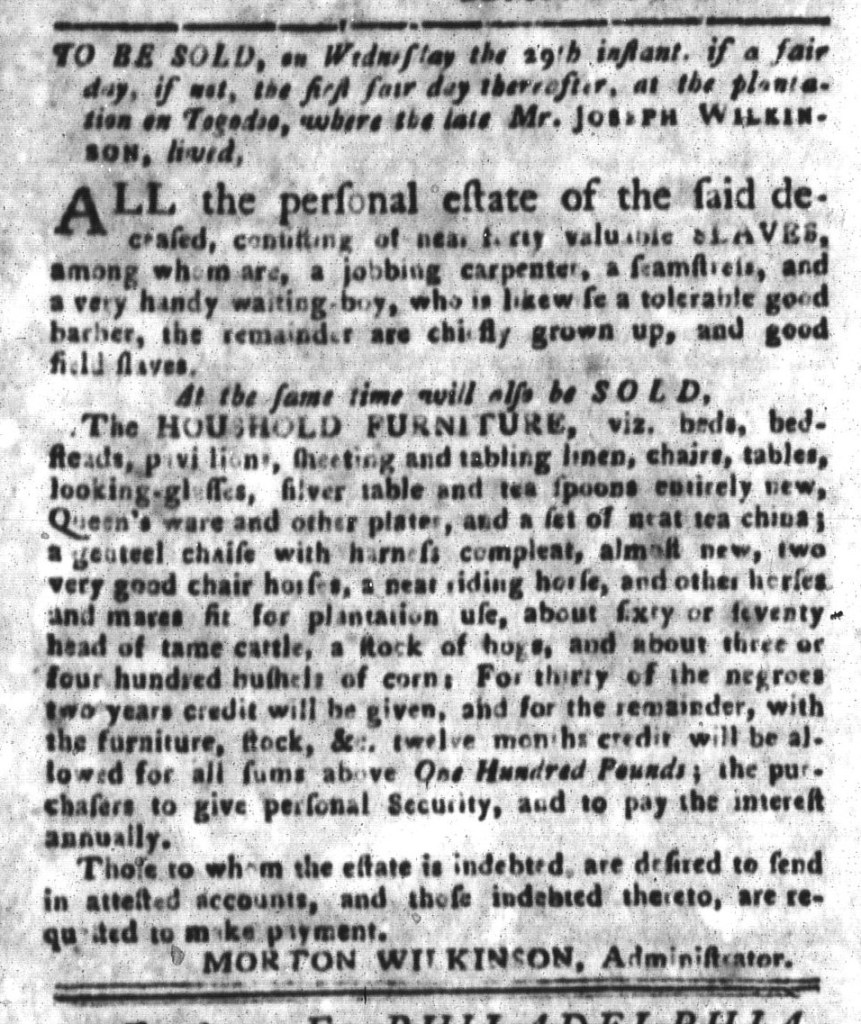
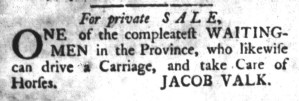
Virginia Gazette [Dixon and Hunter] (March 25, 1775).

**********
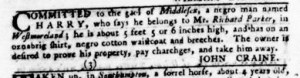
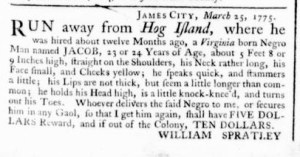
Virginia Gazette [Dixon and Hunter] (March 25, 1775).

**********
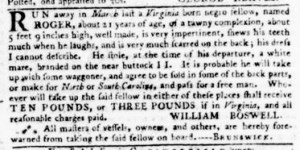
Virginia Gazette [Dixon and Hunter] (March 25, 1775).

**********
Virginia Gazette [Dixon and Hunter] (March 25, 1775).

**********
Virginia Gazette [Dixon and Hunter] (March 25, 1775).

**********
Virginia Gazette [Dixon and Hunter] (March 25, 1775).

**********

Virginia Gazette [Dixon and Hunter] (March 25, 1775).

**********

Virginia Gazette [Dixon and Hunter] (March 25, 1775).

**********

Virginia Gazette [Dixon and Hunter] (March 25, 1775).

**********
Virginia Gazette [Dixon and Hunter] (March 25, 1775).

**********

Virginia Gazette [Dixon and Hunter] (March 25, 1775).

March 24

What was advertised in a colonial American newspaper 250 years ago today?

North-Carolina Gazette (March 24, 1775).

“ADVERTISEMENTS, of a moderate Length, are inserted for THREE SHILLINGS the first Week, and TWO SHILLINGS for every Week after.”

Today, the North-Carolina Gazette makes its first appearance in the Adverts 250 Project and the Slavery Adverts 250 Project.  Few copies of this colonial newspaper from New Bern survive.  Clarence Brigham provides an overview of the publication history of the North-Carolina Gazette, noting that James Davis likely founded it on May 27, 1768, “judging from the date of the earliest issue located, that of June 24, 1768, no. 5.”  The volume numbering also suggests that “publication was suspended for several months between 1769 and 1773 and again in 1776.”[1]  The last known issue appeared on November 30, 1778.  Edward Connery Lathem reports “no copies extant” for 1770, 1771, 1772, 1773, and 1776 “few numbers known (usually less than 25% of those issued)” for 1768, 1769, 1774, and “complete or extensive coverage exists” for 1775, 1777, and 1778.[2]  America’s Historical Newspapers includes only seven issues that have been digitized for greater accessibility, all of them published in 1774.

The March 24, 1774, edition is the first of those issues.  In addition to news, letters, and the “POETS CORNER,” that issue carried nine advertisements, including two concerning enslaved people, that accounted for a quarter of the content.  The colophon at the bottom of the fourth and final page provided information about both subscription costs and advertising fees: “All Persons may be supplied with this PAPER at SIXTEEN SHILLINGS per Annum.  ADVERTISEMENTS, of a moderate Length, are inserted for THREE SHILLINGS the first Week, and TWO SHILLINGS for every Week after.”  Throughout the colonies, printers took a variety of approaches when it came to regularly publishing such information in their mastheads or colophons.  Some did not do so at all, some included only annual subscription costs, some listed only advertising fees, and some, like Davis, provided both.  He happened to charge the same price for advertisements as William Dixon and John Hunter’s Virginia Gazette and John Pinkney’s Virginia Gazette, both published in Williamsburg, suggesting that was the going rate in the region.  For some colonial newspapers it remains difficult or impossible to determine what printers charged for advertising.  Davis, on the other hand, incorporated that information for the North-Carolina Gazette into the colophon, making readily apparent the advertising fees and how much they cost relative to subscriptions.

**********

[1] Clarence S. Brigham, History and Bibliography of American Newspapers, 1690-1820 (Worcester, MA: American Antiquarian Society, 1947), 770.

[2] Edward Connery Lathem, Chronological Tables of American Newspapers, 1690-1820 (Barre, MA: American Antiquarian Society and Barre Publishers, 1972), 8, 12.

Slavery Advertisements Published March 24, 1775

The Slavery Adverts 250 Project chronicles the role of newspaper advertising in perpetuating slavery in the era of the American Revolution. The project seeks to reveal the ubiquity of slavery in eighteenth-century life from New England to Georgia by republishing advertisements about enslaved people – for sale as individuals or in groups, wanted to purchase or for hire for short periods, runaways who liberated themselves, and those who were subsequently captured and confined in jails and workhouses – in daily digests on this site as well as in real time via the @SlaveAdverts250 Twitter feed, utilizing twenty-first-century media to stand in for the print media of the eighteenth century.

The project aims to provide modern audiences with a sense of just how often colonizers encountered these advertisements in their daily lives. Enslaved men, women, and children appeared in print somewhere in the colonies almost every single day. Those advertisements served as a constant backdrop for social, cultural, economic, and political life in colonial and revolutionary America. Colonizers who did not purport to own enslaved people were still confronted with slavery as well as invited to maintain the system by purchasing enslaved men, women, and children or assisting in the capture of so-called “runaways” who sought to free themselves from bondage. The frequency of these newspaper advertisements suggests just how embedded slavery was in colonial and revolutionary American culture in everyday interactions beyond the printed page.

These advertisements also testify to the experiences of enslaved men, women, and children, though readers must consider that those experiences have been remediated through descriptions offered by enslavers rather than enslaved people themselves. Often unnamed in the advertisements, enslaved men, women, and children were not invisible or unimportant in early America.

These advertisements appeared in colonial American newspapers 250 years ago today.

North-Carolina Gazette (March 24, 1775).

**********

North-Carolina Gazette (March 24, 1775).

**********

South-Carolina and American General Gazette (March 24, 1775).

**********

South-Carolina and American General Gazette (March 24, 1775).

**********

South-Carolina and American General Gazette (March 24, 1775).

**********

South-Carolina and American General Gazette (March 24, 1775).

**********

South-Carolina and American General Gazette (March 24, 1775).

**********

South-Carolina and American General Gazette (March 24, 1775).

**********

South-Carolina and American General Gazette (March 24, 1775).

**********

South-Carolina and American General Gazette (March 24, 1775).

**********

South-Carolina and American General Gazette (March 24, 1775).

**********

South-Carolina and American General Gazette (March 24, 1775).

**********

Virginia Gazette [Purdie] (March 24, 1775).

**********

Virginia Gazette [Purdie] (March 24, 1775).

**********

Virginia Gazette [Purdie] (March 24, 1775).

**********

Virginia Gazette [Purdie] (March 24, 1775).

March 23

What was advertised in a colonial American newspaper 250 years ago today?

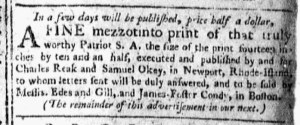
Massachusetts Spy (March 23, 1775).

“A FINE mezzotinto print of that truly worthy Patriot S.A.”

When Charles Reak and Samuel Okey set about publishing a “FINE mezzotinto print of that truly worthy Patriot” Samuel Adams in the spring of 1775, they believed that they could generate interest in their project in Boston.  Accordingly, they placed advertisements in the March 23 edition of the Massachusetts Spy and the March 26 edition of the Boston-Gazette. Reak and Okey chose among the five newspapers published in Boston at the time, selecting the two that consistently took the strongest stance in favor of the American cause during the imperial crisis that eventually became a war for independence.  The savvy entrepreneurs knew which publications would put their notice before the eyes of readers most likely to form a market for a print of the influential and vocal advocate for American liberties.

The advertisement did not go into much detail about the print.  It did not even name Adams, trusting that prospective customers would recognize him from the description and his initials, “S.A.”  They did give the size, “fourteen inches by ten and an half,” so readers could envision framing and displaying the print.  A note at the end of Reak and Okey’s notice in the Massachusetts Spy suggested that they had provided more information to the printing office and “[t]he remainder of this advertisement [will appear] in our next [issue].”  The Boston-Gazette, however, carried the same copy without any additions.  The Massachusetts Spy did not run any version of the advertisement again, neither the original nor an updated variation.  Isaiah Thomas, the printer, published only two more issues in Boston before the political situation got too hot for him to remain there.  He re-established the Massachusetts Spy in Worcester, safely away from British authorities, in May.  The Boston-Gazette did run Reak and Okey’s advertisement one more time, on April 3, but Benjamin Edes and John Gill, the printers (and local agents designated to sell the print of Adams) suspended the newspaper after publishing the April 17 edition.  Following the skirmishes at Lexington and Concord on April 19, they dissolved their partnership.  Edes moved to Watertown and continued publishing the newspaper from there in June.  The outbreak of hostilities almost certainly disrupted Reak and Okey’s plans for advertising and distributing their print of Samuel Adams.

Slavery Advertisements Published March 23, 1775

The Slavery Adverts 250 Project chronicles the role of newspaper advertising in perpetuating slavery in the era of the American Revolution. The project seeks to reveal the ubiquity of slavery in eighteenth-century life from New England to Georgia by republishing advertisements about enslaved people – for sale as individuals or in groups, wanted to purchase or for hire for short periods, runaways who liberated themselves, and those who were subsequently captured and confined in jails and workhouses – in daily digests on this site as well as in real time via the @SlaveAdverts250 Twitter feed, utilizing twenty-first-century media to stand in for the print media of the eighteenth century.

The project aims to provide modern audiences with a sense of just how often colonizers encountered these advertisements in their daily lives. Enslaved men, women, and children appeared in print somewhere in the colonies almost every single day. Those advertisements served as a constant backdrop for social, cultural, economic, and political life in colonial and revolutionary America. Colonizers who did not purport to own enslaved people were still confronted with slavery as well as invited to maintain the system by purchasing enslaved men, women, and children or assisting in the capture of so-called “runaways” who sought to free themselves from bondage. The frequency of these newspaper advertisements suggests just how embedded slavery was in colonial and revolutionary American culture in everyday interactions beyond the printed page.

These advertisements also testify to the experiences of enslaved men, women, and children, though readers must consider that those experiences have been remediated through descriptions offered by enslavers rather than enslaved people themselves. Often unnamed in the advertisements, enslaved men, women, and children were not invisible or unimportant in early America.

These advertisements appeared in colonial American newspapers 250 years ago today.

Maryland Gazette (March 23, 1775).

**********

Maryland Gazette (March 23, 1775).

**********

Maryland Gazette (March 23, 1775).

**********

Maryland Gazette (March 23, 1775).

**********

Maryland Gazette (March 23, 1775).

**********

Maryland Gazette (March 23, 1775).

**********

Massachusetts Gazette and Boston Weekly News-Letter (March 23, 1775).

**********

New-York Journal (March 23, 1775).

**********

Supplement to the New-York Journal (March 23, 1775).

**********

Virginia Gazette [Pinkney] (March 23, 1775).

**********

Virginia Gazette [Pinkney] (March 23, 1775).

**********

Virginia Gazette [Pinkney] (March 23, 1775).

**********

Virginia Gazette [Pinkney] (March 23, 1775).

**********

Virginia Gazette [Pinkney] (March 23, 1775).

March 22

What was advertised in a colonial American newspaper 250 years ago today?

Essex Journal (March 22, 1775).

“The mode of education adopted is similar to that of the most approved English Boarding-schools.”

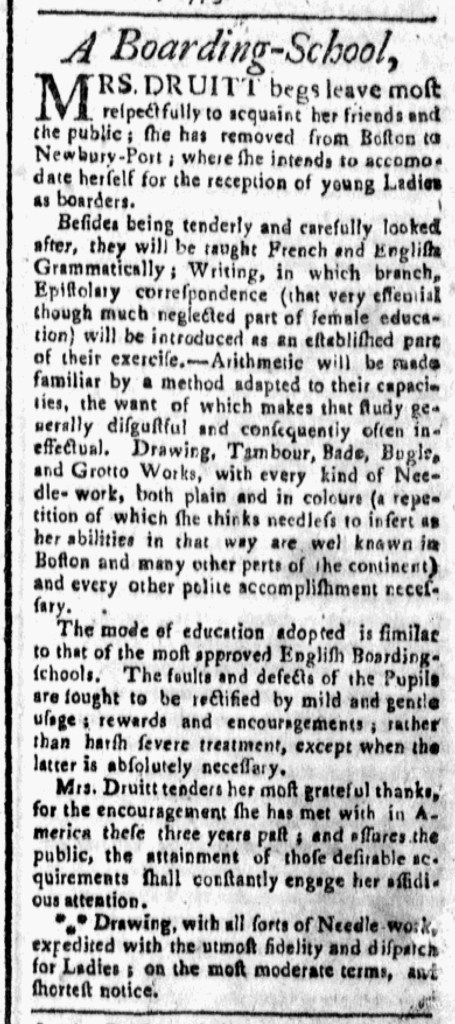
When Eleanor Druitt moved to Newburyport from Boston in the spring of 1775, she placed an advertisement in the local newspaper, the Essex Journal, to announce that she planned to open a boarding school for “young Ladies.”  According to her notice, she had been in the colonies for just three years, yet in that time she had established a reputation for educating young women that she hoped would serve her well in her new town.  Druitt provided a “mode of education … similar to that of the most approved English Boarding-schools,” offering pupils in Massachusetts the same benefits.

The schoolmistress gave an overview of the curriculum, emphasizing that students would learn “French and English Grammatically” and “Writing, in which branch, Epistolary correspondence (that very essential though much neglected part of female education) will be introduced as an established part of their exercise.”  In other words, she taught young women how to write polite letters that would serve them well in maintaining relationships with family and friends in other cities and towns.  Her students also learned arithmetic, “made familiar by a method adapted to their capacities, the want of which makes that study generally disgustful and consequently often ineffectual.”  Druitt had a much higher estimation of young women’s aptitude for drawing, embroidery, and other kinds of decorative “Needle-work,” asserting that she “thinks needless to insert” a longer description “as her abilities in that way are well known in Boston and many other parts of the continent.”  The families of prospective pupils may have seen some of the advertisements she ran in Boston’s newspapers over the past three years since those publications circulated in Newburyport and other towns in Massachusetts and New Hampshire.  In general, her curriculum focused on “polite accomplishment[s]” to distinguish the “young Ladies” that she “tenderly and carefully looked after.”

To that end, Druitt declared that the “faults and defects of the pupils [will] be rectified by mild and gentle usage.”  That meant “rewards and encouragement; rather than harsh severe treatment.”  Parents did not need to worry about the treatment their daughters would receive when boarding with Druitt, though she did state that she would adopt some of those stricter methods as a last resort when “absolutely necessary.”  The schoolmistress suggested that she established just the right balance of encouragement and discipline that allowed pupils at her boarding school to thrive.  Families had a variety of concerns as the imperial crisis intensified in the spring of 1775, but they need not worry about the “reception” their daughters would experience at Druitt’s boarding school.

Slavery Advertisements Published March 22, 1775

The Slavery Adverts 250 Project chronicles the role of newspaper advertising in perpetuating slavery in the era of the American Revolution. The project seeks to reveal the ubiquity of slavery in eighteenth-century life from New England to Georgia by republishing advertisements about enslaved people – for sale as individuals or in groups, wanted to purchase or for hire for short periods, runaways who liberated themselves, and those who were subsequently captured and confined in jails and workhouses – in daily digests on this site as well as in real time via the @SlaveAdverts250 Twitter feed, utilizing twenty-first-century media to stand in for the print media of the eighteenth century.

The project aims to provide modern audiences with a sense of just how often colonizers encountered these advertisements in their daily lives. Enslaved men, women, and children appeared in print somewhere in the colonies almost every single day. Those advertisements served as a constant backdrop for social, cultural, economic, and political life in colonial and revolutionary America. Colonizers who did not purport to own enslaved people were still confronted with slavery as well as invited to maintain the system by purchasing enslaved men, women, and children or assisting in the capture of so-called “runaways” who sought to free themselves from bondage. The frequency of these newspaper advertisements suggests just how embedded slavery was in colonial and revolutionary American culture in everyday interactions beyond the printed page.

These advertisements also testify to the experiences of enslaved men, women, and children, though readers must consider that those experiences have been remediated through descriptions offered by enslavers rather than enslaved people themselves. Often unnamed in the advertisements, enslaved men, women, and children were not invisible or unimportant in early America.

These advertisements appeared in colonial American newspapers 250 years ago today.

Pennsylvania Journal (March 22, 1775).

**********

Pennsylvania Journal (March 22, 1775).

March 21

What was advertised in a colonial American newspaper 250 years ago today?

Pennsylvania Evening Post (March 21, 1775).

“Being resolved to decline his Retail Trade … he will sell his Stock of Goods on Hand at the very lowest Rates.”

George Bartram had been in business “At the Sign of the GOLDEN FLEECE’s HEAD” in Philadelphia for several years by the time he placed an advertisement in the March 21, 1775, edition of the Pennsylvania Evening Post.  He sometimes called his establishment the Woollen-Drapery and Hosiery WAREHOUSE and used visual elements to enhance his advertisements.  For instance, a decorative border enclosed the name of his business in some advertisements while others featured a woodcut that depicted that golden fleece’s head.  Earlier in his career, he kept shop “at the Sign of the Naked Boy.”  An even more elaborate woodcut replicated that sign with a naked boy holding a yard of cloth in a cartouche in the center, flanked by rolls of fabric on either side and the proprietor’s name below them.  Bartram was still using the golden fleece’s head woodcut to adorn his advertisements in Dunlap’s Pennsylvania Packet in March 1775, but he did not have a second one to use in the Pennsylvania Evening Post.

Instead, he relied on advertising copy in making his pitch to prospective customers.  As he had often done in previous newspaper notices, Bartram emphasized the array of choices he made available to consumers, promoting a “large and fresh Assortment of MERCHANDIZE.”  To demonstrate that was the case, he inserted a lengthy list of goods, such as “Broadcloaths, of the neatest and most fashionable Colours, with suitable Trimmings,” “beautiful buff and white Hair Shags,” “rich black Paduasoys and Satins,” and “handsome Silk and Worsted Stuff for Womens Gowns.”  His intended for those evocative descriptions to entice readers.  He played to both taste and imagination by making choice a theme throughout his catalog of merchandise: “Handkerchiefs of all Sorts,” “a Variety of Cambricks suitable for Gentlemen’s Ruffles and Stocks,” “a large Assortment of brown and white Russia Sheetings and Hessians,” “an elegant Assortment of the best Moreens,” “a Quantity of the best Rugs,” and “a large Assortment of Hosiery.”

In a final nota bene, Bartram announced that customers could acquire his wares at bargain prices because he was going out of business.  He “resolved to decline his Retail trade” and “assures his Friends and the Public that he will sell his Stock of Goods on Hand at the very lowest Rates.”  He also offered a discount “to those who purchase a Quantity,” hoping that would offer additional encouragement for prospective customers.  Bartram did not indicate why he was closing his business, though the Continental Association, a nonimportation agreement adopted throughout the colonies, may have presented an opportunity to liquidate his merchandise and get rid of items that had lingered on the shelves in his Woollen Drapery and Hosiery Warehouse.  Bartram was “SELLING OFF” his inventory, offering good deals on absolutely everything.

Slavery Advertisements Published March 21, 1775

The Slavery Adverts 250 Project chronicles the role of newspaper advertising in perpetuating slavery in the era of the American Revolution. The project seeks to reveal the ubiquity of slavery in eighteenth-century life from New England to Georgia by republishing advertisements about enslaved people – for sale as individuals or in groups, wanted to purchase or for hire for short periods, runaways who liberated themselves, and those who were subsequently captured and confined in jails and workhouses – in daily digests on this site as well as in real time via the @SlaveAdverts250 Twitter feed, utilizing twenty-first-century media to stand in for the print media of the eighteenth century.

The project aims to provide modern audiences with a sense of just how often colonizers encountered these advertisements in their daily lives. Enslaved men, women, and children appeared in print somewhere in the colonies almost every single day. Those advertisements served as a constant backdrop for social, cultural, economic, and political life in colonial and revolutionary America. Colonizers who did not purport to own enslaved people were still confronted with slavery as well as invited to maintain the system by purchasing enslaved men, women, and children or assisting in the capture of so-called “runaways” who sought to free themselves from bondage. The frequency of these newspaper advertisements suggests just how embedded slavery was in colonial and revolutionary American culture in everyday interactions beyond the printed page.

These advertisements also testify to the experiences of enslaved men, women, and children, though readers must consider that those experiences have been remediated through descriptions offered by enslavers rather than enslaved people themselves. Often unnamed in the advertisements, enslaved men, women, and children were not invisible or unimportant in early America.

These advertisements appeared in colonial American newspapers 250 years ago today.

Essex Gazette (March 21, 1775).

**********

Essex Gazette (March 21, 1775).

**********

South-Carolina Gazette and Country Journal (March 21, 1775).

**********

South-Carolina Gazette and Country Journal (March 21, 1775).

**********

South-Carolina Gazette and Country Journal (March 21, 1775).

**********

South-Carolina Gazette and Country Journal (March 21, 1775).

**********

South-Carolina Gazette and Country Journal (March 21, 1775).

**********

South-Carolina Gazette and Country Journal (March 21, 1775).

**********

South-Carolina Gazette and Country Journal (March 21, 1775).

**********

South-Carolina Gazette and Country Journal (March 21, 1775).

**********

South-Carolina Gazette and Country Journal (March 21, 1775).

**********

South-Carolina Gazette and Country Journal (March 21, 1775).

**********

South-Carolina Gazette and Country Journal (March 21, 1775).

March 20

What was advertised in a colonial American newspaper 250 years ago today?

Dunlap’s Pennsylvania Packet (March 20, 1775).

“The Proprietors being unwilling to deprive such as are desirous of seeing the factory, from the gratification of their curiosity.”

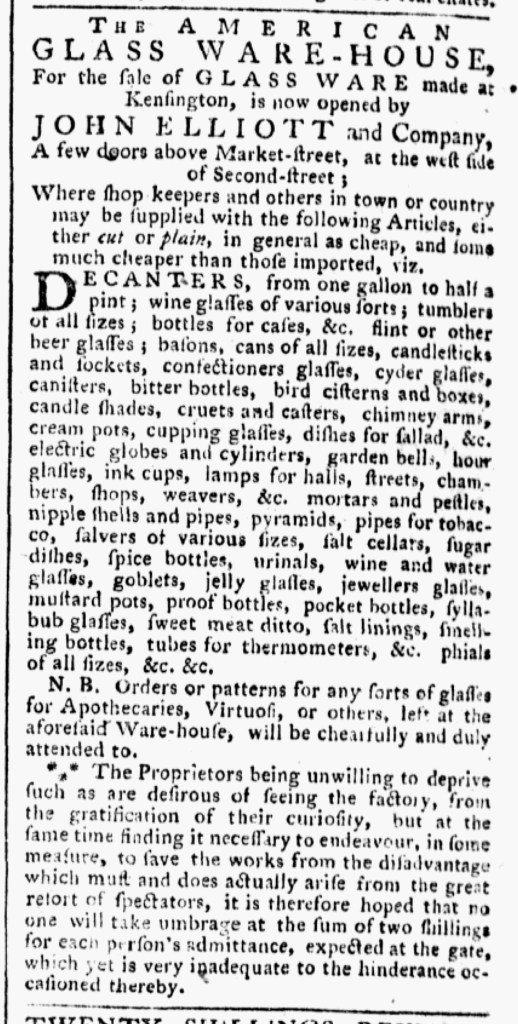
John Elliott and Company advertised items made at the “AMERICAN GLASS WARE-HOUSE” in Kensington, Philadelphia, as soon as the Continental Association went into effect in December 1774.  Nearly four months later, the company ran another advertisement that listed a variety of glassware – including “wine glasses of various sorts,” “tumblers of all sizes,” “hour glasses,” “tubes for thermometers,” “mustard pots,” and “lamps for halls, streets, chambers, shops, [and] weavers” – that “shop keepers and others in town or country” could purchase “as cheap [as] those imported.”  Some items were “much cheaper.”  Colonizers who abided by the nonimportation agreement did not have to pay more to acquire glassware made in the colonies; instead, they got a bargain!  Elliott and Company also informed apothecaries and others that they accepted orders and would follow patterns “left at the aforesaid Ware-house.”

Yet this enterprise did more than manufacture glassware.  Elliott and Company’s operation became a destination for the curious who wanted to witness the production of “AMERICAN GLASS” for themselves.  That had the potential to become disruptive, so the proprietors devoted the final paragraph of their advertisement to instructions for visiting.  They explained that they struck a compromise, “being unwilling to deprive such as are desirous of seeing the factory, from the gratification of their curiosity, but at the same time finding it necessary to endeavour, in some measure, to save the works from the disadvantage which must and does actually arise from the great resort of spectators.”  Accordingly, Elliott and Company charged “two shillings for each person’s admittance, expected at the gate.”  Even that fee, they claimed, “is very inadequate to the hinderance occasioned thereby,” yet, once again, the company offered a bargain.  In the process, Elliott and Company monetized visits to their production facility.  Perhaps it had not been as popular a destination as they implied.  Perhaps they exaggerated in hopes of drumming up interest in such a novelty, especially as the imperial crisis intensified and the Continental Association became even more meaningful to many colonizers.  An advertisement with instructions for visiting the factory, no matter how many people had previously been there, gave readers ideas about an outing they could make themselves.  Attracting visitors to see the works, after all, would likely translate into additional sales.