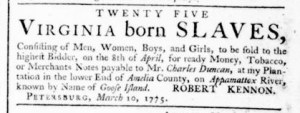
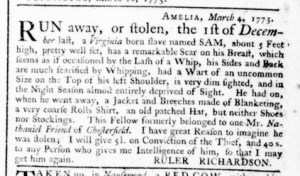
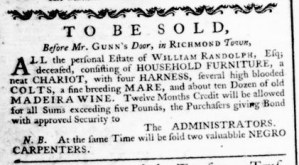
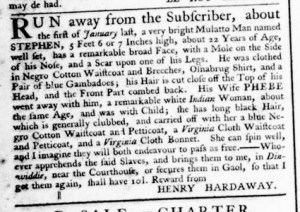
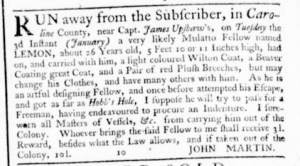
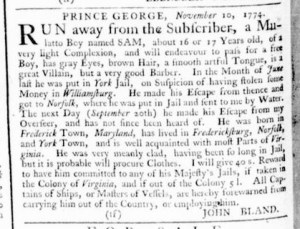
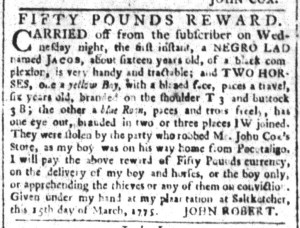
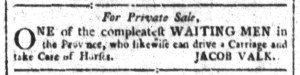
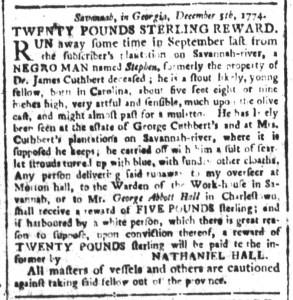
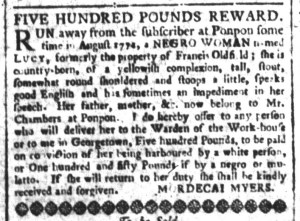
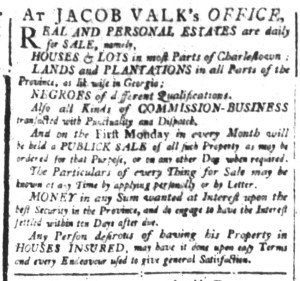
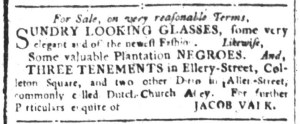
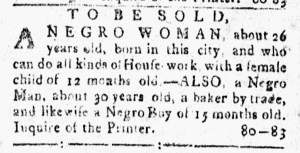
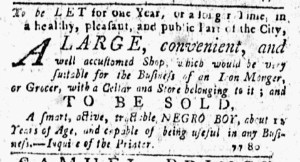
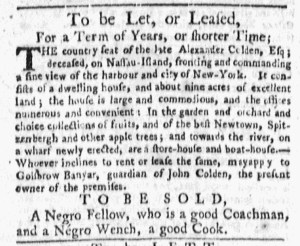
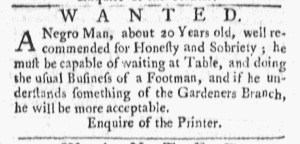
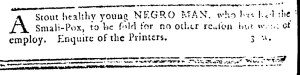
Slavery Advertisements Published March 20, 1775

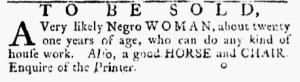
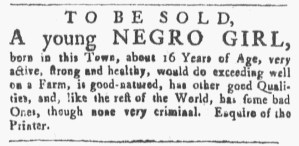
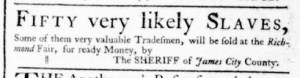
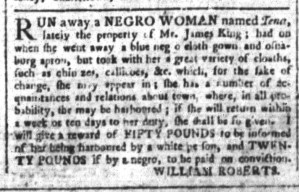
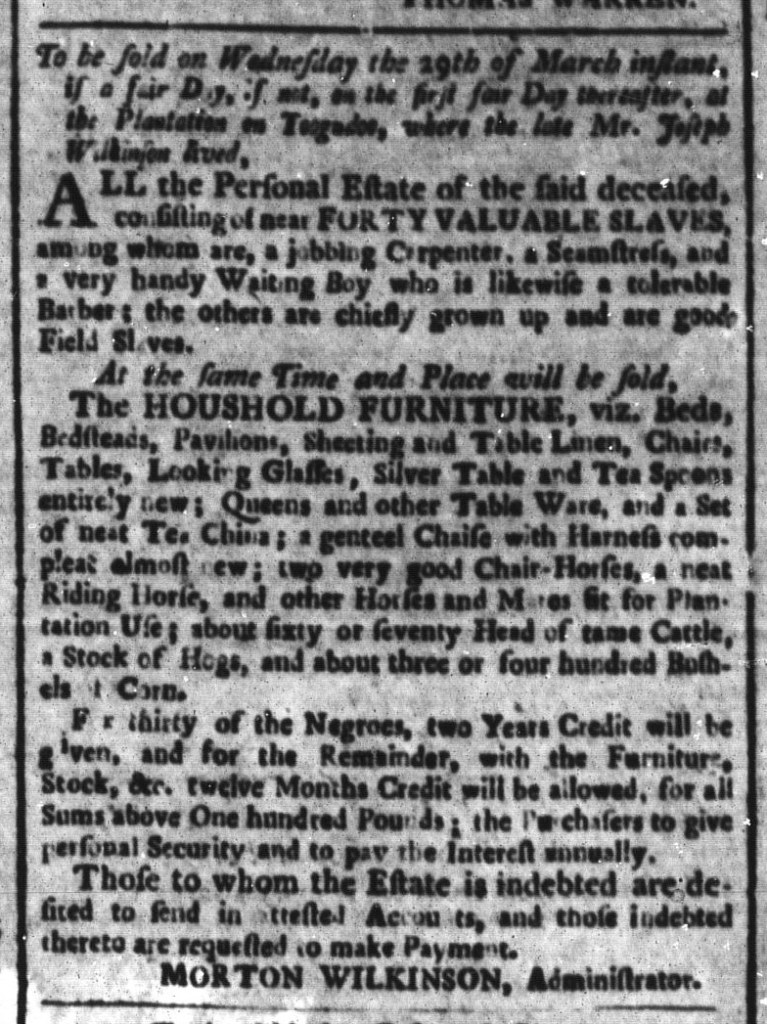
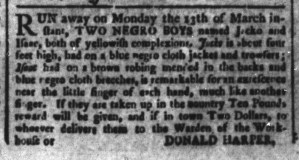
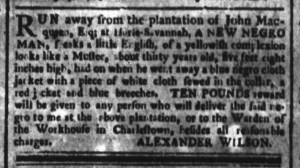
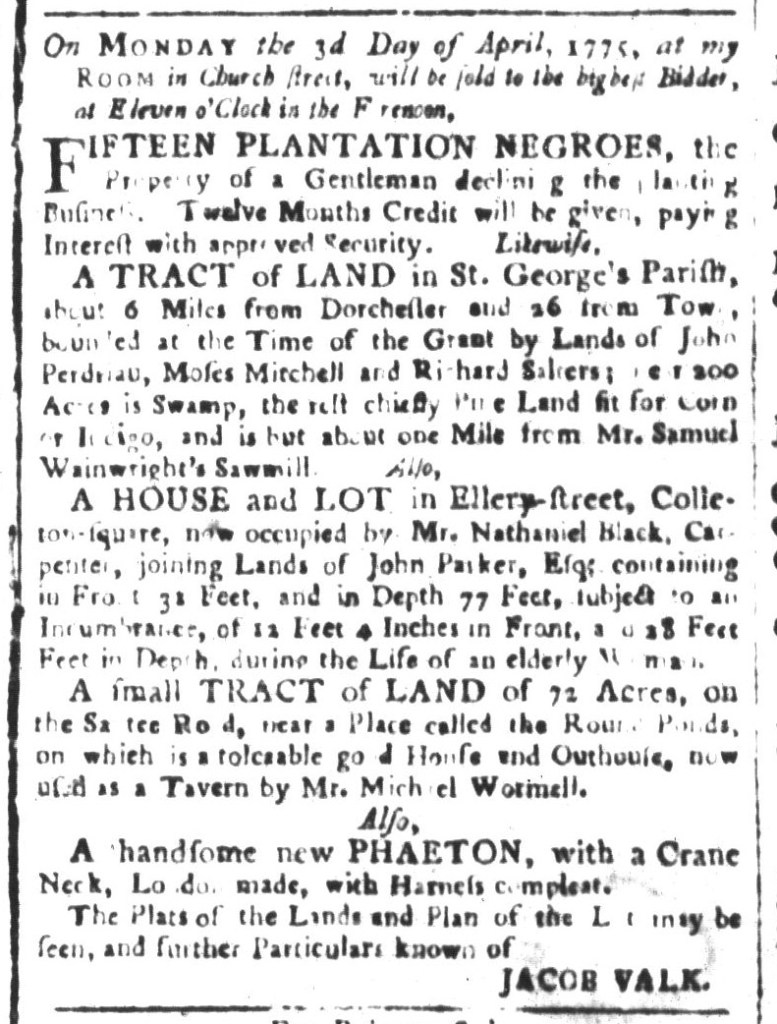
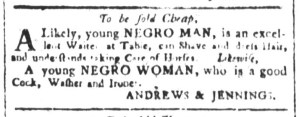
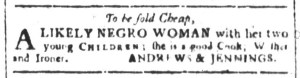
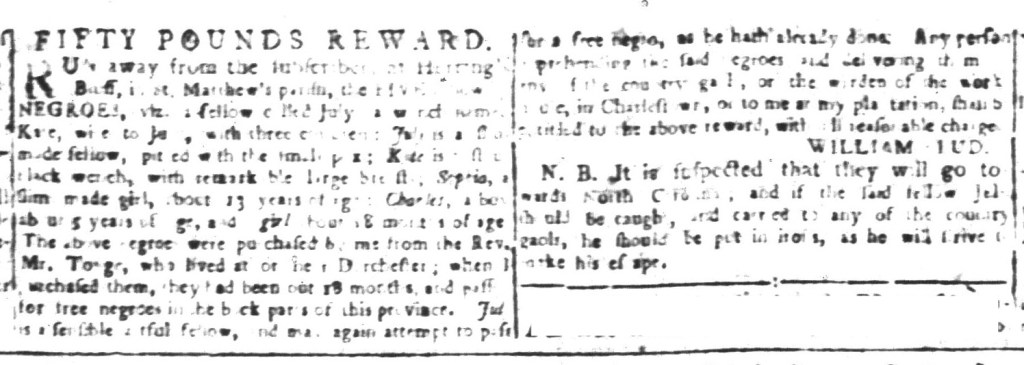
The Slavery Adverts 250 Project chronicles the role of newspaper advertising in perpetuating slavery in the era of the American Revolution. The project seeks to reveal the ubiquity of slavery in eighteenth-century life from New England to Georgia by republishing advertisements about enslaved people – for sale as individuals or in groups, wanted to purchase or for hire for short periods, runaways who liberated themselves, and those who were subsequently captured and confined in jails and workhouses – in daily digests on this site as well as in real time via the @SlaveAdverts250 Twitter feed, utilizing twenty-first-century media to stand in for the print media of the eighteenth century.

The project aims to provide modern audiences with a sense of just how often colonizers encountered these advertisements in their daily lives. Enslaved men, women, and children appeared in print somewhere in the colonies almost every single day. Those advertisements served as a constant backdrop for social, cultural, economic, and political life in colonial and revolutionary America. Colonizers who did not purport to own enslaved people were still confronted with slavery as well as invited to maintain the system by purchasing enslaved men, women, and children or assisting in the capture of so-called “runaways” who sought to free themselves from bondage. The frequency of these newspaper advertisements suggests just how embedded slavery was in colonial and revolutionary American culture in everyday interactions beyond the printed page.

These advertisements also testify to the experiences of enslaved men, women, and children, though readers must consider that those experiences have been remediated through descriptions offered by enslavers rather than enslaved people themselves. Often unnamed in the advertisements, enslaved men, women, and children were not invisible or unimportant in early America.

These advertisements appeared in colonial American newspapers 250 years ago today.
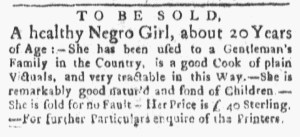
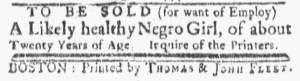
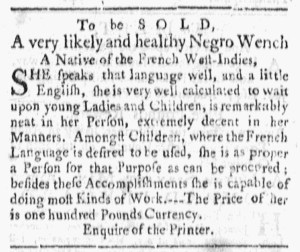
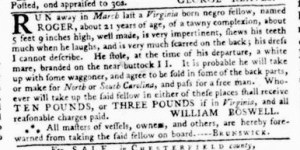
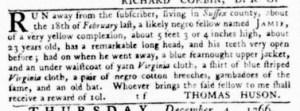
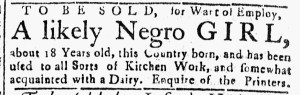
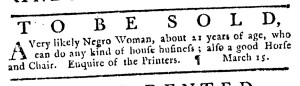
Boston Evening-Post (March 20, 1775).

**********
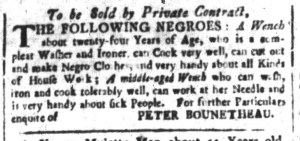
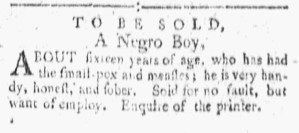
Boston Evening-Post (March 20, 1775).

**********
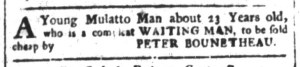
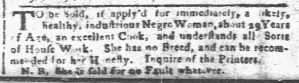
Boston-Gazette (March 20, 1775).

**********
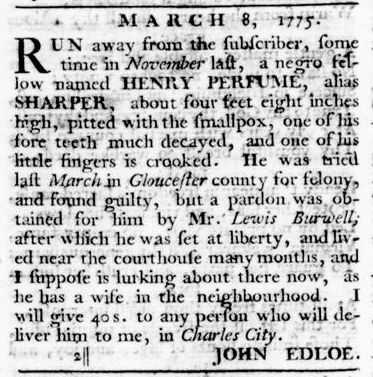
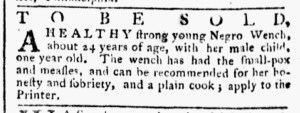
Dunlap’s Pennsylvania Packet (March 20, 1775).

**********
Massachusetts Gazette and Boston Post-Boy (March 20, 1775).

**********
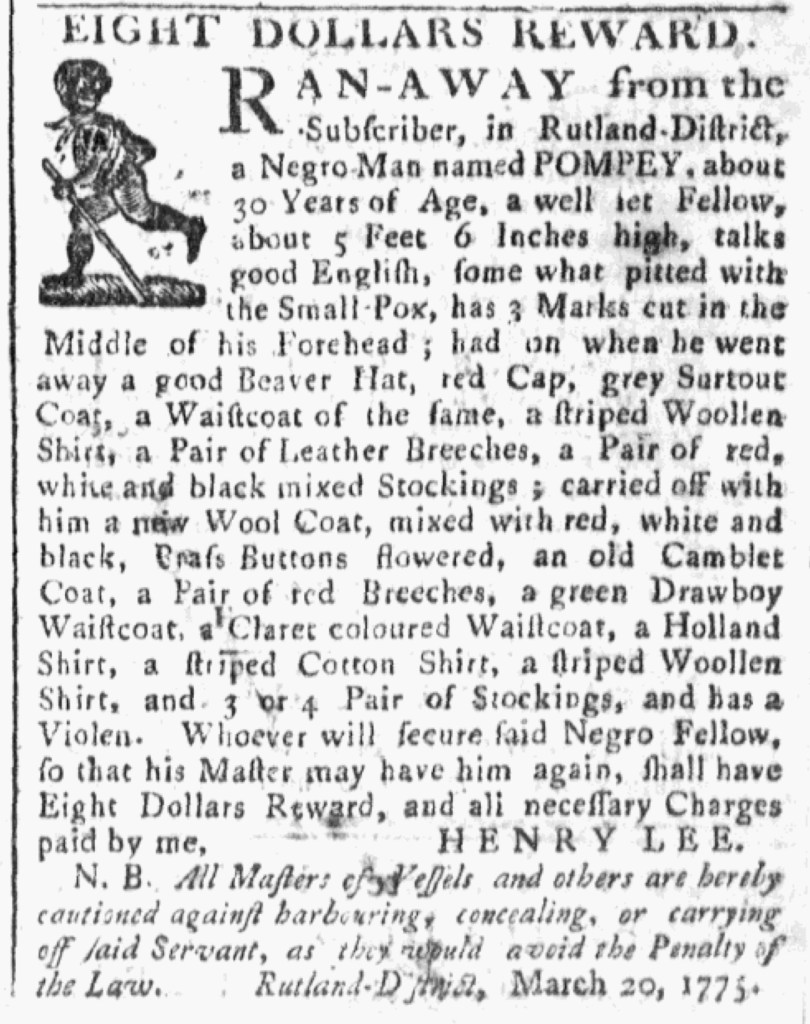
Newport Mercury (March 20, 1775).

**********

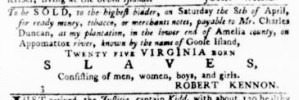
Supplement to the New-York Gazette and Weekly Mercury (March 20, 1775).

**********
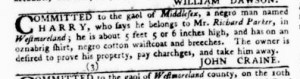
Supplement to the New-York Gazette and Weekly Mercury (March 20, 1775).

March 19

What was advertised in a colonial American newspaper 250 years ago this week?

New-York Journal (March 16, 1775).

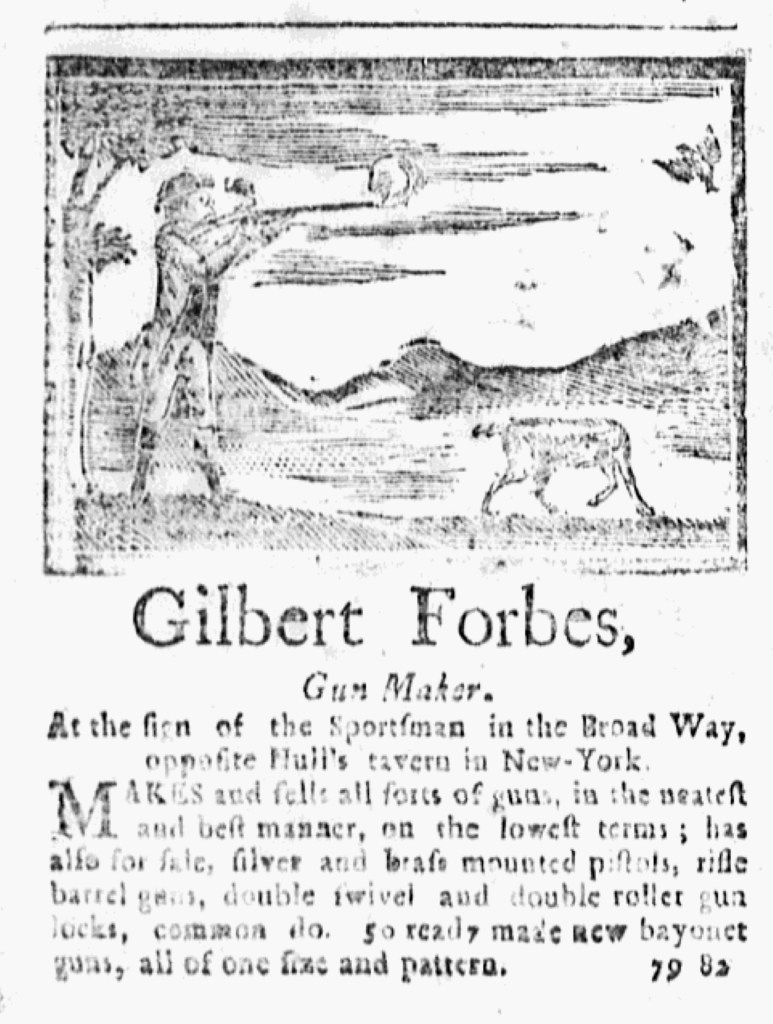
“Gilbert Forbes, Gun Maker, At the sign of the Sportsman.”

Gilbert Forbes, “Gun Maker, At the sign of the Sportsman in the Broad Way,” took to the pages of the New-York Journal to advertise “all sorts of guns” that he made “in the neatest and best manner “and sold “on the lowest terms” as spring approached in 1775.  He made some of the standard appeals deployed by artisans – quality and price – yet those were not the focal point of his advertisement.  A woodcut dominated his notice, accounting for more than half the space he purchased in the newspaper.

Commissioning the woodcut may very well have been worth the investment.  It almost certainly attracted the attention of readers, not only because it appeared on the first page of the March 16 edition.  The image depicted a scene of a well-dressed gentleman firing a gun, a bird plummeting out of the sky, and a hunting dog waiting below.  A puff of smoke wafted out of the barrel of the gun, capturing the moment just after the gentleman pulled the trigger.  Such a scene differed dramatically from other images that appeared in newspaper advertisements during the era of the American Revolution.  When advertisers commissioned woodcuts, they usually requested static images that corresponded to some aspect of their business, most often replicating their shop sign or showing an item that they made or sold at their shop.  For instance, an image of a fish adorned an advertisement for “CORNISH’s New-England FISH HOOKS” in the Massachusetts Spy and an image of a spinning wheel appeared in James Cunning’s advertisement for dry goods he sold “At the Sign of the SPINNING-WHEEL” in the Pennsylvania Journal.  In contrast, Forbes provided a scene in motion, distinguishing his advertisement from others.

Relatively few advertisements featured images at all.  Those that did most often incorporated stock images of ships at sea, houses, horses, or enslaved people, each of them provided by the printer.  Occasionally, advertisers commissioned woodcuts intended exclusively for their own use.  Among that small number, an image of a scene, one that invited viewers to imagine events in motion, was exceptionally rare.  As such, it demanded attention.

March 18

What was advertised in a colonial American newspaper 250 years ago today?

Providence Gazette (March 18, 1775).

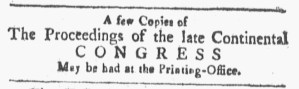
“The Proceedings of the late Continental CONGRESS.”

It was a brief yet important notice: “A few Copies of the Proceedings of the late Continental CONGRESS May be had at the Printing-Office.”  It was the first advertisement that appeared in the March 18, 1775, edition of the Providence Gazette, immediately following the local news.  During the era of the American Revolution, printers often gave advertisements they considered significant, often advertisements for political pamphlets and other publications, that privileged place.  Such notices marked a transition between news selected by the printer and other content submitted by advertisers.  Printers may have expected that readers were more likely to give their attention to notices that followed (or even appeared to continue) the news than if they had been interspersed among other advertisements.

John Carter, the printer of the Providence Gazette, stocked a variety of political publications at his printing office “at Shakespear’s Head, in Meeting-Street, near the Court-House.”  He previously advertised “EXTRACTS From the VOTES and PROCEEDINGS of the AMERICAN CONTINENTAL CONGRESS.”  Once the First Continental Congress concluded its meetings in Philadelphia at the end of October 1774, printers in many towns, including Carter, published and advertised local editions of the Extracts to supplement coverage provided in their newspapers.  Not nearly as many printers, however, published the “JOURNAL OF THE PROCEEDINGS OF THE CONGRESS.”  William Bradford and Thomas Bradford, the printers of the Pennsylvania Journal, published a Philadelphia edition.  Hugh Gaine, the printer of the New-York Gazette and Weekly Mercury, published another edition.  Printers and booksellers in other cities and towns apparently acquired copies of the Journal from the Bradfords or from Gaine rather than devoting resources to producing local editions.  They believed that a market existed for that publication, even if local customers demanded only “A few Copies” to read along with the Extracts that provided so much information about the work of the First Continental Congress.  As the imperial crisis intensified in the first months of 1775, Carter suspected that readers of the Providence Gazette might desire their own copies of the Journal.

Slavery Advertisements Published March 18, 1775

The Slavery Adverts 250 Project chronicles the role of newspaper advertising in perpetuating slavery in the era of the American Revolution. The project seeks to reveal the ubiquity of slavery in eighteenth-century life from New England to Georgia by republishing advertisements about enslaved people – for sale as individuals or in groups, wanted to purchase or for hire for short periods, runaways who liberated themselves, and those who were subsequently captured and confined in jails and workhouses – in daily digests on this site as well as in real time via the @SlaveAdverts250 Twitter feed, utilizing twenty-first-century media to stand in for the print media of the eighteenth century.

The project aims to provide modern audiences with a sense of just how often colonizers encountered these advertisements in their daily lives. Enslaved men, women, and children appeared in print somewhere in the colonies almost every single day. Those advertisements served as a constant backdrop for social, cultural, economic, and political life in colonial and revolutionary America. Colonizers who did not purport to own enslaved people were still confronted with slavery as well as invited to maintain the system by purchasing enslaved men, women, and children or assisting in the capture of so-called “runaways” who sought to free themselves from bondage. The frequency of these newspaper advertisements suggests just how embedded slavery was in colonial and revolutionary American culture in everyday interactions beyond the printed page.

These advertisements also testify to the experiences of enslaved men, women, and children, though readers must consider that those experiences have been remediated through descriptions offered by enslavers rather than enslaved people themselves. Often unnamed in the advertisements, enslaved men, women, and children were not invisible or unimportant in early America.

These advertisements appeared in colonial American newspapers 250 years ago today.

Pennsylvania Ledger (March 18, 1775).

**********
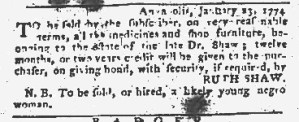
Providence Gazette (March 18, 1775).

**********
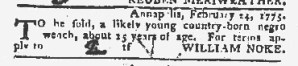
Virginia Gazette [Dixon and Hunter] (March 18, 1775).

**********
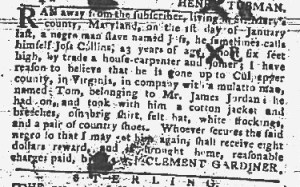
Virginia Gazette [Dixon and Hunter] (March 18, 1775).

**********
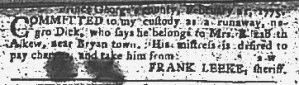
Virginia Gazette [Dixon and Hunter] (March 18, 1775).

**********
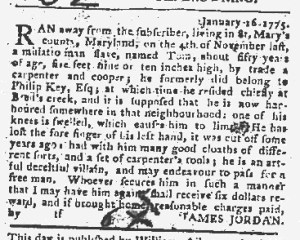
Virginia Gazette [Dixon and Hunter] (March 18, 1775).

**********

Virginia Gazette [Dixon and Hunter] (March 18, 1775).

**********

Virginia Gazette [Dixon and Hunter] (March 18, 1775).

**********

Virginia Gazette [Dixon and Hunter] (March 18, 1775).

March 17

What was advertised in a colonial American newspaper 250 years ago today?

Massachusetts Gazette and Boston Weekly News-Letter (March 17, 1775).

“AN ORATION … to commemorate the bloody Tragedy of March 5th 1770.”

In the spring of 1771, patriots marked the first anniversary of the “BLOODY TRAGEDY” now known as the Boston Massacre with “AN ORATION Delivered … at the Request of the Inhabitants of the Town of Boston … By JAMES LOVELL.”  That started an annual tradition, with Joseph Warren giving the oration in 1772, Benjamin Church in 1773, and John Hancock in 1774.  Gathering for the oration became an annual ritual.  So did publishing and marketing it.

For the fifth anniversary, the “ORATION … to commemorate the bloody Tragedy of March 5th 1770” was once again “delivered by JOSEPH WARREN.”  Less than two weeks later, advertisements in the March 17 edition of the Massachusetts Gazette and Boston Weekly News-Letter informed readers where they could acquire copies.  One indicated that Benjamin Edes and John Gill, the printers of the Boston-Gazette, sold the oration, implying that they also published it.  According to the imprint, Edes and Gill printed the address in partnership with Joseph Greenleaf, the proprietor of the Royal American Magazine.

Another advertisement gave readers another option: “In the MASSACHUSETTS SPY, of this Day is published, the WHOLE of the ORATION, delivered by JOSEPH WARREN, Esq; on March 6th , 1775, to commemorate the bloody Tragedy of March 5th, 1770.”  Isaiah Thomas, the printer of the Massachusetts Spy, did indeed devote three of the four columns of the third page of his newspaper to Warren’s oration.  In an introduction, he reported that it was “this day published, in a pamphlet” and available for sale in addition to appearing in the newspaper.  The printer offered multiple ways for readers to engage with the oration.  He (and Edes and Gill and Greenleaf) also offered consumers an opportunity to purchase a commemorative item.  Readers who previously purchased the orations by Lovell, Warren, Church, and Hancock on previous anniversaries may have been motivated to add to their collections.

The printer of the Massachusetts Gazette and Boston Weekly News-Letter gave the advertisements a privileged place, likely intended to increase the chances that readers took note of them.  They appeared one after the other immediately after the weekly account of local marriages and deaths.  That meant that the advertisements served as a transition between news items and paid notices.  Readers who perused the news yet merely glanced through the advertisements may have been more likely to take note of these first notices as they realized that the remainder of the page featured advertising.  A manicule also helped call attention to them, signaling their importance in a town experiencing the distresses of the Boston Port Act and the other Coercive Acts.

Slavery Advertisements Published March 17, 1775

The Slavery Adverts 250 Project chronicles the role of newspaper advertising in perpetuating slavery in the era of the American Revolution. The project seeks to reveal the ubiquity of slavery in eighteenth-century life from New England to Georgia by republishing advertisements about enslaved people – for sale as individuals or in groups, wanted to purchase or for hire for short periods, runaways who liberated themselves, and those who were subsequently captured and confined in jails and workhouses – in daily digests on this site as well as in real time via the @SlaveAdverts250 Twitter feed, utilizing twenty-first-century media to stand in for the print media of the eighteenth century.

The project aims to provide modern audiences with a sense of just how often colonizers encountered these advertisements in their daily lives. Enslaved men, women, and children appeared in print somewhere in the colonies almost every single day. Those advertisements served as a constant backdrop for social, cultural, economic, and political life in colonial and revolutionary America. Colonizers who did not purport to own enslaved people were still confronted with slavery as well as invited to maintain the system by purchasing enslaved men, women, and children or assisting in the capture of so-called “runaways” who sought to free themselves from bondage. The frequency of these newspaper advertisements suggests just how embedded slavery was in colonial and revolutionary American culture in everyday interactions beyond the printed page.

These advertisements also testify to the experiences of enslaved men, women, and children, though readers must consider that those experiences have been remediated through descriptions offered by enslavers rather than enslaved people themselves. Often unnamed in the advertisements, enslaved men, women, and children were not invisible or unimportant in early America.

These advertisements appeared in colonial American newspapers 250 years ago today.

South-Carolina and American General Gazette (March 17, 1775).

**********

South-Carolina and American General Gazette (March 17, 1775).

**********

South-Carolina and American General Gazette (March 17, 1775).

**********

South-Carolina and American General Gazette (March 17, 1775).

**********

South-Carolina and American General Gazette (March 17, 1775).

**********

South-Carolina and American General Gazette (March 17, 1775).

**********

South-Carolina and American General Gazette (March 17, 1775).

**********

South-Carolina and American General Gazette (March 17, 1775).

**********

South-Carolina and American General Gazette (March 17, 1775).

**********

South-Carolina and American General Gazette (March 17, 1775).

**********

South-Carolina and American General Gazette (March 17, 1775).

**********

South-Carolina and American General Gazette (March 17, 1775).

**********

South-Carolina and American General Gazette (March 17, 1775).

**********

South-Carolina and American General Gazette (March 17, 1775).

**********

South-Carolina and American General Gazette (March 17, 1775).

**********

South-Carolina and American General Gazette (March 17, 1775).

**********

Virginia Gazette [Purdie] (March 17, 1775).

March 16

What was advertised in a colonial American newspaper 250 years ago today?

Maryland Gazette (March 16, 1775).

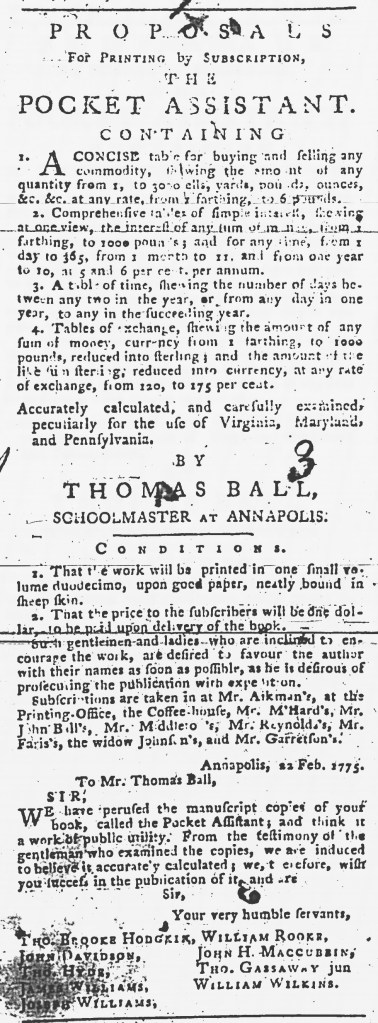
“WE have perused the manuscript copies of your book … and think it a work of public utility.”

Thomas Ball, a schoolmaster in Annapolis, had an entrepreneurial spirit.  He wrote and distributed subscription proposals for “THE POCKET ASSISTANT,” a reference manual that included a “CONCISE table for buying and selling any commodity … at any rate,” “Comprehensive tables of simple interest,” a “table of time, shewing the number of days between any two in the year, or from any day in one yea, to any in the succeeding year,” and “Tables of exchange.”  Merchants, brokers, shopkeepers, and others would certainly find each of those calculations helpful when conducting business.

Ball claimed that each table as “Accurately calculated and carefully examined” so subscribers could trust them.  To that end, he added an endorsement from nine residents of Annapolis after the “CONDITIONS” for subscribing.  “WE have perused the manuscript copies of your book, called the Pocket Assistant,” they declared, “and think it a work of public utility.  From the testimony of the gentleman who examined the copies, we are induced to believe it accurately calculated; we, therefore, wish you success in the publication of it.”  Ball engaged in a bit of sleight of hand: the signatories did not report that they had confirmed the calculations themselves, only that they trusted the unnamed “gentleman” who had looked over them.  Still, Ball considered that recognition significant enough that it might sway prospective subscribers to reserve copies so he could move forward with the project.

The schoolmaster also enlisted the assistance of several local agents who accepted subscriptions on his behalf.  Subscribers could submit their names at popular places for doing business, including the coffeehouse where merchants regularly gathered and the printing office where Anne Catharine Greene and Son published the Maryland Gazette, as well as at William Aikman’s circulating library.  Seven other men and women also took the names of subscribers, though none of them collected any money.  Subscribers only paid “upon delivery of the book,” provided that the proposals generated enough interest to justify Ball taking the “small volume” to press.  Even a carefully orchestrated marketing campaign, however, did not guarantee success.  Many subscription proposals did not result in publication.  Unfortunately for Ball, it does not appear that his Pocket Assistant made it to press.

Slavery Advertisements Published March 16, 1775

The Slavery Adverts 250 Project chronicles the role of newspaper advertising in perpetuating slavery in the era of the American Revolution. The project seeks to reveal the ubiquity of slavery in eighteenth-century life from New England to Georgia by republishing advertisements about enslaved people – for sale as individuals or in groups, wanted to purchase or for hire for short periods, runaways who liberated themselves, and those who were subsequently captured and confined in jails and workhouses – in daily digests on this site as well as in real time via the @SlaveAdverts250 Twitter feed, utilizing twenty-first-century media to stand in for the print media of the eighteenth century.

The project aims to provide modern audiences with a sense of just how often colonizers encountered these advertisements in their daily lives. Enslaved men, women, and children appeared in print somewhere in the colonies almost every single day. Those advertisements served as a constant backdrop for social, cultural, economic, and political life in colonial and revolutionary America. Colonizers who did not purport to own enslaved people were still confronted with slavery as well as invited to maintain the system by purchasing enslaved men, women, and children or assisting in the capture of so-called “runaways” who sought to free themselves from bondage. The frequency of these newspaper advertisements suggests just how embedded slavery was in colonial and revolutionary American culture in everyday interactions beyond the printed page.

These advertisements also testify to the experiences of enslaved men, women, and children, though readers must consider that those experiences have been remediated through descriptions offered by enslavers rather than enslaved people themselves. Often unnamed in the advertisements, enslaved men, women, and children were not invisible or unimportant in early America.

These advertisements appeared in colonial American newspapers 250 years ago today.

Maryland Gazette (March 16, 1775).

**********

Maryland Gazette (March 16, 1775).

**********

Maryland Gazette (March 16, 1775).

**********

Maryland Gazette (March 16, 1775).

**********

Maryland Gazette (March 16, 1775).

**********

Maryland Gazette (March 16, 1775).

**********

Maryland Gazette (March 16, 1775).

**********

Maryland Gazette (March 16, 1775).

**********

New-York Journal (March 16, 1775).

**********

New-York Journal (March 16, 1775).

**********

Supplement to the New-York Journal (March 16, 1775).

**********

Supplement to Rivington’s New-York Gazetteer (March 16, 1775).

**********

Supplement to Rivington’s New-York Gazetteer (March 16, 1775).

**********

Supplement to Rivington’s New-York Gazetteer (March 16, 1775).

**********

Supplement to Rivington’s New-York Gazetteer (March 16, 1775).

**********

Virginia Gazette [Pinkney] (March 16, 1775).

**********

Virginia Gazette [Pinkney] (March 16, 1775).

**********

Virginia Gazette [Pinkney] (March 16, 1775).

**********

Virginia Gazette [Pinkney] (March 16, 1775).

March 15

What was advertised in a colonial American newspaper 250 years ago today?

Essex Journal (March 15, 1775).

The Sign of the GOLDEN EAGLE.”

In an era before standardized street numbers, colonizers used a variety of methods for giving directions and marking locations.  For instance, the colophon for the Essex Gazette noted that Ezra Lunt and Henry-Walter Tinges ran their printing office in “KING-STREET, opposite to the Rev. Mr. PARSONS’s Meeting-House” in Newburyport.  Some of the advertisements in the March 15, 1775, edition of their newspaper also gave directions in relation to other locations.  Robert Fowle, a stonecutter from Boston, advised prospective customers that he now had a workshop “next to Mr. Jonathan Titcomb’s store, near Somersby’s Landing,” places that he believed were familiar to local readers.  John Vinal ran a school “nearly opposite Mr. Davenport’s Tavern.”  Thomas Mewse gave even more elaborate directions to the site where he “CUTS Stamps and prepares a Liquid for Marking” textiles with the names of the owners, stating that he “may be spoke with at Mr. Jacksons, next door to Dr. Coffin’s, in Rogers’s-street, Newbury-Port.”

Another advertiser relied on a shop sign to mark the location where customers could purchase “English CHEESE,” “A good Assortment of English and Piece Goods, Iron-mongery, Cutlery and Braziery Ware,” and other merchandise: “the Sign of the GOLDEN EAGLE, Near the Court House.”  References to shop signs did not appear in advertisements in the Essex Journal as often as in advertisements inserted in newspapers published in Boston, New York, and Philadelphia, in part because that newspaper carried fewer paid notices than the others.  In addition, Newburyport was a smaller town with fewer businesses that relied on such devices to mark their locations.  Yet an advertisement that directed readers to “the Sign of the GOLDEN EAGLE” demonstrates that shop signs became part of the visual culture that colonizers encountered as they traversed the streets of smaller ports, not just major urban centers.  Few shop signs from the colonial era survive today.  Newspaper advertisements testify to the existence of this method that merchants, shopkeepers, and artisans used to establish commercial identities and mark their locations.

Slavery Advertisements Published March 15, 1775

The Slavery Adverts 250 Project chronicles the role of newspaper advertising in perpetuating slavery in the era of the American Revolution. The project seeks to reveal the ubiquity of slavery in eighteenth-century life from New England to Georgia by republishing advertisements about enslaved people – for sale as individuals or in groups, wanted to purchase or for hire for short periods, runaways who liberated themselves, and those who were subsequently captured and confined in jails and workhouses – in daily digests on this site as well as in real time via the @SlaveAdverts250 Twitter feed, utilizing twenty-first-century media to stand in for the print media of the eighteenth century.

The project aims to provide modern audiences with a sense of just how often colonizers encountered these advertisements in their daily lives. Enslaved men, women, and children appeared in print somewhere in the colonies almost every single day. Those advertisements served as a constant backdrop for social, cultural, economic, and political life in colonial and revolutionary America. Colonizers who did not purport to own enslaved people were still confronted with slavery as well as invited to maintain the system by purchasing enslaved men, women, and children or assisting in the capture of so-called “runaways” who sought to free themselves from bondage. The frequency of these newspaper advertisements suggests just how embedded slavery was in colonial and revolutionary American culture in everyday interactions beyond the printed page.

These advertisements also testify to the experiences of enslaved men, women, and children, though readers must consider that those experiences have been remediated through descriptions offered by enslavers rather than enslaved people themselves. Often unnamed in the advertisements, enslaved men, women, and children were not invisible or unimportant in early America.

These advertisements appeared in colonial American newspapers 250 years ago today.

Connecticut Journal (March 15, 1775).

**********

Pennsylvania Journal (March 15, 1775).

**********

Pennsylvania Journal (March 15, 1775).