Slavery Advertisements Published October 15, 1772

GUEST CURATOR: Julia Tardugno

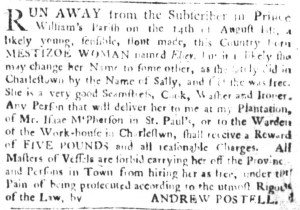
The Slavery Adverts 250 Project chronicles the role of newspaper advertising in perpetuating slavery in the era of the American Revolution. The project seeks to reveal the ubiquity of slavery in eighteenth-century life from New England to Georgia by republishing advertisements about enslaved people – for sale as individuals or in groups, wanted to purchase or for hire for short periods, runaways who liberated themselves, and those who were subsequently captured and confined in jails and workhouses – in daily digests on this site as well as in real time via the @SlaveAdverts250 Twitter feed, utilizing twenty-first-century media to stand in for the print media of the eighteenth century.

The project aims to provide modern audiences with a sense of just how often colonizers encountered these advertisements in their daily lives. Enslaved men, women, and children appeared in print somewhere in the colonies almost every single day. Those advertisements served as a constant backdrop for social, cultural, economic, and political life in colonial and revolutionary America. Colonizers who did not purport to own enslaved people were still confronted with slavery as well as invited to maintain the system by purchasing enslaved men, women, and children or assisting in the capture of so-called “runaways” who sought to free themselves from bondage. The frequency of these newspaper advertisements suggests just how embedded slavery was in colonial and revolutionary American culture in everyday interactions beyond the printed page.

These advertisements also testify to the experiences of enslaved men, women, and children, though readers must consider that those experiences have been remediated through descriptions offered by enslavers rather than enslaved people themselves. Often unnamed in the advertisements, enslaved men, women, and children were not invisible or unimportant in early America.

From compiling an archive of digitized eighteenth-century newspapers to identifying advertisements about enslaved men, women, and children in those newspapers to preparing images of each advertisement to posting this daily digest, Julia Tardugno served as guest curator for this entry. She completed this work as part of the Summer Scholars Program, funded by a fellowship from the D’Amour College of Liberal Arts and Sciences at Assumption University in Worcester, Massachusetts, in Summer 2022. 

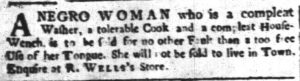
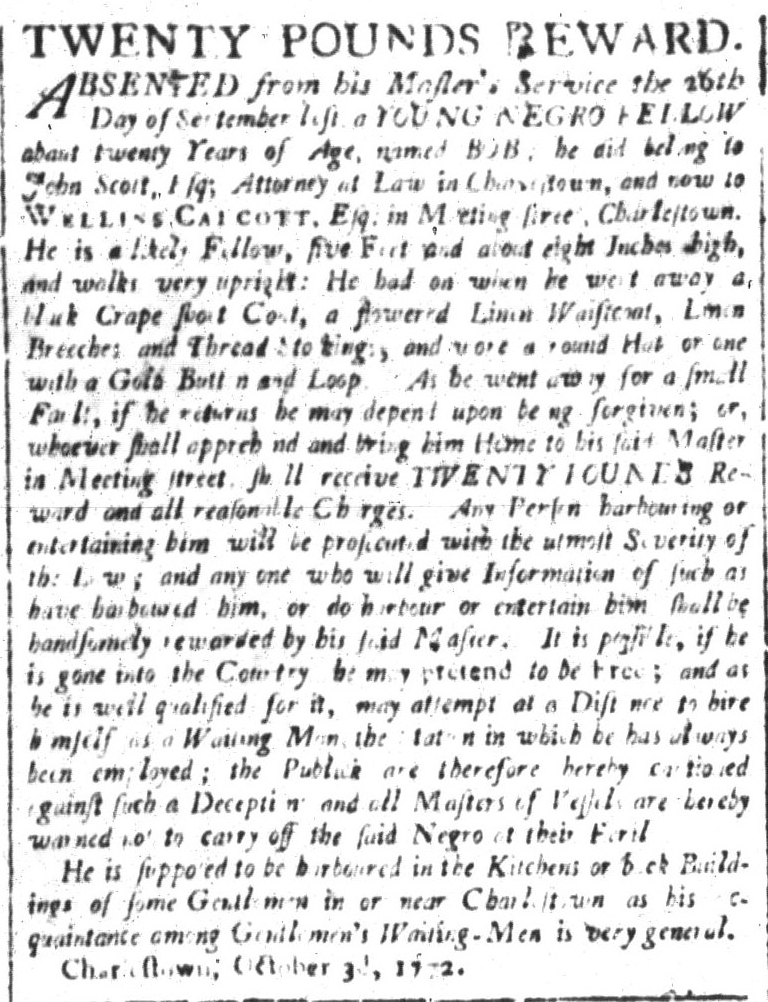
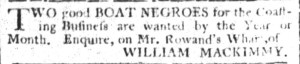
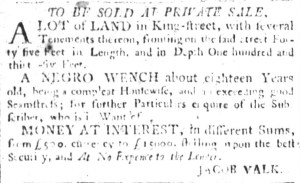
These advertisements appeared in colonial American newspapers 250 years ago today.

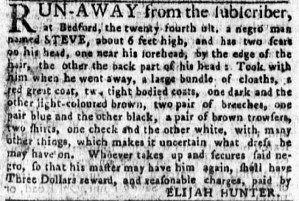
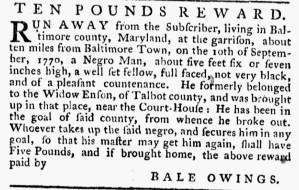
Maryland Gazette (October 15, 1772).

**********

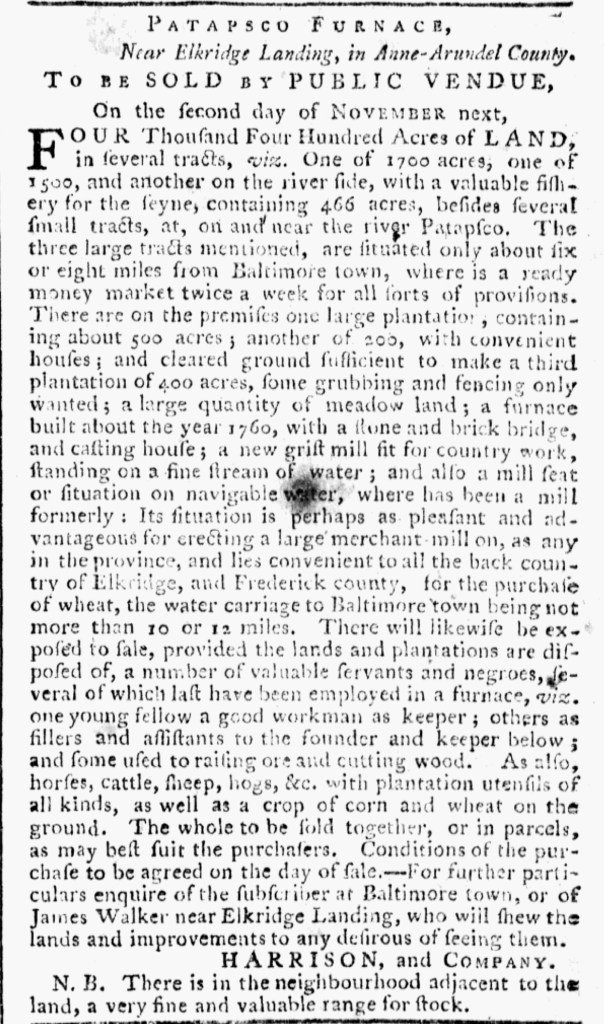
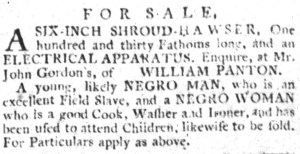
Maryland Gazette (October 15, 1772).

**********
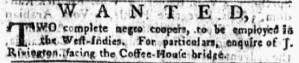
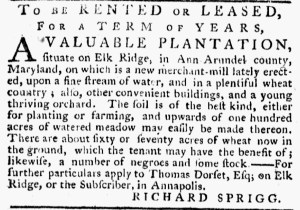
Maryland Gazette (October 15, 1772).

**********
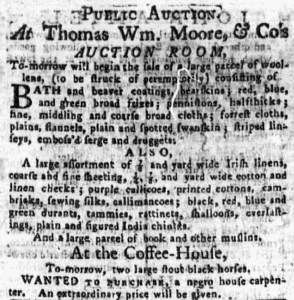
Maryland Gazette (October 15, 1772).

**********
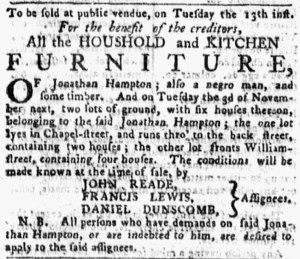
Maryland Gazette (October 15, 1772).

**********
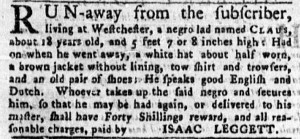
Maryland Gazette (October 15, 1772).

**********

Maryland Gazette (October 15, 1772).

**********
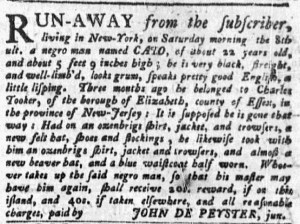
Maryland Gazette (October 15, 1772).

**********
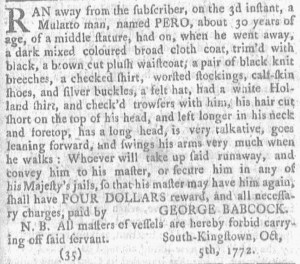
Massachusetts Gazette and Boston Weekly News-Letter (October 15, 1772).

**********

New-York Journal (October 15, 1772).

**********

New-York Journal (October 15, 1772).

**********
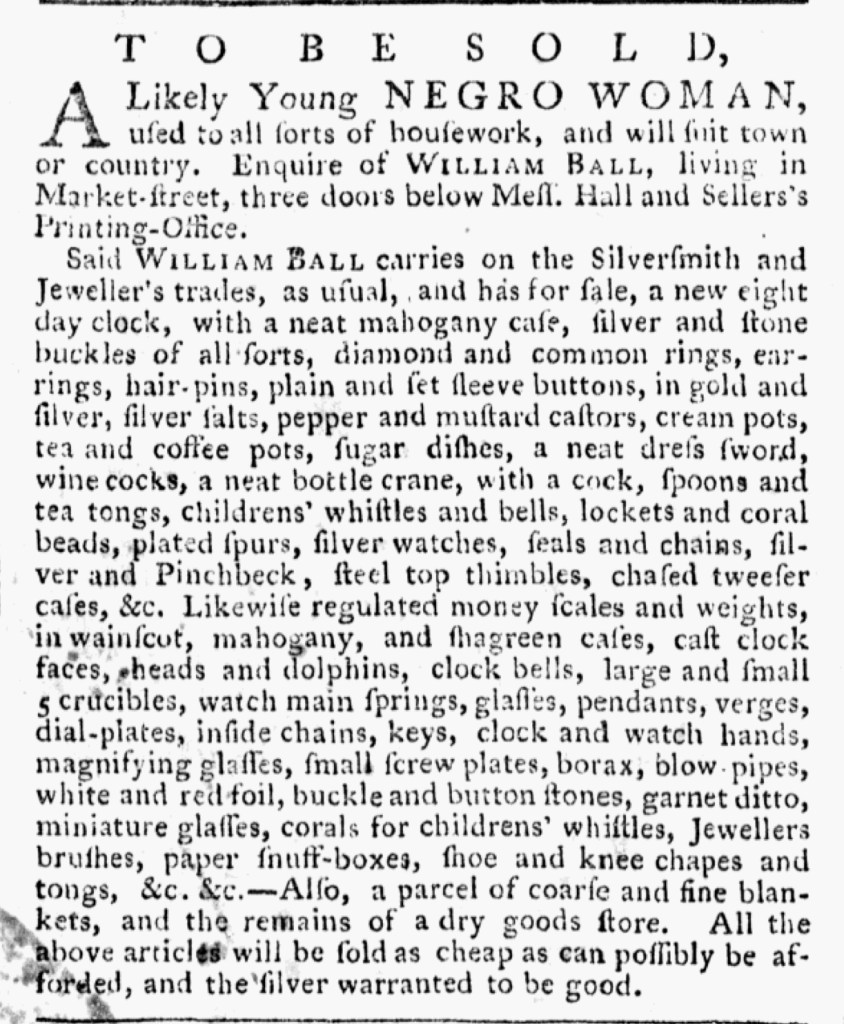
New-York Journal (October 15, 1772).

**********

New-York Journal (October 15, 1772).

**********

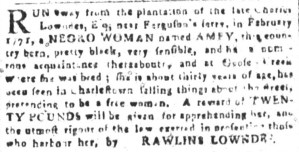
South-Carolina Gazette (October 15, 1772).

**********

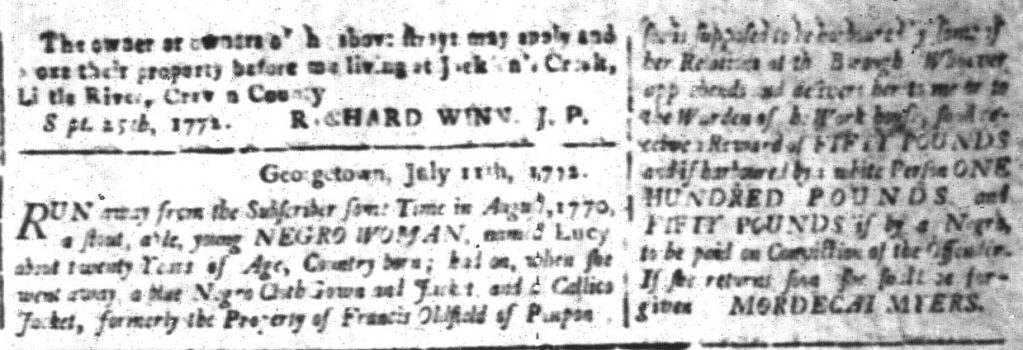
South-Carolina Gazette (October 15, 1772).

**********

South-Carolina Gazette (October 15, 1772).

**********

South-Carolina Gazette (October 15, 1772).

**********

South-Carolina Gazette (October 15, 1772).

**********

South-Carolina Gazette (October 15, 1772).

**********

South-Carolina Gazette (October 15, 1772).

**********

South-Carolina Gazette (October 15, 1772).

**********

South-Carolina Gazette (October 15, 1772).

**********

South-Carolina Gazette (October 15, 1772).

**********

South-Carolina Gazette (October 15, 1772).

**********

Supplement to the South-Carolina Gazette (October 15, 1772).

**********

Supplement to the South-Carolina Gazette (October 15, 1772).

**********

Supplement to the South-Carolina Gazette (October 15, 1772).

**********

Virginia Gazette [Purdie and Dixon] (October 15, 1772).

**********

Virginia Gazette [Purdie and Dixon] (October 15, 1772).

**********

Virginia Gazette [Purdie and Dixon] (October 15, 1772).

**********

Virginia Gazette [Purdie and Dixon] (October 15, 1772).

**********

Virginia Gazette [Purdie and Dixon] (October 15, 1772).

**********

Virginia Gazette [Purdie and Dixon] (October 15, 1772).

**********

Virginia Gazette [Purdie and Dixon] (October 15, 1772).

**********

Virginia Gazette [Purdie and Dixon] (October 15, 1772).

**********

Virginia Gazette [Purdie and Dixon] (October 15, 1772).

**********

Virginia Gazette [Purdie and Dixon] (October 15, 1772).

**********

Virginia Gazette [Purdie and Dixon] (October 15, 1772).

**********

Virginia Gazette [Purdie and Dixon] (October 15, 1772).

**********

Virginia Gazette [Purdie and Dixon] (October 15, 1772).

**********

Virginia Gazette [Rind] (October 15, 1772).

**********

Virginia Gazette [Rind] (October 15, 1772).

**********

Virginia Gazette [Rind] (October 15, 1772).

**********

Virginia Gazette [Rind] (October 15, 1772).

**********

Virginia Gazette [Rind] (October 15, 1772).

**********

Virginia Gazette [Rind] (October 15, 1772).

**********

Virginia Gazette [Rind] (October 15, 1772).

**********

Virginia Gazette [Rind] (October 15, 1772).

October 14

What was advertised in a colonial American newspaper 250 years ago today?

Pennsylvania Journal (October 14, 1772).

“Having for some years operated for, and with the most proficient of the art, in the above-mentioned metropolis (of London).”

When William Johnson, a “GLOVER and BREECHES-MAKER,” arrived in Philadelphia in the fall of 1772, he placed advertisements in the Pennsylvania Journal to introduce himself to the community and invite prospective clients to visit the shop he opened on Front Street.  Like many other artisans who migrated across the Atlantic, Johnson emphasized his experience working in London, the cosmopolitan center of the empire.  Until he had time to establish his reputation in the local market, he depended on his connections to London to sell his services.  In the headline for his advertisements, he described himself as “lately arrived from LONDON.”  In the nota bene that concluded his notice, Johnson declared that he “hopes himself capable to give all possible satisfaction, with respect to the neatness of the fitting, and execution of the workmanship; having for some years operated for, and with the most proficient of the art, in the above-mentioned metropolis (of London).”  He opened and closed his advertisement with references to London.

Johnson also intended for the timing of his arrival to resonate with prospective clients.  Having “lately arrived from LONDON” suggested that he was familiar with the most recent styles in that “metropolis.”  His clients could depend on getting news and advice about current trends, helping them to keep up with new tastes on the other side of the Atlantic and perhaps stay ahead of friends and acquaintances in Philadelphia.  Some artisans continued to promote their connections to London long after they relocated to the colonies.  Johnson provided details that made it possible for prospective clients to determine for themselves that he did indeed recently arrive in the city and, by extension, his knowledge of fashions in London was as current as possible.  He reported that he “lately arrived from LONDON, by Capt. SPARKS.”  The “ship Mary and Elizabeth, J. Sparks from London” appeared among the “ARRIVALS” in the shipping news from the “Custom-House, Philadelphia,” in the September 30 edition of the Pennsylvania Journal.  When Johnson’s advertisement ran in the October 14 edition, he had been in the city for less than three weeks.  In addition, merchants, shopkeepers, and others also referenced the arrival of the ship in their advertisements.  Randle Mitchell, for instance, stated that he “Just imported” new merchandise “in the Elizabeth and Mary, Capt. Sparks, from London.”  Robert Bass, an apothecary, stocked new medicines “JUST IMPORTED in the Mary and Elizabeth, Capt. Sparks from London.”

As yet unknown to prospective clients in Philadelphia, Johnson attempted to leverage his experience in the “metropolis” of London to convince prospective clients to avail themselves of his services.  That experience garnered proficiency in his craft, including “the neatness of the firring, and the execution of the workmanship,” while also giving him access to current styles in the most fashionable city in the empire.  He included the name of the captain of the vessel that transported him across the Atlantic as a means of confirming that he possessed recent knowledge of the latest trends.

Slavery Advertisements Published October 14, 1772

GUEST CURATOR: Julia Tardugno

The Slavery Adverts 250 Project chronicles the role of newspaper advertising in perpetuating slavery in the era of the American Revolution. The project seeks to reveal the ubiquity of slavery in eighteenth-century life from New England to Georgia by republishing advertisements about enslaved people – for sale as individuals or in groups, wanted to purchase or for hire for short periods, runaways who liberated themselves, and those who were subsequently captured and confined in jails and workhouses – in daily digests on this site as well as in real time via the @SlaveAdverts250 Twitter feed, utilizing twenty-first-century media to stand in for the print media of the eighteenth century.

The project aims to provide modern audiences with a sense of just how often colonizers encountered these advertisements in their daily lives. Enslaved men, women, and children appeared in print somewhere in the colonies almost every single day. Those advertisements served as a constant backdrop for social, cultural, economic, and political life in colonial and revolutionary America. Colonizers who did not purport to own enslaved people were still confronted with slavery as well as invited to maintain the system by purchasing enslaved men, women, and children or assisting in the capture of so-called “runaways” who sought to free themselves from bondage. The frequency of these newspaper advertisements suggests just how embedded slavery was in colonial and revolutionary American culture in everyday interactions beyond the printed page.

These advertisements also testify to the experiences of enslaved men, women, and children, though readers must consider that those experiences have been remediated through descriptions offered by enslavers rather than enslaved people themselves. Often unnamed in the advertisements, enslaved men, women, and children were not invisible or unimportant in early America.

From compiling an archive of digitized eighteenth-century newspapers to identifying advertisements about enslaved men, women, and children in those newspapers to preparing images of each advertisement to posting this daily digest, Julia Tardugno served as guest curator for this entry. She completed this work as part of the Summer Scholars Program, funded by a fellowship from the D’Amour College of Liberal Arts and Sciences at Assumption University in Worcester, Massachusetts, in Summer 2022. 

These advertisements appeared in colonial American newspapers 250 years ago today.

Pennsylvania Gazette (October 14, 1772).

**********

Pennsylvania Gazette (October 14, 1772).

**********

Pennsylvania Journal (October 14, 1772).

**********

Pennsylvania Journal (October 14, 1772).

October 13

What was advertised in a colonial American newspaper 250 years ago today?

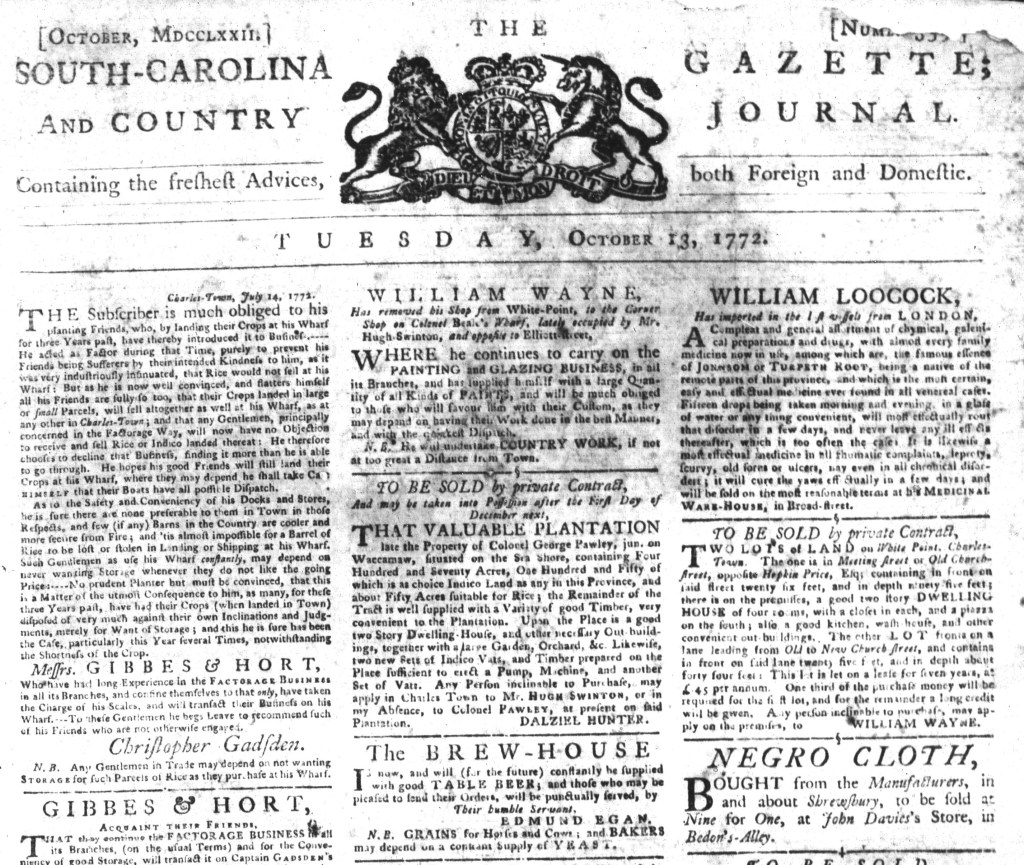
South-Carolina Gazette and Country Journal (October 13, 1772).

“He continues to carry on the PAINTING and GLAZING BUSINESS.”

Colonial printers often resorted to publishing advertising supplements to accompany their weekly newspapers that featured both news and paid notices.  This was especially true for newspapers in the largest port cities, Boston, Charleston, New York, and Philadelphia.  Each standard issue consisted of four pages created by printing two pages on each side of a broadsheet and then folding it in half.  When printers had sufficient additional content to justify the resources required to produce additional pages, they printed two- or four-page supplements.  Although news sometimes appeared in those supplements, additions, and extraordinary editions, they most often consisted of advertising.

That was not the case for the October 13, 1772, edition of the South-Carolina Gazette and Country Journal and the Addition that Charles Crouch distributed on the same day.  The bulk of the news appeared in the two-page Addition after Crouch devoted ten and a half of the twelve columns in the standard issue to paid notices, including more than a dozen that offered enslaved people for sale or offered rewards for the capture and return of enslaved people who liberated themselves by running away from those who held them in bondage.  Paid notices filled the entire first page below the masthead.  They also filled the entire third and fourth pages.  A short note, “For more London News, see the Addition,” appeared at the bottom of the first column of the second page, the only full column of news.  Halfway down the next column, a header for “NEW ADVERTISEMENTS” alerted readers to the content on the remainder of the page.

The two-page Addition gave three times as much space to news compared to the standard issue.  News that arrived via London, most of it extracts from letters composed in various cities on the European continent, filled the first page and overflowed onto the second.  A short proclamation from the governor of the colony ran as local news midway through the second column on the other side of the sheet.  Crouch managed to squeeze in a few more advertisements, including one that promoted a “COMPLETE GERMAN GRAMMAR” that he sold at his printing office.  Instead of an advertising supplement that accompanied the newspaper, the Addition amounted to a news supplement that accompanied an advertising leaflet.  In many instances, colonial newspapers were vehicles for delivering advertising.  That was especially true of the October 13 edition of the South-Carolina Gazette and Country Journal and its Addition.

Slavery Advertisements Published October 13, 1772

GUEST CURATOR: Julia Tardugno

The Slavery Adverts 250 Project chronicles the role of newspaper advertising in perpetuating slavery in the era of the American Revolution. The project seeks to reveal the ubiquity of slavery in eighteenth-century life from New England to Georgia by republishing advertisements about enslaved people – for sale as individuals or in groups, wanted to purchase or for hire for short periods, runaways who liberated themselves, and those who were subsequently captured and confined in jails and workhouses – in daily digests on this site as well as in real time via the @SlaveAdverts250 Twitter feed, utilizing twenty-first-century media to stand in for the print media of the eighteenth century.

The project aims to provide modern audiences with a sense of just how often colonizers encountered these advertisements in their daily lives. Enslaved men, women, and children appeared in print somewhere in the colonies almost every single day. Those advertisements served as a constant backdrop for social, cultural, economic, and political life in colonial and revolutionary America. Colonizers who did not purport to own enslaved people were still confronted with slavery as well as invited to maintain the system by purchasing enslaved men, women, and children or assisting in the capture of so-called “runaways” who sought to free themselves from bondage. The frequency of these newspaper advertisements suggests just how embedded slavery was in colonial and revolutionary American culture in everyday interactions beyond the printed page.

These advertisements also testify to the experiences of enslaved men, women, and children, though readers must consider that those experiences have been remediated through descriptions offered by enslavers rather than enslaved people themselves. Often unnamed in the advertisements, enslaved men, women, and children were not invisible or unimportant in early America.

From compiling an archive of digitized eighteenth-century newspapers to identifying advertisements about enslaved men, women, and children in those newspapers to preparing images of each advertisement to posting this daily digest, Julia Tardugno served as guest curator for this entry. She completed this work as part of the Summer Scholars Program, funded by a fellowship from the D’Amour College of Liberal Arts and Sciences at Assumption University in Worcester, Massachusetts, in Summer 2022. 

These advertisements appeared in colonial American newspapers 250 years ago today.

Connecticut Courant (October 13, 1772).

**********

South-Carolina Gazette and Country Journal (October 13, 1772).

**********

South-Carolina Gazette and Country Journal (October 13, 1772).

**********

South-Carolina Gazette and Country Journal (October 13, 1772).

**********

South-Carolina Gazette and Country Journal (October 13, 1772).

**********

South-Carolina Gazette and Country Journal (October 13, 1772).

**********

South-Carolina Gazette and Country Journal (October 13, 1772).

**********

South-Carolina Gazette and Country Journal (October 13, 1772).

**********

South-Carolina Gazette and Country Journal (October 13, 1772).

**********

South-Carolina Gazette and Country Journal (October 13, 1772).

**********

South-Carolina Gazette and Country Journal (October 13, 1772).

**********

South-Carolina Gazette and Country Journal (October 13, 1772).

**********

South-Carolina Gazette and Country Journal (October 13, 1772).

**********

South-Carolina Gazette and Country Journal (October 13, 1772).

**********

South-Carolina Gazette and Country Journal (October 13, 1772).

October 12

What was advertised in a colonial American newspaper 250 years ago today?

Boston-Gazette (October 12, 1772).

New Advertisements.”

Benjamin Edes and John Gill, printers of the Boston-Gazette, wanted to increase the chances that readers took notice of their call to settle accounts in the fall of 1772.  In the October 12 edition, they inserted an announcement that “ALL Persons indebted for this Paper, whose Accounts have been above 12 Months standing, are requested to make immediate Payment.”  The copy was standard for such notices, placed by printers throughout the colonies, but Edes and Gill deployed a format intended to increase the attention the notice received.  Decorative type enclosed the printers’ notice to delinquent subscribers within a border.  Edes and Gill did not however, devise that format for their own purposes.  Instead, they adopted a strategy already in use by some of their advertisers.  Herman Brimmer and Andrew Brimmer, for instance, enclosed “Variety of Goods,” the headline to their lengthy advertisement listing scores of items, within an ornate border.  Jonathan Williams, Jr., had a border around his entire advertisement.

Edes and Gill also selected an advantageous place on the page for their notice, inserting it at the top of the first column on the final page.  It appeared immediately below a headline for “New Advertisement,” another design element intended to direct attention to the printers’ call for subscribers to pay their bills.  That headline helped to distinguish advertisements on that page from others that ran on the second and third pages.  A brief note on the third page also aided Edes and Gill’s efforts to highlight their notice.  The advertisements on the third page commenced with instructions: “For New Advertisements, See last Page.”  The printers incorporated a variety of means of increasing the visibility of their notice. They exercised their prerogative in placing it first among the notices labeled “New Advertisements” and used notes elsewhere in the issue to direct readers to one of the only advertisements that featured a border composed of decorative type.  Edes and Gill used graphic design to demand attention for an otherwise mundane notice.

Slavery Advertisements Published October 12, 1772

GUEST CURATOR: Julia Tardugno

The Slavery Adverts 250 Project chronicles the role of newspaper advertising in perpetuating slavery in the era of the American Revolution. The project seeks to reveal the ubiquity of slavery in eighteenth-century life from New England to Georgia by republishing advertisements about enslaved people – for sale as individuals or in groups, wanted to purchase or for hire for short periods, runaways who liberated themselves, and those who were subsequently captured and confined in jails and workhouses – in daily digests on this site as well as in real time via the @SlaveAdverts250 Twitter feed, utilizing twenty-first-century media to stand in for the print media of the eighteenth century.

The project aims to provide modern audiences with a sense of just how often colonizers encountered these advertisements in their daily lives. Enslaved men, women, and children appeared in print somewhere in the colonies almost every single day. Those advertisements served as a constant backdrop for social, cultural, economic, and political life in colonial and revolutionary America. Colonizers who did not purport to own enslaved people were still confronted with slavery as well as invited to maintain the system by purchasing enslaved men, women, and children or assisting in the capture of so-called “runaways” who sought to free themselves from bondage. The frequency of these newspaper advertisements suggests just how embedded slavery was in colonial and revolutionary American culture in everyday interactions beyond the printed page.

These advertisements also testify to the experiences of enslaved men, women, and children, though readers must consider that those experiences have been remediated through descriptions offered by enslavers rather than enslaved people themselves. Often unnamed in the advertisements, enslaved men, women, and children were not invisible or unimportant in early America.

From compiling an archive of digitized eighteenth-century newspapers to identifying advertisements about enslaved men, women, and children in those newspapers to preparing images of each advertisement to posting this daily digest, Julia Tardugno served as guest curator for this entry. She completed this work as part of the Summer Scholars Program, funded by a fellowship from the D’Amour College of Liberal Arts and Sciences at Assumption University in Worcester, Massachusetts, in Summer 2022. 

These advertisements appeared in colonial American newspapers 250 years ago today.

Supplement to the Boston Evening-Boy (October 12, 1772).

**********

Massachusetts Gazette and Boston Post-Boy (October 12, 1772).

**********

Massachusetts Gazette and Boston Post-Boy (October 12, 1772).

**********

New-York Gazette and Weekly Mercury (October 12, 1772).

**********

New-York Gazette and Weekly Mercury (October 12, 1772).

**********

New-York Gazette and Weekly Mercury (October 12, 1772).

**********

New-York Gazette and Weekly Mercury (October 12, 1772).

**********

New-York Gazette and Weekly Mercury (October 12, 1772).

**********

Supplement to the New-York Gazette and Weekly Mercury (October 12, 1772).

**********

Supplement to the New-York Gazette and Weekly Mercury (October 12, 1772).

**********

Supplement to the New-York Gazette and Weekly Mercury (October 12, 1772).

**********

Newport Mercury (October 12, 1772).

**********

Newport Mercury (October 12, 1772).

**********

Newport Mercury (October 12, 1772).

**********

Pennsylvania Packet (October 12, 1772).

**********

Pennsylvania Packet (October 12, 1772).

**********

Supplement to the Pennsylvania Packet (October 12, 1772).

**********

Supplement to the Pennsylvania Packet (October 12, 1772).

**********

Supplement to the Pennsylvania Packet (October 12, 1772).

**********

Supplement to the Pennsylvania Packet (October 12, 1772).

**********

South-Carolina and American General Gazette (October 12, 1772).

**********

South-Carolina and American General Gazette (October 12, 1772).

**********

South-Carolina and American General Gazette (October 12, 1772).

**********

South-Carolina and American General Gazette (October 12, 1772).

**********

South-Carolina and American General Gazette (October 12, 1772).

**********

South-Carolina and American General Gazette (October 12, 1772).

**********

South-Carolina and American General Gazette (October 12, 1772).

**********

South-Carolina and American General Gazette (October 12, 1772).

**********

South-Carolina and American General Gazette (October 12, 1772).

**********

South-Carolina and American General Gazette (October 12, 1772).

**********

South-Carolina and American General Gazette (October 12, 1772).

**********

South-Carolina and American General Gazette (October 12, 1772).

October 11

What was advertised in a colonial American newspaper 250 years ago this week?

Massachusetts Spy (October 8, 1772).

“He has almost every Article usually enquired for in that way.”

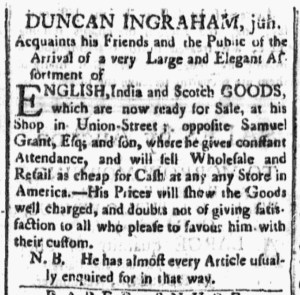
In the fall of 1772, Duncan Ingraham, Jr., took to the pages of the Massachusetts Spy to promote “a very Large and Elegant Assortment of ENGLISH, India and Scotch GOODS, which are now ready for Sale, at his Shop” on Union Street in Boston.  In an advertisement that ran in the October 8 edition, he made appeals to both price and choice in his efforts to entice consumers to shop at his establishment.  Ingraham made bold claims in both regards.  He trumpeted that he would “sell Wholesale and Retail as cheap for Cash [as] at any Store in America,” comparing his prices to those in other shops in Boston as well as Charleston, New York, Philadelphia, and other ports throughout the colonies.  Ingraham confidently stated that “His Prices will show the Goods well charged.”  In turn, he “doubts not of giving satisfaction to all who please to favour him with their custom.”

He had many competitors in Boston, including several who advertised in the Massachusetts Gazette and Boston Weekly News-Letter on the same day.  Herman Brimmer and Andrew Brimmer, Caleb Blanchard, Joshua Gardner, and William Jackson all placed advertisements that listed dozens of imported items available at their shops, demonstrating an array of choices for prospective customers.  The partnership of Amorys, Taylor, and Rogers also published what amounted to a catalog of their merchandise under a headline that promised “GOODS EXTREMELY CHEAP.”  Ingraham adopted a different strategy, choosing instead to market his “very Large and Elegant Assortment” of goods with a nota bene in which he declared that he “has almost every Article usually enquired for in that way.”  He left it to readers to imagine his merchandise on their own.  Even if he did not happen to carry an item a shopper desired, if such a bold claim managed to get them into his store, then he still had an opportunity to make a sale by recommending alternatives.

Ingraham may not have wished to pay to insert a lengthy list of his inventory in the public prints, but that did not mean that he did not attend to consumer choice in an effort to make himself competitive with other merchants and shopkeepers.  In some ways, he invocation of “almost every Article usually enquired for” made even bigger claims than the extensive lists in other advertisements.

October 10

What was advertised in a colonial American newspaper 250 years ago today?

Providence Gazette (October 10, 1772).

“The Shop of Holden and Grainger, Taylors, was broke open.”

Advertisements in eighteenth-century newspapers sometimes served as precursors to police blotters that recorded crimes in later centuries.  In particular, they most often provided details about burglaries, in part because the victims offered rewards for the return of stolen goods and the conviction of the culprits.

Two burglaries occurred in Providence on the night of September 22, 1772.  Perhaps the same “Thief or Thieves” perpetrated both crimes.  William Barton reported his shop “was broke open, and robbed of … five new Beaver Hats, not coloured; one second handed Hat, cut in the new Fashion; and one Cloth coloured Surtout, with Basket Buttons.”  Similarly, tailors Holden and Grainger declared that their shop “was broke open” and an even greater array of items taken.  The details that the tailors provided would have made it easy to identify the stolen goods, including “one Suit of Claret coloured Broadcloth, not finished, the Lining nearly of the same Colour, with Leather Pockets, a Pocket in the Lining of the left Forebody, having Gold Basket Buttons, and Gold Knee-straps, the Breeches not lined” and “a light grey Broadcloth lapelled Jacket, with Basket Buttons of the same Colour, partly worn, having new Lining to the Skirts, and Tow-cloth Pockets.”  Holden and Grainger also stated that “the same Shop was broke open” near the end of August.  Unfortunately for Barton, that had been the case for his shop as well.  The “Thief or Thieves” may have kept some or all of the stolen items for themselves, but they more likely fenced them.  The articles then entered what Serena Zabin has called an “informal economy” that made participating in the consumer revolution more accessible to the lower sorts – free, indentured, and enslaved – who did not have the means to purchase new goods directly from shopkeepers who retailed them or artisans who produced them.

Barton offered a reward of fifteen dollars for apprehending the burglars or five dollars for recovering the stolen articles.  Similarly, Holden and Grainger promised twelve dollars to “Whoever apprehends the Thief or Thieves” and six dollars for the stolen items.  They also decided to take advantage of placing their notice in the Providence Gazette by concluding with a nota bene that informed the public that they “have for Sale choice Deer Skins, and ready made Breeches, cheap for Cash or Grain.”  Like many other advertisers, they placed an advertisement with more than one purpose.  As long as they had the public’s attention, they figured they could benefit from promoting their services in addition to seeking assistance in recovering their stolen goods.

Slavery Advertisements Published October 10, 1772

GUEST CURATOR: Julia Tardugno

The Slavery Adverts 250 Project chronicles the role of newspaper advertising in perpetuating slavery in the era of the American Revolution. The project seeks to reveal the ubiquity of slavery in eighteenth-century life from New England to Georgia by republishing advertisements about enslaved people – for sale as individuals or in groups, wanted to purchase or for hire for short periods, runaways who liberated themselves, and those who were subsequently captured and confined in jails and workhouses – in daily digests on this site as well as in real time via the @SlaveAdverts250 Twitter feed, utilizing twenty-first-century media to stand in for the print media of the eighteenth century.

The project aims to provide modern audiences with a sense of just how often colonizers encountered these advertisements in their daily lives. Enslaved men, women, and children appeared in print somewhere in the colonies almost every single day. Those advertisements served as a constant backdrop for social, cultural, economic, and political life in colonial and revolutionary America. Colonizers who did not purport to own enslaved people were still confronted with slavery as well as invited to maintain the system by purchasing enslaved men, women, and children or assisting in the capture of so-called “runaways” who sought to free themselves from bondage. The frequency of these newspaper advertisements suggests just how embedded slavery was in colonial and revolutionary American culture in everyday interactions beyond the printed page.

These advertisements also testify to the experiences of enslaved men, women, and children, though readers must consider that those experiences have been remediated through descriptions offered by enslavers rather than enslaved people themselves. Often unnamed in the advertisements, enslaved men, women, and children were not invisible or unimportant in early America.

From compiling an archive of digitized eighteenth-century newspapers to identifying advertisements about enslaved men, women, and children in those newspapers to preparing images of each advertisement to posting this daily digest, Julia Tardugno served as guest curator for this entry. She completed this work as part of the Summer Scholars Program, funded by a fellowship from the D’Amour College of Liberal Arts and Sciences at Assumption University in Worcester, Massachusetts, in Summer 2022. 

These advertisements appeared in colonial American newspapers 250 years ago today.

Pennsylvania Chronicle (October 10, 1772).

**********

Pennsylvania Chronicle (October 10, 1772).