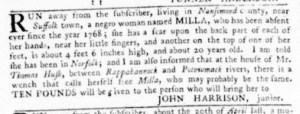
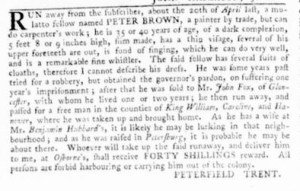
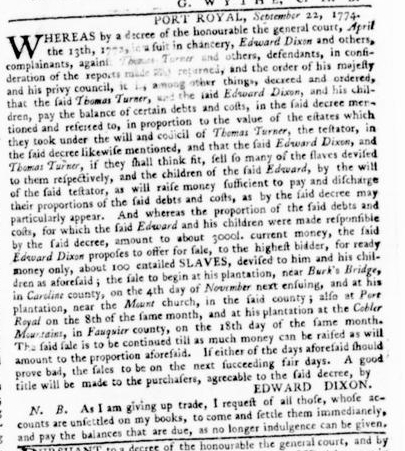
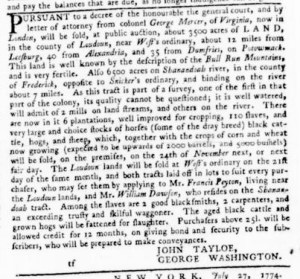
Slavery Advertisements Published November 9, 1774

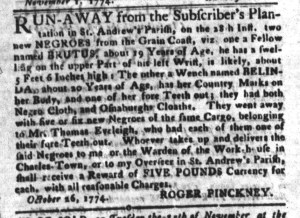
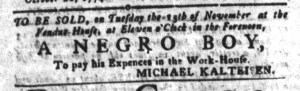
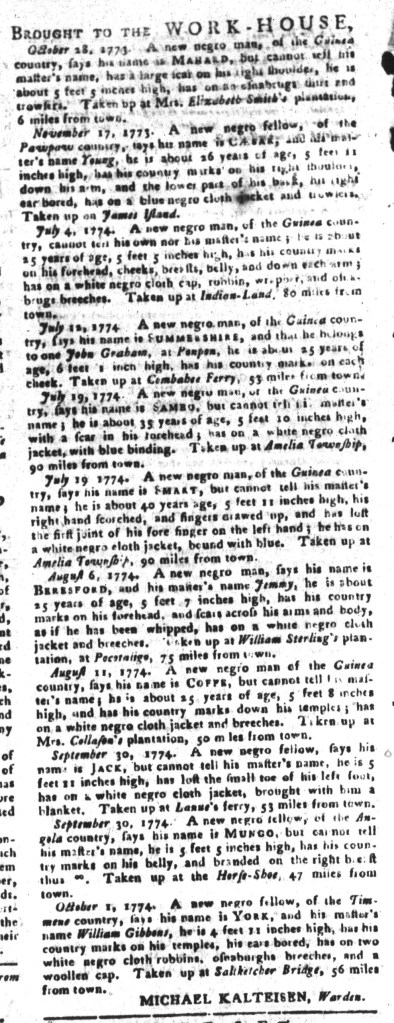
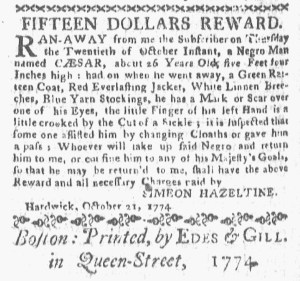
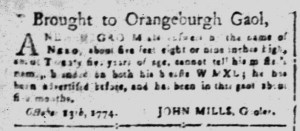
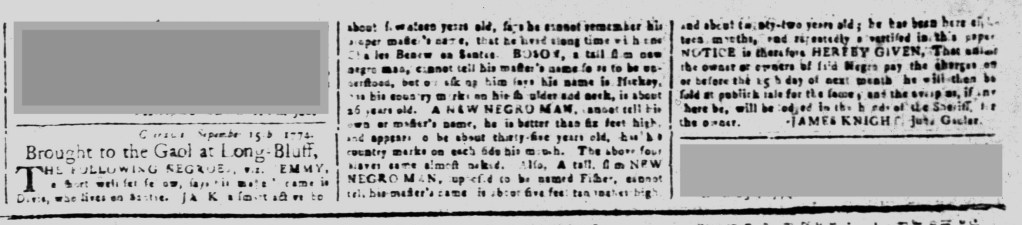
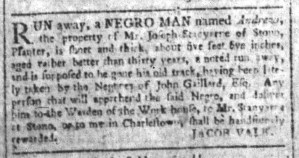
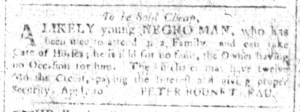
The Slavery Adverts 250 Project chronicles the role of newspaper advertising in perpetuating slavery in the era of the American Revolution. The project seeks to reveal the ubiquity of slavery in eighteenth-century life from New England to Georgia by republishing advertisements about enslaved people – for sale as individuals or in groups, wanted to purchase or for hire for short periods, runaways who liberated themselves, and those who were subsequently captured and confined in jails and workhouses – in daily digests on this site as well as in real time via the @SlaveAdverts250 Twitter feed, utilizing twenty-first-century media to stand in for the print media of the eighteenth century.

The project aims to provide modern audiences with a sense of just how often colonizers encountered these advertisements in their daily lives. Enslaved men, women, and children appeared in print somewhere in the colonies almost every single day. Those advertisements served as a constant backdrop for social, cultural, economic, and political life in colonial and revolutionary America. Colonizers who did not purport to own enslaved people were still confronted with slavery as well as invited to maintain the system by purchasing enslaved men, women, and children or assisting in the capture of so-called “runaways” who sought to free themselves from bondage. The frequency of these newspaper advertisements suggests just how embedded slavery was in colonial and revolutionary American culture in everyday interactions beyond the printed page.

These advertisements also testify to the experiences of enslaved men, women, and children, though readers must consider that those experiences have been remediated through descriptions offered by enslavers rather than enslaved people themselves. Often unnamed in the advertisements, enslaved men, women, and children were not invisible or unimportant in early America.

These advertisements appeared in colonial American newspapers 250 years ago today.
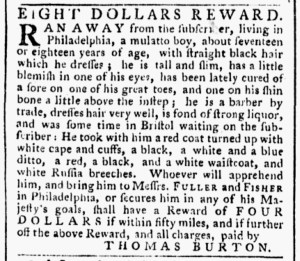
Pennsylvania Journal (November 9, 1774).

**********
Pennsylvania Journal (November 9, 1774).

November 8

What was advertised in a colonial American newspaper 250 years ago today?

South-Carolina Gazette and Country Journal (November 8, 1774).

“He can afford selling them cheaper than any ever imported in this province.”

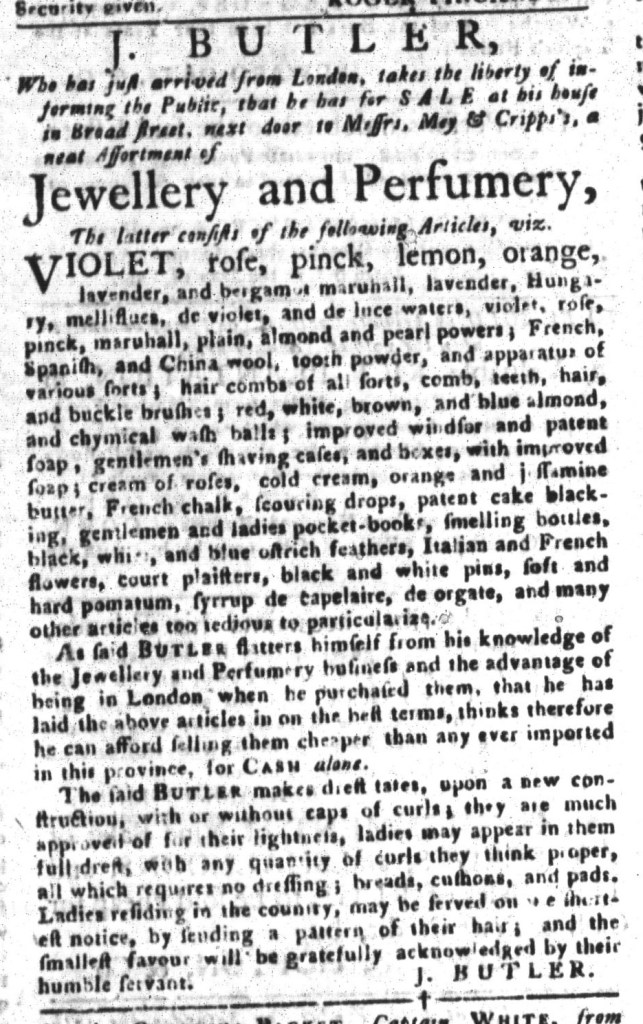
J. Butler’s advertisement in the November 8, 1774, edition of the South-Carolina Gazette and Country Journal proclaimed that he sold “Jewellery and Perfumery” at a shop he operated at his house on Broad Street in Charleston. Among the perfumery, he provided “VIOLET, rose, pinck, lemon, orange, lavender, and bergamot.” In addition, he listed a variety of personal hygiene products and cosmetics that he stocked, including “tooth powder, … hair combs of all sorts, … gentlemen’s shaving cases and boxes, with improved soap, … cold cream, [and] soft and hard pomatum.”  If that was not enough to attract consumers looking to pamper themselves, Butler also proclaimed that he carried “many other articles too tedious to particularize.”  Readers could cure their curiosity with a visit to Butler’s shop.

As further encouragement, he emphasized that he had “just arrived from London.”  Rather than accept merchandise shipped to him without first examining it himself, Butler had carefully examined and thoughtfully selected the wares he now advertised.  He considered that an “advantage,” especially in combination with “his knowledge of the Jewellery and Perfumery business,” that allowed him to acquire his inventory “on the best terms.”  In turn, he passed along the savings to his customers, asserting that “therefore he can afford selling [the above articles] cheaper than any ever imported in this province.”  According to Butler, he not only offered the best prices at that moment, but the best bargains for “Jewellery and Perfumery” ever seen in South Carolina thanks to savvy negotiations with suppliers when he was in London.

Butler was not alone in suggesting that his personal oversight in obtaining his wares accrued benefits to his customers.  Elsewhere in the same issue, Henry Calwell ran a short advertisement that announced he “just arrived from the Northward” and sold a “Large Quantity of Cheese, Chocolate, Potatoes, Onions,” and other groceries.  He added a note that “the Chocolate he warrants to be good, as he saw it made himself.”  Both Butler and Calwell sought to convince consumers that their personal connections to their merchandise should make those items more appealing.

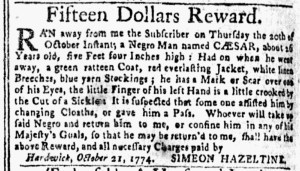
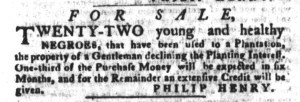
Slavery Advertisements Published November 8, 1774

The Slavery Adverts 250 Project chronicles the role of newspaper advertising in perpetuating slavery in the era of the American Revolution. The project seeks to reveal the ubiquity of slavery in eighteenth-century life from New England to Georgia by republishing advertisements about enslaved people – for sale as individuals or in groups, wanted to purchase or for hire for short periods, runaways who liberated themselves, and those who were subsequently captured and confined in jails and workhouses – in daily digests on this site as well as in real time via the @SlaveAdverts250 Twitter feed, utilizing twenty-first-century media to stand in for the print media of the eighteenth century.

The project aims to provide modern audiences with a sense of just how often colonizers encountered these advertisements in their daily lives. Enslaved men, women, and children appeared in print somewhere in the colonies almost every single day. Those advertisements served as a constant backdrop for social, cultural, economic, and political life in colonial and revolutionary America. Colonizers who did not purport to own enslaved people were still confronted with slavery as well as invited to maintain the system by purchasing enslaved men, women, and children or assisting in the capture of so-called “runaways” who sought to free themselves from bondage. The frequency of these newspaper advertisements suggests just how embedded slavery was in colonial and revolutionary American culture in everyday interactions beyond the printed page.

These advertisements also testify to the experiences of enslaved men, women, and children, though readers must consider that those experiences have been remediated through descriptions offered by enslavers rather than enslaved people themselves. Often unnamed in the advertisements, enslaved men, women, and children were not invisible or unimportant in early America.

These advertisements appeared in colonial American newspapers 250 years ago today.

Essex Gazette (November 8, 1774).

**********
Essex Gazette (November 8, 1774).

**********
South-Carolina Gazette and Country Journal (November 8, 1774).

**********
South-Carolina Gazette and Country Journal (November 8, 1774).

**********
South-Carolina Gazette and Country Journal (November 8, 1774).

**********
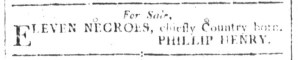
South-Carolina Gazette and Country Journal (November 8, 1774).

**********
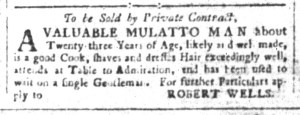
South-Carolina Gazette and Country Journal (November 8, 1774).

**********
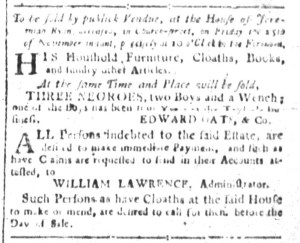
South-Carolina Gazette and Country Journal (November 8, 1774).

**********
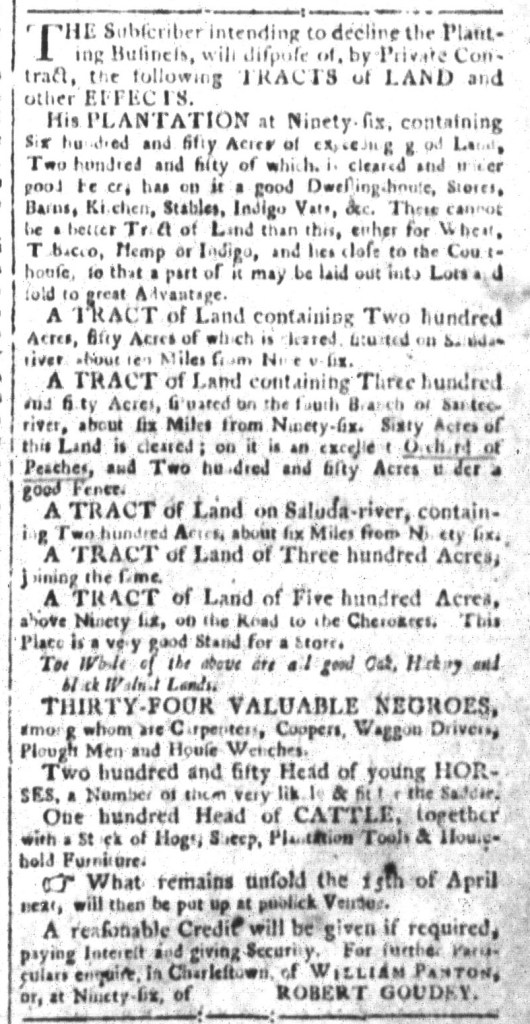
South-Carolina Gazette and Country Journal (November 8, 1774).

**********
South-Carolina Gazette and Country Journal (November 8, 1774).

**********
South-Carolina Gazette and Country Journal (November 8, 1774).

November 7

What was advertised in a colonial American newspaper 250 years ago today?

Newport Mercury (November 7, 1774).

“American SNUFF … equal to any imported from Great-Britain.”

George Lawton and Robert Lawton hoped that their marketing strategy would help them to edge out the competition when they advertised “American SNUFF” in the November 7, 1774, edition of the Newport Mercury.  They explained that the product they sold was “MANUFACTURED in Pennsylvania, and esteemed there equal to any imported from Great-Britain.”  Apparently, it was not yet familiar to consumers in Rhode Island, but the Lawtons hoped that the enthusiasm for the snuff in another colony would convince local customers to give it a try.  Furthermore, they suggested that patriotic consumers had a duty to select this “American SNUFF” and support domestic manufactures over imported alternatives.  “[I]t is hoped,” the Lawtons declared, “that the public spirit of this colony will not be wanting to promote the use of this article, if on trial it should be found to merit it.”  They allowed for some wiggle room, leaving it to consumers to assess the quality of the snuff for themselves, yet proposed that those who did consider it “equal to any imported from Great Britain” should shift their allegiance to the product from the colonies.

Elsewhere on the same page, John Bell a shopkeeper who frequently advertised in the Newport Mercury, hawked “ENGLISH and INDIA GOODS” that he sold “as cheap as can be bought in any shop in AMERICA.”  Following a catalog of some of his inventory, he concluded with a separate entry for “Best Tilloch’s snuff, just imported from Glasgow.”  That city was well known for the quality of the tobacco products made there and then shipped to consumers on both sides of the Atlantic.  Bell expected that customers in Newport recognized “Tilloch’s snuff” as a familiar brand, not an unreasonable supposition considering that other entrepreneurs also advertised that product.  Bell’s effort to market imported snuff did not have the same visual appeal as the advertisement placed by the Lawtons.  Their notice featured “American SNUFF” as a headline in a larger font, calling attention to both the product and the argument about the political principles associated with it at a time that many colonizers advocated for boycotts of British goods as a means of resisting the Coercive Acts passed by Parliament earlier in the year.  They seemingly considered this strategy effective, resorting to it once again after using it several months earlier.

Slavery Advertisements Published November 7, 1774

The Slavery Adverts 250 Project chronicles the role of newspaper advertising in perpetuating slavery in the era of the American Revolution. The project seeks to reveal the ubiquity of slavery in eighteenth-century life from New England to Georgia by republishing advertisements about enslaved people – for sale as individuals or in groups, wanted to purchase or for hire for short periods, runaways who liberated themselves, and those who were subsequently captured and confined in jails and workhouses – in daily digests on this site as well as in real time via the @SlaveAdverts250 Twitter feed, utilizing twenty-first-century media to stand in for the print media of the eighteenth century.

The project aims to provide modern audiences with a sense of just how often colonizers encountered these advertisements in their daily lives. Enslaved men, women, and children appeared in print somewhere in the colonies almost every single day. Those advertisements served as a constant backdrop for social, cultural, economic, and political life in colonial and revolutionary America. Colonizers who did not purport to own enslaved people were still confronted with slavery as well as invited to maintain the system by purchasing enslaved men, women, and children or assisting in the capture of so-called “runaways” who sought to free themselves from bondage. The frequency of these newspaper advertisements suggests just how embedded slavery was in colonial and revolutionary American culture in everyday interactions beyond the printed page.

These advertisements also testify to the experiences of enslaved men, women, and children, though readers must consider that those experiences have been remediated through descriptions offered by enslavers rather than enslaved people themselves. Often unnamed in the advertisements, enslaved men, women, and children were not invisible or unimportant in early America.

These advertisements appeared in colonial American newspapers 250 years ago today.

Boston-Gazette (November 7, 1774).

**********
Dunlap’s Pennsylvania Packet (November 7, 1774).

**********
Newport Mercury (November 7, 1774).

**********

New-York Gazette and Weekly Mercury (November 7, 1774).

**********

New-York Gazette and Weekly Mercury (November 7, 1774).

**********

New-York Gazette and Weekly Mercury (November 7, 1774).

**********

New-York Gazette and Weekly Mercury (November 7, 1774).

**********

New-York Gazette and Weekly Mercury (November 7, 1774).

**********

New-York Gazette and Weekly Mercury (November 7, 1774).

November 6

What was advertised in a colonial American newspaper 250 years ago this week?

Postscript to the Virginia Gazette [Purdie and Dixon] (November 3, 1774).

“It has been thought necessary, for the publick Good, to enter into several particular Resolves.”

As the imperial crisis intensified in the fall of 1774, the distinction between news items and advertisements in colonial newspapers became blurry with greater frequency.  Such was the case with letter-advertisements expressing regret for signing “an Address to the late Governor Hutchinson, on his leaving this Province” in several newspapers in Massachusetts.  Another instance appeared in the Virginia Gazette, published by Alexander Purdie and John Dixon in Williamsburg.  On November 3, they distributed a two-page Postscript to accompany the standard four-page issue.  That supplement included nothing but advertising except, perhaps, the first item in the first column on the first page.  With a dateline that read, “EDENTON, NORTH CAROLINA, October 25, 1774,” it featured the petition signed by fifty-one women at the Edenton Tea Party and listed their names in two columns.

Those women expressed their support for resolutions protesting the Tea Act of 1773 passed by the North Carolina Provincial Congress in August.  They proclaimed, “AS we cannot be indifferent on any Occasion that appears nearly to affect the Peace and Happiness of our Country, and as it has been thought necessary, for the publick Good, to enter into several particular Resolves, by a Meeting of Members deputed from the whole Province, it is a Duty which we owe, not only to our near and dear Connections, who have concurred in them, but to ourselves, who are essentially interested in their Welfare, to do every Thing as far as lines in our Power to testify our sincere Adherence to the same; and we do therefore accordingly subscribe this Paper, as a Witness of our fixed Intention and solemn Determination to do so.” In a single sentence, the women of Edenton declared their position on current events and pledged to participate in politics through the decisions they made about consumption.  They added their voices to those who adopted nonimportation agreements.

Why did their petition appear in an advertising supplement?  Had the women involved in the Edenton Tea Party sent their petition to Purdie and Dixon to feature in the Virginia Gazette?  Probably not, but they may have submitted it to the printer of the North-Carolina Gazette in New Bern.  The few extant issues of that newspaper have not been digitized for greater accessibility, making it difficult to determine if the petition appeared in that newspaper and then Purdie and Dixon reprinted it.  After all, colonial printers constantly reprinted items from other newspapers.  The printers in Williamsburg could have received an issue of the North-Carolina Gazette with the petition from the Edenton Tea Party after they printed the November 3 edition of the Virginia Gazette but did not wish to wait a week to disseminate it in the next issue.  Take into consideration as well that news, especially “Extracts from the Votes and Proceedings of the AMERICAN CONTINENTAL CONGRESS,” filled much of the newspaper, crowding out advertisements.  The printers had reason to produce an advertising supplement, yet they may have also wished to highlight the petition signed by patriotic women in Edenton.  The “Extracts” started with an overview of the Continental Association, a nonimportation agreement, as the first news item.  The women’s petition ran as the first item in the Postscript, mirroring the placement of the Continental Association and demonstrating the commitment already expressed for such measures even before the First Continental Congress formally adopted them.  At a glance, it looked like another advertisement among those in the Postscript, yet it delivered important news to readers.

November 5

What was advertised in a colonial American newspaper 250 years ago today?

Providence Gazette (November 5, 1774).

“The Manual Exercise … the best calculated for Appearance and Defence.”

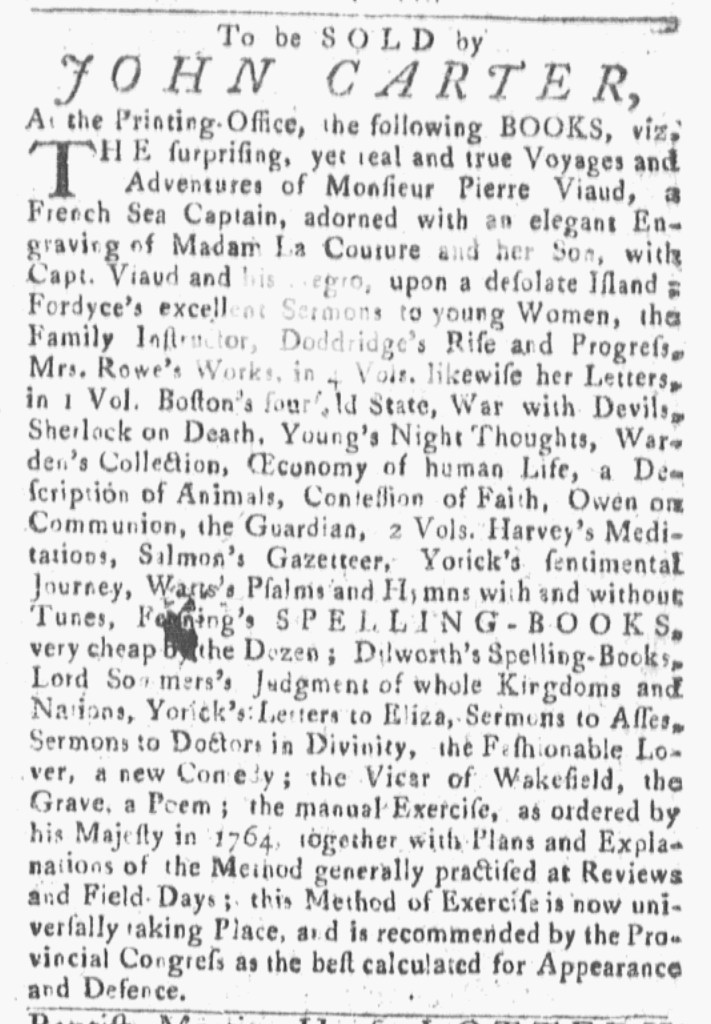
As was often the case, John Carter, the printer of the Providence Gazette, placed several advertisements in his own newspaper on November 5, 1774, hoping to advance other revenue streams in his printing office.  He placed five notices of varying lengths.

If they perused the contents of that issue from start to finish, readers first encountered an advertisement for books that Carter sold on the third page.  It listed dozens of items, starting with “THE surprising, yet real and true Voyages and Adventures of Monsieur Pierre Viaud, a French Sea Captain, adorned with an elegant engraving of Madam La Couture and her Son, with Capt. Viaud and his Negro, upon a desolate island” that previously had been featured separately in a much more extensive advertisement and concluded with “the Manual Exercise, as ordered by his Majesty in 1764, together with Plans and Explanations of the Method generally practised at Reviews and Field Days,” a publication that had recently received some attention in Boston as well.  Carter added a short note, advising that “this Method of Exercise is now universally taking Placer, and is recommended by the Provincial Congress as the best calculated for Appearance and Defence.”  The printer did not specify the threat that colonizers faced; as the imperial crisis intensified following the passage of the Coercive Acts, readers understood the context for promoting that book.

On the fourth page, the second and third columns began and ended with advertisements from Carter.  At the top of the second column, he declared that he had “JUST PUBLISHED” Benjamin West’s “NEW-ENGLAND A[L]MANACK, OR, Lady’s and Gentleman’s DIARY, For the Year of our LORD, 1775.”  Two weeks earlier, he inserted a notice that publication of this annual collaboration with West, an astronomer and mathematician, was imminent.  Carter completed the column with a short advertisement for “BLANKS of various Kinds to be sold by the Printer hereof.”  The fourth column featured an advertisement addressed to the “FRIENDS of LIBERTY and USEFUL KNOWLEDGE,” alerting them that they could acquire copies of “ENGLISH LIBERTIES, OR, The free-born Subject’s INHERITANCE” at Carter’s printing office.  He published that volume by subscription, a project that took quite some time.  Upon publication, this advertisement appeared regularly in the Providence Gazette.  The column ended with a call for “clean Linen Rags … and old Sail-Cloth” to supply the “PAPER MANUFACTORY in Providence.”  Carter offered the “best Prices” to colonizers who supplied these items so essential to the printing trade.

In addition to his own advertisements, the printer inserted a brief note that “Advertisements omitted will be in our next.”  How many advertisements did not appear?  Did Carter’s own notices crowd out paid notices submitted by customers?  Or had some advertisements arrived at the printing office too late to include in the November 5 edition?  Carter had to weigh the advantages and disadvantages of giving too much space to advertisements concerning his own endeavors when others wished to pay for space in his newspaper.

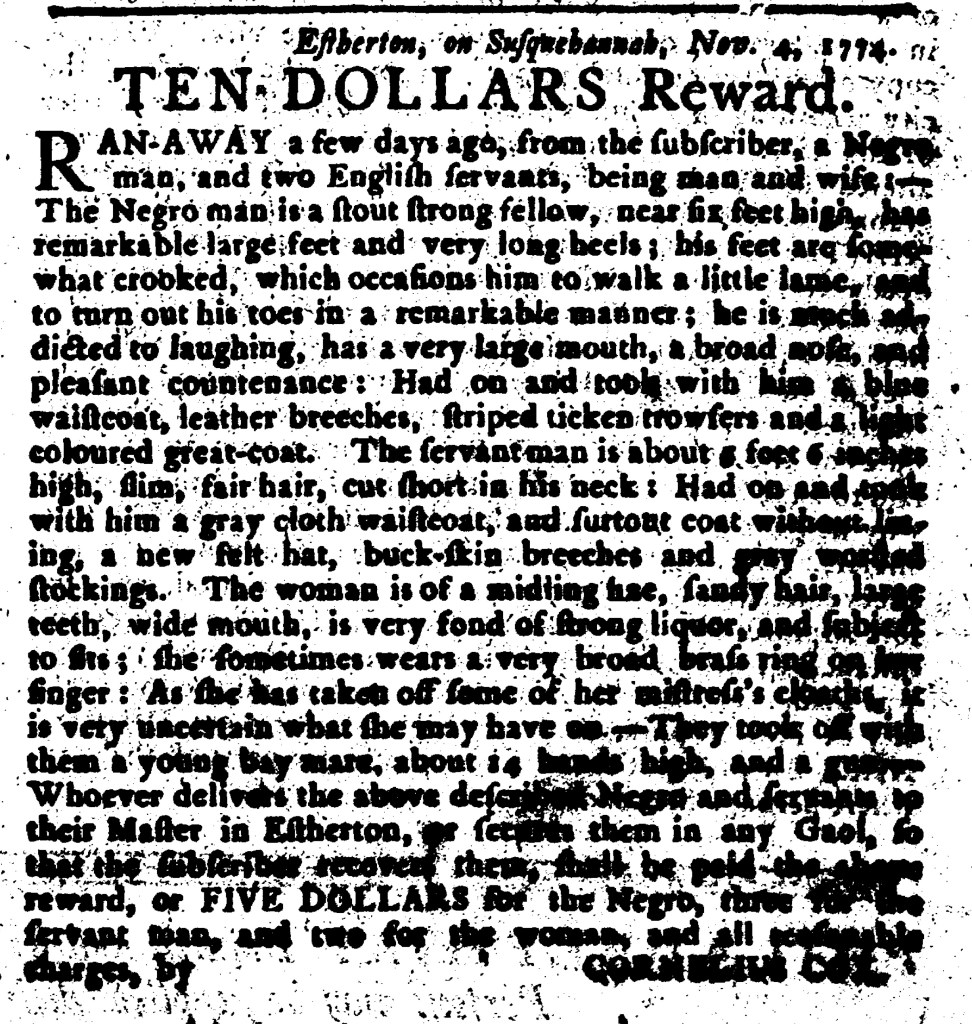
Slavery Advertisements Published November 4, 1774

The Slavery Adverts 250 Project chronicles the role of newspaper advertising in perpetuating slavery in the era of the American Revolution. The project seeks to reveal the ubiquity of slavery in eighteenth-century life from New England to Georgia by republishing advertisements about enslaved people – for sale as individuals or in groups, wanted to purchase or for hire for short periods, runaways who liberated themselves, and those who were subsequently captured and confined in jails and workhouses – in daily digests on this site as well as in real time via the @SlaveAdverts250 Twitter feed, utilizing twenty-first-century media to stand in for the print media of the eighteenth century.

The project aims to provide modern audiences with a sense of just how often colonizers encountered these advertisements in their daily lives. Enslaved men, women, and children appeared in print somewhere in the colonies almost every single day. Those advertisements served as a constant backdrop for social, cultural, economic, and political life in colonial and revolutionary America. Colonizers who did not purport to own enslaved people were still confronted with slavery as well as invited to maintain the system by purchasing enslaved men, women, and children or assisting in the capture of so-called “runaways” who sought to free themselves from bondage. The frequency of these newspaper advertisements suggests just how embedded slavery was in colonial and revolutionary American culture in everyday interactions beyond the printed page.

These advertisements also testify to the experiences of enslaved men, women, and children, though readers must consider that those experiences have been remediated through descriptions offered by enslavers rather than enslaved people themselves. Often unnamed in the advertisements, enslaved men, women, and children were not invisible or unimportant in early America.

These advertisements appeared in colonial American newspapers 250 years ago today.

Connecticut Gazette (November 4, 1774).

**********

Connecticut Journal (November 4, 1774).

**********

Connecticut Journal (November 4, 1774).

**********

Connecticut Journal (November 4, 1774).

**********

South-Carolina and American General Gazette (November 4, 1774).

**********

South-Carolina and American General Gazette (November 4, 1774).

**********

South-Carolina and American General Gazette (November 4, 1774).

**********

South-Carolina and American General Gazette (November 4, 1774).

**********

South-Carolina and American General Gazette (November 4, 1774).

**********

South-Carolina and American General Gazette (November 4, 1774).

**********

South-Carolina and American General Gazette (November 4, 1774).

**********

South-Carolina and American General Gazette (November 4, 1774).

**********

South-Carolina and American General Gazette (November 4, 1774).

**********

South-Carolina and American General Gazette (November 4, 1774).

**********

South-Carolina and American General Gazette (November 4, 1774).

**********

South-Carolina and American General Gazette (November 4, 1774).

**********

South-Carolina and American General Gazette (November 4, 1774).

**********

South-Carolina and American General Gazette (November 4, 1774).

**********

South-Carolina and American General Gazette (November 4, 1774).

**********

South-Carolina and American General Gazette (November 4, 1774).

**********

South-Carolina and American General Gazette (November 4, 1774).

**********

South-Carolina and American General Gazette (November 4, 1774).

**********

South-Carolina and American General Gazette (November 4, 1774).

**********

South-Carolina and American General Gazette (November 4, 1774).

**********

South-Carolina and American General Gazette (November 4, 1774).

**********

South-Carolina and American General Gazette (November 4, 1774).

**********

South-Carolina and American General Gazette (November 4, 1774).

**********

South-Carolina and American General Gazette (November 4, 1774).

**********

South-Carolina and American General Gazette (November 4, 1774).

**********

South-Carolina and American General Gazette (November 4, 1774).

**********

South-Carolina and American General Gazette (November 4, 1774).

**********

South-Carolina and American General Gazette (November 4, 1774).

**********

Virginia Gazette [Pinkney] (November 4, 1774).

**********

Virginia Gazette [Pinkney] (November 4, 1774).

**********

Virginia Gazette [Pinkney] (November 4, 1774).

**********

Virginia Gazette [Pinkney] (November 4, 1774).

**********

Virginia Gazette [Pinkney] (November 4, 1774).

**********

Virginia Gazette [Pinkney] (November 4, 1774).

**********

Virginia Gazette [Pinkney] (November 4, 1774).

**********

Virginia Gazette [Pinkney] (November 4, 1774).

**********

Virginia Gazette [Pinkney] (November 4, 1774).

November 4

What was advertised in a colonial American newspaper 250 years ago today?

Connecticut Journal (November 4, 1774).

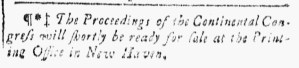
The Proceedings of the Continental Congress will shortly be ready for sale at the Printing Office in New Haven.”

William Bradford and Thomas Bradford, the printers of the Pennsylvania Journal in Philadelphia were the first to advertise the Extracts from the Votes and Proceedings of the American Continental Congress after the First Continental Congress adjourned its meeting in the fall of 1774, but other printers in other towns soon hawked their own editions.  A multiplication of copies produced and disseminated throughout the colonies aided in keeping colonizers informed beyond what they read in newspapers or heard from their friends and neighbors.

The Bradfords announced publication of the Extracts on November 2, a week after the First Continental Congress concluded its meeting.  On November 3, John Holt, the printer of the New-York Journal, ran a shorter advertisement to the same effect: “THE PROCEEEDINGS OF THE CONTINENTAL CONGRESS, With their Letter to the People of QUEBEC, To be sold by the Printer.”  He may have been so occupied with taking the Extracts to press as quickly as possible that he did not focus on crafting an advertisement.  On the other hand, considering the level of interest in the decisions of the delegates, Holt may not have considered an elaborate advertisement necessary to market the pamphlet.  Anne Catharine Green and Son, the printers of the Maryland Gazette in Annapolis, ran their own advertisement that day, though they did not have their edition ready for sale.  Still, they wanted readers to know that it would soon be available: “Now in the press, and speedily will be published, EXTRACTS FROM THE VOTES AND PROCEEDINGS OF THE AMERICAN CONTINETNAL CONGRESS.”  They placed their notice immediately after the news, testifying to its consequence.

Thomas Green and Samuel Green, the printers of the Connecticut Journal and New-Haven Post-Boy, also moved quickly to publish an edition of the Extracts.  They inserted a note in the November 4 edition of their newspaper: “The Proceedings of the Continental Congress will shortly be ready for sale at the Printing Office in New Haven.”  It appeared at the bottom of the final column on the third page of that issue.  Printers usually printed the first and fourth pages on one side of a broadsheet and let them dry while they set type for the second and third pages to print on the other side.  That meant that the Greens’ notice about the Extracts would have been the last item added to that edition.  Perhaps they had hoped to have the pamphlet ready for sale by the time the second and third pages of the newspaper went to press, but settled for alerting readers that they could acquire copies soon.  As quickly as they could, the Greens joined other printers in disseminating the political pamphlet far and wide.

November 3

What was advertised in a colonial American newspaper 250 years ago today?

Massachusetts Spy (November 3, 1774).

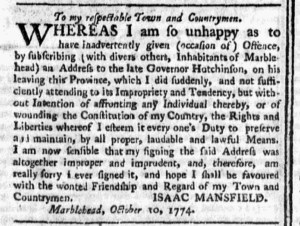
“I am now sensible that my signing the said Address was altogether improper and imprudent.”

Yet another colonizer who signed “an Address to the late Governor Hutchinson, on his leaving this Province” took to the public prints to recant and apologize.  Isaac Mansfield of Marblehead published his message to “my respectable Town and Countrymen” in the November 3, 1774, edition of the Massachusetts Spy.  Like others who claimed that they regretted their actions, he asserted that he had endorsed the address “suddenly, and not sufficiently attending to its Impropriety and Tendency.”  In other words, he had carelessly affixed his name without giving the contents or their implications much thought.  Upon further reflection, realizing what he had done (and facing the consequences of giving “Offence”), he declared that he had no intention of “affronting any Individual” or, especially, “wounding the Constitution of my Country, the Rights and Liberties whereof I esteem it every one’s Duty to preserve and maintain, by all proper, laudable and lawful means.”  Mansfield had strayed in expressing Tory sympathies, but he had seen the light.  He described signing the address as improper and imprudent, following immediately with an apology and a request for the “Friendship and Regard of my Town and Countrymen.”

Similar disavowals and retractions had been appearing in newspapers in Massachusetts and neighboring colonies for some time.  Much shorter versions by J. Fowle and John Prentice, both of Marblehead, that ran in three newspapers published in Boston and another in Salem during the past week also appeared in the November 3 issue of the Massachusetts Spy.  Some printers treated them as letters to place among news items, while others placed them with advertisements, making unclear which genre these letter-advertisements represented and whether printers charged for inserting them in their newspapers.  Isaiah Thomas, the printer of the Massachusetts Spy, ran the letter-advertisements from Fowle and Prentice below a letter to the editor from “A PROPRIETOR” and above Donald McAlpine’s advertisement for fencing lessons, similar to their placement in the Boston-Gazette three days earlier.  Had the men from Marblehead submitted their letter-advertisements to Thomas’s printing office?  Or had the patriot printer decided to reprint news from another newspaper?  In this instance, the double line separating different kinds of content appeared above the letter-advertisements, signaling to readers that they had finished with the news and began the advertisements.  The placement of Mansfield’s letter-advertisement was less ambiguous.  It ran on the final page, embedded among advertisements.  A notice from Silent Wilde, a post rider, appeared above it and an advertisement for William Hunter’s “Auction-Room” below it.  Does that mean that Thomas charged for printing Mansfield’s letter-advertisement?  Perhaps, though he may have been more interested in publicizing that another member of the community had seemingly come into conformity with patriot politics than generating revenue from Mansfield’s missive.  Either way, readers encountered news about current events as they perused the portion of the Massachusetts Spy that contained advertisements.